
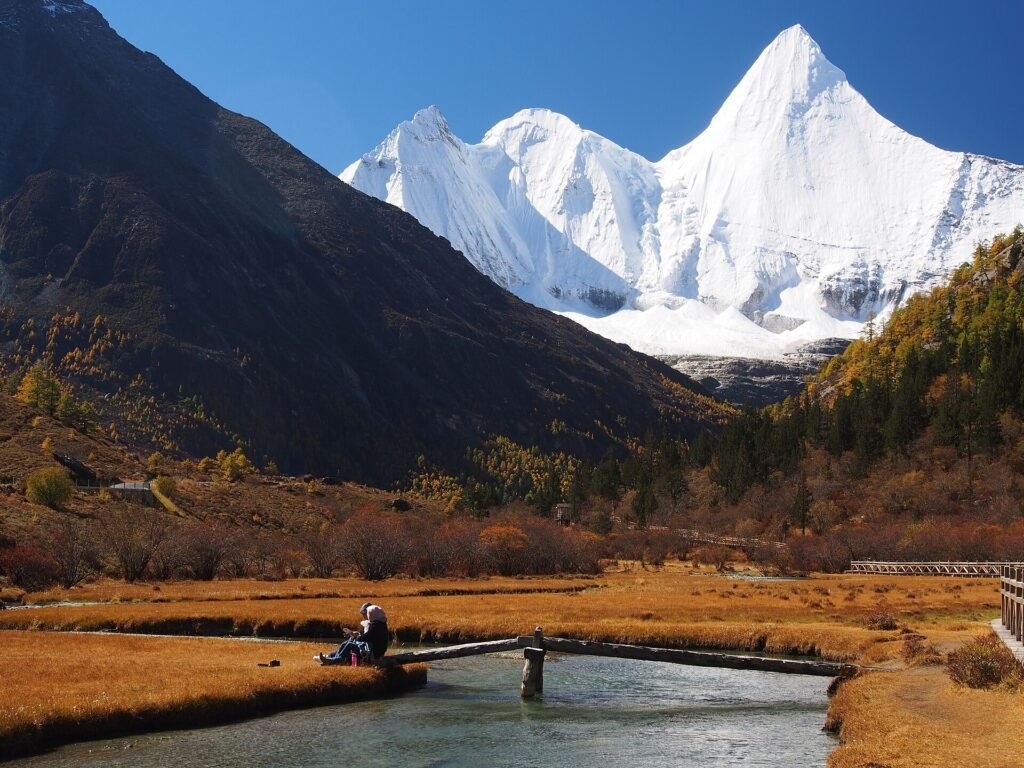
There is one film scene shot in Yading, and it lasts about four minutes. Everything else that makes this valley worth a nine-hour journey is either geological, political, or a number on a signboard. The Daocheng Yading filming locations question is therefore a short one, and this page answers it in the first section so you can get on with the part that matters: the fact that the aeroplane puts you down at 4,411 metres, and the lake at the end of the walk is at 4,600.
That gap — 189 vertical metres between the runway and the highest thing you came to see — is the whole trip. It is why the flight is short and the first night is bad. It is why the bus is limited to 20 km/h on the bends. It is why the runway is longer than the one at most of the world’s biggest airports. And it is why the advice that works everywhere else in China (“fly in, save a day”) is the one piece of advice here that can ruin the week.
The second thing worth knowing is that the ticket is currently free, and the reason is not generosity. In April 2026 the Ministry of Culture and Tourism named this scenic area for unreasonable shuttle-bus charging. In May a traveller with a camera asked to see the paperwork. By the end of that month the shuttle was free, and from 1 August the ticket was too. That is a strange and useful thing to know before you book, and it is the subject of the longest section below.
Short answer. The only film credit that matters at Daocheng Yading is I Belonged to You (从你的全世界路过, 2016), directed by Zhang Yibai, which shot its proposal scene at Luorong Pasture (洛绒牛场, 4,150 m). The street scenes and the radio station that the film labels “Daocheng” were actually shot in Xiangcheng County, next door. There is no Hollywood credit and no official filmography. The airport is at 4,411 m — the highest civilian airport in the world — and the highest lake on the standard walk is at about 4,600 m. Admission is free for all visitors from 1 August to 31 October 2026, and the shuttle bus and the electric cart have been free since 29 May 2026; the normal prices are 146 yuan and 120 yuan, and nobody has published what they will be on 1 November.
Why this page exists
Most pages on this site exist because a drama made a place famous and you want to stand where the actors stood. This one is the exception, and it is worth being honest about that at the top. Yading was not made famous by a film, which makes the Daocheng Yading filming locations answer unusually short for a place this famous. It was made famous by photographs taken a century before the film was released, by a name borrowed from a British novel, and by the fact that it is one of the few places on earth where three 6,000-metre snow peaks stand around a meadow you can walk into.
So the Daocheng Yading filming locations question has a short answer and a long tail. The short answer is one film, one scene, one meadow. The long tail is everything else: how you get to 4,600 metres without getting sick, what the ticket actually costs this month and why, and which of the three walks is the one you should do with the body you have rather than the body you wish you had.
This is also the first page on this site where the practical information is genuinely unstable. Prices here moved twice in four days in May 2026, and the current free period ends on 31 October. That is not a reason to write something vague. It is a reason to write down exactly what we saw, when we saw it, and what we could not find out — which is what the last two sections do.
Daocheng Yading filming locations: what Yading actually is
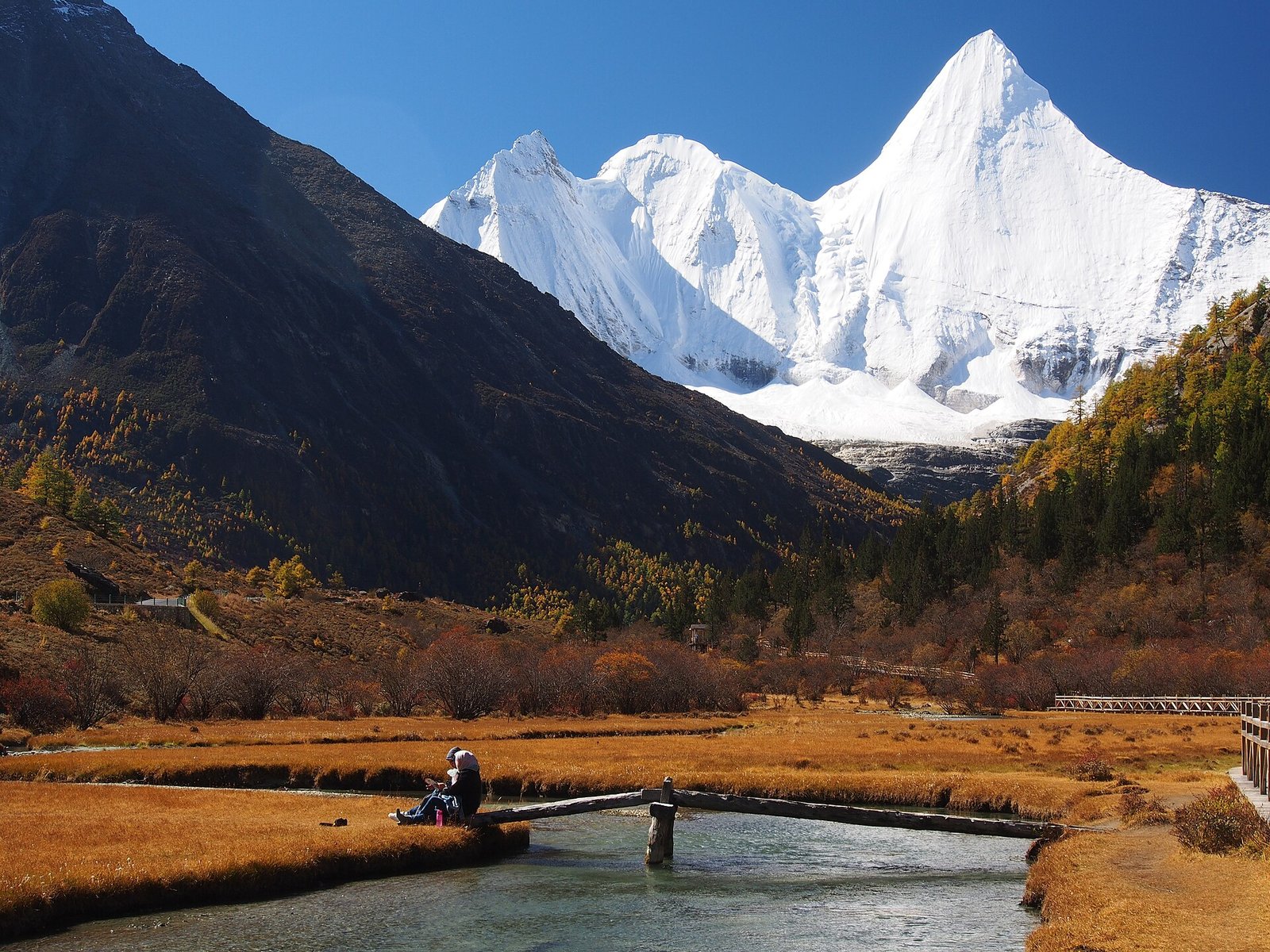
Yading is a valley system inside a national nature reserve in Daocheng County, in the Garze Tibetan Autonomous Prefecture of western Sichuan, close to the Yunnan border. The reserve was upgraded to national status by the State Council in June 2001 and rated a 5A scenic area in December 2020. The scenic area itself covers about 32 km². The Tibetan name is 念青贡嘎日松贡布, and 亚丁 means “the place that faces the sun”.
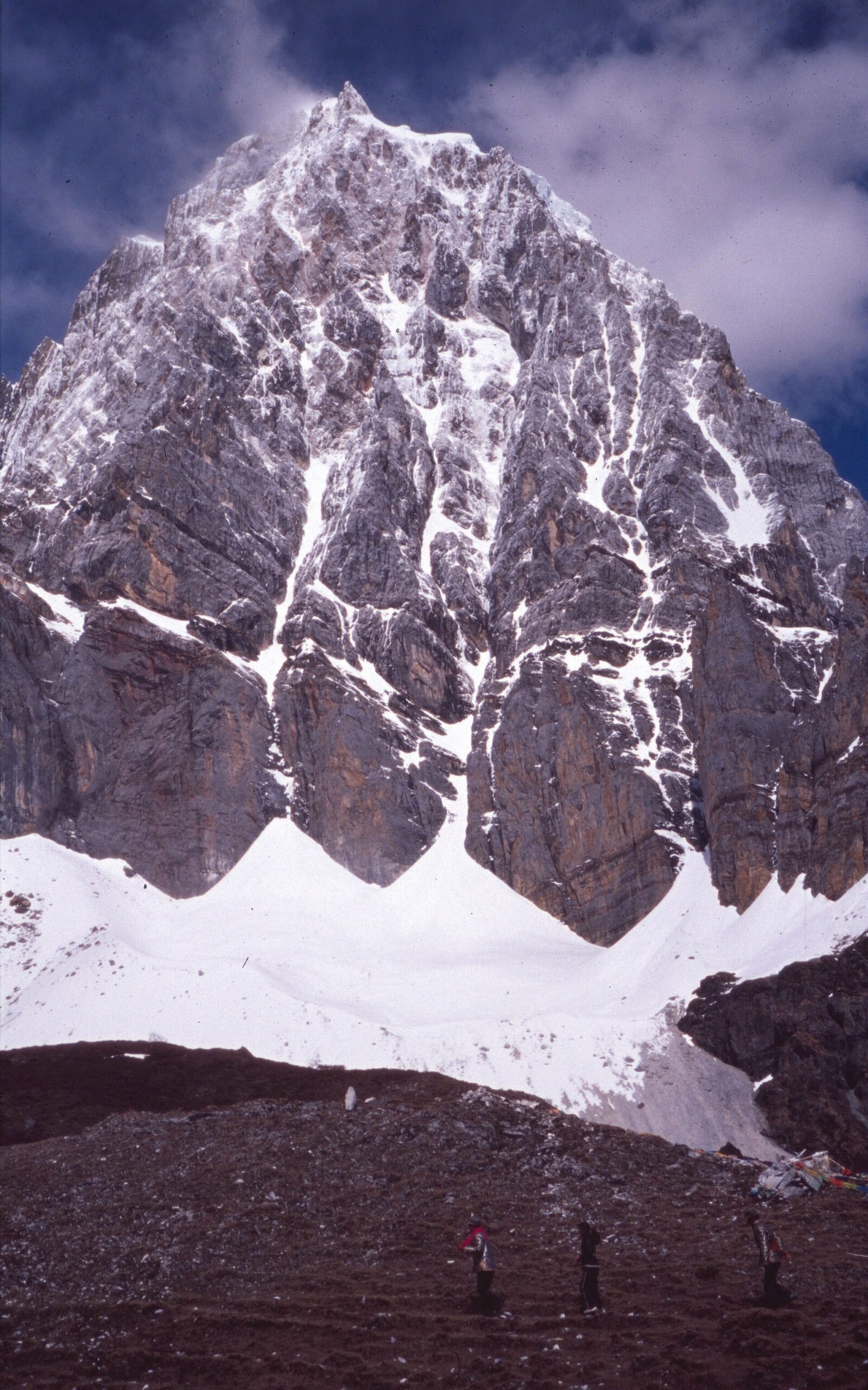
For a Daocheng Yading filming locations reader, the structure is simple enough to hold in your head. Three snow peaks — Chenresig to the north, Jampelyang to the south, Chana Dorje to the east — stand in a rough triangle around a high pasture. Below the pasture the valley runs down through a bend in the river to a monastery, then to a village, then to the gate, then to a town. Almost everything you have seen photographs of is inside that triangle: the pasture, the two glacial lakes above it, and the small turquoise lake below the monastery that reflects the north peak.
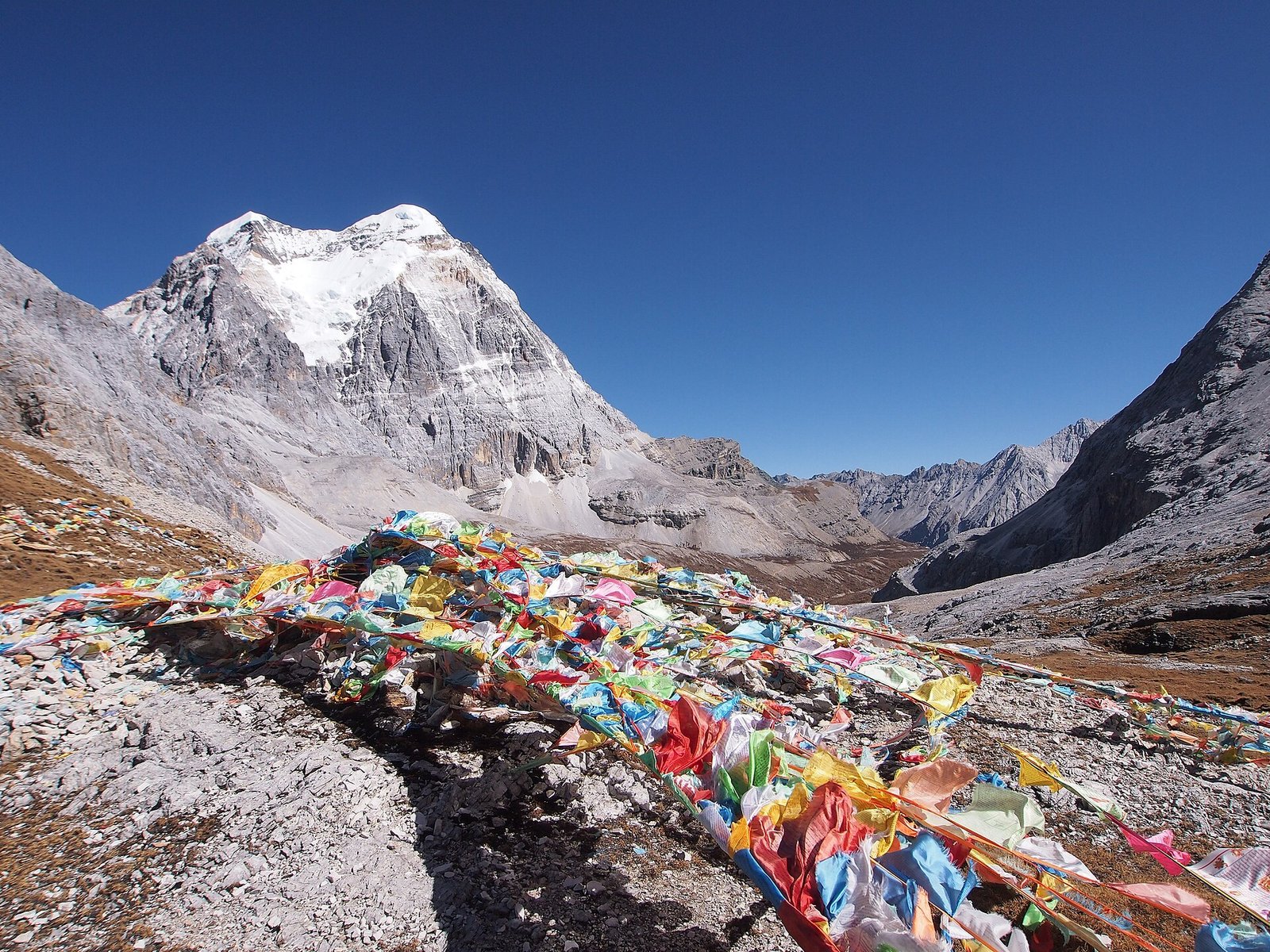
The three peaks are not secular scenery. They are the 三怙主 — the three protectors — and they are Chenresig (compassion), Jampelyang (wisdom) and Chana Dorje (power). Tibetans walk around them, not up them, and the outer kora takes days. That matters for how you behave here, and it matters for how you read the signage: the lakes are named as sacred sites, not as viewpoints.
The name “Shangri-La” arrived from outside. James Hilton invented the word for a 1933 novel, and it has been attached to this corner of Kham ever since — most visibly when Zhongdian in Yunnan renamed itself Shangri-La City in 2001. The operator’s own introduction calls Yading “the last Shambhala”, using the Tibetan term rather than the novel’s. That is a more careful choice than most English copy manages, and it is worth noticing: “the last” is a ranking word, and at least three places in western China use it about themselves.
The explorer usually credited with bringing the range to a Western readership is Joseph Rock, the Austrian-American botanist who passed through in the late 1920s and whose photographs ran in National Geographic. The line most often attributed to him here — that Yading is the most beautiful place in the world — appears in a great deal of Chinese tourism copy without a citation, and we could not find the original. What is documented is the photography. We have left the quotation out.
What was filmed here, and what was not
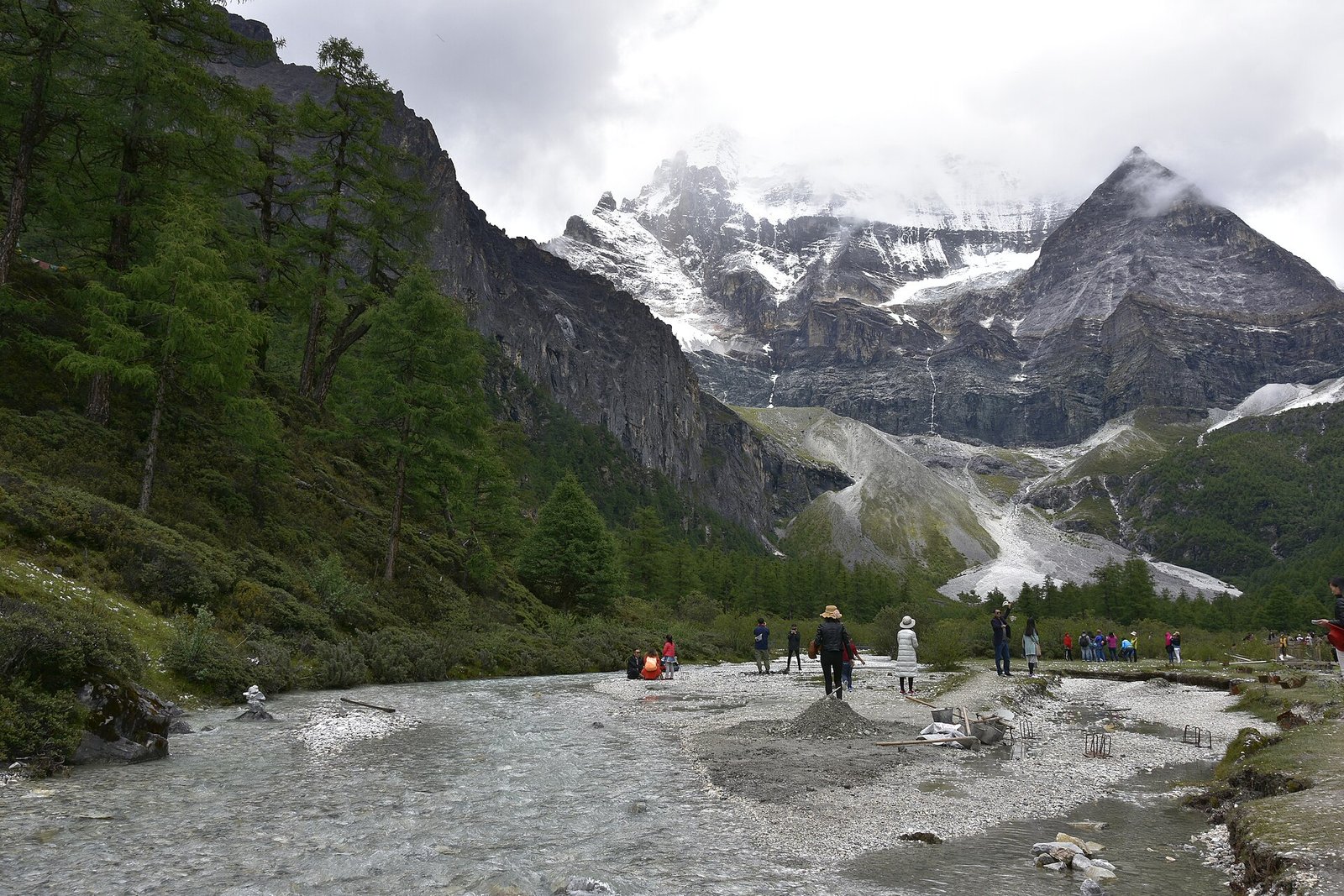
Here is the whole Daocheng Yading filming locations list, and it fits in a paragraph. I Belonged to You (从你的全世界路过), released in mainland China on 29 September 2016, directed by Zhang Yibai from a screenplay by Zhang Jiajia adapting his own collection of short stories, 113 minutes, starring Deng Chao, Bai Baihe, Yang Yang, Zhang Tian’ai, Yue Yunpeng and Du Juan. The proposal scene was shot at Luorong Pasture, with the Gonga River running through it and the three peaks behind. That is the credit.
There is no second Daocheng Yading filming locations entry worth listing. Yading has no official filmography — no page on the operator’s site, no county culture-bureau list, no plaque at the gate. That is worth pausing on, because it is the opposite of how these places usually behave. Zhangye publishes every production that has ever pointed a camera at its hills, in one sentence, on a government page. Wuzhen publishes nothing at all. Yading is closer to Wuzhen, and the reason is the same: it does not need filmmakers to explain why anyone would come. The mountains were doing that before cinema existed.
| Production | Year | Where | How solid |
|---|---|---|---|
| I Belonged to You (从你的全世界路过) | 2016 | Luorong Pasture, 4,150 m — the proposal scene | Documented, and the one location everybody photographs |
| the same film’s “Daocheng” street and radio station | 2016 | Not Yading. Xiangcheng County, Qingde township, Xiande village | Documented in Chinese location breakdowns; see the next section |
| The Untamed and most other C-dramas with snow mountains | — | Not here. Usually CGI, or a different range entirely | Documented by the productions themselves |
| assorted Chinese travel films and music videos | — | reported, unspecified | No primary source located; not listed |
That last row is the honest part. A search for Daocheng Yading filming locations turns up lists that include three or four more titles, usually with no location more specific than “Daocheng”. We could not verify any of them to the level of a named place, so they are not in the table. If you have a primary source we have missed, the corrections page is the place to put it.
The film, and the county it borrowed
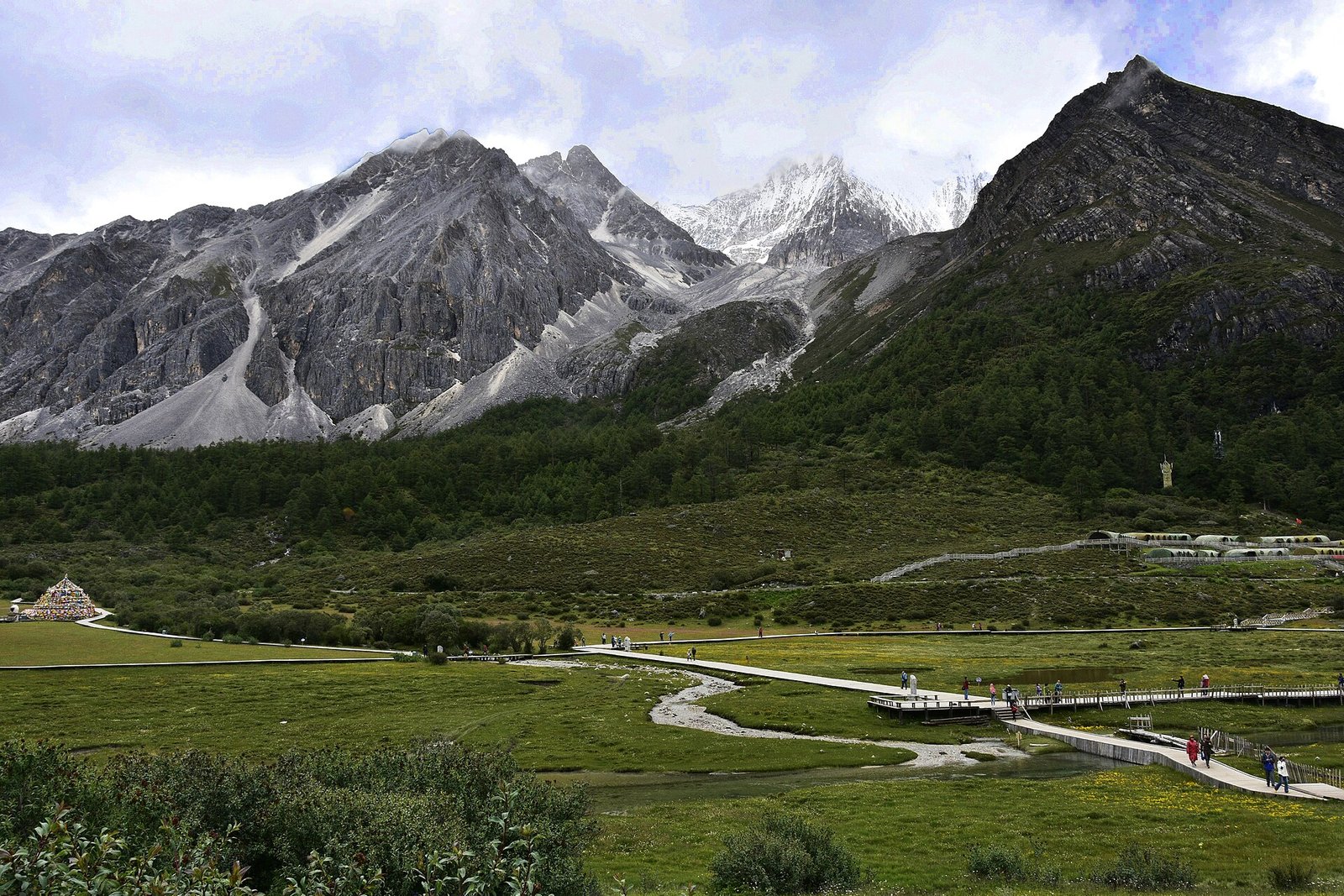
I Belonged to You is a three-part romance stitched together from Zhang Jiajia’s stories, and it was a large commercial success in 2016. Its most-quoted sequence is the one shot here: a character kneels in the grass at Luorong Pasture with the snow peaks behind him, and a line about wanting to meet someone like you before the end of the world. The image did for this valley roughly what a single photograph used to do, which is to say it made a place into a shorthand.
What almost nobody mentions in a Daocheng Yading filming locations write-up is that the film cheats, in the ordinary way films cheat. The streets it labels as Daocheng, and the radio station that one of the characters works in, were shot in Xiangcheng County — specifically in Qingde township, Xiande village — which is the next county south, not Daocheng at all. There is a sequence in the finished film where two characters run hand in hand out of the village and arrive, in the next shot, at Luorong Pasture. Those two places are dozens of kilometres apart and separated by a mountain pass. The cut is invisible and completely fictional.
This matters practically. People arrive in Daocheng County looking for the white Tibetan village from the film and cannot find it, because it is not there. If you want the village, you go to Xiangcheng. If you want the meadow with the peaks behind it, you go to Luorong, and you will find it exactly as photographed, because the meadow is real and the peaks have not moved.
It also matters editorially, and this is the part we want to be careful about. It would be easy to write a page that debunks the film, and it would be wrong. The film gave this valley something no photograph had: a story about arriving somewhere beautiful in order to say something to another person. That is why people come in pairs. The correction is not that the film lied. The correction is that the film is a composite, and knowing which half is which is the difference between a good trip and a wasted afternoon in a car park looking for a radio station.
The airport is almost the summit
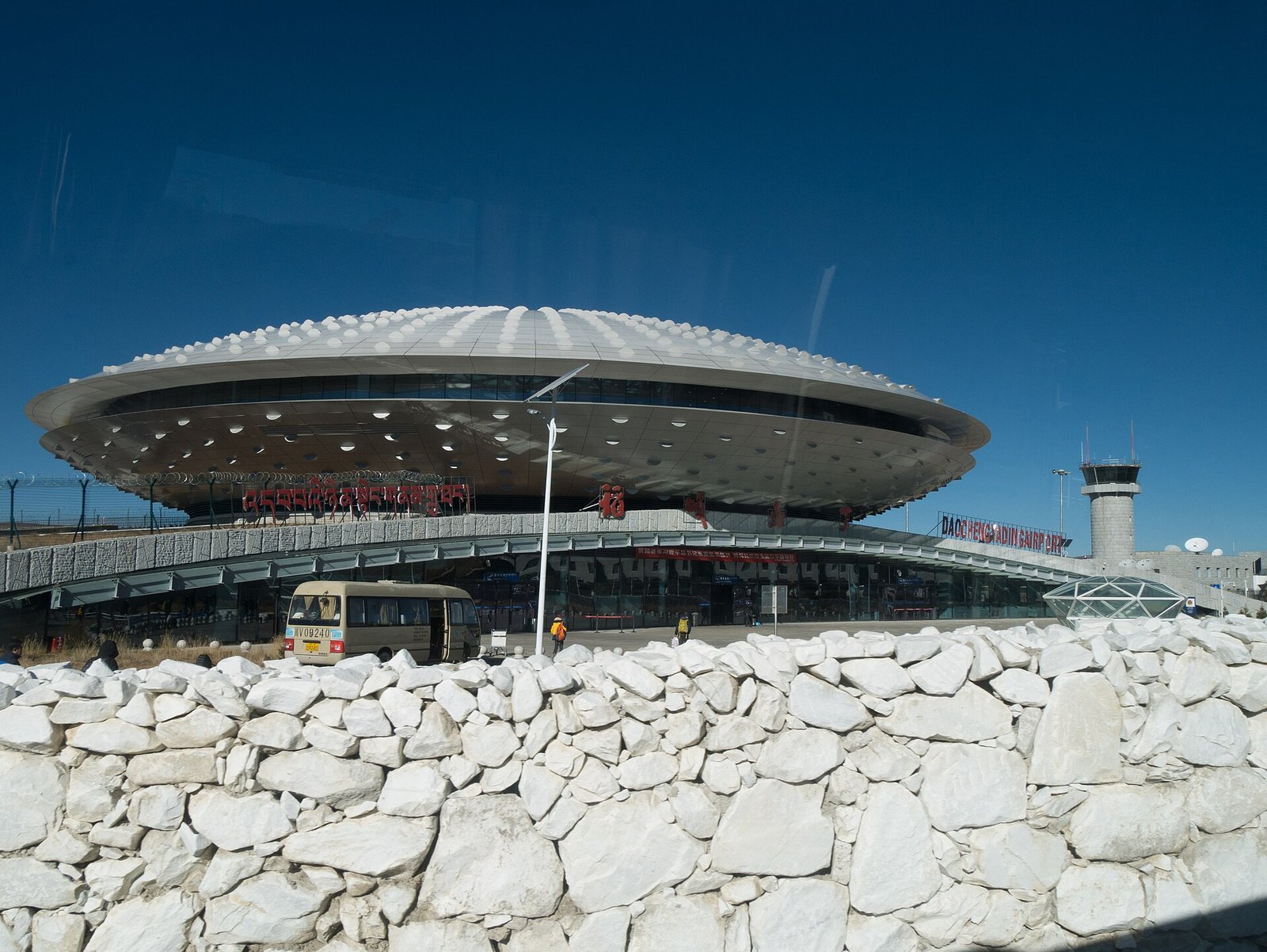
Daocheng Yading Airport sits on the Haizi Shan plateau at 4,411 metres. It opened on 16 September 2013, replacing Bangda in Tibet as the highest civilian airport in the world, and it has held the title since. It is a 4C regional airport with a single terminal, about 50 km by road from Daocheng town and roughly 35 km in a straight line.
Now put that next to the walk. The highest point of the standard visitor route is Five Colour Lake at about 4,600 metres. The difference is 189 metres. You step off an aircraft at 4,411 and, two days later, if everything goes well, you stand 189 vertical metres higher than that, having walked there. The aeroplane delivers you to within 200 metres of the highest thing you came for.
Almost every English-language Daocheng Yading filming locations guide presents this as a convenience. It is not a convenience; it is the single most consequential fact about a trip to Yading, and it cuts both ways. It saves you two days of driving. It also removes the two days of driving, which are the acclimatisation. The body’s adjustment to altitude is a function of time spent at height, and a 65-minute flight from Chengdu, which sits at about 500 metres, gives it none.
The descent afterwards is just as strange. From the airport you drive down to Daocheng town at 3,750 metres, and then further down to Shangri-La town at about 2,900, where most people sleep. So the pattern of a flying visit is: land at 4,411, sleep at 2,900, ride a bus up to 3,800, walk to 4,600, and come back down to 2,900. You land 1,511 metres above your bed, on the first day, with no preparation. That is the itinerary. It is not a warning box appended to the itinerary.
Why the runway is 4.2 km long
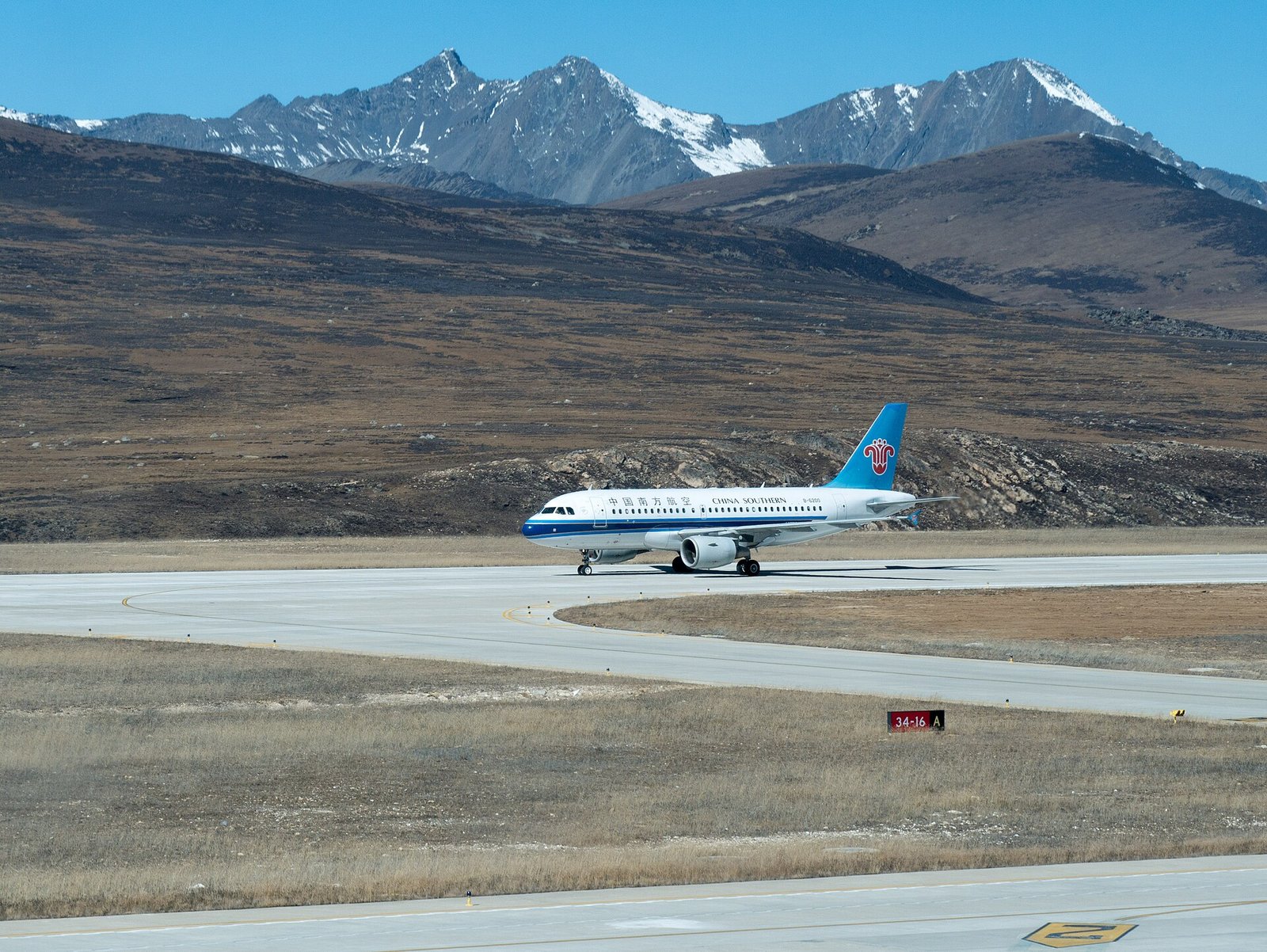
The runway at Daocheng Yading is 4,200 metres, and it is the second half of the Daocheng Yading filming locations story that nobody tells. For comparison, that is longer than the main runway at Heathrow, longer than either runway at Charles de Gaulle, and about the same as the longest strip at Denver. It is not a vanity project and it is not for big aircraft — the airport handles Airbus A319s and Boeing 737-700s, nothing larger. The runway is long for one reason, and it explains the entire page.
At 4,411 metres, air density is roughly 60 per cent of what it is at sea level. A wing generates lift in proportion to air density, and a jet engine generates thrust in roughly the same proportion. So an aircraft that needs 2,000 metres of runway at sea level needs something like 3,500 to 4,000 metres here to reach the same speed before the end of the concrete. The runway is long because the air is thin.
Once you accept that sentence, four other things stop being mysterious. It explains why only specific high-altitude-approved airframes fly here. It explains why the flight is bumpy — thin air is also thinner weather, and the plateau generates its own turbulence. It explains why flights are cancelled more readily than at lowland airports. And it explains why you feel the way you feel walking through the terminal: the aircraft needed 4.2 km of runway because there is less oxygen in every cubic metre, and you are breathing the same cubic metres.
The airport is equipped for this. There is a high-altitude medical station and oxygen supply point in the terminal, and the waiting area provides blankets, hot water and oxygen. That is not reassurance for the nervous; it is standard equipment at a facility where a meaningful share of arriving passengers will feel unwell within the hour.
The altitude ladder
Here are the numbers any Daocheng Yading filming locations plan needs, all from the operator’s own pages or from the county government, and all of them worth writing down before you go, because the ones on English blogs are frequently a hundred metres out.
| Place | Altitude | What happens there |
|---|---|---|
| Chengdu | ~500 m | Where you get on the plane |
| Daocheng Yading Airport | 4,411 m | Where you get off it |
| Daocheng town (县城) | 3,750 m | County capital; the airport bus terminates here |
| Shangri-La town (香格里拉镇, Riwa) | ~2,900 m | Where most visitors sleep; 34 km from Aden village |
| Zaguanbeng (扎灌崩) | 3,800 m | Where the shuttle bus stops and the walking starts |
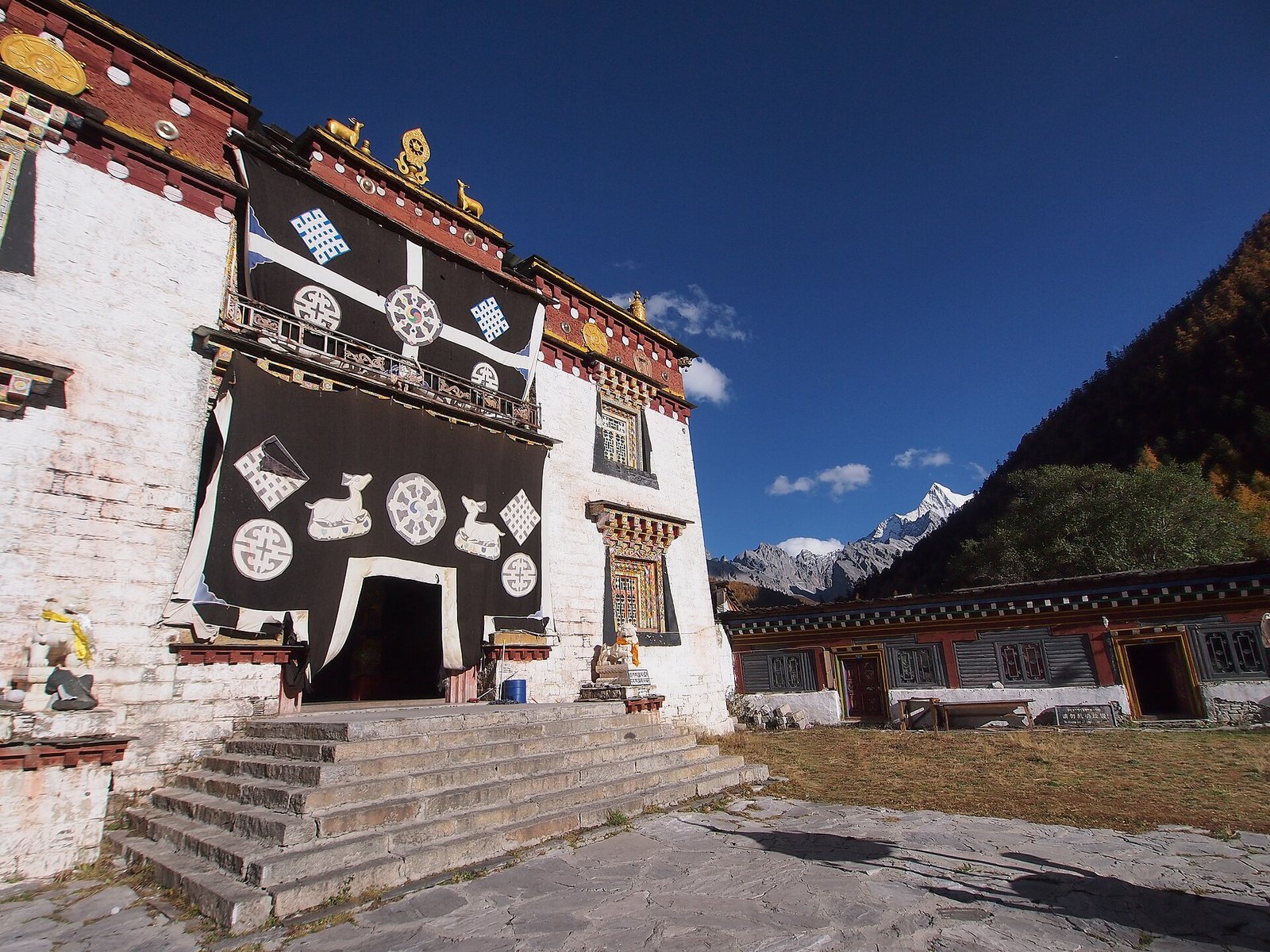
| Chonggu Monastery (冲古寺) | 3,900 m | 800-year-old Gelug monastery; junction of the two routes |
| Pearl Lake (珍珠海 / 卓玛拉措) | 4,100 m | The lowest of the sacred lakes; the classic reflection of the north peak |
| Luorong Pasture (洛绒牛场) | 4,150 m | The film location; the best single view of all three peaks |
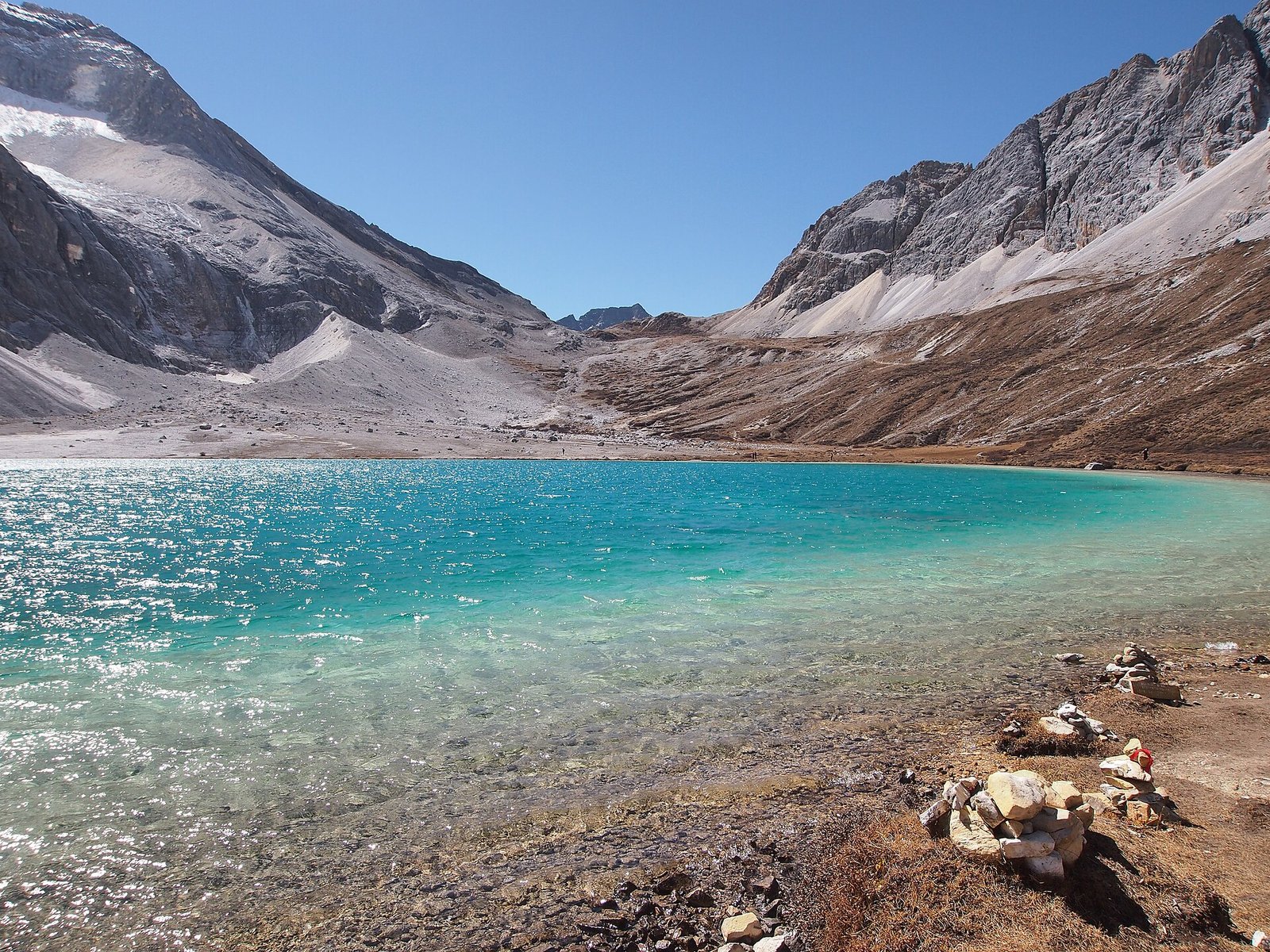
| Milk Lake (牛奶海 / 俄绒措) | ~4,500 m | Glacial lake, teardrop-shaped, below the south peak |
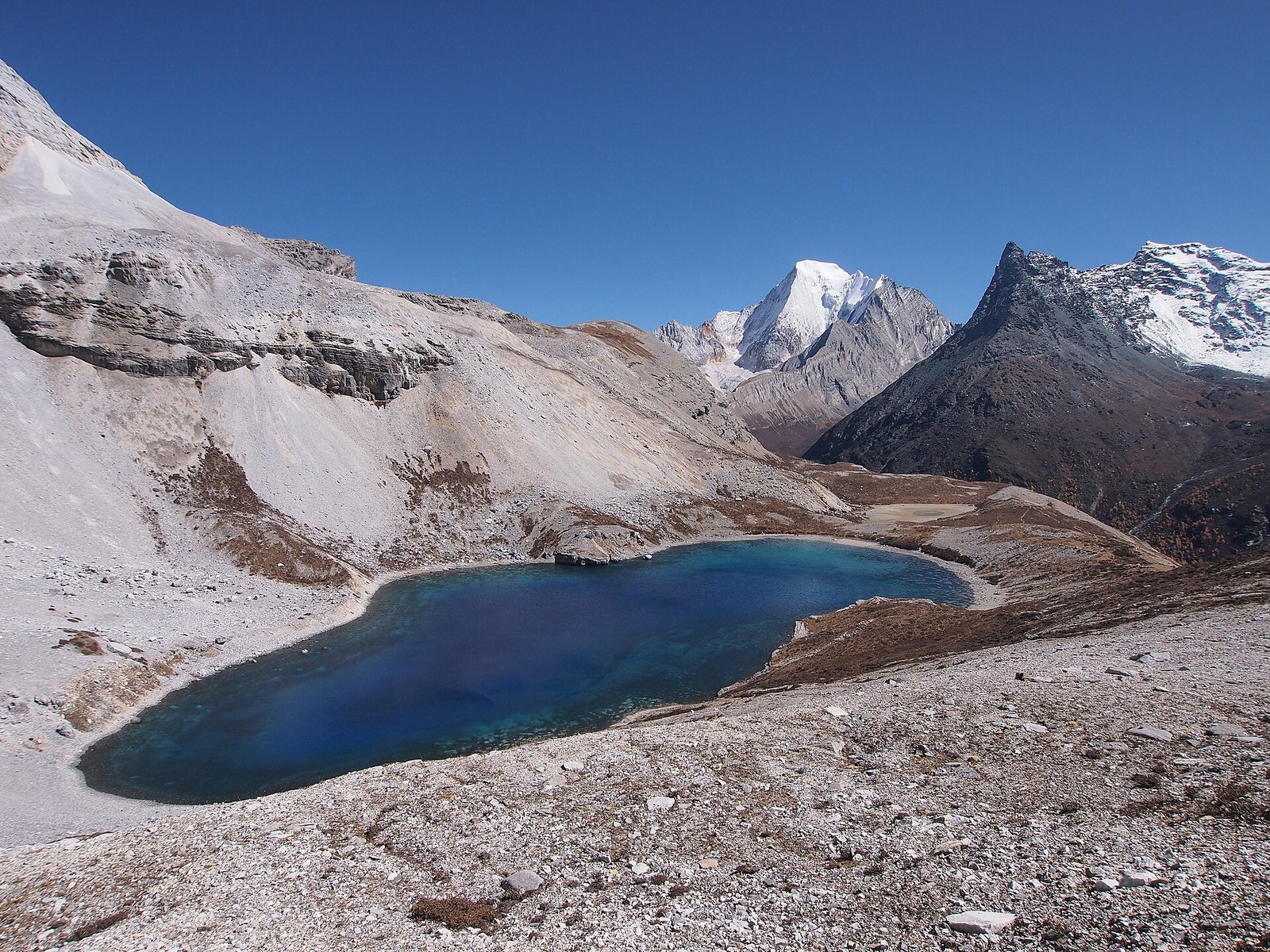
| Five Colour Lake (五色海 / 丹增措) | ~4,600 m | The highest point of the standard visit |
| Aden village (亚丁村) | 3,900–4,060 m | The village inside the park, if you choose to sleep high |
Two notes on this table. First, the operator’s page gives Milk Lake as “about 4,500” and Five Colour Lake as “about 4,600”; a great many blogs give 4,600 and 4,700. We have used the operator’s figures and are telling you that the difference exists, because a hundred metres at this height is not nothing and you should not be surprised if your own altimeter app disagrees with a signboard. Second, the 189-metre figure in the previous section uses the operator’s 4,600 for Five Colour Lake; if you prefer the blog figure of 4,700, the gap becomes 289 metres, and the argument does not change.
The three walks, measured in metres
There are three routes and they are not three different trails, which is the part most Daocheng Yading filming locations itineraries get wrong. They are the same road with three different places to stop, which is why the choice is really a choice about your lungs rather than your legs.
The short route: Zaguanbeng to Chonggu to Pearl Lake. From the bus stop it is a flat 20-minute walk to the monastery, and then a short climb to Pearl Lake at 4,100 metres, where the north peak stands directly behind the water. Round trip about two hours at an unhurried pace, on paved and boardwalk path, with a gentle gradient. This is the route for a first afternoon, for anyone travelling with parents, and for anyone who felt the plane.
The middle route: Luorong Pasture. From Chonggu, an electric cart runs up the valley to the pasture at 4,150 metres — about 20 minutes. This is where I Belonged to You was shot, and it is the single best view in the park: a flat meadow with a river through it and all three peaks standing around it. You can walk it instead of taking the cart, which adds about an hour each way. Many people do this and nothing else, and they are not wrong to.
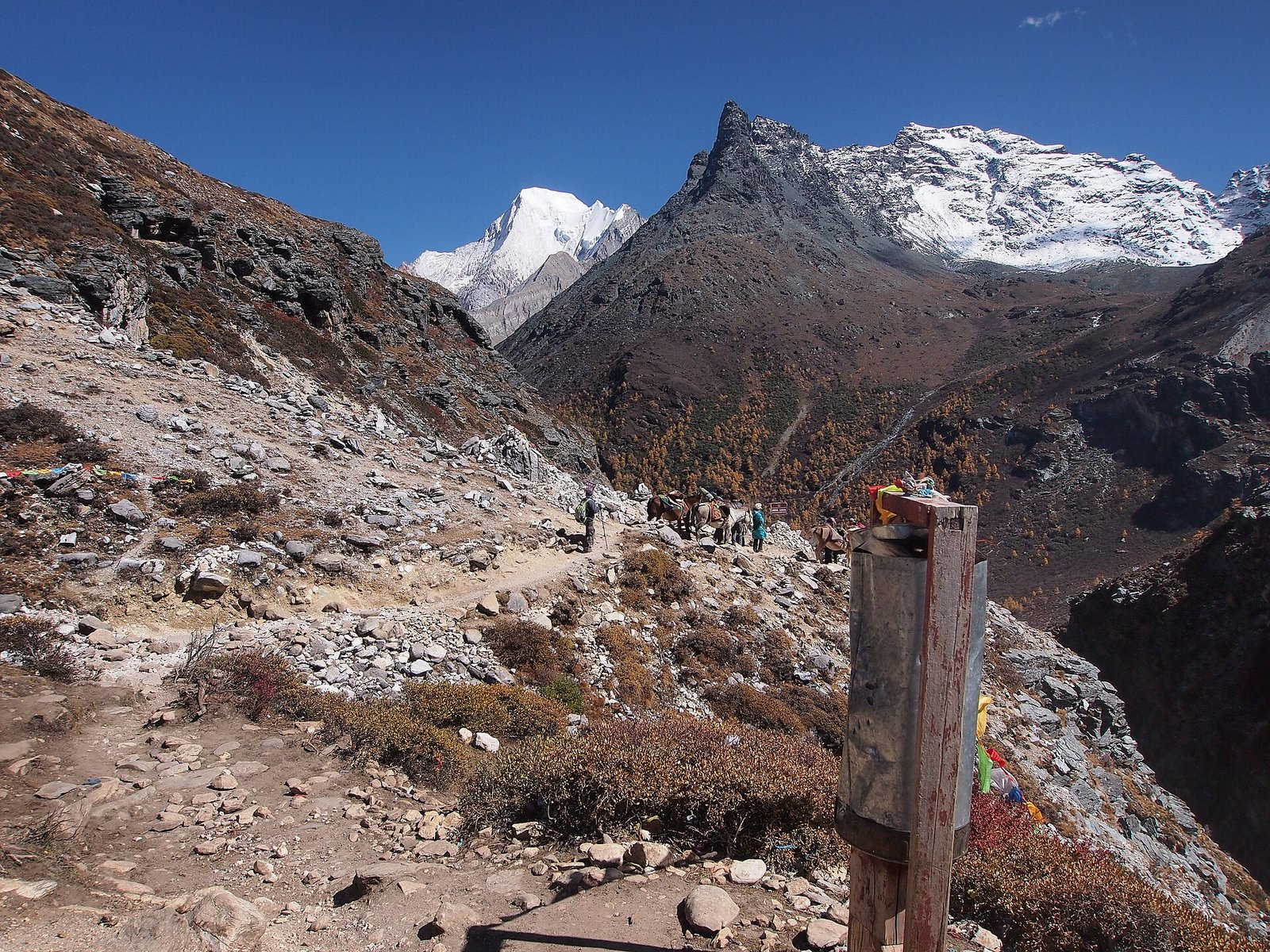
The long route: Luorong to Milk Lake to Five Colour Lake. From the pasture, a trail climbs to Milk Lake at about 4,500 and then to Five Colour Lake at about 4,600. Round trip is usually quoted at five to six hours from the pasture, roughly 7.4 km, and the last section is steep, rocky and exposed. This is the walk everybody posts photographs of and the one that produces the altitude headaches. Horses can carry you part of the way from the pasture; the final climb is on your own feet.
| Route | Start → end | Round trip | Time | Who it is for |
|---|---|---|---|---|
| Short | Zaguanbeng 3,800 → Chonggu 3,900 → Pearl Lake 4,100 | ~4 km | 2 h | First day, families, anyone who felt the flight |
| Middle | Chonggu → Luorong Pasture 4,150 | 4.5 km (cart both ways optional) | 1–3 h | The film location; the best view for the least effort |
| Long | Luorong 4,150 → Milk Lake 4,500 → Five Colour Lake 4,600 | ~7.4 km | 5–6 h | Fit walkers with a spare day and no altitude symptoms |
The thing no table captures is the sequencing problem. The long route is the reason people come, and it is also the route that a body arriving from Chengdu that morning is least equipped to do. If you have two days, the correct order is short route on day one and long route on day two, not the reverse. If you have one day, do the middle route and accept that you have seen the valley rather than crossed it. The number of people who fly in, go straight up to Five Colour Lake, and spend the following day in a hotel room is not small.
The three peaks, and the number nobody agrees on
The three peaks are the reason for everything else, and they are the part of the Daocheng Yading filming locations question that people photograph most, so it is worth getting their names and their order right. They are Chenresig in the north, Jampelyang in the south, and Chana Dorje in the east, and they are not interchangeable: each is a bodhisattva, and the circuit around all three is a pilgrimage rather than a hike.
Now the numbers, which are a mess. The operator’s own site gives Chenresig 5,998.5 m, Jampelyang 6,033 m — described as the first of the three and the highest point in Daocheng County — and Chana Dorje 5,951.3 m. But a different page on the same operator’s site gives Jampelyang as 5,958 m. Meanwhile the popular lists, the ones that get copied into English blogs, give Chenresig 6,032 m, Jampelyang 5,958 m and Chana Dorje 5,958 m.
| Peak | Direction | Bodhisattva | Operator’s main page | Operator’s FAQ page | Popular lists |
|---|---|---|---|---|---|
| Chenresig 仙乃日 | North | Compassion | 5,998.5 m | — | 6,032 m “the highest” |
| Jampelyang 央迈勇 | South | Wisdom | 6,033 m, highest in the county | 5,958 m | 5,958 m |
| Chana Dorje 夏诺多吉 | East | Power | 5,951.3 m | — | 5,958 m |
Look at the 6,032 and the 6,033 and you can see what probably happened. Those are the same number measured twice, and it belongs to Jampelyang — the operator says so, twice, in the sentence that calls it the highest peak in the county. The popular lists have attached it to Chenresig and given Jampelyang a smaller figure, which means that the “highest peak” claim has been moved to the wrong mountain along with the number. The operator’s own site disagrees with itself by 75 metres on Jampelyang, which tells you how carefully these figures have been maintained anywhere.
For the traveller, the practical conclusion is short. All three peaks are between 5,950 and 6,035 metres, the difference between them is smaller than the difference between two weather forecasts, and standing in the pasture you will not be able to tell which is taller without a map. What you can do is avoid labelling your photographs wrongly, which is the one error that is both common and visible: the peak that dominates the view from Luorong, the pyramidal one with the steep east face, is Jampelyang, not Chenresig. Chenresig is the broad massif you see behind Pearl Lake, on the other side of the valley.
The price that moved twice in four days
Now the part of this Daocheng Yading filming locations page that is not about mountains. In 2026 the price of visiting Yading was not set by cost, by scarcity, or by ecology. It was set by who was paying attention, and the record of that is public.
In April 2026 the Ministry of Culture and Tourism named this scenic area among those with unreasonable shuttle-bus charging and poorly designed visitor routes. On 15 May 2026 a Chinese travel blogger driving through the area found that the S462 provincial road — the only road to Aden village and the villages beyond it — was cut by a ticket barrier, and that passing required a 120-yuan shuttle ticket. He asked to see the document authorising the charge. The scenic area offered to waive the bus fare and reimburse his accommodation, on condition that he ride the bus. He declined, signed a liability waiver, and drove through.
He posted the video on 24 May. On 25 May the scenic area issued a notice saying the staff member who let him drive in had acted improperly and had been disciplined — a notice that did not address the question of the road. The same day, its booking mini-programme announced a discount: the shuttle bus from 120 yuan to 96, the electric cart from 70 to 56, both at 20 per cent off, described as a measure “to give back to the many visitors for their care and support”, to run until the fares were formally adjusted.
Read that again, because it is the sharpest fact on this page. A price that can fall by 20 per cent in a single day was never a cost. It was a number that had room in it. And the reason given for moving it was gratitude, four days after a video, following a ministry reprimand the month before.
It did not stop there. On 28 May the Garze prefecture rectification task force published a notice on the upgrading of the clean-up, and the prefecture’s Development and Reform Commission announced that from 29 May the shuttle bus and electric cart would stop charging transport service fees altogether. On the same day a provincial inspection team was formed from six departments — culture and tourism, development and reform, public security, transport, market regulation, forestry and grassland — and required the prefecture to suspend the charges while providing the same service. On 10 July the rectification measures were published: reservation-based access for private cars, reduced transport fees, and free admission for all domestic visitors from 1 August to 31 October 2026, with free admission for that year’s university and high-school entrants made permanent.
| Date (2026) | What happened |
|---|---|
| April | Ministry of Culture and Tourism names the area over unreasonable shuttle charging and poor route design |
| 15 May | Traveller reaches the S462 barrier; asks for the authorising document; is offered a waiver and a hotel refund if he rides the bus; declines |
| 24 May | Video published |
| 25 May | Staff member disciplined; same day, bus 120 → 96, cart 70 → 56, “to give back to visitors” |
| 28 May | Prefecture rectification notice; prefecture DRC announces charges suspended from 29 May |
| 29 May | Six-department provincial inspection team orders the suspension maintained |
| 10 July | Rectification measures published: private-car reservations, lower transport fees, free admission 1 Aug – 31 Oct |
| 15 Oct | Bus and cart still free; admission still free |
By July, more than 170,000 visitors had used the free shuttle. The operator’s revenue figures put the stakes in perspective: in 2023 the area received just over a million visitors and took 257 million yuan in tickets and transport combined, against 2.2 billion yuan in total tourism revenue for the county. In 2025 it passed a million visitors again, and at 120 yuan a head the bus alone would have brought in more than 120 million yuan. This was never a small line item, which is exactly why it took a ministry, a province and a video to move it.
The public road with a toll booth on it
The road at the centre of this is worth understanding, because it is why your Daocheng Yading filming locations trip has a barrier on it, because it is the reason the story is not simply about an expensive bus. The S462 runs from Shangri-La town up to Aden village and beyond, about 38 km. It was dug in the late 1990s by 3,000 local villagers who raised 300,000 yuan to cut the “Renya road”, then widened, hardened and surfaced over the following two decades.
In 2022 the Sichuan provincial transport and development authorities wrote it into the provincial road network plan for 2022–2035, formally designating the 38 km as a provincial road. In January 2023 it was transferred to the prefecture’s highway maintenance centre. In other words, it is a public road maintained with public money — the 2026 minor-works contract alone was worth more than 3.23 million yuan.
And here is the document that makes the whole argument. The county government’s own environmental assessment disclosure for the 2014 upgrade of this road states, in terms, that “after completion the project will not have a toll station”. Twelve years later there was a toll station on it.
We are not going to pretend this is simple, because the operator’s counter-arguments are not absurd. The road runs through a national nature reserve; unrestricted cars would degrade it; someone has to run and maintain a fleet of buses up a mountain with 30-odd hairpin bends. The scenic area says it invested about 18.28 million yuan in the road between 2013 and 2022. A shuttle service is a legitimate way to move people through a fragile valley.
The problem is narrower and harder to argue with. The charge was attached to passage, not to service. A visitor who wanted to reach a village, or a guesthouse, or a trailhead, had to buy a bus ticket whether or not they used a bus. That is the difference between a transport fee and a second admission fee, and it is the distinction Chinese travel commentators made in exactly those terms — the China Tourism Academy’s Yang Jinsong wrote that a scenic-area shuttle can be justified as an environmental service, but turning a through public road into a paid product is something else; Xinhua’s reporters called it the ticket-economy model dressed as transport.
For you, as a visitor, the practical upshot is this. The road is now open to private cars on a reservation basis, with numbers capped, priority given to residents and local businesses. The details of the quota had not been published as of our check. If you are driving yourself, the reservation is the thing to sort out first, before the hotel.
What it costs now, and what happens on 1 November
Here is the state of play for Daocheng Yading filming locations as we checked it on 17 October 2026, which is two weeks before the free period ends.
| Item | Normal price | Status on 17 October 2026 |
|---|---|---|
| Peak-season admission | 146 yuan | Free for all visitors, 1 Aug – 31 Oct 2026 |
| Off-season admission (approx. late Nov – mid Apr) | 120 yuan | Not applicable during the free period |
| Shuttle bus, visitor centre → Zaguanbeng (38 km) | 120 yuan return | Free since 29 May 2026 |
| Electric cart, Chonggu → Luorong Pasture | 70–80 yuan return | Free since 29 May 2026 |
| Insurance | 10 yuan | Optional, still charged |
| Daily capacity | — | 15,000, real-name booking, no same-day tickets at the gate |
Two warnings about reading that table. First, free admission is not free entry. You still need a reservation, made under your real name, several days ahead through the official mini-programme or a partner platform. The daily cap is 15,000 and it fills. Turning up at the gate in the last week of October without a booking is the single most reliable way to waste a day in this part of Sichuan.
Second, and more important: we do not know what the price will be on 1 November, and neither does anyone else. The operator is required to complete a cost audit, then hold a formal price hearing, then publish the result. As of our check that process was not finished. Anyone who tells you the new price is a specific number is guessing. What we can say is that the pre-rectification prices were 146 and 120, that the 20 per cent discount of 25 May was explicitly temporary, and that the phrase used throughout the official notices is “after the cost audit is complete, priced according to law and published”. If you are travelling in November, check the official mini-programme the week before you go, and treat any number in a blog — including a number on this page — as a historical figure rather than a current one.
Getting there: the fast way and the safe way
There is no railway to Daocheng, which is the first thing any Daocheng Yading filming locations plan has to absorb. The Sichuan–Tibet railway is under construction and does not reach here; any page offering you a “Daocheng high-speed rail timetable” is selling you something that does not exist. For the rail legs that do exist elsewhere in China, see how to book Chinese train tickets. That leaves three ways in, and the choice between them is really a choice about acclimatisation.
Fly. Chengdu to Daocheng Yading takes about 65 minutes, with several flights a day in season. From the airport, a shuttle bus runs to Daocheng town in about an hour for around 30 yuan, and from there a shared car or bus reaches Shangri-La town in another 1.5 to 2 hours. Total, city centre to hotel, about three and a half hours. It is fast, it is not cheap in peak season, and it is the option that puts you at 4,411 metres before lunch.
Drive. Chengdu to Daocheng by the G318 southern route — Ya’an, Kangding, Xinduqiao, Litang, Daocheng — is roughly 800 km and takes two days, with a night at Kangding (about 2,560 m) or Xinduqiao (about 3,300 m). The road crosses passes above 4,000 metres. This is the option that builds the acclimatisation into the journey, and it is the one to choose if you have any reason to be cautious about altitude, or if you simply want the drive, which is one of the great road journeys in China.
Bus. Long-distance coaches from Chengdu’s Xinnanmen and Chadianzi stations run to Daocheng in 22 to 24 hours, split over two days with a night in Kangding, for around 270 to 300 yuan. Slow, cheap, and functionally the same acclimatisation profile as driving.
| Method | Time | Arrival altitude | Acclimatisation |
|---|---|---|---|
| Fly Chengdu → DCY, then road | ~3.5 h door to door | 4,411 m at the airport | None. The descent to 2,900 m happens after the exposure |
| Drive G318 | 2 days | Gradual: 500 → 2,560 → 3,300 → 4,014 → 3,750 | Two nights of it, which is the point |
| Coach | 22–24 h over 2 days | Same profile as driving | One night in Kangding |
There is a compromise that almost nobody writes about and that solves the problem: fly in and do not go up on the first day. Land at 4,411, take the bus down to Shangri-La town at 2,900, and spend the rest of that day and the following morning doing nothing at all. You have bought the two days of acclimatisation back at the cost of one afternoon. It is the single most useful piece of advice on this page, and it costs nothing.
Three days, three heights
If you are flying in for Daocheng Yading filming locations, the shape of a good three-day visit looks like this, and the logic is that each day tops out a few hundred metres above the last.
Day one: arrive, descend, do nothing. Land at 4,411, ride down to 2,900, eat early, sleep. Do not walk up anything. Do not have a hot bath. Do not drink. This day feels wasted and it is the day that makes the other two work.
Day two: the short route. Into the park, bus to 3,800, walk to the monastery at 3,900 and Pearl Lake at 4,100. Two hours of gentle walking, then out. You have now been to 4,100 and come back down. That is the point of the day.
Day three: the long route. Bus up, cart to Luorong at 4,150, and walk to Milk Lake and Five Colour Lake at 4,500–4,600. Start early — the first buses leave at 7:10 — because afternoon weather on the plateau arrives on schedule and the last descent bus is at 19:00.
If you drove in over two days, you can compress this: the acclimatisation is already done, and you can do the long route on your first full day in the park. That is the real argument for the road, and it is a better one than the scenery.
What to do if it goes wrong: headache that does not respond to water and paracetamol, nausea, dizziness, or breathlessness at rest are reasons to go down, not to push on. Every descent here is downhill, the road is short, and the town is at 2,900 metres. Oxygen is available at the airport and at the park entrance; the buses carry it. There is no heroism in a summit photograph taken at the cost of two days in bed.
When to go
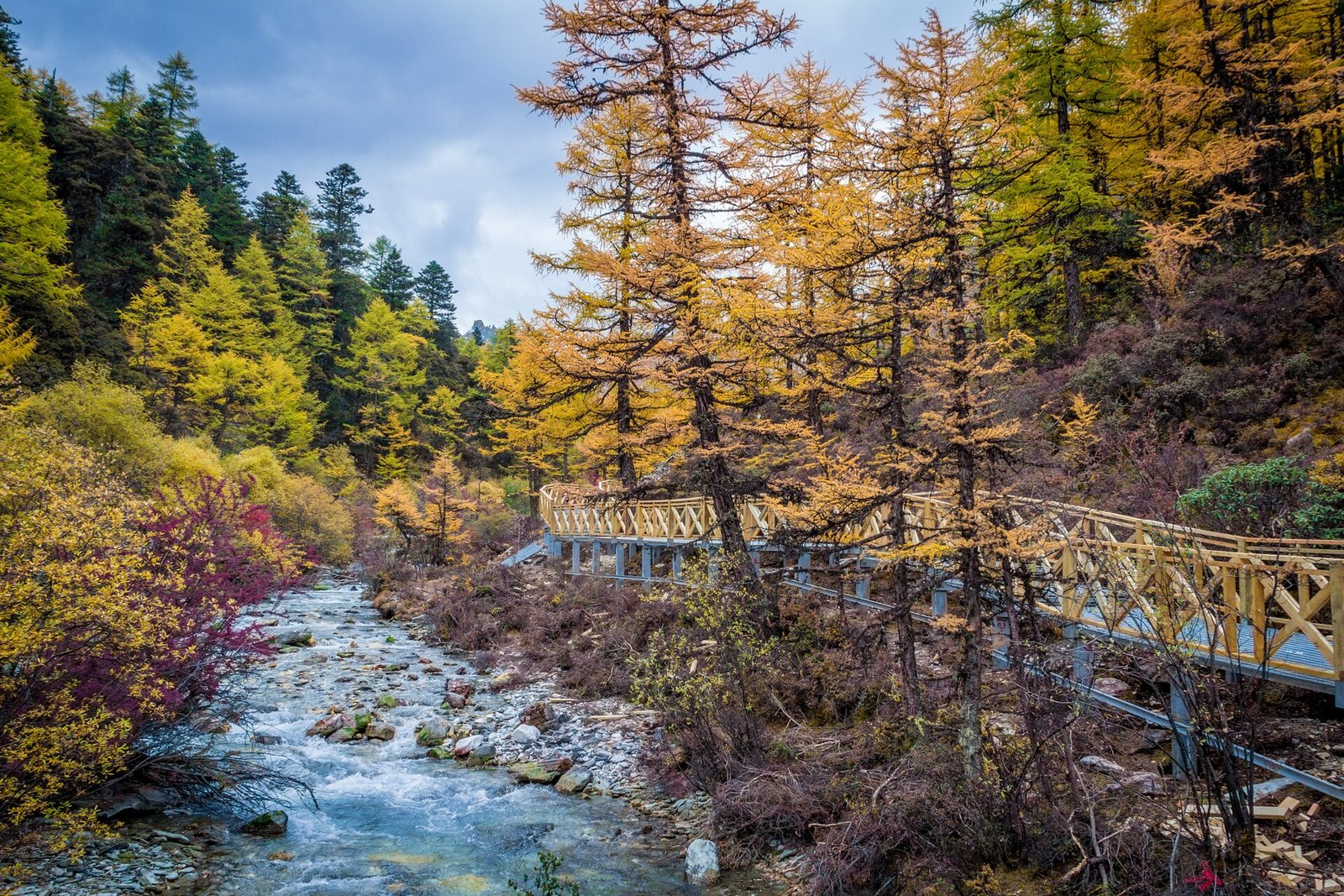
The valley has two seasons that people plan around and two that they should. Late September to late October is the famous window: the larches turn, the air is clear, the peaks are white and the light is low. It is also exactly when the current free-admission period is running, which means the last two weeks of October 2026 combine the best weather of the year with the lowest price of the decade and a 15,000-person daily cap. That combination will not repeat.
May and June are the second window: the rhododendrons are out, the snow is still on the peaks, and the valley is green rather than gold. July and August are the rainy season — the clouds sit on the peaks and the trails are muddy, though the meadows are at their most flowered. November to April is winter: the lakes freeze, some facilities close, the roads can ice, and the ticket drops to the off-season price. The mountains are arguably at their most beautiful then and the trip is the least comfortable.
Two local warnings. The plateau makes its own weather, so a forecast for Daocheng town is not a forecast for the pasture 1,250 metres above it; plan for four seasons in a day and carry a shell. And the first week of October is a national holiday, which means the 15,000 cap is reached days in advance and the buses run full.
Where to sleep, by altitude
There are three places to sleep for Daocheng Yading filming locations and they differ by more than price. Choosing between them is choosing how much altitude you want overnight.
Shangri-La town (Riwa), ~2,900 m. The base at the park gate, 34 km from Aden village, with the widest range of hotels, the most restaurants and the lowest sleeping altitude. If you flew in, this is where you should be. The trade-off is that you join a bus queue in the morning rather than walking out of your room into the valley.
Aden village, 3,900–4,060 m. Inside the park, on the bus route, with guesthouses looking at the peaks. It saves you the morning transfer and gives you sunrise and sunset. It also means sleeping at nearly 4,000 metres, which is above the altitude at which many people sleep badly even when they feel fine during the day. Two nights here after a flight is how people end up leaving early.
Daocheng town, 3,750 m. The county capital, an hour from the airport, 75 km or so from the gate. Useful for a late arrival or an early flight, not a base for the park. It has the most services of the three and the least reason to stay.
| Base | Altitude | Best for | Cost of the choice |
|---|---|---|---|
| Shangri-La town | ~2,900 m | Anyone who flew in; families; first visit | Morning bus queue; no sunrise in the valley |
| Aden village | 3,900–4,060 m | Second visit; photographers; people who acclimatised on the road | Sleeping 1,100 m higher than the alternative |
| Daocheng town | 3,750 m | Late arrival, early departure, winter | 75 km from the gate |
Booking, limits and the queue
Reservations are made under your real name, through the operator’s official mini-programme or a partner platform, and the daily ceiling is 15,000. In the last week of a free-admission period, and on public holidays, that ceiling is reached days ahead. Book three to seven days out, and do not assume that a hotel booking gets you in. Payment and identity apps are worth sorting out before you arrive — see paying in China and the visa guide.
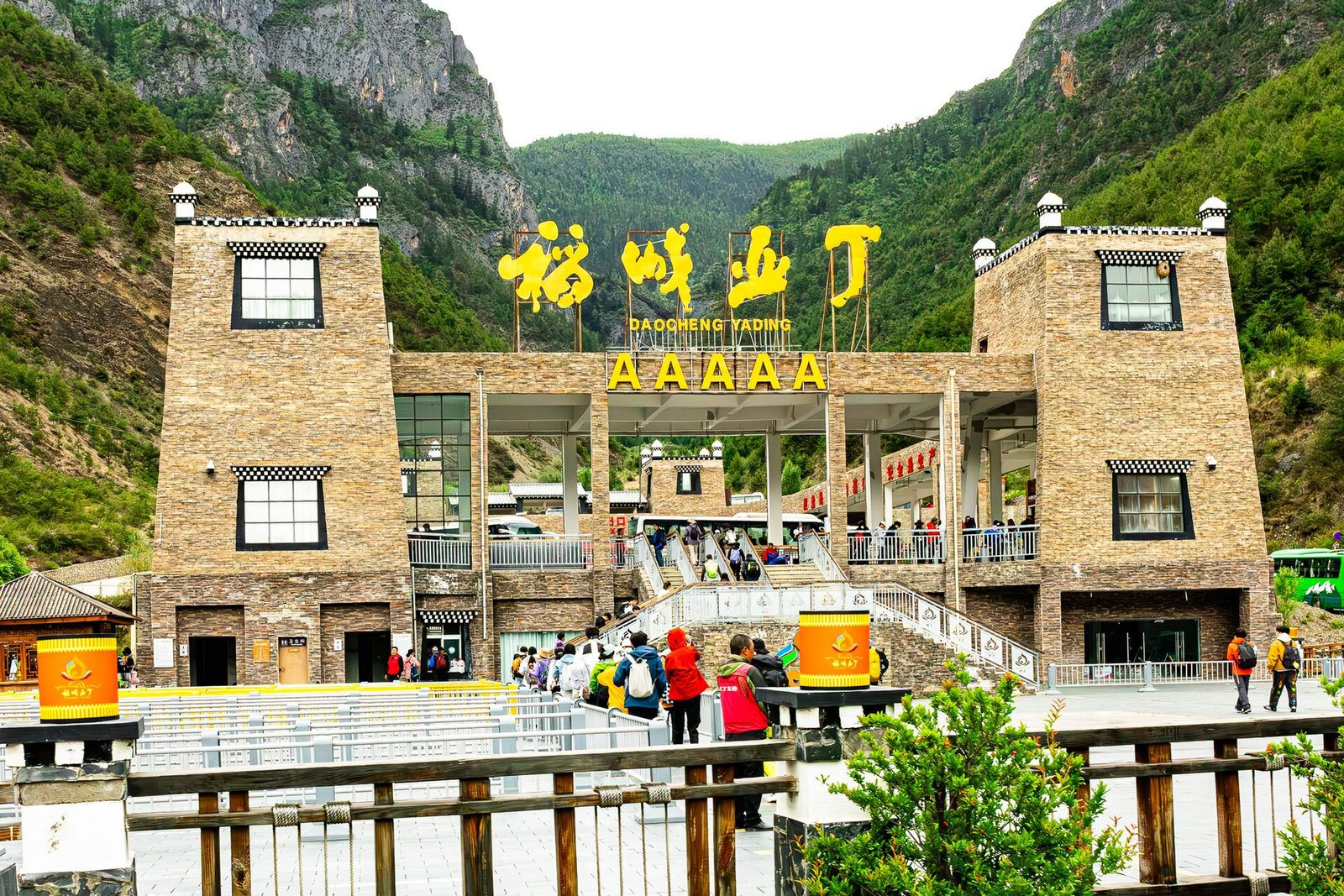
On the day, the mechanics are these. The visitor centre is where every vehicle stops; you cannot drive to the valley floor. From the car park it is about ten minutes’ walk across the square to the bus loading point, with steps. The bus takes 50 to 60 minutes over 38 km, limited to 20 km/h on the bends, climbing from around 3,000 to 3,800 metres, and it stops at Aden village on the way. First bus up at 7:10 in peak season, last at 17:00; first bus down at 8:30, last at 19:00.
Three things to carry that people forget: water (the air is dry and you will not notice how much you are losing), sun protection (4,600 metres with a clear sky is not a gentle sun), and cash or a working payment app for the insurance and anything the buses do not cover. And one thing to leave behind: the assumption that a free ticket means an uncrowded park. It means the opposite.
One day or two
One day is enough to see the valley and not enough to walk it. If you have one day: first bus, cart to Luorong Pasture, an hour there with the three peaks, walk back down to the monastery and Pearl Lake, out by late afternoon. You will have seen the film location and the best view in the park, and you will not have been above 4,150 metres.
Two days is the right answer for most people, and the split should be short route then long route. Two days also lets you absorb a bad weather day, which on this plateau is not a hypothetical.
Three days is for people who want the outer kora, or who want to photograph the peaks at both ends of the day from inside the park. It is a different trip, and it requires either a body that has acclimatised slowly or a tolerance for discomfort.
What we would not do is the thing that package tours sell hardest: land in the morning, drive up, walk to Five Colour Lake the same afternoon, fly out the next day. It is technically possible. It is also the itinerary that produces the most abandoned afternoons and the fewest good photographs.
How we checked this
The altitudes of the named places inside the park — the monastery at 3,900, Pearl Lake at 4,100, Luorong Pasture at 4,150, Milk Lake at about 4,500, Five Colour Lake at about 4,600, and the three peaks at 5,998.5, 6,033 and 5,951.3 — come from the operator’s own site, page by page. So does the description of the three peaks as the 三怙主 and the statement that Jampelyang is the highest point in the county. The county’s altitude of 3,750 metres, described as the fourth-highest county seat in Sichuan, comes from the Daocheng County People’s Government website.
The airport figures — 4,411 metres, opened 16 September 2013, 4C, runway 4,200 metres, about 50 km by road from the county town — come from the Civil Aviation Administration of China’s notice on the 2012 test flight and from subsequent state-media reporting, including a 2025 New Year feature that repeats the 4,411 figure and describes the terminal’s oxygen and blanket provision.
The 2026 pricing story is documented in an unusual amount of detail because it became a national news event. The dates and the sequence — the April ministry criticism, the 15 May encounter, the 24 May video, the 25 May disciplinary notice and simultaneous 20 per cent discount, the 28 May prefecture notice, the 29 May provincial inspection team, the 10 July rectification measures, the 1 August to 31 October free admission — are consistent across state media, provincial media and the trade press. The 170,000 free-shuttle figure and the 2013–2022 road investment of about 18.28 million yuan come from the operator via the 10 July reporting. The revenue figures for 2023 and 2025 come from prefecture and industry reporting.
The 2014 environmental assessment line about no toll station comes from the county government’s own disclosure for the road upgrade, as cited in the reporting on the dispute. The provincial road designation comes from the Sichuan road network plan for 2022–2035. The commentary is attributed: the China Tourism Academy’s Yang Jinsong and Xinhua’s reporters, both published in May and June 2026.
Five things we could not establish, and have marked rather than smoothed over. One: the price after 31 October, because the cost audit and the price hearing had not concluded; we have said so in the text rather than guessing. Two: the exact boundaries of the off-season ticket, because the operator’s ticket page and its bus timetable use different date ranges that do not quite meet. Three: the electric cart’s original price, quoted as 70 yuan in the official rectification material and 80 yuan in older ticketing pages, so we have given both. Four: the exact quota and process for private-car reservations, which had not been published. Five: the Joseph Rock quotation that Chinese tourism copy attributes to him, which we could not source and therefore did not use.
One thing we deliberately did not do is claim a shot-by-shot correspondence between the film and the meadow. The proposal scene is documented at Luorong Pasture; anything finer than that would be inference.
Common questions
Was Daocheng Yading used as a filming location?
Yes, once, and it matters. I Belonged to You (从你的全世界路过), directed by Zhang Yibai and released on 29 September 2016, shot its proposal scene at Luorong Pasture at 4,150 metres. Beyond that there is no official filmography, and the additional titles that appear in some lists cannot be verified to a named location.
Is the village in I Belonged to You in Daocheng?
No. The street scenes and the radio station that the film presents as Daocheng were shot in Qingde township, Xiande village, in Xiangcheng County — the next county south. Only the meadow scene is in Yading. The film cuts between the two as if they were adjacent; they are separated by a mountain pass.
How high is Daocheng Yading, and will I get altitude sickness?
The airport is at 4,411 metres, the park gate town at about 2,900, the highest point of the standard walk at about 4,600. Altitude illness is common here precisely because the flight is short: you go from about 500 metres to 4,411 in 65 minutes, which is the fastest large altitude gain available to a tourist in China. The single most effective precaution is not to go up on arrival day — descend to the town, sleep, and start the park the following morning.
How much does Daocheng Yading cost?
As of 17 October 2026, nothing for admission, nothing for the shuttle bus and nothing for the electric cart: admission has been free for all visitors from 1 August to 31 October 2026, and the transport fees have been suspended since 29 May 2026. The normal prices are 146 yuan for peak-season admission, 120 yuan for the shuttle and 70 to 80 yuan for the cart. Insurance at 10 yuan is optional. The price after 31 October had not been published at the time of writing.
Do I need a reservation if admission is free?
Yes. Entry is by real-name reservation through the operator’s mini-programme or a partner platform, capped at 15,000 people a day, and there are no same-day tickets at the gate. In the final weeks of a free period and around public holidays the cap fills several days ahead.
How do I get to Daocheng Yading from Chengdu?
Fly: about 65 minutes to Daocheng Yading Airport, then roughly three and a half hours door to door including the road transfer. Drive: about 800 km on the G318 southern route via Kangding, Xinduqiao and Litang, two days. Coach: 22 to 24 hours over two days. There is no train.
Which walk should I do?
The middle one, to Luorong Pasture, if you have one day — it is the film location and the best view for the least climbing. The long route to Milk Lake and Five Colour Lake if you have a second day and no symptoms. The short route to Pearl Lake on your first afternoon, because it tops out at 4,100 metres and tells you how your body is behaving before you commit to 4,600.
Your next move
If the thing that interested you here is the relationship between a place and the film that borrowed it, the closest pages on this site are Wuzhen, where the drama arrived after the town was already famous, and Zhangye, where the government publishes a filmography because it needs one. Wuyuan is the third version of the same question: a place whose villages were filmed so often that the filming became the economy. If you want the opposite kind of destination — a landscape with almost no screen history at all — Dunhuang and Zhangjiajie are the two we have written about at length, and Luoyang is the one where the city itself is the set.
If what you actually want is more of western Sichuan, Sichuan is where you will land, and Chengdu is where you will land in it and is worth two days on its own; the Untamed guide is the page that first put this region on our map, and it mentions Daocheng in its travel notes. For the wider picture, the regional index lists Sichuan alongside the other provinces we cover, and the drama index has every series we have written about, the route planner will build the line for you, the map view shows where everything sits, and the open dataset has all of it in one table if you would rather compare than browse.
Three pages to read before you book: first time in China, because the reservation systems are the part that trips people up; how many days you need, because Yading is a two-day place pretending to be a one-day stop; and the best time to visit China, because the last two weeks of October are not the same as the first two. Dali is the other high-altitude slow trip we cover, and it is a gentler introduction to the plateau than this one. If we have something wrong — and with prices this unstable, we will eventually — the corrections page is where to say so.
Last verified
Sources: Daocheng Yading scenic area official site, “About Yading” (cn.yadingtour.com/strategy/about) — the Tibetan name Nianqing Gongga Risong Gongbu and the meaning of Yading as “the place that faces the sun”; the national nature reserve and provincial scenic area status; the 1,145 high-altitude lakes; the description of the reserve as “the last Shambhala”; the altitudes of Chonggu Monastery at 3,900 m, Pearl Lake at 4,100 m, Luorong Pasture at 4,150 m, Milk Lake at about 4,500 m and Five Colour Lake at about 4,600 m; and the three peaks — Chenresig 5,998.5 m, Jampelyang 6,033 m described as the first of the three and the highest point in Daocheng County, and Chana Dorje 5,951.3 m · Daocheng Yading scenic area official site, individual FAQ pages for Chenresig, Jampelyang, Chana Dorje, Chonggu Monastery, Pearl Lake, Five Colour Lake, Milk Lake and Luorong Pasture — the bodhisattva identities, the directions of the three peaks, Chonggu Monastery as a Gelug house founded in the Yuan dynasty and standing for close to 800 years, and Pearl Lake as the lowest of the sacred lakes. The Jampelyang FAQ page gives 5,958 m, which conflicts with the 6,033 m on the main page; both are reported in the article and the conflict is stated rather than resolved silently · Daocheng County People’s Government, “Daocheng in brief” — the county seat at 3,750 m, described as the fourth-highest county seat in Sichuan; 7,323 km² of county area; a resident population of 34,000 at the end of 2023, of whom about 92 per cent are Tibetan; and a vertical range within the county of more than 4,000 m · Civil Aviation Administration of China, notice of the successful test flight at Daocheng Yading Airport, 26 November 2012 — the elevation of 4,410 m, the airport as the highest civil airport in the world, and the requirement that aircraft hold a special airworthiness approval for the airfield. The 4,411 m figure, the opening date of 16 September 2013, the 4C classification and the runway length of 4,200 m are consistent across CAAC and state-media reporting, including a 2025 New Year feature describing the blankets, hot water and oxygen provided in the terminal · Garze Prefecture Development and Reform Commission, notice of 28 May 2026 — suspension of the transport service charges for the scenic area shuttle bus and the electric cart from 29 May 2026 · Garze Prefecture task force for the rectification of Daocheng Yading, “Notice on the upgrading of the clean-up of problems at the Daocheng Yading scenic area”, 28 May 2026 — the cost audit of shuttle pricing, two additional viewing platforms and bus stops, and the optimisation of seven existing stops · Daocheng Yading scenic area booking mini-programme, notice of 25 May 2026 — the shuttle bus reduced from 120 to 96 yuan and the electric cart from 70 to 56 yuan, a 20 per cent discount on single and sectional tickets as well, described as a measure “to give back to the many visitors for their care and support” and running until the fares were formally adjusted · Rectification measures announced 10 July 2026, reported by China Youth Network and provincial media — reservation-based access for private cars with numbers capped and priority for residents and local businesses; the commitment to complete a cost audit, hold a price hearing and publish the result; free admission for all domestic visitors from 1 August to 31 October 2026; permanent free admission for each year’s university and high-school entrants; more than 170,000 visitors carried free between 29 May and July; and about 18.28 million yuan invested in the road by the scenic area administration between 2013 and 2022 · Daocheng County People’s Government, environmental assessment disclosure for the Renya road upgrade between Shangri-La town and the Yading scenic area (2014) — the statement that “after completion the project will not have a toll station”, quoted in the article as the documentary basis for the dispute over charging on the S462 · Sichuan Provincial Transport Department and Development and Reform Commission, “Sichuan ordinary provincial road network layout plan 2022–2035” — the designation of the 38 km road to Aden village as provincial road S462; transfer of the road to the Garze highway maintenance centre, Daocheng branch, in January 2023; and the 2026 minor-works contract of more than 3.23 million yuan · Commentary published May and June 2026 — Yang Jinsong of the China Tourism Academy, on the difference between a shuttle service justified as environmental protection and the conversion of a through public road into a paid product, and Xinhua reporters Wu Guangyu and Hu Xu on the ticket-economy model. Both are attributed by name in the article · On-site reporting, 2 June 2026 — the 38 km shuttle route from the visitor centre to Zaguanbeng, the 20 km/h limit on bends, the climb from about 3,000 m to 3,800 m, and a journey time of 50 to 60 minutes; bus timetables for the peak season of 15 April to 25 November with the first bus up at 7:10 and the last at 17:00, and the first bus down at 8:30 and the last at 19:00; the daily capacity of 15,000 with real-name booking and no same-day tickets at the gate; peak-season admission of 146 yuan and off-season admission of 120 yuan; the optional 10 yuan insurance · 1905 Film Network and Douban entries for I Belonged to You (从你的全世界路过) — directed by Zhang Yibai, written by Zhang Jiajia from his own collection, released in mainland China on 29 September 2016, 113 minutes, starring Deng Chao, Bai Baihe, Yang Yang, Zhang Tian’ai, Yue Yunpeng and Du Juan; the English title I Belonged to You · Chinese location breakdowns of I Belonged to You — the proposal scene at Luorong Pasture in the Yading scenic area, and the street scenes and radio station shot in Qingde township, Xiande village, Xiangcheng County. Used in the article to separate the meadow, which is in Yading, from the village, which is not · Baidu Baike entry on the 15 May 2026 Daocheng Yading shuttle-bus charging incident — the fullest single chronology of the dispute, including the 15 May encounter, the 24 May video, the 25 May disciplinary notice and discount, the 28 May prefecture notice, the 29 May provincial inspection team, the 10 July measures, the history of the road from the villagers’ 300,000-yuan Renya road to its 2022 provincial designation, and the revenue figures of 257 million yuan in tickets and transport against 2.2 billion yuan in total tourism revenue in 2023, and more than 120 million yuan in bus revenue in 2025 at 120 yuan a head · Wikimedia Commons — photography, credited in the captions and in the media library
Spotted something out of date? Email us — or read how corrections work. We check every report against the source and update the page.
Ready to plan it? Turn the dramas you have watched into a day-by-day route with the C-drama route planner.
Not sure where to start? Take the drama-city quiz — seven questions, one city, and a route waiting at the end.