
Every drama guide on this site ends with an itinerary, and every one of them assumes you have already decided how long you can travel. This page is the one that answers the question underneath all of them: given the time you actually have, which dramas you can realistically cover on a C-drama filming location trip — and what it will cost?
The short answer: Five days gets you one drama done properly. Seven days gets you one drama plus a second region. Ten days is the first length at which a multi-province trip stops feeling rushed. Fourteen days lets you follow three or four different shows with room to breathe. Anything under five days means picking a single studio and staying there — which is a perfectly good trip, just a different one.
The real variable on a C-drama filming location trip is not days — it is transfers
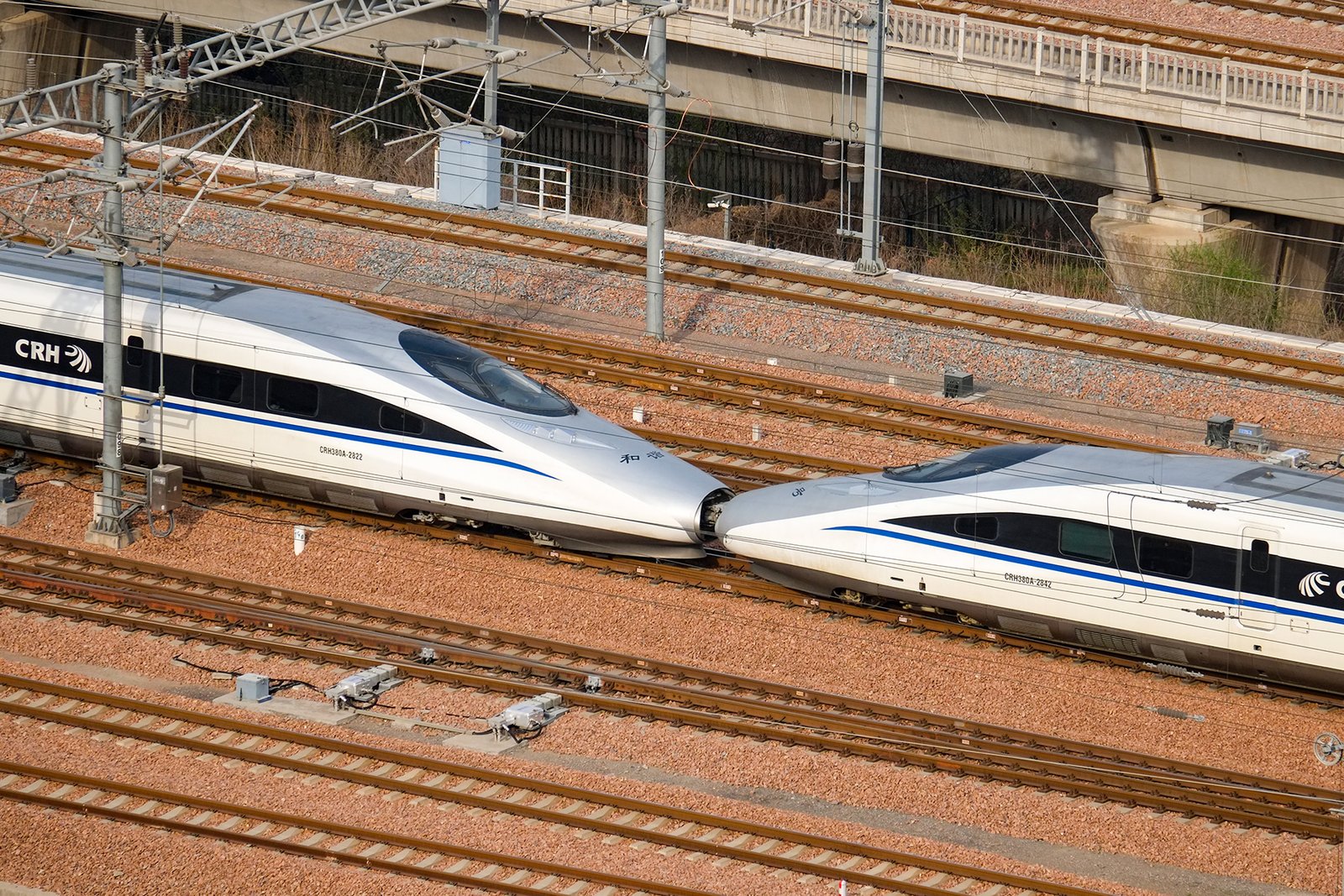
Before the plans, one thing has to be said, because it is what actually decides how much you see. The number of days matters far less than the number of times you move. Every time you change city you lose most of a day to the transfer: packing, checking out, getting to a station, riding, getting to the next hotel, checking in. On a high-speed rail network that is genuinely excellent, that is still three to five hours gone, plus an hour of padding on each side.
So the practical rule is this: a stop needs two nights to be worth making. One night, and you spend more time arriving and leaving than seeing anything. Two nights, and you get one full day on the ground. That single rule explains almost every itinerary on this site — which is why the Hengdian guide suggests two days, the Dali guide four, and the Zhejiang route five.
Which means the honest way to plan is to count your transfers first: take your total days, subtract one full day for each city change, and see what is left. The four plans below are already built that way.
Five days: one C-drama filming location trip, done properly
Five days is the floor for a trip that feels like a trip. It is enough for exactly one of three things, and the choice matters more than any other decision here.
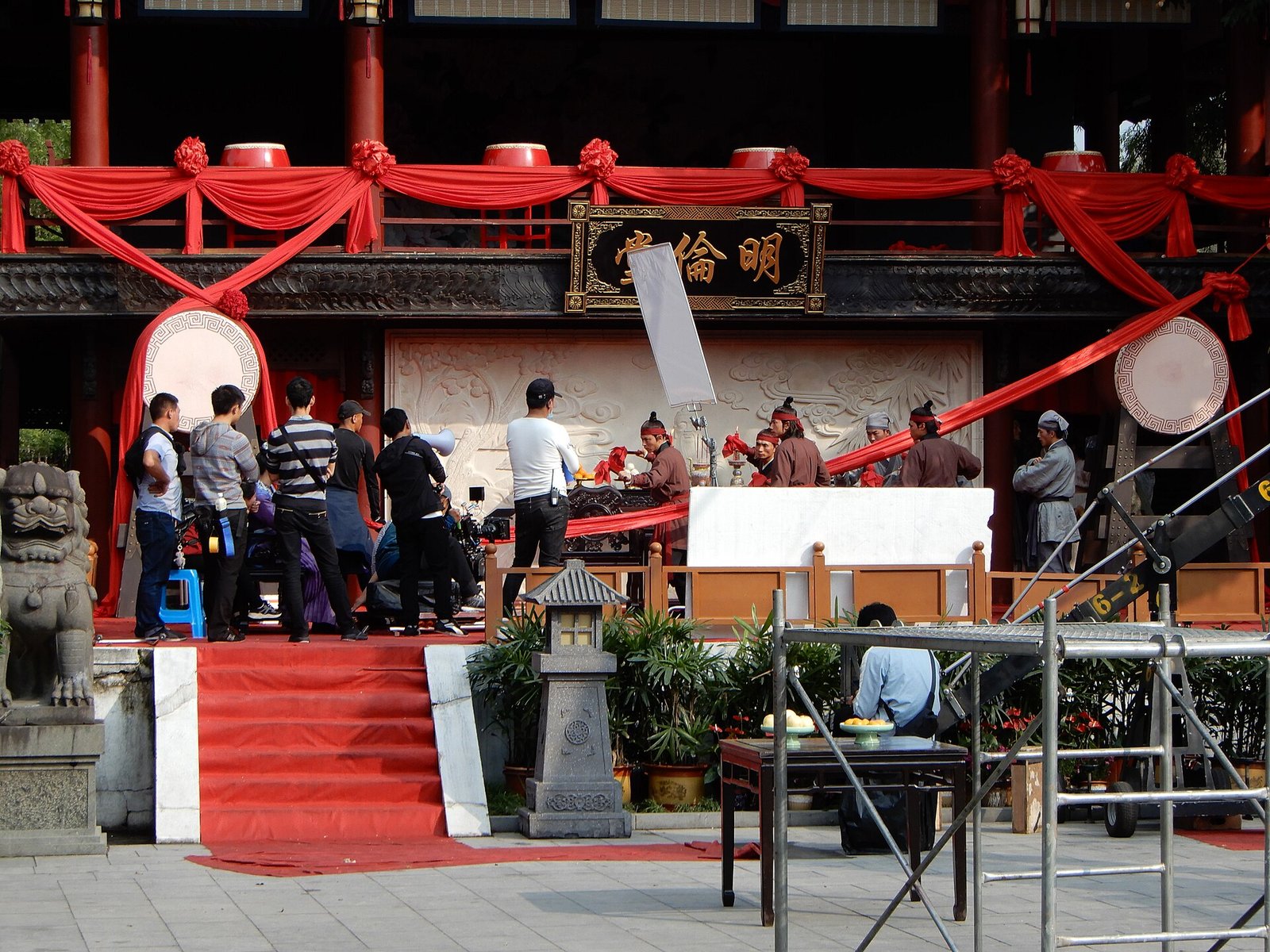
Whisper of the heart / Wikimedia Commons, CC BY-SA 4.0
| Option | Where you go | What it is | Read next |
|---|---|---|---|
| The studio trip | Hengdian, Zhejiang | The single richest set-jetting stop in China — 30-plus standing sets, the place most period dramas are actually shot | Hengdian guide |
| The landscape trip | Dali and Shaxi, Yunnan | Real scenery, slow travel, the easiest trip to enjoy even if you are not a hardcore fan | Dali guide |
| The city trip | Shanghai | Urban filming locations plus a working backlot, and the most comfortable base for a first visit | Shanghai guide |
Pick one and go deep. Five days in Hengdian and its surroundings beats five days split across three provinces by a wide margin — you will see more, spend less time in transit, and actually get the golden-hour light that makes the photographs worth taking.
Typical cost on the ground: roughly ¥2,500–4,000 (about US$350–560) for five days excluding international flights, based on the figures in the individual guides. Hengdian is the cheap end for hotels and the expensive end for tickets; Yunnan is the opposite.
Seven days: one drama plus a second region
Seven days is where you can add a genuinely different second stop without wrecking the pace. The trick is to add a region that is near your first one, so the transfer is short.
| Combine | Why they pair | Transfer |
|---|---|---|
| Hengdian + Xiangshan | Both Zhejiang studios, deliberately different — one inland and industrial, one coastal | Rail via Ningbo, a few hours |
| Hengdian + Jinyun Xiandu | Studio plus real landscape — the constructed world, then the actual cliffs period dramas borrow | Rail via Jinyun West |
| Beijing + Shanghai | The two cities that play themselves; both have studio layers as well as real locations | High-speed rail, ~4.5 hours |
| Xiangyang + Duyun | The two halves of Joy of Life and The Untamed — Tang City and the Guizhou mountains | Long rail leg; the least convenient pairing here |
The best-supported seven-day version is the Zhejiang pair, because the rail connections are short and the two stops complement rather than duplicate each other. Our five-day Zhejiang film route covers Hengdian, Xiangshan and Jinyun; add two days at the front or back and you have a comfortable week.
Typical cost on the ground: roughly ¥3,500–5,500 excluding international flights.
Ten days: the first length that is not rushed
Ten days is a real threshold. It is the point at which a three-stop trip stops feeling like a logistics exercise. You can do one studio properly, add one landscape, and still keep a day free to absorb a delay — which on a trip built around trains is not a luxury, it is insurance.
The strongest ten-day shape for this site’s readers is a Zhejiang–Hubei triangle: Hengdian (the studio heart) → Xiangshan or Jinyun (the landscape) → Xiangyang and its Tang City (the other half of Joy of Life). That covers the two biggest period dramas on the site with a single itinerary, and every leg is on high-speed rail.
A second ten-day shape, better for readers who prefer cities: Beijing → Shanghai → Hengdian. Both cities play themselves, both have studio layers, and the rail down to Zhejiang is one of the most frequent lines in the country.
Typical cost on the ground: roughly ¥5,000–8,000 excluding international flights. The hotel line climbs faster than the transport line here — ten days of mid-range accommodation is the biggest single number in the budget.
Fourteen days: three or four dramas
Two weeks is enough to treat this as a proper China trip rather than a single pilgrimage, and it is the length at which you can follow several shows without short-changing any of them. It also gives you room to go somewhere that is not directly a filming location — the Great Wall, Xi’an, a Yangtze city — which most readers find they want by day ten.
A fourteen-day route that runs on rail alone: Beijing (the city and its studio layer) → Shanghai (Blossoms Shanghai and Chedun) → Hengdian (the studio heart) → Jinyun or Xiangshan (landscape) → optionally down to Xiangyang or across to Dali. That is four dramas and two kinds of landscape, with two or three nights at most stops.
Typical cost on the ground: roughly ¥8,000–13,000 excluding international flights. At this length the rail passes and the hotel choices start to matter enough to shop around — see the best-time and budget guide for how the season moves these numbers.
What a day actually costs, by category
These are the figures the individual guides already use, gathered in one place so you can build your own total. Everything is in CNY, per person.
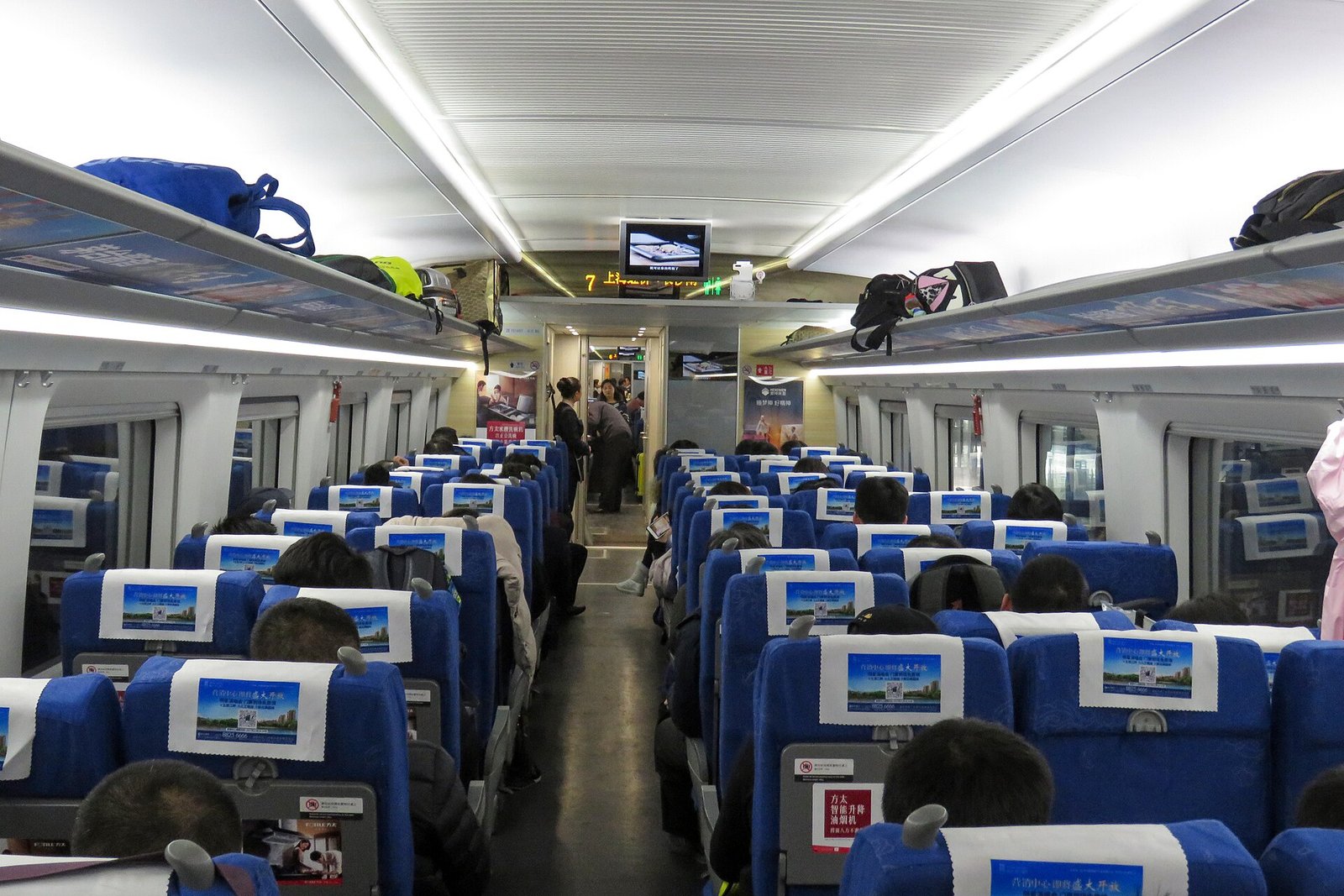
N509FZ / Wikimedia Commons, CC BY-SA 4.0
| Category | Typical cost per day | Notes |
|---|---|---|
| Mid-range hotel | 200–900 | The widest range of anything here. Shanghai is 400–900; Hengdian 250–450; Yunnan 150–400; Xiangyang 200–400 |
| Meals | 40–200 | Yunnan and Hubei at the cheap end, Shanghai at the top |
| Local transport | 15–100 | Taxis and DiDi in a studio town; metro fares in the big cities; bike rental in Dali |
| High-speed rail | 100–160 per leg | Paid per journey, not per day. Most useful legs run 1.5–2 hours |
| Ticketed filming locations | 80–240 | Highly variable — a studio combo ticket is one price for several zones, so it is not a daily cost |
Add it up and a comfortable mid-range day lands somewhere between ¥400 and ¥900 on the ground, with the city you are in mattering more than the length of the trip. Two hard costs sit outside this table: international flights, and the fact that Golden Week roughly doubles hotel rates and sells out rail seats entirely. If your dates are flexible, avoiding the first week of May and the first week of October is worth more to your budget than any other decision.
One booking constraint to plan the whole trip around: China’s high-speed rail tickets go on sale 14 days before departure — the pre-sale window is 15 days counting the day you book. You cannot book a train three months out. On a popular date the morning departures can be gone within minutes of the window opening, so the honest answer to “when do I book?” is “the morning the window opens, with an alarm set.” Everything else in your plan can be locked in earlier; the trains cannot. If you are travelling on a passport, book on 12306 with your passport number and carry the physical passport — on a passport booking it is your ticket at the gate, and if the automated gate will not read it, the staffed lane will.
Which plan is yours
- Under five days: pick one studio town and stay there. Hengdian if you want the biggest concentration of sets; Shanghai if you want the city.
- Five days: one drama, done properly. See the three options above.
- Seven days: one drama plus a near neighbour — the Zhejiang pair is the easiest to execute.
- Ten days: the Zhejiang–Hubei triangle, or Beijing → Shanghai → Hengdian.
- Fourteen days: three or four dramas across regions, with room for a non-filming detour.
Whichever you choose, sort the four pre-departure things first — entry status, mobile payment, rail booking and apps — and check the visa rules before you fix any dates, because your entry status can short-circuit the whole plan.
Common questions
Is five days enough for a first C-drama trip?
Yes, if you spend it in one place. Five days is the floor for a trip that feels worthwhile, and it is genuinely enough for Hengdian or Dali done properly. Where five days fails is when people try to see three provinces — that version needs ten.
Should I add days or add destinations?
Add days. The most common mistake is stretching a short trip across too many stops; you end up with a photo of each place and a memory of none. A seven-day trip in two well-chosen places beats a seven-day trip in four every time.
Can I do this trip without speaking Chinese?
You can, and the logistics are easier than they used to be. But prepare your phone thoroughly — translation app with an offline Chinese pack, Amap or Apple Maps, and the Chinese names of every location photographed and saved. See the apps guide. In the big cities you will be fine; in a studio town like Xiangyang, expect less English.
What about going in winter?
Winter is the cheapest season and the light is flat, and some evening performances close for the season. For a studio-heavy trip that matters less than you would think — you are indoors or among buildings much of the time. For a landscape-led trip, go in spring or autumn instead.
Does the number of dramas I want to see change the length?
Not as much as you would expect, because several popular shows share the same locations. Joy of Life, The Untamed and a long list of period dramas were all shot at Hengdian. So “three dramas” can still mean one stop — check the drama index to see which shows overlap, and you may find your list collapses into two regions.
Your next move
Ready to go?
Length is one door. The planning hub covers the rest.
Last verified
Sources: China Railway 12306 — official pre-sale rule (15 days incl. the day of booking) · China Railway 12306 — live pre-sale window lookup
Spotted something out of date? Email us — or read how corrections work. We check every report against the source and update the page.
Ready to plan it? Turn the dramas you have watched into a day-by-day route with the C-drama route planner.
Not sure where to start? Take the drama-city quiz — seven questions, one city, and a route waiting at the end.