
Hengdian World Studios is not one film set with one all-access ticket. It is a working production campus with more than ten shooting bases and ten Grade-A or Grade-B studios, alongside visitor-facing scenic areas built around different periods of Chinese history. The distinction matters: a visitor ticket covers the scenic product you choose, not an active set or every attraction in town. A major transport change came in September 2024, when the Hangzhou–Wenzhou high-speed rail line opened Hengdian Station (横店站) and a light-rail connection to the studios.
The short answer: Hengdian World Studios (横店影视城) is a working film-and-TV campus in Dongyang, Zhejiang, with five familiar core visitor zones: Qinqing Palace, Ming Qing Palace, Riverside Scene at Qingming Festival, Guangzhou Street · Hong Kong Street, and Dream Valley. Ticket orders that include any of six named scenic areas require a separate reservation; the reservation list is below. Two days is a practical starting point for several core zones. The official English site also gives overseas visitors a concrete booking route: use a mainland friend’s ID for the initial booking, then ask Hengdian’s online customer service to replace the order details with your passport details.
Last checked: 18 October 2026. The official site lists date-specific ticket products and a reservation portal for selected ticket orders. This guide avoids quoting a general adult ticket price because the publicly available tariff page contains a legacy 2019 calendar. Confirm the selected product, total price, reservation confirmation, and any filming closures before travelling.
What Hengdian World Studios actually is
It is not a theme park in the Disney sense. There are no rides in the historical zones. It is a genuine production facility — one of the largest in the world — that also sells day access to tourists, which is precisely why it looks right on camera. When a drama needs the Forbidden City, it films a full-scale replica here rather than negotiating access to the real one.
That is the thing to understand before you arrive: you are walking through working sets, not attractions built to be walked through. The upside is authenticity — the proportions, the materials, the wear. The downside is that sets get closed for shoots, and what you see on a given Tuesday is not guaranteed.
The park began in 1996, when the studio built an entire 19th-century Canton street in about three months so that director Xie Jin could shoot The Opium War. That street is still there. Everything since has been built on the same logic: a production needs it, so the park builds it, and then keeps it.
The five ticketed zones
The park is officially divided into a south area and a north area, with five ticketed zones between them. Everything else at Hengdian is either a separate attraction with its own ticket, or a hotel and restaurant district.
| Zone | Chinese | Area | Why a C-drama fan goes |
|---|---|---|---|
| Qinqing Palace | 秦王宫 | South | The great palace steps; the single most photographed backlot in Chinese television |
| Riverside Scene | 清明上河图 | South | Song-dynasty streets, bridges and market scenes |
| Dream Valley | 梦幻谷 | South | The evening zone — large-scale night shows |
| Ming Qing Palace | 明清宫苑 | North | A full-scale Forbidden City replica; white walls, grey tile, long sightlines |
| Guangzhou Street · Hong Kong Street | 广州街·香港街 | North | Republican-era Canton and colonial Hong Kong — where the park began |
Qinqing Palace (秦王宫) — the palace steps
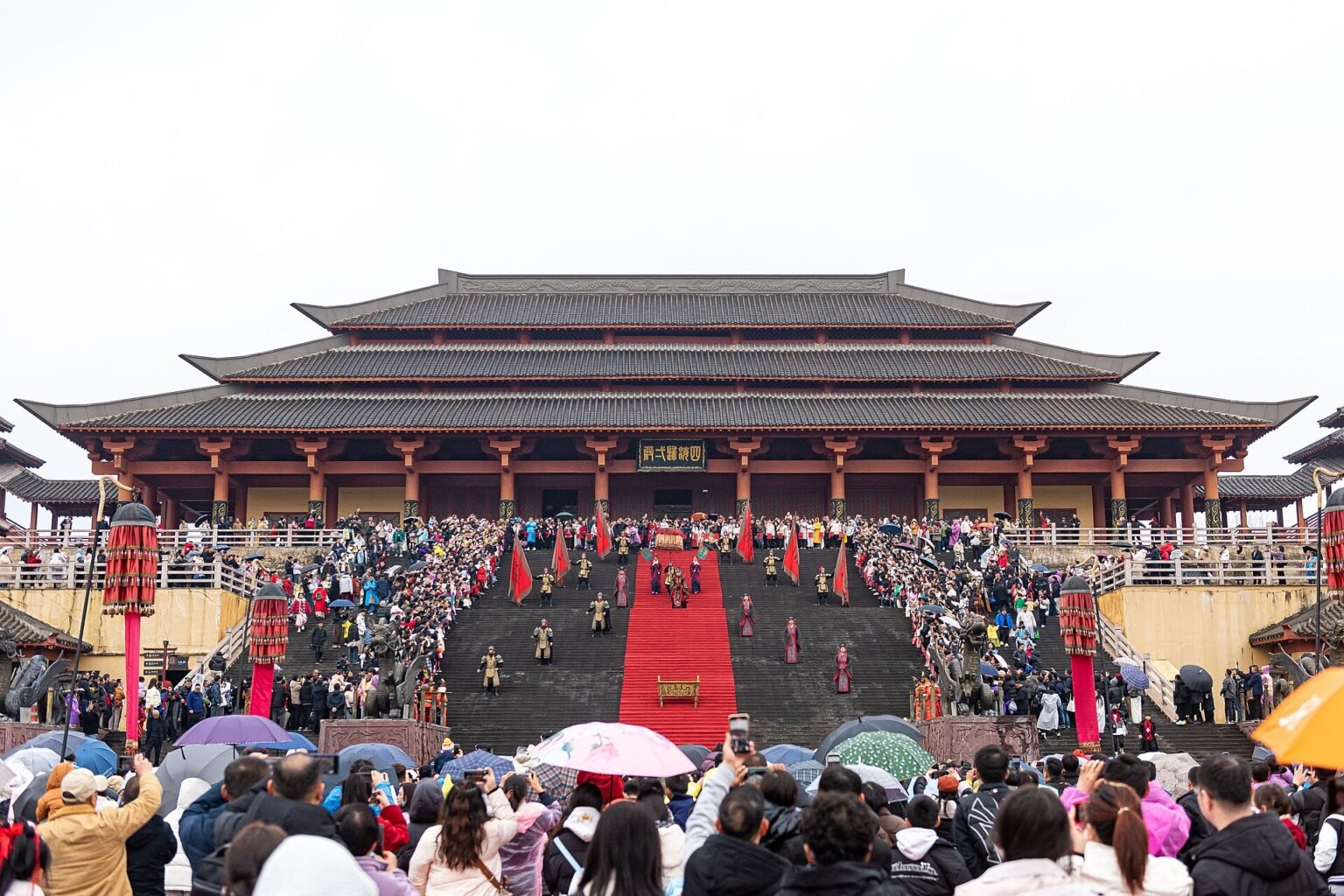
Built for Chen Kaige’s The Emperor and the Assassin and later used by Zhang Yimou for Hero, this is the black-walled palace that doubles as Koi Tower in The Untamed. The long staircase you are picturing — the one in the opening procession and the final confrontation — is here, and it is every bit as long in person as it looks on screen.
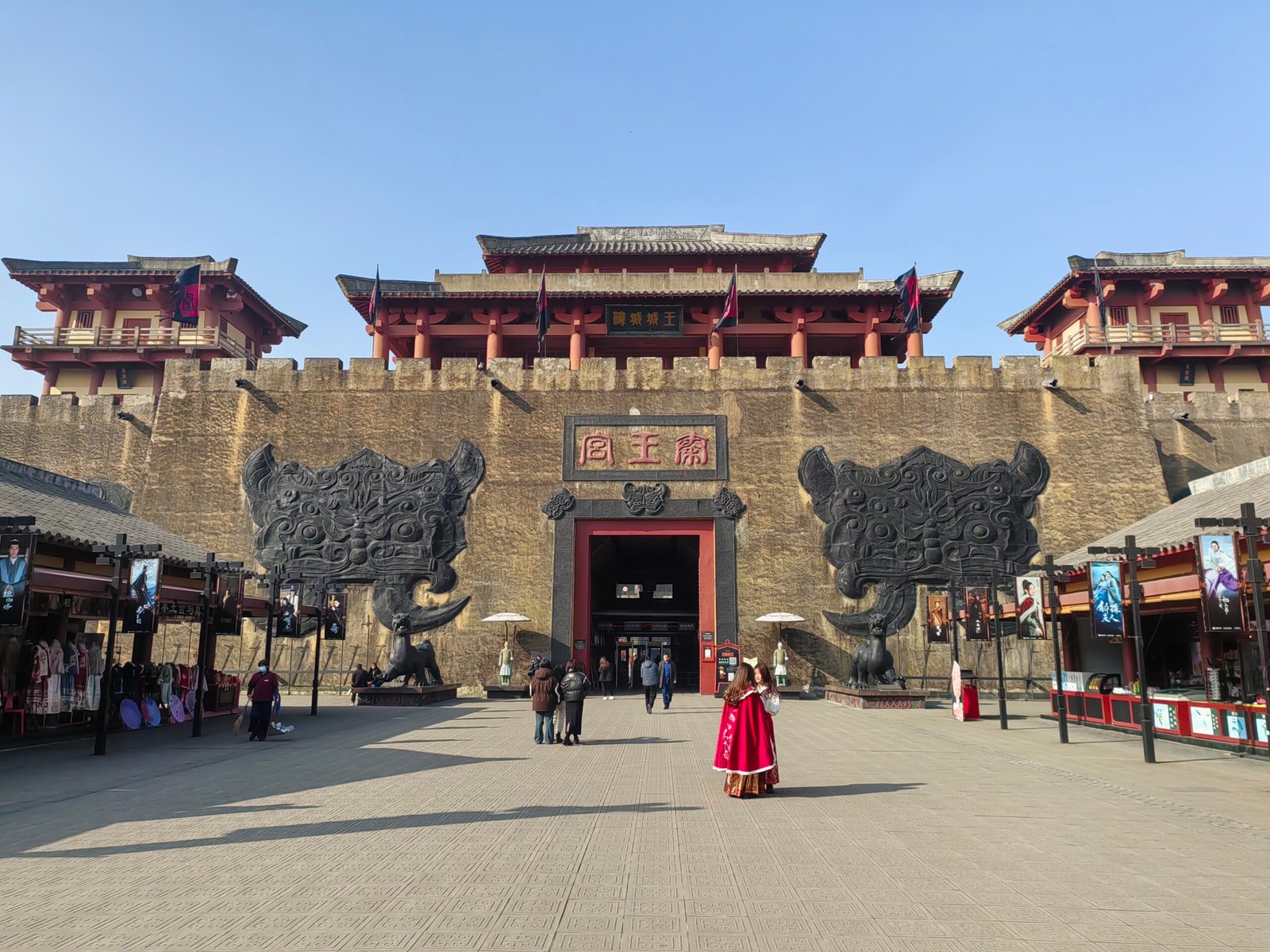
There is also a marked Untamed photo point inside this zone, which the park maintains for visitors. It is not the kind of thing that is advertised in English, so ask at the entrance if you cannot find it.
The zone also stages an “enthronement ceremony” on the great staircase — costumed performers, a red carpet laid down the centre, and a crowd three deep on both sides. It is not advertised in English, so ask at the gate for the day’s times and plan your walk through the hall around it.
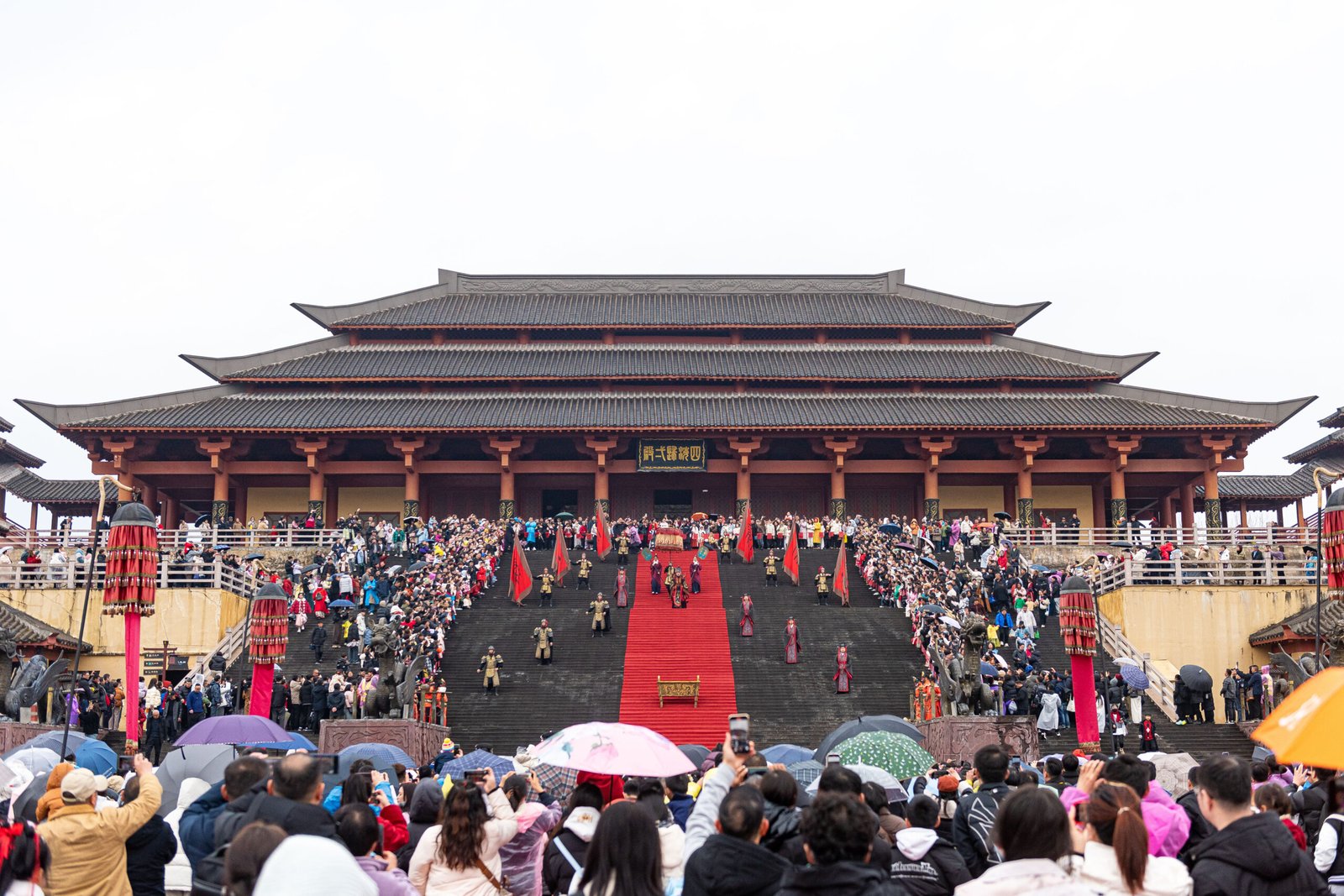
Go at opening. The steps face east and catch hard morning light, which is both the best photography window and the moment before the tour groups arrive. By 10am the same staircase is a queue.
Practical warning: the steps are steep and unshaded, with no handrail for most of the run. Wear shoes you trust.
Ming Qing Palace (明清宫苑) — the Forbidden City, rebuilt
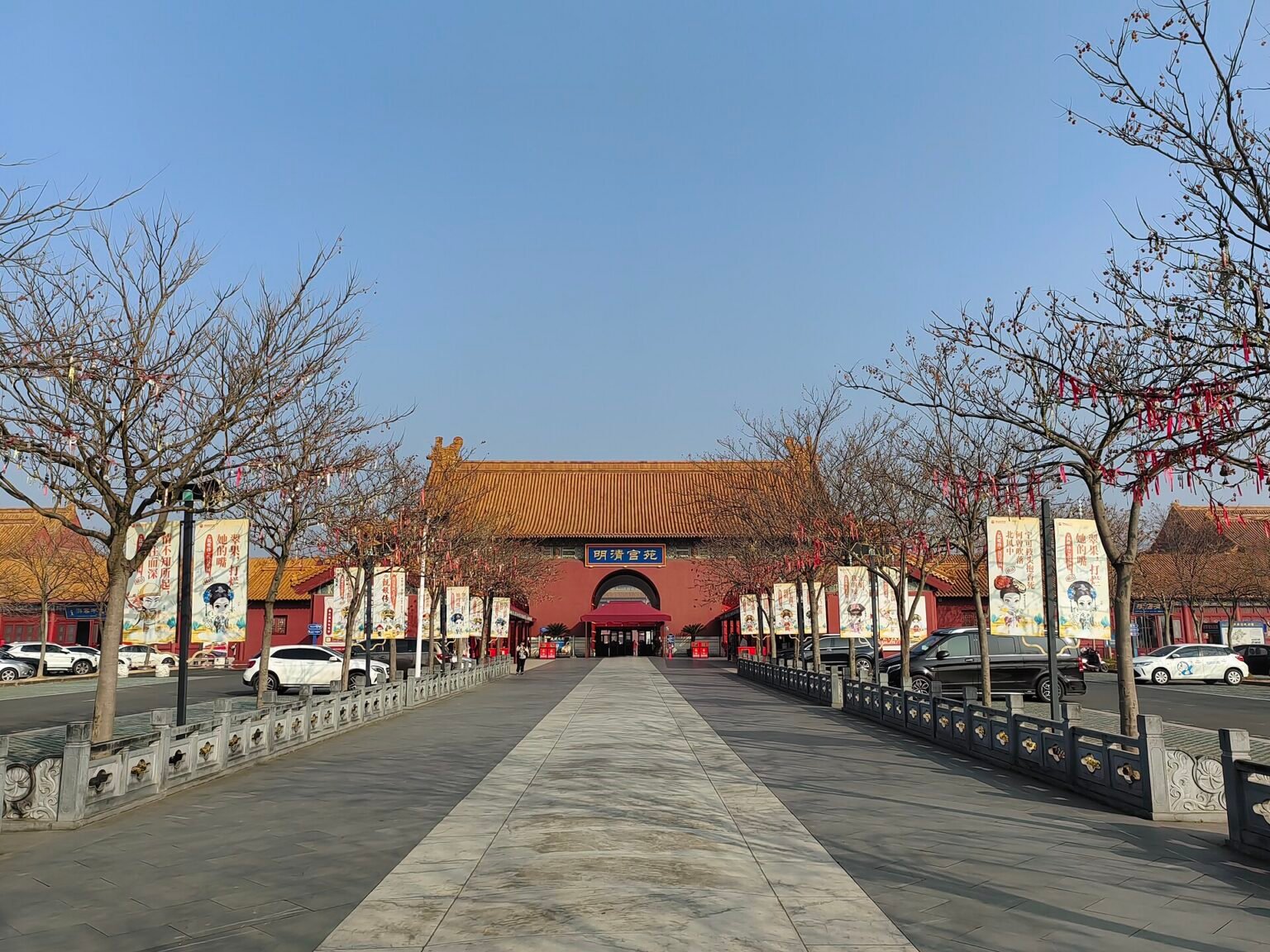
A near-complete 1:1 replica of Beijing’s Forbidden City, occupying around 1,500 mu of ground. This is why the proportions feel so authoritative on camera — they are the real ones. The palace halls, the long white corridors and the courtyard sequences in most of the big imperial dramas were shot here, and it is the single best zone for the aesthetic shots most fans actually come for.
Late afternoon, when the light goes gold and the tour buses have thinned, is when it looks most like the show. If you only have one afternoon at Hengdian, spend it here.
Riverside Scene at Qingming Festival (清明上河图) — the streets
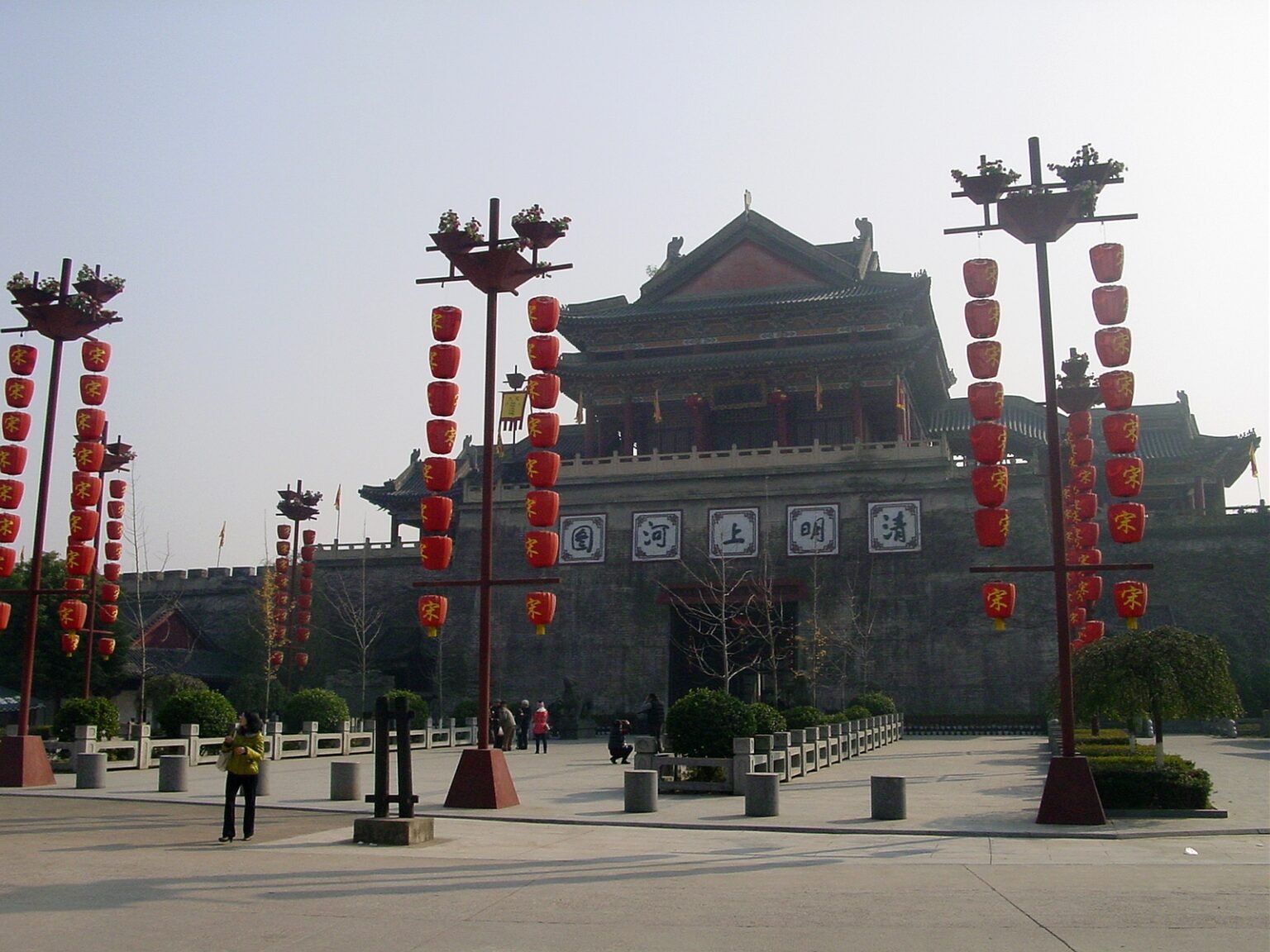
Built from the Song-dynasty scroll painting of the same name, this zone supplied the market streets, bridges and canal-side scenes that make up the “lived-in” half of a period drama — the teahouses, the crowds, the river towns. It is the most walkable of the five and the easiest to wander without a plan.
Note that sections of this zone are periodically placed under closed management for filming, including the main street area. Check the notice board at the gate.
Guangzhou Street · Hong Kong Street (广州街·香港街) — the park’s origin
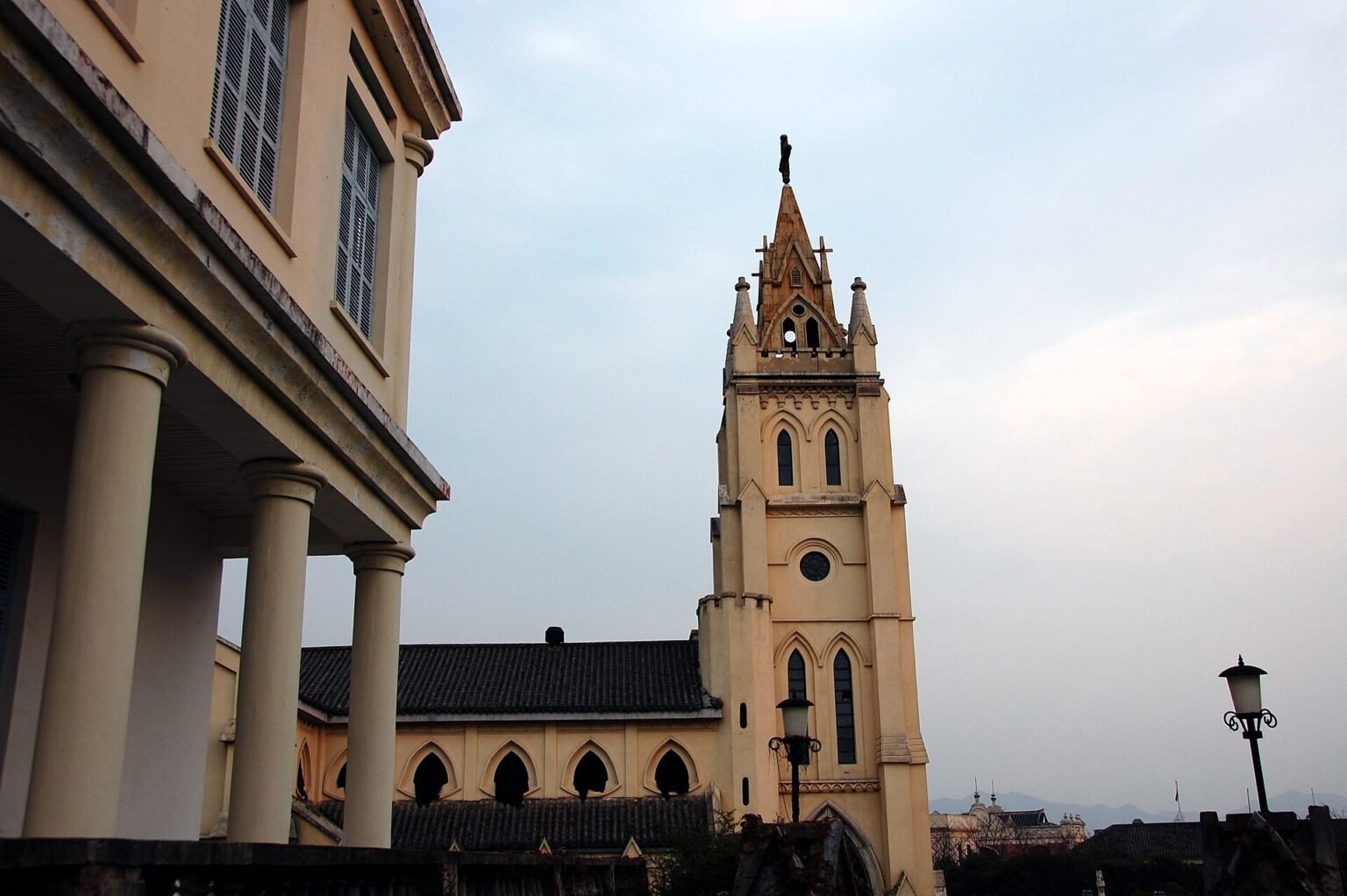
The original 1996 set, built for The Opium War. Two connected streets: a 19th-century Canton trading district and a colonial Hong Kong waterfront. If you watch Republican-era dramas, 1930s Shanghai stories, or anything with a harbour and a hotel lobby, this is where it came from.
It is also the only zone with a substantial evening life — the park runs immersive street shows here, and the zone is generally open much later than the historical ones. Some visitors report that late-evening entry is free or heavily reduced; treat that as worth asking about at the gate rather than something to plan around.
Dream Valley (梦幻谷) — the evening zone
The outlier: an evening park with large-scale stage and water shows rather than sets. It sells a separate ticket and, unlike the other four, is worth treating as optional — go if you have a third day, or if you are travelling with people who are not there for the filming locations.
Which drama was filmed in which zone
If you are chasing one show rather than the park in general, this is the table you need. Every pairing below is a place you can stand in today.
| Zone | What was filmed there |
|---|---|
| Qinqing Palace (秦王宫) | The Untamed — the Koi Tower staircase and the Jin clan’s halls. Joy of Life — the palace and court interiors. Nirvana in Fire — the court scenes and the pavilion. |
| Ming Qing Palace (明清宫苑) | The Untamed — the Cloud Recesses interiors. Story of Yanxi Palace and Ruyi’s Royal Love in the Palace — the Qing court, rebuilt one-to-one from Beijing’s Forbidden City. |
| Riverside Scene at Qingming Festival (清明上河图) | A Dream of Splendor — the Song-dynasty city streets and teahouses. The Story of Minglan. |
| Dream Valley (梦幻谷) | The Untamed — Caiyi Town, inside the Jiangnan water-town section. |
Two things follow from this. The same zone is redressed for different dynasties and different shows, which is exactly why the sets feel familiar when you arrive. And if you only have one day, Qinqing Palace plus Ming Qing Palace covers most of what The Untamed and Joy of Life fans come for — those are the two to prioritise.
The zones beyond the big five
Hengdian is bigger than the five ticketed zones, and if you are chasing a specific drama it is worth knowing what else exists:
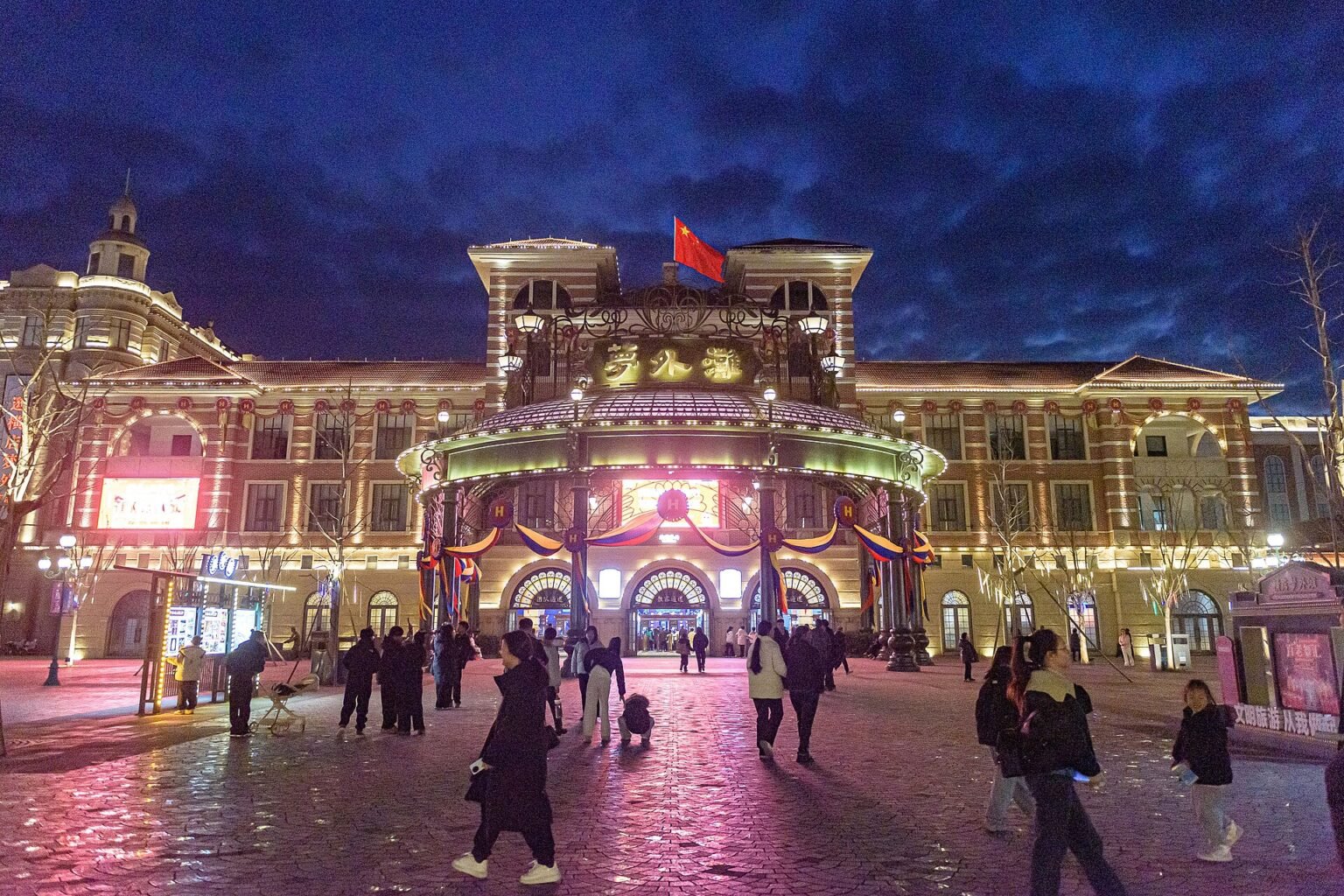
- Dream Bund (梦外滩) — a 1930s Shanghai Bund reconstruction, with its own ticket. Relevant if you are following Blossoms Shanghai-era material, though the series itself was shot in Shanghai.
- Spring and Autumn · Tang Park (春秋唐园) — an older set used across many productions; quietly one of the most recognisable backlots on the site.
- Yuanming New Park (圆明新园) — a 1:1 reconstruction of the Old Summer Palace, built at extraordinary expense and opened in phases from 2015. It is a separate attraction with a separate ticket, and it is enormous. Do not fold it into a two-day plan.
- Others — a Ming-Qing folk architecture park, a cave-temple scenic area, a Buddhist temple and a long-march exhibition park. None of these are C-drama draws. Skip them.
Tickets, areas and the reservation step
Hengdian is a menu of separately defined scenic products, not one pass that opens every attraction. The official homepage advertises single-area tickets and one-, two-, or multi-day combinations. Match the product name to the exact scenic areas on your itinerary; other attractions in Hengdian may be separate products.
| Check before paying | What the official pages say |
|---|---|
| Which places are included? | Use the product’s included-area list. Do not assume Dream Bund, New Yuanmingyuan, or another attraction is covered by a core-zone combination. |
| Does this order need a separate reservation? | The official scenic-area reservation portal says a reservation is required for ticket orders that include Dream Valley, Ming Qing Palace, Guangzhou Street · Hong Kong Street, Qinqing Palace, Riverside Scene at Qingming Festival, or Dream Bund. |
| Who has to reserve? | Use the identity details on the ticket order. The official portal says when an order contains several visitor ID numbers, submit a reservation separately for each ID. |
| What is the current price? | Choose your date and areas in the official booking flow and check the payable amount there. The public tariff page still exposed by the operator contains a 2019 holiday calendar, so it is not a current general price list. |
Do not stop after buying the ticket. If your order includes any of the six areas above, complete the separate reservation for each visitor ID, and keep the confirmation with your booking. The official reservation page lists 4009-0579-77 for visitors whose phone cannot complete the process.
One current product example, not a general admission rate: when checked on 18 October 2026, the official ticketing page listed a 2026 one-adult/one-child annual card at ¥799, valid for 365 days from purchase, limited to one entry per scenic area per day, and unavailable during Golden Week. Confirm the product remains on sale and read its terms before relying on it.
A sightseeing ticket is not a filming permit. The operator lists visitor scenic areas separately from production facilities. An admission ticket is not permission to enter a restricted set or film commercially.
For overseas visitors, follow the passport booking steps below before submitting a ticket order.
Getting there
The current rail-first route
The Hangzhou–Wenzhou high-speed railway began operating on 6 September 2024. Hengdian Station is on the route, and a Zhejiang-government report says visitors can reach Hengdian World Studios from the station by light rail in about nine minutes. Treat that as the connection time reported at opening, not a promise about today’s service interval or last train.
| Route choice | Practical note |
|---|---|
| Hengdian Station (横店站) | Use the current train search for your travel date, then confirm the station-to-park light-rail connection and stop at the station. |
| Hangzhou West or Yiwu | Both may fit an itinerary depending on train availability and origin. Compare the full rail journey in 12306 rather than assuming Yiwu is the only gateway. |
| Taxi / ride-hailing | Useful for hotels, other scenic areas, or when rail service does not match your arrival time. Check the in-app fare estimate and destination gate. |
Light-rail operating hours, frequency, and fares can change. Check the operator’s current service notice before booking a late show or an evening return. Hengdian’s scenic areas are spread across town; confirm the gate you need, not just the name “Hengdian World Studios.”
Where to stay
Inside Hengdian town, or immediately adjacent to it — not in Dongyang city. The gates open early, the light is best early, and the difference between a five-minute walk and a forty-minute drive is the difference between two zones a day and three. The town has well over a thousand hotels and guesthouses, from budget rooms to the park’s own themed properties, which are the closest thing to sleeping on set.
Room rates vary by hotel and date; compare the official booking options for your travel nights. If you are coming at Spring Festival, Golden Week or during a major event, book well ahead — the town genuinely fills, and rooms near the gates go first.
Stay in Hengdian town, not Dongyang city — the gates open early and the best light is before the tour buses arrive. Type 横店 or 东阳 (Hengdian / Dongyang) into the box to see what is actually within walking distance of the park.
Booking through this widget earns us a small commission at no extra cost to you. It never changes what we recommend — see our affiliate disclosure.
How to structure your days
The park’s own advice is half a day per zone, which is honest. That makes five zones a two-and-a-half-day job. Here is how to compress it without wrecking the trip.
One day. Ming Qing Palace in the morning, Qinqing Palace in the afternoon. These are the two zones that carry the most recognisable C-drama material, and they are in different areas of the park, so you will see the widest range. Accept that you are sprinting.
Two days. Day one: Ming Qing Palace, then Guangzhou Street · Hong Kong Street in the evening, when it is at its best. Day two: Qinqing Palace at opening, Riverside Scene after lunch, Dream Valley if you still have energy. This is the itinerary to book if you are coming for a specific drama.
Three days. Add the zones beyond the big five — Dream Bund, and Yuanming New Park if you have any appetite for a second, much larger reconstruction. Three days is also the first length at which you can revisit a zone for better light, which is worth more than an extra zone.
Filming is real — and it closes things
Hengdian is a working studio. Productions shoot here year-round, and when they do, the park fences off what they need. This is not a rare event you can plan around; it is the normal operating condition of the place.
Recent examples from the park’s own notices: sections of Qinqing Palace’s central axis — from the middle gate through the great square and the main hall — closed for a shoot; the main street of Riverside Scene placed under closed management; and a winter-season attraction shut entirely from December to mid-February.
What this means practically: check the notice page on the official site a day or two before you go, and accept that a specific staircase or hall may be behind a barrier. You are still walking the sets. You are not watching the filming — active sets are closed, and no ticket gets you behind the tape.
When the light is right
Three timing rules, learned the hard way:
- Qinqing Palace: at opening. The steps face east. Early light rakes across them and the tour groups have not arrived. This is the one zone where being late genuinely costs you the photograph.
- Ming Qing Palace: late afternoon. The white walls and grey tile need low, warm light. Midday flattens them completely.
- Guangzhou Street · Hong Kong Street: evening. It is built for it, and it is the only zone that improves after dark.
On season: spring and autumn are the park’s own recommendation, and they are right. Zhejiang summers are brutally hot and the sets are almost entirely outdoors with no shade. Winter is comfortable but the light is flat, and evening shows may not run. Our best-time guide covers the holiday calendar, which matters more here than the weather — a quiet backlot turns into a queue of thousands during Golden Week.
Booking and entering with a foreign passport
The official English site publishes a usable route for overseas visitors; you do not have to guess at the ticket counter:
- Open the official ticket flow. On Hengdian’s English homepage, select Buy tickets and scan the QR code in WeChat.
- Place the initial booking. The operator’s English guidance says an overseas visitor may book with the ID card of a friend from Chinese Mainland.
- Convert the order to your passport. After booking, contact the mini-program’s online customer service and ask them to replace the order information with your passport information. Confirm that the order now shows your passport details before you leave the chat.
- Make the required area reservation. If the order includes Dream Valley, Ming Qing Palace, Guangzhou Street · Hong Kong Street, Qinqing Palace, Riverside Scene at Qingming Festival, or Dream Bund, open the official reservation portal and reserve separately for each visitor ID. The portal is ID-oriented; if it will not accept the updated passport record, call 4009-0579-77 for the official reservation help listed on that page.
- At the gate. Bring the original passport registered on the order and the reservation confirmation. The operator’s English guidance says to present the original ID card or passport registered at purchase. The park also uses facial-recognition entry; follow staff directions if the gate sends you to a staffed check.
Why this matters: the passport is not an add-on note to a friend’s booking. Ask customer service to replace the order details first, then use the resulting visitor record for the separate reservation and entry check.
Official sources: Hengdian’s English booking instructions and WeChat QR · scenic-area reservation portal and per-ID instructions · operator contact page · quick-entry face-registration page.
Before you go: the visa and entry guide, the payment guide, the apps guide and the high-speed rail guide cover the parts that are the same everywhere in China. This section covers the Hengdian-specific booking and gate steps.
Common questions
Can I visit without speaking Mandarin?
Yes, with preparation. Hengdian is a major domestic destination and ticket staff are used to passport holders, but English signage is thin. Save the zone names in Chinese characters on your phone, and use WeChat’s scan-and-translate on signs. The one place this matters most is the service centre where you register your face — take a screenshot of the Chinese phrase for it.
How do I book Hengdian tickets with a foreign passport?
Hengdian’s official English site says overseas visitors can make the initial booking with a mainland Chinese friend’s ID card, then contact the mini-program’s online customer service to replace the order details with the visitor’s passport details. Confirm the order shows the passport before leaving support. If the ticket order includes Dream Valley, Ming Qing Palace, Guangzhou Street · Hong Kong Street, Qinqing Palace, Riverside Scene at Qingming Festival, or Dream Bund, the official reservation portal requires a separate reservation; each ID in a multi-person order must be reserved separately. If the portal will not accept the updated passport record, call 4009-0579-77. Bring the original passport registered on the order and the reservation confirmation.
Will I see filming happening?
Occasionally, at a distance. Productions shoot year-round, but active sets are fenced and closed. You are walking the sets, not watching the filming.
Is one day enough?
For a specific drama, no. For a general sense of the place, one long day works if you start at opening, skip Dream Valley, and pick two zones rather than trying to cover all five.
What if it rains?
The historical zones are almost entirely outdoors, and there is very little covered walking. A wet day is a bad day here. If your itinerary is flexible, move the visit rather than pushing through it.
Planning this as a route? This stop is one leg of a five-day itinerary that links three Zhejiang film locations by rail — see the Zhejiang film studio route.
Your next move
Still exploring?
Hengdian is the set for The Untamed, Joy of Life and dozens more.
Worried about the practical stuff?
Visas, payment, trains and the apps you’ll need before you land — the four things you cannot work out on the ground. Each guide is dated and sourced.
Ready to go?
Hengdian needs two to three days. The planning guide sizes it.
Last verified
Sources: Hengdian World Studios — English ticket booking, overseas visitor passport conversion, and original-document admission guidance · Hengdian World Studios — scenic-area reservation list, per-ID reservation rule, and hotline · Hengdian World Studios — official contact page · Hengdian World Studios — 2026 one-adult/one-child annual-card terms · Hengdian World Studios — face-registration page · Zhejiang government — Hengdian Station/light-rail connection, 2024-09-09 · Hengdian World Studios — public fare page, retained only as a legacy page with 2019 dates
Spotted something out of date? Email us — or read how corrections work. We check every report against the source and update the page.
Ready to plan it? Turn the dramas you have watched into a day-by-day route with the C-drama route planner.
Not sure where to start? Take the drama-city quiz — seven questions, one city, and a route waiting at the end.