
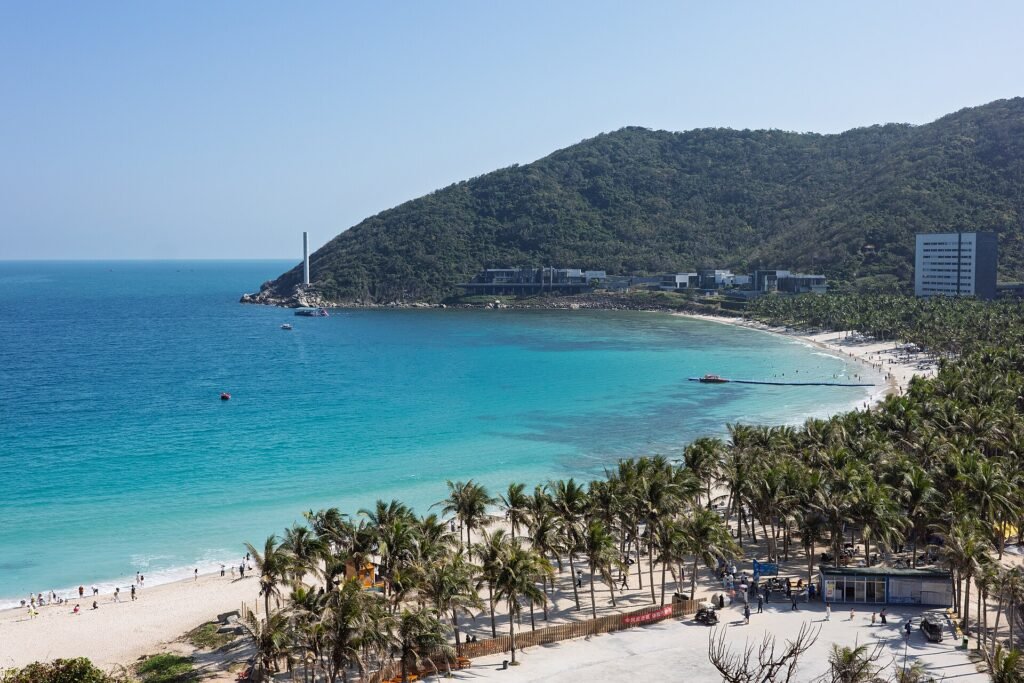
The Hainan filming locations question has a strange answer, and the strangest part of it is that we got it wrong first. In 2023 a Chinese thriller set on a fictional Southeast Asian island became one of the biggest films of the year. It was shot entirely in Hainan — the lighthouse, the jungle waterfall, the yacht marina, the street where the money gets stolen, all of it. The Southeast Asia you see on screen was built on this island, by a crew that hired hundreds of foreign extras to make it convincing. It worked. Which is why the English-language internet still thinks the film was made in Malaysia.
So this page does three things. It lists the locations. It explains why almost nobody connects them to the film. And it retracts a sentence we published ourselves on our China visa page, where we told readers there was no reason to come to Hainan for filming. There is. We were wrong, in print, about the one thing this site exists to track.
Hainan is also the easiest place in China to enter. It has its own visa-free policy, separate from the rest of the country, covering 61 nationalities for 30 days, with no tour group, no agency sponsorship and — in the immigration service’s own words — no advance declaration. That policy is the reason this island is worth a page even for readers who have never watched a Chinese drama. It is also the policy we got wrong, twice, on the same page.
Short answer. Hainan’s filming locations cluster in four places. Lingshui has the lighthouse from Lost in the Stars (消失的她, 2023), the ocean park where the underwater scene was shot, and a jungle waterfall. Wanning has the coastal road used for the chase and the beach bar where the leads rent diving gear. Baoting has the film base where the film’s Southeast Asian street was physically built — a set that is now largely empty. Haikou has Feng Xiaogang Movie Town, a 93-hectare film-themed park open since 2014. Sanya has the forest park used by both If You Are the One II and Go Go Squid!. Entry is visa-free for 61 nationalities for 30 days; the ring railway connects Haikou and Sanya in 1 hour 30 minutes.
Why this page exists
Most pages on this site start with a drama and work outwards. This one starts with a correction, because the correction is the interesting part.
In 2023 we wrote a guide to Chinese entry rules. It has a section on Hainan’s island visa-free policy, and in that section we wrote this: “There is no C-drama filming location on Hainan, so this door is mostly relevant if you are combining a beach trip with a mainland one.” It was a reasonable inference. Hainan is marketed as a beach destination, its resort strip is aimed at domestic honeymooners and Russian package tours, and it does not appear on any of the fan-compiled filming location lists that this site was built on.
It was also wrong. Not slightly wrong, or wrong at the margins. Wrong in the way that a page claiming there are no castles in Scotland would be wrong.
The Hainan filming locations we had dismissed turn out to include a 93-hectare film-themed park in Haikou, built by one of China’s best-known directors. There is a purpose-built film base in Baoting that has been standing since 2014. And there is an entire feature film — the sixth-highest-grossing Chinese film of 2023 — that was shot from end to end on this island, in four different cities and counties, using locations a visitor can stand in.
None of this was hidden. The Hainan provincial tourism department published a seven-stop itinerary for the film in August 2023. The Lingshui county government published an interview with the director explaining exactly where he shot. We simply never looked, because our mental model said “beach island, no studios” and the model never got tested.
Why this matters beyond Hainan. This site has made factual claims on more than thirty pages. Nothing on the site was checking them. This is the first time we have treated our own published sentence as a source that needed verifying — and it failed verification on exactly one count — the one that mattered. If you find another one, the corrections page explains how to tell us.
The Southeast Asian street that was built in Hainan
Start with the mechanism, because the mechanism explains every Hainan filming locations question on this page.
Lost in the Stars (消失的她) is a psychological thriller about a man whose wife disappears on an island holiday. The story is set in Southeast Asia. Shooting began in December 2021, and the director, Cui Rui (崔睿), was asked directly by a Hainan Daily reporter which parts of Hainan the production had used.
His answer, in the county government’s own transcript: “We went to Sanya, Lingshui, Baoting and Wanning and other places to shoot.”
Then he was asked why the film does not look like China. This is the part worth reading twice:
“Because our story is set in Southeast Asia. So we not only needed a similar island atmosphere, we also needed to build Southeast Asian-style streets and various venues. At the same time, we mobilised several hundred foreign extras, to present a relatively authentic Southeast Asia.”
That is the whole answer. The film was not shot in Malaysia. It was shot in Hainan, and then Southeast Asia was constructed on top of it — a street built at a film base in Baoting, a cast of hundreds hired to fill it, an aesthetic built to be somewhere else.
This is a different situation from the one we described in our Chengde guide, where a single eighteenth-century tower stood in for a room in a palace and never appeared in the credits. That was a substitution at a point. This is a substitution across an entire island, carried out deliberately, with a construction budget. Chengde was a body double. Hainan was a rewrite.
And the rewrite succeeded so completely that the internet drew the obvious wrong conclusion. Search “Lost in the Stars filming location” and the autocomplete offers Malaysia and Thailand. Not because anyone lied, but because the film looks like those places and the credits say a fictional island. A production that disguises a location well does not get a location credit. It gets a compliment.
The honest summary of Hainan’s screen career. Hainan did not play itself. It played somewhere else, and it played it well enough that nobody checked. The locations below are real, visitable, and almost entirely undocumented in English — which is precisely why this page can be useful and why the fan lists never mention them.
One film, seven Hainan filming locations
In August 2023 the Hainan provincial tourism and culture department published a “follow the film” itinerary naming seven stops from Lost in the Stars. It is a government document, it is specific, and as far as we can tell it has never been translated.
Here it is, with the scene each location appears in, using the department’s own descriptions.
| Location | Where | Scene | Access |
|---|---|---|---|
| Qingshui Bay Freedom Lighthouse (清水湾自由灯塔) | Lingshui, Qingshui Bay | The lighthouse the protagonist drives to; in the film it is called Mosa Lighthouse and holds the plot’s final secret | Free, open shoreline |
| Hainan R&F Ocean Paradise (海南富力海洋欢乐世界) | Lingshui | The “undersea starry sky” sequence | Ticketed theme park, national 4A rating |
| Qingshui Bay Marina (清水湾游艇会) | Lingshui | The yacht dock glimpsed as the lead runs | Working marina; public areas open |
| Dali Waterfall (大里瀑布) | Lingshui, deep in Diaoluo Mountain | The cliff where the two leads hide from pursuit | Free natural site; seasonal access |
| Riyue Bay coastal road (日月湾滨海公路) | Wanning | The driving/chase sequence, shot from above: “half coconut grove, half sea” | Public road |
| Shiling Film Base / Qiongya Old Town (什玲影视基地·琼崖古城) | Baoting, Shiling town | The Nanyang Street the lead runs through after his wallet is stolen | Uncertain — see below |
| Corona Sunset Bar (科罗娜日落吧) | Wanning, Dong’ao, by the Sheraton Shenzhou Peninsula beach | Where the two leads rent diving suits | Operating beach bar |
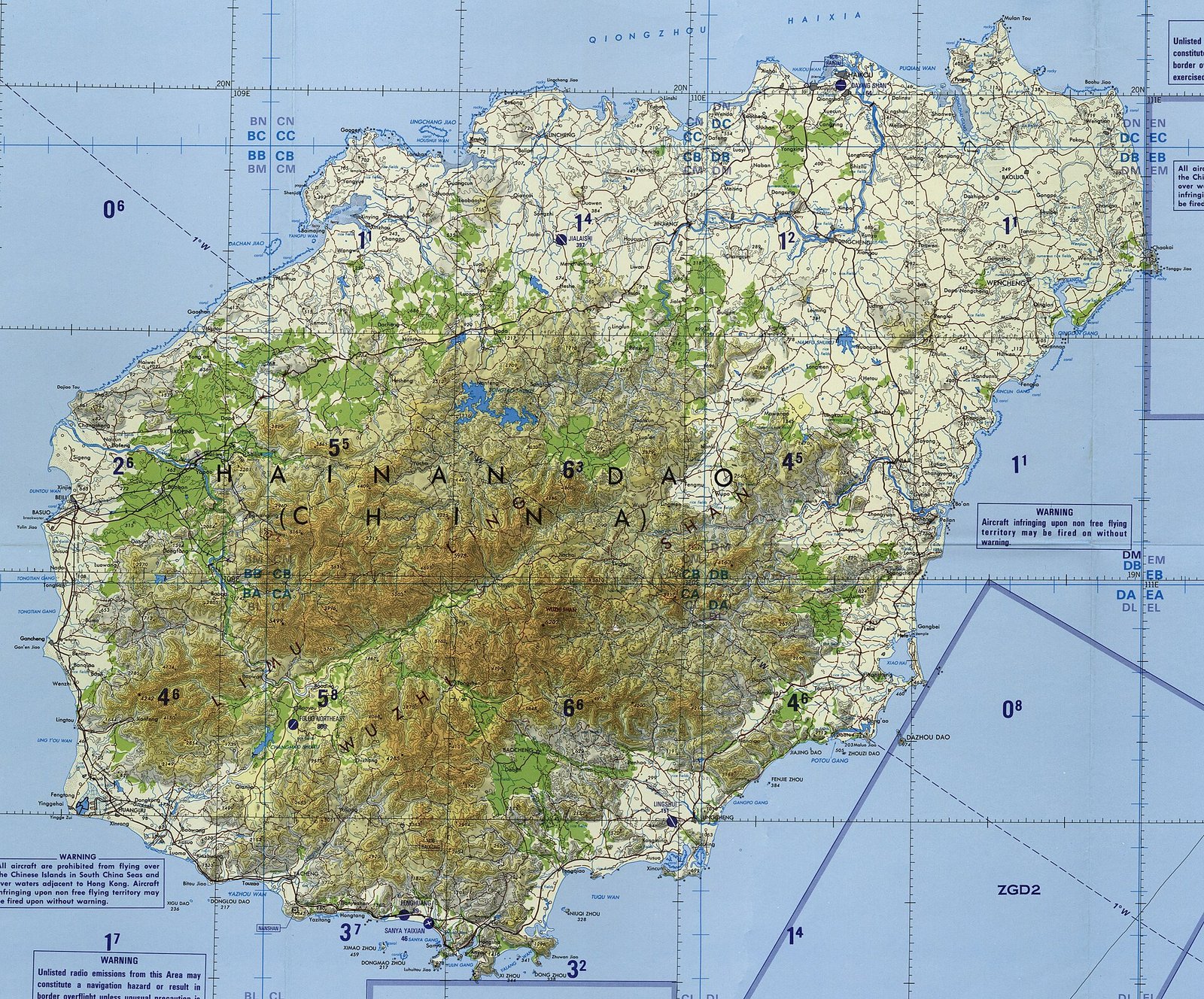
That is four administrative areas — Lingshui, Wanning, Baoting, Sanya — and the film also used Sanya, according to the director. The route is not a loop. Lingshui and Wanning are on the south-east coast, Baoting sits inland behind them, and Sanya is the southern tip. All four are within about 90 minutes of each other by road, which makes the film’s geography unusually convenient for a visitor.
What that list also shows is how little of the island is coast. Three of the seven stops are on the water, but two are inland and one is a constructed street. The Hainan filming locations that appear on screen are not the postcard Hainan of resort pools and infinity edges; they are a waterfall in a mountain range, a film base in a county town, and a beach bar next to a hotel. The geography of the film is closer to the island’s interior than its marketing is.
Baoting, where the street was built, is a Li and Miao autonomous county in the rainforested centre-south. It is not a beach destination and does not try to be. The interior of Hainan — Baoting, Wuzhishan, Qiongzhong, the Diaoluo and Yinggeling ranges — holds 4,269 square kilometres of tropical rainforest inside a national park that was among the first five China designated, and it is where the island looks least like a resort and most like the rest of tropical Asia. That is presumably why a production that needed to look like Southeast Asia went inland to build.
The province’s own file also credits Hainan with Feng Xiaogang’s Personal Tailor, The Meg, the drama Psychologist, and the variety shows Viva La Romance and Summer Surf Shop. Whatever the reason we assumed otherwise, “no filming here” was never a defensible position.
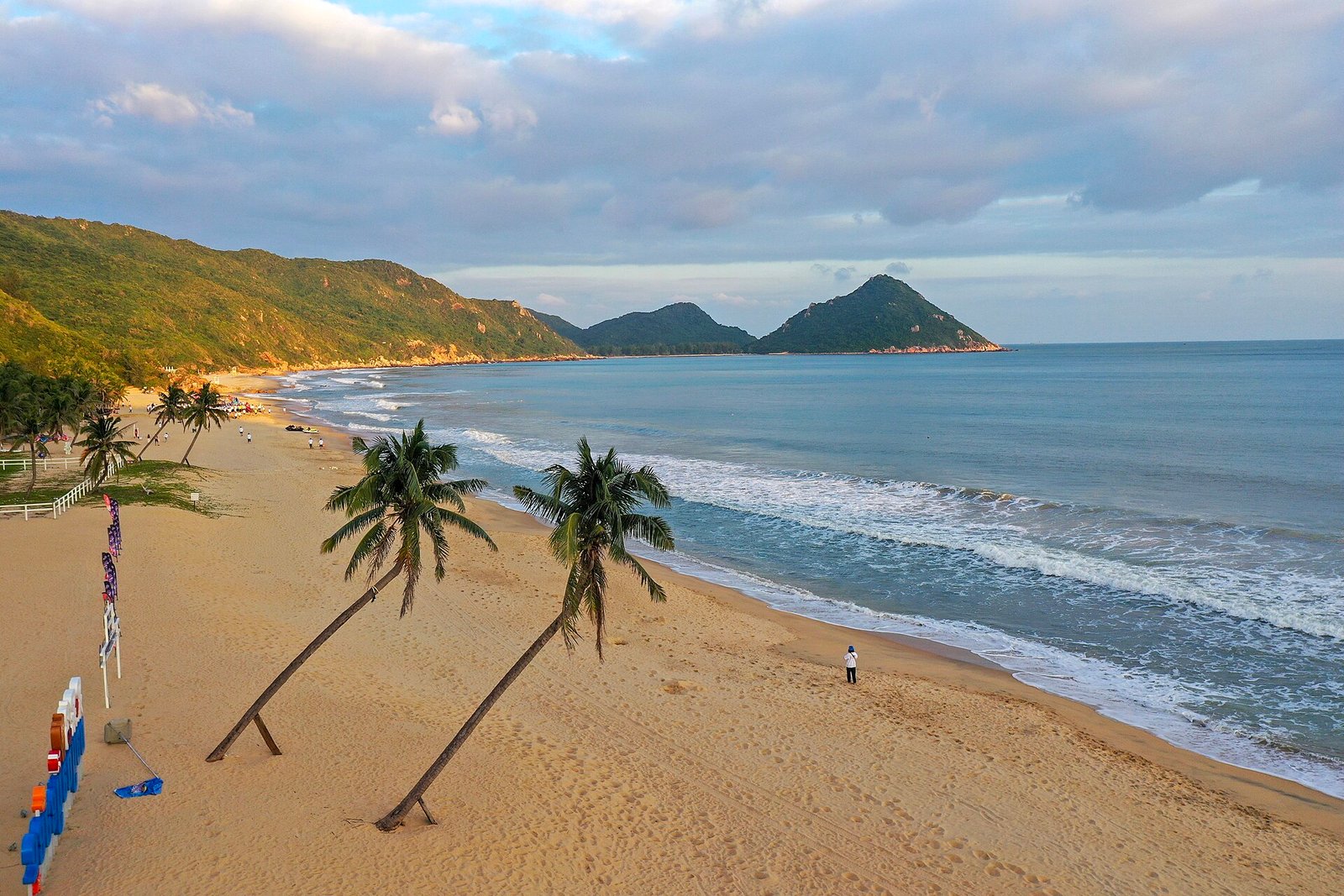
Lingshui: the lighthouse, the ocean park, the waterfall
Lingshui Li Autonomous County occupies the south-east corner of the island, roughly 60 km east of Sanya and much less developed. It has become the film’s unofficial centre, and it has three of the seven stops.
Qingshui Bay Freedom Lighthouse
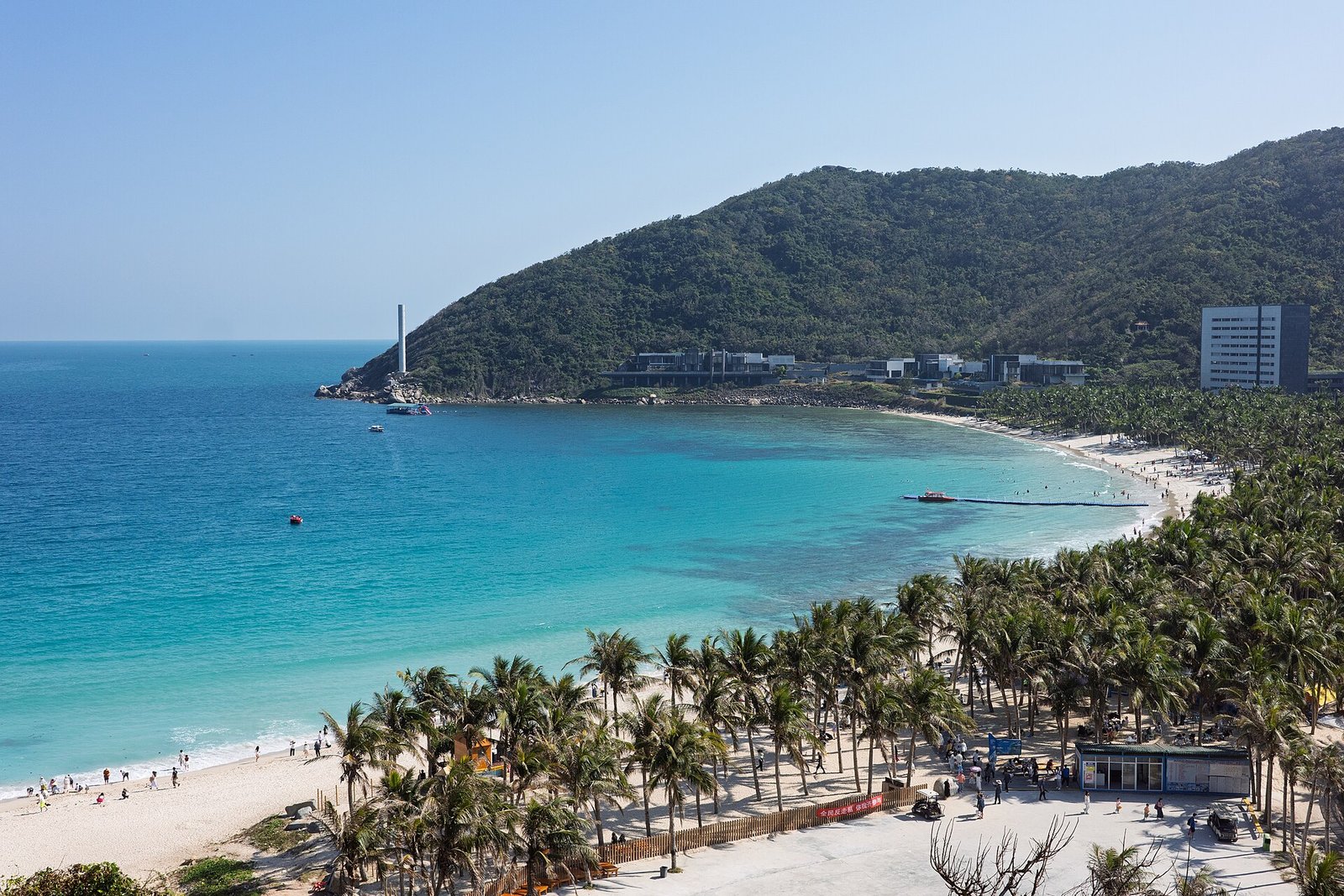
The lighthouse is the one image everybody remembers: a white tower on a headland, at the end of a road, with the sea on three sides. In the film it is called Mosa Lighthouse. On the map it is the Freedom Lighthouse (自由灯塔) at Qingshui Bay, and it is not a film set — it is a working navigational light on a public shoreline, free to walk to, and best at the hour before sunset when the light comes on and the bay goes flat.
It is also, as of late 2025, a small case study in how quickly a free thing can stop being free. The marina operator posted a notice of a 10 yuan per person charge effective 15 November 2025. After the notice circulated and drew objections, the operator issued a statement on the evening of 20 November 2025 saying it had consulted publicly and the lighthouse would remain free. As of our check it is free. Treat that as a decision that could be revisited rather than a law of nature, and check at the gate.
Hainan R&F Ocean Paradise
The underwater sequence — the one with the star field — was shot at this ocean-themed park in Lingshui, which carries a national 4A rating and combines aquariums, marine animal halls and water rides. It is a family attraction rather than a film site; you go for the tanks and the shows, and the film connection is a bonus plaque rather than an exhibit.
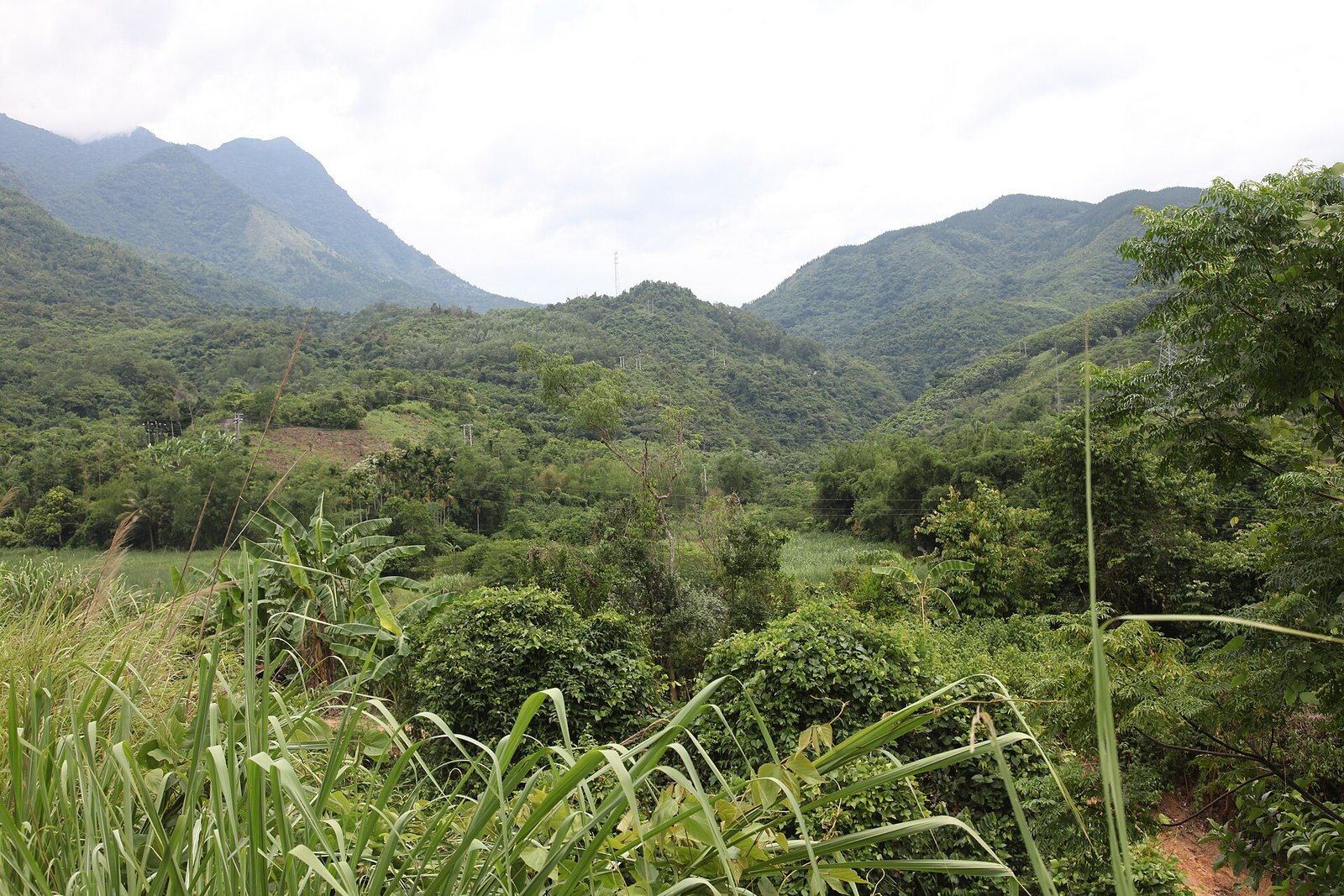
Dali Waterfall
Deep in the Diaoluo Mountain range, the Dali Waterfall (大里瀑布) is actually two falls — Tuonari and Jiemei — and it is where the film’s two leads flee to a cliff edge. It is a natural site, not a managed attraction, which means two things: it costs nothing, and access depends on the season and the weather. In heavy rain the approach is not something to attempt casually.
Qingshui Bay Marina and the beach
The marina appears for a few seconds as a backdrop. The beach beside it is more interesting than the film gives it credit for: Qingshui Bay’s sand is fine enough that walking on it produces an audible squeak, which local tourism has branded the “singing beach”. It is a real acoustic property of very uniform, very dry quartz sand, and it is at its loudest in dry weather.
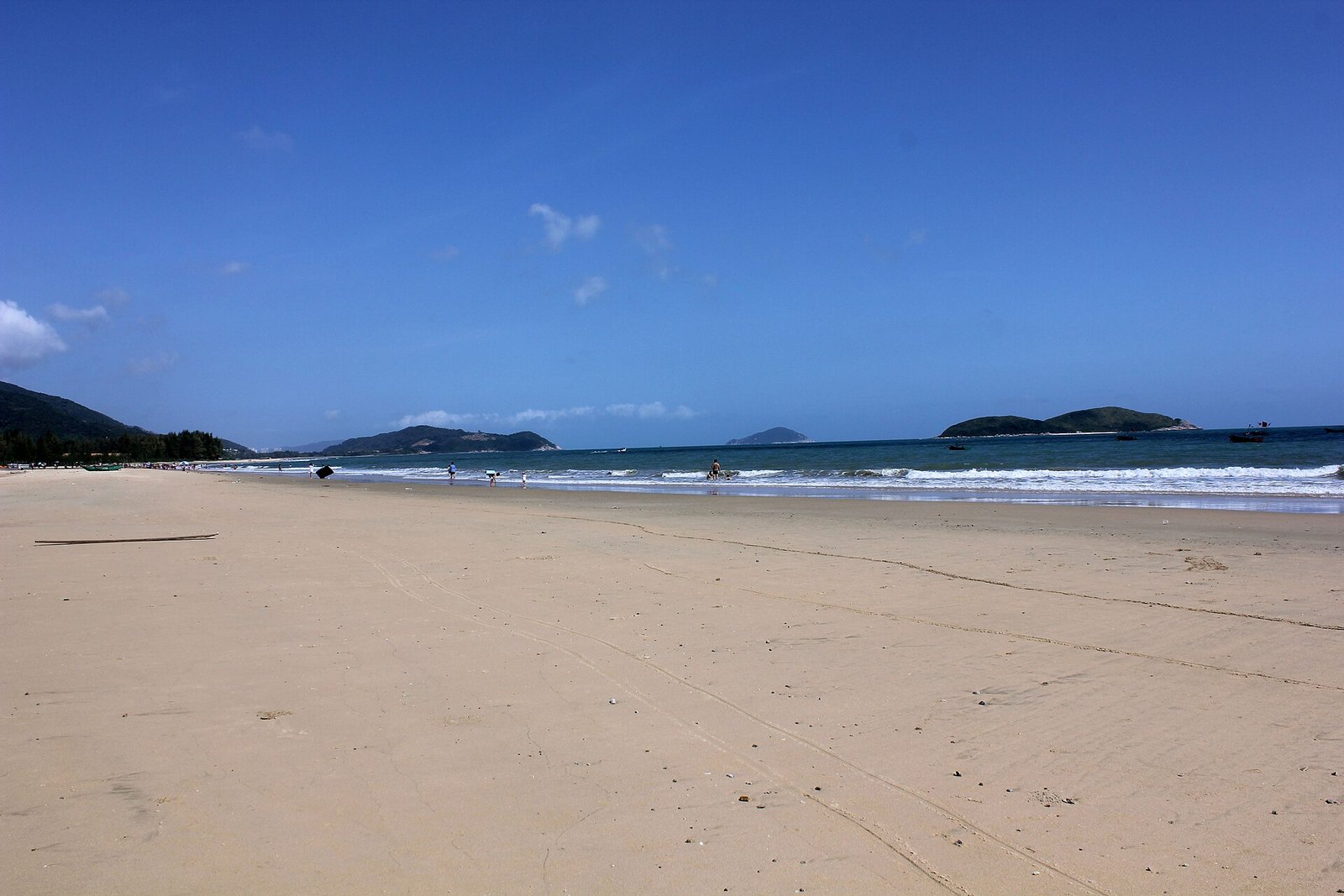
Wanning: the coast road and the beach bar
Wanning sits north-east of Lingshui and has become the island’s surf town. Two of the Hainan filming locations on this list are here, and one of them is the best free thing on the page.
The Riyue Bay coastal road
The chase sequence was shot from above on the coastal road at Riyue Bay (日月湾), and the shot is the reason the sequence works: coconut palms on one side, open sea on the other, one strip of asphalt between them. The road is public, drivable and rideable, and it forms part of the 988.2 km Hainan Coastal Scenic Road, which runs through twelve coastal cities and counties and, according to the provincial tourism department, links 25 lighthouses, 68 bays, 40 service stations and 261 coastal heritage sites.
If you are renting a car or a scooter on this island, this is the stretch to plan around. It is also the single easiest location on the list to reach without a guide.
Corona Sunset Bar
The beach bar where the two leads rent diving equipment is a real bar on the sand near the Sheraton Shenzhou Peninsula, in Dong’ao town. It is the only location on the list that is unambiguously a business with opening hours, and the only one where the film connection is essentially incidental — you are going for a drink at sunset, and the fact that a camera stood there is a footnote.
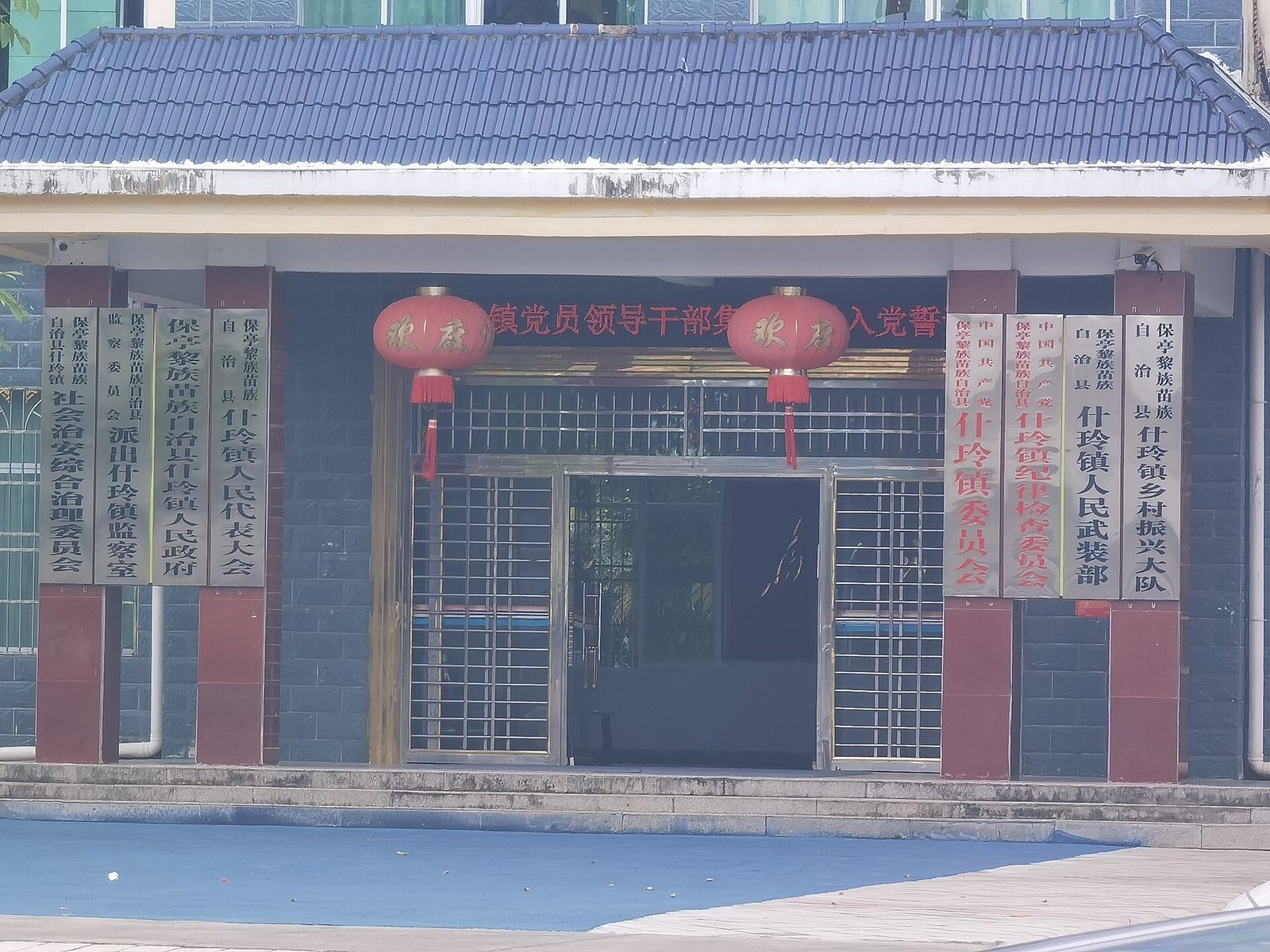
Baoting: the film set you probably cannot walk into
This is the section that made the Hainan filming locations question worth a page at all, and it is the one that will disappoint you.
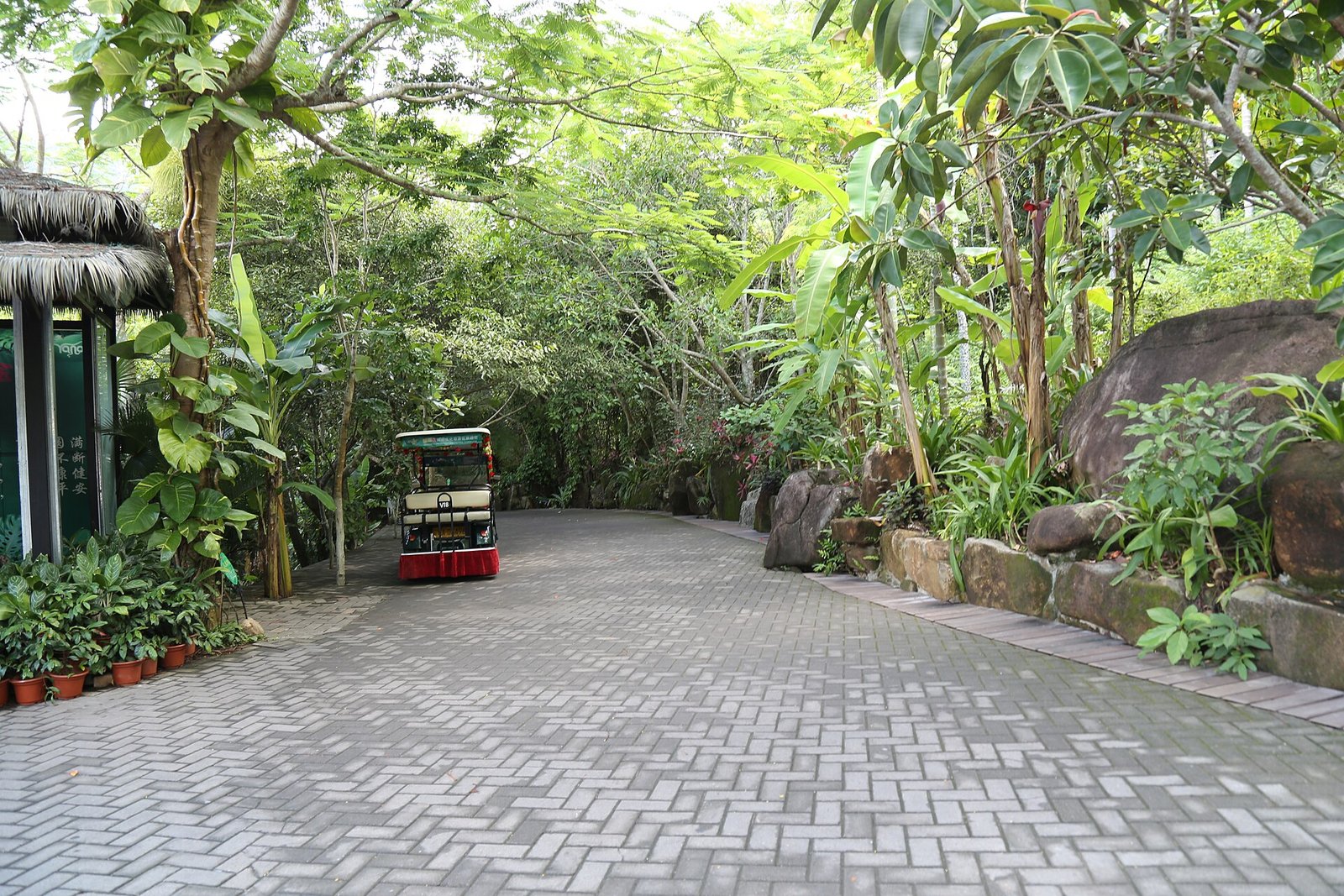
The Southeast Asian street from the film — the one the lead runs through after his wallet is taken — was not found. It was built. It stands at the Shiling Film Base (什玲影视基地), also marketed as Qiongya Old Town (琼崖古城), in Shiling town, Baoting Li and Miao Autonomous County, about ten kilometres from the county seat.
The base itself
The base dates from 2014. It is small: by the provincial tourism department’s own description, a single Republican-era street plus a cluster of military and administrative office blocks. It was built to be rented to productions, and it was rented to this one.
Here is the problem. The Hainan tourism department lists it, in a 2023 article, as “a comprehensive tourist attraction integrating ancient Hainan culture, tropical rainforest and lake scenery”. Visitor accounts from December 2020 and again from June 2026 describe something else: empty streets, no staff, no ticket office. The 2026 account is titled, without much ambiguity, “stumbling on an abandoned film city in Hainan”. The base was twelve years old at that point.
Do not build a trip around this. We are listing it because it is the answer to the question “where did they build the Southeast Asian street”, not because we can promise you can get in. The official position is that it is an attraction; the ground-level position is that it is mostly empty and may or may not be open. If you go, go because you are passing, not because you have planned a morning.
And notice what that means. Of the seven locations from the film, the one that exists only because of the film — the one that is pure cinema, built for a camera, with no other reason to exist — is the one you cannot reliably buy a ticket for. The lighthouse is free and open. The waterfall is free and open. The most cinematic site on the island is the one with the locked gate.
Haikou: the director’s movie town
Haikou, at the northern end of the island, is where Hainan keeps its actual film infrastructure. The city is not on the Lost in the Stars list, but it is the reason the “no filming locations” claim was indefensible.
Feng Xiaogang Movie Town
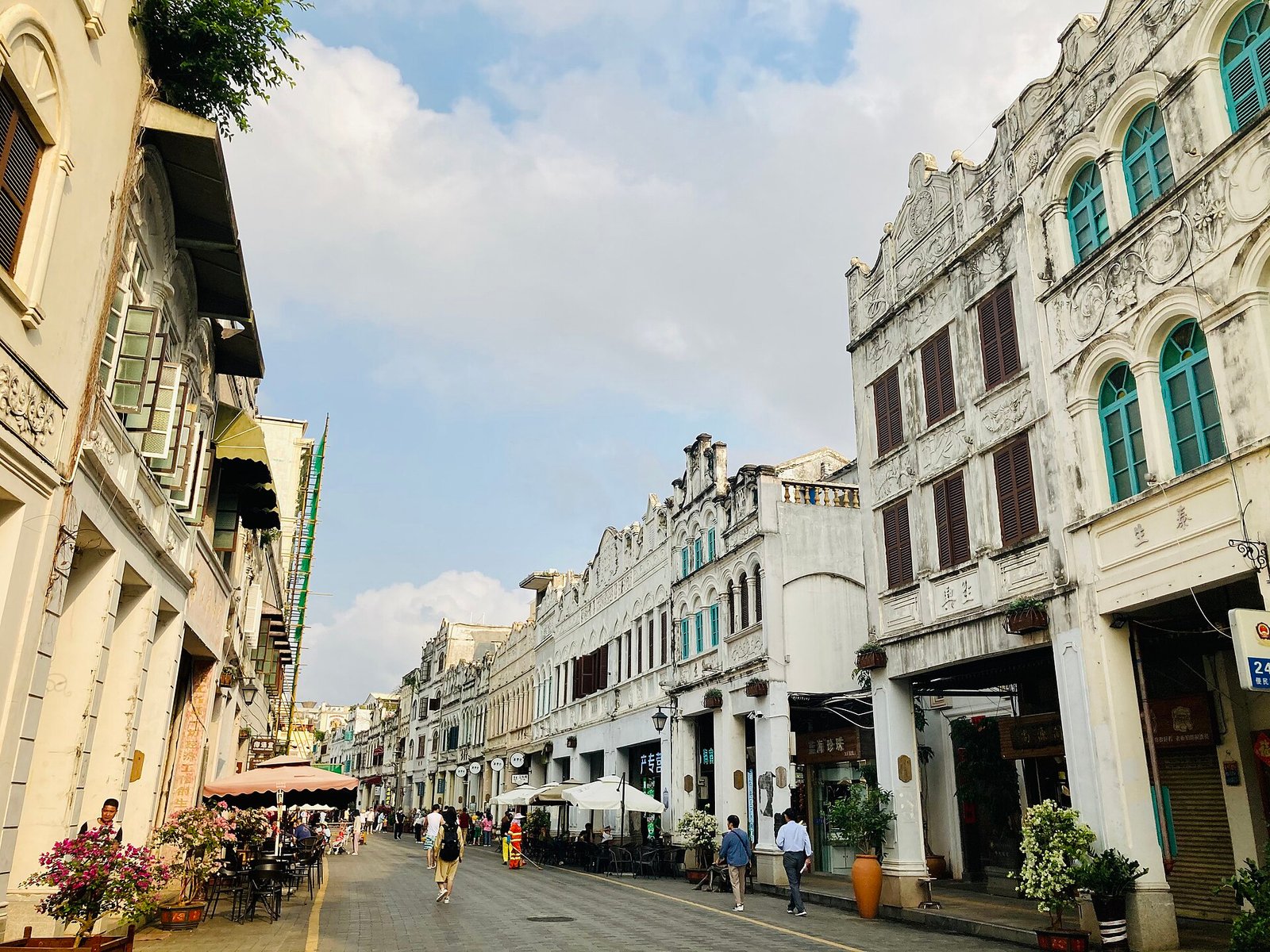
Mission Hills Huanan Feng Xiaogang Movie Town (观澜湖华谊冯小刚电影公社) opened in June 2014 on 93 hectares (1,400 mu) in Longhua district, built by the director Feng Xiaogang with the Mission Hills group. It describes itself, accurately, as China’s first film-themed tourism project named after an individual director.
It is not a backlot with a gift shop. It is a walled town of built sets, and you walk through them:
| Zone | What it is | Built from |
|---|---|---|
| 1942 Street (1942街) | A Chongqing street of the war years, 280 metres long with more than 70 buildings | Back to 1942 (一九四二) |
| Nanyang Street (南洋街) | Southeast Asian arcade architecture fused with Hainanese shophouse style | Nanyang Past (南洋往事) |
| Fanghua Courtyard (芳华小院) | The military arts troupe compound: rehearsal hall, dormitories, pool | Youth (芳华) |
| Film museum, shooting-experience area, Walk of Fame | Props, costumes, scripts; dubbing and green-screen participation | — |
Opening hours are 9:00 to 22:00 with last entry at 21:00, and the operator suggests three to five hours. Address is Guanlanhu Avenue, Longhua district. There is a night session from 17:00, and the Walk of Fame is genuinely better after dark.
One naming trap: the province calls the zones Nanyang Street, Old Beijing Street and the 1942–Fanghua scenic area. Ticket platforms sell them as “Nanyang Tide”, “Jiangcheng Ballad–Fanghua” and “East Is Red”. These are the same places under commercial names. If you are buying a ticket and the zone names do not match what you read here, you are not looking at a different attraction.
Why a director got a town
The park exists because of a specific run of films, and the zones map onto it exactly. Feng Xiaogang spent the 2010s making large historical and period pictures — Back to 1942 (2012) about the Henan famine, Personal Tailor (2013), Youth (2017) about a military arts troupe in the 1970s — and each needed a street that no longer exists in usable form. Rather than rebuild one per production, the sets were built once, at scale, and then opened to the public between shoots.
That is a different business model from a theme park. A theme park builds an attraction and hopes a film licenses it. This built the films’ sets and then sold admission to them. It is also why the architecture is unusually specific: 1942 Street is not “old China” in general, it is wartime Chongqing, with 280 metres of frontage and more than seventy buildings arranged to match a particular film’s geography. You can walk the length of a decision.
The Hainan filming locations that most visitors can actually reach, then, are of two kinds. The film town is a set you can buy a ticket for. The Shiling base is a set you probably cannot. Both are constructions; only one is managed.
On price: we are not going to give you a number, and the reason is in the cost section. Three different sources give three different figures and the operator’s own domain does not resolve. Budget for a mid-range theme-park ticket, buy through the official channel, and expect the night ticket to be materially cheaper than the full-day one.
Sanya: the forest park two dramas used
Sanya is the island’s resort capital and its most-visited city, and it has the cleanest film credit on the island — not one drama, two, confirmed by the provincial government rather than by fan wikis.
Yalong Bay Tropical Paradise Forest Park
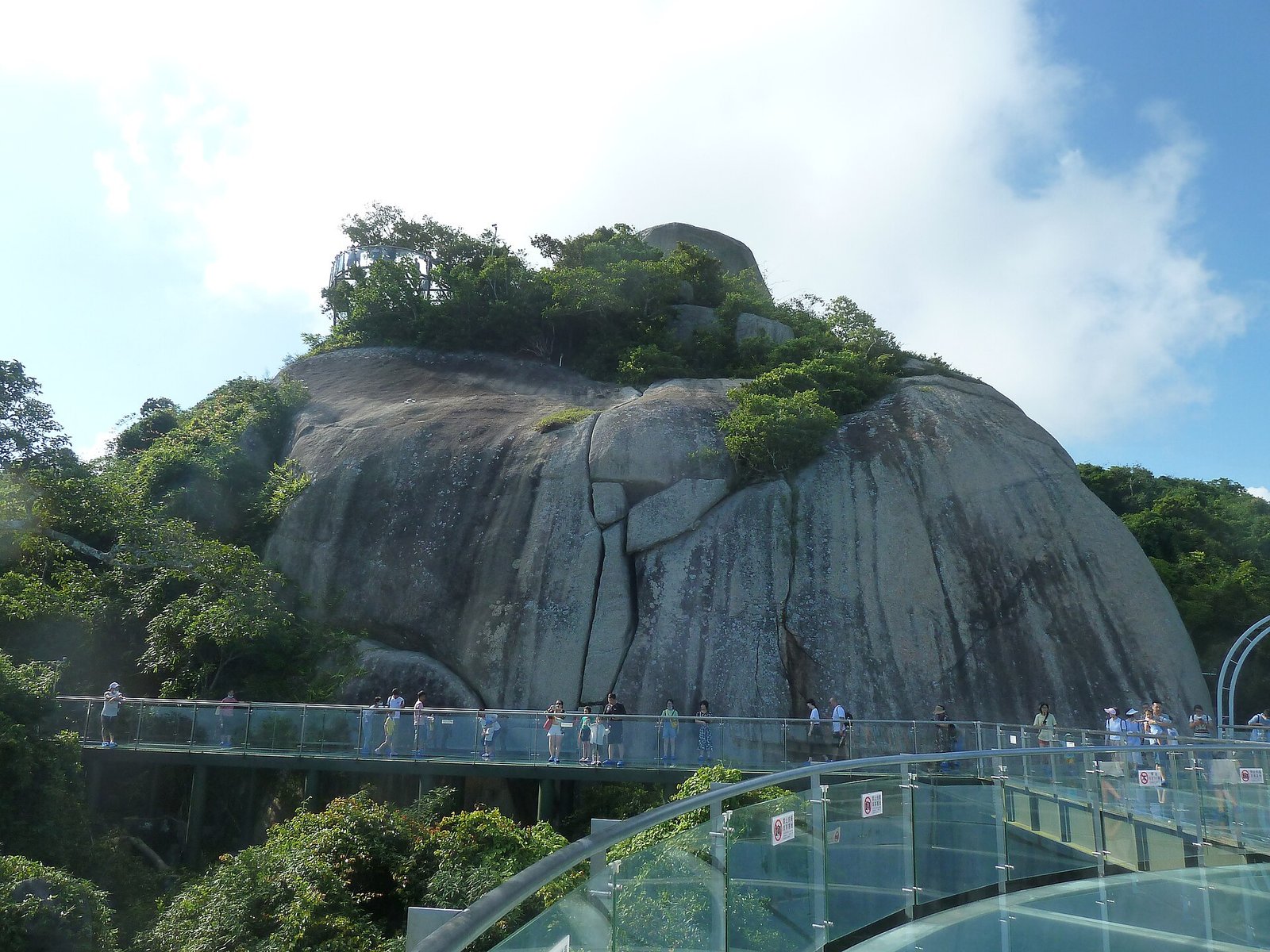
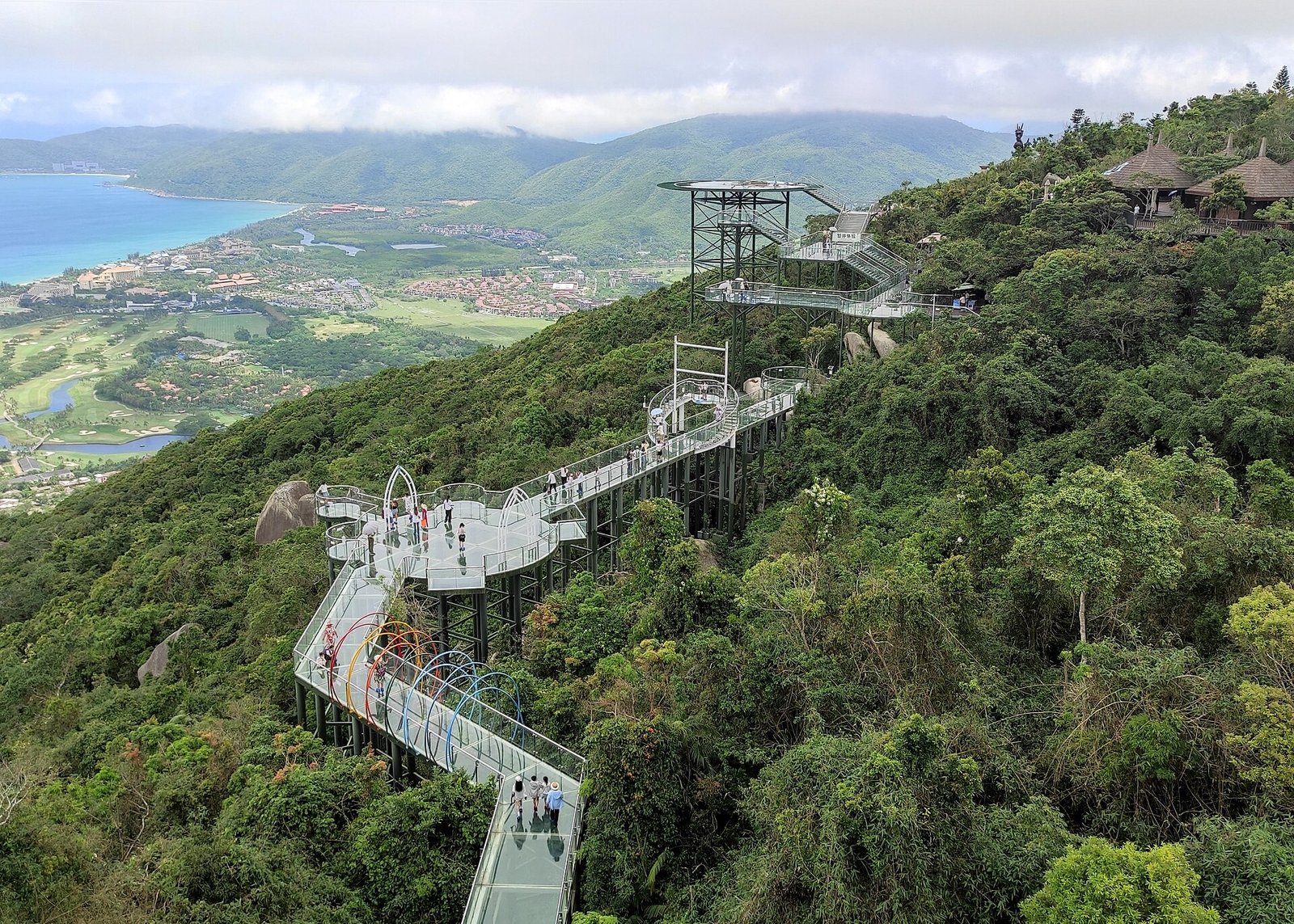
The park covers about 1,500 hectares of coastal mountain forest above Yalong Bay. It appears in If You Are the One II (非诚勿扰II, 2010) — Feng Xiaogang again — and in Go Go Squid! (亲爱的,热爱的, 2019). The provincial tourism department names both, in one line, as “the same filming locations”, which saves everyone the trouble of arguing about it.
The bridge, the pool and the room
Three specific spots carry the film associations: the Guojianglong rope bridge (过江龙索桥), which the film turned into a lovers’ bridge and which now has queues; the cliff pool (峭壁天池); and the trial-marriage room (试婚房) from the 2010 film. The bridge, the glass walkway and the forest slide are all charged separately on top of admission.
Opening hours are 8:00 to 18:00 with last entry at 17:30. We could not get that from the park’s own site, so treat it as the current operating pattern rather than a promise — see what we could not verify.
The park is also the only place on this page where you are unambiguously a tourist in a queue. If you want the Hainan that feels like the film, this is not it. If you want the Hainan that two of the most-watched Chinese dramas actually used, this is exactly it.
The rest of Sanya
Sanya has more than the forest park, and if you are here for a week you will end up at some of it. Three worth naming, because they are the ones that come up in searches and they are genuinely different from each other.
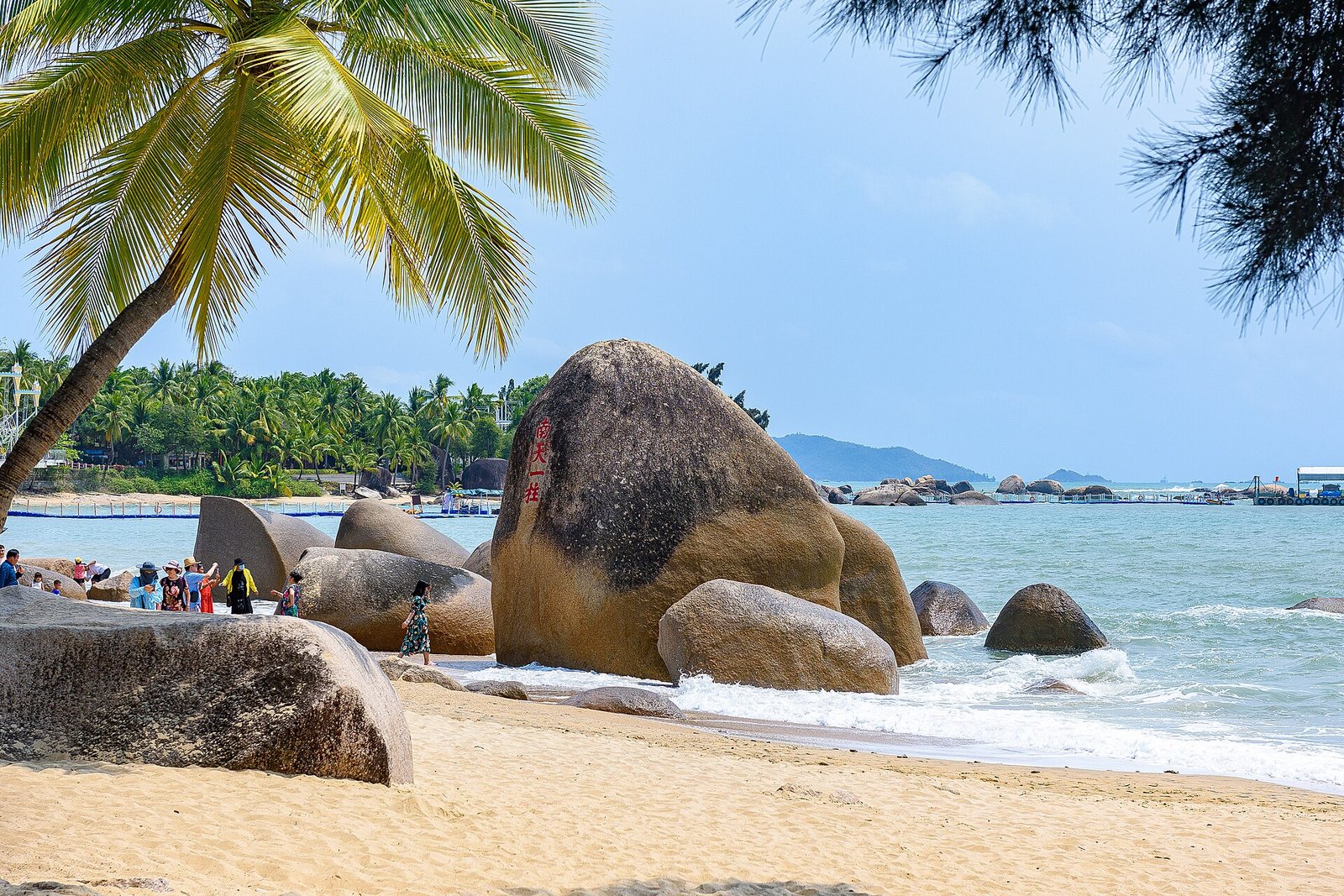
Tianya Haijiao (天涯海角), the “edge of the sky and corner of the sea”, is the island’s oldest tourist cliché and still works: two boulders on a beach with a long literary history, best at low tide and early. Nanshan (南山) is a Buddhist cultural park built around a 108-metre statue of Guanyin standing in the sea, which is genuinely impressive at scale and entirely a modern construction — it opened in 2005. Wuzhizhou Island (蜈支洲岛) is the diving and snorkelling island, reached by a short ferry, and it is the busiest thing on this coast in high season.
None of these is a filming location. We are naming them because a page that lists seven film sites and pretends the rest of Sanya does not exist is not a useful page. The Hainan filming locations on this island are a subset of a much larger trip, and the honest version of this guide says so.
The sentence we have to take back
Everything above is a list. This section is the reason the list exists, and it is not flattering.
Our China visa guide has a section on Hainan’s island visa-free policy. Here is what it said, verbatim, until this week:
“Less useful for filming locations, but worth knowing. 61 nationalities — the 57 transit countries plus Malaysia, Thailand, the Philippines and Kazakhstan — can enter Hainan visa-free for 30 days. The catch is that you must fly direct to Sanya or Haikou, and you may not leave the island. Transiting through mainland China to get there does not work. There is no C-drama filming location on Hainan, so this door is mostly relevant if you are combining a beach trip with a mainland one — which you cannot do on a single entry.”
One error in five sentences. The numbers are current — we checked them twice, and the second check is why this section reads the way it does. The error is the sentence that tells the reader there is nothing here for them.
| What we wrote | What is correct | Source |
|---|---|---|
| 61 nationalities | 61 — correct, but not for the reason given. The real total is 59 plus Kyrgyzstan and Vietnam, added on 20 August 2026 | National Immigration Administration announcement of 20 August 2026, reported by Xinhua |
| the 57 transit countries | 57 — also correct, as of the same date. The figure was 55 before Kyrgyzstan and Vietnam were added | Same announcement |
| No C-drama filming location on Hainan | A feature film shot end to end on the island, seven documented locations, a 93-hectare film-themed park and a purpose-built film base | Hainan tourism department, 17 August 2023; Lingshui county government, 3 July 2023 |
So the numbers held. They held for a reason worth spelling out, because it is the same reason the filming claim failed.
The page says 61 nationalities equals the 57 transit countries plus Malaysia, Thailand, the Philippines and Kazakhstan. That is not how the policy works. The Hainan list has its own membership and its own history; it reached 61 on 20 August 2026, when Kyrgyzstan and Vietnam were added to both the Hainan scheme and the transit scheme in a single announcement. The sum the page performs also lands on 61. Two routes, one right answer, and only one of them is a description of the policy.
That is a worse position than being wrong. A wrong number gets noticed the first time somebody checks. A right number reached by the wrong route sits there looking verified, and it breaks silently the moment either list moves — and both of them have moved twice while this page has been online. The judgment about filming failed the same way: we did not look Hainan up and get it wrong, we reasoned from what kind of place it is, and the reasoning was never tested against a source.
We did not look Hainan up and get it wrong. We reasoned from a category. Hainan is a beach island, beach islands in China are resort products, resort products do not host productions. Every step of that is individually plausible, and the conclusion is false, because Hainan is also the site of a director-built film town, a provincial film base, a December international film festival, and a film that used the whole island as a stand-in for another country.
The category was the error. And the reason nobody caught it is that we had no mechanism for catching it: our fact-checking ran forwards, from claim to source, and never backwards, from published page to whether the page was still true.
What we changed. The visa page now carries the correct figures, the correct policy description, and a line pointing here. The retraction is dated rather than silent, because a page that quietly fixes itself teaches the reader nothing about how much to trust it.
If this seems like an odd thing to devote a section to, consider the alternative. A site that only ever corrects other people — the tourism boards, the fan wikis, the guides that copy each other — is making a claim about its own reliability that it has never tested. This is the test. We failed it on a sentence we wrote ourselves, and the only useful response is to say so and fix it.
The visa-free door, corrected
Here is the policy as it actually stands, taken from the immigration service’s own text rather than from a summary.
What the policy says
| Item | Rule |
|---|---|
| Nationalities | 61 — including the US, Canada, UK, Australia, New Zealand, Japan, South Korea, Singapore, Malaysia, Thailand, Vietnam, the Philippines, Indonesia, Kyrgyzstan, Brazil, Mexico, Argentina, Chile, the UAE, Qatar and most of Europe |
| Maximum stay | 30 days, counted from midnight of the day after entry |
| Permitted purposes | Tourism, business, visits, family visits, medical treatment, conferences and exhibitions, sports competition. Work and study are excluded. |
| Ports of entry | Any open port in Hainan — Haikou Meilan airport, Sanya Phoenix airport, Qionghai Boao airport, Yangpu, Haikou, Qinglan, Basuo and Sanya seaports |
| Advance declaration | None. The immigration text says so explicitly. |
| Tour group required | No. There is no group, agency or sponsor requirement in the policy. |
| Area of activity | Hainan province only. Leaving for the mainland requires a visa or residence permit applied for inside Hainan before your 30 days expire. |
| Document | An ordinary passport, valid, presented at the border |
| How you arrive | Commercial flight, charter flight or cruise |
The two clauses worth underlining are the ones English-language guides most often get wrong. There is no advance declaration — you do not file anything before you fly. And there is no tour-group requirement — a large amount of English-language advice still says you must book through a licensed agency, which was true of an earlier version of the policy and is not true of this one.
What it does not allow
You cannot use it to enter mainland China. Fly into Sanya, spend two weeks on the beach, then take the train to Guangzhou, and you have overstayed your permission. The 30 days are geographically bounded by the province.
If you want both, the immigration text gives the workaround: if your country has no direct flight to Hainan, you may fly first to a country that does — or to Hong Kong or Macao — and connect into a Hainan airport. That gets you onto the island legally. It does not get you off it into the mainland.
And do not confuse this with the 240-hour transit visa-free policy, which is a different scheme covering 57 nationalities across 65 open ports in 24 provinces. The transit policy is for people passing through to a third country. The Hainan policy is for people staying in Hainan. They have different country lists, different durations and different rules. Our visa guide covers the transit scheme; this page covers the island.
Getting there: two airports and a ring railway
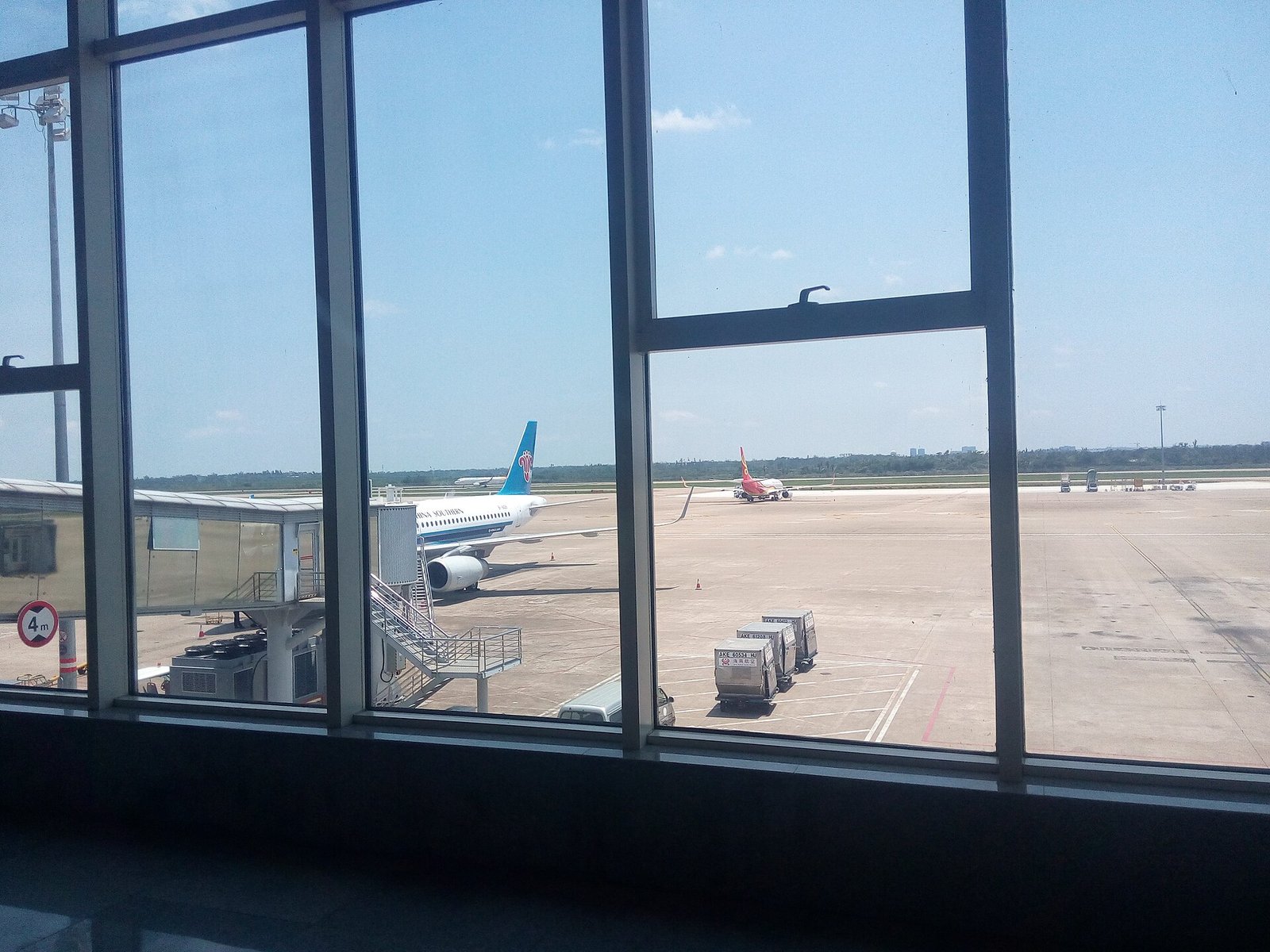
Hainan has three commercial airports — Sanya Phoenix (SYX) in the south, Haikou Meilan (HAK) in the north, and Qionghai Boao (BAR) on the east coast — and the useful thing about the island is that the two main ones are connected by a railway that goes both ways round.
The Hainan Ring Railway is 653 km of high-speed line that closed into a complete loop on 30 December 2015, the first circular high-speed railway in the world. It links twelve cities and counties and takes about 4.5 hours to go all the way round. The useful number is the direct one: Haikou to Sanya in 1 hour 30 minutes, which is the China State Railway Group’s own figure and makes the two cities a single base rather than two trips.
| From | To | Best option |
|---|---|---|
| Haikou Meilan (HAK) | Sanya | Ring railway, about 1 h 30 min; Meilan airport has its own station on the line |
| Sanya Phoenix (SYX) | Lingshui / Wanning | Ring railway east, or road; Lingshui is roughly an hour by car |
| Haikou | Lingshui / Wanning | Ring railway east coast, faster than driving |
| Sanya | Baoting (Shiling) | Road only, inland; about 90 minutes |
For trains, book with your passport through the official 12306 app or at a station counter; our train booking guide walks through the passport registration step, which is the part that trips people up. For payment on the island, Alipay and WeChat Pay both work and cash is accepted at hotels but increasingly awkward at small vendors. The apps guide covers the ride-hailing and translation setup.
One structural note: if you are arriving under the island visa-free policy you must fly direct to a Hainan airport. You cannot land in Shanghai, clear immigration on the transit scheme, and then fly domestic to Sanya. The policy is about entering Hainan, not about entering China and going to Hainan.
When to go
Timing matters more than usual for Hainan filming locations, because two of the seven are weather-dependent. The climate is simple enough to describe without a table of monthly averages, which is fortunate, because the averages that circulate online disagree with each other and none of them are authoritative.
Dry season: November to April
This is the window the island sells. Low humidity, little rain, stable sea conditions, and temperatures that make a beach work without making walking unpleasant. December to February is the peak: it is cold in most of China, the island fills with domestic tourists, and prices roughly double at the resort end. If you are coming for the film locations rather than the beach, January and February give you the best light and the worst crowds.
Wet season: May to October
Hot, humid, and wet in the afternoons. This is also the typhoon window, which runs roughly May to November with the active period in July to September. A typhoon event typically affects the island for three to five days; outside those windows the weather is often perfectly good, and the prices are a fraction of peak. September carries the highest historical probability of disruption.
For this page specifically, the wet season has one concrete consequence: the Dali Waterfall is a rain-fed jungle site and the coastal road at Riyue Bay is exposed. Both are better in the dry season. The lighthouse, the film town and the forest park are unaffected.
For the island-wide picture, our best-time-to-visit guide covers how Hainan’s seasons line up with the rest of the country — relevant if you are combining this with a mainland trip, which the visa-free policy does not allow on a single entry.
December is also the film festival
One scheduling fact that changes the calculus: Sanya hosts the Hainan Island International Film Festival (HIIFF) every December. It is run under the guidance of the national film administration and co-hosted by China Media Group and the Hainan provincial government, and its top prize is the Golden Coconut Award. The seventh edition ran 3–9 December 2025 in Sanya; James Cameron came for it, which tells you how seriously the province takes the event.
For a visitor this cuts both ways. Hotel prices in Sanya spike during festival week, and the good rooms go early. But if you are here for the film geography rather than the beach, December is the one month when the island’s screen industry is visible as an industry rather than as a set of locations — screenings, panels, and a city that is briefly full of people who make films.

Four days, five days, seven days
The search data on this island is dominated by day-count questions, and the answers are unusually clean, because the geography is compact — which is what makes Hainan filming locations practical to string together.
| Length | What fits | Base |
|---|---|---|
| 4 days | Lingshui (lighthouse, ocean park, waterfall) + Wanning (coast road, beach bar) | Sanya or Lingshui |
| 5 days | The above plus Sanya’s forest park, or plus Haikou’s film town | Sanya, one night Haikou |
| 7 days | The whole list in order: Haikou north, ring railway down, Lingshui, Wanning, Baoting, Sanya | Two bases |
The four-day version is the one we would recommend, and it has a logic: Lingshui and Wanning are adjacent, both are on the south-east coast, and together they hold five of the seven film locations. Base yourself in Lingshui, drive the coast road, and you have done the film without ever setting foot in a resort.
The seven-day version exists mainly because of the ring railway. Going all the way round — Haikou, then down the east coast stopping at Wanning and Lingshui, then Sanya, then back up the west coast if you want — is a genuinely good use of a week and takes you through parts of the island that get almost no foreign visitors.
For a wider planning frame, our how-many-days guide covers how a Hainan leg fits into a longer China trip, and the route planner will lay out a sequence if you want one built for you.
What it costs, and why the price is a range
Hainan’s ticket prices are not market prices, and once you understand that, the numbers stop looking contradictory.
Take Yalong Bay Tropical Paradise Forest Park. Hainan’s price bureau issued a ruling on it in 2012 — document Qiong Jia Shen Pi [2012] No. 264 — and the ruling is still the operative one. It does not set a price. It sets a base price and a permitted float:
“Admission is subject to government-guided pricing; the specific price is determined by the operator within the guided range and must be publicly posted. (1) The base admission price is 100 yuan, with a permitted float of plus or minus 20 per cent. (2) The base round-trip sightseeing bus fare is 42 yuan, with a permitted float of plus or minus 20 per cent.”
So the lawful range is 80 to 120 yuan for admission and 33.6 to 50.4 yuan for the bus, with a combined ceiling of 170.4 yuan. That is why you will find 130, 148, 158 and 248 quoted for the same park in the same season. They are not errors. They are different products at different points inside a legal band, and the operator is obliged to post whichever one it is charging.
This is a different situation from a resort discount or a promotional rate. The band is the price’s nature. There is no single “official” figure to look up, because the regulation deliberately does not create one.
| Site | What we can state | Confidence |
|---|---|---|
| Yalong Bay Tropical Paradise Forest Park | Admission 80–120; bus 33.6–50.4; bridge, glass walkway and slide charged separately | High — government pricing document |
| Qingshui Bay Freedom Lighthouse | Free | High — operator statement, Nov 2025 |
| Riyue Bay coastal road | Free (public road) | High |
| Dali Waterfall | Free; no facilities, seasonal access | Medium |
| Feng Xiaogang Movie Town | Mid-range theme-park pricing; night ticket materially cheaper than full-day | Low — see below |
| R&F Ocean Paradise | Ticketed 4A theme park; price not verified | Low |
| Shiling Film Base | No reliable ticket information; may be unstaffed | None |
The film town is the weak row. Three sources give three different prices for the same park, and the operator’s own site advertises a contact domain that did not resolve when we checked. We are not going to publish a number we cannot stand behind, so the honest answer is: expect a standard Chinese theme-park ticket, buy through the official WeChat account or the gate, and treat any figure you see quoted online — including one you might find elsewhere on this site — as a snapshot rather than a fact.
The fifth pattern
We have now written five of these guides, and they keep failing in different ways, which is the useful part. A place and a screen production can relate to each other in at least five distinct ways, and the way you have to research is different in each.
| Pattern | What happens | Example on this site |
|---|---|---|
| Announced | The local government publishes a filmography and promotes it | Zhangye |
| Unmentioned | The production does not list the place, and neither does the place | Wuzhen |
| Neither | No official filmography, no local claim, only fan knowledge | Daocheng Yading |
| Substituted | A specific building stands in for another specific building and gets no credit | Chengde |
| Rewritten | An entire region plays somewhere else, deliberately, at cost — and the disguise succeeds so completely that nobody believes the original | Hainan |
The first four are all problems of attribution. Somebody knows, and the question is who wrote it down. You resolve them by finding the right document: a government filmography, a production note, a local tourism campaign, or the absence of all three.
Hainan is a problem of rewriting, and it does not resolve by finding a document. The documents all agree: the film was shot here, here are the seven places, here is the director saying so. What defeated the record was not secrecy but craft. A production that builds another country on top of yours, staffs it with hundreds of extras, and gets the light right has done its job. The location disappears into the fiction, and the fiction is what people search for.
That is why the English-language search traffic for this film points at Malaysia. It is not a conspiracy and it is not ignorance; it is the intended effect, working. And it is why the Hainan filming locations question needed a provincial tourism department to answer it rather than a fan wiki: the fans were watching a film set in a country that does not exist.
What we could not verify
This section exists because a page that only lists what it knows is quietly telling you that it knows everything. Four of the Hainan filming locations below carry some uncertainty, and two carry a lot.
- Feng Xiaogang Movie Town ticket prices. Three conflicting figures, no resolvable official domain. We publish no number. To resolve: the operator’s official WeChat account, or the price board at the gate.
- Whether Shiling Film Base is open. The province lists it as an attraction; recent visitor accounts describe it as empty and unstaffed. Both can be true — an attraction can be listed and unmanaged. To resolve: ask in Baoting, not online.
- Yalong Bay’s actual current price. The legal band is documented; the operator’s current point inside it is not. To resolve: the posted board at the ticket office, which the regulation requires.
- Opening hours at Yalong Bay. Multiple 2025 sources agree on 8:00–18:00 with last entry at 17:30, but none of them is the park or the price bureau. To resolve: the park’s own channel.
- Monthly average temperatures. Deliberately omitted. The figures in circulation disagree with each other and vary year to year; the dry/wet/typhoon structure is more useful and more durable.
- Ocean Paradise and Nanshan ticket prices. Not checked at all. Not used in any recommendation here.
How we checked this
Sources are ranked, and the ranking matters more than the count. Government and operator documents outrank media retellings, which outrank aggregator pages, which we do not cite at all.
| Fact | Source | Level |
|---|---|---|
| 61 nationalities, 30 days, no advance declaration, no group requirement, Hainan-only | National Immigration Administration announcement of 20 August 2026, adding Kyrgyzstan and Vietnam; the underlying 59-country policy text republished in full by the Chinese embassy in Moldova, 4 September 2024 | Primary |
| 240-hour transit visa-free covers 57 countries across 65 ports | Same NIA announcement, 20 August 2026 | Primary |
| The seven Lost in the Stars locations and their scenes | Hainan Provincial Department of Tourism, Culture, Radio, Television and Sports, 17 August 2023 | Primary |
| Shooting began December 2021; locations in Sanya, Lingshui, Baoting, Wanning; Southeast Asian sets and hundreds of foreign extras | Interview with director Cui Rui, Hainan Daily, republished by Lingshui county government, 3 July 2023 | Primary |
| Yalong Bay admission 100 ±20%, bus 42 ±20% | Hainan Price Bureau, Qiong Jia Shen Pi [2012] No. 264, 16 May 2012 | Primary |
| Haikou to Sanya in 1 hour 30 minutes | China State Railway Group, 4 February 2026 | Primary |
| 7th Hainan Island International Film Festival, 3–9 December 2025, Sanya | Sanya Municipal People’s Government press conference, 25 November 2025 | Primary |
| Movie town opened June 2014, 93 hectares, 9:00–22:00, 1942 Street 280 m and 70+ buildings | Operator’s official site | Primary (operator) |
| Lighthouse fee notice withdrawn, stays free | Operator statement reported 21 November 2025 | Secondary |
| Shiling Film Base largely empty | Visitor accounts, December 2020 and June 2026 | Secondary, unconfirmed |
Where a primary source did not exist, we have said so in the text rather than smoothing it over. The corrections page explains how to challenge any of it, and the updates log records when this page changes.
Common questions
Are there really C-drama filming locations in Hainan?
Yes, and more than the drama side. Lost in the Stars (2023) was shot entirely on the island, with seven documented locations across Lingshui, Wanning, Baoting and Sanya. If You Are the One II and Go Go Squid! both used Yalong Bay Tropical Paradise Forest Park. Haikou has a 93-hectare film-themed park built by Feng Xiaogang. Our own visa page said otherwise until this week; it has been corrected.
Was Lost in the Stars filmed in Malaysia or Thailand?
No. It is set in Southeast Asia and was shot entirely in Hainan. The director has explained that the production built Southeast Asian streets and hired several hundred foreign extras to make the island read as another country. That disguise is presumably why so much English-language search traffic assumes Malaysia.
Can I visit the Southeast Asian street from the film?
It exists — it was built at Shiling Film Base in Baoting — but we cannot tell you it is open. The province lists the base as a tourist attraction; visitor accounts from 2020 and 2026 describe it as empty and unstaffed. Do not plan a day around it.
Do I need a visa for Hainan?
If you hold a passport from one of 61 countries, no — you can enter for up to 30 days for tourism, business, family visits, medical treatment, conferences or sport, through any open port in the province, with no advance declaration and no tour group. You must stay inside Hainan province. Leaving for the mainland requires a separate visa, applied for inside Hainan before your time runs out.
How do I get from Haikou to Sanya?
The ring railway, 1 hour 30 minutes at the fastest. Haikou Meilan airport has its own station on the line, so you can land and be on a train without entering the city.
When is the best time to visit?
November to April, the dry season. December to February has the best weather and the worst crowds. Avoid the July–September typhoon peak unless you are flexible about dates.
How much does it cost?
Less than you would expect for a resort island, because the film sites are mostly free. The lighthouse, the coastal road and the waterfall cost nothing. Yalong Bay’s forest park is legally priced between 80 and 120 yuan plus a bus fare of 33.6 to 50.4. The film town is a standard theme-park ticket, and we have deliberately not published a figure — see the cost section for why.
Is Hainan worth it if I do not care about the dramas?
Yes, on its own terms: 1,944 km of coastline, 68 natural harbours, a rainforest national park of 4,269 square kilometres, and a December international film festival in Sanya. But the reason it belongs on this site is the film geography, and that geography is genuinely unusual — an island that spent a production budget pretending to be somewhere else.
Your next move
If you are building a trip around this page, the sequence that works is: land in Sanya, base in Lingshui for three nights, drive the Wanning coast road, loop inland to Baoting to see whether the film base is open, then take the ring railway north to Haikou for the movie town and fly out of Meilan. That is five days and it covers everything on the list.
If you only have a day, the lighthouse at Qingshui Bay at sunset is the one thing worth rearranging a schedule for, and it is free.
Two things to read before you book. Our China visa guide now carries the corrected Hainan section and explains how the island policy differs from the 240-hour transit scheme — the distinction that determines whether you can add a mainland leg. And if this island is one stop on a longer trip, the regional index lists every province we have written up, and the drama index works the other way round, from show to place.
One last comparison worth making. We wrote about Chengde because a tower there played a room in a palace and never got a credit. We wrote about Wuzhen because a drama was set there and the town has never said so. We wrote about Daocheng Yading because a film made it famous and neither the film nor the county will admit the relationship. Hainan is the fourth pattern: the place was used, disguised, and used so well that the disguise became the reason nobody looks. If you want the general version of this problem, the dataset page tracks it across every series we have documented.
Last verified
Sources: National Immigration Administration announcement of 20 August 2026, reported by Xinhua and carried on the central government portal — from that date Kyrgyzstan and Vietnam may use both the 240-hour transit visa-free policy and the Hainan 30-day entry policy, taking the transit scheme to 57 countries and the Hainan scheme to 61, across 65 open ports. This is the document that sets the current figures, and it is the reason the article does not treat the numbers on our visa page as stale: they are correct, and the article says so · National Immigration Administration policy text for the Hainan 30-day scheme, republished in full by the Chinese embassy in Moldova (4 September 2024) — the underlying 59-country list in its entirety; the permitted purposes of tourism, business, visits, family visits, medical treatment, conferences and exhibitions and sports competition, with work and study excluded; a maximum stay of 30 days counted from midnight of the day after entry; entry through any open port in the province, including Haikou Meilan, Sanya Phoenix and Qionghai Boao airports and the Yangpu, Haikou, Qinglan, Basuo and Sanya seaports; the explicit statement that no advance declaration is required; activity limited to the Hainan provincial administrative area; and the note that travellers whose country has no direct flight may connect through a country that does, or through Hong Kong or Macao. This is the source that falsifies the sentence on our own visa page, which said there is no C-drama filming location on Hainan · Hainan Provincial Department of Tourism, Culture, Radio, Television and Sports, Sunshine Hainan, “Follow the film: Hainan’s scenery on camera” (17 August 2023) — the seven-stop Lost in the Stars itinerary used in this article, with the scene attributed to each location: the Qingshui Bay Freedom Lighthouse as the film’s Mosa Lighthouse, the R&F Ocean Paradise for the undersea star-field sequence, the Qingshui Bay marina, the Dali Waterfall for the cliff pursuit, the Riyue Bay coastal road for the driving sequence, the Shiling Film Base at Qiongya Old Town for the Nanyang Street chase, and the Corona Sunset Bar at Dong’ao in Wanning for the diving-suit scene. The same document credits Yalong Bay Tropical Paradise Forest Park with both If You Are the One II and Go Go Squid!, gives the film town’s zones as Nanyang Street, Old Beijing Street and the 1942-Fanghua scenic area, and supplies the 1,944 km coastline, 68 natural harbours, 988.2 km coastal scenic road and 4,269 square kilometres of rainforest cited in the article · Lingshui Li Autonomous County government, republishing an interview with director Cui Rui from Hainan Daily (3 July 2023) — that shooting began in December 2021, that the production shot in Sanya, Lingshui, Baoting and Wanning, and the director’s own explanation that the story is set in Southeast Asia and the production therefore built Southeast Asian streets and venues and mobilised several hundred foreign extras. This quotation is the article’s central evidence that the disguise was deliberate and successful · Hainan Price Bureau, Qiong Jia Shen Pi [2012] No. 264 (16 May 2012), published in the price-documents section of the Hainan Development and Reform Commission site — the ruling that admission and the sightseeing bus at Yalong Bay Tropical Paradise Forest Park are subject to government-guided pricing, with a base admission price of 100 yuan and a base round-trip bus fare of 42 yuan, each with a permitted float of plus or minus 20 per cent, and with the operator obliged to post the price it is charging. The article derives the 80 to 120 and 33.6 to 50.4 ranges and the 170.4 ceiling from this document rather than quoting a market price · China State Railway Group (4 February 2026) — the statement that the fastest Haikou to Sanya journey on the Hainan Ring Railway is 1.5 hours, in a report on the line that also gives 653 km of route, twelve cities and counties, a complete loop closed on 30 December 2015, and a round-island running time of about 4.5 hours · Sanya Municipal People’s Government press conference (25 November 2025) — the seventh Hainan Island International Film Festival held in Sanya from 3 to 9 December 2025, co-hosted by China Media Group and the Hainan provincial government under the guidance of the national film administration, with the Golden Coconut Award as its top prize · Mission Hills Huanan Feng Xiaogang Movie Town, operator’s official site — opened June 2014; 1,400 mu (about 93 hectares); Guanlanhu Avenue, Longhua district, Haikou; 9:00 to 22:00 with last entry at 21:00; a suggested visit of three to five hours; 1942 Street as a 280-metre wartime Chongqing street of more than seventy buildings; and the Nanyang Street and Fanghua Courtyard zones. The article deliberately does not publish a ticket price, because the operator’s own site, the ticketing platforms and the encyclopaedia entries give three mutually incompatible figures and the contact domain the site advertises did not resolve when checked · Operator statement reported on 21 November 2025 — the withdrawal of a posted 10-yuan-per-person charge at the Qingshui Bay Freedom Lighthouse that was to have taken effect on 15 November 2025, after public consultation, with the lighthouse remaining free · Visitor accounts from December 2020 and June 2026 — the Shiling Film Base at Qiongya Old Town described as empty, unstaffed and effectively abandoned twelve years after construction, which is why the article tells readers not to plan a day around it despite the provincial tourism department listing it as a visitor attraction · Wikimedia Commons — photography, credited in the captions and in the media library. Two contributor names were romanised for consistency with the rest of the site’s credits
Spotted something out of date? Email us — or read how corrections work. We check every report against the source and update the page.
Ready to plan it? Turn the dramas you have watched into a day-by-day route with the C-drama route planner.
Not sure where to start? Take the drama-city quiz — seven questions, one city, and a route waiting at the end.