
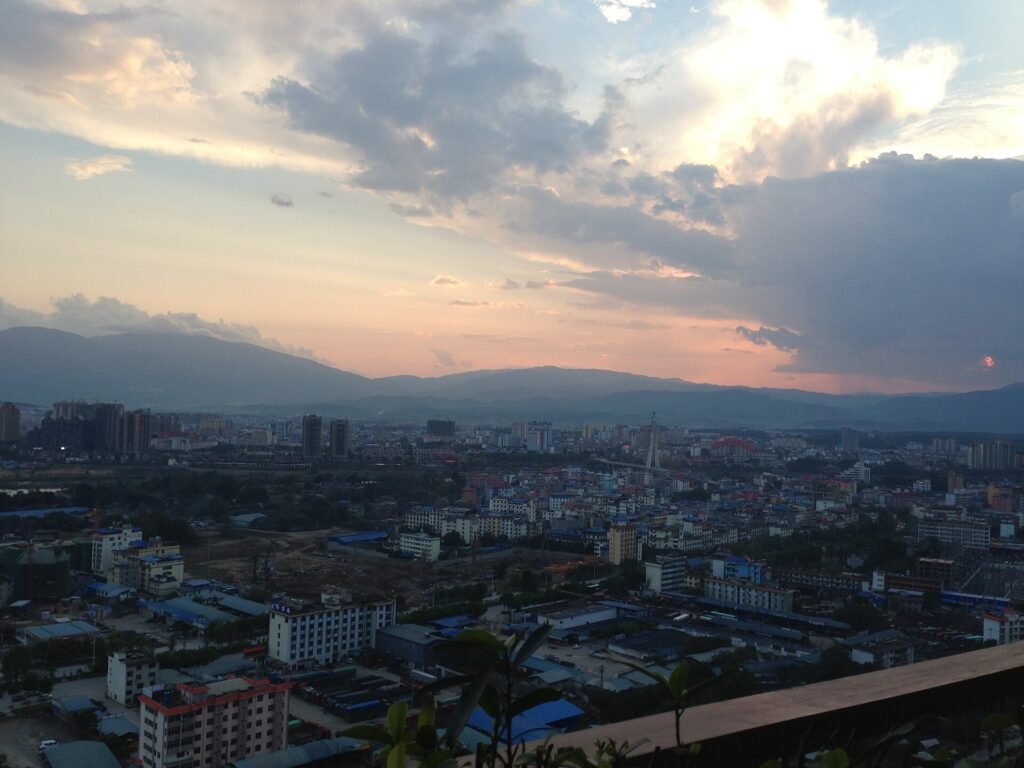
Escape from the Trilateral Slopes (边水往事) is a twenty-one-part crime drama set in a country that does not exist. The Escape from the Trilateral Slopes filming locations are real, and they are the only real thing about it. Its lawless borderland — the “Trilateral Slopes” (三边坡) — is invented, a fictional no-man’s-land somewhere between China, Laos and Myanmar where the drug trade, the casinos and the money all run together. What is not invented is the place that plays it. Every village, market, temple and stretch of rainforest you see on screen was shot on location in Xishuangbanna (西双版纳), the Dai autonomous prefecture in the far south of Yunnan, on China’s border with Laos and Myanmar. Once you know that, the Escape from the Trilateral Slopes filming locations stop being a puzzle and become a trip: China’s own slice of tropical Southeast Asia, reached by a railway that runs from Kunming all the way to Vientiane.
This is not a feel-good travelogue, and the show is not an advertisement for the region. It is a dark, humid, morally grey story — the kind that made people ask, after every episode, which country is this actually? The answer is the interesting part. Xishuangbanna is real, it is Chinese, and it looks nothing like the rest of China: a Dai homeland of golden pagodas, stilt houses, rubber and tea, where the Mekong slides past night markets and the rainforest is genuinely tropical. The show used it for exactly that reason. This page is the map.
The short answer: Escape from the Trilateral Slopes (边水往事, 2024) is a Youku crime drama whose fictional setting, “Trilateral Slopes”, was filmed entirely on location in Xishuangbanna, Yunnan — mainly around the prefectural capital Jinghong, plus Mengla and Menghai. The recognisable spots are the Xishuangbanna Dai Park (傣族园) at Ganlanba, the Wangtianshu rainforest (望天树) canopy in Mengla, the Gaozhuang night market (告庄西双景) on the Mekong, the old street of Menghai (勐海老街), and two Dai villages on the edge of Jinghong. Most are working towns, villages and ticketed nature parks rather than film sets — so treat the Escape from the Trilateral Slopes filming locations as a real journey into China’s tropics, not a studio tour.
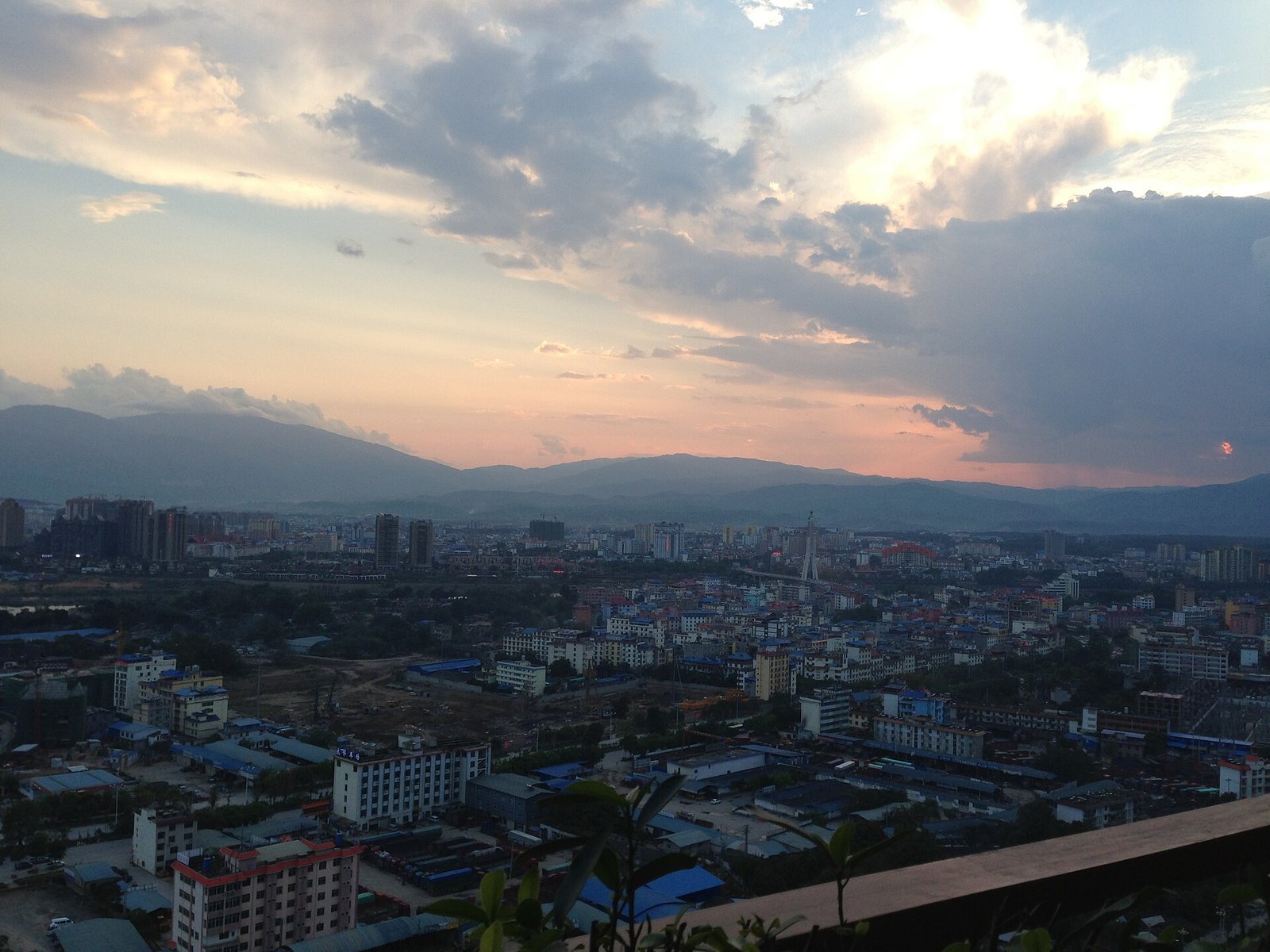
The drama that sends you to Xishuangbanna
Escape from the Trilateral Slopes premiered on Youku on 16 August 2024, and it was one of the year’s critical successes. It is a twenty-one-episode drama, each part around fifty minutes, directed and co-written by Suan (算) and produced under the veteran filmmaker Cao Baoping (曹保平) as executive producer. The cast is led by Guo Qilin (郭麒麟) as Shen Xing, a young migrant worker who washes up in the borderland by accident, and the Hong Kong actor Francis Ng (吴镇宇) as Uncle Cai, the fixer who takes him under his wing.
The premise is a survival story with a moral spine. Shen Xing arrives in a place where nothing is quite legal and no one is quite who they say they are, and the show follows what he is willing to do — and to refuse to do — to get home. It is the kind of drama that earns its reputation slowly: on Douban it sits at around 8.2, and it collected nominations for the Feitian, Golden Eagle and Magnolia television awards. Its texture is what people remember. The show is shot with a documentary plainness that makes the fictional borderland feel like a place you could fly to.
Which is the point of this page. The production could have built its Southeast Asian border town on a backlot. Instead it went south, to the one part of China that already looks the part, and shot there. The producer, Zhang Yuanhuan (张元欢), put it simply: Xishuangbanna’s tropical scenery, its biodiversity and its Dai culture gave the show the “exotic” texture it needed as a narrative space. That decision is why the Escape from the Trilateral Slopes filming locations are worth a trip rather than a trivia list.
Escape from the Trilateral Slopes filming locations at a glance
Here is the short list of the Escape from the Trilateral Slopes filming locations in Xishuangbanna, with what each one is in the show and where to find it. Almost everything is either a working town, a Dai village or a ticketed nature park, so the practical question is less “can I get in” and more “how do I get there”.
| Location | Where | What it is in the show | Type |
|---|---|---|---|
| Xishuangbanna Dai Park (西双版纳傣族园) | Ganlanba, Jinghong — about 30 km south of the city | Dai village scenes and the water-splashing sequences | Ticketed park (~¥45) |
| Wangtianshu scenic area (望天树景区) | Mengla County, ~2.5–3 hours from Jinghong | The deep-rainforest and canopy scenes | Ticketed national park |
| Gaozhuang Xishuangjing (告庄西双景) | Jinghong, on the Mekong | Night-market and city scenes; the Starlight Night Market | Free public district |
| Menghai Old Street (勐海老街) | Menghai County, ~1 hour west of Jinghong | Old-street and food-stall scenes | Working town street |
| Daixiang Shuicheng (傣乡水城) | Central Jinghong | Riverside city scenes | Free public area |
| Manyangguang village (曼养广村) | Mannongfeng, Jinghong | Dai stilt-house village scenes | Living village — be respectful |
| Manga village (曼嘎村) | Gasajiedao, Jinghong | Border-village scenes | Living village — be respectful |
The borderland that is not there
Start with the thing you cannot visit, because it explains the rest. The “Trilateral Slopes” of the title is a fictional place. It is not a real prefecture, city or district, and there is no border marker you can stand beside and say you have found it. The name is a piece of invention — a stand-in for the lawless tri-border zone of the Golden Triangle, the region where Thailand, Laos and Myanmar meet and where the Mekong becomes the Ruak. That is why so many viewers finish the show and reach for a search bar: the drama is deliberately vague about exactly where it is set, and the vagueness is the atmosphere.
The answer to the question is that the setting is fictional and the shooting is real, and the two are not the same place. The show was filmed in Xishuangbanna, the one prefecture in China that already contains, in reality, everything the invented borderland needed on screen: stilt houses, Theravada Buddhist pagodas, tropical rainforest, rubber and tea plantations, a Mekong riverfront, and a Dai majority culture that is closer to Laos and northern Thailand than to Beijing. When the production needed a market, a temple, a jungle or a village, it did not build one — it drove to a real one.
That makes this a particular kind of film-location trip. You will not find a studio gate, a plaque or a themed attraction built for fans. What you will find is a Chinese prefecture that looks like the country next door, and a handful of places where, if you know what you are looking at, you can stand exactly where a camera stood. The rest of this guide is that list, and then the Xishuangbanna that exists whether or not you have seen the show.
Dai Park and the rainforest canopy
The two Escape from the Trilateral Slopes filming locations most associated with the show are also the two you will have to travel a little for, and they are the ones worth planning a day around.
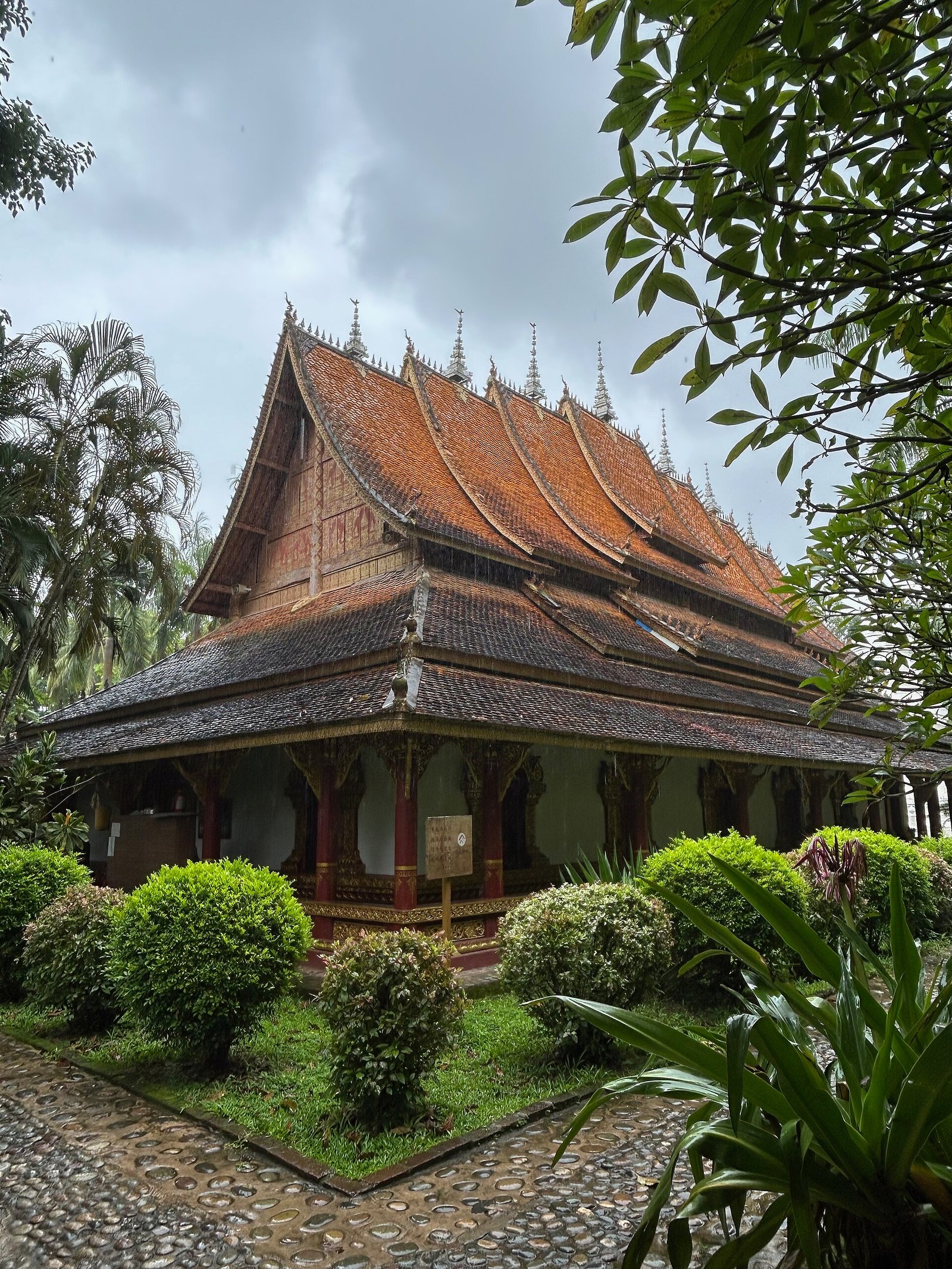
Xishuangbanna Dai Park (西双版纳傣族园) sits at Ganlanba, on a bend of the Mekong about thirty kilometres south of Jinghong, and it is the show’s Dai-village heart. It is a cluster of five old Dai villages — not a reconstruction but a living settlement of stilt houses, temple compounds and fruit trees — that was opened to visitors as a park. The show used it for the village scenes and for water, and the park has leaned into that: its water-splashing square runs a “water-splashing festival every day”, so even if you miss the real April festival you can watch the ritual, and the dai dance and drumming that go with it, on an ordinary afternoon. Tickets are around ¥45.
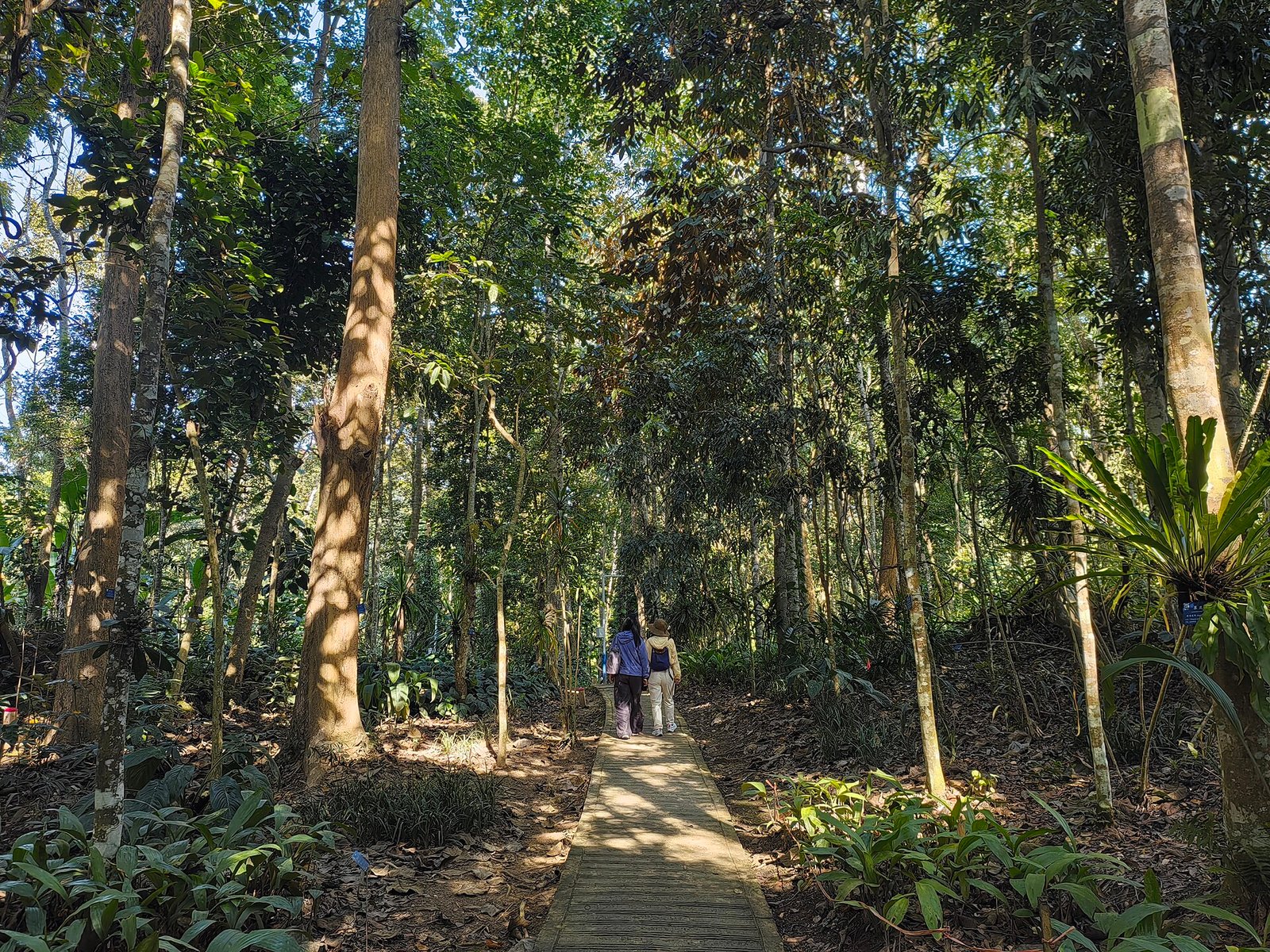
Wangtianshu (望天树景区), in Mengla County near the Lao border, is the opposite kind of place: a national rainforest park built around the Parashorea chinensis, the towering dipterocarp that gives the park its name and is one of the tallest trees in China. Its signature experience is the canopy walkway — a suspended walkway strung between the giant trunks high above the forest floor — which is the closest you will get to the canopy shots in the show. The base ticket is around ¥55, with the canopy walkway sold separately at about ¥120; most visitors buy a package that adds a boat ride up the Nanla River. It is a genuine rainforest, so expect heat, humidity and mosquitoes.
Gaozhuang, the night market and the old towns
The rest of the Escape from the Trilateral Slopes filming locations cluster around Jinghong, the prefectural capital, and are best treated as a slow wander rather than a route with stops.
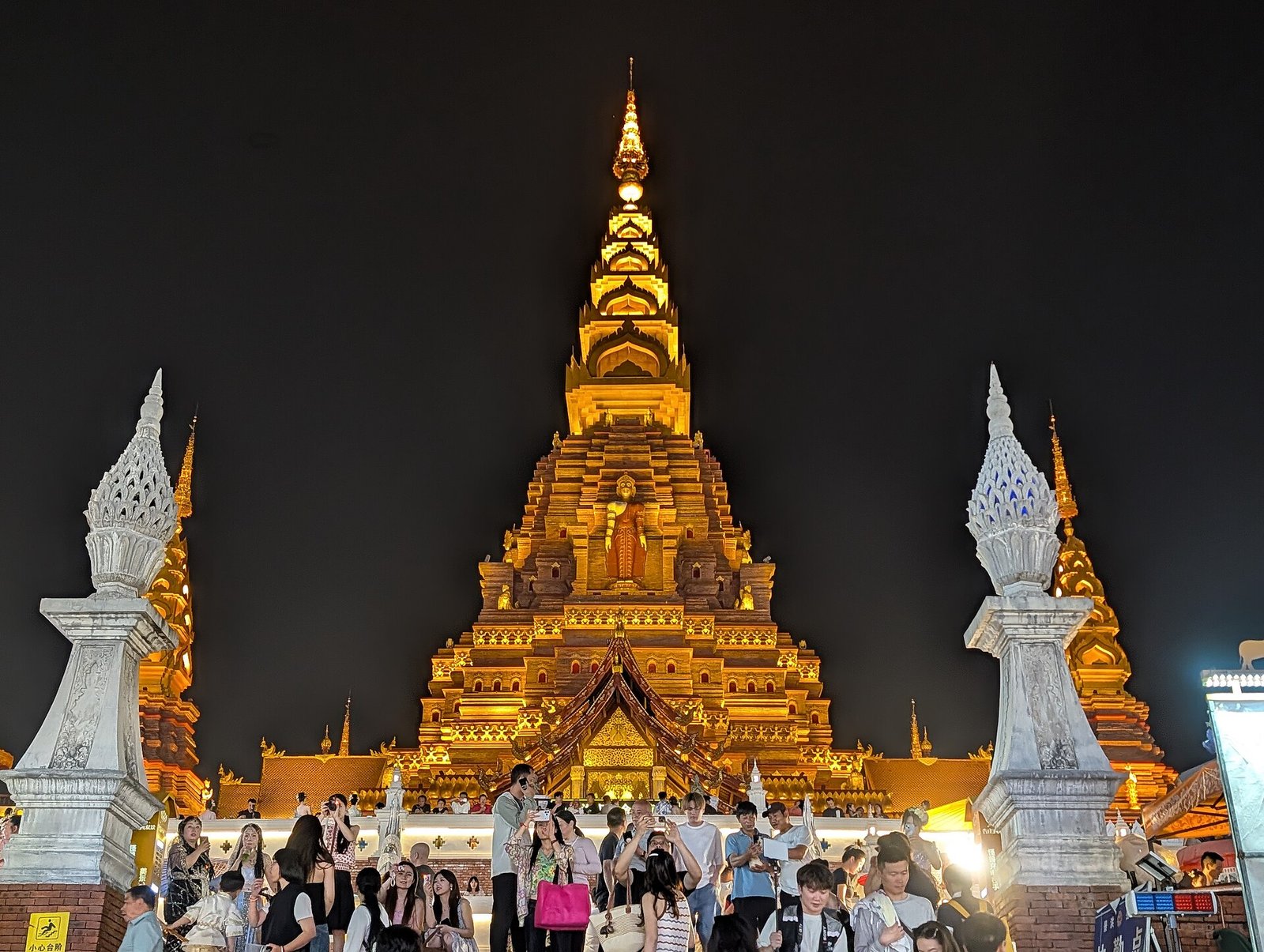
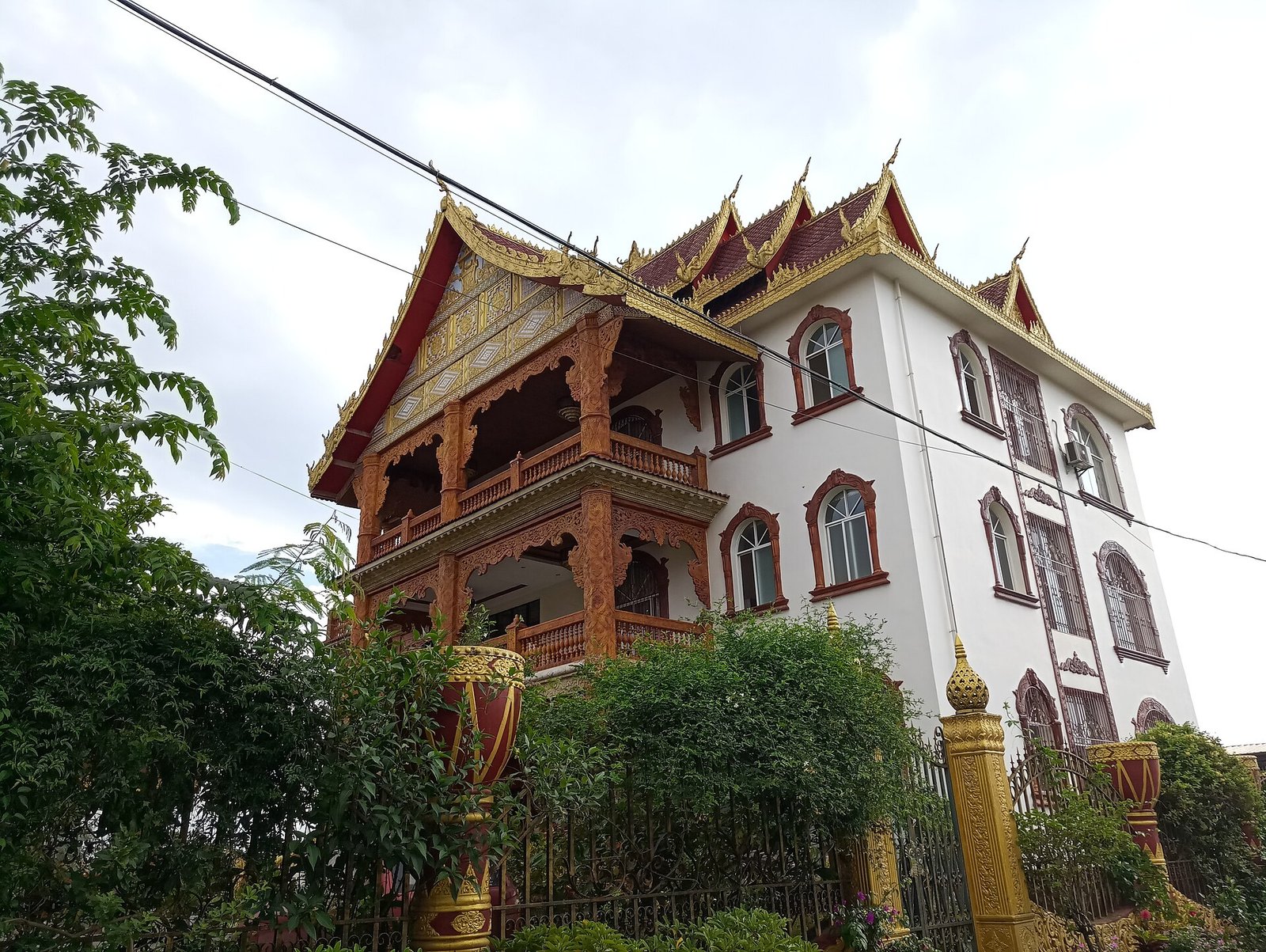
Gaozhuang Xishuangjing (告庄西双景) is the show’s city-in-miniature and the easiest of the locations to reach: a large riverside district on the Mekong built around a golden pagoda, and home to the Starlight Night Market, a nightly sprawl of stalls selling Dai grilled food, Lao iced coffee, Thai pancakes and Vietnamese rolls under strings of lights. It is free to walk, it is where the show’s market scenes were shot, and it is where most visitors end up every evening whether or not they came for the drama. Daixiang Shuicheng (傣乡水城) is the quieter, brick-and-water counterpart in the centre of town, used for riverside city scenes.
West of Jinghong, in Menghai County, the Menghai Old Street (勐海老街) supplies the show’s older, smokier texture: a working county town famous across Yunnan for its barbecue — Menghai roast chicken, griddle plates and oil-braised dishes. And on the edges of Jinghong itself, two ordinary Dai villages appear in the series as the borderland’s hamlets: Manyangguang (曼养广村), where you can watch Dai paper-making and pottery, and Manga (曼嘎村) near the airport road. Both are real villages where people live and work, not exhibits; go quietly, buy something if you can, and do not treat anyone’s front yard as a backdrop.
Read this before you set out: this list mixes ticketed nature parks with ordinary towns and living villages. Hours and prices change, and a village is not a set. Confirm anything specific on the day, keep your visit short and quiet, and remember that the show’s borderland is a violent fiction — the real Xishuangbanna is a peaceful Dai homeland, and the people in it are not extras.
How we checked this list
Four honest caveats, because they change how you should read everything above.
First, the country in the show is fictional and the prefecture is real. “Trilateral Slopes” does not exist. Xishuangbanna does, and the production shot there rather than on a set — the producer has said so publicly, and the regional media and the provincial government’s own channels published the location round-ups. So the “filming locations” here are not the address of an invented country; they are the real villages, parks, markets and streets that stood in for it. Expect a prefecture, not a landmark.
Second, the tone is dark, and the places are not themed to it. Escape from the Trilateral Slopes is a crime drama about drugs, violence and survival on a lawless border. The real Xishuangbanna is nothing like that: it is a prosperous, peaceful, majority-Dai prefecture and one of China’s most popular domestic holiday regions. Do not arrive expecting the show’s danger, and do not treat the show’s fiction as a description of the place or its people.
Third, there is no official scene-by-scene list. The attributions here come from China National Radio (央广网), The Paper (澎湃) and the Xishuangbanna prefectural publicity and media centre, which published the location round-ups after the show aired, plus the parks’ own material. We could not find a studio document confirming each scene individually, so treat the scene-level attributions as reported rather than officially confirmed, and treat all prices and hours as a snapshot. Everything here was checked on 16 October 2026.
Fourth, this is a border region with its own rules. Xishuangbanna shares a border with Laos and Myanmar, and parts of the prefecture are subject to border-area rules that do not apply in the rest of Yunnan. If your plans take you toward the frontier, check the current situation and carry your passport; for Jinghong, Mengla’s parks and the Dai villages in this guide, ordinary tourist travel applies.
Xishuangbanna beyond the drama
Xishuangbanna is worth the trip whether or not you have seen the show, and it is unlike anywhere else in China. A short list, all of it checkable against official sources.
The botanical garden comes first. The Xishuangbanna Tropical Botanical Garden (中国科学院西双版纳热带植物园), run by the Chinese Academy of Sciences, sits on a bend of the Luosuo River at Menglun, about an hour and a half from Jinghong, and it is the largest tropical botanical garden in China — thousands of species, a giant banyan, a “flower garden” of exotic blooms and a rainforest that is genuinely worth a slow half-day. Admission is around ¥80, with an optional shuttle around the site at about ¥50.
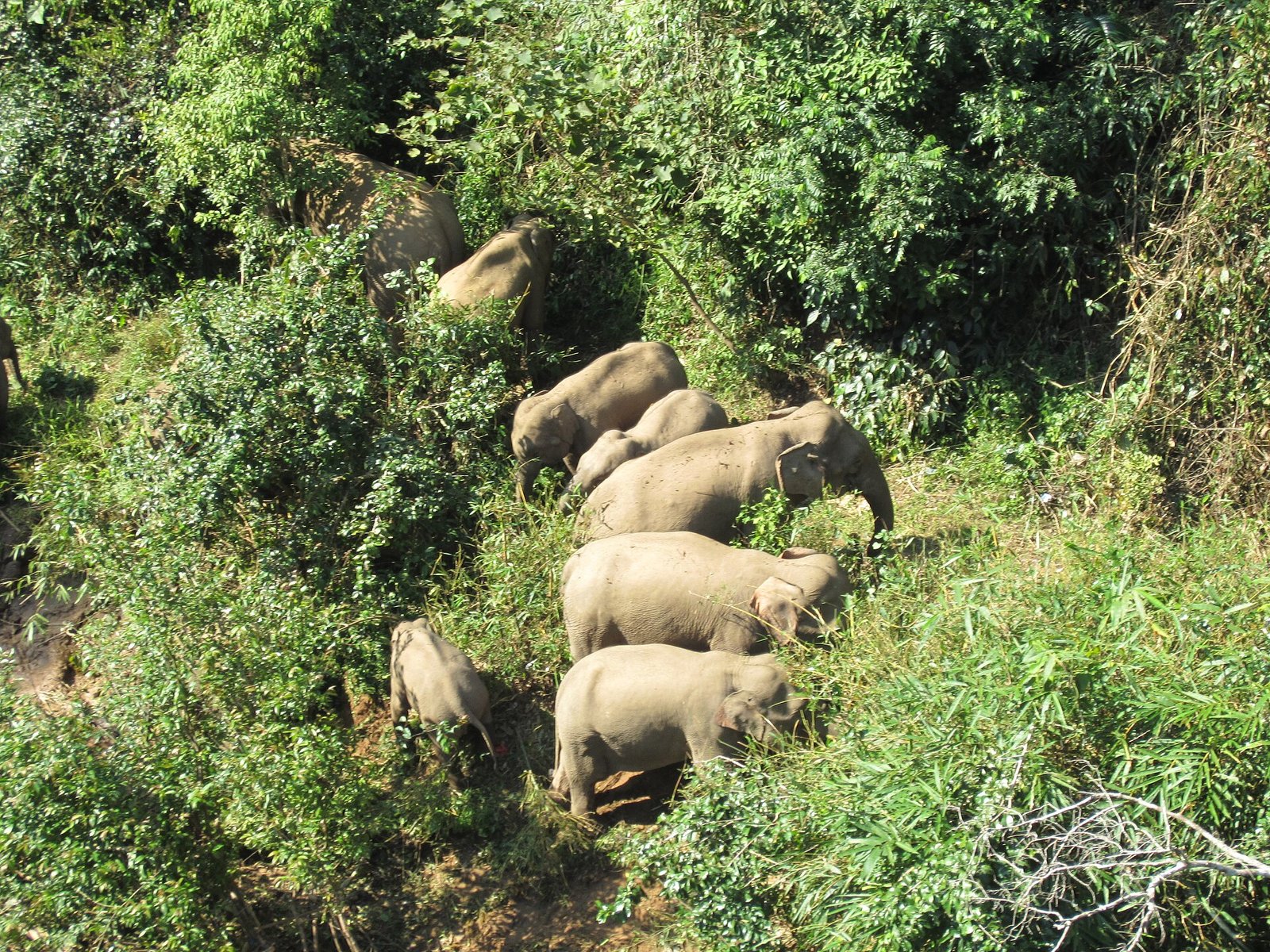
The elephants. The Wild Elephant Valley (野象谷), north of Jinghong, is China’s best-known place to see Asian elephants, and tickets are around ¥60. It is a wild-elephant reserve as well as a visitor site, so sightings are never guaranteed; the rainforest boardwalks and the elephant observation are the draw. Come early, and manage expectations — the forest is the point, not a guaranteed encounter.
The old capital. Manting Park (曼听公园), in Jinghong, is the former royal garden of the Dai chieftains, with a temple and a lake at its centre, and in the evening it hosts a “Lancang–Mekong night” song-and-dance and bonfire show. The town’s great temple, Wat Chaimongkhon (总佛寺), and the golden pagoda of Gaozhuang are the other architectural anchors of a city that is, for China, unusually Theravada Buddhist.
The festival. Xishuangbanna’s Water-Splashing Festival (泼水节), the Dai New Year, is the biggest event of the year — officially 12–15 April in 2026, with the main celebrations on the Mekong waterfront in Jinghong and at Gaozhuang. If you cannot make April, the Dai Park’s daily water-splashing keeps a version of it running year-round.
The tea and the border. Xishuangbanna is the historic homeland of Pu’er tea, grown on the old tea mountains of Menghai and Mengla, and the China–Laos Railway now runs from Jinghong south to the Lao border at Mohan and on to Vientiane. If you have a visa for Laos, the prefecture is the natural first stop on a cross-border trip.
Seeing it in three or four days
Xishuangbanna is bigger than it looks on a map, and the show’s locations are spread between Jinghong, Mengla and Menghai. Build the days around the region first, then let the Escape from the Trilateral Slopes filming locations fold in.
Day one — Jinghong and the show. Land, settle, and start with the city the drama used as its capital: Gaozhuang Xishuangjing and its golden pagoda by day, Daixiang Shuicheng and the Mekong waterfront in the late afternoon, and the Starlight Night Market for dinner — Dai grilled fish, Lao iced coffee, tropical fruit. This is the day that follows the show.
Day two — Dai Park and the villages. Take the morning south to Xishuangbanna Dai Park at Ganlanba for the stilt-house villages and the daily water-splashing, then loop back via Manyangguang or Manga village in the afternoon. If you have time, add the Tropical Botanical Garden at Menglun on the way, which is close to the Ganlanba road.
Day three — the rainforest. This is the long day: Wangtianshu in Mengla County, two and a half to three hours each way, for the canopy walkway and the rainforest. Leave early, book the canopy walkway in advance, and treat it as a full-day trip rather than a stop. If the journey is too much, substitute the Wild Elephant Valley north of Jinghong, which is closer and still thoroughly tropical.
Day four — Menghai and the tea hills. Head west to Menghai for the old street, the barbecue and the Pu’er tea mountains, then keep the rest of the day loose — a market, a temple, a final bowl of Dai noodles. With more time, Xishuangbanna is also the springboard for the China–Laos Railway south to the border, and for the rest of Yunnan via Dali and Kunming.
How to read this: the show’s locations are a mix of free public places (Gaozhuang, Daixiang Shuicheng, the villages) and paid nature parks (Dai Park, Wangtianshu, the botanical garden, Wild Elephant Valley). Your real costs are the parks and the long transfers, so group the paid sights by direction and keep the free city wandering flexible.
Getting to Xishuangbanna
By rail — the good option. Xishuangbanna is on the China–Laos Railway, and the Xishuangbanna station in Jinghong is a stop on the line that runs from Kunming south to Vientiane. The journey from Kunming South takes about three hours (roughly 3h16m on the fastest services), with second-class fares floating between about ¥178 and ¥260 depending on the train and the date. This is the line that turned a former eight-hour bus ride into a comfortable morning. From almost anywhere else in China you must change at Kunming South and allow at least an hour for the connection.
By air. Xishuangbanna Gasa International Airport (XIS) serves Jinghong, and the flight from Kunming is only about an hour — but fares are often two to three times the train, so the rail line is usually the better call unless your time is very tight.
Around the region. Xishuangbanna station is at Gasa, on the edge of Jinghong: it is about twenty minutes and roughly ¥30 by taxi to Gaozhuang, about fifteen minutes to the centre, and there is a K1 bus from the station straight to Gaozhuang. From Jinghong, the Dai Park, the botanical garden and Wild Elephant Valley are all reachable by shuttle bus or day tour, and Menghai and Mengla are reached by road, by the “Banna Haoxing” shuttle network or by hired car. Pay for everything with Alipay or WeChat Pay.
Tickets, hours and what is free
| What | Price | Notes |
|---|---|---|
| Gaozhuang Xishuangjing & Starlight Night Market | Free | Riverside district; market runs nightly |
| Daixiang Shuicheng | Free | Central Jinghong; public riverside area |
| Manyangguang & Manga villages | Free | Living Dai villages — visit respectfully |
| Menghai Old Street | Free | Working town; pay for food |
| Xishuangbanna Dai Park | ~¥45 | Ganlanba; daily water-splashing show |
| Wangtianshu scenic area | ~¥55 + canopy ~¥120 | Mengla; book the canopy walkway ahead |
| Xishuangbanna Tropical Botanical Garden | ~¥80 + shuttle ~¥50 | Menglun; allow a half-day |
| Wild Elephant Valley | ~¥60 | North of Jinghong; go early |
| Manting Park & the evening show | ~¥40 + show | Jinghong; check the night-show schedule |
| Kunming South → Xishuangbanna (rail) | ~¥178–260 | About 3 hours; book ahead in holidays |
| Xishuangbanna station → Gaozhuang (taxi) | ~¥30 | About 20 minutes; K1 bus also runs |
What to know before you go
Visas. Yunnan is one of the provinces covered by China’s 240-hour visa-free transit, which lets eligible travellers stay up to ten days without a visa on a confirmed onward ticket to a third country or region; the main transit port for the region is Kunming Changshui airport. Xishuangbanna also sits under a long-standing arrangement that lets ASEAN tour groups enter the prefecture visa-free, which is why the region feels so connected to Laos and Thailand. Country lists and rules change — check our visa guide and the official source before you book.
Weather. This is the tropics, not the Yunnan plateau. Expect heat and humidity for most of the year, a distinct rainy season from roughly May to October, and a cooler, drier, more comfortable winter (November to February) that is also the busiest domestic season. Rainforest parks are hot and wet year-round, so bring light layers, sun protection and mosquito repellent.
Paying. Alipay and WeChat Pay both work with foreign cards and are how you will buy train tickets, park admissions, meals and taxis. Carry your passport — it is the ID for rail travel, park tickets and the visa-free-transit paperwork.
Booking in the holidays. Xishuangbanna is a hugely popular domestic destination, and rail seats and hotels sell out fast around Spring Festival, the Water-Splashing Festival (April) and National Day. Book rail tickets roughly two weeks ahead in those windows.
When to go. For comfort, the dry, mild months from November to March are the best. For the region’s biggest spectacle, come for the Water-Splashing Festival in mid-April — and book everything early. For the drama’s locations specifically there is no season to chase; the villages, markets and rainforest are open year-round.
Common questions
Where was Escape from the Trilateral Slopes filmed?
In Xishuangbanna, the Dai autonomous prefecture in southern Yunnan, on China’s border with Laos and Myanmar. The production shot on location rather than on a set, mainly around the prefectural capital Jinghong, plus Mengla and Menghai. The best-known spots are the Xishuangbanna Dai Park at Ganlanba, the Wangtianshu rainforest canopy in Mengla, the Gaozhuang night market on the Mekong, and the old street of Menghai.
Which country is the show set in?
None — the setting is fictional. The drama’s borderland, the “Trilateral Slopes” (三边坡), is an invented place, loosely modelled on the Golden Triangle where Thailand, Laos and Myanmar meet. It is not a real country, region or city. What is real is where it was filmed: Xishuangbanna, in China.
Is Xishuangbanna in China?
Yes. Xishuangbanna (西双版纳) is a Dai autonomous prefecture in the far south of Yunnan province, China, bordering Laos and Myanmar. Its capital is Jinghong, and it is the southern terminus of the Chinese section of the China–Laos Railway. It is Chinese territory, and domestic travel to it is ordinary — the same visa and ID rules as the rest of Yunnan apply.
Can you visit the filming locations?
Yes, and most of them are either free public places or ordinary ticketed parks. Gaozhuang, Daixiang Shuicheng and the Dai villages are free to walk; the Dai Park, Wangtianshu, the Tropical Botanical Garden and Wild Elephant Valley charge admission. None of them is a film set built for tourists, so check current hours and prices on the day, and treat the villages as people’s homes.
Is Escape from the Trilateral Slopes worth watching?
If you like slow-burn crime dramas with a strong sense of place, yes. It holds around 8.2 on Douban and was nominated for the Feitian, Golden Eagle and Magnolia television awards. It is a survival story set in a lawless borderland, and its reputation rests on its documentary texture and the performance at its centre. Go in expecting heat, moral grey areas and a lot of atmosphere rather than action.
How many episodes does it have, and where can I watch it?
Twenty-one, each about fifty minutes, first broadcast on Youku from 16 August 2024. It is a Youku production, so Youku’s own platforms are the official home, and it circulates internationally under the English title Escape from the Trilateral Slopes. Availability by region changes, so check your local services.
How do I get to Xishuangbanna?
The easiest way is the China–Laos Railway: take a train from Kunming South to Xishuangbanna station in Jinghong, about three hours, with second-class fares from around ¥178. Almost every other city connects through Kunming South, so allow an hour for the change. You can also fly into Xishuangbanna Gasa International Airport (XIS), about an hour from Kunming.
What is the best time to visit Xishuangbanna?
The dry, mild months from November to March are the most comfortable. The region’s signature event is the Water-Splashing Festival in mid-April (officially 12–15 April in 2026), which is spectacular but crowded — book trains and hotels well ahead. For the drama’s locations there is no season to chase; they are open year-round.
Your next move
More real cities, more dramas?
Xishuangbanna is one of the real places we have mapped to the dramas shot there — from steel towns and water towns to a fictional borderland that turned out to be China’s tropics.
Worried about the practical stuff?
Visas, payment, trains and the apps you will need before you land — the four things you cannot work out on the ground. Each guide is dated and sourced.
Ready to go?
Xishuangbanna was shot as it is: China’s own slice of the tropics, with golden pagodas, rainforest and a night market on the Mekong. See where it sits on the map.
Last verified
Sources: China National Radio, CNR (cnr.cn), 2024-08-31 — the Xishuangbanna filming locations of Escape from the Trilateral Slopes: the Dai Park, Wangtianshu, Gaozhuang, Menghai Old Street, Daixiang Shuicheng and the Dai villages of Manyangguang and Manga, plus the producer’s remarks on why the region was chosen · The Paper (thepaper.cn), 2024-09-01 — a full round-up of the drama’s Xishuangbanna locations · Xishuangbanna Dai Autonomous Prefecture People’s Government (xsbn.gov.cn), 2026-03-20 — the official 2026 Water-Splashing Festival (Dai New Year 1388) programme, 12–15 April · Xishuangbanna Tropical Botanical Garden, Chinese Academy of Sciences (xtbg.ac.cn) — admission and shuttle charges for the botanical garden · Douban (movie.douban.com/subject/36097760) — Escape from the Trilateral Slopes (边水往事, 2024): 21 episodes, directed and co-written by Suan, executive-produced by Cao Baoping, starring Guo Qilin and Francis Ng, and its Feitian, Golden Eagle and Magnolia award nominations · Baidu Baike — Escape from the Trilateral Slopes: production companies, the Youku premiere on 16 August 2024 and the cast · Sina (k.sina.com.cn), 2026-09-14 — admission prices for Xishuangbanna’s main scenic areas, including the Tropical Botanical Garden (¥80), Wild Elephant Valley (¥60) and the Dai Park (¥45) · Sina / NetEase — the China–Laos Railway: Kunming South to Xishuangbanna (Jinghong) in about three hours, second-class fares floating between roughly ¥178 and ¥260, and the station at Gasa with the K1 bus to Gaozhuang · National Immigration Administration (nia.gov.cn) and official visa guides — China’s 240-hour transit visa-free policy, its provinces and its ports, and the ASEAN tour-group arrangement for Xishuangbanna · Yangcheng Evening News (2024-09) — the drama’s Douban score of around 8.2 · Baidu Baike / Qunar / Tuniu — Wangtianshu scenic area: base admission around ¥55 and the canopy walkway around ¥120 · Wikimedia Commons photo pages for the photographs used, credited in the captions and the media library
Spotted something out of date? Email us — or read how corrections work. We check every report against the source and update the page.
Ready to plan it? Turn the dramas you have watched into a day-by-day route with the C-drama route planner.
Not sure where to start? Take the drama-city quiz — seven questions, one city, and a route waiting at the end.