
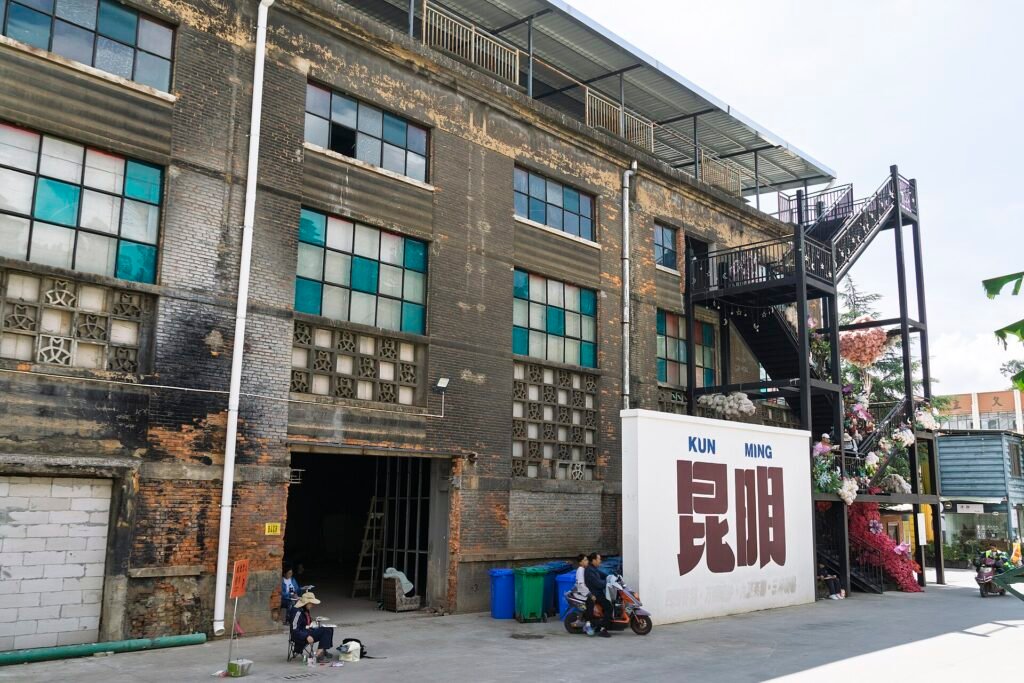
The Long Season (漫长的季节) is a story about a frozen steel town in China’s far north-east — and almost none of it was filmed there. The show’s fictional city, Hualin, sits somewhere in the rust belt of the north; the camera, however, spent three months in Kunming, more than 3,000 kilometres to the south, in a temperate Yunnan valley where the autumn stays golden and the ironworks never stopped smoking. That single fact is what makes the Long Season filming locations worth a trip: you are not visiting a theme park built for a drama, you are visiting a working industrial city that stood in for another one, and a handful of real rivers, bridges and back lanes that the show used exactly as they are.
The short answer: The Long Season (漫长的季节, 2023) is set in the fictional north-eastern town of Hualin but was shot in and around Kunming, the capital of Yunnan. The core of the show’s world — the steelworks, the workers’ dormitories, the cinema and the assembly hall — was filmed at the Kunming Iron and Steel (昆钢) old plant in Anning and at the No. 5 Sodium factory (五钠厂) on the western edge of the city; a few key scenes used real places such as the Chijiang bridge on the Nanpan River and the Baoxiang River in Guandu. Most of these are industrial sites rather than ticketed attractions, and one has been partly demolished — this is film-location archaeology, not a studio tour.
The drama that sends you to Kunming
The Long Season is a twelve-part mystery-drama that premiered on Tencent Video on 22 April 2023, directed by Xin Shuang (辛爽). It follows three men from a failing north-eastern steel town — the driver Wang Xiang (played by Fan Wei, 范伟), his brother-in-law Gong Biao (Qin Hao, 秦昊) and the retired policeman Ma Desheng (Chen Minghao, 陈明昊) — as a minor case of a cloned licence plate pulls them back into a dismemberment murder that went unsolved eighteen years earlier. The story runs on three timelines at once, 1997, 1998 and 2016, and most of its reputation rests on how gently it treats the people caught between them.
The reputation is real. On Douban the show holds 9.4 from roughly 1.18 million ratings, the highest score of any Chinese drama of 2023; it opened at 9.0 and climbed to 9.5 by the finale. It took Best Mini-Series and Best Actor at the 18th Seoul International Drama Awards, and Best Director for Xin Shuang at the 28th Busan International Film Festival. It is, in other words, one of the most internationally visible Chinese dramas of its decade — and the reason that matters here is that the show’s look is inseparable from a place the viewer is never told about.
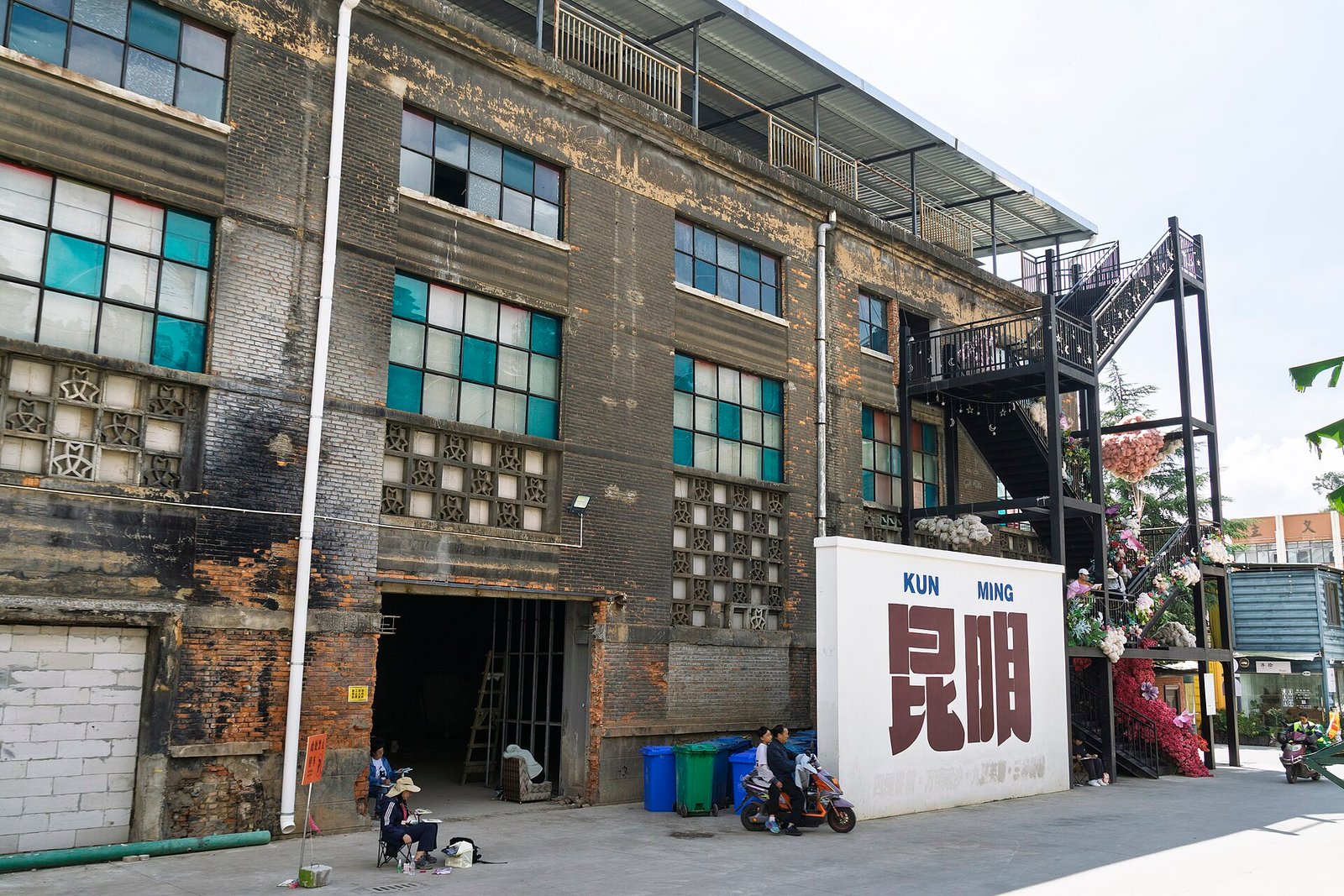
That place is Kunming. Hualin does not exist; the production built its world out of the Kunming Iron and Steel plant in Anning, the abandoned and half-abandoned factory districts around the city, and a set of real streets, rivers and bridges. The director wanted a warm, gold-leaf autumn rather than the grey the story implies, and Kunming — the “spring city,” mild all year — gave it to him. So the steel town you remember from the screen is, in physical fact, a subtropical highland city with red-brick workshops, an old railway line and a river that runs to the Mekong. Seeing both at once is the whole point of this guide — and it is why the Long Season filming locations reward a slower trip than a checklist, because you are looking at a real city wearing another city’s clothes.
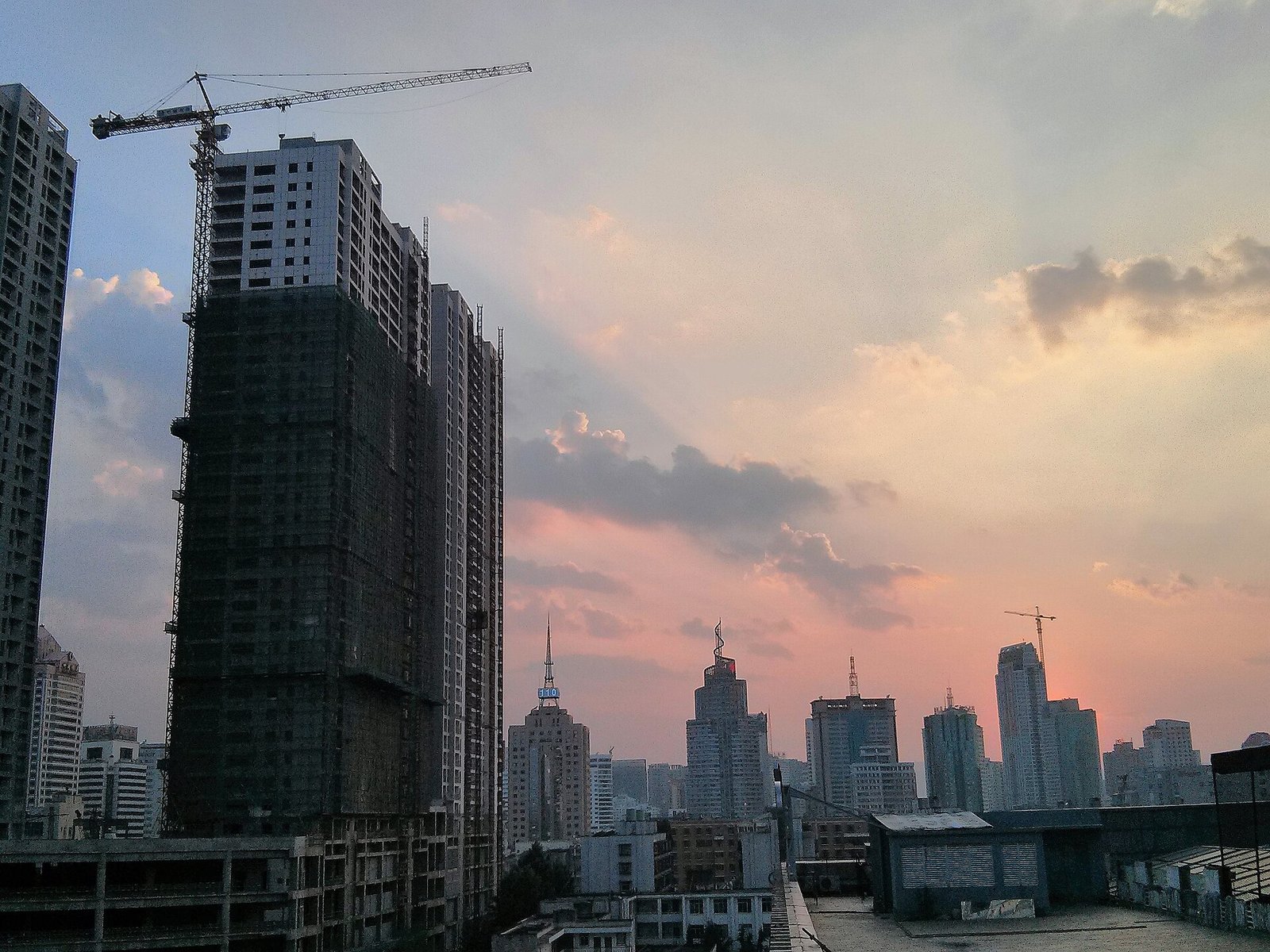
The Long Season filming locations at a glance
| Location | Where | What it is in the show | Type |
|---|---|---|---|
| Kunming Iron & Steel (昆钢老厂区) | Anning, 30–40 km west of the city | The steelworks and streets of Hualin — the main stage | Industrial heritage |
| No. 5 Sodium factory (五钠厂) | Haikou, Xishan District | The video hall, the works hall and the offices of Hualin Steel | Former factory |
| Yunnan Tyre Plant housing (云南轮胎厂生活区) | Jinning District | Wang Xiang’s home, the Hualin Steel residential quarter | Partly demolished |
| Hand tractor factory (手扶拖拉机厂) | Kunming Economic Zone | The Hualin cinema | Former factory |
| Chijiang bridge (赤江桥) | Beigu town, Yiliang County | The “Xiaoliang River” bridge that moves the plot | Working bridge |
| Baoxiang River (宝象河) | Xiaobanqiao, Guandu District | Where Gong Biao goes into the water | City river |
| Mayuan urban village (麻园城中村) | Wuhua District | The lane where the two track the medicine buyer | Residential lane |
| Yulong Bay (玉龙湾) | Anning | Old-Kunming street set used across period dramas | AAAA scenic area |
Kun Steel: the factory town that became Hualin
If you want to stand where the show was made, go to Anning, the industrial county-level city on Kunming’s western edge, and find the old plant of Kunming Iron and Steel (昆钢). It is the anchor of the Long Season filming locations in Kunming, and everything else on this list is a satellite around it. This is not a set. Kungang was founded in 1939 and grew into one of the pillars of south-western Chinese industry, and in 2018 its headquarters plant was designated a National Industrial Heritage site. What survives is an unusually complete industrial landscape: red-brick workshops, clusters of blast furnaces, worker dormitories climbing the hillside, and old rail sidings that still run out toward the plant gates. Crews film here precisely because it does not need dressing — the texture is original.
More than 70 per cent of The Long Season was shot in Anning, and the plant district is the reason. The show’s promotional poster is a photograph of Kungang’s gas pipes; the street where Wang Xiang gives flowers to Li Qiaoyun is Jianshe Road inside the plant district; the railway scenes use the plant’s disused branch line. The old factory district was later opened to the public as the Yunnan Industrial Culture Expo Park (云南工业文化博览园), with its core in the Kungang headquarters plant, and it has since become a filming magnet in its own right — the drama Good Times (好好的时光) shot entirely across twenty-one Anning locations in 2025, and more than fifty productions have used the city in recent years.
Two practical notes before you plan around it. First, this is a heritage and exhibition area rather than a conventional ticketed park, and it sits inside a working industrial zone, so confirm current opening arrangements locally rather than assuming; the core is usually walkable in about two hours. Second, the appeal is photographic and atmospheric — a steel structure, a rusted pipe, a line of dormitory windows — so come for the look of the thing and the history behind it, not for rides or exhibits on a theme-park scale. If the industrial mood is what you came for, Kunming has other converted factories worth an hour each: the Chunyu 937 district (春雨937), a 1937 smeltery turned cultural quarter in Xishan District, and the M60 and C86 creative parks in the same west-of-centre belt.
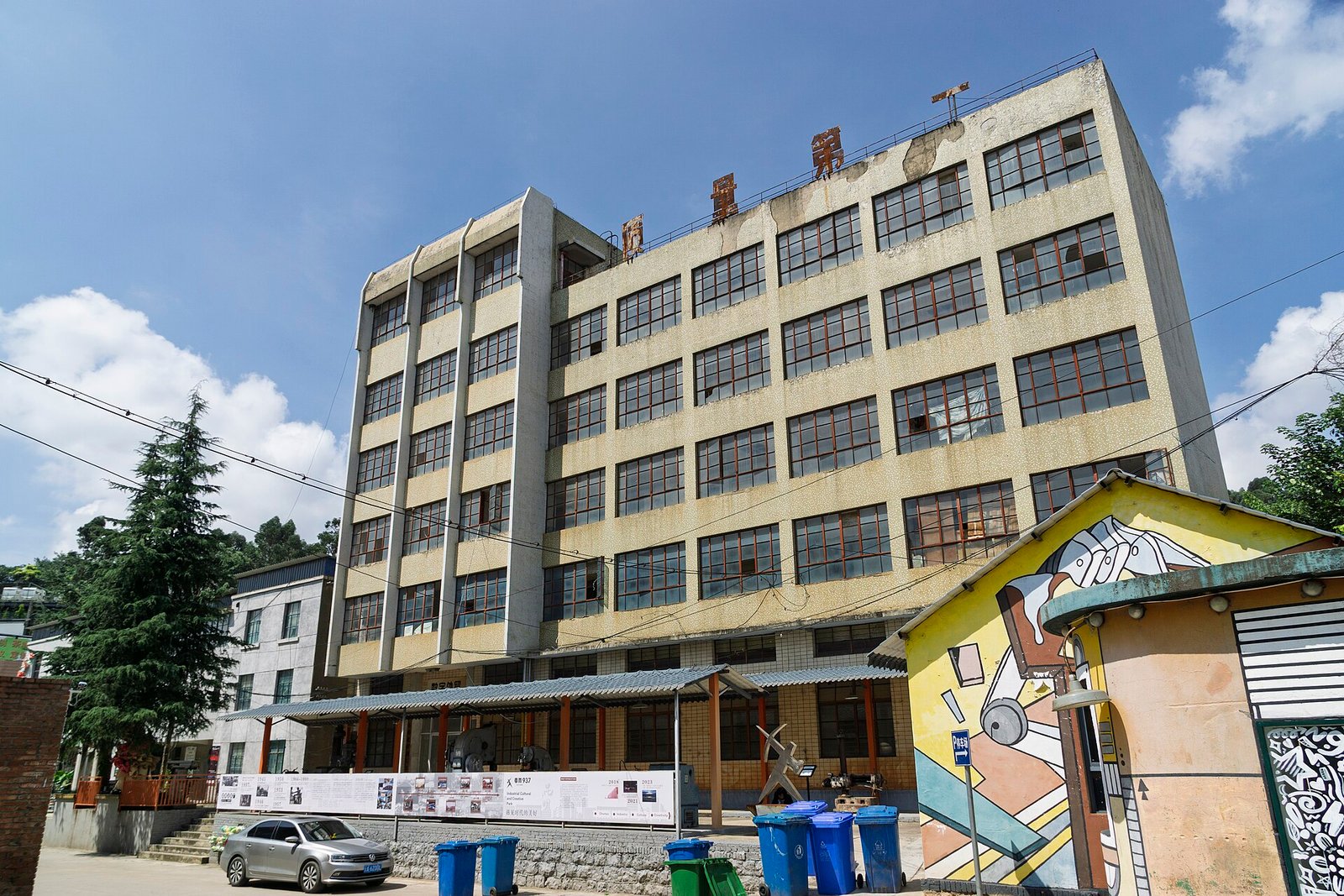
Anning: the industrial-heritage stage
Anning is worth more than the one factory. The city sits in the Tanglangchuan river valley, on the old Southern Silk Road, and it stacks industrial memory on top of hot springs and Qing-dynasty streets — which is why directors keep coming back to it. Three stops round out a day.
Yulong Bay (玉龙湾) is the counterweight to all the brick and steel: an AAAA-rated scenic area of about 1,817 mu with a forest coverage of roughly 80 per cent, and inside it the Old Kunming City Film Base, a reconstructed set of Ming, Qing and Republican street scenes with double-eaved gate towers and courtyard houses. It has been filming for decades — the 1999 sequel to Journey to the West was shot here — and it makes a pleasant, low-key half-day on its own.
Anning Hot Spring Town (温泉镇) is the other Anning, the one that gave the city its name — it has been known for centuries as the “No. 1 Hot Spring Under Heaven,” with Republican-era buildings set among green hills and the Zen temple of Caoxi (曹溪寺) nearby. It is the right place to end an industrial day, and the visual contrast between a blast furnace at noon and a misty hot-spring town at dusk is exactly the range that keeps crews returning.
The rest of the county is a quiet list of the same idea: Qinglong Gorge (青龙峡) for forest and ravine scenery, the old town of Lianran for the everyday texture of a Yunnan county seat, and the riverside farmland along the Tanglangchuan for the golden autumn the show was chasing. None of it is a blockbuster stop; all of it is the reason The Long Season looks the way it does.
Rivers, bridges and back lanes in the city
Not everything is industrial. A handful of the show’s most important scenes were shot on ordinary public ground in Kunming, and those are the easiest places to visit without any arrangement at all.
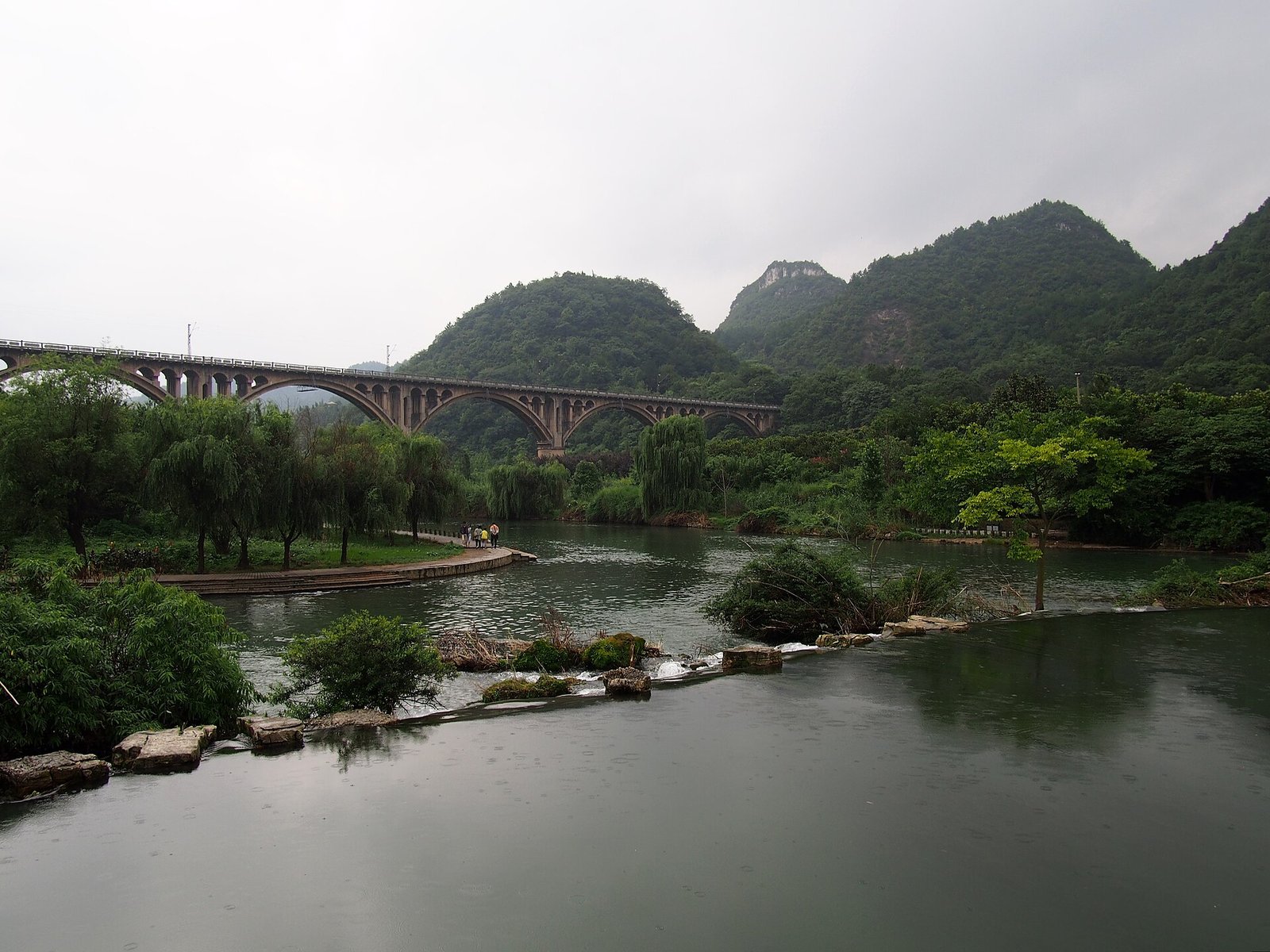
The “Xiaoliang River” bridge, which the plot uses as a hinge, is the Chijiang bridge (赤江桥) over the Nanpan River at Beigu town in Yiliang County, east of the city. Gong Biao’s fall into the water was filmed on the Baoxiang River (宝象河) near Xiaobanqiao in Guandu District, in the south of Kunming. The urban-village lane where Wang Xiang and Gong Biao hunt for the medicine buyer is in Mayuan (麻园), a dense old neighbourhood in Wuhua District; the convenience store where Wang Bei works is in the Xindexiang lane off Panlong District; the “Hualin Public Security Bureau” building is an office block at the old Coal Machinery Plant in Panlong District. These are working parts of the city, not attractions — go quietly, look, and do not expect a sign.
Two more city locations are worth knowing because they are among the most visited places in the show’s aftermath. The No. 5 Sodium factory (五钠厂) on Haikou Street in Xishan District supplied the video hall, the works assembly hall and the office interiors — the sequences that most clearly fix the show’s late-1990s mood. And the “Hualin Steel residential quarter,” Wang Xiang’s own neighbourhood, was the Yunnan Tyre Plant No. 1 housing area in Jinning District, which began to be cleared after filming finished; visitors who go looking for it should expect to find fragments and a changed site rather than a preserved one.
Read this before you set out: most of the Long Season locations are former or working industrial sites, not ticketed tourist attractions. Some have been demolished or are mid-redevelopment, and access can change without notice. Treat the list as a starting point for exploration, check locally on the day, and never enter a factory area that is fenced or clearly in operation.
How we checked this list
Three honest caveats, because they change how you should read everything above.
First, the story and the shoot are in different places. Hualin is fictional and north-eastern; the filming was in Kunming and Yunnan, a subtropical province in the south-west. If you are coming to Yunnan expecting to see a frozen north-eastern steel town, you will not — you will see the real, working city that stood in for one, which is a different and, most would say, better thing. This guide covers only the Long Season filming locations in Kunming and the surrounding county, not the handful of scenes shot elsewhere in Yunnan.
Second, not every location survives. The Yunnan Tyre Plant housing area was being cleared after the shoot, and several of the factory interiors were always temporary. The show was made in 2022 and released in 2023; industrial districts redevelop. Verify anything you specifically want to see before building a day around it.
Third, there is no official scene-by-scene list. The location attributions here come from Kunming and Yunnan media and from fans who went and checked — the local government’s own tourism coverage of Anning and the Kungang heritage site is the strongest single source — but we could not find a studio document that confirms each scene individually. Treat the attributions as reported rather than officially confirmed, and treat all prices and hours as a snapshot. Everything was checked on 15 October 2026; ticket prices, opening hours and access rules change.
Kunming beyond the drama
Kunming is worth the trip even if you have never seen the show, and it is the gateway to the whole of Yunnan. A short list, all of it checkable against official sources.
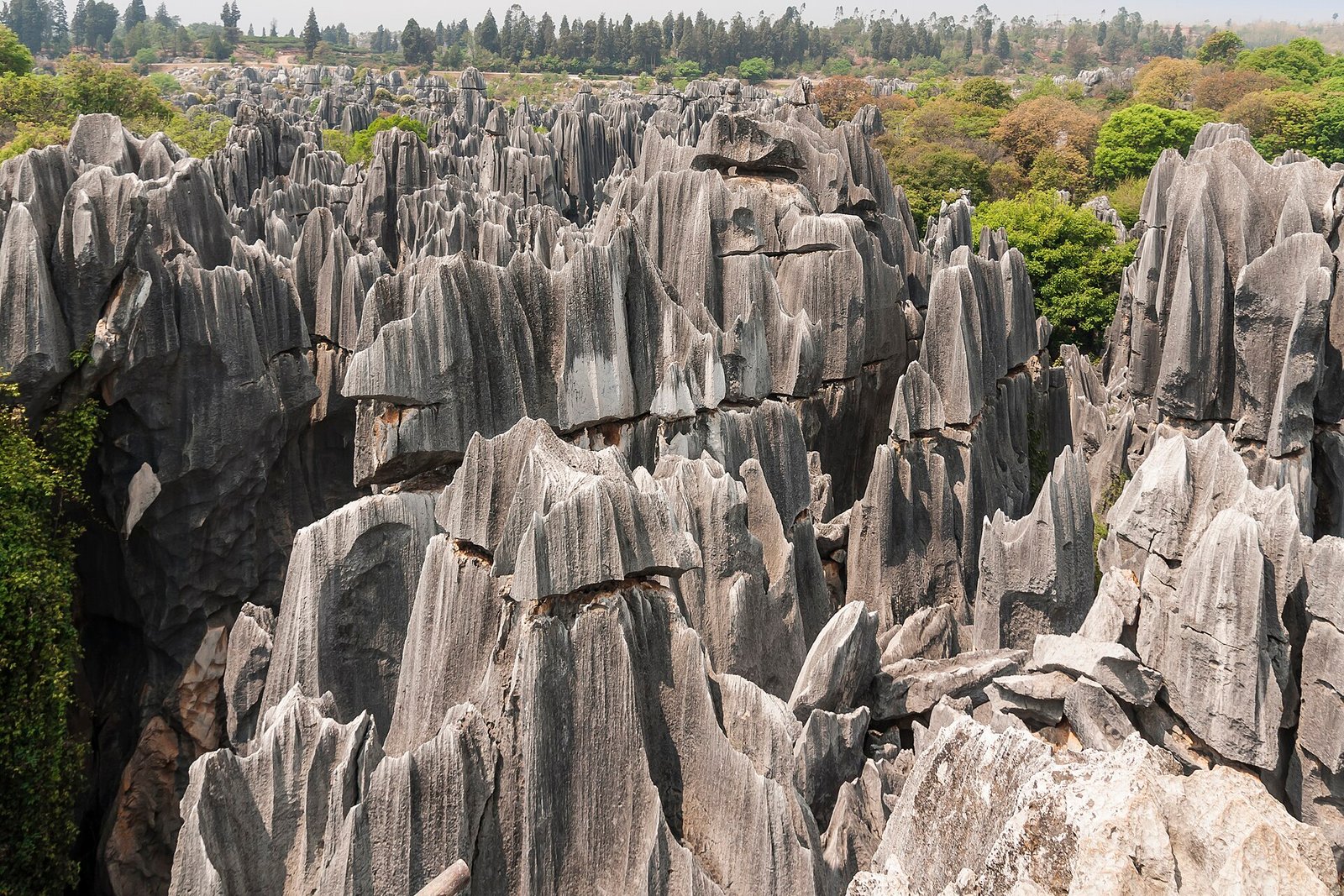
The Stone Forest (石林) is the one unmissable detour: a UNESCO World Heritage karst landscape of limestone pinnacles a couple of hours east of the city, rated AAAAA. Tickets are around ¥130 for adults plus roughly ¥25 for the shuttle, and it is open 07:30–17:30 with last entry at 17:00, though holiday hours shift. The easiest route is the high-speed train from Kunming South to Shilin West in about twenty minutes, then the shuttle bus; there are also direct tourist coaches from Kunming’s East Bus Station.
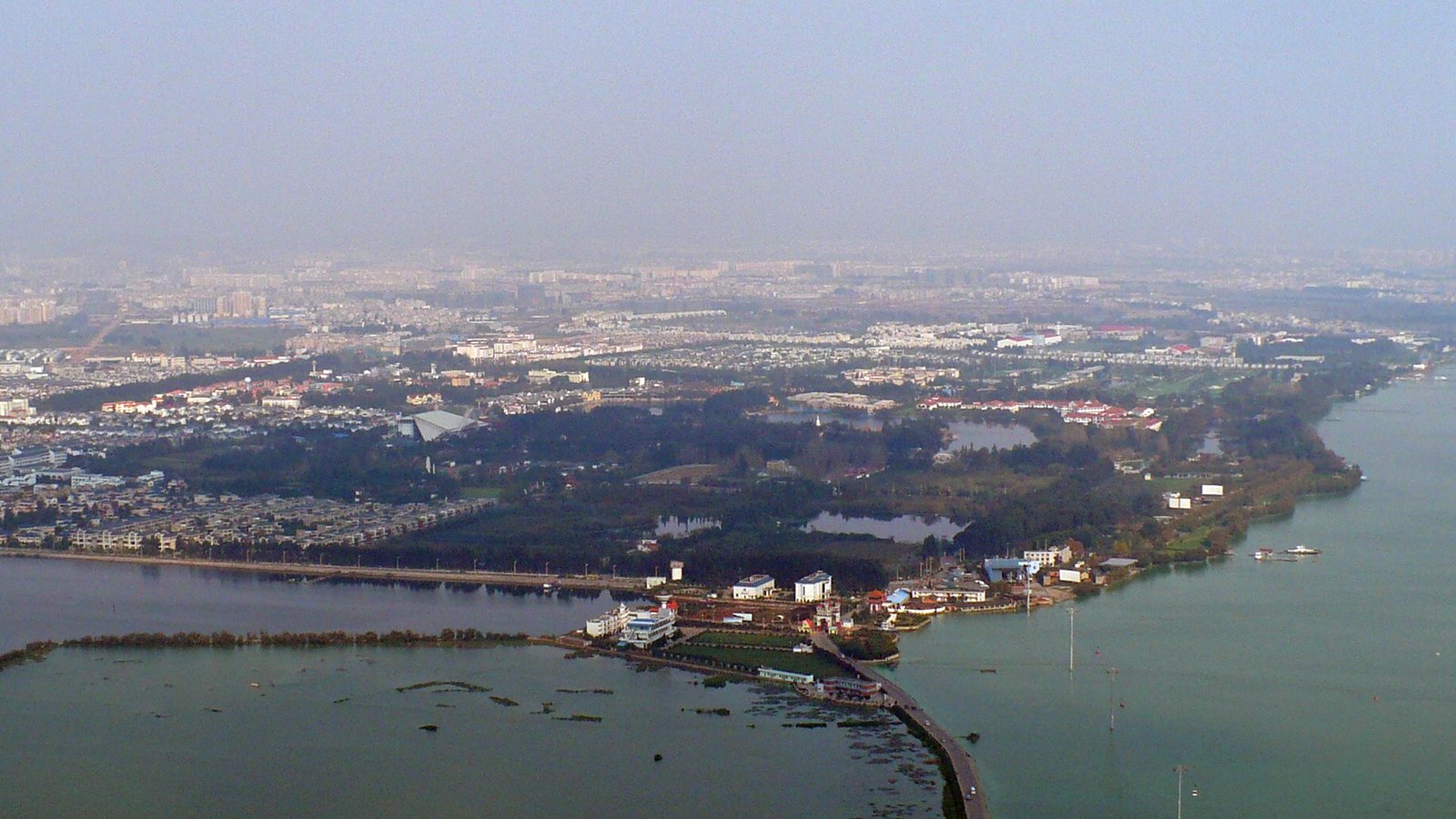
Dianchi Lake (滇池) is the city’s own water, free to visit and best at Haigeng Dam, where in winter — roughly November to March — thousands of black-headed gulls arrive and the whole promenade turns into a feeding ground. Green Lake Park (翠湖) in the old city is the smaller, calmer version of the same pleasure, free and central. The Yunnan Ethnic Village (云南民族村, about ¥90) gathers twenty-six of the province’s ethnic groups in one place beside Dianchi, and the Western Hills (西山) rise behind the lake with the Dragon Gate (龙门, about ¥30) and a cable car that crosses the water — the best single view of Kunming.
In town, the Yunnan Provincial Museum (free, by reservation) is the one to book if you want the region’s archaeology explained, with the bronze ox-and-tiger table as its signature piece; Guandu Old Town (官渡古镇) is an old riverside quarter worth a morning; and the Dounan flower market (斗南花市), the largest in Asia, is a genuine local spectacle in the small hours. The Golden Horse and Jade Rooster arches (金马碧鸡坊) mark the old city centre at night.
Seeing it in three or four days
Kunming splits cleanly, and the drama touches only part of it. Build the trip around the city first, then give Anning its own day.
Day one — the old city. Start at Green Lake, walk the centre, take in the Yunnan Provincial Museum if you booked ahead, and spend the evening around the Golden Horse and Jade Rooster arches and the food streets. This is the gentle orientation day.
Day two — lake and hills. Dianchi, Haigeng Dam and the Western Hills in one loop, with the cable car across the lake if you want the view. Add the Yunnan Ethnic Village if you are travelling with children.
Day three — the drama. Give the whole day to Anning. Reach the Kungang old plant and the Yunnan Industrial Culture Expo Park in the morning, when the light on the red brick is best, then continue to Yulong Bay or the hot-spring town in the afternoon. If you are chasing specific scenes, add the Chijiang bridge at Beigu and the city lanes on the way back, but keep them loose — this is the day that rewards wandering.
Day four — the Stone Forest. A half to full day east by high-speed train. If you have more time, Kunming is also the springboard for Dali and Lijiang, both a short high-speed ride away.
How to read this: the Long Season filming locations are almost entirely free or unticketed — they are streets, bridges and factory districts rather than attractions. Your real costs are the Stone Forest, the Ethnic Village and the Western Hills cable car. Budget the paid sights for the days you are not chasing the show, and keep one flexible day for Anning, because access there is the one thing that can move.
Getting to Kunming and Anning
By air. Kunming Changshui International Airport (KMG) is the gateway to Yunnan and the Chinese airport with the most connections to South and South-East Asia, with more than ninety regional and international routes. The city is unusually easy to reach from the terminal: Metro Line 6, the airport line, runs from the airport straight to Tangzixiang in the centre in about half an hour, where you change to Line 2 and the rest of the network.
By rail. Kunming South Railway Station (昆明南站) is the high-speed hub, with fast trains to Guiyang, Guangzhou, Shanghai and beyond; Kunming Station (昆明站) handles the older lines and is closer to the centre. The Yunnan network is the reason Kunming works as a base — Dali is roughly two hours away by high-speed train and Lijiang a little further.
To Anning. Anning is about 40 kilometres west of central Kunming and is reached either by road or by a metro-and-bus combination — the simplest public route chains metro Lines 1, 2 and 3 to the western bus corridors and then a local Anning bus, which takes well over an hour. For the Kungang heritage district, a car or taxi is the practical choice; for the hot-spring town and Yulong Bay, check local services on the day.
Around the city. Kunming’s metro is clean, bilingual and cheap, and covers the airport, both railway stations and most of the sights above. Fares are low and payment is by Alipay or WeChat Pay, or a stored-value card. Because the Long Season filming locations spread from the centre out to Anning and Jinning, the city works best as a base: sleep in Kunming, and treat Anning as a day out rather than a place to stay.
Tickets, hours and what is free
| What | Price | Notes |
|---|---|---|
| Kungang heritage district / Yunnan Industrial Culture Expo Park | Varies / often free | Industrial zone — confirm opening locally; core walk about 2 hours |
| Yunnan Tyre Plant housing (former) | Free | Partly cleared — expect a changed site |
| Chijiang bridge, Beigu | Free | A working road bridge on the Nanpan River |
| City lanes (Mayuan, Xindexiang) | Free | Living neighbourhoods — be respectful |
| Yulong Bay scenic area | Ticketed | AAAA; Old Kunming City Film Base inside |
| Stone Forest (Shilin) | ~¥130 + ~¥25 shuttle | 07:30–17:30, last entry 17:00; AAAAA / World Heritage |
| Dianchi Lake / Haigeng Dam | Free | Open all day; gulls roughly November–March |
| Green Lake Park (Cuihu) | Free | Central; gulls in winter |
| Yunnan Ethnic Village | ~¥90 | Beside Dianchi; 26 ethnic groups |
| Western Hills / Dragon Gate | ~¥30 (gate) | Cable car across the lake is extra |
| Yunnan Provincial Museum | Free | By reservation; closed Mondays |
What to know before you go
Visas. Kunming Changshui airport is one of China’s 240-hour visa-free transit ports, which lets eligible travellers stay up to ten days without a visa if they hold a confirmed onward ticket to a third country or region; the scheme covers 55 nationalities, and Yunnan is a permitted travel area. The number of travellers using it at Kunming rose sharply in 2025, so the border staff know the process well. Many travellers from a further list of countries can also enter visa-free for up to 30 days, and there is a separate visa-free arrangement for ASEAN tour groups entering Xishuangbanna. Rules and country lists change — check our visa guide and the official source before you book.
Altitude and weather. Kunming sits at around 1,900 metres, which is high enough to notice on stairs but not high enough to trouble most visitors. The compensation is the climate: mild year-round, which is why the show got its golden autumn and why the city is called the “spring city.” Bring layers and sun protection; the UV at this altitude is stronger than the temperature suggests.
Paying. Alipay and WeChat Pay both work with foreign cards and are how you will buy metro tickets, meals and museum entries. Carry your passport — it is the ID for museum reservations and for the visa-free-transit paperwork.
Getting around Anning. This is the one part of the itinerary where public transport is fiddly. If the factory district is the reason you came, plan a car or a taxi for the Anning day rather than chaining buses.
When to go. Autumn is the show’s season — that is the light and colour the director was after, and the weather is at its best. Winter brings the gulls to Dianchi and Green Lake. Spring is warm and the hills are green; summer is the rainy season, so pack for afternoon showers.
Common questions
Where was The Long Season filmed?
The Long Season (漫长的季节, 2023) is set in the fictional north-eastern town of Hualin but was filmed in and around Kunming, the capital of Yunnan, in China’s south-west. The steelworks, workers’ housing, cinema and assembly-hall scenes were shot at the Kunming Iron and Steel plant in Anning and at the No. 5 Sodium factory in Xishan District, with other scenes on real rivers, bridges and lanes across the city and county. More than 70 per cent of the show was shot in Anning.
Is The Long Season set in the north-east?
The story is set in a fictional north-eastern steel town called Hualin, and the characters speak and live as north-easterners. The filming, however, took place mainly in Kunming, more than 3,000 kilometres south, because the director wanted a warm, golden autumn and the city’s industrial districts gave him the 1990s steel-town look he was after. The place on screen and the place in the credits are two different places.
Can you visit the filming locations?
Partly. The Kungang industrial-heritage district in Anning and the Yulong Bay scenic area are open to visitors, and the city’s rivers, bridges and lanes are ordinary public places you can walk to — most Long Season filming locations in the city are simply on the street. Several locations, including the Yunnan Tyre Plant housing area, have been demolished or redeveloped, and some factory interiors were never permanent. This is film-location archaeology rather than a studio tour — check locally before building a day around a specific spot.
How do I get to Anning from Kunming?
Anning is about 40 kilometres west of central Kunming. Public transport is a metro-and-bus combination that takes well over an hour; for the Kungang heritage district a car or taxi is the practical option. Many travellers treat Anning as a half- or full-day trip from a Kunming base rather than somewhere to stay.
How many episodes does The Long Season have?
Twelve, each about an hour long. It premiered on Tencent Video on 22 April 2023 and runs on three timelines — 1997, 1998 and 2016 — following three men from a failing steel town as an old murder case resurfaces. It holds a 9.4 rating on Douban, the highest of any Chinese drama of 2023.
Is The Long Season worth watching?
It is widely regarded as one of the best Chinese dramas of its decade — 9.4 on Douban from more than a million ratings, with Best Mini-Series and Best Director awards at the Seoul and Busan festivals. It is a slow, humane mystery rather than a thriller, so go in expecting character and atmosphere rather than twists, and give it a few episodes to settle.
How much does the Stone Forest cost, and how do I get there?
Adult tickets for the Stone Forest (Shilin) are around ¥130, plus roughly ¥25 for the shuttle inside the park. It is open 07:30–17:30 with last entry at 17:00, and holiday hours can differ. The quickest route is the high-speed train from Kunming South to Shilin West, about twenty minutes, then the shuttle bus; there are also direct coaches from the East Bus Station.
What is the best time to visit Kunming?
Autumn, for the same reason the drama was shot then — clear light and mild weather. Winter is the season for the black-headed gulls at Dianchi and Green Lake. Spring is warm and green; summer is the rainy season, so plan around afternoon showers. Kunming is mild all year, which is why it is called the spring city.
Your next move
More real cities, more dramas?
Kunming is one of twenty dramas we have mapped to the real places they were filmed in — from steel towns to water towns to film-studio backlots.
Worried about the practical stuff?
Visas, payment, trains and the apps you will need before you land — the four things you cannot work out on the ground. Each guide is dated and sourced.
Ready to go?
Kunming was shot as it is: an industrial city in a subtropical valley, with a steel plant that became a drama set and a lake full of winter gulls. See where it sits on the map.
Last verified
Sources: Kunming Municipal People’s Government (km.gov.cn), 2026-04-03 — the Kungang National Industrial Heritage site and its reuse, from The Long Season to Good Times · InKunming / Kunming Information Hub (kunming.cn), 2026-03-04 — The Long Season filmed over 70 per cent of its scenes in Anning, and the Kungang old factory district as the core stage · Kunming Local Treasure (km.bendibao.com), 2023-05-08 — the full list of The Long Season filming locations around Kunming and Yunnan (Kungang, the No. 5 Sodium factory, the Yunnan Tyre Plant housing, the Chijiang bridge and others) · Yunnan Provincial Development and Reform Commission (yndrc.yn.gov.cn), 2025-06-27 — 240-hour transit visa-free arrivals at Kunming airport port up 977 per cent year on year · National Immigration Administration (nia.gov.cn) — the 240-hour transit visa-free policy · The State Council of China (gov.cn), 2025-06-12 — the 240-hour transit visa-free scheme extended to 55 eligible countries · Kunming Local Treasure (km.bendibao.com) — the Stone Forest: ticket price, opening hours and how to get there by high-speed train or coach · Baidu Baike — The Long Season (漫长的季节), the Stone Forest Scenic Area, Kunming Metro Line 6, and the Yunnan Industrial Culture Expo Park: the drama’s production credits and broadcast date, and the airport line and the Kungang heritage site · Douban (movie.douban.com/subject/35588177) — The Long Season (漫长的季节, 2023): 12 episodes, directed by Xin Shuang, starring Fan Wei, Qin Hao and Chen Minghao; rated 9.4 from roughly 1.18 million votes · Kunming Policy Research and Reform (sg.km.gov.cn), 2026-03-20 — Kunming’s industrial heritage reuse, including the Chunyu 937 industrial-heritage cultural district · Official media and local tourism channels — The Long Season filming locations around Kunming and Yunnan, and the drama’s use of the Kungang old factory district · Wikimedia Commons photo pages for the photographs used, credited in the captions and the media library
Spotted something out of date? Email us — or read how corrections work. We check every report against the source and update the page.
Ready to plan it? Turn the dramas you have watched into a day-by-day route with the C-drama route planner.
Not sure where to start? Take the drama-city quiz — seven questions, one city, and a route waiting at the end.