
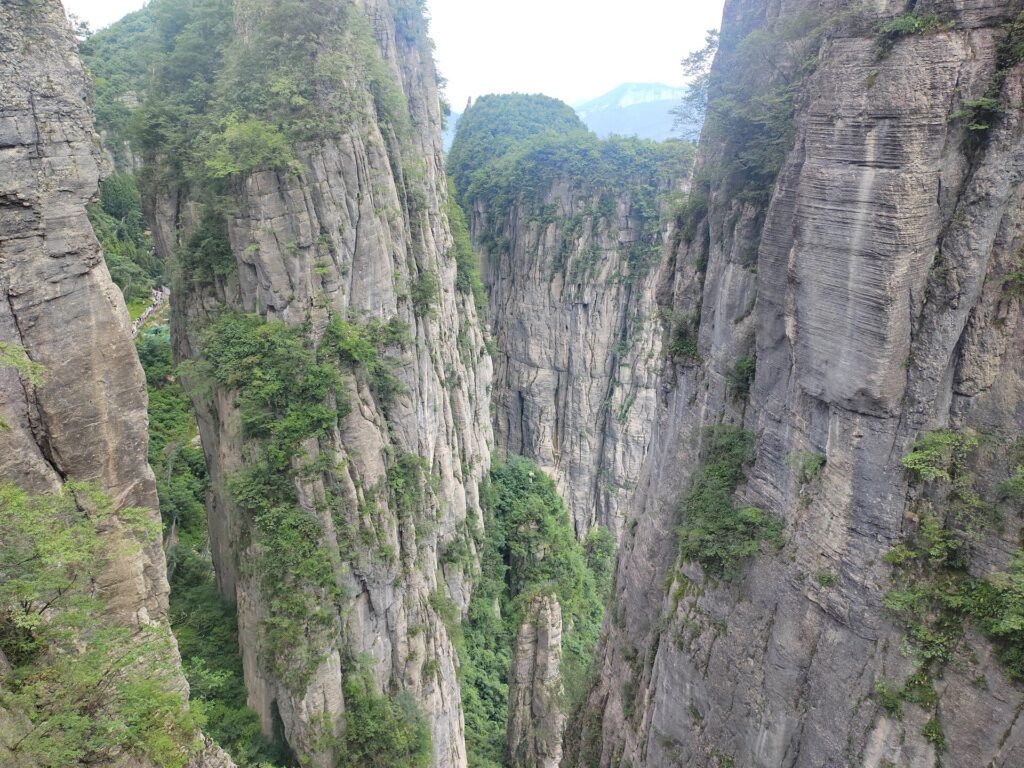
The drama is called The Wrath of Time: Xiangxi. Xiangxi is in Hunan. Almost none of the landscape in it was filmed there. The Enshi filming locations below are where the cameras went instead.
That is not a scandal, and it is not a trick played on the audience. It is something more interesting: a production that went looking for the place in its own title, could not find what the script needed, and said so out loud. The crew’s own account is that they travelled to Xiangxi to scout, found nothing that matched, and moved the exterior shoot one province north to Enshi, in Hubei, where the rock does what the script asked for.
An actor then explained the logic in a single sentence. Gao Weiguang, who plays the lead, told a Hubei newspaper that the drama had two shooting locations — the tomb interiors were built at Xiangshan Film City in Zhejiang, and the natural landscape was shot mainly in Enshi, because the exteriors in this drama cannot be built.
That sentence is the spine of this guide. These Enshi filming locations are not a list of pretty places that happened to appear on camera. They are the specific places that a professional crew concluded were cheaper to travel to than to fake.
Short answer. The Enshi filming locations for The Wrath of Time: Xiangxi (2019) are in Enshi Prefecture, Hubei — chiefly the Yunlong River reservoir and gorge inside Enshi Grand Canyon, plus Tenglong Cave, Haohan Slope, the Qingjiang dry riverbed and Heidong, all near Lichuan. The tomb interiors were built at Xiangshan Film City in Zhejiang. North of Enshi, Shennongjia is a separate story: the Dajiuhu wetland has been filmed as itself in Novoland: Eagle Flag, The Assassin, A Spring River and others.
Why these Enshi filming locations, and why the poster is wrong
Enshi Tujia and Miao Autonomous Prefecture sits in the far south-west corner of Hubei, pressed against Chongqing to the west and Hunan to the south. It is one of the largest prefectures in China by area and one of the least visited by foreign travellers, which is a strange thing to write about a place with a canyon this size.
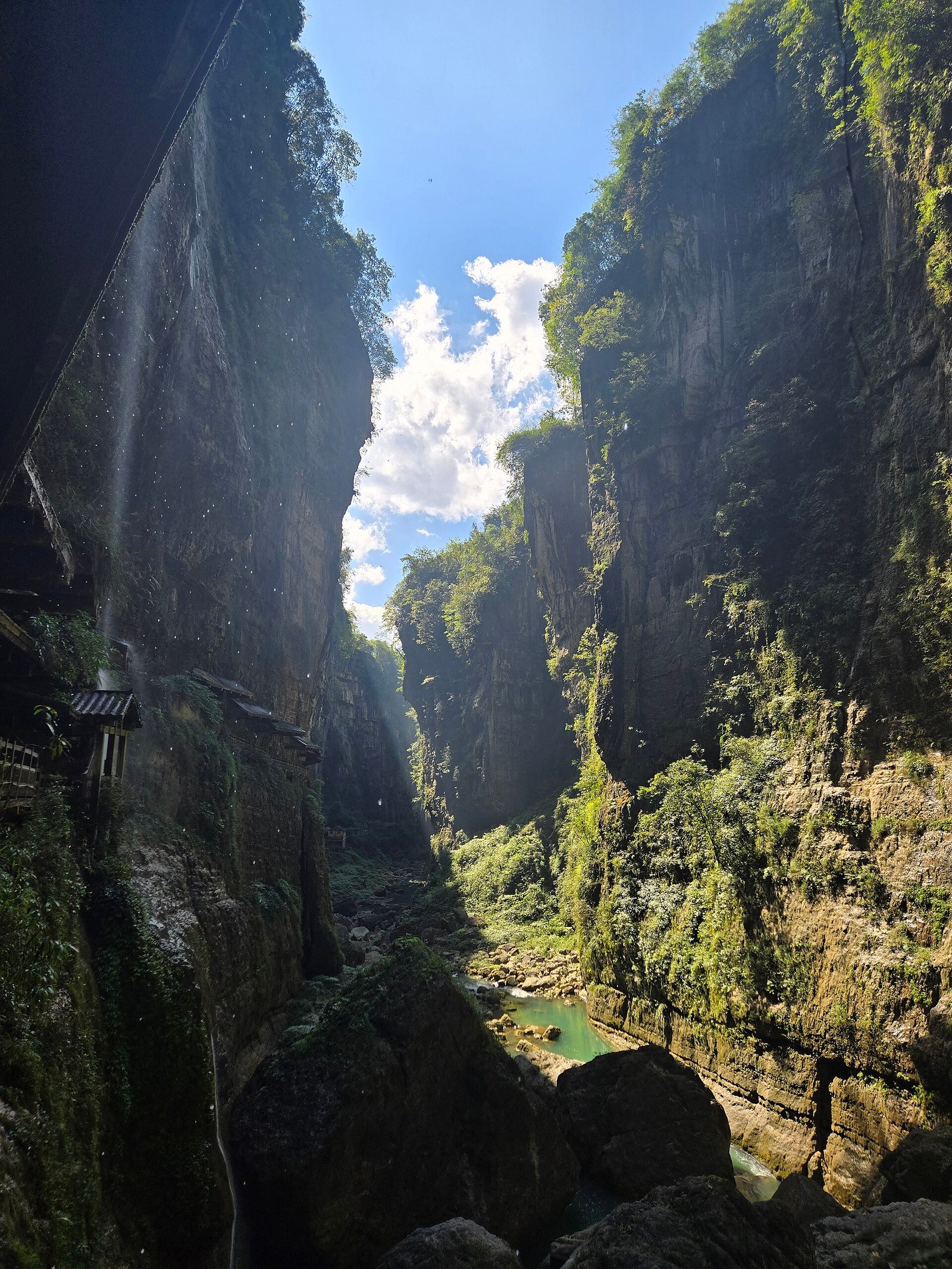
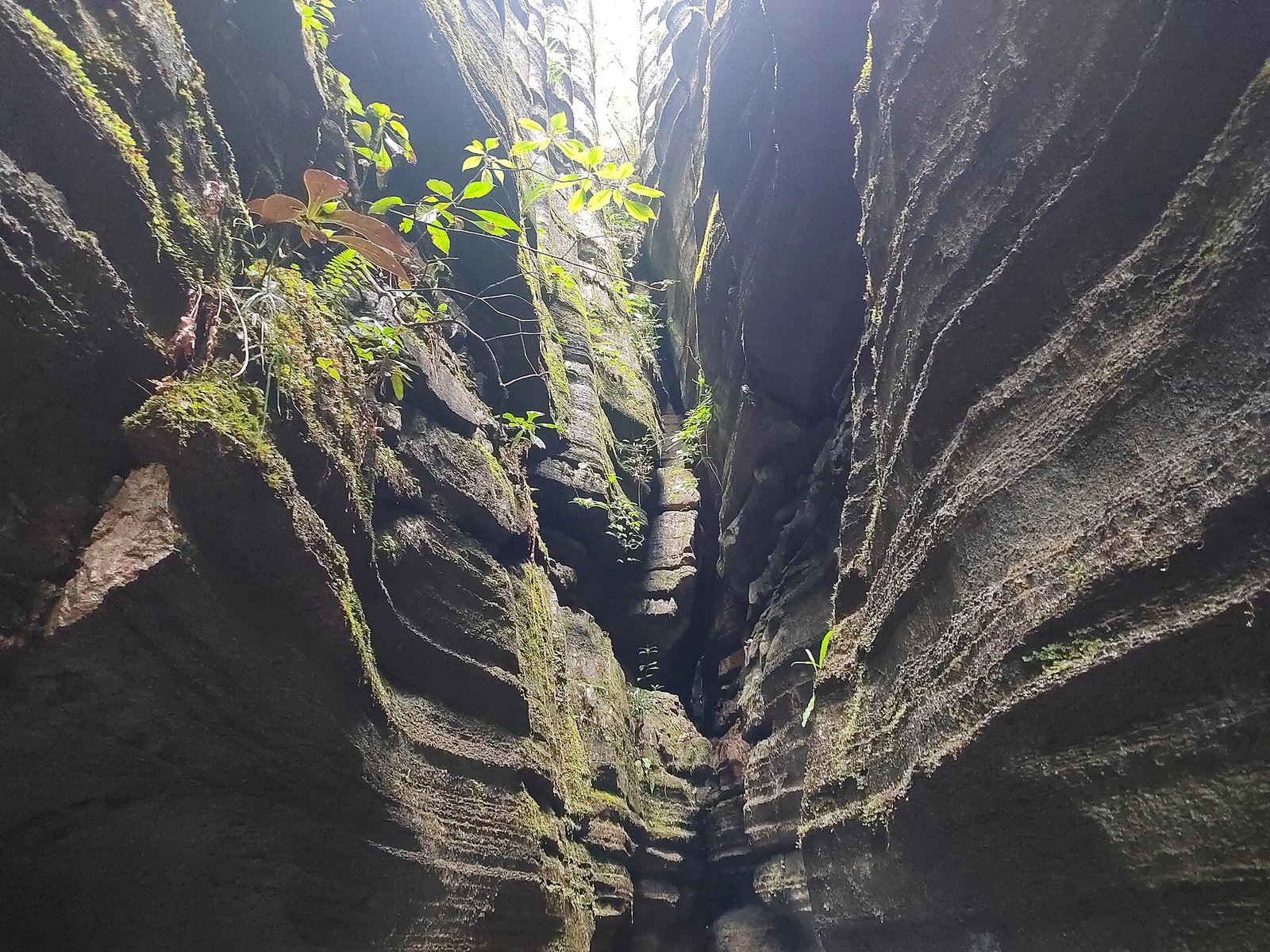
The geography is the reason the cameras came. Enshi is karst, but not the karst of Guilin’s rounded towers or Zhangjiajie’s vertical pillars. It is karst that has been cracked open: a difei — a rift gorge, a slot cut down through the plateau with near-vertical walls and a river at the bottom that you often cannot see from the rim. Add sinkholes, blind valleys, dry riverbeds and one of the largest cave systems on earth, and you have a landscape that reads as hostile in a way that a postcard mountain does not.
That is exactly what a tomb-raiding story needs. The Wrath of Time: Xiangxi — 怒晴湘西 — is a 2019 adaptation of a Ghost Blows Out the Light novel, produced by Guan Hu, directed by Fei Zhenxiang, and starring Pan Yueming, Gao Weiguang and Xin Zhilei. The story involves a mountain called Pingshan, a Yuan dynasty tomb, a clan of grave robbers and a lot of vertical travel. Pingshan is fictional. Xiangxi, in the title, is real.
So the production went to the real one first. More on that in a moment, because it is the most useful paragraph in this guide.
What you should understand before you plan anything is that Enshi filming locations are not a studio attraction. There is no backlot, no prop warehouse, no “scene 12 was shot here” plaque. There is a national scenic area with a ticket gate, a cave with a car park, and a river valley that a crew once closed for a few weeks in 2018. You go for the landscape, and the film history is the reason the landscape is worth the trip rather than the other way round.
The two halves, at a glance
One sentence from an actor splits this drama cleanly in two, and the split is worth putting in a table because it explains the entire geography of the shoot.
| What the script needed | Where it was shot | Why there |
|---|---|---|
| Tomb interiors, corridors, traps, underground chambers | Xiangshan Film City, Zhejiang | Can be built, lit, redressed and shot repeatedly. Weather is irrelevant. |
| Cliffs, rift gorges, sinkholes, cave mouths, dry riverbeds | Enshi, Hubei | Cannot be built. The scale, the wet rock and the light are the scene. |
| Wide valley establishing shots | Yunlong River reservoir, Enshi Grand Canyon | The only place the crew found that matched the novel’s description. |
| Underground river and cave interiors on location | Tenglong Cave, Lichuan | A cave that is already a soundstage — 59.8 km of it. |
Two rows, two different industries. The left-hand column is a construction problem; the right-hand column is a location problem. Most Chinese fantasy and tomb-raiding drama lives entirely in the left column, which is why so much of it looks the same. This one bought the right column, and that is the only reason a guide to Enshi filming locations is worth writing.
The search that failed
Here is the paragraph that makes this place different from every other location guide on this site.
In January 2019, as the drama went to air, Chinese entertainment press carried an account from the production. The relevant part, translated closely: some of the more beautiful scenes in the drama are not real Xiangxi. The early camera team went to Xiangxi to scout locations, but did not find a suitable place to shoot. The exterior locations that appear in the drama were at the Yunlong River reservoir in Enshi Grand Canyon, Hubei — the local geology and landforms are very similar to Xiangxi, and also fit the description in the original novel.
Read that again, because it is doing something unusual. The production is not defending a choice. It is describing a failed search. They had a title with a place name in it, they went to that place, and the place did not have the rock.
Why not? Because “Xiangxi” as a landscape brand means something specific — the rounded sandstone and limestone country around Zhangjiajie and Fenghuang, forested peaks, river towns on stilts, mist between pillars. It is beautiful and it is extremely well known, which is precisely the problem: it has been photographed so heavily that it reads as a tourist destination on camera. What the script needed was not beauty. It needed somewhere that looks like the earth failed.
Enshi has that. The rift gorge at Yunlong is a slot in the plateau rather than a valley between peaks. The walls are wet, close and vertical. From the rim you hear the water and cannot see it. It is the kind of place where a rope matters, which is the entire grammar of a tomb-raiding story.
So the title stayed, and the landscape moved 300 kilometres north-west into another province. The drama is still called Xiangxi. The rock in it is Hubei. It is also why these Enshi filming locations are worth a trip rather than a paragraph: you are going to the place that won an argument with a title.
The half they built
The other half of the shoot is in Zhejiang, and it is worth naming because it tells you what not to expect in Enshi.
Gao Weiguang’s account is that the tomb interiors were done at Xiangshan Film City, on the coast south of Ningbo. That is normal practice: a tomb is a set. It has no sky, no weather and no sun angle, which means it can be built to the millimetre, lit from any direction, flooded, burned and rebuilt. Nothing about it benefits from being real.
Xiangshan is not a small operation. It is one of the two or three largest film bases in the country and it has its own dedicated guide on this site — see our Xiangshan Film City guide for what is actually visitable there, and our comparison of China’s film studios if you are choosing between Xiangshan, Hengdian and Wuxi.
The point for an Enshi trip is the negative one. If you are hoping to walk through a reconstructed tomb, a treasure room or a corridor of traps, you are in the wrong province. Enshi gives you the outside of the story. The inside of it is 1,200 kilometres east and made of plaster.
This is also why the phrase “Enshi filming locations” can be misleading if you read it as “Enshi was the set”. Enshi was the location. The set was elsewhere. Those are different jobs, and the industry keeps them separate on purpose.
The half they could not build
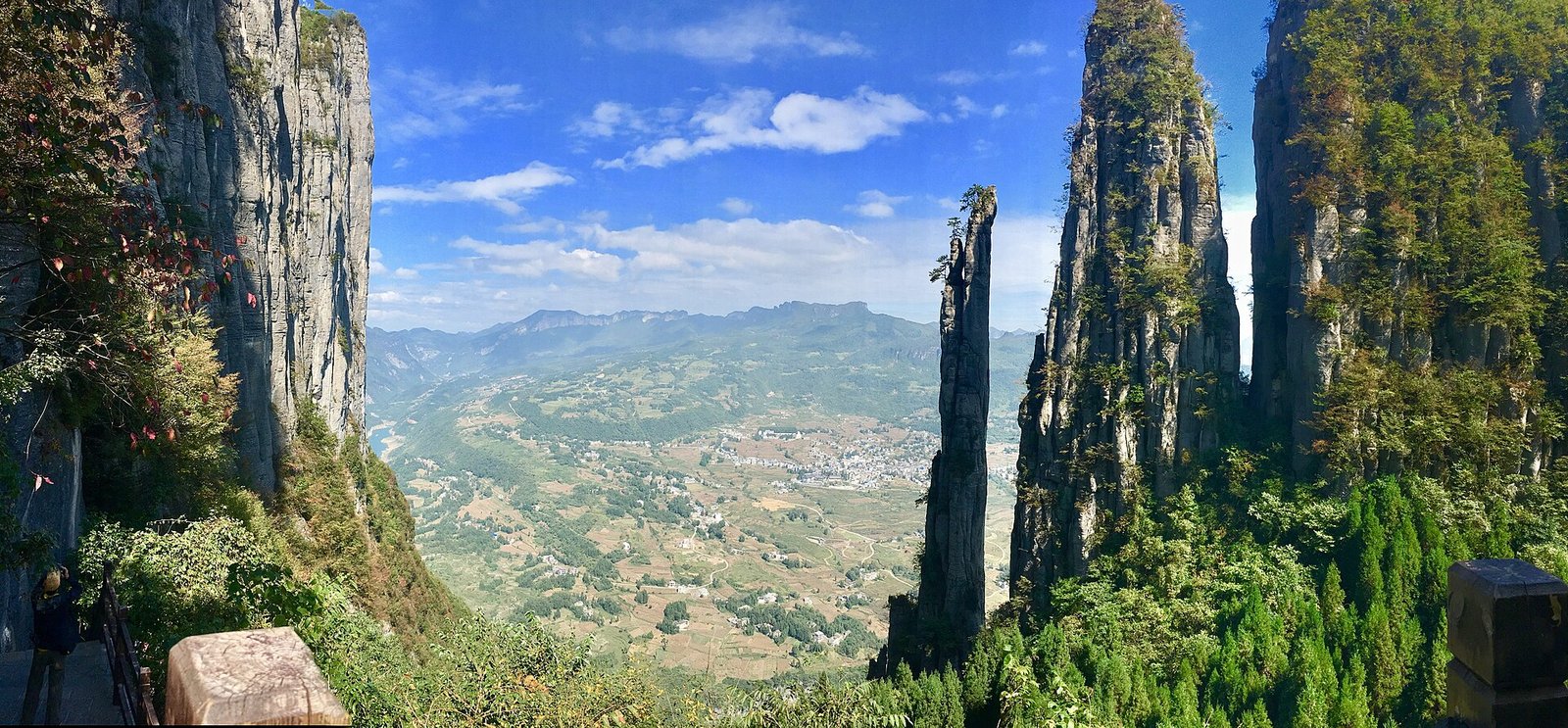
Enshi Grand Canyon — 恩施大峡谷 — is the anchor of any trip here, and it is the reason the drama came. It is not one canyon. It is a scenic area covering two quite different experiences, and you need to understand the difference before you buy a ticket.
If you only have one day for Enshi filming locations, this is the section to read twice.
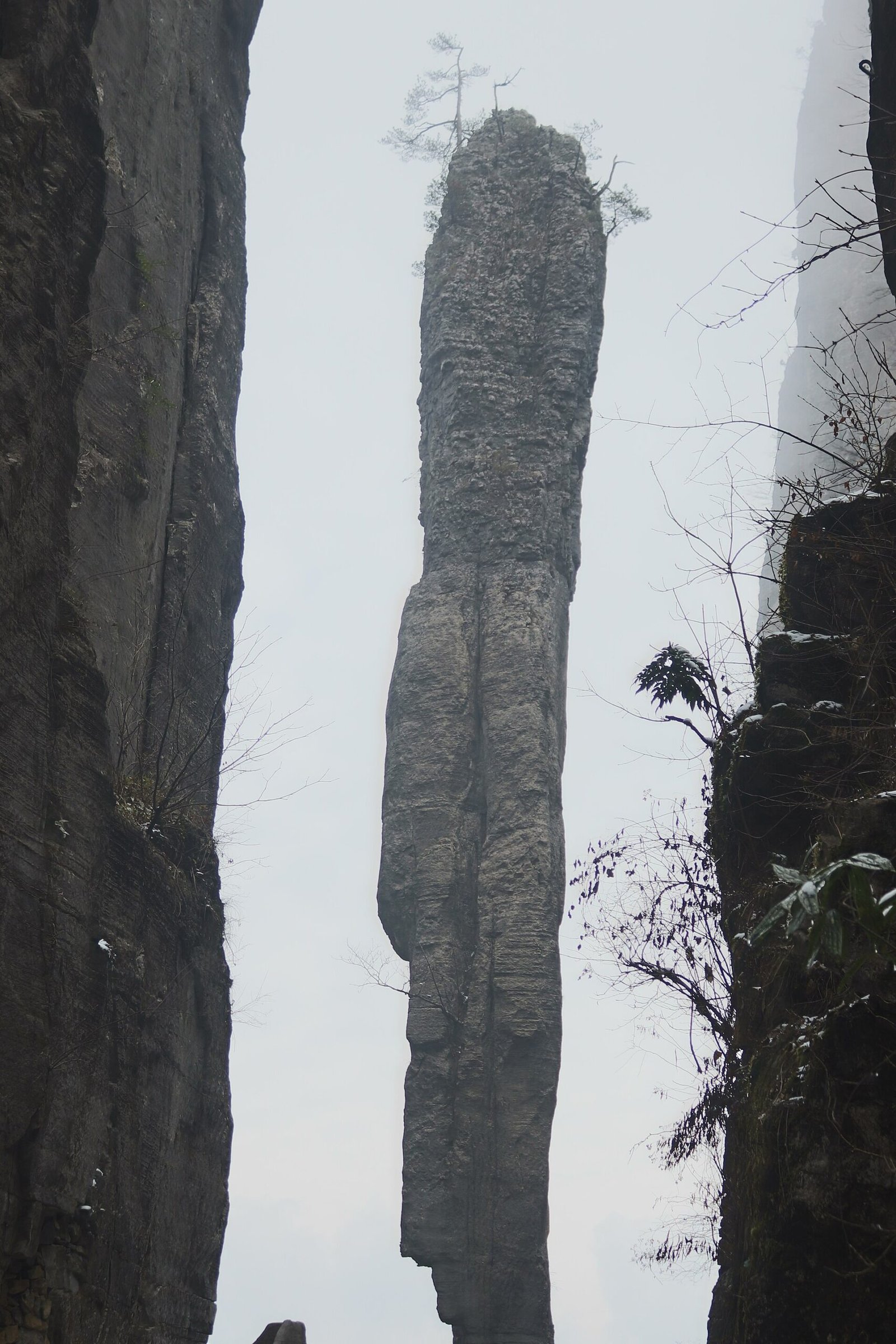
Qixingzhai (七星寨) is the upper part: a ridge walk along the top of the plateau with the gorge falling away on one side. The open section runs about 7.2 km. The signature object is Yizhuxiang (一炭香), “a stick of incense” — a free-standing rock pillar roughly 150 metres tall with a base only about four metres across. It should not be standing. It has been standing for a very long time, which is the sort of fact that makes a location scout put down his clipboard.
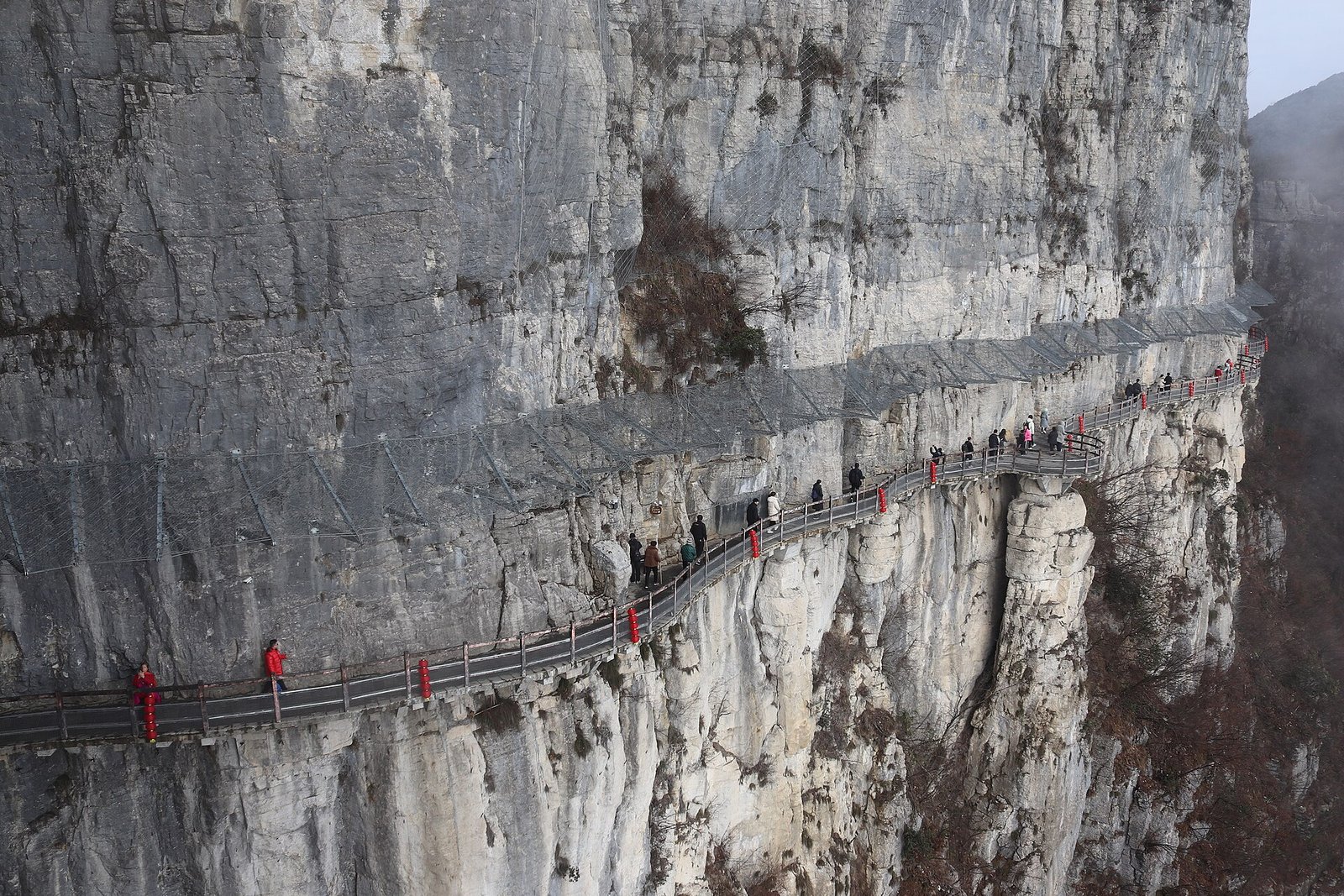
The other set piece up here is the cliff corridor (绝壁长廊), 488 metres of walkway pinned to a vertical face at over 1,700 metres, built from 2007. One side is rock, the other side is air. If you have a problem with heights, this is where you find out, and there is no alternative route once you are on it.
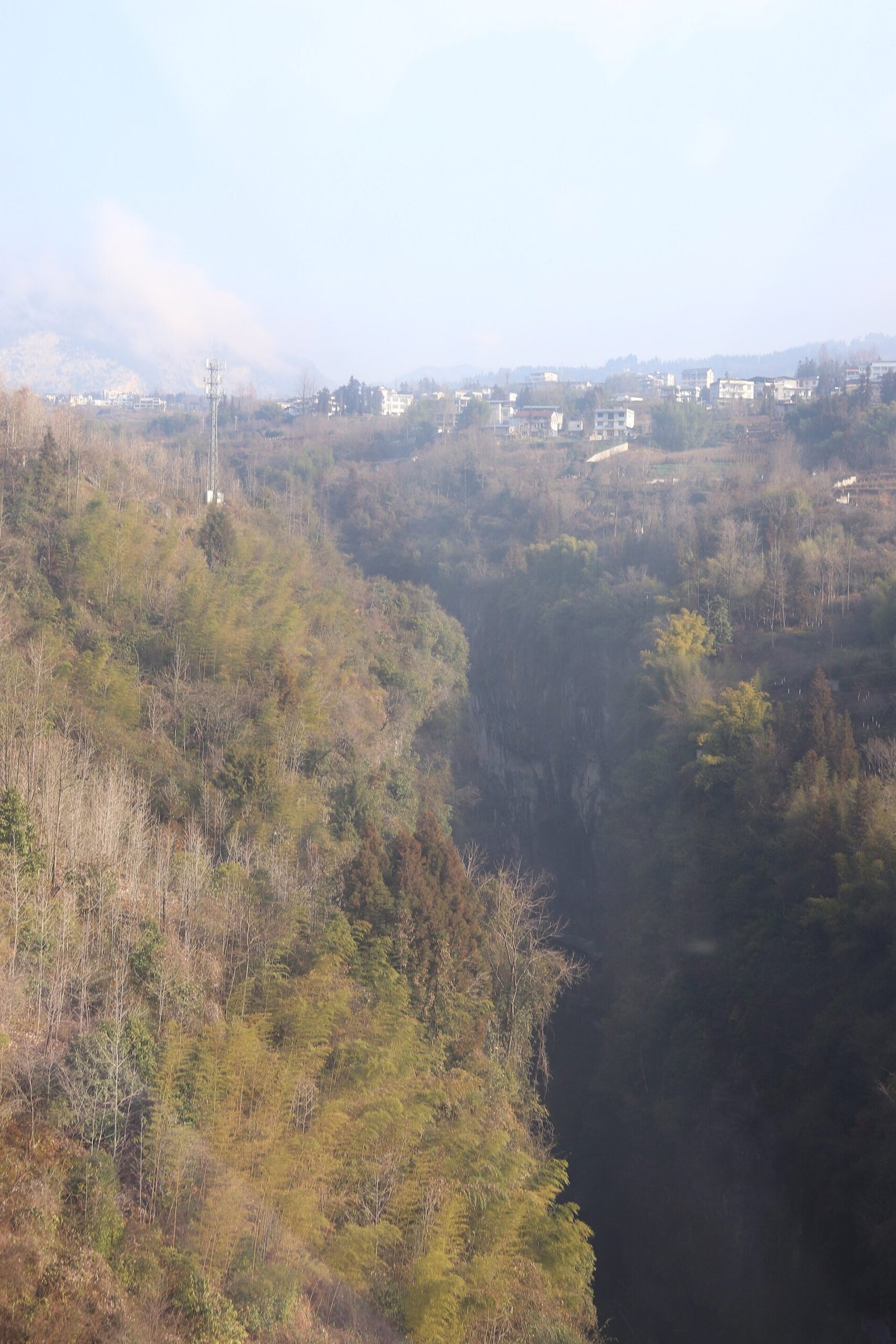
Yunlong (云龙地缝) is the lower part and the film location proper. It is the rift: a narrow slot cut through the plateau floor with waterfalls dropping into it and a river running along the bottom. The published figures for its length do not agree — you will see both 20 km and 3.6 km quoted, which almost certainly reflects a difference between the full geological feature and the developed visitor section. We give it as several kilometres of walkable gorge rather than pick a number we cannot defend.
The Yunlong River reservoir — the water body at the head of the gorge — is the specific place the production named as its core exterior location, and the place where the shoot wrapped in June 2018. Lead actors Xin Zhilei and Gao Weiguang were photographed there between takes. It is not a shrine; it is a reservoir with a road along it. But if you want the one spot where the drama’s landscape claim is literally true, this is it.
The four Enshi locations named by name
Most of what circulates online about this drama’s locations is vague. The city government was not vague. When the drama premiered in January 2019, the prefecture’s own publicity channel listed the places the crew had worked, and that list is the most reliable thing available.
Four names, in two clusters:
| Location | Where | What it is | Practical |
|---|---|---|---|
| Yunlong River reservoir (云龙河水库) | Enshi Grand Canyon, Banqiao | Core exterior location; the shoot wrapped here | Inside the scenic area ticket |
| Haohan Slope (好汉坡) | Lichuan | Mountain slope exteriors | No visitor infrastructure; a road stop |
| Qingjiang dry riverbed (清江古河床) | Lichuan | An ancient river bed, now dry, with smoothed rock | Best with a local guide |
| Heidong (黑洞, “Black Cave”) | Lichuan | Cave exteriors and entrances | Not a public attraction |
Two things to note. First, three of the four are in Lichuan city, not in Enshi city — the prefecture is big and the two urban centres are about an hour apart by train. Second, the same government notice added a detail that no location blog ever mentions: quite a few of the extras were locals. The people walking through the background of a 2019 tomb-raiding drama are, in several shots, residents of the villages you will drive through.
The Lichuan cluster matters for planning because it sits on the other side of the prefecture from the canyon. If you want both, you are looking at a two-base trip, not a day trip. The route section below sets out how that works.
Tenglong Cave, 59.8 km of set
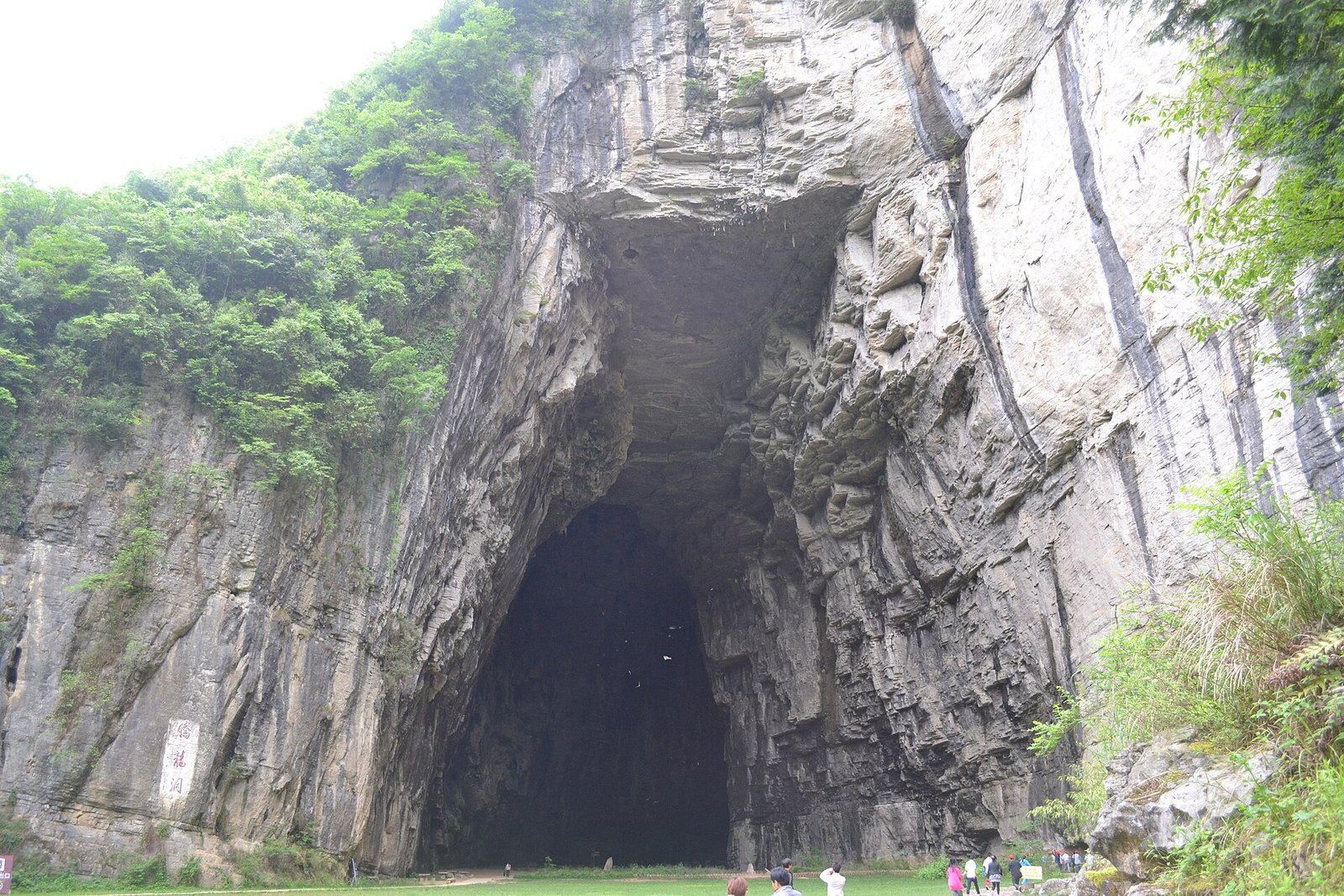
Tenglong Cave (腾龙洞) is the strangest of the Enshi filming locations on this list, because it is a cave that behaves like a building.
The numbers are not subtle. The cave system has five stacked levels. Explored passages total 59.8 km, per the geopark’s own published figures. The dry entrance is around 64 metres wide and roughly 72 to 74 metres high — the provincial culture and tourism department and the geopark give slightly different heights, so treat it as over 70 metres. The highest point inside reaches 235 metres. You could put a cathedral in the entrance hall and still have room for the queue.
For a production, this is the ideal hybrid: an interior that is genuinely underground, with genuine rock and genuine darkness, but with a mouth wide enough to drive equipment into and enough floor space to rig lights. It is the one place where the “cannot be built” rule and the “must be controlled” rule stop fighting each other.
The prefecture’s own tourism office credits the drama with a measurable effect: after The Wrath of Time: Xiangxi aired, bookings at Tenglong Cave and the boutique guesthouses around it rose sharply. That is the closest thing to an official statement that the cave is in the show.
Practical note that nobody puts in the first paragraph: the cave holds a steady 14–18°C inside. In July, when Enshi city is at 35°C, that is a twenty-degree drop in a hundred metres of walking. Bring a layer. Every Chinese guide says this and every visitor ignores it.
March 2024: the set became a Geopark
Here is the detail that makes these Enshi filming locations worth writing about in 2026 rather than 2020.
On 27 March 2024, the executive board of UNESCO approved Enshi Grand Canyon–Tenglong Cave UNESCO Global Geopark for the Global Geoparks Network. It covers 679.19 km² across Enshi city and Lichuan city, and it is designated for karst and tectonic landforms — the Chinese shorthand is “a three-dimensional karst museum”. It was one of six Chinese geoparks approved in that round, alongside Changbaishan, Linxia, Longyan, Wugongshan and Xingyi.
The timing is the point. The crew filmed there in 2018. The place became a UNESCO Global Geopark in 2024. The rock did not change; the designation did. What that means for a visitor is concrete: the interpretation has improved, the signage is better, the geological story is now written down and explained on site, and the site is on a list that will keep adding visitors for the next decade.
It also means the framing has shifted. In 2019 this was “a canyon where a tomb-raiding drama was filmed”. In 2026 it is “a UNESCO Global Geopark that also happens to be where a tomb-raiding drama was filmed”. Those are different places in the mind, and the second one is more interesting.
One more designation to keep straight, because it is easy to confuse with the one above. Shennongjia, further north, is a UNESCO World Heritage site (natural), inscribed on 17 July 2016 — Hubei’s first, and China’s eleventh natural World Heritage site. It is also a UNESCO Biosphere Reserve and a UNESCO Global Geopark, which makes it the first place in China to hold all three designations at once. A Geopark and a World Heritage site are not the same programme. Enshi has the first. Shennongjia has both.
Shennongjia: the forest that plays itself
Now the second half of this guide, and a completely different kind of honesty.
Enshi is a stand-in. It plays a place it is not. Shennongjia — 神农架 — does the opposite, and it is the reason this guide covers two prefectures rather than one set of Enshi filming locations. It has been filmed repeatedly, and in almost every case it has been filmed as itself: a high-altitude wilderness that looks like nowhere else in China because it is nowhere else in China.
The prefecture-level government’s own record lists what has shot at Dajiuhu, the wetland at the centre of the reserve: the TV dramas Novoland: Eagle Flag (九州缋缆录) and Sword of Wudang, and the films A Chinese Tall Story, The Assassin (刺客藏隔娘), Da Jiao Yin and Kaili Blues-adjacent art-house title The Pluto Moment. In 2022 Dajiuhu was named to the first “Hubei’s Ten Most Beautiful Filming Locations” list.
The most useful entry on that list for a traveller is The Assassin — Hou Hsiao-hsien’s 2015 Tang dynasty film, which is the reason a certain kind of cinephile already knows this place without knowing its name. The mist-and-marsh sequences that people describe as painterly were shot in conditions that the director did not manufacture. He waited for them.
That is the same rule as Enshi, seen from the other side. In Enshi, the landscape was too specific to build. Here, the landscape is too conditional to build — it exists for forty minutes at dawn and then it is gone. Either way the conclusion for a production is identical: go there, and take what the weather gives you.
Dajiuhu, where fog is the whole point
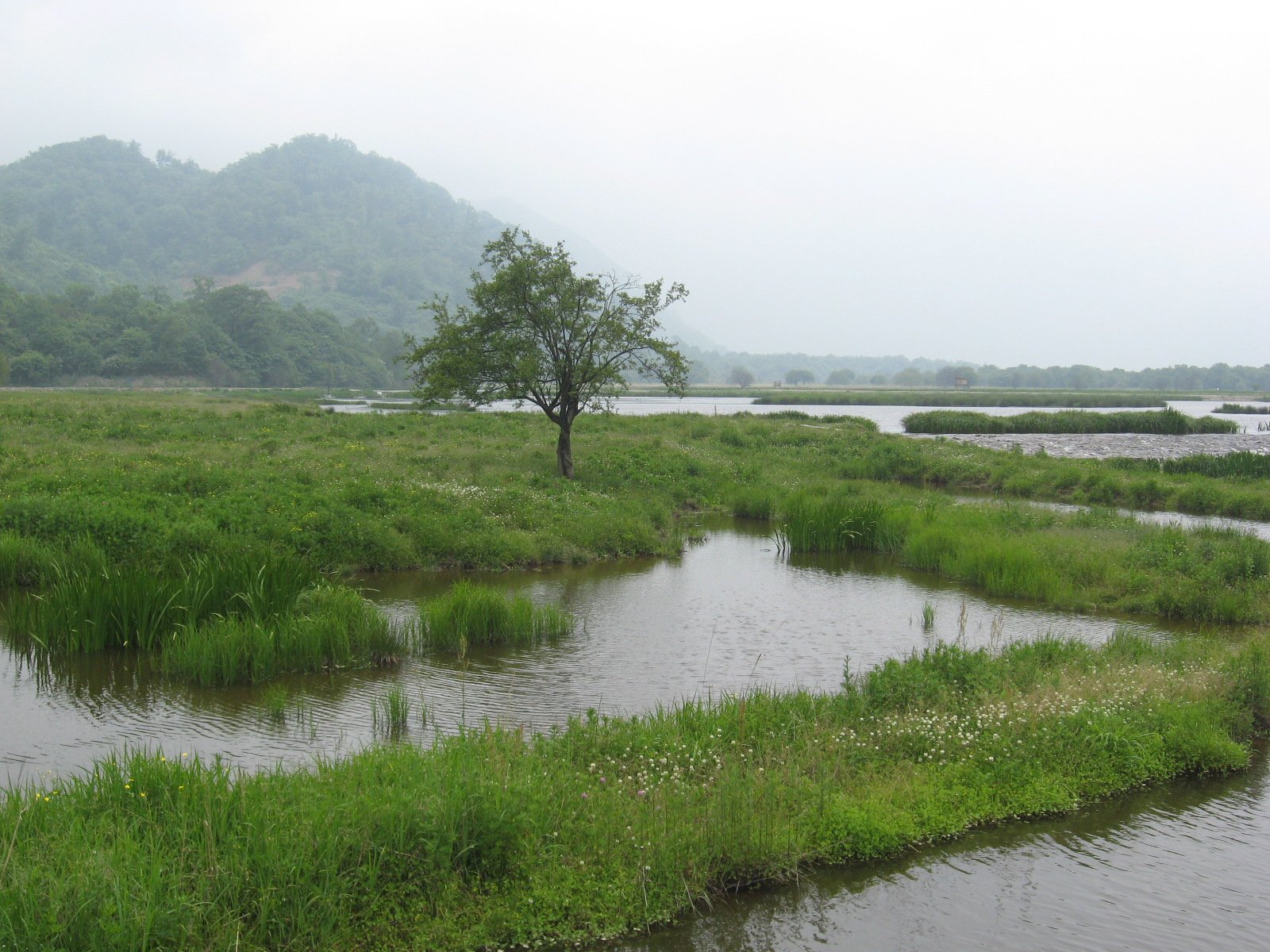
Dajiuhu (大九湖, “the nine great lakes”) is a basin at an average 1,730 metres in the north-west of the Shennongjia forest district, shaped like a flattened S, holding nine small lakes in a peat wetland. The national wetland park covers roughly 340 km² in total; the core protected area is a fraction of that. It is a Ramsar-designated wetland of international importance.
What it looks like on the ground is not what the name suggests. It is not nine dramatic lakes. It is a wide, flat, grassy basin with shallow water, no tree line to speak of, and mountains arranged around the rim like a bowl. In clear midday light it is pleasant and slightly ordinary, which is exactly why the photographs you have seen of it were not taken at midday.
The asset is fog. At dawn the basin fills, the far rim disappears, and the water becomes a flat white plane with grass islands floating in it. That is the image in The Assassin. It is also the image in A Spring River (一江春水), a 2022 release whose producers shot almost twenty minutes of snow footage here — the crew came up in January 2019 to complete the film’s final shoot.
For anyone treating Enshi filming locations and Shennongjia as one itinerary, the practical advice is unusually blunt: if you are going to Dajiuhu for the photography, you are going for the first two hours after sunrise, and you may get nothing. The fog is not scheduled. A clear morning gives you a pretty meadow. A foggy morning gives you the shot. Both are the same ticket.
There is a second, harder constraint. The wetland is a protected area with a mandatory shuttle system: you park at the Pingqian transfer centre and go in by park bus and then by a small train around the lakes. You cannot drive yourself in. The shuttle fee is charged separately from admission and is not optional.
Two kinds of honesty
Put the two halves side by side and something clean appears.
| Enshi | Shennongjia | |
|---|---|---|
| Role | A stand-in | Itself |
| Chosen because | It looks like somewhere else | It looks like nowhere else |
| What the drama says | “This is Xiangxi” | “This is the world” |
| The honest version | The real Xiangxi did not have the rock | The real world does not have this basin |
| What you see | Rift gorge, sinkholes, cave mouths | High wetland, fog, treeless basin |
| Best season | April–June, September–October | May–October, dawn |
Most location guides collapse these into one thing called “filming locations” and move on. They are not the same. In Enshi the interesting question is what was it pretending to be. In Shennongjia the interesting question is why does this place not need to pretend.
There is a nice piece of evidence that the distinction is real rather than rhetorical. Novoland: Eagle Flag shot at Dajiuhu in Shennongjia and at Tang City in Xiangyang, 400 km east. Tang City is a purpose-built Tang dynasty backlot — we cover it in our Xiangyang Tang City guide. So one drama used both halves of the same rule: the city walls that can be built, and the wetland that cannot. Exactly the split that The Wrath of Time made between Xiangshan and Enshi, made again by a different production two years later.
When two unrelated crews independently divide the world the same way, it is not a coincidence. It is how the industry works.
What the drama actually changed here
It is easy to write about “the filming effect” as a vague economic good. In Enshi there is an unusually specific record of it, and it is worth reading closely because it says something about what film tourism does and does not do.
The prefecture government’s 2025 feature on filming and local tourism makes two claims about this drama and one about a different production. The first: after The Wrath of Time: Xiangxi aired, bookings at Tenglong Cave and the boutique guesthouses around it rose sharply. The second is the same effect described at industry level — the “filming location effect” is credited with pushing the local tourism supply chain up a tier, from farmhouse rooms to designed guesthouses.
And the third claim is the interesting one. A different drama, the television series Blood Oath, is credited with causing a cluster-wide surge in Enshi’s guesthouse sector — not a single site, but the whole cluster. The same government feature also records that a tea plantation in Lichuan became a recommended filming base, and that the profile of a local tea brand rose as a result.
What that pattern tells you is that the drama did not create a film-tourism attraction. It raised the occupancy of an existing one. Nobody built a “Wrath of Time Experience Zone”. What happened is that more people came to a cave, and the accommodation around the cave got better.
That is a different and less visible kind of change than the studio-town model, and it has a practical consequence for you as a visitor: the Enshi filming locations are not curated for fans. There is no signage connecting a rock to a scene. There is a cave, a gorge and a reservoir, and the connection to the drama exists only in the reporting we have cited. If you want the story told to you on site, this is not that place. If you want to stand in a landscape and know what it was used for, this is exactly that place.
One more consequence worth flagging. The 2024 Geopark designation arrived six years after the shoot, and designations of that kind change visitor volumes for a decade rather than a season. If you are choosing between Enshi now and Enshi in five years, the honest answer is that the landscape will be the same and the crowds will not.
Not Zhangjiajie
This confusion is common enough that it needs its own section, because it will affect your planning.
Zhangjiajie is in Hunan. Enshi is in Hubei. They are about 300 km apart, they are both karst, they are both in the Wuling mountain belt, and they look nothing alike once you are standing in them. Zhangjiajie is vertical pillars in forest. Enshi is a plateau with a slot cut into it.
The confusion has two sources. First, several Chinese listicles about The Wrath of Time: Xiangxi name Zhangjiajie as a location. We could not find a primary source for that claim, and the prefecture’s own list does not include it. Second, and more importantly, Zhangjiajie has its own separate film history that is much bigger than this drama — our Zhangjiajie filming locations guide covers the Avatar connection, which is a story about a prototype rather than a shoot.
That distinction matters and is worth stating plainly:
- Zhangjiajie was looked at. The Hallelujah Mountains in Avatar were modelled on photographs of it; the film was not shot there.
- Enshi was filmed. Cameras, actors, lights, a wrapped shoot in June 2018.
One is an inspiration. The other is a location. If you are choosing a trip, they are different trips, and neither substitutes for the other.
The photograph that is in no drama
Here is a fact that complicates the whole premise of a film-location trip, and it is worth stating before you book anything.
The single most recognisable image associated with Enshi is not from a drama. It is Pingshan Canyon (屏山峡谷) in Hefeng county, where a shallow wooden boat appears to float in mid-air above water so clear that the riverbed is invisible from the surface. The photograph went around the world several times, usually without a caption explaining where it was. It is the reason a lot of people have heard of Enshi at all.
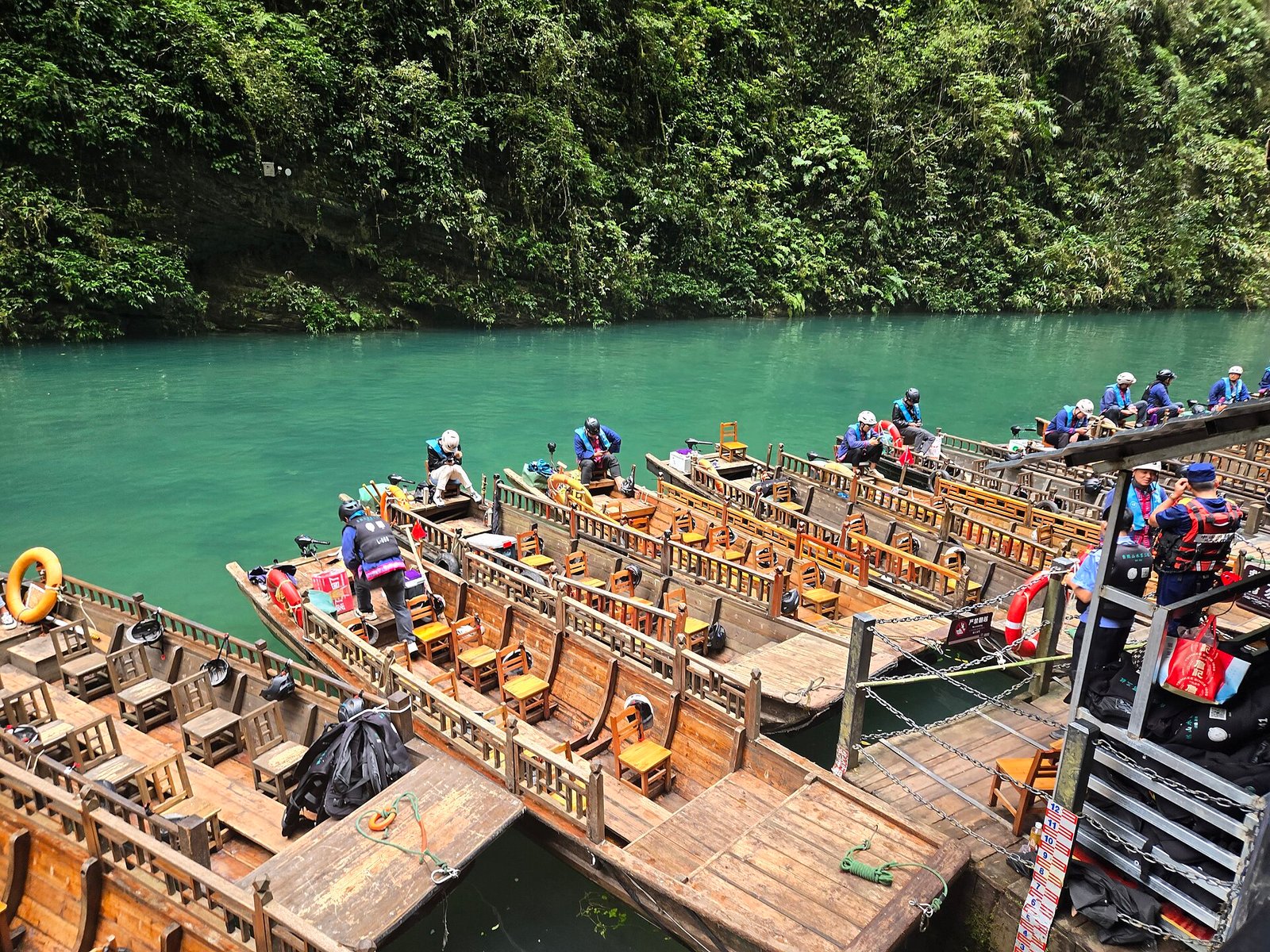
No production we could document shot there for this drama. It is not one of the four locations the prefecture named. It is simply the most photogenic thing in the prefecture, and it became famous on its own.
That is worth knowing for two reasons. First, because it means the thing you most want to see may have nothing to do with the thing you came for — which is normal, and is not a problem. Second, because it sets an expectation that the place can fail to meet. The floating-boat effect requires specific conditions: still water, direct sun, no wind, and a riverbed that is pale enough to vanish. After rain the water carries silt, the bed shows, and the boat sits on brown water like a boat. Photographs from those days look ordinary, and visitors who arrived expecting the internet image are frequently disappointed.
If you go — and it is worth going — treat it as a weather-dependent event rather than a guaranteed sight. Clear days, early, before the tour groups arrive and before the wind picks up. The window people report is roughly 09:00 to 11:00, and the single most useful thing you can do is check the water colour the afternoon before rather than commit in advance.
Admission is around 210 yuan, which makes it the most expensive single site in this guide, and it is a two-hour drive from Enshi city in the opposite direction from Lichuan. In a four-day trip it competes directly with Tenglong Cave. If you only have time for one, the cave is the film location and Pingshan is the photograph. Choose the one you actually came for.
| If you want… | Go to | Time from Enshi city | Cost |
|---|---|---|---|
| The actual film location | Yunlong reservoir and gorge | Within the canyon area | Bundled in canyon admission |
| The cave from the drama | Tenglong Cave, Lichuan | About 1 hour by train | Around ¥150 |
| The famous photograph | Pingshan Canyon, Hefeng | About 2 hours by road | Around ¥210 |
| The geological oddity | Suobuya Stone Forest | About 1.5 hours by road | ¥78–120 + ¥30 shuttle |
This is the general problem with Enshi filming locations as a category: the place is more photogenic than it is filmic. The drama is a good reason to get on a train. It is not the best reason to stay for four days, and pretending otherwise would make this a worse guide.
When to go
Enshi and Shennongjia are 300 km apart and 1,500 metres apart in altitude, so they do not share a season. Treat them separately.
Enshi. April to June and September to October are the reliable windows for the canyon and the other Enshi filming locations. July and August are the domestic summer-escape season — the canyon and the cave are genuinely cooler than the cities, which means they are also genuinely crowded, and Tenglong Cave becomes a refuge at 14–18°C inside. Winter is quiet but some high walkways and the cliff corridor can close for ice, and the canyon in low cloud gives you nothing.
Shennongjia. The wetland’s product is fog, so the usable season is late spring to mid-autumn. May to October is the window; late October turns the grass gold; January and February are the snow season that A Spring River came for, at the cost of road closures. Dajiuhu sits at 1,730 m, so it is 8–10°C cooler than Enshi city on the same day.
If you have not settled on a route at all yet, the quiz that matches you to a drama city is a faster way in than reading province lists, and the China trip planning hub puts the logistics in one place.
Two dates to avoid if you have flexibility: the first week of October (National Day) and the first week of May. Both are the busiest travel periods in China, both fill the shuttle queues at Pingqian, and both make the canyon’s narrow sections unpleasant rather than dramatic. Our best time to visit China guide covers the national calendar in more detail.
The route that works
The mistake almost everyone makes with Enshi filming locations is treating Enshi and Shennongjia as one destination because they are both “western Hubei”. They are two destinations with a slow road between them. Plan for two bases.
Base one: Enshi city (3 nights). Use it for the canyon. Day one, Qixingzhai and the cliff corridor — this is a full day of walking and you want good legs for it. Day two, Yunlong gorge in the morning and the reservoir road after, which is the film-location day. Day three, either Pingshan Canyon in Hefeng (the “floating boat” photographs, 210 yuan, and it must be a clear day) or Shilin at Suobuya.
Base two: Lichuan (2 nights). Tenglong Cave is here, and so are the other three named locations. Lichuan also puts you on the road towards Chongqing, which is the next province west — our Chongqing filming locations guide covers the 8D city on the other side of that border. The cave takes half a day; the dry riverbed and the slope need a car and a local who knows where to stop. Lichuan is an hour from Enshi by train, which makes it an easy transfer rather than an expedition.
Optional third: Shennongjia (2–3 nights). Base at Muyu town, which is the gateway, or at Pingqian if Dajiuhu is the priority. One dawn at the wetland, one day on the Shennongding side. This is a separate trip in feel: colder, emptier, and much less about film.
That is seven to eight nights for the full set. If you have four, pick one half. Enshi alone is the better first trip, because the film evidence is stronger and the logistics are simpler.
For how this fits into a longer China itinerary, our how many days do you need guide covers the arithmetic, and the route planner will build a sequence around your arrival city.
Getting there, and one correction
To Enshi. Two ways in, both easy, and both put you within an hour of the main Enshi filming locations. Enshi railway station is high-speed and sits inside the city, so you step off the train into the hotel-and-restaurant zone — this is the option most visitors take. Enshi Xujiaping Airport (ENH) is one of the closest airports to a city centre in China; the taxi into town takes about ten minutes. If there is no direct flight from where you are, connect through Wuhan or Chongqing.
To Shennongjia. Here is the correction. A surprising number of Chinese travel documents still say the Shennongjia high-speed station is “expected to open in June 2026”. It opened on 20 June 2022, on the Zhengzhou–Wanzhou high-speed line, and the forest district has described itself as being in the “two highs” era — high-speed rail and expressway — since then. If you are planning around a future opening, you are planning around something that already happened four years ago.
There is also Shennongjia Airport (HBJ), and the Baoshen expressway connects the district to the broader motorway network.
Between the two. There is no direct high-speed service and the drive is long. The route that works: Enshi → high-speed train to Xingshan → shuttle bus to Muyu town. The train leg is roughly 1 hour 40 minutes and costs around 66 yuan second class; the bus leg from Xingshan station to Muyu is about two hours and runs only a few times a day, so you want to be on the platform ready to transfer rather than assuming you can wait. An alternative is Enshi → Badong by train, then a long-distance bus to Muyu. Going via Yichang also works and is slower.
Because these timetables change often, we are not printing departure times. Check the day before you travel, and if you are doing the Xingshan transfer, check the shuttle frequency as well as the train.
For the national rail system in general, our guide to booking train tickets in China covers the passport-based booking process, which is not the same as booking in most other countries.
Getting around inside the prefecture
This is where most itineraries fall apart, because Enshi Prefecture is large and the sites are not clustered.
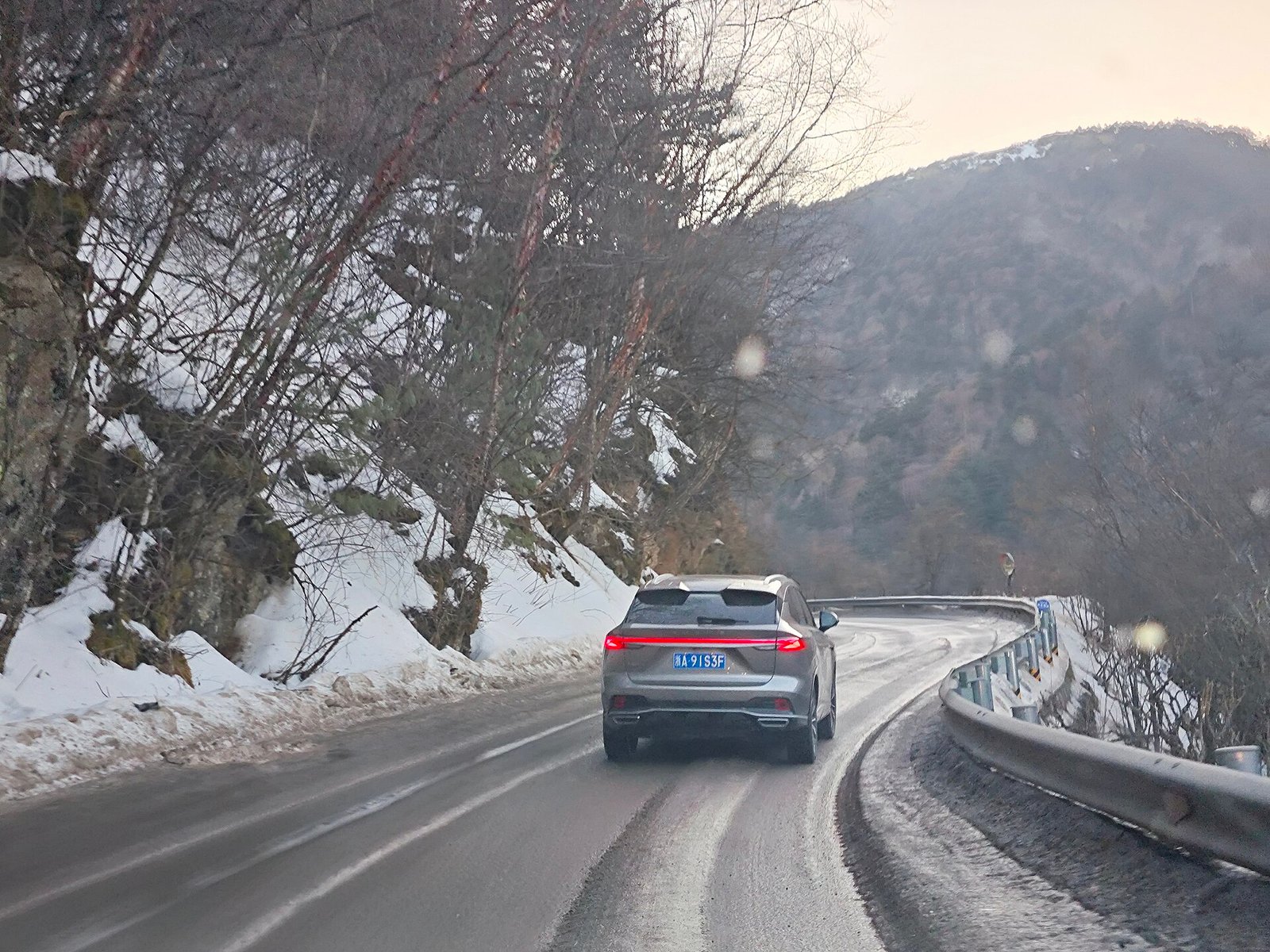
The prefecture covers roughly 24,000 km². Enshi city and Lichuan are connected by high-speed rail and the trip is about an hour. Everything else — the canyon, the stone forest, Pingshan, the dry riverbed — is a road journey from one of those two cities, and the roads are mountain roads with a lot of tunnel.
Three options, in order of how much we recommend them.
Hire a driver for the day. This is the standard solution and it is not expensive by European standards. A car and driver for a full day of canyon-and-village work typically runs a few hundred yuan; your hotel can arrange it, and the driver will know where the ticket offices are, which matters more than it sounds. If you are doing the Lichuan cluster — dry riverbed, Haohan Slope, Heidong — this is effectively mandatory, because those are not signposted attractions and there is no public transport to any of them.
Scenic-area shuttles. Inside Enshi Grand Canyon and at Dajiuhu, private cars are not allowed and you use the park’s own buses. This is efficient and it is also the bottleneck on busy days.
Public buses. There is a direct bus from Enshi city to Suobuya Stone Forest that costs around 25 yuan and runs roughly every half hour, which makes the stone forest the one outlying site you can do independently. For everything else, the bus network exists but assumes you read Chinese and have time.
Self-driving is possible and the expressway network is good, but be realistic about the mountain sections: this is a landscape of tunnels and switchbacks, and a driver who is not used to it will be slow. Our first-time in China guide covers the licence and rental situation, which is more restrictive than most visitors expect.
One planning note that saves a wasted day: do not try to do the canyon and Lichuan on the same day. They are on opposite sides of the prefecture, the canyon takes a full day on foot, and the train between the two cities leaves you with nothing in the middle. Two bases, two days, no improvisation.
Tickets and what needs booking
Two different pricing systems, and the Shennongjia one has a seasonal split that catches people out.
Enshi. Enshi Grand Canyon is quoted at 185 to 205 yuan depending on the channel and whether transport inside the park is bundled; treat it as a range and confirm at the gate. Tenglong Cave is around 150 yuan. Suobuya Stone Forest is 78 to 120 yuan plus a 30 yuan shuttle. Pingshan Canyon is about 210 yuan. Enshi Tusi City is around 50 yuan. Nvercheng, the “Daughter City” food and performance district, is free.
One thing to know before you go looking for it: the canyon’s paid fast-track service, which let visitors skip queues, was suspended on 3 September 2025 and has not been reinstated. If a reseller offers it, that is out of date.
Shennongjia. The six core scenic areas — Shennongding, Dajiuhu, Tianyan, Shennongtan, Tianshengqiao and Guanmenshan — are sold as a combined ticket, and the price depends on the date:
| Period | Full ticket | Half ticket |
|---|---|---|
| 1 January – 20 April (low season) | ¥159 | ¥99 |
| 21 April – 31 December (high season) | ¥299 | ¥150 |
The combined ticket is valid for five days with repeat entry, which is what makes a two-base trip workable. Buying single tickets instead is a false economy: Shennongding alone is 130 yuan, Dajiuhu 100, Guanmenshan 95, Shennongtan 55, Tianshengqiao 55 and Tianyan 45 — about 480 yuan for the set, against 299 for the pass.
Then there are the mandatory extras, which are not included and are not optional:
- Dajiuhu shuttle: 70 yuan. Park bus plus the small train around the lakes. Charged at the Pingqian transfer centre, separately from admission. A second consecutive day adds 20 yuan.
- Shennongding shuttle: 60 yuan. If you are going up.
Add those and a Dajiuhu day in high season is closer to 370 yuan than 299. Budget accordingly, and note that the wetland cannot be entered by private car at all.
How we checked this
The film history behind these Enshi filming locations rests on four independent sources that agree with each other, which is unusual for a drama this old.
The claim that the production scouted Xiangxi and failed is from a January 2019 entertainment report quoting the production directly, published as the drama went to air. The claim that the drama had two shooting locations, and that the exteriors “cannot be built”, is from a Hubei newspaper interview with the lead actor, Gao Weiguang, published in February 2019. The list of four Enshi locations — Yunlong reservoir, Haohan Slope, Qingjiang dry riverbed, Heidong — is from the prefecture’s own publicity channel, published when the drama premiered. And the link between the drama and Tenglong Cave is stated by the Enshi prefecture government’s tourism office in a 2025 feature on filming and local tourism.
The Shennongjia side is easier, because it is almost entirely official. The list of productions shot at Dajiuhu, and the 2022 “ten most beautiful filming locations” award, come from the Shennongjia forest district government’s own news service. The A Spring River snow sequence is documented on the same government site. The 2026 combined-ticket prices — 159 and 299 — are from the district government’s publication of the operator’s policy, dated 27 November 2025.
Where sources conflict, we say so rather than picking a winner. Enshi Grand Canyon admission is quoted at both 185 and 205 yuan by different Chinese outlets, so we give a range and tell you to confirm at the gate. Tenglong Cave’s entrance height is given as 72 m by the provincial culture and tourism department and 74 m by the geopark, so we say “over 70 m”. The Yunlong gorge length is quoted as both 20 km and 3.6 km, so we describe it as several kilometres of walkable gorge rather than adopt a figure we cannot verify.
One thing we deliberately corrected. Several Chinese travel documents still describe the Shennongjia high-speed station as opening in 2026. It opened on 20 June 2022. We have written the correction into the transport section rather than quietly omitting the wrong version, because if you have already read the wrong version somewhere else, you need to know which one to discard.
Two things we did not do. We did not name the specific cliff, ledge or cave mouth used for individual scenes — the production never published a shot list, and any blog that claims to know is guessing. And we did not include Zhangjiajie in the location list, despite several Chinese listicles doing so, because we could not find a primary source and the prefecture’s own list does not mention it.
Practical notes
Payments. Alipay and WeChat Pay work everywhere that takes money, including the shuttle counters and the small shops at the canyon gate. Set up an international card before you arrive — our China payment guide walks through it. Cash is accepted but slow.
Language. English signage exists at the canyon ticket office and almost nowhere else. Save the Chinese names and show them rather than say them: 恩施大峡谷 for the canyon, 云龙地缝 for the rift, 腾龙洞 for the cave, 大九湖 for the wetland, 坪坪 for the Pingqian transfer centre.
Walking. The canyon is not a stroll. Qixingzhai plus the cliff corridor is a full day with real elevation change, and the corridor is one-way with no bail-out. Knees are the limiting factor for most visitors, not fitness. There are cable cars and an escalator on parts of the route, but not on the corridor.
Weather. This is a wet landscape and that is the point, which is inconvenient if you have booked three days for Enshi filming locations and the cloud is down. Rain makes the gorge dramatic and the walkway slippery; low cloud makes the canyon invisible. Build one spare day into any Enshi itinerary, because the canyon is a waste of a ticket in a white-out.
Expectations. There is no film tourism infrastructure here — no studio tour, no props, no reconstruction. If that is what you want, our comparison of China’s film studios points you at Hengdian, Xiangshan and Wuxi, which do that job properly. Enshi is the opposite proposition: real places, still doing their original job, that a crew once borrowed.
Visa. Enshi and Shennongjia are both inside the standard visa-free transit regions for most European and American passport holders, but the rules changed several times in 2025 and 2026. Our China visa guide is the current version, and it is worth reading before you book flights rather than after.
Common questions
Was The Wrath of Time: Xiangxi actually filmed in Enshi?
Yes. The exterior landscape was shot mainly in Enshi Prefecture, Hubei, in 2018, with the Yunlong River reservoir inside Enshi Grand Canyon as the core location and the shoot wrapping there in June 2018. The city government’s own publicity channel named four Enshi filming locations: Yunlong reservoir, Haohan Slope, the Qingjiang dry riverbed and Heidong, the last three near Lichuan. The tomb interiors were built at Xiangshan Film City in Zhejiang.
Why is it called Xiangxi if it was filmed in Hubei?
Because the story is set in Xiangxi, in Hunan, and the title follows the story rather than the shoot. The production did scout Xiangxi first and could not find a suitable location; the crew’s own account says the early camera team went to Xiangxi and found nothing that matched, then moved the exterior work to Enshi because the geology there is similar and fits the novel’s description. The name on the poster is the setting. The rock on screen is Hubei.
Was anything filmed in Shennongjia?
A lot, and mostly at Dajiuhu. The forest district government lists the TV dramas Novoland: Eagle Flag and Sword of Wudang, and the films A Chinese Tall Story, The Assassin, Da Jiao Yin and The Pluto Moment as having shot at the wetland. The 2022 film A Spring River shot almost twenty minutes of snow footage there. Dajiuhu was named to Hubei’s first list of ten most beautiful filming locations in 2022.
Is Enshi Grand Canyon worth it if I do not care about the drama?
Yes, and this is the more common reason to go. It became a UNESCO Global Geopark in March 2024 for its karst and tectonic landforms, and it holds three things that are hard to see together anywhere else: a walkable rift gorge, a free-standing 150-metre rock pillar with a four-metre base, and a cave system 59.8 km long with an entrance over 70 metres high. The drama is a good excuse to go. It is not the reason the place is significant.
How do I get from Enshi to Shennongjia?
There is no direct high-speed service. The route that works is Enshi to Xingshan by high-speed train, roughly 1 hour 40 minutes and around 66 yuan, then a shuttle bus from Xingshan station to Muyu town, about two hours and only a few departures a day. Going via Badong or Yichang also works. Check both legs the day before, because the shuttle frequency is the constraint, not the train.
Do I need to visit Xiangshan as well?
Only if you want the interiors. The tomb sets from this drama were built at Xiangshan Film City near Ningbo, and that is a separate trip on the other side of the country. Xiangshan is worth visiting on its own terms — it is one of China’s largest film bases and has its own guide on this site — but it is not part of an Enshi itinerary.
Is Enshi the same as Zhangjiajie?
No. Zhangjiajie is in Hunan, Enshi is in Hubei, and they are about 300 km apart. Zhangjiajie is famous as the visual prototype for the Hallelujah Mountains in Avatar, but Avatar was not filmed there. Enshi is the opposite case: less famous, but cameras actually went there. Both are karst. They look completely different in person.
Your next move
If this guide has done its job, you now know that the name on the poster and the rock on the screen are two different places, and that the gap between them is the most interesting thing about these Enshi filming locations. A crew went looking for Xiangxi, did not find it, and drove north-west until the ground behaved.
Three directions from here. If you want the half they built, our Xiangshan Film City guide covers the studio where the tomb interiors were shot, and the studio comparison sets it against Hengdian and Wuxi. If you want the neighbouring case where a place was looked at rather than filmed, our Zhangjiajie guide covers the Avatar prototype story, and it is a genuinely different kind of claim.
And if you are working through the provinces, the full list of filming locations by region now includes Hubei twice over — the Tang city at Xiangyang in the east, and this canyon in the west. The drama guides index lists every series we have covered, and the open dataset of Chinese filming locations puts the provinces side by side in one table if you would rather compare than browse. There is also a map view.
Two recent guides cover the same question from other angles. Wulanbutong is a grassland with no studio and no town, where two productions shared one landscape and neither was entirely honest about it. Jingdezhen is a valley that two crews used fifty years apart for opposite reasons — one for its poverty, one for its craft. Enshi is a third pattern: a place chosen because it was the only one that could not be built. All three are about the same thing, which is what a location is actually for.
Last verified
Sources: Hai Xia Wang (海峡网), 25 January 2019, on where the Yuan dynasty tomb scenes in The Wrath of Time: Xiangxi were filmed — the primary account for the failed scout: the production team went to Xiangxi to look for locations and did not find a suitable place to shoot, and the exteriors that appear in the drama were filmed at the Yunlong River reservoir in Enshi Grand Canyon, Hubei, where the geology and landforms are very similar to Xiangxi and also fit the description in the original novel · Chutian Metropolis Daily, 16 February 2019, interview with Gao Weiguang (who plays Zhe Gu Shao), as carried by Baijiahao — the drama had two shooting locations: the tomb-interior and underground scenes were completed at Xiangshan Film City, and the natural landscape was shot mainly in Enshi because the exteriors in this drama “cannot be built” · Enshi Release (恩施发布), the Enshi Municipal Party Committee publicity channel, 22 January 2019, as the drama premiered — filming at the Yunlong River reservoir in Enshi Grand Canyon scenic area and at Haohan Slope, the Qingjiang ancient riverbed and Heidong near Lichuan; many of the extras were local residents · Enshi Prefecture People’s Government, 25 August 2025, “Secret landscapes, written in light” — that bookings at Tenglong Cave and surrounding boutique guesthouses rose sharply after The Wrath of Time: Xiangxi aired; that the drama Blood Oath drove a cluster-wide surge in Enshi’s guesthouse sector; and that a tea plantation in Lichuan became a recommended filming base · Wrap report, 13 June 2018 — the production completed exterior shooting at the Yunlong River reservoir area under the Enshi Grand Canyon scenic area administration, with the reservoir named as the core location; lead actors Xin Zhilei and Gao Weiguang photographed between takes there · Shennongjia Forest District People’s Government, 1 August 2022 — the list of productions shot at Dajiuhu: the TV dramas Novoland: Eagle Flag and Sword of Wudang, and the films A Chinese Tall Story, The Assassin, Da Jiao Yin and The Pluto Moment; and Dajiuhu’s inclusion in the first “Hubei’s Ten Most Beautiful Filming Locations” list · Shennongjia Forest District People’s Government, 14 January 2022 — the film A Spring River, whose almost twenty minutes of snow footage was shot entirely at Dajiuhu, with the crew coming up on 14 January 2019 to complete the final shoot · Shennongjia Forest District People’s Government, 27 November 2025 — the 2026 scenic-area ticket policy: a combined ticket of 159 yuan full and 99 yuan concession from 1 January to 20 April, and 299 yuan full and 150 yuan concession from 21 April to 31 December, covering Shennongding, Dajiuhu, Tianyan, Shennongtan, Tianshengqiao and Guanmenshan, valid for five days with repeat entry · Shennongjia Forest District Party Committee, 21 June 2022 and 24 March 2026 — the Shennongjia station on the Zhengzhou–Wanzhou high-speed line opened on 20 June 2022; the district has described itself as being in the “two highs” era of high-speed rail and expressway since then. This corrects Chinese travel documents that still describe the station as opening in June 2026 · Shennongjia National Park official site — Dajiuhu’s average elevation of 1,730 m and its S-shaped basin holding nine lakes · Enshi Grand Canyon–Tenglong Cave UNESCO Global Geopark official site — the Tenglong cave system’s five stacked levels and 59.8 km of explored passages; and the geopark’s designation for karst and tectonic landforms · CCTV, 29 March 2024 — the UNESCO Executive Board approved 18 new geoparks on 27 March 2024, including Enshi Grand Canyon–Tenglong Cave, one of six Chinese geoparks in that round · Hubei Provincial Department of Culture and Tourism, 15 July 2026 — Tenglong Cave’s entrance at 72 m high and 64 m wide, with a maximum interior height of 235 m; and the cave’s steady 14–18 degrees Celsius · Xinhua, 19 December 2023, and CCTV’s Shennongjia feature — inscription on the World Heritage List on 17 July 2016, Hubei’s first and China’s eleventh natural World Heritage site, and the first place in China to hold UNESCO biosphere reserve, global geopark and World Heritage status together · Sina, Baidu Wenku and Baijiahao travel pieces, October 2026 and 2026 editions — Enshi Grand Canyon admission quoted at both 185 and 205 yuan; Tenglong Cave around 150 yuan; Pingshan Canyon around 210 yuan; Suobuya Stone Forest 78 to 120 yuan plus a 30 yuan shuttle; and the suspension of the canyon’s paid fast-track service on 3 September 2025 · Baidu Baike entries for Yunlong rift gorge, Tenglong Cave and Dajiuhu — supplementary figures only; the rift gorge length is quoted as both 20 km and 3.6 km, so the article describes it as several kilometres of walkable gorge rather than adopting either figure · Autohome and Baidu Wenku transport notes — the Enshi to Xingshan high-speed leg at about 1 hour 40 minutes and around 66 yuan second class, and the shuttle from Xingshan station to Muyu town at about two hours with few daily departures; timetables change frequently and should be checked the day before travel · Wikimedia Commons — photography, credited in the captions and in the media library
Spotted something out of date? Email us — or read how corrections work. We check every report against the source and update the page.
Ready to plan it? Turn the dramas you have watched into a day-by-day route with the C-drama route planner.
Not sure where to start? Take the drama-city quiz — seven questions, one city, and a route waiting at the end.