
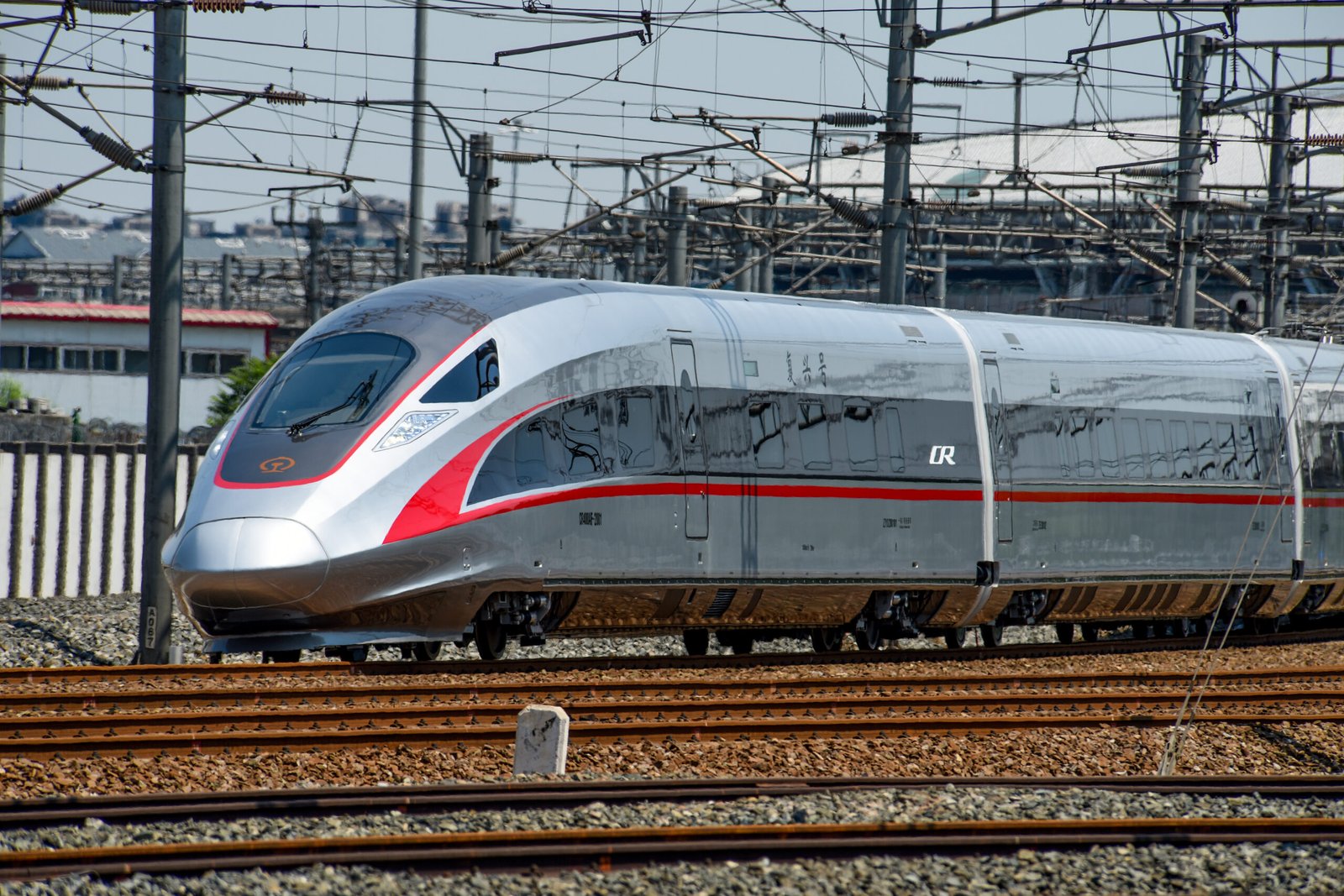
High-speed rail in China is the single best thing about travelling here. It turns a 1,200-kilometre journey into a four-hour trip on a train that arrives on time to the minute. For set-jetting it is what makes a multi-province filming-location itinerary realistic at all — and it is the reason a ten-day transit entry can still cover two regions. This guide covers how to book train tickets in China with a foreign passport, what each class actually gets you, and the two rules that catch first-time visitors out.
The short answer: High-speed rail in China is booked on the official 12306 app for the lowest price, or Trip.com if you would rather have a polished English interface and are happy to pay a small fee. Your passport is your ticket — there is no paper ticket to collect, and all of China’s high-speed rail has been paperless since 2020. Two facts that catch people out: tickets only go on sale 15 days before departure, and the ticket gate closes between 2 and 7 minutes before the train leaves — the exact cut-off is set station by station, not nationally, and at the underground Badaling Great Wall station it is a full 12 minutes — with no refund if you miss it.
Checked against China Railway’s own published rules, September 2026. The 15-day pre-sale window and the refund-fee tiers below come from 12306’s official notices rather than from travel blogs — several widely-copied blog posts still quote fee tiers that China Railway stopped using years ago. Rules do change, so confirm inside the app before you rely on a large refund.
Why high-speed rail in China decides your itinerary
Most C-drama locations cluster around a few rail hubs, and the last leg is usually the part that takes planning. Here is the honest version.
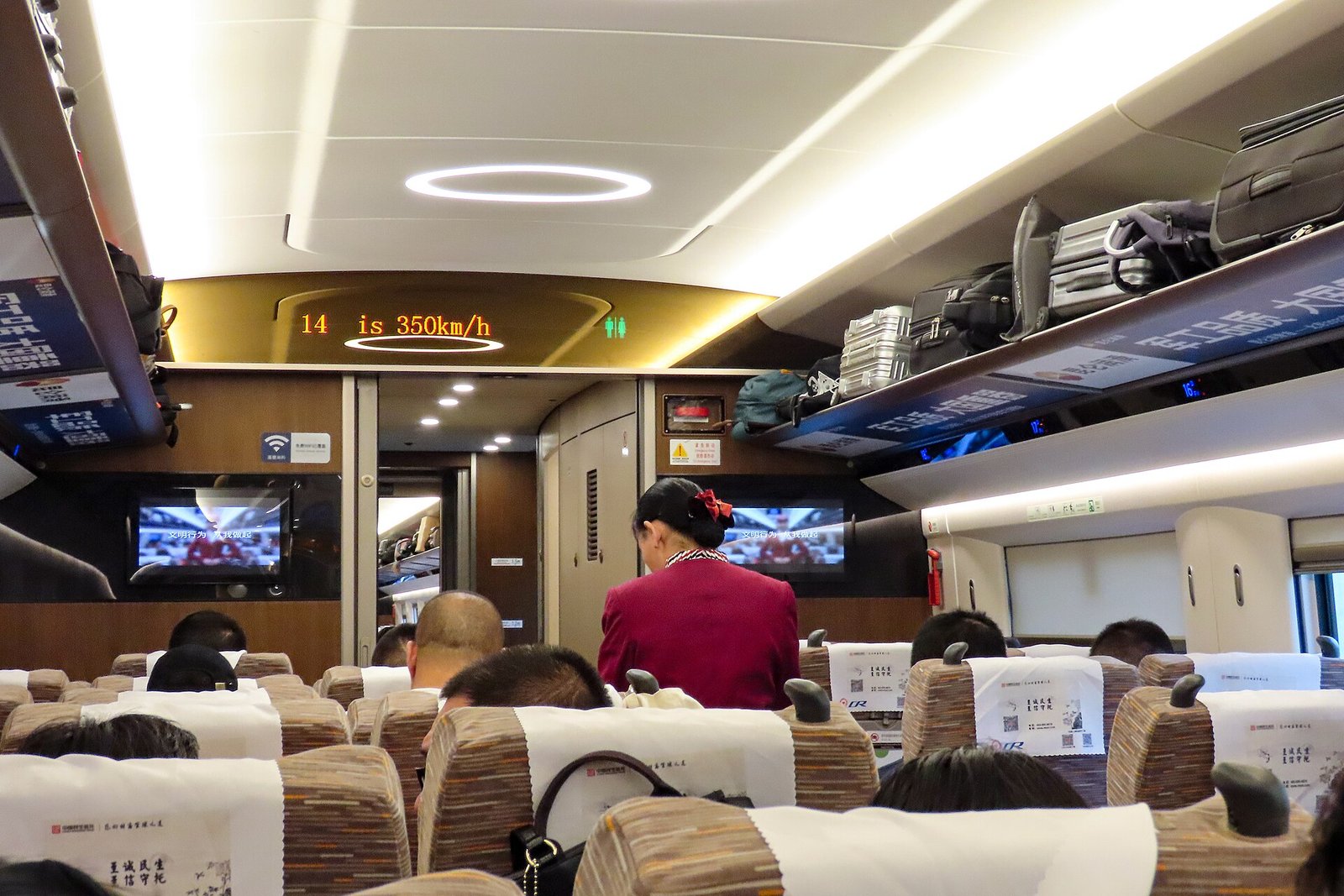
N509FZ / Wikimedia Commons, CC BY-SA 4.0
| Filming location | Nearest useful station | From Shanghai | The last leg |
|---|---|---|---|
| Hengdian World Studios | Hengdian or Yiwu | ~1h 40m | From Yiwu, the Yidong light rail runs to Ming Qing Palace station at the park gate (about ¥10, 40 minutes). Hengdian station itself opened in September 2024. |
| Xiangyang Tang City | Xiangyang East | ~4h 30m | Taxi to the studio complex; the city centre is closer than the station name suggests |
| Dali & Shaxi | Dali | Long — usually fly | Rail works from Kunming; from Shanghai, fly to Dali or Kunming instead |
| Duyun, Guizhou | Duyun East | Fly to Guiyang, then rail | Guiyang to Duyun East is a short high-speed hop, about 40 minutes |
| Shanghai locations | Shanghai Hongqiao / Shanghai | — | Metro covers almost everything you will want to see |
The Hengdian leg is the one almost every itinerary starts with, and the rail connection is why: under two hours from Shanghai Hongqiao, and — unusually for China — the light rail puts you down at the park gate rather than at a station on the edge of town. Note the pattern for the other three — the station is rarely at the location. Budget an hour of ground transport on arrival day and do not book a train that lands you somewhere at dusk.
Ticket classes
| Class | What you get | Best for |
|---|---|---|
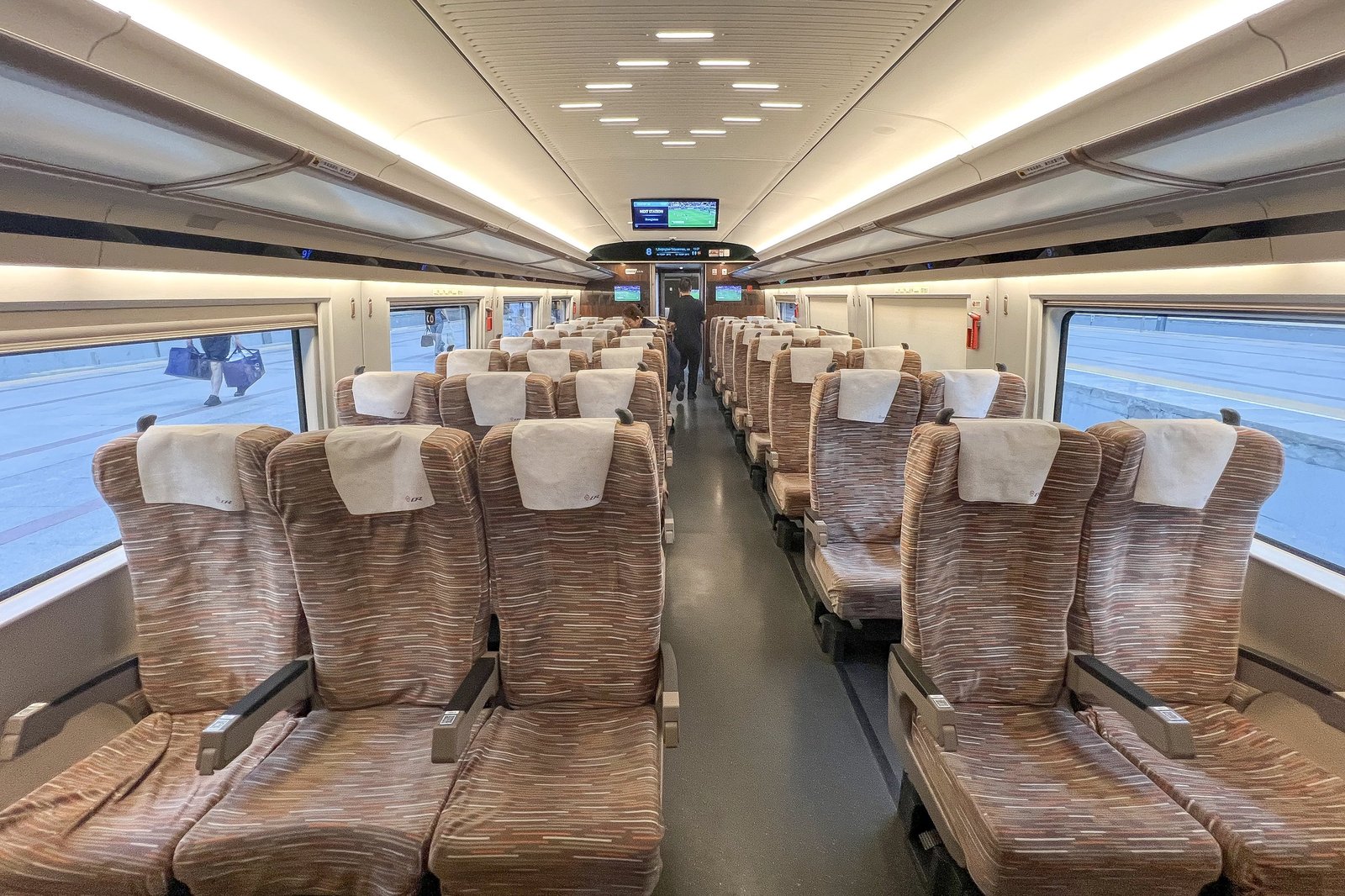
| Second class (二等座) | 3+2 seating, generous legroom | Almost every trip — genuinely comfortable |
| First class (一等座) | 2+2 seating, wider seats | Long legs, long journeys |
| Business class (商务座) | Lie-flat seats, lounge access | Only if the price does not matter |
Second class on a Chinese high-speed train is closer to European first class than to economy. Do not assume you need to upgrade — the money is better spent on an extra night somewhere.
How to book train tickets in China with a passport
You cannot book more than 15 days ahead. China Railway sells tickets on a rolling 15-day pre-sale window (including the day of departure), and this has been the rule since June 2022. If you are used to booking European rail months in advance, this will feel wrong — but there is no way around it. Set a reminder for exactly 15 days before each leg, because popular services and holiday periods do sell out within hours of opening.
- Register on 12306 with your passport. You do not need a Chinese phone number — an email address plus a mobile number that can receive SMS is enough. Complete all three verifications (passport, phone, email) before your booking window opens, because an unverified account can browse trains but cannot check out.
- Passport verification is the slow step. Upload a clear photo of the passport data page. It is usually approved within minutes, but allow up to about 24 hours for the system to sync. Do this the day before you intend to book.
- Switch to English under Me → Settings → Language if the app opens in Chinese. The translation covers booking, payment, refunds and passenger management, though it has rough edges.
- Pay within 30 minutes. Once you select a seat the clock starts; if you do not pay in time, 12306 releases the seat and you start again. Have your payment method ready before you begin.
- Use a card 12306 actually accepts. Visa, Mastercard, JCB and Diners Club work, as do Alipay and WeChat Pay. American Express is not accepted. Foreign cards are declined often enough that you should have a second option ready — if one fails, try switching networks, call your bank to clear the transaction, or pay with Alipay instead.
12306 or Trip.com? 12306 is the source of all tickets — every other platform draws from the same pool — and it charges the face price. Trip.com adds a booking fee but gives you an English interface, email support and a simpler payment flow. If your itinerary is two or three legs and you value your time, Trip.com is a reasonable trade. If it is six legs across two weeks, the fees add up and 12306 is worth the friction.
A note on booking channels: cancel where you booked. If you buy on Trip.com, refund through Trip.com — trying to cancel the same booking directly on 12306 can lock it and leave you calling support.
At the station: the 30-minute drill
At the station, in order
Announcements are in Chinese, usually with English on major lines. Showing your booking to staff on the platform is routine and they will help.
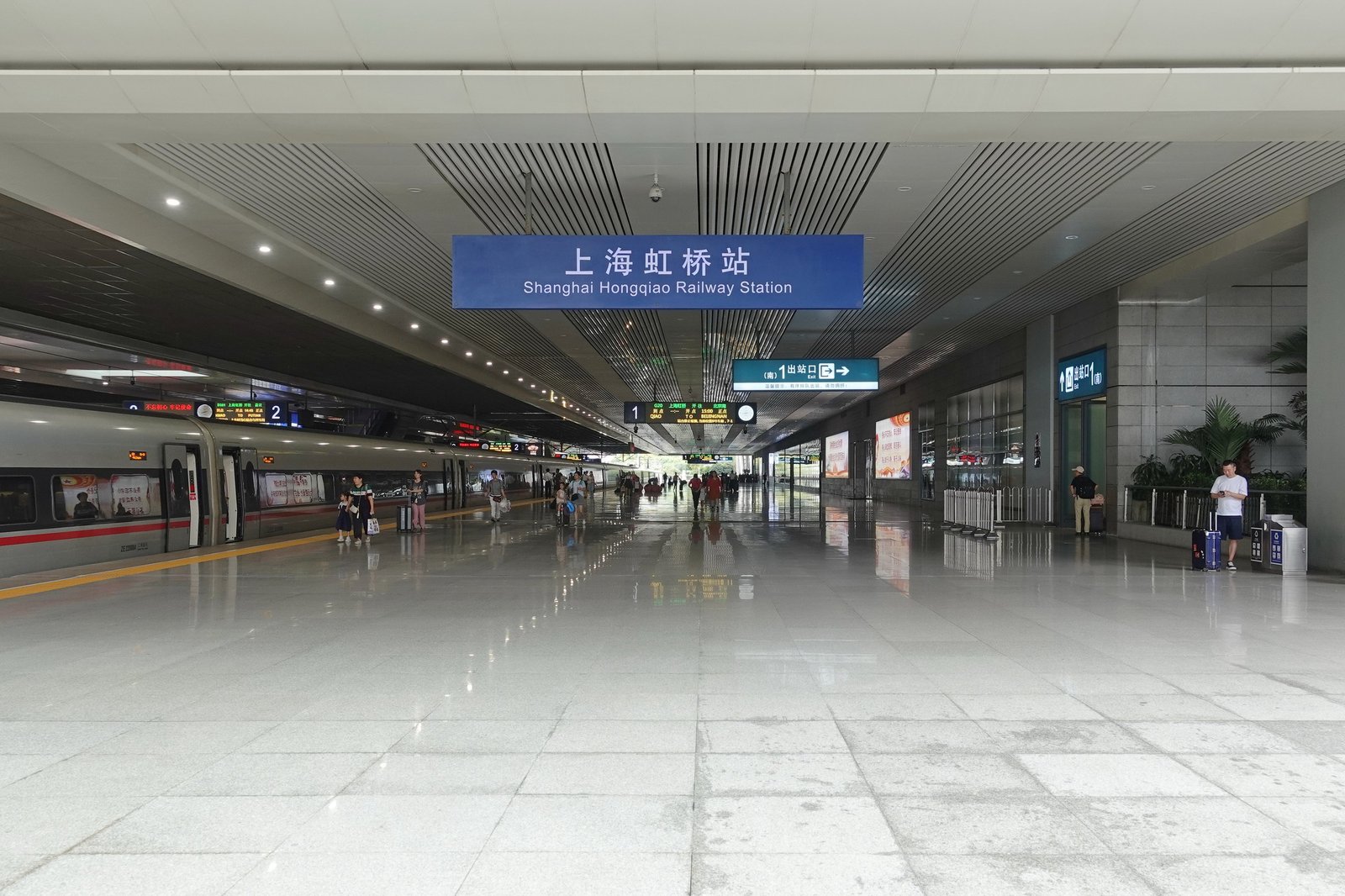
- Arrive early enough. Thirty minutes before departure for a normal station, 45 minutes for the giant hubs such as Beijing West or Shanghai Hongqiao, and a full hour if you are crossing at West Kowloon, where mainland immigration happens on site.
- Security first. Every bag goes through an X-ray and you walk through a metal detector. Two confiscation rules matter for this kind of trip: lighters and matches are taken, and power banks over 20,000 mAh — or with no legible capacity marking — are confiscated. Bring a smaller, clearly labelled bank instead.
- Find your train. You are looking for the train number (for example G1234) and the boarding gate on the departure board. Your 12306 booking also shows the waiting hall and gate.
- Scan your passport at the gate. This is your ticket — no printout, no collection window. Large stations read passports at the automated gates (lay it flat and closed on the scanner); smaller stations may only list mainland, Hong Kong, Macao and Taiwan documents, so the machine rejects you. The accepted-document list is printed on the gate itself, and the staffed lane is right beside it. Use it without hesitation.
- Boarding opens roughly 20 minutes before departure at the train’s starting station and about 10 minutes before at stations it passes through — and closes between 2 and 7 minutes before. There is no single national figure: each station sets its own cut-off according to how far the gate is from the platform, and it ranges from 2 minutes to 7, reaching 12 at the underground Badaling Great Wall station. China Railway’s own advice is to be inside the station 25–30 minutes before departure. Whenever it falls, it is a hard cut-off — if you are not through the gate by then, the train leaves without you and the ticket is worthless.
- Match the carriage number printed on the platform floor and on the side of the train, then find your seat. The train stops for only a few minutes at intermediate stations.
Announcements are in Chinese, usually with English on major lines. If in doubt, show your booking to a staff member on the platform — helping foreign passengers is routine for them.
Changing and refunding
Refunds are tiered by how far ahead you cancel, and the tiers are steeper than most people expect.
| When you cancel | Refund fee |
|---|---|
| 8 days or more before departure | No fee — full refund |
| More than 48 hours before departure | 5% of the fare |
| 24 to 48 hours before departure | 10% of the fare |
| Less than 24 hours before departure | 20% of the fare |
| After the train has departed | No refund at all |
The practical conclusion is simple: cancel early or accept a real loss. If your plans are still fluid, book the train you want and cancel it more than eight days out if they change — it costs nothing.
Changes work differently from refunds. Each ticket includes one change, and it must be made before the original train departs. Changes are generally free if you are moving to another train on the same route and the same seat class, with the fare difference settled either way; changing the date further out, or after the train has gone, carries a fee. You cannot change your departure or arrival station through a normal change — that needs the separate Change Destination option, which is only available more than 48 hours before departure and uses up your one change.
If you miss the train, you cannot get your money back — but you can usually move to a later same-day train from the same station at no extra cost, as long as you do it before midnight. Do it at the departure station, and do it immediately. And if China Railway cancels or delays your train, the refund is automatic and complete, with no fee.
Common questions
Can I book before I have a visa?
Yes — rail booking does not require a visa. But enter your passport number exactly as it appears on the document, including the exact spelling, because that number is what the gate reads.
Do I need to print anything?
No. With a passport booking, your passport is the ticket at most stations. Keep your booking reference on your phone as a backup, and if the automated gate will not read your passport, the staffed lane will.
Can foreigners book train tickets in China online?
Yes, and it is the normal way to do it. 12306 — the official app — accepts a foreign passport, an overseas mobile number and an email address, with no Chinese phone number required. Trip.com sells the same seats through an English interface for a small fee. What you cannot do is book more than 15 days ahead, so plan the booking date, not just the travel date.
Is there food on board?
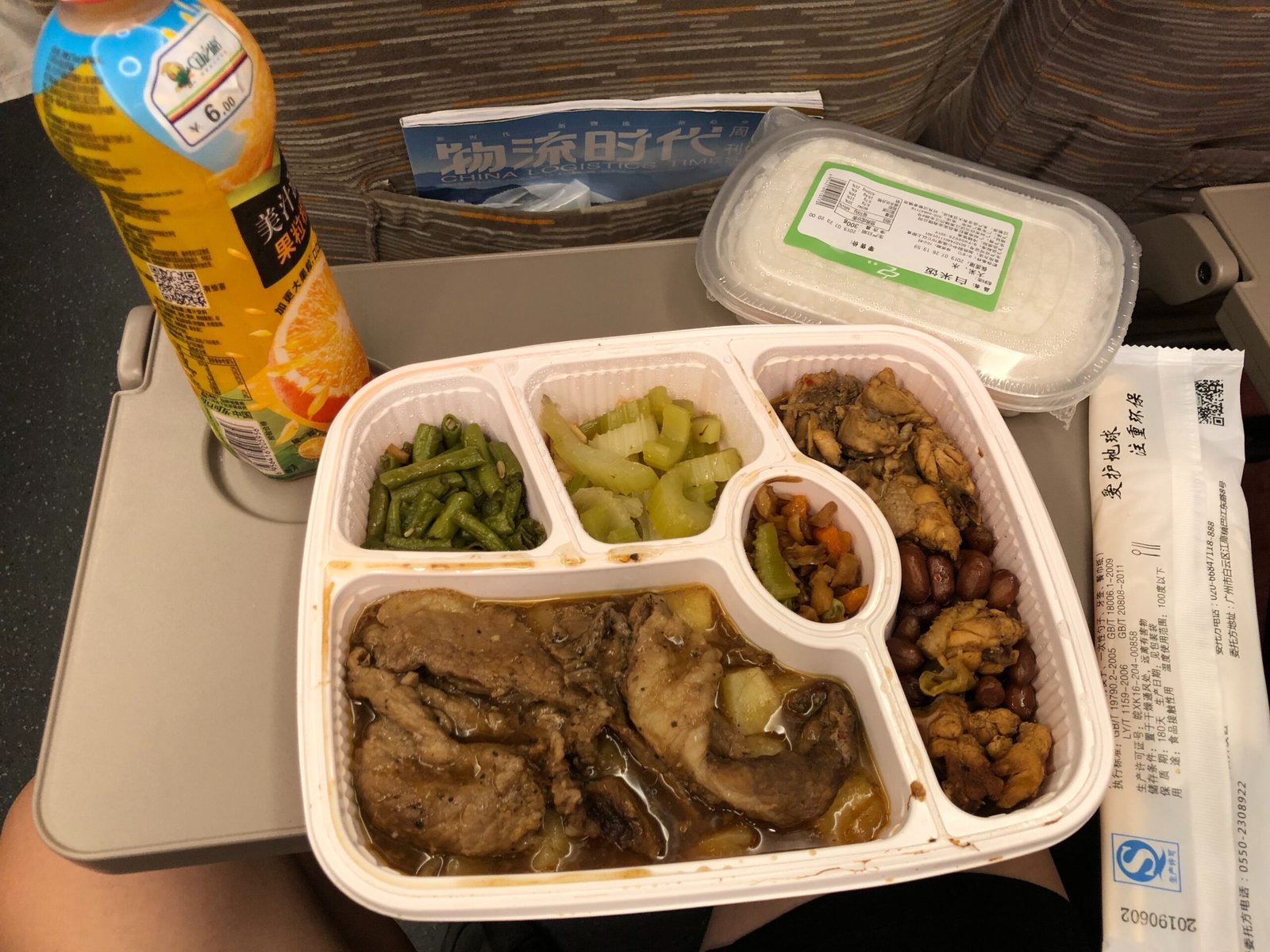
Yes — a trolley service, plus a dining car on longer routes. Quality is basic. Buy supplies at the station before boarding; the food options at major stations are genuinely good.
Can I take large luggage?
Yes, though there is an official size limit that is rarely enforced for ordinary suitcases. There are luggage racks at the end of each carriage and overhead space for smaller bags. Bring your bag to the gate yourself — there is no porter culture on Chinese high-speed rail.
How do I get my refund?
It goes back to whatever you paid with. Refunds to Alipay or WeChat Pay usually land within one to three business days; refunds to an international bank card take longer, typically three to seven business days, and occasionally more. Do not panic if it is not instant.
When do trains sell out?
Around Chinese New Year, the first week of May and the first week of October, when the whole country travels at once. Book the moment the 15-day window opens for those dates, and expect to be flexible about times rather than dates.
Trip.com sells the same inventory as the official 12306 system, but with an English interface that accepts foreign cards — which is the part that usually defeats people on their first trip. Book inside the 15-day window.
Booking through this widget earns us a small commission at no extra cost to you. It never changes what we recommend — see our affiliate disclosure.
Your next move
Worried about the practical stuff?
The visa guide covers the visa-free doors and the tourist visa.
Ready to go?
Rail is one door. The planning hub covers the rest.
Last verified
Sources: China Railway 12306 — ticket pre-sale window set at 15 days (official notice) · China Railway 12306 — how to use Change Destination · China Railway — official explainer on how many minutes before departure the gate closes
Spotted something out of date? Email us — or read how corrections work. We check every report against the source and update the page.
Ready to plan it? Turn the dramas you have watched into a day-by-day route with the C-drama route planner.
Not sure where to start? Take the drama-city quiz — seven questions, one city, and a route waiting at the end.