
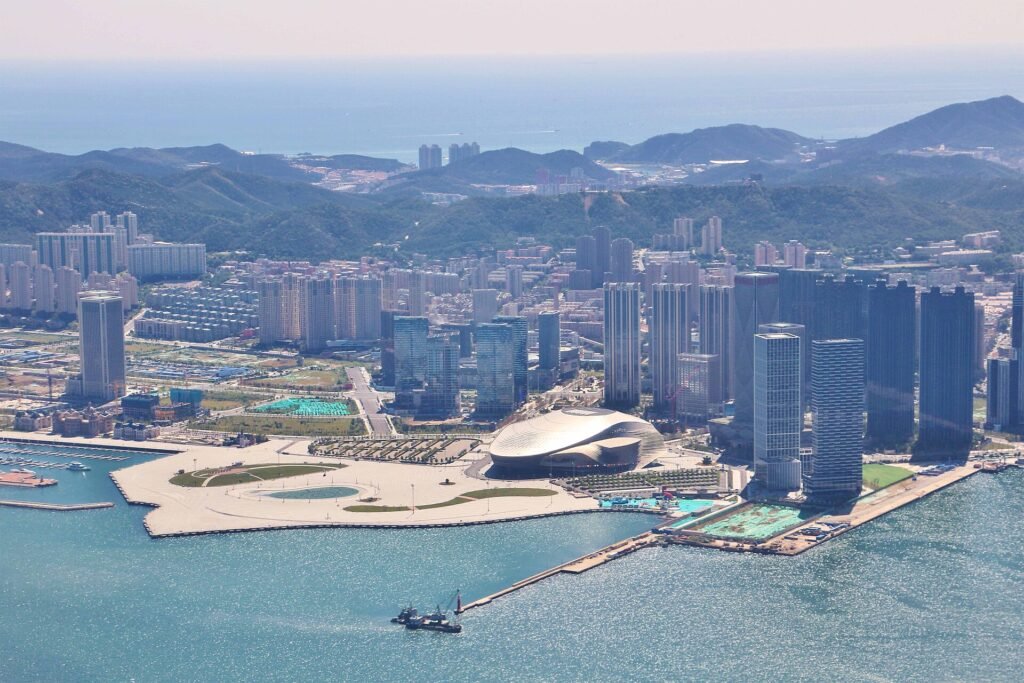
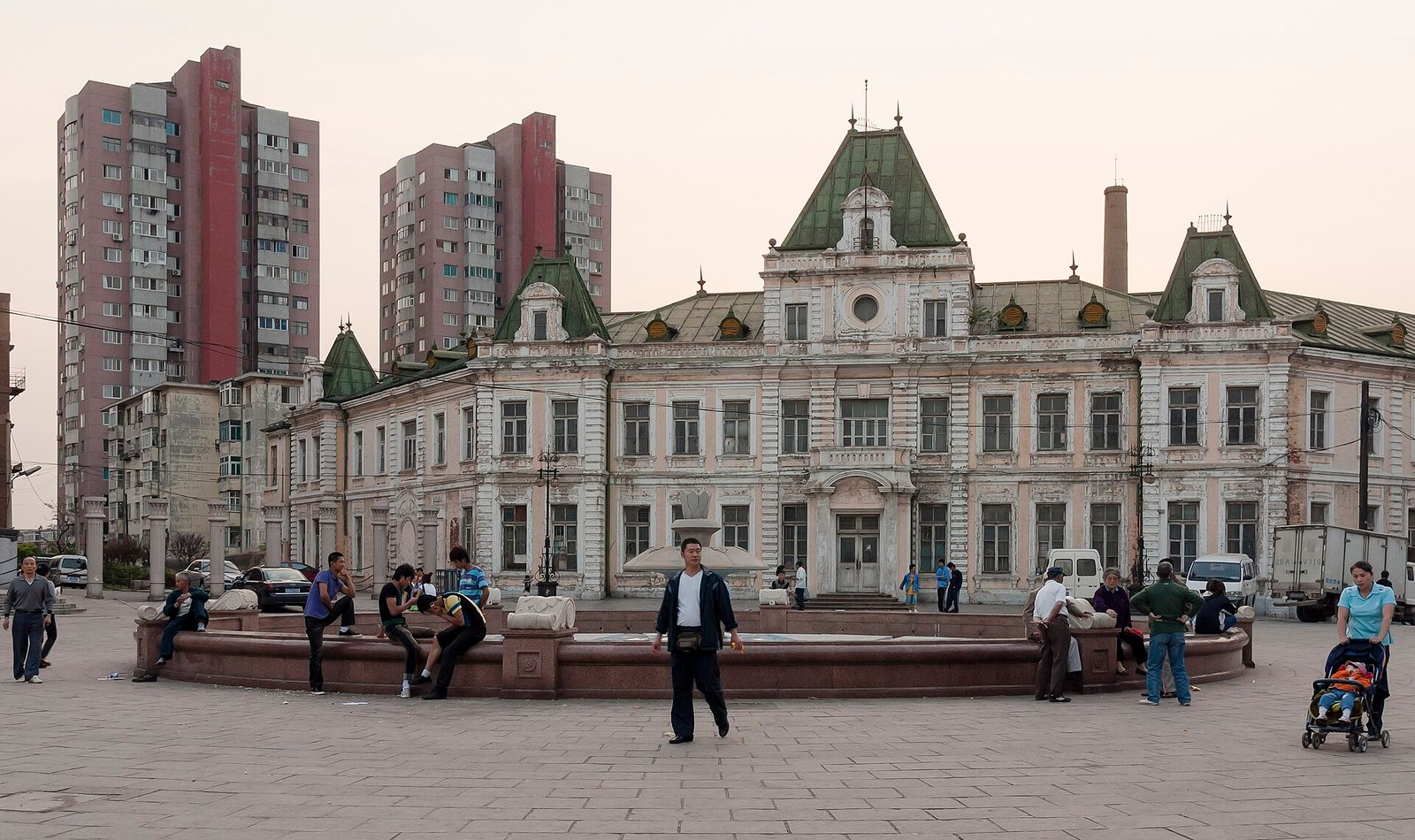
Dalian does not usually play itself. That is the first thing to understand about the Dalian filming locations. When a Chinese production needs a European street, a 1930s port, a Japanese colonial town or simply a coastline that looks like somewhere else, it flies to the southern tip of Liaoning and points a camera at a city that was built by two empires and never entirely stopped looking like them. Zhongshan Square alone holds five European architectural styles in a single circle. That is why Across the Furious Sea, Forensic Qin Ming and Blades of the Guardians all shot within a few hundred metres of each other, and why almost none of them were set in Dalian.
And then there is the comedy. Goodbye Mr. Loser (夏洛特烦恼, 2015) — the film that made Shen Teng and Ma Li into the biggest comedy partnership in China — was shot here, in Lüshun and Ganjingzi. Its high school is one of the most recognisable sets in modern Chinese cinema. It was also not a school: it was a disused factory dressed up as one, and it no longer exists in any usable form. That contradiction — a city famous for being other places, and a beloved set that was never real — is what this guide is about.
Dalian is also, separately, a very good two-day trip: a 35 km coastal road, the largest city square in Asia, a working tram network from 1909, and a seafood season that locals plan their year around. The film angle gets you here. The city is why you stay.
The short answer: Dalian (大连) is a coastal city at the southern tip of Liaoning, about 2 hours by high-speed rail from Shenyang and 4–5 from Beijing. Its film identity is substitution: the Russian- and Japanese-era architecture of Zhongshan Square lets period and coastal productions shoot here without building anything. Across the Furious Sea (2023) and Forensic Qin Ming used the square; Goodbye Mr. Loser (2015) shot in Lüshun and Ganjingzi, and its “high school” was a converted factory, not a real school. The one place you can actually tour is the Chuang Guandong film base at Qinfeng Xiaozhen in Lüshun, open 08:00–17:00, roughly ¥40–180 depending on where you buy. Best months: September and October for seafood and clear air, July and August for swimming.
Why Dalian plays other cities
The answer is a treaty. Russia took the site in 1898 and laid out a city called Dalny on the model of a European port; Japan took it over in 1905 and kept building. Between them they left behind a stock of stone facades, colonnades, domes and clock towers that no Chinese developer would ever commission and no set designer could afford to reproduce. When a production needs a street that reads as foreign — Shanghai in the 1930s, Harbin under occupation, a European port, a Japanese town — Dalian already has it, in stone, at street level, with working drainage.
This is a different kind of film city from the ones this site usually covers. Hengdian builds what it needs and charges admission. Harbin is loved for its winters and its Russian centre. Dalian’s advantage is variety inside a small radius: five architectural styles around one roundabout, a colonial-era town twenty minutes away, a working container port, a coastline that runs from cliffs to sand, and a tram system old enough to be period-correct without any dressing.
The result is a city whose Dalian filming locations are less a list of famous scenes than a list of capabilities. Need a 1930s quay? The old harbour. Need a court building? Zhongshan Square. Need a school? Until 2015, a factory in Ganjingzi. Need a mountain pass? An hour north. What Dalian does not have is a single film that owns it the way Meet Yourself owns Dali — and that is precisely why the city keeps getting hired to be somewhere else.
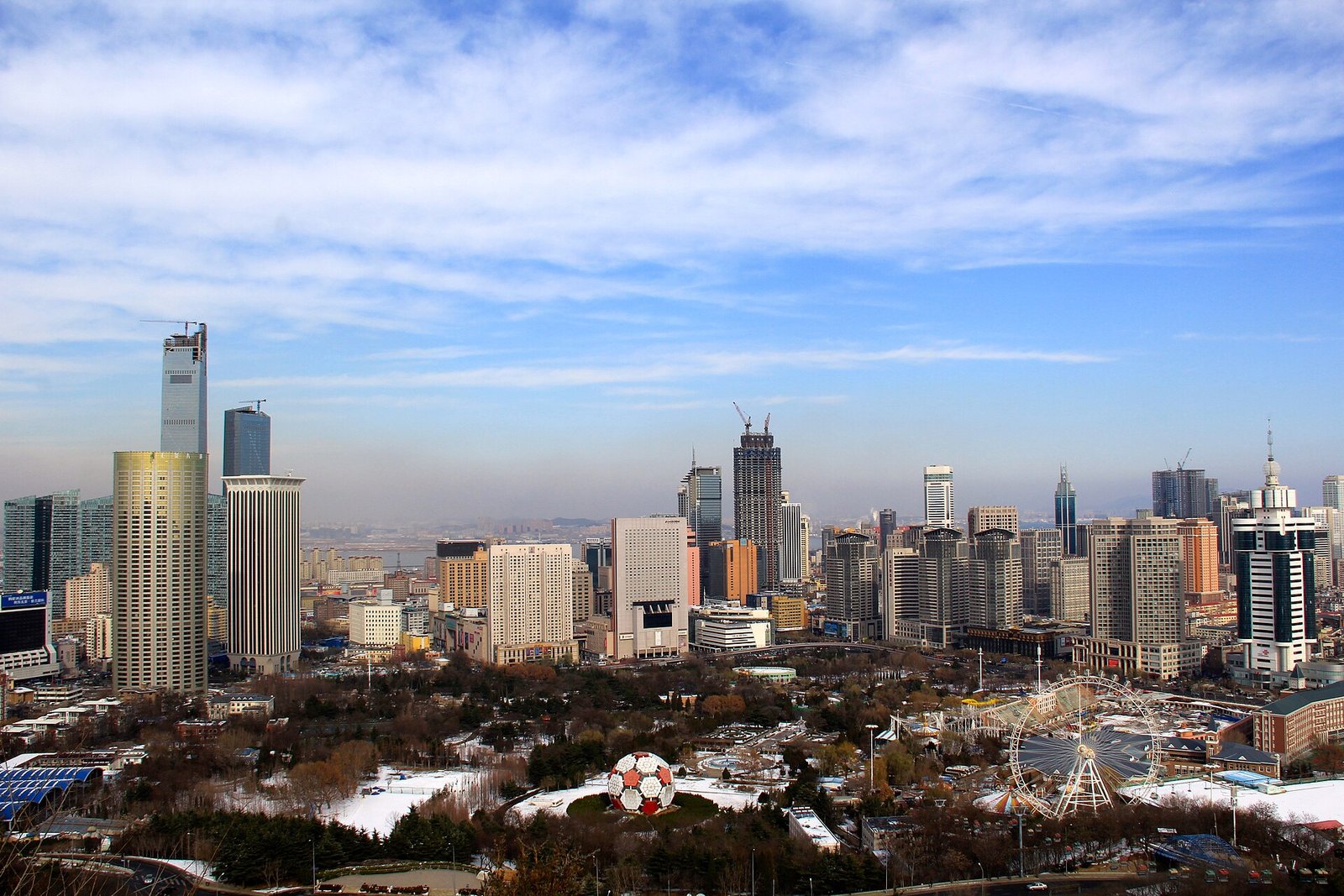
Dalian filming locations at a glance
| Place | What it is | On screen | Time |
|---|---|---|---|
| Zhongshan Square (中山广场) | A traffic circle ringed by five European styles, still the city’s civic centre | Across the Furious Sea · Forensic Qin Ming · Blades of the Guardians · Walking to School with Anthony | 45 min |
| Xinghai Square (星海广场) | The largest city square in Asia, free, on the water | City establishing shots | 1–2 h |
| Binhai Road (滨海路) | About 35 km of coastal road, cliffs to beaches | Coastline exteriors | Half a day |
| Chuang Guandong film base (闯关东影视基地) | A built 1930s north-east town, AAA-rated, ticketed | Dozens of productions | 2–3 h |
| Lüshun Sunjia Gou (旅顺太阳沟) | Japanese- and Russian-era streets under old plane trees | Goodbye Mr. Loser surroundings | 2–3 h |
| Jinshitan (金石滩) | Sea-eroded rock formations and beaches | The Love You Left Behind | Half a day |
| Laohutan (老虎滩) | Headland and marine park | Naval Port Nights (TV) | Half a day |
| Labour Park (劳动公园) | City-centre park with a hilltop viewpoint | Happy Times (2000) · Tiger Den (1956) | 1 h |
| Donggang / Venice Water City (东港) | Canals and European-style commercial streets | Night exteriors | 1–2 h, after dark |
Read the third column carefully. This is the honest version of the Dalian filming locations list: only one row is a place built for cameras, and only one row belongs to a film that people quote at each other. Everything else is a real city that happens to be photogenic in a specific historical way.
Zhongshan Square: five styles in one circle
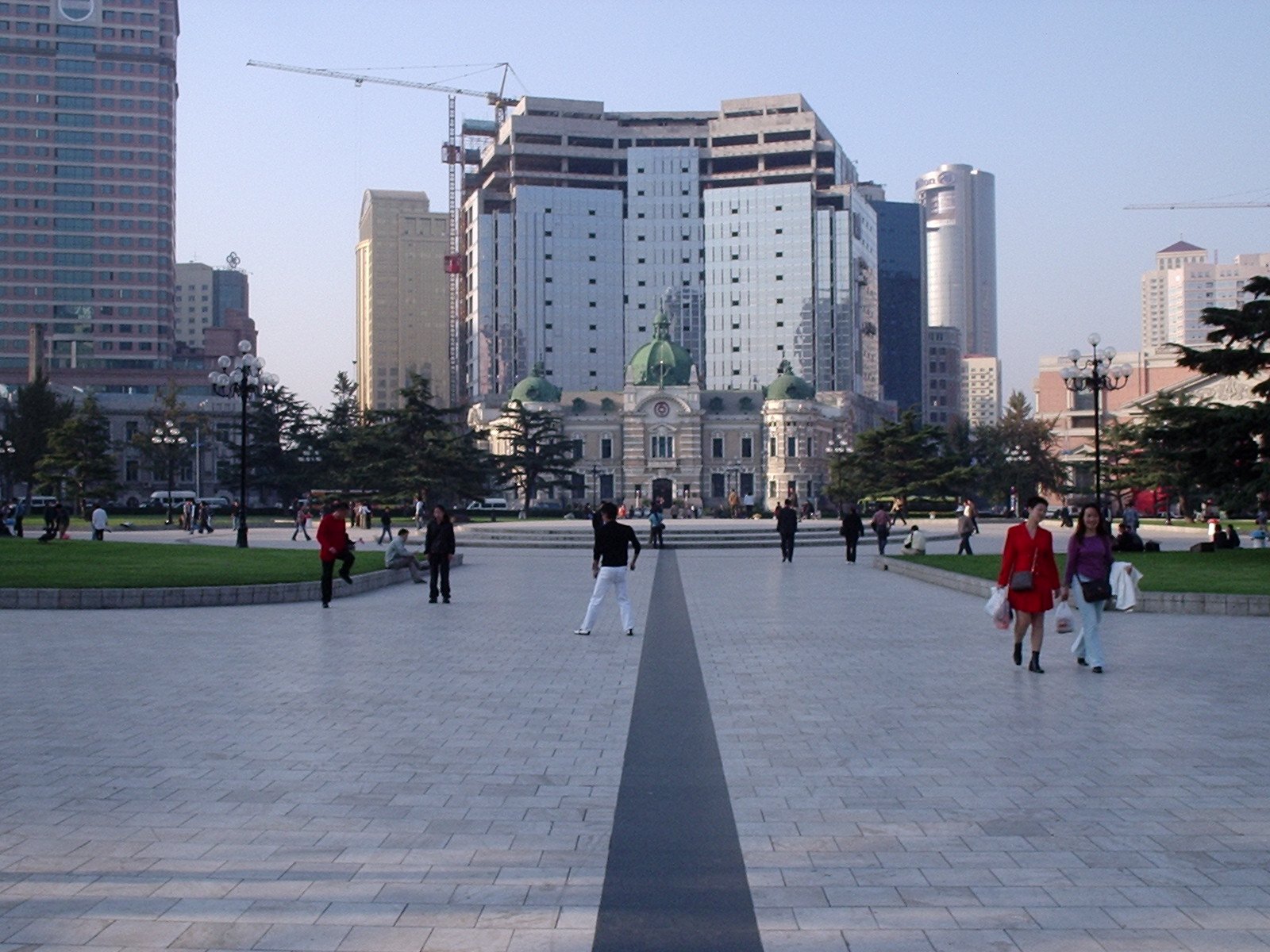
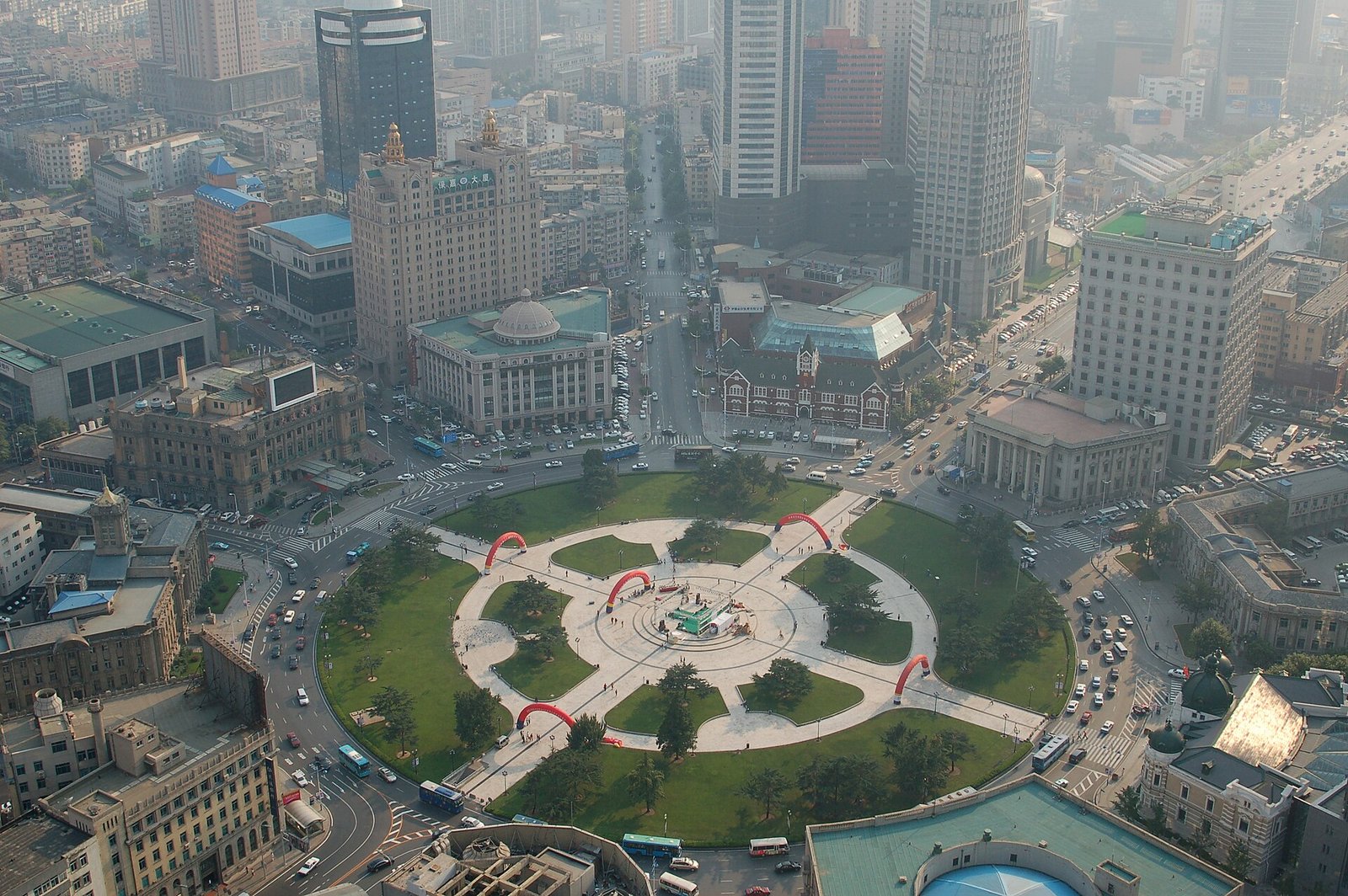
Zhongshan Square is a roundabout, which undersells it badly. Around the circle sit buildings in Gothic, Baroque, Romanesque-classical, Western classical and eclectic styles, put up between the 1900s and the 1930s, most of them banks or civic institutions then and several of them banks or civic institutions now. Stand in the middle and turn through 360 degrees and you have passed through about four decades of European architecture without crossing a road.
For a production, that is a gift with a specific property: you can shoot different centuries from the same tripod position. A camera pointed north can be 1920s Shanghai; pointed east it can be a Japanese concession; pointed at the paving it can be anywhere with money. Chinese location scouts call this kind of asset readable, and it is why the square keeps turning up.
The films that used it are a strange sample of recent Chinese cinema. Across the Furious Sea (涉过愤怒的海, 2023), Cao Baoping’s revenge thriller with Huang Bo and Zhou Xun, put its coastal-city material here. Forensic Qin Ming, the long-running procedural, has used the square repeatedly. Walking to School with Anthony (陪安东尼度过漫长岁月) and the espionage series Blades of the Guardians (暴风眼) both shot here too. Four productions, four different fictional cities, one roundabout.
Go at dusk. The square is at its best when the facades are lit and the traffic is a blur, and it is free, open, and in the middle of the city — which is not something you can say about most of the places on this site. Two warnings: it is a live traffic circle with eight roads feeding it, so cross via the underpasses; and the surrounding blocks are ordinary working Dalian, not a heritage zone, so do not expect a preserved 1930s streetscape beyond the ring itself.
What you are actually looking at
The ring is not a museum. Most of the buildings are still in institutional use — banks, a post office, civic offices — which is precisely why they survived: nobody had a reason to knock them down and rebuild. That gives the square a quality that restored heritage districts rarely have, which is that it looks maintained rather than preserved. The stone is clean because someone cleans it, not because a conservation plan says so.
Practically, this means you cannot go inside most of them. What you can do is walk the pavement ring and read the facades in sequence, which takes about forty minutes if you stop. Start on the north side and work clockwise: the styles change in the order they were built, so the walk doubles as a timeline of who was running the city and when.
How to shoot it yourself
If you want the frame that the productions get, you need two things: height and dusk. From street level the facades are foreshortened and the traffic dominates. The pedestrian bridges and the upper floors of the commercial buildings on the south-east corner give you the elevated angle, and the twenty minutes after sunset give you the lit-window look that makes the ring read as a period set rather than a roundabout.
Bring something with a wider lens than you think you need. The circle is about 200 metres across, so a normal phone lens will get you one building at a time; you want the sweep. And shoot on a weekday evening, not a weekend — the difference in traffic is the difference between a street scene and a car park.
The school that was a factory
Goodbye Mr. Loser (夏洛特烦恼) came out in 2015 and became the highest-grossing Chinese film of that year. Its premise — a failed musician passes out at a wedding and wakes up in 1997 as a high-school student — means the school is not a backdrop but the entire engine of the film. The corridors, the basketball court, the classroom with the broken window, the toilet block where a character hides: a whole generation of Chinese viewers can describe that building from memory.
They mostly think it was Lüshun No. 55 Middle School. It was not. The production shot in Lüshun district and Ganjingzi district, and the school was a disused factory converted into a set — which is why its proportions feel slightly wrong in a way you cannot name: the corridors are too wide, the ceilings too high, the windows in the wrong place for a school built in the 1980s. It reads as a school because it was dressed as one, not because it ever was one.
This is a category of location this site has not had before. It is not a real place playing itself (that is Xiamen in Hidden Love). It is not a film town built for tourists (that is Hengdian, or the base described below). It is a one-off set inside a real city: used once, abandoned, and left to the weather.
Source note, stated plainly. The “converted factory” account comes from Chinese fan investigations and self-published walkthroughs, including one widely shared 2025 post that is itself labelled as machine-generated. We have not found an official production statement confirming it. We report it because the same conclusion appears independently in older forum threads correcting the “Lüshun No. 55” claim, and because the alternative — that a real school was used — is contradicted by those threads. Treat it as the best available account, not as settled fact.
And here is the part that matters for your trip. The set is gone in any meaningful sense. Walkthroughs from 2025 describe an overgrown basketball court, a toilet block reduced to a roof, classroom dressing peeling off the walls, and the word for “outpatient department” still legible above a door that no longer closes. There is nothing to buy a ticket for and nobody maintaining it. If you go looking for it, you will find a derelict industrial site in a suburb, and you will be trespassing.
We are telling you this because the alternative is worse: a guide that lists the address, implies a pilgrimage, and sends you to a fence. Not every filming location deserves a visit, and the honest version of the Dalian filming locations list says so. The film is worth two hours of your evening. The factory is not worth two hours of your day.
There is a production logic worth understanding here, because it explains why the school feels slightly off. A film set in 1997 needs a school that looks like 1997 — and by 2014, when the film was shot, most Chinese urban schools had been rebuilt, air-conditioned and fitted with security gates. Real schools were the wrong texture. An empty industrial building, on the other hand, has high ceilings, long corridors, wide windows and no recent renovation to hide: exactly the raw material for dressing a school that no longer exists. The production was not avoiding a real place. It was building a past that had already been demolished.
That is also why the set decayed so completely. A converted factory has no institution behind it — no school district, no heritage listing, no caretaker. When the shoot wrapped, the dressing had no owner. Ten years later it is a ruin with a fence around it, and the film survives in a way the building never will.
Across the Furious Sea and the working harbour
If Goodbye Mr. Loser is the film Dalian is loved for, Across the Furious Sea is the film that uses the city most deliberately. Cao Baoping — who is from Dalian — shot his revenge story along the coast and around the port, and the choice was not decorative: the plot needs a fisherman, a boat, and water that looks cold and dangerous rather than pretty.
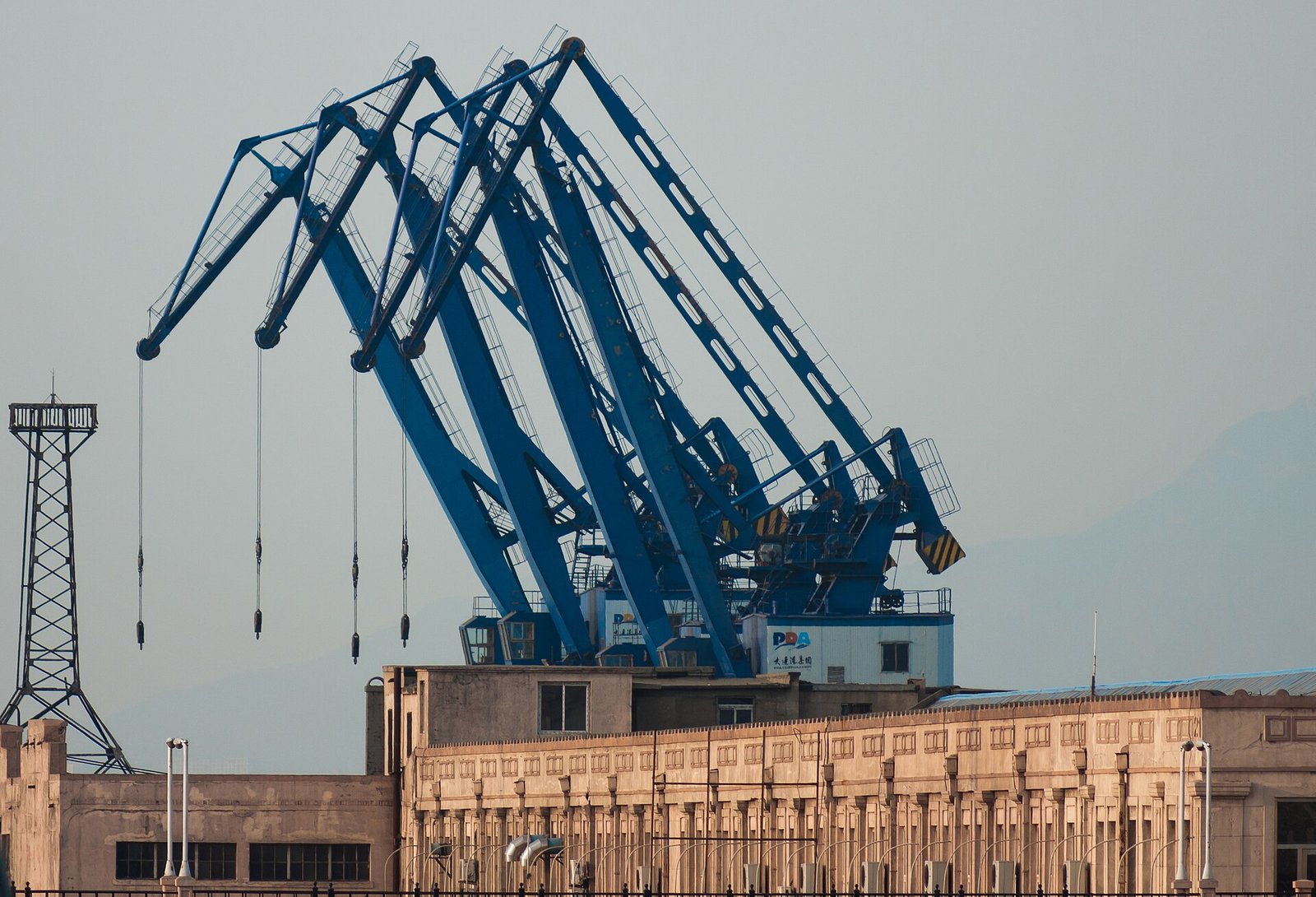
That is the part of Dalian the postcards skip. The city’s waterfront is not one continuous promenade; it is a series of working harbours, shipyards, fish markets and rocky headlands, and the fishing ports east and north of the centre are where the film’s texture comes from. You cannot tour a film set here, because there was no set — the production used the port as it was, which is exactly the kind of location that ages fastest and photographs worst.
What you can do is eat. The seafood in Dalian is the reason locals tolerate the wind: sea urchin dumplings, boiled prawns, scallops, and a summer-to-autumn calendar that peaks in September and October when the fishing ban lifts. A harbour restaurant at the right time of year is a better use of an evening than a plaque on a wall.
What substitution costs a city
There is a trade-off in being useful, and Dalian has paid it. Because the city can be anywhere, no production has ever needed to say Dalian. Compare the places this site covers where the opposite happened. Meet Yourself made Dali a destination by naming it; The First Frost made Chongqing legible as itself; the whole Hengdian economy runs on being unmistakably one thing. Dalian’s architecture is so adaptable that the camera never has to admit where it is.
The practical consequence for a visitor is that the Dalian filming locations do not accumulate. A city that plays itself builds a canon — a street that is the street from the show, with a plaque and a queue. A city that plays other cities builds a filmography of fragments: this facade in that thriller, this corridor in that comedy, this quay in something set three provinces away. You can visit all of them, and none of them will tell you what Dalian is.
That is not a complaint, and it is not a reason to skip the place. It is a reason to arrive with the right expectation. If you come looking for one pilgrimage site, you will leave disappointed — especially because the one site everyone wants is a derelict factory. If you come to watch a city perform, the Dalian filming locations are unusually rewarding, because you are seeing the mechanism rather than the monument: the exact stonework that a location scout would have circled in red.
There is also a quieter cost, which is that substitution work is invisible labour. The crews come, shoot, wrap and leave; the city gets a few days of hotel bookings and no story. Harbin at least gets to be Harbin in the crime films set there. Dalian gets to be Shanghai, and then to be nothing at all. Worth remembering the next time a Chinese film’s closing credits list a shooting location you did not expect.
The one place that really is a film set
Chuang Guandong film base — also called Qinfeng Xiaozhen (清风小镇) — is in Lüshun district, at 369 Sigou Road, and it is the only entry on this list that exists for the purpose of being filmed and is open to the public. It is a rebuilt north-east Chinese town of the 1930s and 1940s: timber shopfronts, dirt lanes, a railway platform, the kind of courtyard housing that the television epic Chuang Guandong made famous. Dozens of productions have shot here.
It is rated AAA, opens at 08:00 and closes at 17:00 with last entry at 16:30, and takes two to three hours. The ticket price is the most confusing thing in this guide: Chinese booking sites quote ¥40, ¥50 and ¥180 for what appears to be the same attraction, with the higher figure described as the official full price and the lower ones as platform or local-resident discounts. Budget ¥40–180 and check at the gate. We are giving you a range because three credible sources disagree, and inventing a single number would be worse than admitting that.
Two honest notes. First, this is a base, not a location — the buildings were constructed to be filmed, so what you are walking through is the thing itself rather than a place that stood in for something. That makes it satisfying in a way the factory in Ganjingzi is not, and also less interesting if what you want is the real city. Second, it is a 40-minute drive from central Dalian and pairs naturally with Sunjia Gou, which is ten minutes away and is the real thing.
The cheapest period set in China
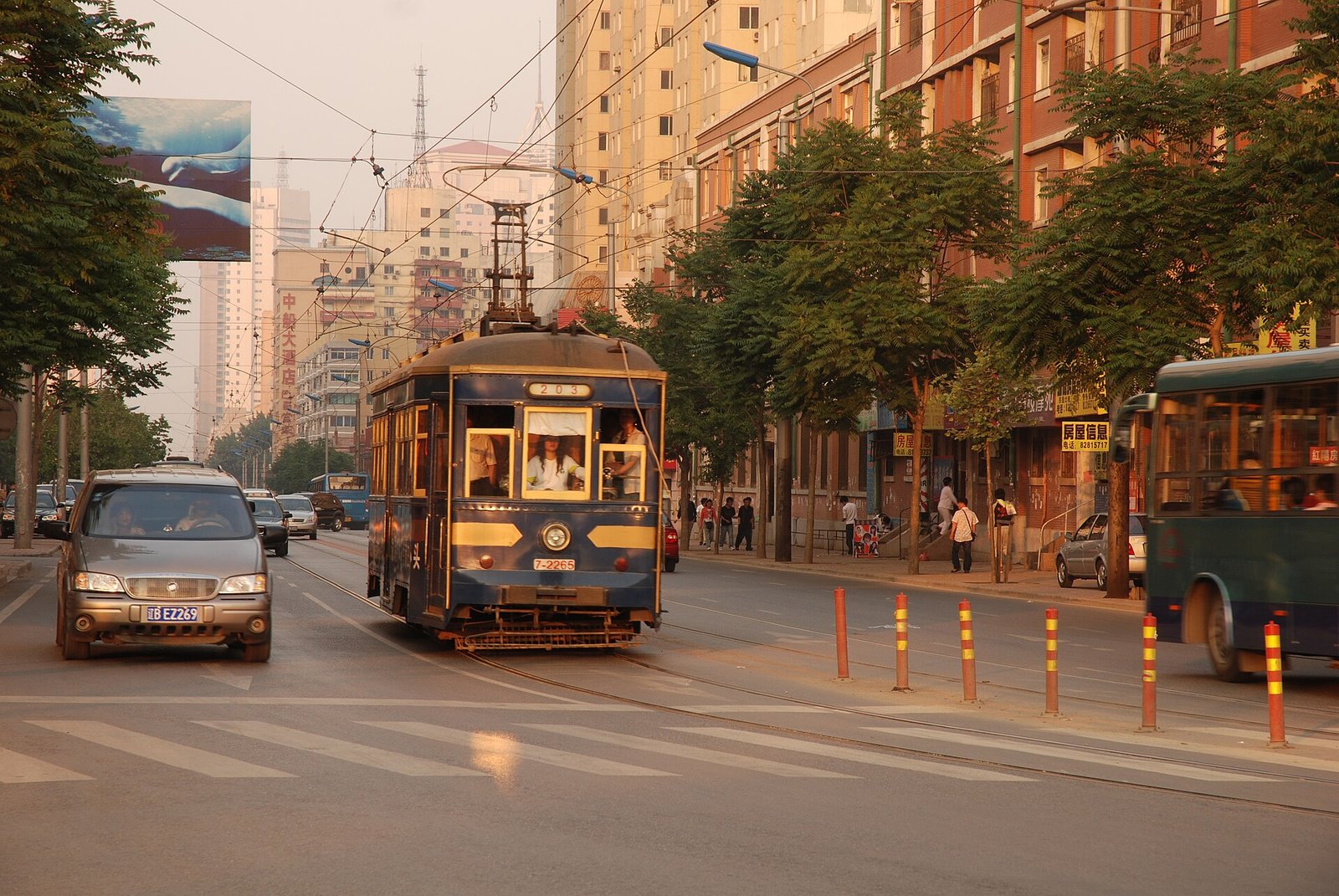
Line 201 has been running since 1909, which makes it older than the Chinese film industry and roughly contemporary with the first European tram systems that inspired it. Part of the route still uses period rolling stock — wooden benches, brass fittings, a conductor rather than a card reader — and a ride costs about ¥1–2. It is, by a wide margin, the cheapest way to stand inside a period set anywhere in this guide.
What makes it more than a novelty is that the tram runs through the actual city rather than a preserved loop. You get the colonial facades on one stretch, ordinary residential blocks on the next, and the harbour at the end — which is exactly the mix a production wants and exactly the mix a visitor rarely gets to see in one continuous shot. If you are doing the Dalian filming locations on a budget, this is the single best hour you can spend, and it costs less than a coffee.
Two practical notes. The historic cars are not on every departure, so if you specifically want one, ask at the terminus rather than boarding the first thing that arrives — the modern low-floor trams run the same line. And ride it in the direction of the old town in late afternoon, when the light comes down the cross streets and the interiors fill with it. That is the shot.
The 35 km coast road and Xinghai Square
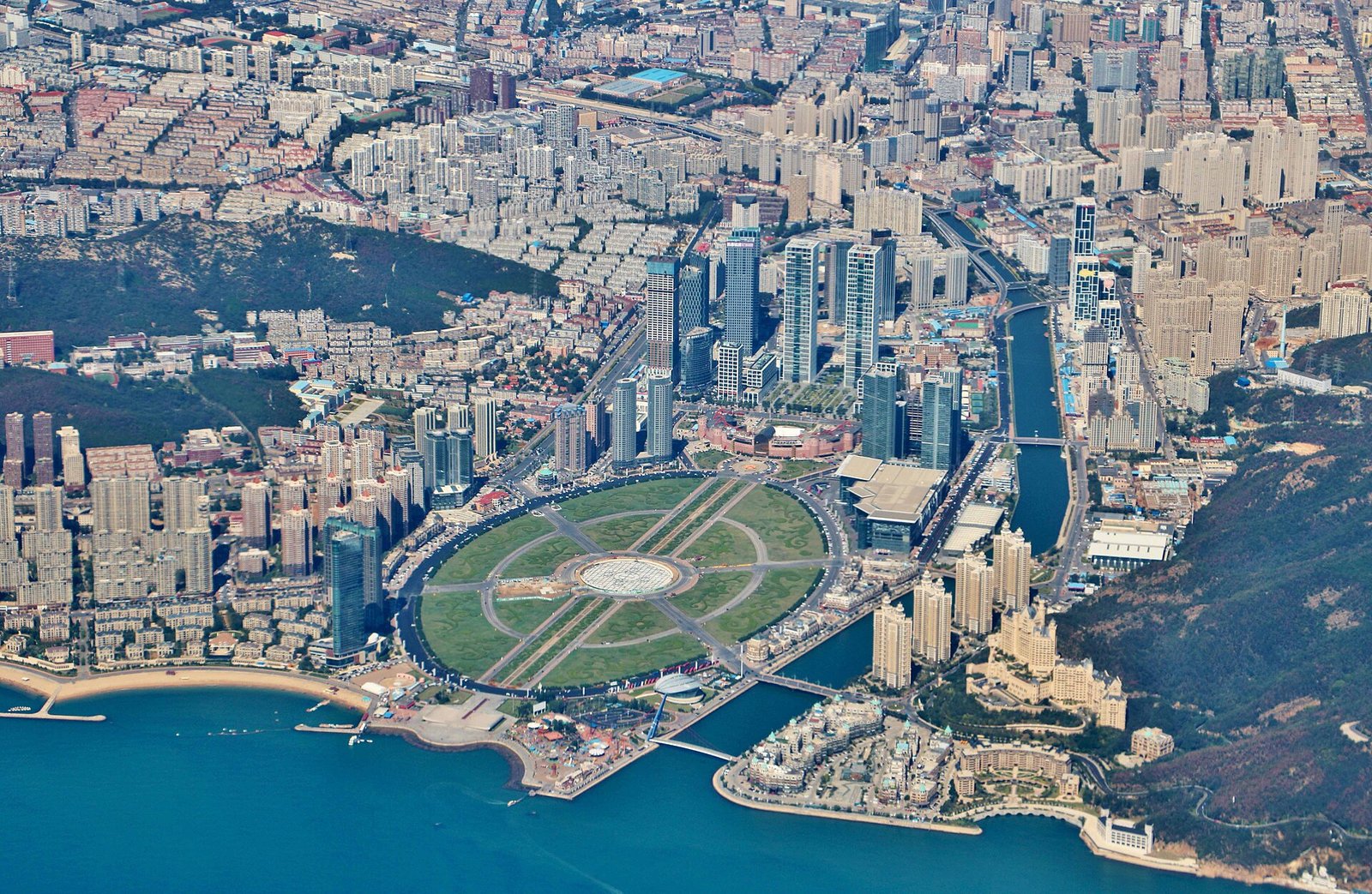
Binhai Road runs about 35 km along the southern edge of the city, from the old town around to Jinshitan, and it is the single best half-day in Dalian. It alternates between cliff sections where the road is cut into rock and beach sections where it drops to sea level, and there are enough laybys and stairways down to the water that you can stop every ten minutes without feeling like a tourist bus.
Do not try to do it on public transport. Buses run along parts of it, but the interesting stops are between the stops, and the road is one-way in sections. A hired car for four hours, or a taxi arranged for the loop, is the practical answer — the same advice that applies to the Wuyuan villages and to most of rural China.
Xinghai Square anchors the western end: the largest city square in Asia, free, built on reclaimed land in 1997, with a promenade that fills up at sunset. It is not a filming location in any meaningful sense — it is a civic gesture — but it is where the city photographs itself, and if you want one frame that says “Dalian” rather than “somewhere in Europe”, this is it. The tram is the other one: line 201 has been running since 1909 and still uses period rolling stock on part of the route, which means you can film a 1930s street scene by buying a ¥1 ticket.
Lüshun and Sunjia Gou
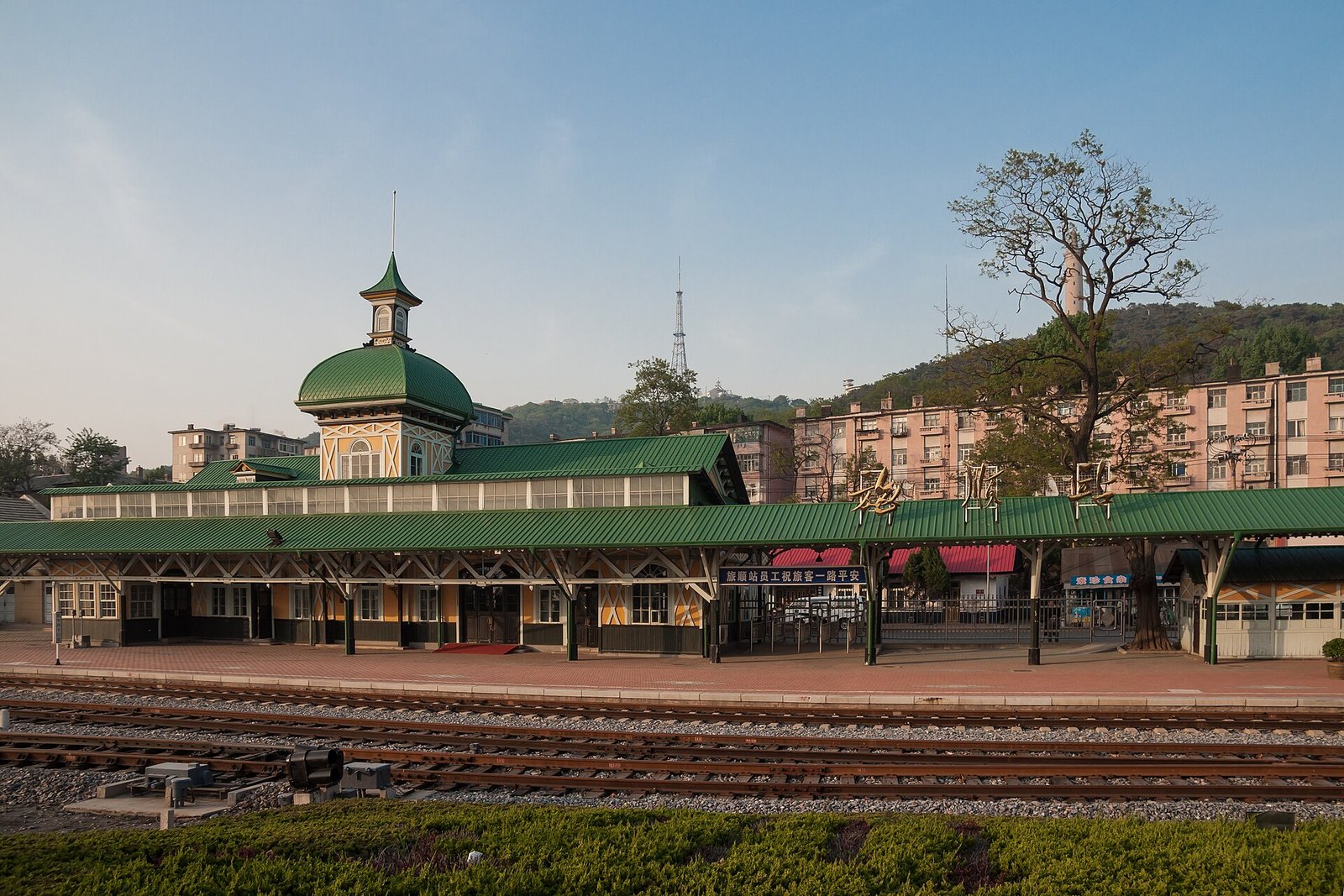
Lüshun is 45 minutes south-west of the centre and was, for half a century, the most contested naval base in East Asia — which is why it looks nothing like the rest of Dalian. Sunjia Gou, the old residential quarter, is a grid of Japanese- and Russian-era villas under mature plane trees, much of it empty, some of it restored, all of it photogenic in the specific way that decaying colonial architecture is.
This is where Goodbye Mr. Loser found its streets, and it is the closest you will get to walking through the film’s world — not the school, which is gone, but the lanes around it. The district also holds the Puppet Manchukuo-era sites, the naval museum and the Laotieshan headland, and the local government maintains a tourism listing for the film base and the pottery museum that is worth checking before you go, since opening hours shift with the season.
One practical warning: Lüshun is a military area in parts, and photography is restricted near installations. Signs are clear where they exist; where they do not, do not photograph anything with uniforms or antennas in it.
When to go
| Window | Weather | Why come then | Watch out for |
|---|---|---|---|
| April–May | Cool, windy, clear | Cherry blossom around Lüshun; few visitors; good light | The sea wind is colder than the temperature suggests |
| July–August | 25–30°C, humid | The only months you can swim; the city’s beach season | Peak prices, packed beaches, book ahead |
| September–October | Dry, mild, clear | The best window. Fishing ban lifts, seafood at its peak, air clears | The October holiday week is the busiest of the year |
| November–March | Cold, very windy | Empty streets, cheap hotels, snow on the colonial architecture | Coastal walks close to unpleasant; some seasonal sites shut |
The commonly quoted golden season is May to October, and the honest refinement is that late September to mid-October beats all of it: the water is still warm enough to look inviting, the seafood season has opened, the summer crowds have gone, and the light on the European facades is at its best. If you are choosing one week for the Dalian filming locations and the city together, choose that one. For how this fits the rest of the country, our best-time guide maps the national calendar.
How we checked this guide
Everything here was checked against a primary or official source on 17 October 2026. The film base’s address, opening hours and rating come from the Lüshun district government’s tourism listings and from the attraction’s own booking page. The Zhongshan Square filmography comes from Chinese film-and-travel reporting that names the productions, cross-checked against the films’ own records. The Across the Furious Sea production details come from Chinese reference sources, and the director’s Dalian origin is repeated consistently in Chinese media.
One claim in this guide is weaker than the rest and we have flagged it in place rather than in a footnote: the account of Goodbye Mr. Loser’s school as a converted factory rests on fan investigation and self-published walkthroughs, not on a production statement. We included it because the competing claim — that it was a real school — is contradicted by the same sources, and because the practical conclusion (the set is gone; do not go looking) holds either way. Where Chinese booking sites give three different prices for the same ticket, we give the range. If something here is out of date, our corrections page explains how to tell us.
One, two or three days
| Time | Plan | Notes |
|---|---|---|
| One day | Zhongshan Square, the old town, Xinghai Square at sunset, seafood dinner | All central and mostly free. Do it on foot plus the tram. |
| Two days | Day 1 as above; Day 2 hire a car — Binhai Road, then Lüshun and Sunjia Gou | The right trip. Day 2 needs a car; buses will eat the day. |
| Three days | Add the Chuang Guandong base, Jinshitan, and a slow morning on the coast | Three days is generous but Dalian rewards slowness. |
Two days is the honest minimum, and the split is clean: one day for the city that plays other cities, one day for the coast and the colonial south. If you only have one day, skip Lüshun — it is 45 minutes each way and deserves its own half-day — and do the square at dusk instead. Our how-many-days guide sets this against the other regions, and the route planner will fit Dalian into a longer itinerary.
Getting there
Dalian has two railway stations and they serve different purposes. Dalian station (大连站) is the old terminus in the centre, with a European facade that is itself a period-correct backdrop; Dalian North (大连北站) is the high-speed hub, further out but connected to the centre by metro. The two are linked by metro, so arriving at the wrong one is an inconvenience rather than a disaster.
| From | How | Time |
|---|---|---|
| Shenyang | High-speed rail | About 2 hours |
| Beijing | High-speed rail | About 4–5 hours |
| Harbin | High-speed rail via Shenyang or Changchun | About 4–5 hours |
| Shanghai / eastern China | Fly, or rail via Shenyang | Flight about 2 hours |
| Japan / Korea | Fly into Dalian Zhoushuizi (DLC) | Short-haul international |
By air, Dalian Zhoushuizi International Airport is unusually close to the city — a 20-minute taxi to the centre, which is rare among Chinese cities of this size. Inside the city, the metro, buses and the tram network cover everything central; a stored-value Mingzhu card is the local answer to paying for all three. For Binhai Road and Lüshun, arrange a car: this is the one part of the trip where public transport genuinely fails.
Dalian is also the natural southern anchor of a north-east circuit. Shenyang is two hours north, Changchun an hour beyond that, Harbin an hour beyond that — and each has its own film story: Changchun is where Chinese cinema began, and Harbin is the country’s coldest crime scene. Doing all three in one trip is realistic in eight or nine days. For the paperwork, our China visa guide covers the transit-without-visa rules port by port, and booking trains in China explains the real-name system you will need for every leg.
Tickets, the base and what is free
| Item | Price | Notes |
|---|---|---|
| Zhongshan Square | Free | A working traffic circle; use the underpasses |
| Xinghai Square | Free | Largest city square in Asia; best at sunset |
| Binhai Road | Free | Hire a car; there is no through bus |
| Sunjia Gou | Free | Residential streets, partly unrestored |
| Chuang Guandong film base | ¥40–180 | Three sources, three prices. 08:00–17:00, last entry 16:30 |
| Jinshitan | Ticketed | Geological park with its own admission |
| Laohutan | Ticketed | Marine park; separate from the headland walk |
| Tram line 201 | About ¥1–2 | Running since 1909; the cheapest period set in China |
| Goodbye Mr. Loser school set | Not open | Derelict and closed; do not attempt |
The shape of this table is the point. Dalian’s Dalian filming locations are overwhelmingly free, because they are public streets and squares rather than attractions. The one ticketed film attraction has a price nobody can agree on. And the one location people most want to see is the one that does not exist any more.
What to know before you go
Bring a windproof layer even in summer. Dalian’s sea wind is the thing visitors underestimate. A 26°C day on the coast can feel like 20°C once the wind picks up, and the coastal road is exactly where you will be standing.
Do not plan Lüshun as a walk-up. It is 45 minutes each way, the sites are spread out, and parts of the district are restricted. Give it a half-day with a car, or skip it.
Zhongshan Square is a roundabout, not a pedestrian zone. Eight roads feed it. Use the underpasses and do not try to cross at street level, however good the light is.
Eat seafood in September or October. The summer fishing ban means the best of the catch lands in autumn, and the difference between a September scallop and a July one is not subtle.
Accept that the film trail is thin. Of everything in this guide, only two entries are genuinely about cinema: the square, and the base. The rest is a very good coastal city. If you want the opposite experience — a place where the sets are the attraction — go to Hengdian, and see our comparison of China’s film studios for how the different bases differ.
Download a Chinese map app before you arrive. The first-time-in-China guide covers the app and payment setup, and you will need both to find the film base, which sits in a village outside the city.
Give the coast a full morning, not an afternoon. The light on Binhai Road is best before eleven, when the sun is still low enough to come across the water rather than behind it, and the laybys are empty. By two o’clock the tour coaches have arrived and every viewpoint has a queue.
Do not plan around a single building. The most common disappointment with the Dalian filming locations is expecting a landmark and finding a street. Zhongshan Square is a ring of facades, Sunjia Gou is a residential grid, the harbour is a working port. Bring a route rather than a target.
Check the district government site before Lüshun. The Lüshun authorities publish seasonal changes to museum and site opening hours, and they shift more than you would expect — a page that says one thing in July can say another in October.
Common questions
What was filmed in Dalian?
A lot, mostly as a stand-in. Across the Furious Sea (2023) shot its coastal material here, as did Forensic Qin Ming, Walking to School with Anthony and Blades of the Guardians around Zhongshan Square. Goodbye Mr. Loser (2015) shot in Lüshun and Ganjingzi districts. Older productions include Zhang Yimou’s Happy Times (2000) at Labour Park and Tiger Den (1956) in the same place.
Can I visit the school from Goodbye Mr. Loser?
No. The building was a disused factory dressed as a school, not a real school, and it is now derelict with no public access. Reports from 2025 describe an overgrown site with the set dressing gone. We would rather tell you this than send you to a fence in a suburb.
Was the school really Lüshun No. 55 Middle School?
That is the widely repeated claim and it appears to be wrong. Chinese forum threads corrected it soon after the film’s release, and later walkthroughs describe a converted factory. We have not found an official production statement either way, so we treat it as the best available account rather than settled fact.
Why is Zhongshan Square in so many films?
Because it holds five European architectural styles in a single circle, built between the 1900s and 1930s under Russian and Japanese administration. A production can shoot different decades and different fictional cities from the same position without building anything, which is why location scouts keep coming back.
Is the Chuang Guandong film base worth it?
Yes, if you want to walk through a built 1930s north-east town and do not mind that it was constructed to be filmed. Two to three hours, open 08:00–17:00, roughly ¥40–180 depending on where you buy. It pairs well with Sunjia Gou, which is ten minutes away and is the real thing.
How many days do I need in Dalian?
Two, split one day in the centre and one day on the coast and in Lüshun. One day works if you stay central and skip Lüshun. Three days lets you add the film base and Jinshitan at a comfortable pace.
Your next move
Treat the Dalian filming locations as a reason to walk a city rather than a checklist to tick. Stand in the middle of Zhongshan Square at dusk and turn slowly: that is the whole thesis of this guide in one movement. Then take the tram, eat something from the sea, and drive the coast road the next morning. Skip the factory. It is not there, and the film does not need it to be.
Then go north. Changchun is where Chinese cinema started and Harbin is the coldest film set in the country — three cities, one rail line, one very coherent week. If you want the opposite of substitution — a place where the city plays itself and the camera simply agrees — try Wuyishan or Wuyuan. And for the pure opposite — a city so distinctive that no one would ever mistake it for somewhere else — there is Chongqing, which is the mirror image of everything on this page. Browse the rest on the drama hub or the region-by-region map, or let the which-drama-city quiz pick for you. The full dataset behind these guides is published as our China filming locations dataset.
Last verified
Sources: Dalian Lüshunkou District government portal (dllsk.gov.cn), tourism listings, January 2026 — the QINGFENG Xiaozhen (Chuang Guandong) film and television base, the Sunjia Gou pottery museum and seasonal opening-hour changes at the Lüshun Museum · Ctrip attraction page for the Chuang Guandong film base — the address at 369 Sigou Road, Lüshunkou District, opening 08:00–17:00 with last entry at 16:30, and the concession policy · Baijiahao, 27 February 2024, “Winter in Dalian: the city in the hit dramas is not only about the dialect” — the Zhongshan Square production list (Across the Furious Sea, Walking to School with Anthony, Forensic Qin Ming, Blades of the Guardians) and the five European architectural styles coexisting on the square · Baijiahao, 24 September 2023, “Through the silver screen: exploring Dalian’s filming locations” — the Chuang Guandong base, Jinshitan for the film Aishi Ni, Laohutan for the television series Jungang zhi Ye, Labour Park for Zhang Yimou’s Happy Times (2000), Hu Xue Zhuizong (1956) and Xin Guimi Shidai, and Zhongshan Square for Forensic Qin Ming · Baidu Baike, “Across the Furious Sea” — directed by Cao Baoping, starring Huang Bo and Zhou Xun, released 25 November 2023, the third film in the Zhuo Xin series · Baidu Zhidao question-and-answer threads on the filming locations — Dalian as the principal location, Cao Baoping as a Dalian native, and the Chinese-media framing of the choice as a tribute to his home city · Baidu Tieba threads from 2015 and a Bilibili column of 30 January 2025 — the spread of Goodbye Mr. Loser across Lüshunkou and Ganjingzi districts, the correction that the school was not Lüshun No. 55 Middle School, the “Xihongshi railway station” as Jinzhou station, and the Sunjia Gou and Laohuwei backdrops · Baijiahao, 22 October 2025 — the claim that the school set was converted from a disused factory and has since decayed. This article is itself labelled as machine-generated and is treated here as corroboration only, not as an official statement · cncn, Yaochufa and Baidu Wenku listings for the Chuang Guandong base — the ¥40, ¥50 and ¥180 price points, AAA grading and the two-to-three-hour visit · Baijiahao (April and September 2026), Zhihu (18 March 2025) and Baidu Wenku — the May-to-October high season and April-to-October best window, July and August for swimming, September and October for seafood; Xinghai Square as the largest city square in Asia and free to enter; Binhai Road at about 35 km; Zhou Shui Zi airport, Dalian station and Dalian North station linked by metro; the Mingzhu card; and the advice to hire a car for Binhai Road and Lüshun · Wikimedia Commons photo pages for the photographs used, credited in the captions and the media library
Spotted something out of date? Email us — or read how corrections work. We check every report against the source and update the page.
Ready to plan it? Turn the dramas you have watched into a day-by-day route with the C-drama route planner.
Not sure where to start? Take the drama-city quiz — seven questions, one city, and a route waiting at the end.