
Most Chinese cities end up on screen because of what they look like. Jingdezhen was chosen twice, fifty years apart, for two completely different reasons — and both times the crew went to the same valley east of the city. The Jingdezhen filming locations below are those two trips, fifty years apart.
In 1974 the Bayi Film Studio brought The Sparkling Red Star to Fuling County and turned its rivers, bridges and camphor trees into a revolutionary battlefield. In 2023 a Hunan TV drama called Reblooming Blue came to the same county and used its kilns, factories and old towns as the set for a story about making porcelain. One production needed a poor mountain village that could pass for 1930s Jiangxi. The other needed a working craft economy that looks good on camera. Fuling had both, layered on top of each other, and that is the whole reason this guide exists.
This guide to Jingdezhen filming locations follows the second layer: where the cameras actually went, what is still standing, what it costs, and the one thing that changed in 2025 when a ticket barrier went up at a 2,000-year-old town and came down again four days later.
Short answer. Jingdezhen filming locations are almost all in Fuling County, not in the city. The Sparkling Red Star (1974) was shot almost entirely around Ehug town — Jinxi Bridge, the camphor tree at Zulu Yuan, and the old market street at Zangwan. Reblooming Blue (2024) used Taoyangli, Taoxichuan, Yaoli, Hanxi and Bingding kiln. Everything sits within about 50 km of the city centre, and only one of them charges a real admission fee.
Jingdezhen filming locations, and why now
Three things are happening at once here, and the coincidence is worth stating plainly because it shapes everything about a visit.
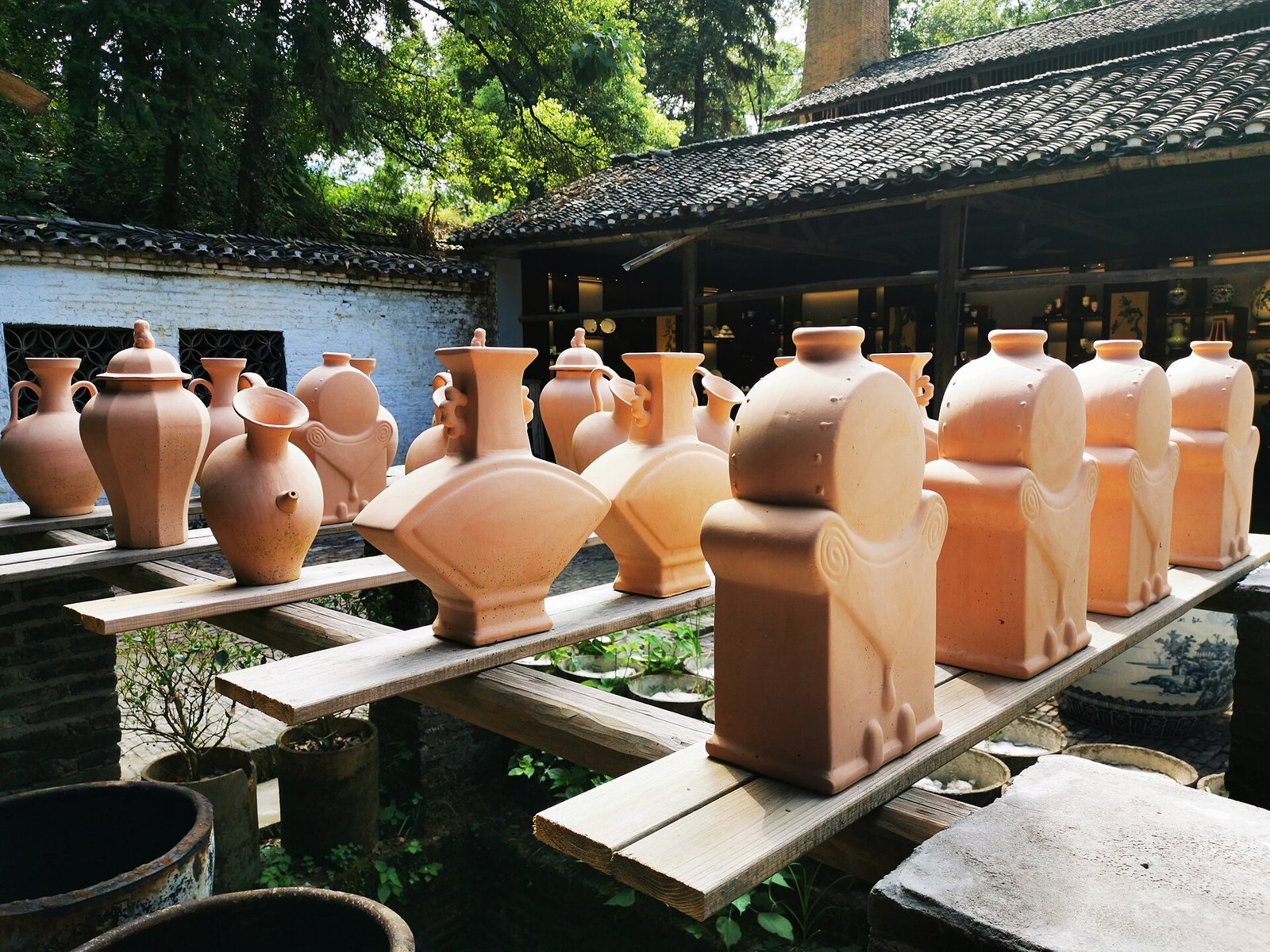
The first is the obvious one. Jingdezhen has made imperial porcelain since the Yuan dynasty, and the craft never stopped. The old city is not a reconstruction of an industry that left — it is an industry that is still there, with kilns that fire, workshops that take apprentices, and a market that fills with young potters every weekend. When a production needs to film someone actually throwing a pot, there is no need for a stand-in.
The second is the World Heritage listing. On 25 July 2026, at the 48th session of the World Heritage Committee in Busan, South Korea, “Jingdezhen Handicraft Porcelain Industry Relics” was inscribed on the World Heritage List. It is China’s 61st World Heritage site, and the first one the country has ever nominated as industrial heritage. The list had long covered the carriers of silk and tea; porcelain was the missing craft. That was three months ago. The English-language coverage of it is close to zero, which is exactly why it belongs in a travel plan now rather than in two years.
The third is the visa detail. Jiangxi Province has exactly two ports of entry in China’s 240-hour visa-free transit scheme, and one of them is Jingdezhen. For a reader flying into China on a transit itinerary, that single line in an immigration table turns a side trip into a legal entry point — the kind of thing that decides whether a place is reachable at all. We cover the mechanics in Getting there.
Put together, these three facts explain the shape of a visit. A city that is simultaneously a living workshop, a brand-new World Heritage site and a legal entry port is not a place you pass through on the way to the villages. It is the base, and the villages are the day trips. Most guides get this backwards, because most guides are written about porcelain and treat the Jingdezhen filming locations as a curiosity.
They are not a curiosity. They are the reason a reader of this site would go, and they happen to sit in the same valley as the kilns.
Two productions, fifty years apart
Two titles carry almost all of the weight in any account of Jingdezhen filming locations. They are not comparable in genre, budget or audience, and that is the point — the comparison shows what a location can be asked to do.
| The Sparkling Red Star (1974) | Reblooming Blue (2024) | |
|---|---|---|
| Type | Feature film, Bayi Film Studio | 36-episode TV drama, Hunan TV |
| Director | Li Jun and Li Ang | Li Ang |
| Why this county | A revolutionary base area whose local history matched the script, plus unspoiled river-and-village scenery | Porcelain craft as the subject of the story, with real kilns and real makers |
| What it needed from the landscape | A poor mountain village that could pass for 1931 Jiangxi | A working craft economy that photographs well |
| Where the crew went | Ehug town, Zangwan township and Jinxi village, in Fuling County | Taoyangli, Taoxichuan, Yaoli, Hanxi and Bingding kiln |
| What survives | A bridge, a camphor tree, a market street and a memorial arch | All five locations, in daily use |
| Cost to visit | Free — they are village infrastructure | Free to ¥53, depending on the site |
The film is the harder one to use, and the more interesting one to understand. A 1974 production leaves almost nothing behind except the places themselves, which means the locations are only legible if you know what happened in front of them. So we start there. For the wider question of how a city gets picked in the first place, our guide to which drama was filmed in which city lays out the logic.
1974: the war film that turned a valley into a battlefield
The Sparkling Red Star (闪闪的红星) is one of the most-watched Chinese films ever made, and for anyone who grew up in China between 1974 and 1990 it is not really a film at all — it is a set of songs, a boy on a bamboo raft, and a villain named Hu Hansan who gets what is coming to him. It was the first colour feature completed in China after the Cultural Revolution began, which mattered enormously to how it looks.
Colour film stock was new and expensive, and the studio wanted landscapes that would justify it. The advance team surveyed Jiangxi and settled on Ehug commune — today Ehug town, in Fuling County — for two reasons that the local record states explicitly.
The first was history. Fuling was a revolutionary base area with a local record that rhymed with the script almost beat for beat. The Red Tenth Army was founded at Jieshou village in Leping in July 1930 with more than 3,000 porcelain workers among its recruits. The Xiaoyuan uprising followed in April 1934, the Chengjiashan base area expanded across the border into Anhui, and in January 1938 Chen Yi came to Yaoli to reorganise the guerrilla units into the New Fourth Army. A film about a boy in a mountain village under Kuomintang pressure did not need to invent its setting. It only needed to point a camera at one.
The second reason was simpler and more practical. In the words of the local account, Ehug had “mountains and water, old bridges, old groves, old houses and old villages wherever you looked.” The crew arrived, looked around, and decided the scenery already met the film’s visual requirements. No set needed to be built for the exteriors.
The schedule is worth knowing because it explains why the locations are scattered across a whole township rather than concentrated in one village. The fourth production unit of Bayi Film Studio moved into Ehug commune in mid-August 1973 and shot the first block of exteriors through the end of that year. The footage went back to Beijing, was screened for local officials, and was praised — particularly the landscapes. But the film was then caught in the political turbulence of the period and effectively rejected. Bayi decided to reshoot. In March 1974 the unit came back to Ehug for a second pass, spent another four months, and finished the exteriors. From first survey to final cut the project took two years and nine months.
That second pass is the reason three specific objects in Fuling are worth a detour today — the oldest surviving Jingdezhen filming locations in the county — and we treat them separately below. First, though, the other production — because the contrast is the argument.
2024: the drama that turned the same valley into a workshop
Reblooming Blue (另一种蓝, released internationally under that title) is a 36-episode drama directed by Li Ang, starring Song Qian and Vic Chou, with Liu Mintao and Liu Chang. It began shooting in Jingdezhen on 6 July 2023 and premiered on Hunan TV on 8 May 2024, streaming the same day on Mango TV. The plot is a return-home story: Chen Xiaoman, a young woman who has been grinding away in Beijing, comes back to her hometown after a series of failures, runs into a former boss, and ends up building a business around inherited porcelain craft.
That premise is why the location list looks the way it does. A drama about someone learning to make porcelain cannot fake the workshop. The camera needs hands on clay, a kiln being loaded, a glaze test going wrong, a shelf of failures. So the production did not go looking for scenery. It went looking for work, and found five places that between them cover the whole chain.
The reported list of Jingdezhen filming locations is consistent across Chinese coverage: Taoyangli imperial kiln scenic area, Taoxichuan, Yaoli old town, Hanxi village and Bingding kiln. Read as a set rather than a list, they are not random. Taoyangli is the archaeological and museum layer, the imperial kiln where the good pieces were made for the court. Taoxichuan is the industrial layer, a state factory that closed and came back as a design district. Yaoli is the deep-history layer, a riverside trading town that gave the industry its name. Hanxi is the rural layer, a tea village that turned itself into an art site. Bingding is the craft layer, a working wood-fired kiln in a village that still fires by eye.
That is a story about porcelain, filmed in the places where porcelain is a fact rather than a theme. It is also, conveniently for anyone planning a trip, a story that can be walked in two days.
The same valley, two faces
Here is the observation this whole guide turns on, and the one that separates Jingdezhen filming locations from a theme park. The two productions did not merely happen to use the same county. They used the same two townships, half a century apart, and asked the ground to be two different things.
| Place | What the 1974 film used it for | What the 2024 drama used it for |
|---|---|---|
| Ehug town | The commune where the crew was billeted; the river, bridges and lanes that became the film’s exterior world | Bingding kiln, at Panxi village — a working wood-fired kiln |
| Zangwan township | The old market street where Pan Dongzi worked, and where Hu Hansan dies | Hanxi village, the site of the Art in Fuling landscape-art project |
| Yaoli | Not used — the crew stayed north of it | The riverside old town |
| Taoyangli and Taoxichuan | Not used — both are inside the city, and the film wanted mountains | The imperial kiln site and the former state factory |
Notice what the table is really showing. In 1974 the county was asked for its natural layer: water, stone, trees, unpainted houses, a landscape poor enough to be 1931. In 2023 the same county was asked for its industrial layer: brick chimneys, kiln mouths, workshop benches, a craft that produces visible objects. Neither production was wrong. The valley has both layers, stacked, and a camera can point at either one without moving more than a few kilometres. It is the opposite of a city like Dalian, which is cast to play somewhere else; here the location plays itself, twice.
This is a different situation from the usual “was it really filmed here” question, and it needs a different answer. The honest note about a place like this is not it was not filmed here. It is it was filmed here twice, and the two films wanted opposite things from it. If you arrive expecting a film set, you will find a working town. If you arrive expecting a working town, you will keep tripping over film history.
The practical consequence is that a visit works best when you deliberately alternate layers. A morning at the imperial kiln site, an afternoon at a village bridge. A museum in the morning, a chimney at dusk. The two halves of the trip are not variations on a theme; they are two different arguments about what this place is for, and the pleasure of the county is watching them sit next to each other without resolving.
The Wuyuan question
If you search for where The Sparkling Red Star was filmed — the most disputed question in the whole Jingdezhen filming locations record — you will find at least two confident answers, and both of them are in Jiangxi. One says Wuyuan. One says Fuling. Chinese travel writing has been repeating both for years, usually without noticing that they are different counties about 80 km apart.
The clearest statement of the division comes from a 2019 feature published by China National Radio, written with the Fuling county media centre, which describes the production in detail and then adds a sentence that most retellings drop: the exteriors were shot mainly around Ehug commune, and “apart from a small number of shots filmed at Qinghua and Sikou in Wuyuan County, almost all of it was completed in the Ehug area.”
That sentence resolves the argument, and it resolves it in a way that is unusually fair. Wuyuan did not invent its claim. The bamboo-raft sequence — the single most recognisable image in the film, Pan Dongzi standing on a raft as it drifts downriver — was shot on the river at Qinghua, and the 2007 television remake went back to the same ground, starting production at Hexi village in Qiukou township. Wuyuan’s film history is real. It is simply a handful of shots inside a much larger production.
So the accurate version has a hierarchy rather than a winner. Fuling got the film: the village, the market, the bridge, the tree, the whole exterior world. Wuyuan got the postcard. If you have time for one, and you want to stand where the story happened rather than where the poster was made, go to Fuling. If you want the poster, go to Wuyuan — and read our Wuyuan filming locations guide, which covers four generations of films in that county and treats the Red Star sequence as one of them.
One caveat, stated plainly. The China National Radio piece is local reporting, written with the county’s own media centre, and it has an obvious interest in establishing that the film belongs to Fuling. That is a reason to read it carefully, not a reason to dismiss it — because it is also the only account we found that limits its own claim, naming the two Wuyuan locations and calling them a small number of shots. A source that volunteers a concession is usually the one to trust on the point it concedes.
The three Red Star props you can still stand next to
These are the least managed Jingdezhen filming locations you can visit. None of them is a tourist attraction in any managed sense. There is no gate, no ticket, no interpretation board, and in two cases no obvious reason for a passer-by to stop. They are a bridge, a tree and a street. That is precisely what makes them worth the detour: fifty-two years after the crew left, the film’s exteriors are still standing because nobody ever needed to move them.
Jinxi Bridge, where the salt got through
The most famous sequence in the film is the salt run. Hu Hansan’s men blockade the mountain to keep salt from reaching the Red Army, and Pan Dongzi is sent down with an older man to buy some. He hides it in a bamboo tea flask, reaches the checkpoint, realises the flask will be searched, runs to the river, soaks the salt into his padded jacket, and walks through. On the other side the older man touches the jacket, tastes his fingers, and shouts.
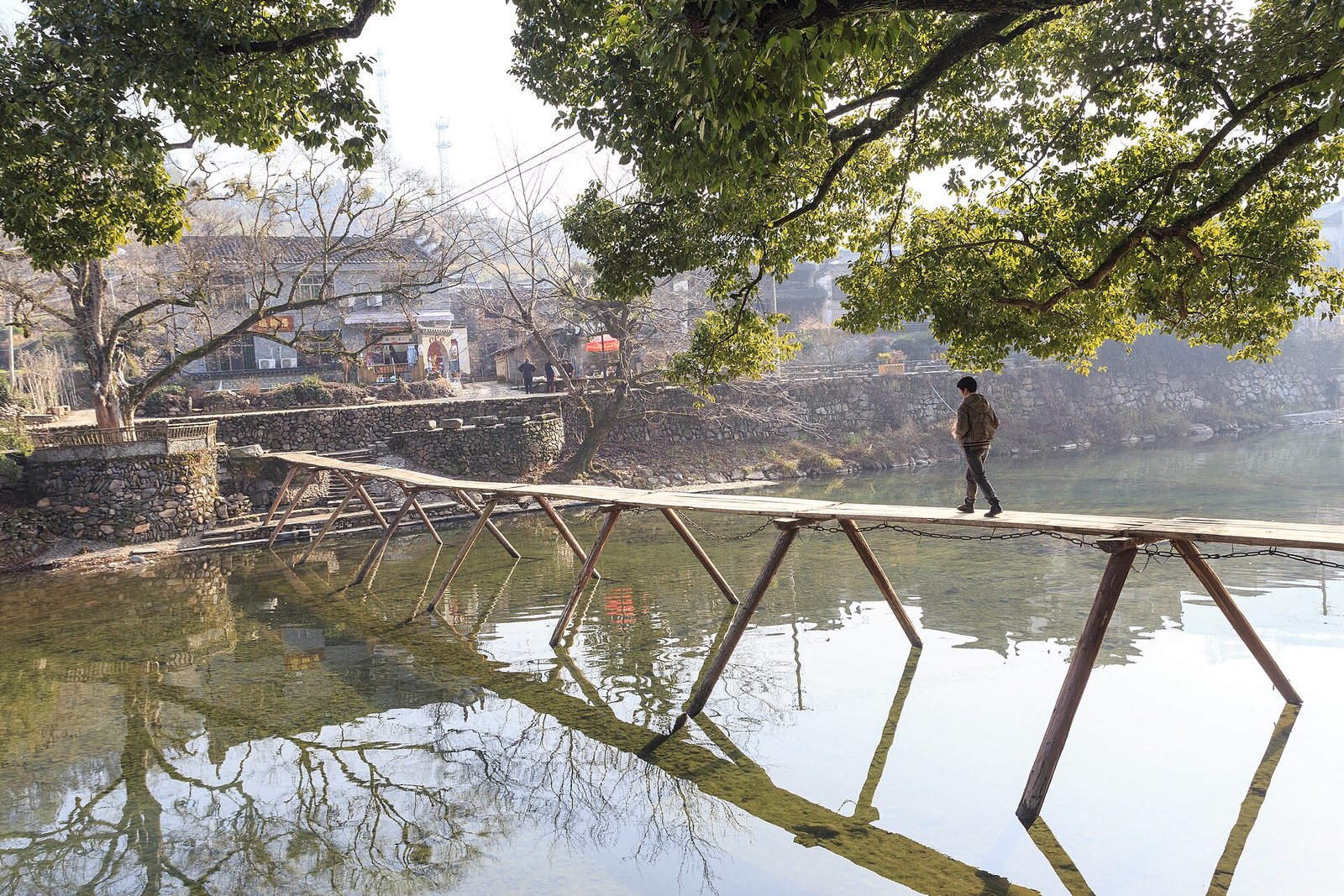
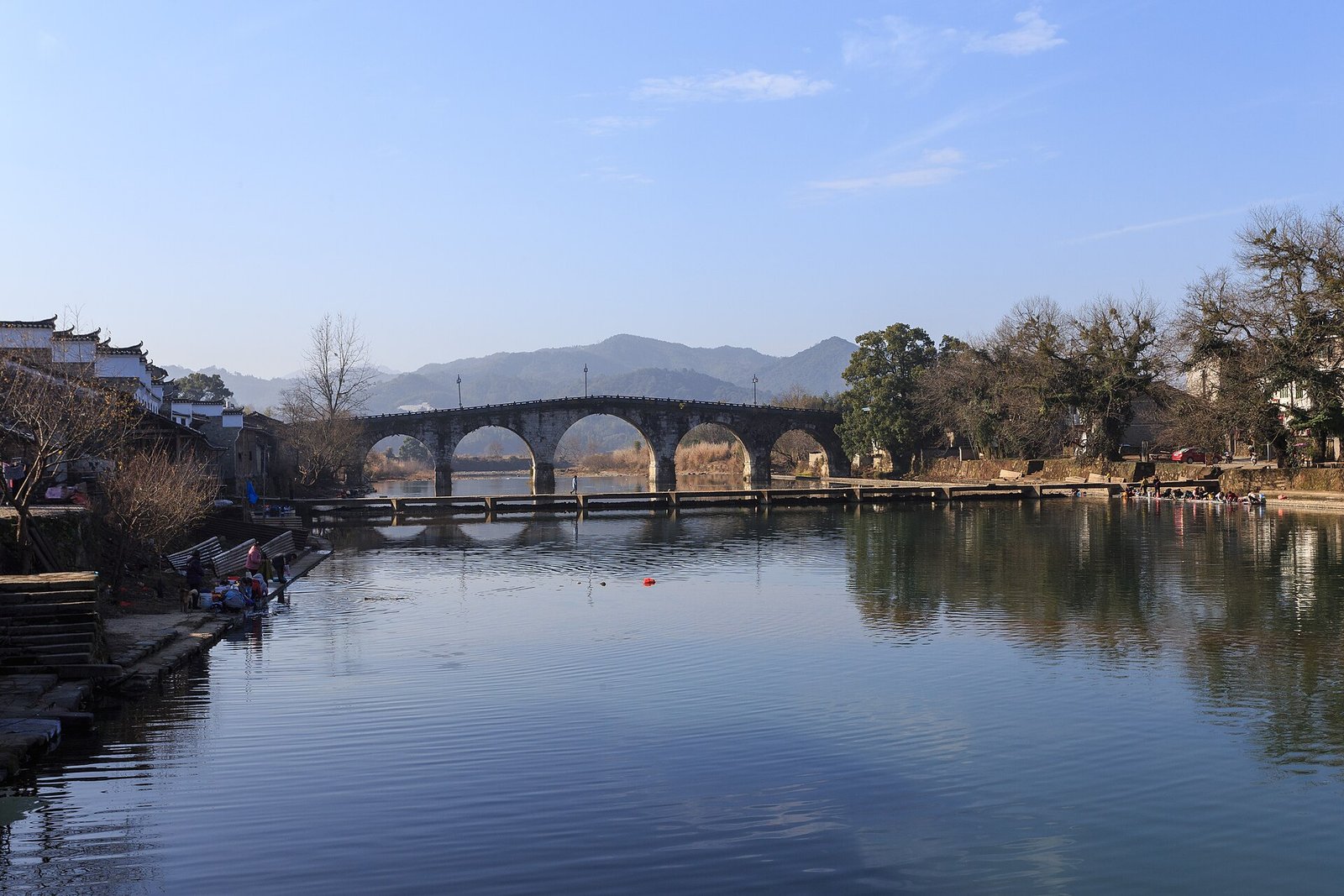
The checkpoint in that scene is Jinxi Bridge in Zhujin village, Ehug town — a stone bridge roughly 50 metres long and 4 metres wide. The railings and the span are intact. The covered gallery that stood on top of it is gone. Villagers from Jinxi were used as extras; one resident, Xie Dong’ai, recalled that her son, then 19, played a peasant pushing a barrow.
It is a bridge on a village road, in use, with no marker. Stand on it and the geography of the scene becomes obvious in a way no photograph conveys: the river is right there, close enough that a boy could run down and back before anyone got suspicious.
The camphor tree at Zulu Yuan
In the film’s opening act, Pan Dongzi is caught carrying firewood past Hu Hansan’s house, refuses to say where his father is, and is strung up and beaten. The tree he is hung from is real, and it is still alive.
It stands at Zulu Yuan, a natural hamlet of Zhang village, Ehug town — a camphor said to be around a thousand years old. Age has tilted the trunk, and the local authority has built a tapered stone support under the leaning side to hold it up. Villagers point out the patch of open ground to the right of the tree as the place where Hu Hansan’s house stood for the shoot. The house is gone. The tree is not.
This is the strangest of the three to visit, because the object is a thousand years old and the film is a footnote in its life. The tree was there before the story was written and will be there after everyone who saw the film is gone. Standing under it is less like visiting a set than like interrupting something.
The old market at Zangwan
The third is the most film-specific. Zangwan was a market town in the pre-modern economy, and the film used its old commercial street as the place where Pan Dongzi takes work in order to gather intelligence — and where, in the end, he kills Hu Hansan. The line that entered the language, “you have rice but you will not sell it”, belongs to this street.
The stone memorial arch inscribed “Zangwan Old Market” still stands. A three-storey building beside the street is identified by residents as the rice shop. New houses have gone up around it, but faded slogan characters from the period can still be made out on some walls.
Of the three, this is the one where the film and the place are most tightly joined: the scene is about commerce, and the location is a commercial street. It is also the easiest to miss, because a market street that has been partly rebuilt looks like any other market street until someone tells you which doorway mattered.
All three are free, unstaffed and unsigned. Take the village names in Chinese, because a taxi driver will not know them in English, and do not expect to find them on a map app without searching the township first.
July 2026: the newest World Heritage site in China
On 25 July 2026 the World Heritage Committee, meeting in Busan, inscribed the Jingdezhen Handicraft Porcelain Industry Relics on the World Heritage List. It is China’s 61st entry and the country’s first nomination in the industrial-heritage category — a designation that had covered the landscapes of silk and tea for years while leaving out the one craft that gave the world a word for fine ceramic.
The inscription covers 45 component sites, and the list is worth reading because it explains what kind of place this is. It includes the imperial kiln site and the Luomaqiao and Guanyinge kiln sites in the city, the Hutian kiln complex, the Gaoling mines that gave kaolin its name, and the raw-material workings at Dawukeng and Xiaowuli where the stone was quarried and washed before it ever reached a workshop. This is not a single monument. It is a production chain, inscribed end to end.
The nomination took eleven years: work began in 2015, the imperial kiln site entered China’s tentative list in 2017, the project was named a national priority in the 2021 five-year plan, and the final name — deliberately broader than “imperial kiln” — was settled in January 2025.
For a visitor, the practical effects on Jingdezhen filming locations are already visible. The first National Day holiday after inscription, in October 2026, was described by the municipal forestry bureau as a record: Taoxichuan’s creative market alone hosted 445 stalls run by young makers and “Jingpiao” artists who have moved to the city, plus a separate design market with 185 stalls. Expect crowds in the old city on any public holiday, expect some component sites to introduce booking or caps, and expect prices at the margin to drift upward.
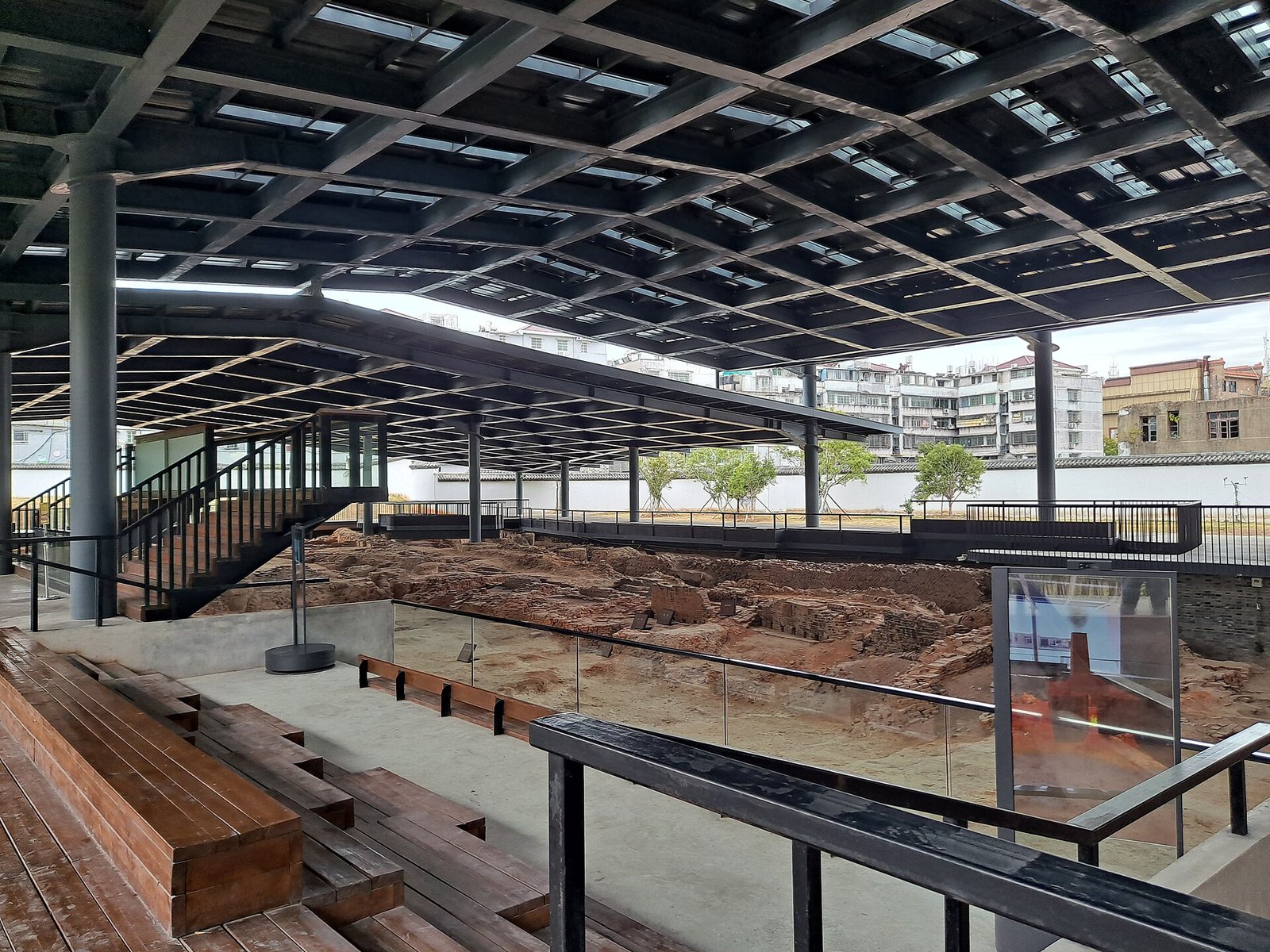
The upside is that the inscription has forced money into conservation and signage at sites that previously had neither. The industrial components — the mines, the washing works, the kiln complexes outside the city — are the ones that will change most in the next few years. If you want to see them before they are organised, this is the window.
The old city in half a day
The city half of the Jingdezhen filming locations is compact and can be done on foot and by taxi in a morning and an afternoon. Two places carry it, and they are five minutes apart.
Taoyangli and the imperial kiln museum
Taoyangli is the historic core around the Ming and Qing imperial kiln site — the yard where the court’s porcelain was made, inspected, and either accepted or smashed. It reopened as a ticketed scenic area at the end of December 2023 after a period of free access, and admission is now ¥53 for an adult, ¥26 concession, with children under 1.2 m and several other categories free. The ticket is valid for re-entry on the day.
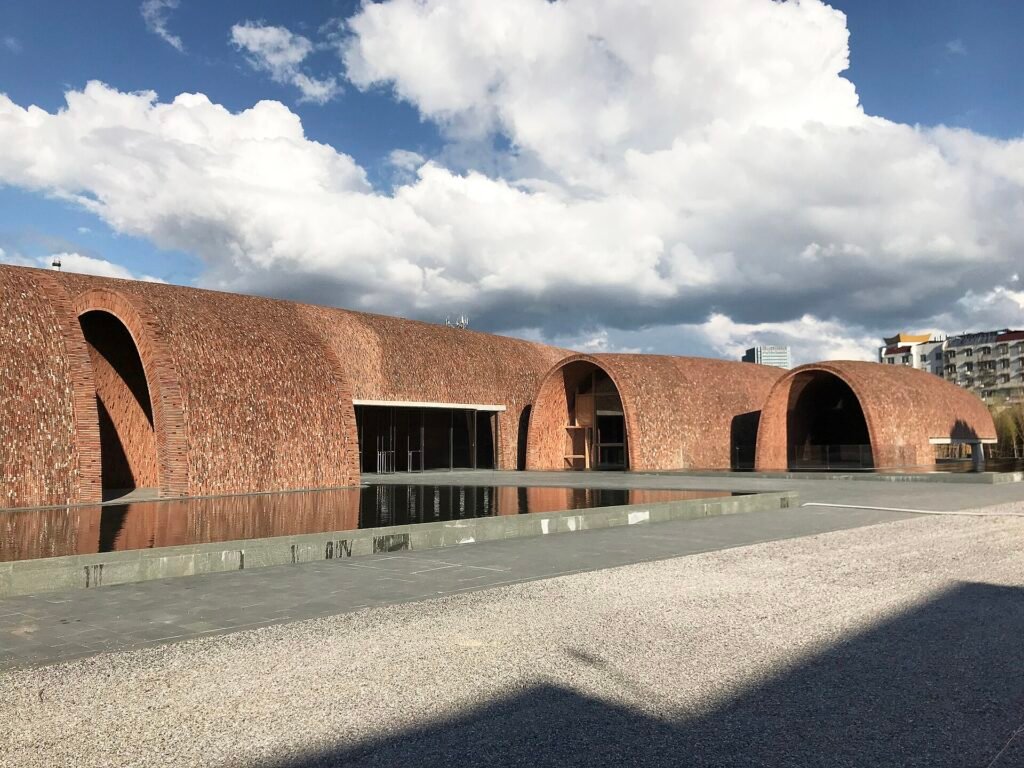
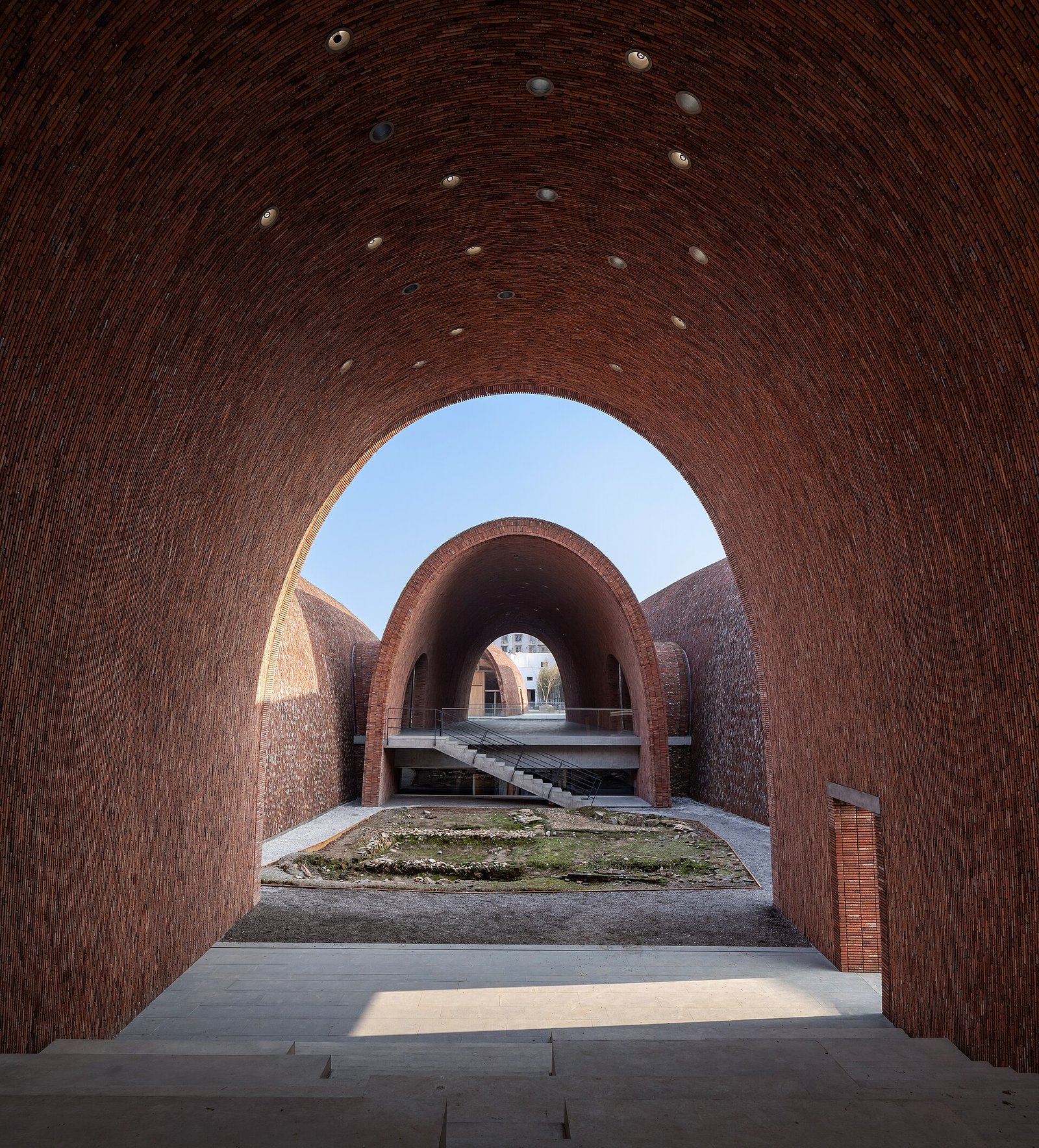
Inside it, the Imperial Kiln Museum is the reason to come. Designed by Zhu Pei and opened in 2021, it is a row of brick vaults that borrow the section of a traditional kiln, half-buried, with the galleries running through them. It is one of the few museum buildings in China where the architecture is doing the same job as the collection — explaining how a kiln works by making you stand inside one.
The important practical detail: the museum is free but requires a reservation, made through the “Changyou Jingdezhen” or Jingdezhen Imperial Kiln Museum accounts on WeChat, and it closes on Mondays. Buying the scenic-area ticket does not get you in. This catches people out constantly, because the ticket queue and the museum door are not the same queue.
Taoxichuan, the factory that became a market
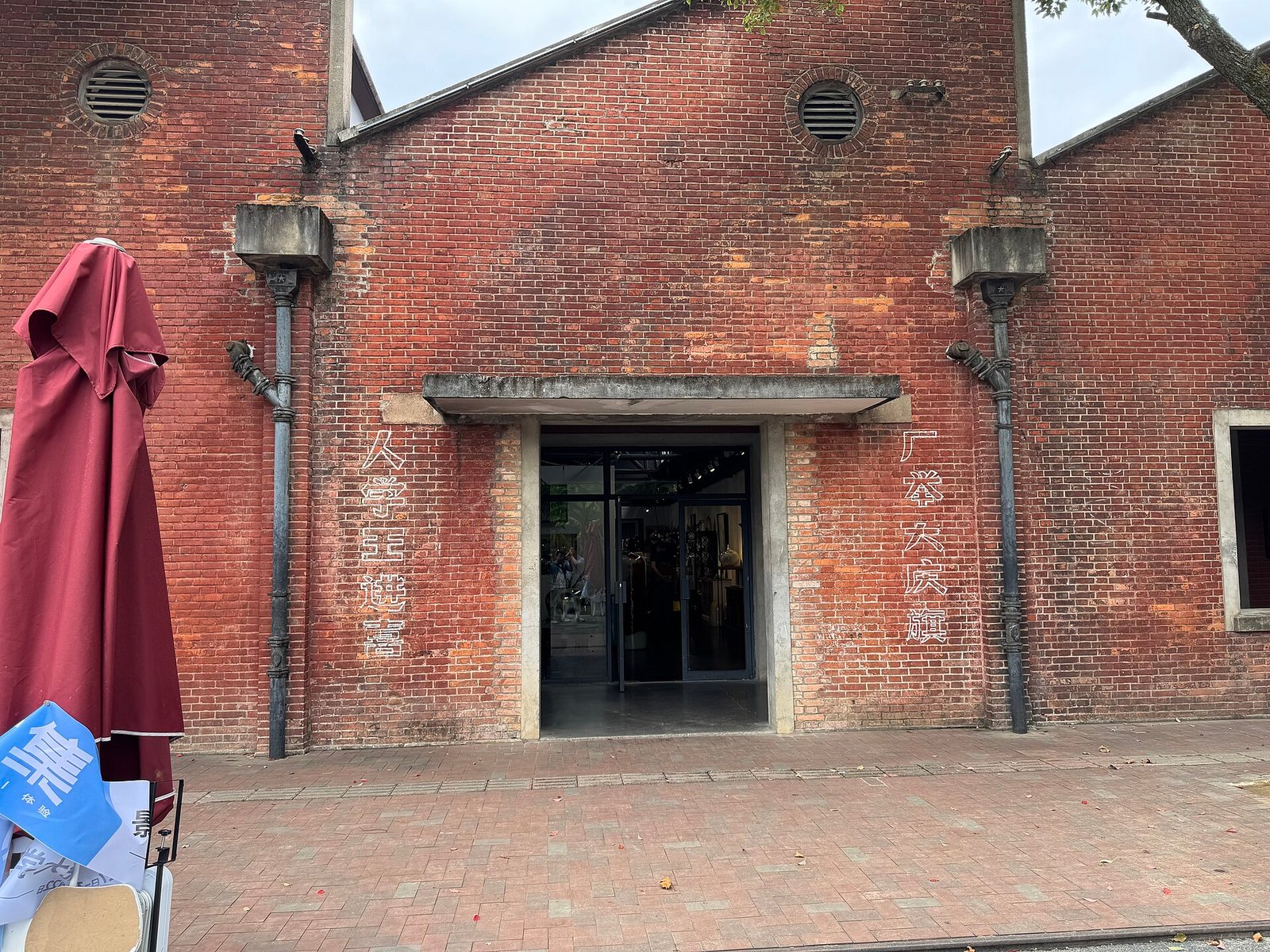
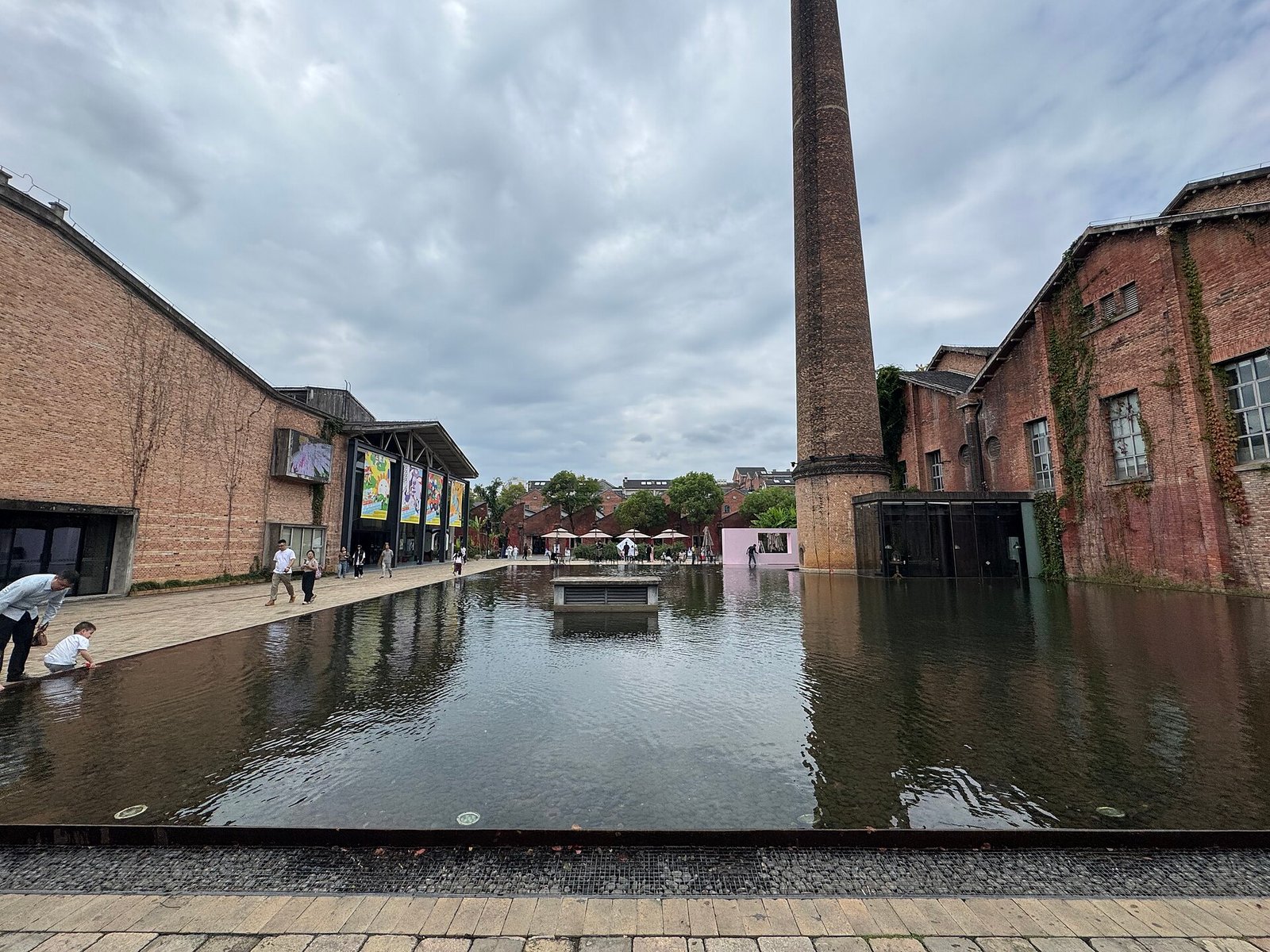
Taoxichuan is the former Yuzhou porcelain factory, and the conversion is unusually honest: the brick sheds, the chimney and the railway siding are all still there, with workshops and galleries inserted into them. The district is free and open all day, which makes it the best value in the city.
Come in the late afternoon. From about 16:00 on Friday to Sunday the creative market sets up through the old factory yard — hundreds of stalls of original work by young makers, design students and people who moved here to try being a potter for a year. It is a market, so most of it is not to your taste, but the density is the point: this is what a craft economy looks like when it is alive rather than preserved, and it is the same thing the 2024 drama was filming.
The kiln museum inside the district needs a reservation. The district itself does not.
Two smaller stops if you have the time. The sculpture porcelain factory holds the Ledan market on Saturday and Sunday mornings — smaller, cheaper, and where a lot of the city’s younger makers actually sell. And Sambao village, up a valley on the edge of town, is where a number of ceramicists have set up studios; it is a place to wander rather than to tick off.
Yaoli: 2,000 years and a four-day ticket barrier
Yaoli is the reason to leave the city, and the most contested of the Jingdezhen filming locations. It sits at the eastern edge of Fuling County, against the Anhui border, and it has been a settlement for more than two thousand years. Its old name was Yaoli written with the character for kiln — the town is one of the places the porcelain industry started, before the industry moved down to the river junction where Jingdezhen now stands.
What you see today is a Huizhou river town: white walls, dark tile, narrow lanes stepping down to water, a covered bridge, and mountains close on both sides. It is the most photogenic place in the county and it was used by Reblooming Blue as one of its five locations. It was not used by the 1974 film, whose crew stayed north of it — worth saying, because local tourism writing sometimes implies otherwise.
The ticketing is the part you need to understand before you go, and it changed twice in one week in July 2025.
Historically, walking into the old town was free. The five sub-areas — Wanghu, Meiling, Raonan, the porcelain-and-tea old town, and the Gaoling mine park — were sold as a combined ticket, generally quoted at ¥110, with some sources listing an ¥80 version covering a smaller set. You could always walk the lanes and the riverbank without paying anything.
On 10 July 2025 the operating company put barriers at several entrances to Yaoli village and began charging ¥30 to enter the village, on top of the ¥110 combined ticket. Villagers objected immediately and publicly: they posted on social media telling tourists not to pay, and put notices at the entrances pointing to the free routes in. The story ran nationally. On 14 July the scenic area published a notice saying it had “restored the previous operating model,” and on 15 July it apologised. A local trader’s explanation for the whole episode was that the company had been preparing a large immersive costume event and imposed booking controls for it.
Two things follow from that. First, the village is free again, and the barrier was gone within four days. Second, and more usefully: the ticketing at Yaoli is a live policy, not a fact. Any number in any guide, including this one, can be out of date by the time you arrive. Check the Yaoli scenic area’s own WeChat account the day before, and treat a ¥30 gate as a thing that can reappear.
What the episode also shows is a real tension. A two-thousand-year-old town where people live and work is not a museum, and the moment it is fenced, the residents become scenery in their own village. The villagers’ objection was not sentimental. It was about who the street belongs to.
Two villages outside town
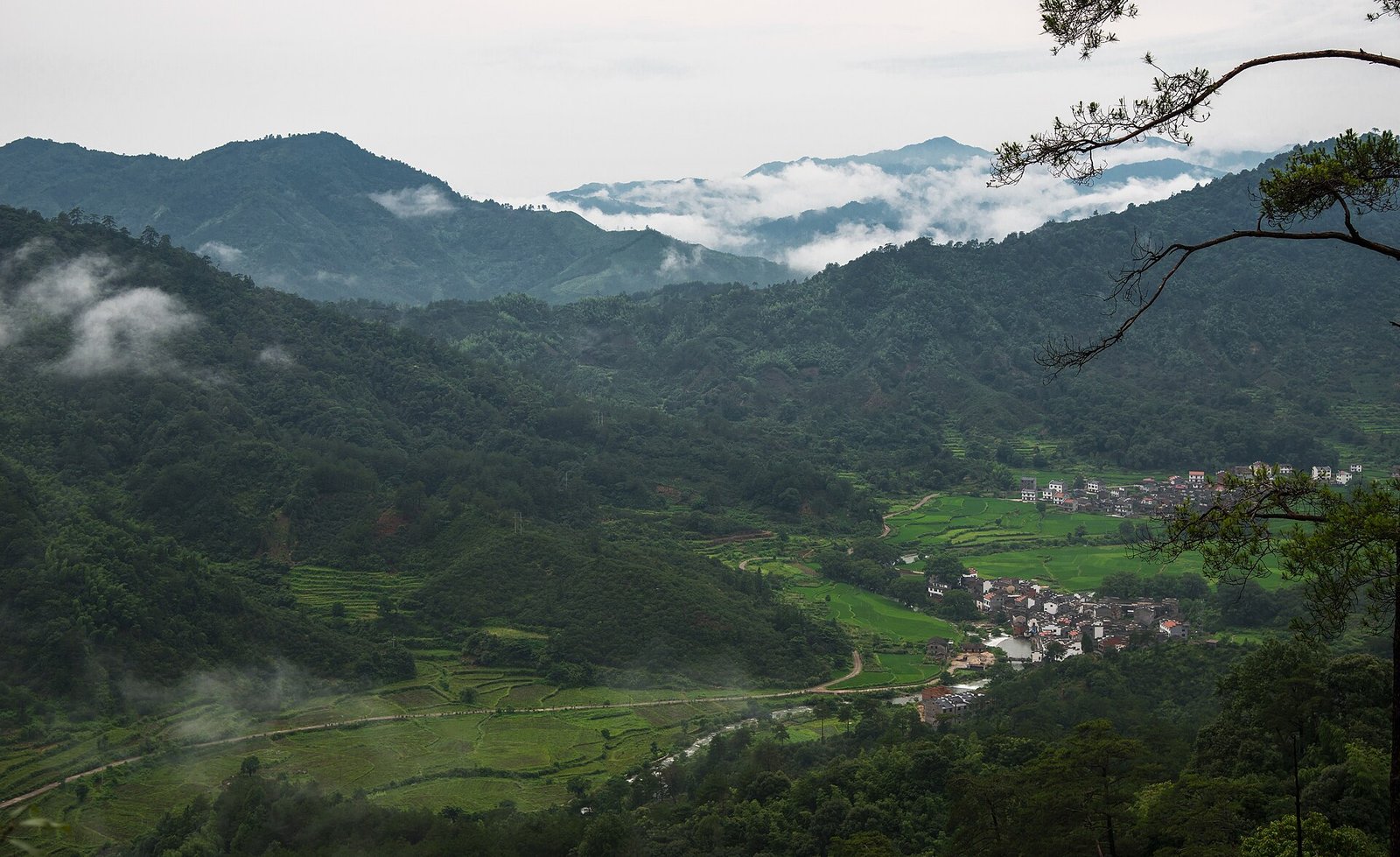
The other two Reblooming Blue locations are outside Yaoli and both are worth half a day, for different reasons.
Bingding kiln: thirty people a day
Bingding kiln sits at Panxi village in Ehug town — the same township the 1974 crew was billeted in, which is the coincidence that makes this guide possible. It is a working wood-fired kiln built in red brick and concrete, with a stepped profile and a chimney, and the name is the owner’s: bing and ding are the two yang stems of the fire cycle, chosen to mean “yang at its height, like the sun.”
It is free to visit and it is also the hardest booking on this list. Entry is by reservation through the kiln’s own WeChat account, three days ahead, and the cap is 30 people a day. Opening days are Tuesday to Sunday, 9:00 to 17:00. It is about 40 minutes by car from the city.
Thirty people a day is not a marketing device. A wood kiln is a physical constraint: the firing takes days, the kiln has to be loaded and unloaded by hand, and a crowd in the stacking chamber is a hazard. The cap is the reason the place still looks like a workshop instead of a venue, and it is worth planning around rather than resenting.
Hanxi: art in a tea field
Hanxi village, in Zangwan township, is the site of Art in Fuling, a landscape-art project run on the model of Japan’s Echigo-Tsumari triennale: works installed through a working village and its tea terraces rather than gathered in a building. The core site is at Shiziyuan, a hamlet of Hanxi.
It is a strange and rather good pairing with the film history, because Hanxi is also the village that supplied extras to the 1974 production. A woman named Huang Cuiying, then twelve or thirteen and in her first year of middle school, was picked from her class with dozens of other students and bussed to a road lined with azaleas to film the sequence where the Red Army returns in Pan Dongzi’s dream. Her job was to hold two bunches of flowers, shout a welcome, and bounce. It took two half-days. She was paid five jiao, which she remembered as a lot of money.
The same village that gave the film a crowd of schoolchildren now gives visitors a landscape-art trail. Whether that is continuity or coincidence is a matter of taste. Either way, it is the clearest single example of the argument this guide has been making: the valley keeps being asked to perform, and it keeps saying yes in a different costume.
When to go
The county has a subtropical monsoon climate with four distinct seasons and a pronounced plum-rain period in June — which matters more for Jingdezhen filming locations than for the museums, because half of them are outdoors. The two productions shot in opposite halves of the year, which is a useful way to think about it: the 1974 film needed green, and the 2024 drama shot in July heat.
| Window | What you get | The trade-off |
|---|---|---|
| March – April | Rapeseed in the valleys, tea picking starting, mild temperatures | Frequent rain; grey skies for photography |
| May | The greenest month, before the crowds and the heat | Rain builds through the month |
| June | Fewer visitors | Plum rain: sustained wet weather, rivers high |
| July – August | The season the drama was filmed in; long evenings at Taoxichuan | Hot and humid, mid-30s, uncomfortable by midday |
| September – October | Clearest light, most reliable weather, best for the villages | Busiest period, especially the National Day week |
| November – December | Quiet, cold, good light on the old town walls | Short days; some rural sites thin out their opening |
If you have a choice, take late September or the first half of November — our guide to the best time to visit China explains why that window holds across most of the country. If you want the market at its fullest, take a Friday-to-Sunday in any month with tolerable weather. Avoid the first week of October unless you specifically want the post-inscription crowds, which are now a spectacle in themselves.
The route that works
Two days is enough to cover the Jingdezhen filming locations in the county if you are efficient, three is comfortable, and one is a mistake. The structure below alternates layers deliberately, so that you are never doing two museums in a row or two villages in a row.
| Morning | Afternoon | Evening | |
|---|---|---|---|
| Day 1 — city | Taoyangli and the imperial kiln site | Imperial Kiln Museum (booked), then Sambao village | Taoxichuan market from 16:00 |
| Day 2 — county | Jinxi Bridge, the camphor tree at Zulu Yuan, the Zangwan old market | Yaoli old town, then Hanxi village | Bingding kiln at closing time, or back to the city |
| Day 3 — optional | Gaoling mine park or the Raonan kiln site | Wuyuan, if you want the raft sequence | — |
The one sequencing rule that matters: do the 1974 sites in the morning and the porcelain sites in the afternoon. The film locations are unstaffed and unshaded, they look best in low morning light, and they are in villages where nothing is open early. The museums and markets are the reverse — indoor, air-conditioned, and better in the heat of the day.
You need a car and a driver for day two. The three Red Star sites are spread across two townships on village roads, none of them is served by a shuttle, and the driving between them is the point — the landscape you are crossing is the landscape the film used. A hired car for the day, arranged through your hotel, is the standard solution and costs less than the time you would lose on buses. If you are building a longer trip, our route planner will fit this county into a wider itinerary.
Getting there, including the visa detail most guides miss
By high-speed rail. Jingdezhen North station is on the Hangzhou–Huangshan–Nanchang corridor. Nanchang is a little over an hour away; Hangzhou and Shanghai are in the four-to-five-hour range; Beijing is six to seven. Trains such as G3789 and G3790 run between Shanghai South and Nanchang East via Jingdezhen North, Huangshan North and Hangzhou West in about four hours. Some services are direct and some require a change at Shangrao or Hangzhou, so check 12306 for your date rather than assuming a through train.
By air. Luojia airport (JDZ) has a thin route network. For most itineraries the train is faster door to door, and the airport is worth considering only if you are connecting from a city with a direct service.
The visa point. China’s 240-hour visa-free transit scheme operates through a fixed list of ports, and in Jiangxi there are exactly two: Nanchang and Jingdezhen. If you are routing a transit itinerary through this province, that means Jingdezhen can be your port of entry rather than a domestic add-on. The rules on eligibility, onward tickets and the permitted travel area are specific and change; our China visa guide sets out the current version, and the port list is the part to check against your own nationality.
Getting around. Bus 1 runs from the north station into the old city in about 40 minutes and is much cheaper than a taxi. For Yaoli, Bingding and Hanxi you want a car: the city-to-Bingding drive is about 40 minutes, Yaoli is further east, and public buses to the villages are infrequent enough to make a timetable the centre of your day rather than an afterthought. If this is your first trip, our first-time China guide covers the basics and assumes nothing.
Tickets, hours and what needs booking
| Place | Admission | Booking | Notes |
|---|---|---|---|
| Taoyangli scenic area | ¥53 adult, ¥26 concession | On site or online | Re-entry same day; under 1.2 m free |
| Imperial Kiln Museum | Free | Required, via WeChat | Closed Mondays; the scenic ticket does not cover it |
| Taoxichuan | Free | None | Market Friday–Sunday from about 16:00 |
| Kiln museum at Taoxichuan | Free | Required | Separate booking from the district |
| Yaoli old town | Free to walk (as of late 2025) | None | Reconfirm: a ¥30 entry gate appeared in July 2025 and was withdrawn in four days |
| Yaoli five-site ticket | ¥110 (some sources ¥80) | On site | Covers Wanghu, Meiling, Raonan, the old town sites and Gaoling |
| Bingding kiln | Free | Required, 3 days ahead | 30 people a day; Tuesday–Sunday 9:00–17:00 |
| Hanxi / Art in Fuling | Exhibition fee | On site | Works are spread through the village and tea terraces |
| Jinxi Bridge, camphor tree, Zangwan market | Free | None | Village infrastructure; no facilities |
Two warnings about Jingdezhen filming locations that come from the research rather than from experience. First, Chinese sources disagree on the Yaoli combined ticket — ¥110 is the figure quoted most often, ¥80 appears in several guides, and the difference seems to be which sub-sites are included. Treat it as a range. Second, booking requirements at the two museums and at Bingding kiln are enforced by WeChat accounts that assume a Chinese phone number. If you do not have one, arrange the booking through your hotel or a local guide before you arrive, because turning up and explaining is not a plan.
How we checked this
The film history behind these Jingdezhen filming locations rests on one unusually detailed primary account: a 2019 feature published by China National Radio, reported from Fuling with the county media centre, which names the bridge, the tree and the market street, gives the shooting schedule, and quotes two people who were there — the crew’s liaison officer and a teenage extra. Where this guide describes what a scene was filmed against, that article is the source.
The World Heritage facts come from the Jingdezhen municipal government’s own chronology of the nomination and from Xinhua’s report on the Busan session, both dated 25 July 2026. The 45 component sites, the “first industrial heritage nomination” framing and the eleven-year timeline are all from those two.
The 2025 Yaoli ticket dispute is documented in contemporaneous reporting from 14–17 July 2025, including the scenic area’s own notices and a Guangming Daily commentary. We have given the sequence of dates rather than a summary, because the dates are the story.
Where sources conflict, we say so rather than picking a winner. The Yaoli combined ticket is quoted as both ¥110 and ¥80. The Shanghai high-speed service is described in some places as direct and in others as requiring a change. The 1974 shooting schedule contains an internal contradiction in the local account — a start date in August 1973 and a first block described as finishing before New Year 1973 — which we have resolved by following the later, more detailed passage describing the March 1974 return.
Two things we deliberately did not do. We did not name villages for the raft, azalea and bamboo-grove sequences, because the primary account says the crew filmed them without specifying where. And we did not repeat the common claim that Yaoli appears in the 1974 film: the crew’s base was at Ehug, north of the town, and no source we found places them in Yaoli.
Practical notes
Payments. Alipay and WeChat Pay are near-universal, including at market stalls. Set up an international card before you arrive; our China payment guide covers the setup. Cash works but is slow and occasionally refused.
Language. Village sites have no English signage at all. Save the Chinese names — 锁溪大桥 for Jinxi Bridge, 足禄源 for Zulu Yuan, 藏湾 for Zangwan — and show them rather than saying them.
Expectations. Most Jingdezhen filming locations have no film base, no backlot and no props tour. If you want that, go to Hengdian, which is a purpose-built studio town and a completely different proposition — our comparison of China’s film studios sets out the difference. What Jingdezhen offers is the opposite: real places that happened to be filmed, still doing their original job.
Time budget. Half a day for the city sites, a full day for the county, and one more if you add Wuyuan or the industrial component sites. Our how many days in China guide puts this in the context of a longer itinerary.
Common questions
Was anything actually filmed in Jingdezhen?
Yes, and more than most people expect. The Sparkling Red Star (1974) shot almost all of its exteriors in Fuling County, which is part of Jingdezhen’s municipal area, and Reblooming Blue (2024) filmed at five locations in and around the city. The confusion is geographical: the Jingdezhen filming locations are in the county, not in the urban districts.
Where exactly was The Sparkling Red Star filmed?
Mainly around Ehug town in Fuling County: Jinxi Bridge in Zhujin village for the salt-checkpoint sequence, a thousand-year-old camphor at Zulu Yuan in Zhang village for the scene where Pan Dongzi is beaten, and the old market street at Zangwan for the scenes where he takes work and confronts Hu Hansan. A small number of shots were filmed at Qinghua and Sikou in Wuyuan County.
Can you visit the Reblooming Blue locations?
All five are open to the public: Taoyangli, Taoxichuan, Yaoli, Hanxi and Bingding kiln. Only Taoyangli charges a significant admission (¥53); Taoxichuan is free, Yaoli is free to walk, Hanxi charges for its exhibition, and Bingding is free but capped at 30 visitors a day with a three-day booking.
Is Jingdezhen worth visiting for film fans, or only for porcelain?
Both, and the overlap is the reason to come. A film fan who ignores the porcelain will spend a morning at three village sites and be done. A porcelain visitor who ignores the film will miss the fact that the county’s landscape was chosen for reasons that are still visible. Two days covers both.
Do you need a visa to visit Jingdezhen?
Not necessarily. Jingdezhen is one of two ports in Jiangxi participating in China’s 240-hour visa-free transit scheme, alongside Nanchang. If your itinerary qualifies, you can enter here without a visa; otherwise the standard visa rules apply. Check the current port list and eligibility against your nationality before booking.
Your next move
If this guide has done its job, you now know that Jingdezhen is not one thing. The Jingdezhen filming locations are the county half of that; the kilns are the city half. It is a porcelain city with a film history in its county, and the two are close enough to walk between in a day.
Three directions from here. If you want the other half of the Red Star story, read our Wuyuan filming locations guide, which covers the county that got the raft sequence and four generations of films besides. If you want the neighbouring mountain landscape that directors kept returning to, our Wuyishan guide covers the border country to the south-east. And if you are still deciding where to base yourself, the full list of filming locations by province sets every city we have covered side by side, including the ones where the film was real and the ones where it was not.
For the wider picture — which dramas were shot where, and how the cities compare — the drama guides index and our open dataset of Chinese filming locations are the two places to start. Both are updated as we publish. There is also a map view if you would rather see the whole country at once.
Two recent guides cover the opposite kind of place. Wulanbutong is a grassland film base with no walls and no town around it; Zhangjiajie is a mountain that stood in for an alien planet. Neither has a porcelain workshop, and both show how differently a Chinese location can be used.
And if you go: check the Yaoli ticket the day before, book the kiln museum and Bingding kiln in advance, and take the Chinese names of the three village sites with you. The rest of the county is patient.
Last verified
Sources: China National Radio, 14 May 2019, “Tracing a red memory: how The Sparkling Red Star came to be filmed in Fuliang” — the primary account for the 1974 production: the crew’s base at Ehug commune (now Ehug town); the statement that apart from a small number of shots at Qinghua and Sikou in Wuyuan County almost all exteriors were completed in the Ehug area; the Jinxi Bridge at Zhujin village (about 50 m long, 4 m wide, gallery no longer standing) as the salt-checkpoint location; the thousand-year camphor at Zulu Yuan in Zhang village as the tree Pan Dongzi is hung from, now braced with a stone support; the Zangwan old market street as the place he takes work and confronts Hu Hansan, with the “you have rice but will not sell it” line; the August 1973 arrival and the March 1974 return with about four more months of shooting; the two-year-nine-month total; and interviews with Shu Huairen, the crew liaison who also appears in the film, and Huang Cuiying of Hanxi village, a teenage extra paid five jiao · Jingdezhen Municipal People’s Government, 25 July 2026, chronology of the “Jingdezhen Handicraft Porcelain Industry Relics” nomination — inscription on the World Heritage List at the 48th session in Busan; work beginning in 2015; the imperial kiln site entering the tentative list in 2017; the 2021 designation as a national priority; and the January 2025 settlement of the final nomination name · Xinhua, 25 July 2026 — the Busan session decision and the component sites named in the nomination, including the Hutian kiln complex, the imperial kiln site, the Guanyinge kiln site and Gaoling · Baijiahao, 27 July 2026, and the World Heritage Committee coverage — China’s 61st World Heritage site, the first nominated by China as industrial heritage, the 45 component sites including Luomaqiao, Dawukeng and Xiaowuli, and the point that silk and tea were already represented on the list while porcelain was not · Jingdezhen Municipal Forestry Bureau, 6 October 2026 — the first National Day holiday after inscription; 445 stalls at the Taoxichuan creative market run by young makers and Jingpiao artists, plus a design market of 185 stalls · Fuliang County People’s Government, 28 May 2026, on Shiziyuan in Hanxi village — Art in Fuling sited at Shiziyuan, Hanxi village, Zangwan township · The Paper, 14 November 2023, and Baijiahao, 9 April 2024 and 9 May 2024 — Reblooming Blue beginning shooting in Jingdezhen on 6 July 2023; filming at Taoyangli imperial kiln scenic area, Taoxichuan, Yaoli, Hanxi village and Bingding kiln; a 36-episode drama directed by Li Ang and starring Song Qian and Vic Chou; premiere on Hunan TV on 8 May 2024 with same-day streaming on Mango TV · Dahe Piaowu, 19 August 2025, Fliggy and Baijiahao, 31 December 2023 — Taoyangli admission of 53 yuan for adults and 26 yuan concession, restored on 30 December 2023, with free entry for children under 1.2 m; and the Imperial Kiln Museum being free but requiring a reservation, closed on Mondays · Baijiahao, 18 June 2026 — Bingding kiln at Panxi village, Ehug town, Fuliang County; the name taken from the two yang stems of the fire cycle; open Tuesday to Sunday 9:00–17:00; free entry by reservation through its WeChat account three days ahead; capped at 30 visitors a day; about 40 minutes by car from the city · Baijiahao, 15 July 2025, Guangming Daily commentary, 17 July 2025, and contemporaneous reports — the Yaoli ticket dispute: barriers at several entrances from 10 July 2025 charging 30 yuan to enter the village against a 110-yuan combined ticket; villagers posting advice not to pay and notices pointing to free routes; the scenic area announcing on 14 July that it had restored the previous operating model; and the apology on 15 July, with a local trader attributing the episode to booking controls for an immersive costume event · Ctrip, Qunar and Baidu Wenku — the five Yaoli sub-areas (Wanghu, Meiling, Raonan, the porcelain-and-tea old town and the Gaoling mine park) sold as a combined ticket generally quoted at 110 yuan with an 80-yuan version listed by some sources; the old town core historically free to walk; opening 08:00–17:30 · Ctrip, 4 October 2026, Baidu Baike entries for trains G3789 and G3790, and Autohome, 12 May 2026 — Jingdezhen North as the high-speed station, Nanchang just over an hour, Hangzhou and Shanghai four to five hours, Beijing six to seven; the Shanghai South to Nanchang East service via Jingdezhen North, Huangshan North and Hangzhou West in about four hours; and the conflicting accounts of whether a through train exists · Baijiahao, 23 October 2025, Baidu Wenku and Baijiahao, October 2026 — Taoxichuan free and open all day, the creative market running from about 16:00 on Fridays through Sundays, and the sculpture porcelain factory holding its Ledan market on Saturday and Sunday mornings · Wikimedia Commons photo pages for the photographs used, credited in the captions and the media library
Spotted something out of date? Email us — or read how corrections work. We check every report against the source and update the page.
Ready to plan it? Turn the dramas you have watched into a day-by-day route with the C-drama route planner.
Not sure where to start? Take the drama-city quiz — seven questions, one city, and a route waiting at the end.