
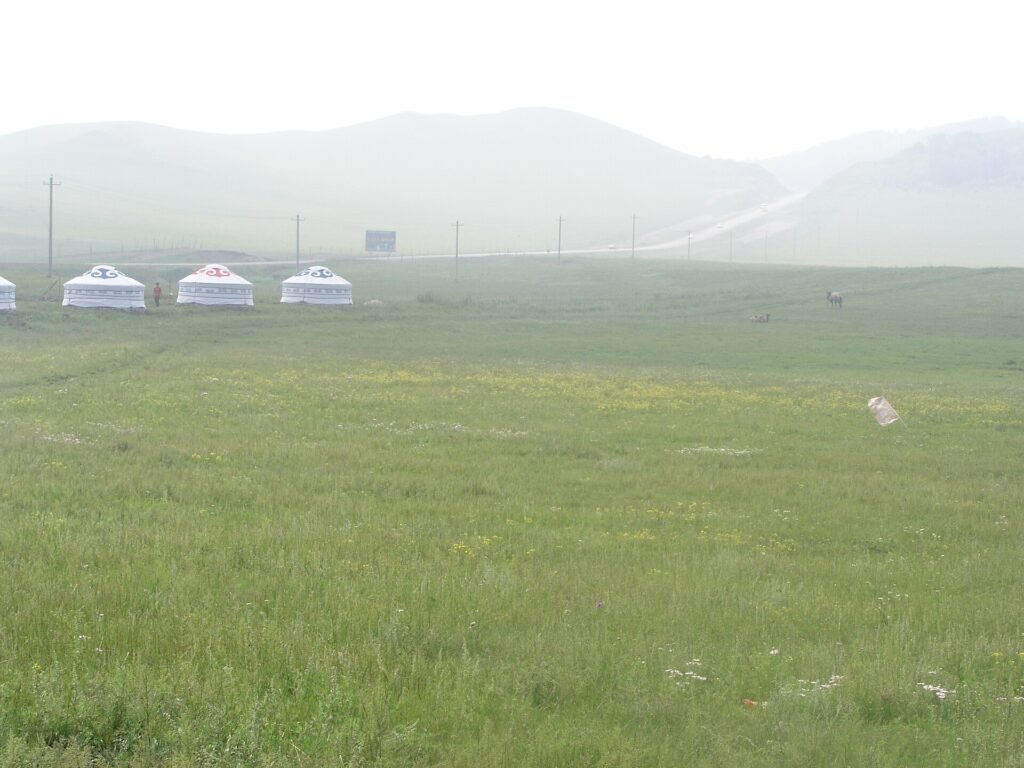
Wulanbutong is the reason a Qing dynasty can be shot in Inner Mongolia without building a palace, a steppe battle can be staged without CGI, and a director who needs “the grasslands” can stop looking at a map. These Wulanbutong filming locations sit in Hexigten Banner, Chifeng, in the south-east corner of the autonomous region — about 450 km north of Beijing — and they have been used so often that the Chinese film industry gave the place a nickname: the grassland film city. My Fair Princess, Kangxi Dynasty, Hanwu the Great and The Legend of the Condor Heroes all shot their largest outdoor sequences here.
It is also the most confusing place on this website to actually visit, and not because of the roads. Three names — Bashang, Mulan Weichang and Wulanbutong — describe overlapping ground in two different provinces, and the most-quoted film credit attached to the place, Wolf Totem, is only half true: the winter material and the wolf-training were shot here, and the summer grassland everyone remembers is about 1,000 km away. Getting those two things straight is most of what this guide does.
Then there is the payoff. A 120-yuan ticket covers three days, the sun rises over a wetland where horses are driven through the shallows, and the autumn window is about three weeks long. The film angle is why you have heard of Wulanbutong. The light is why photographers keep going back.
The short answer: Wulanbutong (乌兰布统) is a grassland in Hexigten Banner, Chifeng, Inner Mongolia — not in Hebei, despite what the name “Bashang” suggests. Its film base covers about one million square metres in four zones and has hosted 60-plus productions (some counts say more than 100), including My Fair Princess, Kangxi Dynasty, Hanwu the Great and The Legend of the Condor Heroes. The scenic-area ticket is ¥120 in high season (late April to late October) and is valid for 72 hours, covering the film base, General’s Lake, Princess Lake, the European-style zone and Hama Dam. Saikhanba is a separate park in Hebei with a separate ticket. Best windows: mid-July to late August for green grass, 20 September to 10 October for the autumn colour.
Why every dynasty ends up on this grass
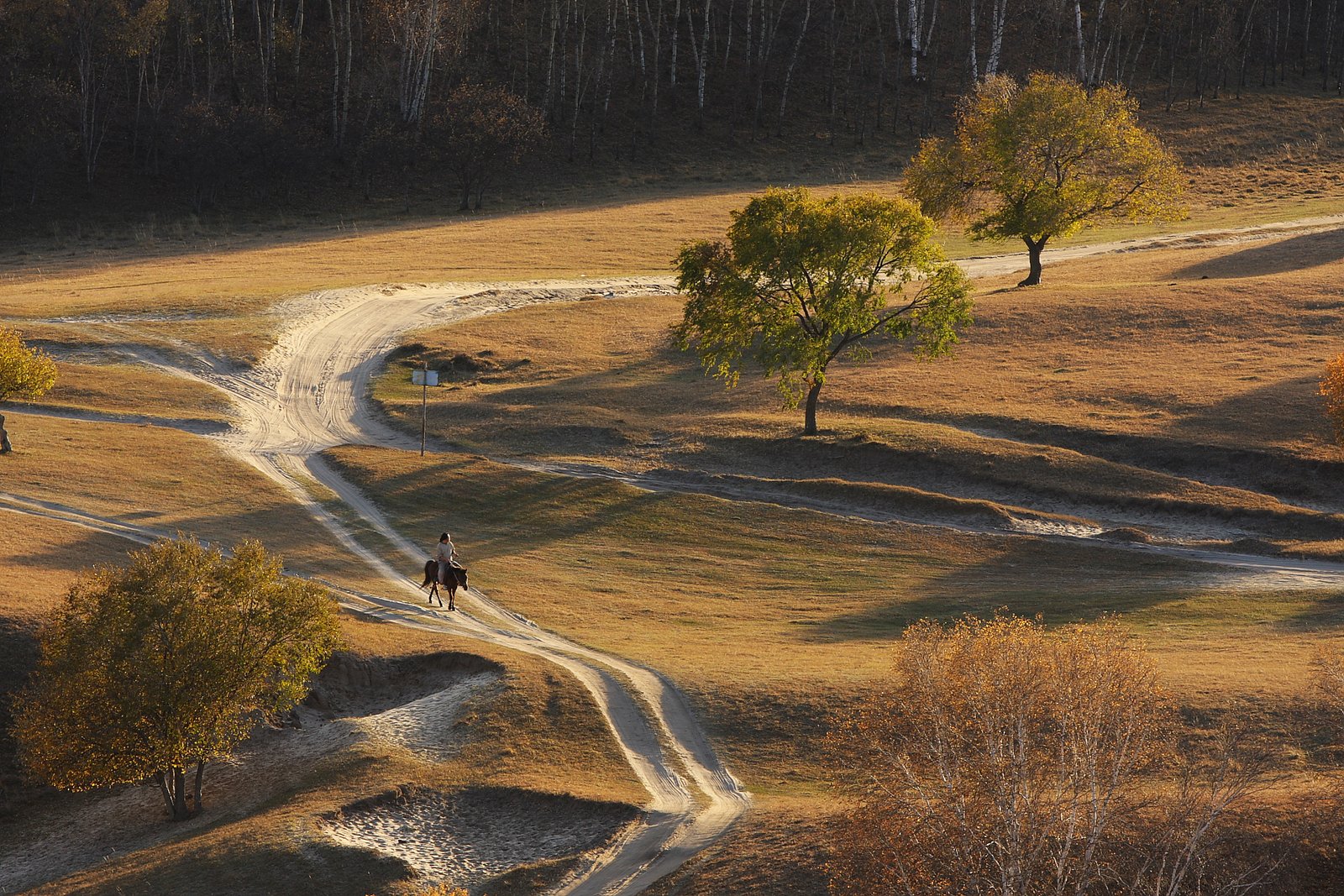
Start with the geography, because it explains everything else. Wulanbutong is not flat. It is a series of low, rounded hills — 1,200 to 1,700 metres — covered in grass on the tops and birch in the folds, with streams wandering between them instead of cutting straight channels. That combination does something specific on camera: it gives a cinematographer layers. A cavalry charge filmed here has a foreground ridge, a middle ground of grass, a treeline behind it and a sky that occupies the top third of the frame. Filmed on the genuinely flat steppe further north, the same charge looks like it is happening on a table.
That is the technical answer. The historical answer is better. This ground was part of the Mulan Weichang (木兰围场), the imperial hunting reserve set up under the Kangxi emperor in the 1680s, where the Qing court came every autumn to hunt, drill cavalry and keep the Manchu military tradition alive. A reserve that was, by design, mostly empty and lightly managed for two centuries left behind exactly what a film crew needs today: open country with no villages in it.
So when a production needs a steppe battle, a Mongol camp, a princess riding out of the palace gates or a group of exiles crossing open country, the practical answer has been the same for thirty years — drive north from Beijing, stop where the hills start, and shoot. The Qing court used the ground for manoeuvres. Television uses it for the same reason, with a camera instead of a regiment.
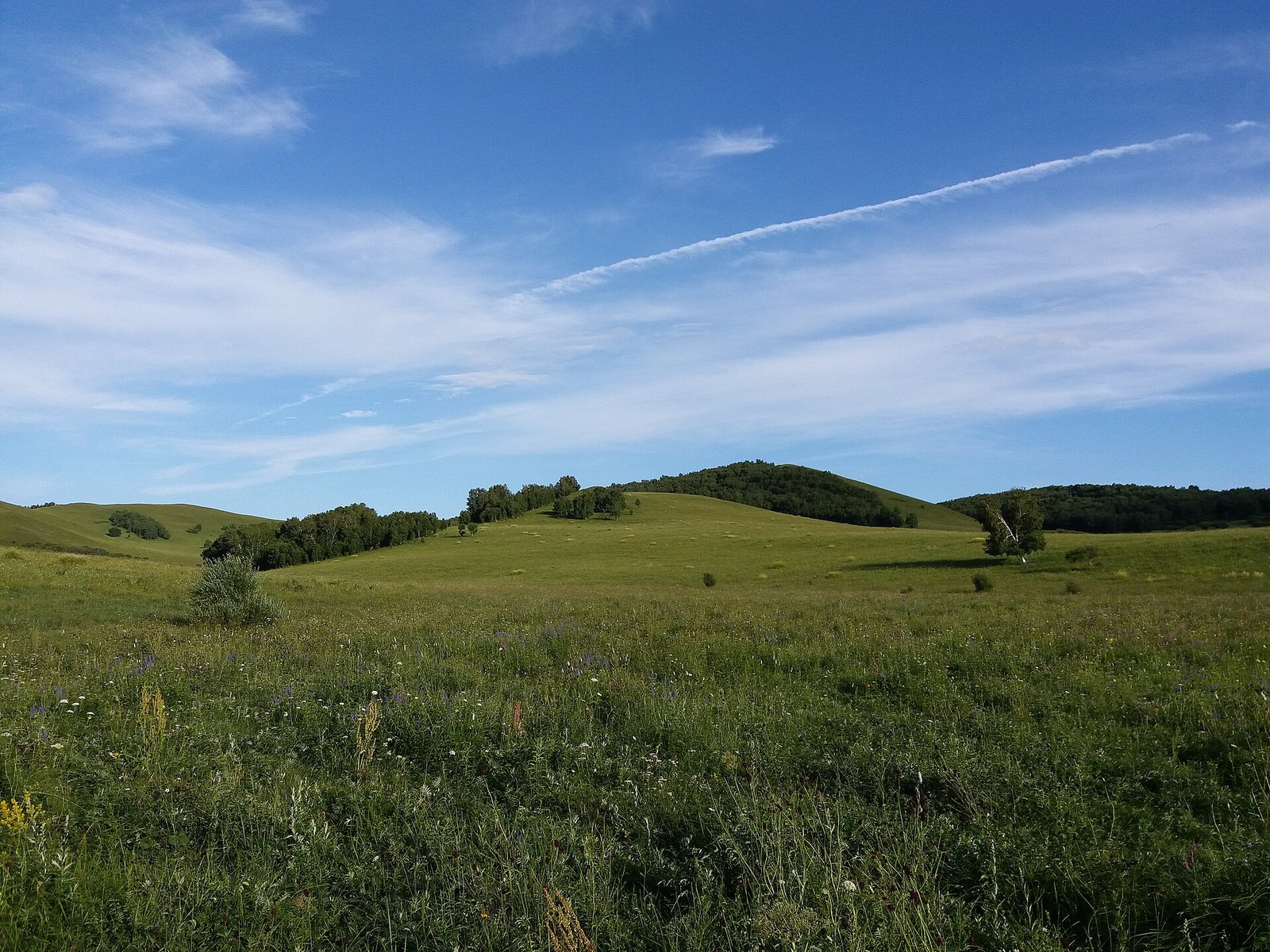
Worth saying plainly, because a lot of English-language material gets this wrong: this is Inner Mongolia, not Hebei, and not “near Beijing” in any useful sense. The border with Hebei runs a few kilometres north of the scenic-area gate, and the nearest Hebei town of any size is a two-hour drive. Wulanbutong is administered as a sumu — a township-level unit — inside Hexigten Banner, which is one of the largest banners in Chifeng and also holds the Hexigten Global Geopark. If you are building an itinerary and wondering whether to file this under “Beijing side trip” or “Inner Mongolia”, the honest answer is that it is the second one with a long approach from the first.
Wulanbutong filming locations at a glance
The short version of the Wulanbutong filming locations, for anyone planning a trip rather than reading for the film history:
| Detail | |
|---|---|
| Where | Wulanbutong Sumu, Hexigten Banner, Chifeng, Inner Mongolia. About 450 km and 6 hours by road from Beijing |
| What it is | Rolling grassland at 1,200–1,700 m, with birch groves, wetlands and a working film base |
| Film pedigree | My Fair Princess (1998) · Kangxi Dynasty (2001) · The Legend of the Condor Heroes · Hanwu the Great (2005) · plus Wolf Totem’s winter material |
| Ticket | ¥120 high season (late April–late October), valid 72 hours, unlimited re-entry |
| Covered by the ticket | Film base, General’s Lake (将军泡子), Princess Lake (公主湖), European-style zone, Baicao Ovoo, Hama Dam |
| Not covered | Saikhanba National Forest Park, which is in Hebei and charges separately |
| Best months | Mid-July to late August (green) · 20 September to 10 October (autumn colour) |
| Time needed | Two days minimum; three if you want both sunrise slots and the western valleys |
| How you get around | Your own car or a hired driver. There is no usable public transport inside the scenic area |
| Biggest trap | Assuming one ticket covers both sides of the provincial border. It does not |
The film base: a million square metres, four zones
The Wulanbutong Film Base (乌兰布统影视基地) is the part of this landscape that has been organised for production rather than left wild. It covers roughly one million square metres and is divided into four working zones: the European-style scenery zone (欧式风光区), the customs park (风情园), the Iron Horse film and folk zone (铁马影视民俗区) and the ancient battlefield (古战场). The names are literal. The first is the hills-and-birch landscape that reads as European; the second is a set of built structures for market scenes and camps; the third is where horses, carts and period props are kept; the fourth is the ground associated with the Kangxi campaigns against the Dzungar leader Galdan.
Two things about the base are worth knowing before you arrive. The first is that it has no perimeter wall and no separate gate — Chinese write-ups describe the whole grassland as the backlot, which is close to the truth. The base is a designated area inside the scenic area rather than a theme park you enter through a turnstile. The second is that it is included in the 120-yuan scenic ticket. There is no second charge for walking into the European-style zone or standing on the battlefield, which surprises people who have paid extra at Hengdian or Xiangshan.
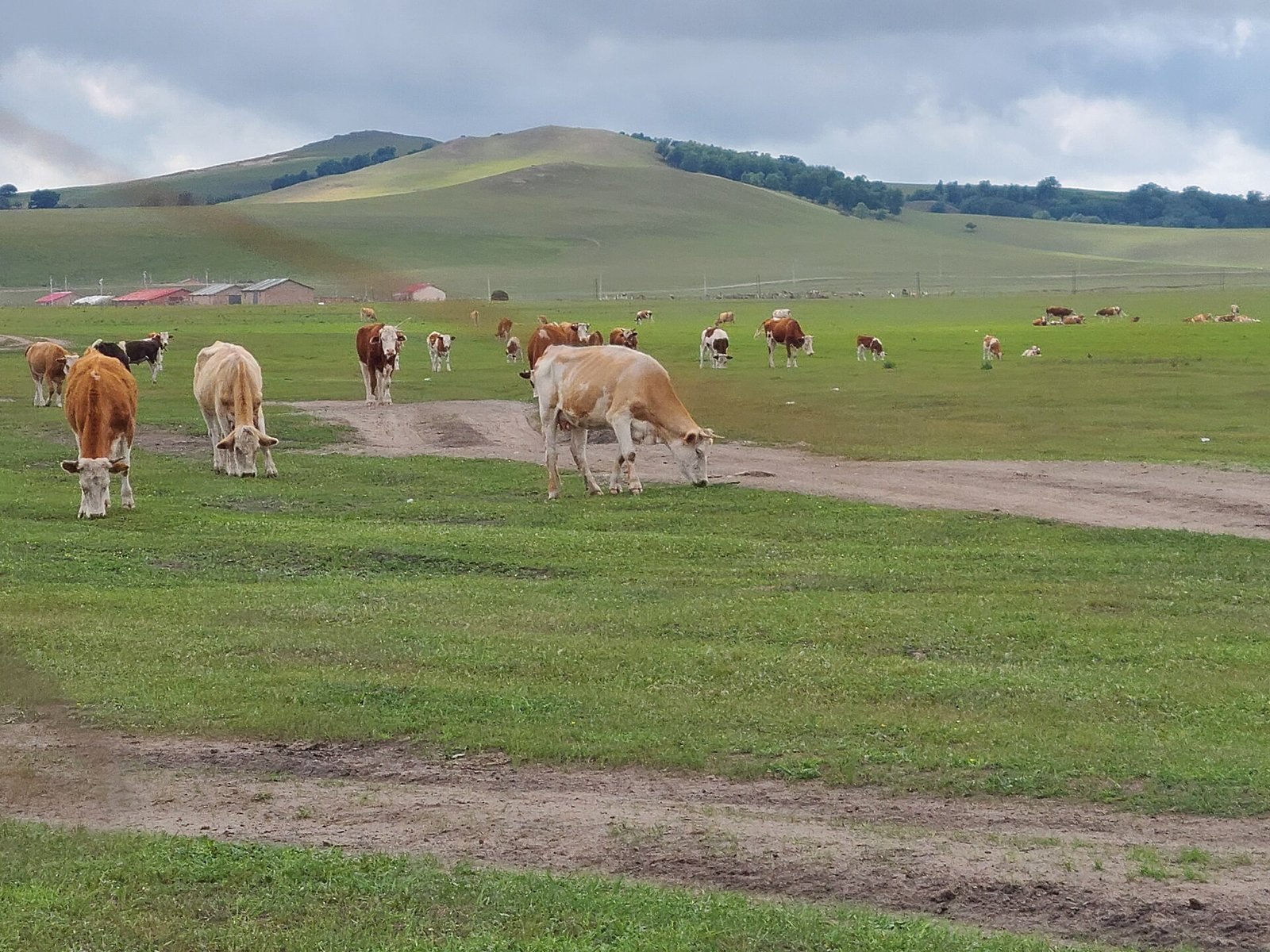
It is also why the Wulanbutong filming locations are not a theme park: the base is a working facility inside a scenic area, and the scenic area is the reason the facility exists.
What you will actually find there is thin. This is a working location, not a preserved set: the structures are maintained for shooting and for the tourist season, and between productions they weather. Do not come expecting the Hangzhou studio experience of painted palaces and costumed staff. Come expecting hills, a few built compounds, horse herds and the knowledge that a specific shot you remember was taken from roughly where you are standing. On this site the comparison is with Hengdian, where you pay to walk through something built to be looked at; Wulanbutong is the opposite bargain — you pay to walk through ground that was used because it already looked right.
If you are the kind of traveller who wants a plaque telling you which episode was shot where, this place will frustrate you. For a first trip to the country more generally, the first time in China page covers the logistics this guide assumes. There are no marked camera positions. The base’s value is atmospheric and photographic, and the honest way to use it is to arrive for sunrise, walk the ridges, and treat the film history as context rather than as an itinerary.
Why the grass looks European
Foreign visitors consistently describe this landscape as looking like Scotland, or Transylvania, or the foothills of the Alps, and then wonder why. The answer is geology plus a specific tree.
The hills here are the weathered edge of the Inner Mongolian plateau where it steps down toward the North China Plain. Because they were never glaciated in the way European mountains were, and because the bedrock is a mix of granite and volcanic rock that weathers into rounded forms, you get smooth, convex slopes rather than the sharper ridges of, say, the Tibetan margin. Add a cool, short growing season and you get grass that stays short and even, with isolated birch groves rather than continuous forest — because birch is one of the few trees that survives the wind and the cold on exposed slopes. Isolated clumps of pale-trunked trees on smooth green hills is, visually, the signature of upland Europe. It is not a coincidence that the film base named its best zone after the resemblance.
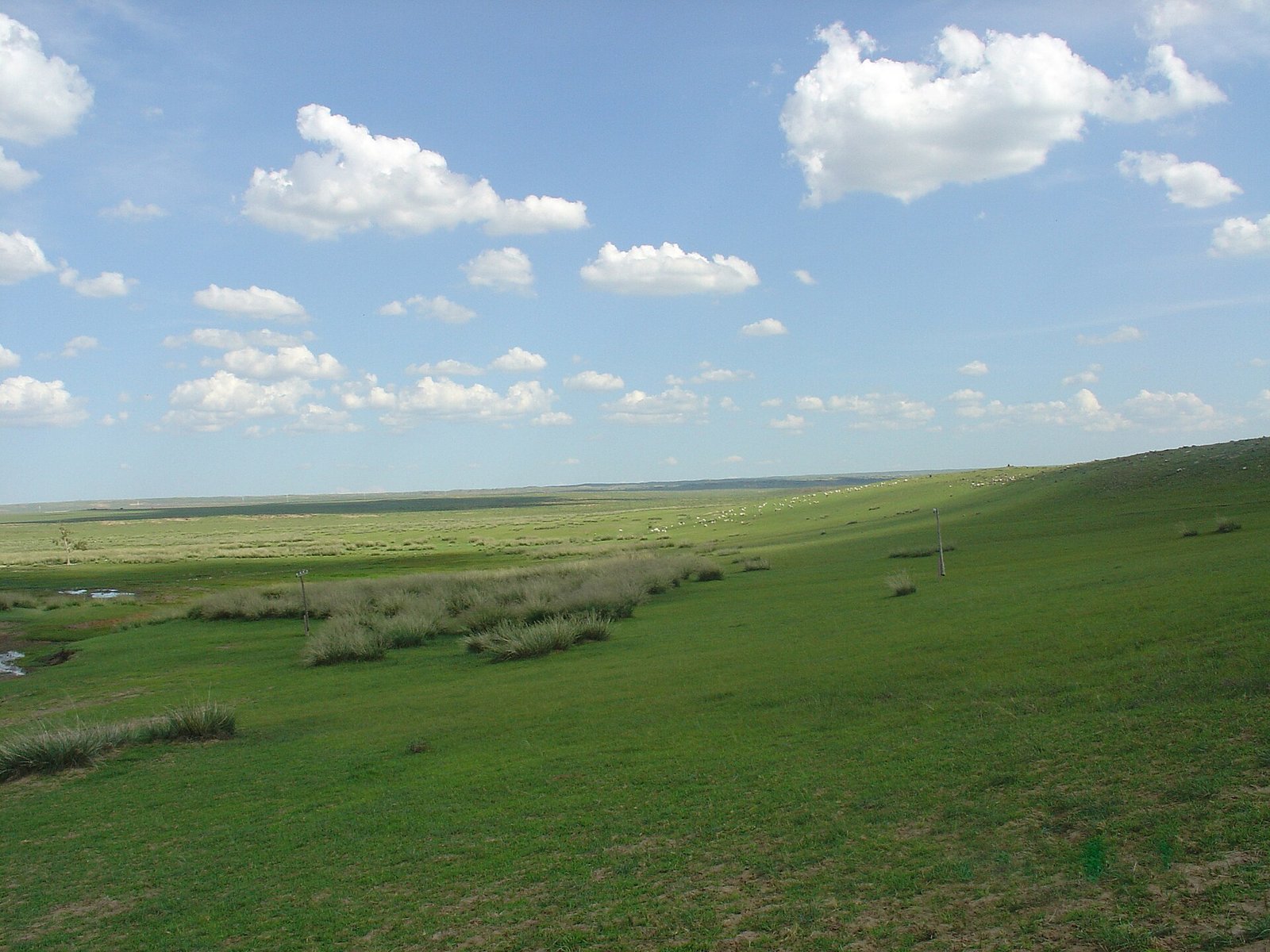
This is the answer to the question every photographer asks on arrival — why do the Wulanbutong filming locations look like somewhere in Europe rather than like the steppe further north. The hills are the reason, and so is the birch.
Practically, this matters for two reasons. The first is photographic: the light here behaves like mountain light, with a long golden hour and fast-moving cloud shadow, which is why the autumn window produces the pictures it does. The second is logistical: smooth hills mean you can see weather coming from a long way off, and they also mean there is very little shelter. A summer thunderstorm on the ridge is not dangerous in the way an alpine storm is, but you will get wet with nowhere to hide.
The vegetation also explains the seasons. Because the growing season is short, the birch turns early and all at once: the shift from green to gold happens across roughly ten days in late September, and the leaves are gone by the middle of October. That is the entire autumn. It is why the photographers’ calendar here has a hard three-week core and nothing much either side of it.
The four productions that made the name
The base’s reputation rests on a small number of productions that were watched by essentially everyone in China. They are also the reason the Wulanbutong filming locations are recognisable to viewers who have never been north of Beijing. They are worth knowing individually, because each one used the landscape differently.
My Fair Princess (还珠格格, 1998)
The one that made the grassland famous. My Fair Princess was the late-1990s costume drama that turned a runaway princess story into a national ritual — broadcast every summer holiday for years — and its outdoor sequences, the riding, the escapes and the open-country montages, were shot here. For a generation of Chinese viewers the association between “grassland” and “freedom” is literally this programme. If you want to understand why a Chinese tourist will drive six hours to stand on a hill with no facilities, this is the answer.
Kangxi Dynasty (康熙王朝, 2001)
The serious counterpart. Kangxi Dynasty is the prestige historical series about the emperor who set up the hunting reserve in the first place, and its steppe and campaign material was filmed on the ground the campaigns actually happened on. The production used the ancient battlefield zone, which is associated with Kangxi’s expeditions against Galdan. This is the closest thing on this site to a production shooting at a site for historical reasons rather than scenic ones — the equivalent of a Roman epic filming in actual Roman ground.
Hanwu the Great (汉武大帝, 2005)
The Han dynasty epic, and the one that pushed the base’s standing as a location for large scenes: massed cavalry, camps, the whole apparatus of a court on campaign. If you have seen the wide shots of an army crossing grassland in a 2000s Chinese historical drama, there is a good chance they came from here or from ground very like it.
The Legend of the Condor Heroes (射雕英雄传)
The wuxia entry, and the one that matters most for the look of the place. Jin Yong’s story spends its early chapters on the steppe with the Mongol camps, and the screen adaptations have repeatedly used Wulanbutong for exactly that material. It is also the clearest illustration of the base’s function: the landscape is asked to be a place that no longer exists — twelfth-century Mongolia — and it works because nothing has been built on it.
On the numbers, stated plainly. Chinese sources disagree about how many productions have used the base: 60-odd over the last decade in 2024 and 2026 write-ups, 80-odd in a 2026 travel guide, and more than 100 in a 2026 news piece. The wide spread is normal for this kind of figure, because different articles count features, television series, advertisements and music videos differently, and because some count the whole grassland rather than the designated base. This guide uses “60-plus, with some counts above 100” and does not pretend to a precise total.
Wolf Totem: the half that was shot here
Now the part that most articles get wrong, and the reason this page exists.
Wolf Totem (狼图腾, 2015), Jean-Jacques Annaud’s adaptation of Jiang Rong’s novel, is routinely described as having been filmed at Wulanbutong. It was, and it was not. The film’s main location was Ulagai (乌拉盖), a grassland in the north-east of Xilin Gol League, where the crew shot on location for about nine months. The two places are roughly 1,000 km apart — Ulagai is about 1,000 km from Beijing, Wulanbutong about 450 — and they are in different leagues of the same region.
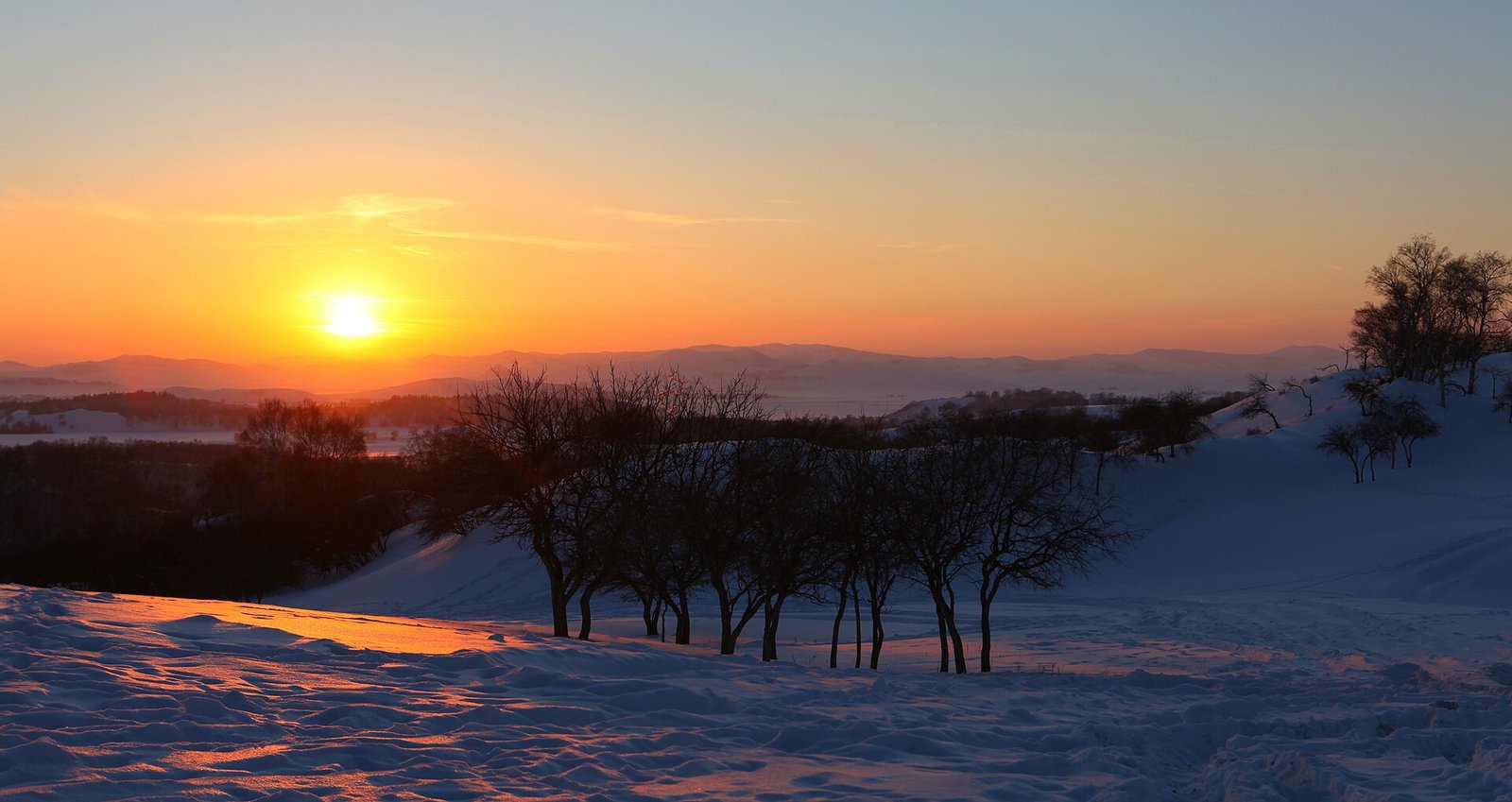
What Wulanbutong provided was the early production period, the wolf handling and training, and the winter sequences. That is the whole of the Wulanbutong filming locations credit on this film, and it is a real one. That is not a footnote. The wolves are the film’s whole technical achievement, and the snow material is some of its most memorable imagery. If you come here in January and stand on a white hillside, you are standing in the film. If you come in July expecting the green grassland of the poster, you are standing in a different film’s grassland, in a different league, a day’s drive away.
Why this one is hard to correct. “Wulanbutong was a location for Wolf Totem” is not false. It is partially true, which is much stickier than a clean error. A reader who checks will find the claim repeated in travel articles, in tour itineraries and in the base’s own promotional material, and every one of those statements is defensible in the narrow sense. The useful correction is not “no” but “which half”: winter and wolves here, summer grassland there. On this site the nearest comparison is the Dalian guide, where a beloved school turned out to be a converted factory; that was a wrong object, this is a half-shared credit.
If Wolf Totem specifically is your reason for coming, the honest advice is to decide which half you want. Winter here is a real option — the snow country is spectacular and almost empty — but it is minus 20 and the roads are not always passable. The summer grassland requires a separate trip to Xilin Gol, which is a different guide and a different set of logistics.
Bashang, Mulan Weichang, Wulanbutong
Three names get used interchangeably for this area in Chinese travel writing, and they are not the same thing. If you are researching Wulanbutong filming locations and finding contradictory addresses, this is why. Sorting them out is the single most useful preparation you can do, because the confusion has a direct financial consequence — covered in the next section.
| Name | What it actually is | Where it is |
|---|---|---|
| Bashang (坝上) | A geographic term, not an administrative one: the raised tableland where the Mongolian plateau steps down to the North China Plain, roughly 18,000 km². It contains four recognised areas — Weichang, Fengning, Zhangbei and Guyuan | Spans Hebei and Inner Mongolia |
| Mulan Weichang (木兰围场) | The Qing imperial hunting reserve established under Kangxi in the 1680s. Today the name is used mostly for the park complex on the Hebei side | Mainly Weichang Manchu and Mongol Autonomous County, Chengde, Hebei |
| Saikhanba (塞罕坝) | A forest park, the core of the old reserve, famous as a reforestation project. 142万亩 of plantation and natural forest | Weichang County, Chengde, Hebei — 240 km from Chengde, 460 km from Beijing |
| Wulanbutong (乌兰布统) | Natural rolling grassland plus the film base. Not a forest, not a plantation | Hexigten Banner, Chifeng, Inner Mongolia |
Read that table once more, because the trap is in the first row. Wulanbutong is part of Bashang but is not one of the four areas usually listed under that name. It is Inner Mongolian ground that happens to sit on the same tableland, which is why you will find it described as “Bashang” in one article and as “Inner Mongolia” in the next, both correctly. The four named areas — Weichang, Fengning, Zhangbei, Guyuan — are the Hebei ones, and that is why a reader who searches “Bashang” will mostly find Hebei content.
The physical relationship is easy to picture: Wulanbutong and Saikhanba are separated by a river and a provincial border and are usually visited on the same trip, because the road from Beijing runs through Weichang and past Saikhanba before it reaches the Wulanbutong gate. That single road is why the confusion exists. You drive through one province for four hours, cross a bridge, and are suddenly in another one, on ground that looks continuous.
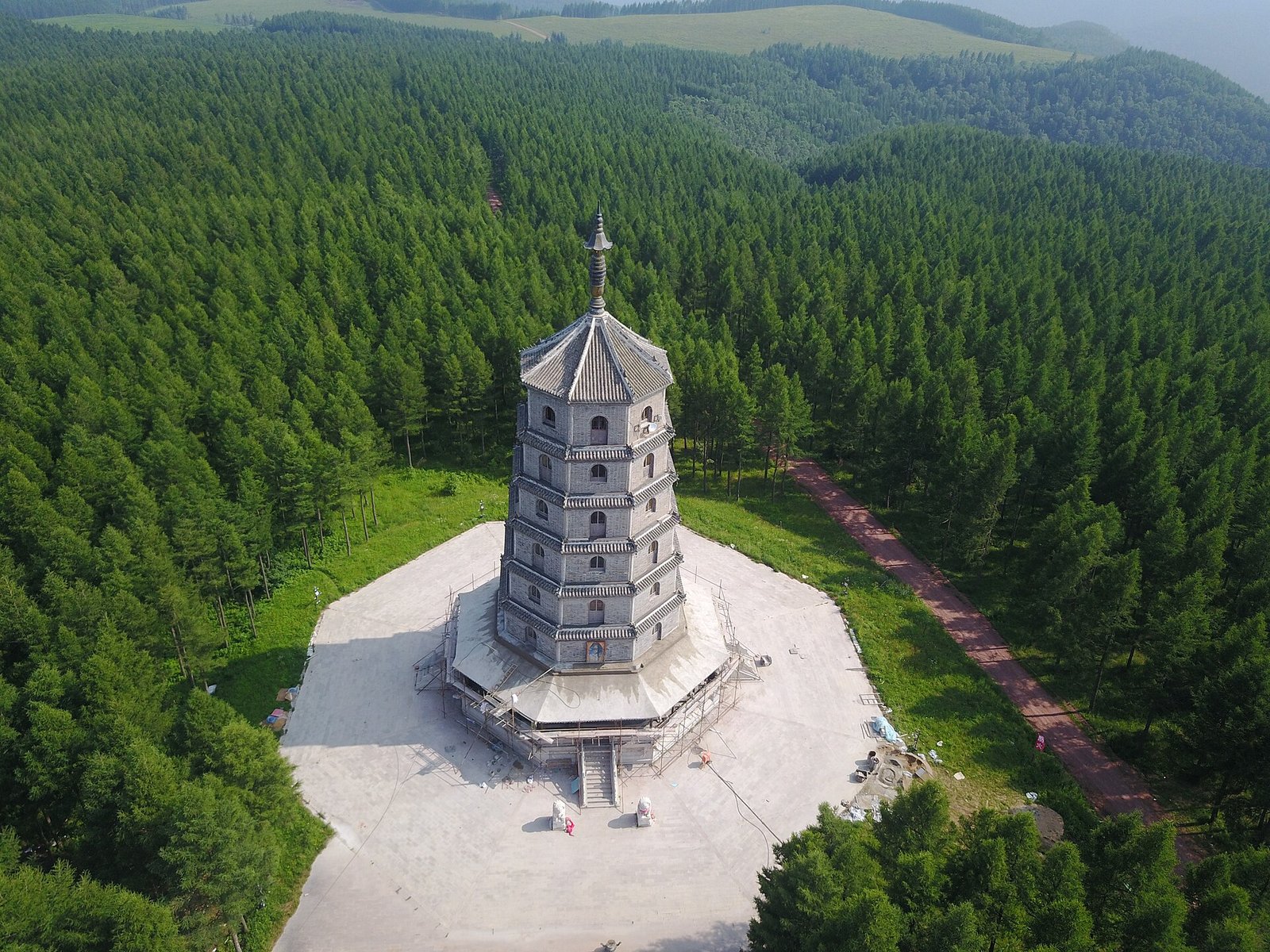
The difference in landscape is real, though, and worth planning around. Saikhanba is forest — larch and birch plantation, dense, dark green, with a famous tower and wetland boardwalks. Wulanbutong is grass and isolated birch groves — open, layered, photogenic in the way the steppe is. If you only have one day, pick based on that: forest or grassland. If you have two, the contrast between them is the best thing about the route.
Two provinces, two tickets
Here is where the naming confusion costs money.
They are not one ticket. Saikhanba is a Hebei forest park. Wulanbutong is an Inner Mongolia scenic area. If you drive from the Hebei side toward Wulanbutong — which is the standard route from Beijing — every person in the car needs a Wulanbutong ticket, regardless of what they paid on the Hebei side. Chinese guides state this repeatedly because people get it wrong every year and turn up at the gate assuming their forest-park ticket covers the grassland.
Budget for the Wulanbutong filming locations per person, not per car, and treat the Hebei side as a separate purchase.
The Wulanbutong side is straightforward: ¥120 per person in high season, from late April to late October, valid for 72 hours from first scan, with unlimited re-entry to the core sights. Online platforms sell it for around ¥115–118. The price is set under a Chifeng municipal pricing document from 2018, and it has been stable since. Students and visitors aged 60 and over pay half; children aged six or under or under 1.2 m, visitors aged 70 and over, and serving military personnel go free.
The Saikhanba side is where the numbers fall apart. Chinese sources in 2026 give three different accounts: that the main gate ticket is now free and only individual sights inside charge (around ¥60 for Qixing Lake, around ¥25 for the Saikhan Tower); that a combined Saikhanba-plus-Yudaokou ticket costs ¥130 for three days; and that a three-park combination costs ¥150. The older figure of a ¥130 main gate ticket still circulates too. This guide therefore writes the range as free to ¥150, depending on which gate and which combination — and tells you to confirm at the gate rather than budget from a blog.
The one thing that is certain: the two sides are separately ticketed, and crossing from Hebei into Inner Mongolia means buying the Inner Mongolia ticket for everyone in the vehicle. Budget ¥120 per adult for Wulanbutong and treat the Saikhanba figure as somewhere between nothing and ¥150 until you are standing at the window.
What you actually see
The scenic area is large and the sights are spread across it, which is the main practical constraint: you will spend real time driving between them. These are the Wulanbutong filming locations worth the fuel. These are the ones that justify the trip.
| Sight | What it is | Best time |
|---|---|---|
| Film base (影视基地) | The four zones described above — European-style scenery, customs park, Iron Horse zone, ancient battlefield | Sunrise; the ridges catch light first |
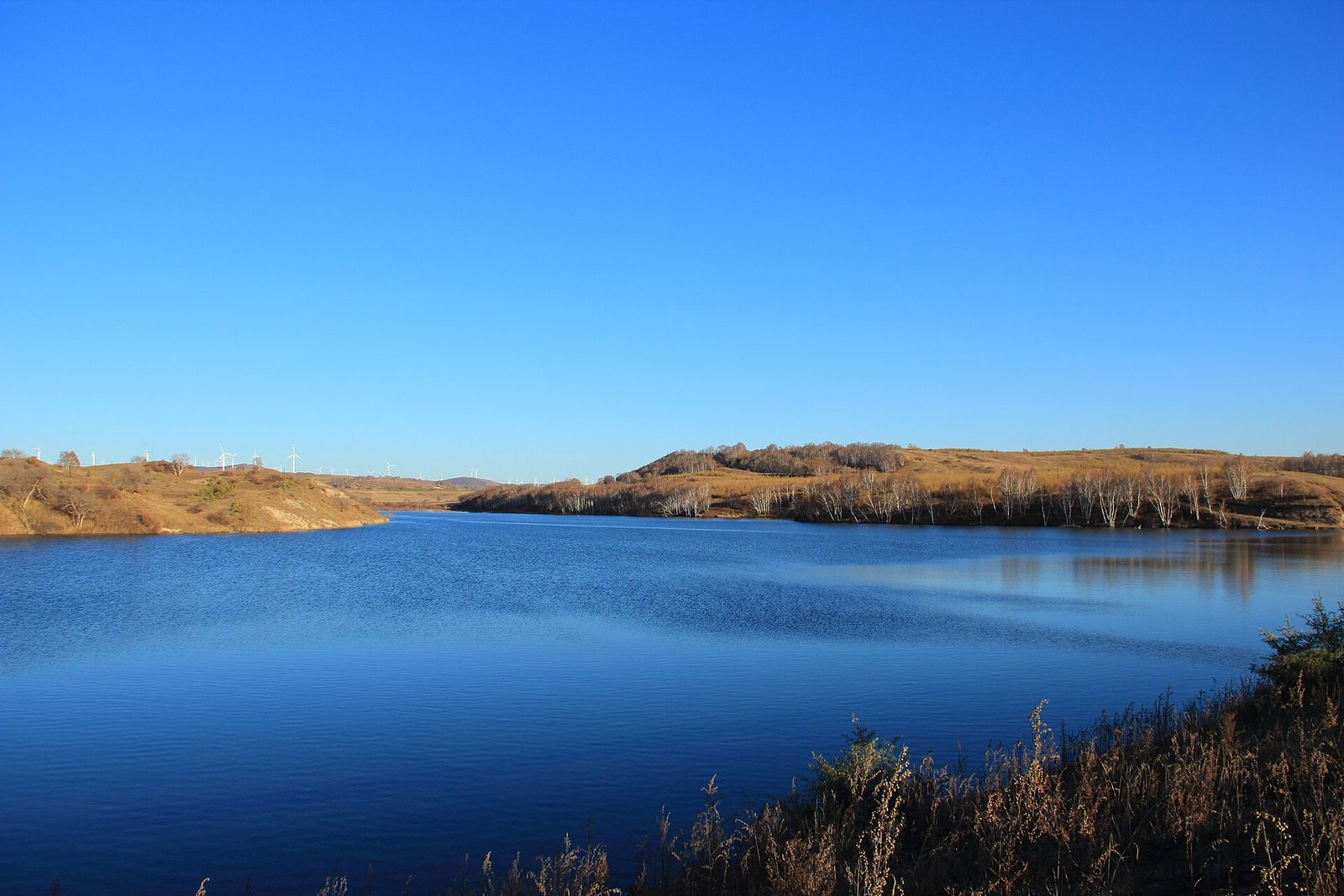
| General’s Lake (将军泡子) | A shallow lake and wetland on the ground of Kangxi’s campaign against Galdan. The name refers to a general killed there | Dawn for mist and horses in the water; dusk for the reverse view |
| Princess Lake (公主湖) | A small lake ringed by birch, with a flat boardwalk. The classic reflection shot | Early morning, still air |
| Hama Dam (蛤蟆坝) | Rolling ground with a reservoir, terraced fields and birch — the most “painted” corner of the area | Late September to early October |
| Wucai Mountain (五彩山) | “Five-colour mountain”: mixed woodland that turns in layers | The three weeks of autumn |
| North, East and Toufeng gullies (北沟 / 东沟 / 透风沟) | Valley roads through birch, the photographers’ working area | Sunrise; expect dirt road |
| Panlong Canyon (盘龙峡谷) | A shallow canyon cut into the plateau edge | Half a day, any season |
| Baicao Ovoo (百草敖包) | A cairn on a ridge, on the ticket, passed en route | Any |
Two honest notes on this list. Princess Lake is small — the photographs make it look like a highland loch, and it is a pond with good framing. General’s Lake is the one that delivers, because the combination of shallow water, reeds, horses and a low sun is genuinely cinematic and does not require a particular lens. If you have one morning, spend it there rather than at the base.
The other thing worth saying: the landscape is the attraction. There is no museum, no visitor centre worth the name and no interpretive signage explaining the film history. If you need infrastructure to enjoy a place, this is not the place. If you are happy to drive to a ridge at 05:30 and stand there, it is one of the best mornings available in northern China.
The horses, and the shows put on for cameras
Horses are everywhere here, and they are not decorative — they are the reason half the Wulanbutong filming locations look the way they do on screen. The base keeps herds for production use, the herders around the wetland run animals, and the “horses crossing water” shot that appears in every Wulanbutong gallery is a real working practice that has also become a scheduled performance.
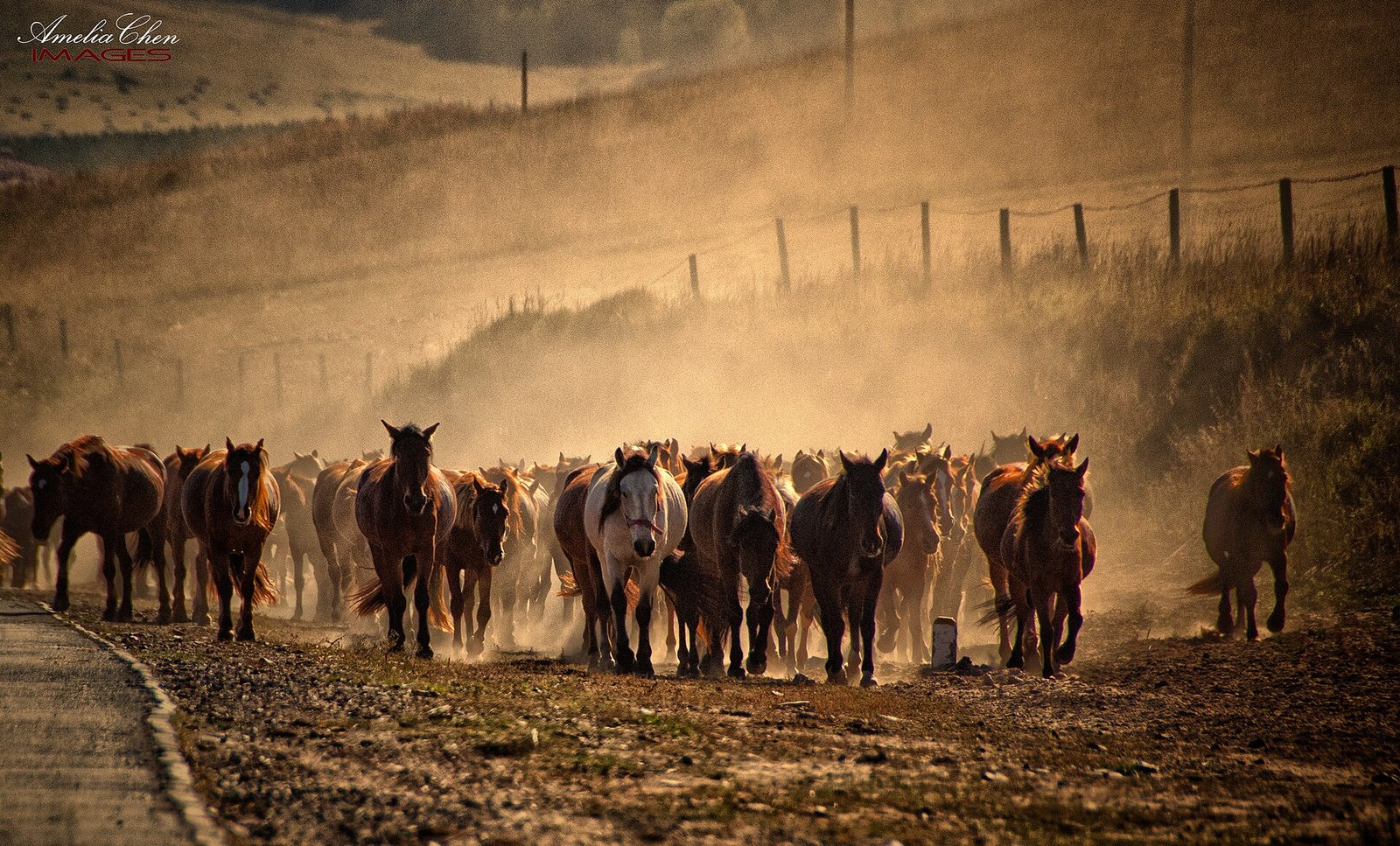
That is worth being straight about. On a good morning at General’s Lake you will see a herd driven through the shallows at sunrise, and it is beautiful. It is also, in most cases, arranged for the photographers who have paid to be there. This is not a scandal — the same thing happens at horse fairs in Camargue and at falconry displays in Scotland — but it changes what you are looking at. You are watching a performance of a practice, not a practice. If that distinction matters to you, the alternative is to walk the ridges away from the main viewpoints, where you will see herders moving animals for actual reasons, at unpredictable times, without a crowd.
Riding is available at several points around the scenic area and is priced per hour, informally, by the operator. There is no central booking, no insurance scheme worth the name and no helmet in most cases. Decide for yourself whether that is acceptable; the ground is soft and the horses are calm, but a fall on a ridge is a long way from a hospital.
When to go
| Window | What you get | What it costs you |
|---|---|---|
| Mid-July to late August | Green grass, cool days (the reason Chinese families come), long evenings, horses everywhere | Peak prices, weekend traffic on the approach road, the busiest viewpoints |
| 20 September to 10 October | The autumn colour: gold birch, red-brown scrub, morning mist, the best light of the year | A three-week window that everyone knows about; National Day week is the single worst time to be here |
| May to mid-June | Empty, cheap, grass just coming in, wildflowers late in the period | Wind, dust, some tracks still soft |
| December to February | Snow country: the Wolf Totem landscape, no crowds at all | Minus 20 and below, some roads impassable, most facilities shut |
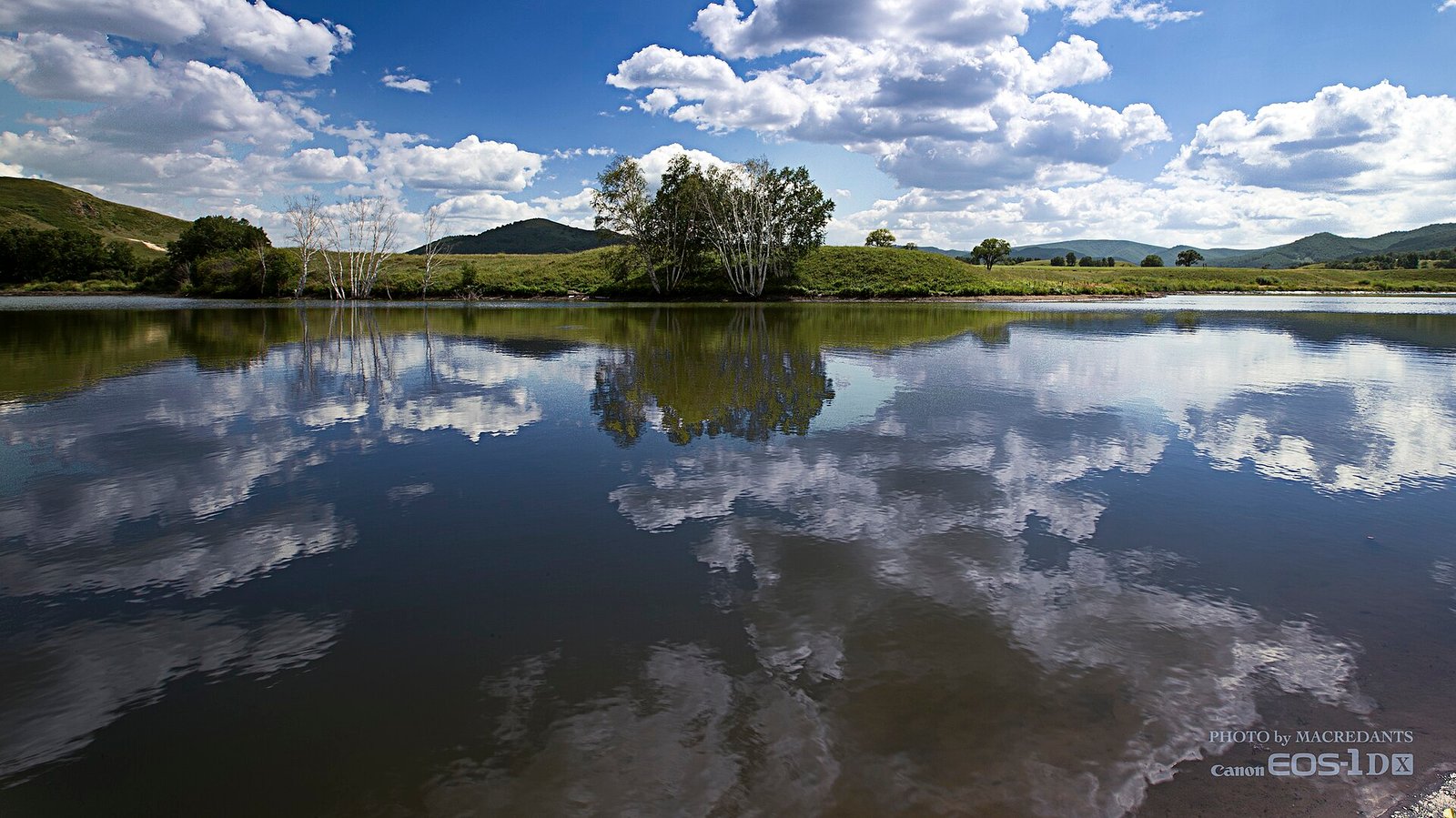
The Wulanbutong filming locations change character completely between the two windows, and the difference is not only colour: summer is a landscape, autumn is a light.
The autumn window deserves its own sentence, because it is shorter than people expect. The birch turns across roughly ten days in late September, the colour holds for about three weeks in total, and by the middle of October the leaves are down and the landscape is brown. Photographers here work to a hard calendar of 20 September to 10 October and treat anything outside it as a different trip. If autumn colour is the reason for your visit, book accommodation early and avoid the first week of October, when the National Day holiday fills every room between Chengde and the gate.
Summer is the opposite proposition: less spectacular light, but a far more forgiving trip. Days are cool at 1,400 m even when Beijing is at 35 °C, the grass is green from July, and the roads are all open. If you are travelling with children or without a car full of camera gear, July and August are the sensible choice.
How we checked this guide
Everything here about the Wulanbutong filming locations rests on secondary sources, and the guide says which. The film credits, the size of the base and its four zones come from the Chinese encyclopaedia entry for the Wulanbutong Film Base, cross-checked against travel and news write-ups from 2024 and 2026 that repeat the same production list. The administrative geography — that Wulanbutong is in Hexigten Banner, Chifeng, Inner Mongolia, and that Saikhanba is in Weichang County, Chengde, Hebei — comes from the encyclopaedia entries for both and from Chinese explainers written specifically to separate the two.
The ticket price is the figure given consistently across 2026 sources: ¥120 in high season, 72 hours, unlimited re-entry, with the same list of included sights each time. Where sources disagreed — the number of productions, and the Saikhanba ticket — this guide gives the range and says so in the text rather than picking the most flattering number.
The Wolf Totem split is the one claim here that required going past the travel articles. The nine-month Ulagai shoot is documented in Chinese film-tourism write-ups; the Wulanbutong winter and wolf-training work is documented in reader-contributed explanations that specifically address the confusion between the two places. Both are secondary sources. We have not found a production statement listing the split, so the guide presents it as the best available account rather than as settled fact.
One, two or three days
Two days is what covers the Wulanbutong filming locations properly; one day is what covers the drive.
One day is only worth it if you are already sleeping nearby. Sunrise at General’s Lake, mid-morning at the film base, an afternoon drive through Hama Dam, out before dark. It works, but you will spend more time driving than looking.
Two days is the right answer, and it is what the 72-hour ticket is designed for:
- Day one: arrive by mid-afternoon, check in near Hongshan Military Horse Farm, drive to General’s Lake for the last light. Eat at your guesthouse.
- Day two: out before dawn for sunrise at the lake or the film base — pick one, not both, they are in different directions. Late morning: the European-style zone and the ancient battlefield. Afternoon: Hama Dam and the western valleys. Sunset on a ridge.
Three days lets you add the gullies — North, East and Toufeng — which are dirt-road country and need a vehicle with clearance, plus Panlong Canyon. It also gives you a second sunrise, which in autumn is the difference between a good trip and a great one, because the mist is not guaranteed on any given morning.
If you are combining with the Hebei side, add a day: Saikhanba’s forest, the tower and the wetland boardwalks are a genuinely different landscape and the drive between them is the scenic part of the trip. Just buy the Wulanbutong ticket separately when you cross.
Getting there
There is no railway station anywhere near the scenic area, and this is the fact that shapes every itinerary. Getting to the Wulanbutong filming locations is a driving problem before it is anything else. Wulanbutong is a drive-in destination.
From Beijing by road, which is how almost everyone does it: Jingcheng expressway to Chengde, continue to the Weichang North exit, then Yudaokou, then the Wulanbutong gate. About 450 km, six hours in normal conditions. A slower scenic alternative runs via the National Highway No. 1 Scenic Route and adds roughly an hour, with far better viewpoints and more places to stop.
By high-speed rail plus a driver: take the train to Chengde South and hire a car for the remaining three to four hours, or go to Chifeng and approach from the north-east via Jingpeng. The rail leg is fast and comfortable; the transfer is where the cost goes. This is the option for travellers who do not want to drive in China, and it is worth pricing before you decide, because a two-day driver hire is not cheap.
Two road notes that matter more than they sound. First, there is one petrol station inside the scenic area and queues are common — fill up in Weichang town or in Chifeng before you go in. Second, many of the interesting roads are dirt, and after rain or in autumn they get soft. A sedan will manage the main loop; the gullies want clearance. If you are renting, say where you are going.
Inside the scenic area you drive yourself or you are driven. There is no shuttle bus connecting the sights, and the distances are real: the loop between the lake, the base, Hama Dam and the western valleys is well over 100 km of driving in a day.
Tickets and what they cover
| Item | Price | Notes |
|---|---|---|
| Wulanbutong scenic area, high season | ¥120 | Late April to late October. Valid 72 hours from first scan, unlimited re-entry |
| Wulanbutong, online advance | about ¥115–118 | Same ticket, sold through Chinese platforms; needs a Chinese payment app |
| Students, age 60+ | Half price | ID required |
| Under 1.2 m or age 6 and under; age 70+; serving military | Free | ID required |
| Saikhanba National Forest Park | free to ¥150 | Hebei side, separate ticket. Sources disagree: free main gate with paid inner sights, ¥130 combined with Yudaokou, or ¥150 for three parks |
| Qixing Lake (inside Saikhanba) | about ¥60 | Charged separately if the main gate is free |
| Saikhan Tower | about ¥25 | Charged separately |
| Horse riding, informal | per hour, negotiated | No central booking, no formal insurance |
The structure to understand is that Wulanbutong is a single ticket for a large area and Saikhanba is a park with a shifting gate policy and paid sights inside it. That is why the Wulanbutong figure is stable at ¥120 across every 2026 source and the Saikhanba figure is not stable at all. Budget ¥120 per adult for the Inner Mongolian side, treat the Hebei side as a range, and confirm at the window.
One more thing about the ticket: because it runs for 72 hours from first scan, the clock starts when you enter, not when you buy. If you arrive late in the day and only want a sunset, you are burning a day of validity. Buy on the morning you actually start.
What to know before you go
Altitude and weather. The scenic area sits at 1,200–1,700 m. That is not high enough to cause altitude sickness, but it is high enough that nights are cold even in August — bring a jacket. Summer thunderstorms arrive fast and there is no shelter on the ridges. Autumn mornings can be below freezing.
Cash and connectivity. Mobile signal is patchy in the valleys. Set up Alipay or WeChat Pay before you leave the city, because the small operators — horse hire, roadside food, guesthouse extras — take QR codes, not cards. Carry some cash as a fallback.
Where to sleep. The Hongshan Military Horse Farm area has the densest cluster of guesthouses and small hotels, and it is the right base because it is central to the lake, the base and the western valleys. Book ahead for the autumn window and for National Day week, when the whole corridor from Chengde fills up.
Food. Guesthouse cooking, mostly: lamb, mutton hotpot, buckwheat noodles, and dairy in the Mongolian style. It is hearty rather than refined. Vegetarians will find it harder than in the cities.
Etiquette around the ovoo. The cairns are religious sites for Mongolians. Walk around them clockwise, do not climb them, and do not take stones away. This is not decorative folklore; it is somebody’s practice.
What this trip is not. The Wulanbutong filming locations are not a heritage site with interpretation, it is not accessible without a vehicle, and it is not a place where a two-hour visit makes sense. It is a landscape that happens to be the most-used outdoor film location in northern China, and it rewards the same things any landscape rewards: early starts, patience and a car.
If you are building a longer route, the how many days guide will tell you honestly whether this fits a five-day or a ten-day trip, and the best time to visit China page covers the national holiday problem in more detail, and the train guide explains the Chengde and Chifeng connections.
Common questions
What was filmed at Wulanbutong?
The productions most often cited are My Fair Princess (1998), Kangxi Dynasty (2001), Hanwu the Great (2005) and The Legend of the Condor Heroes, with Chinese sources describing the base as having hosted 60-plus productions and some counts going above 100. Wolf Totem (2015) shot its winter material and its wolf-training work here, but its main summer grassland was Ulagai in Xilin Gol, about 1,000 km away.
Is Wulanbutong in Inner Mongolia or Hebei?
Inner Mongolia. It is in Hexigten Banner, Chifeng. The confusion arises because the wider tableland it sits on — Bashang — spans both provinces, and because the standard road from Beijing passes through Hebei and Saikhanba before reaching the Wulanbutong gate. Saikhanba is the Hebei side; Wulanbutong is the Inner Mongolian side; they are separated by a river and a border.
Does one ticket cover both Saikhanba and Wulanbutong?
No. They are separately ticketed. If you drive from the Hebei side into Wulanbutong, every person in the vehicle needs a Wulanbutong ticket — ¥120 per adult in high season, valid 72 hours. The Saikhanba ticket, whatever it currently costs, does not carry over.
Can I visit without a car?
Not practically. There is no railway to the scenic area, no shuttle between the sights, and the loop between them runs well over 100 km. The workable version is high-speed rail to Chengde South or Chifeng followed by a hired car and driver for two days.
What is the best time to go?
Mid-July to late August for green grass and cool weather, or 20 September to 10 October for the autumn colour, which is the photographic peak and lasts about three weeks. Avoid the first week of October, when the National Day holiday fills every room in the corridor.
How many days do I need?
Two days for the grassland itself, using the 72-hour ticket properly: one afternoon for the lake at sunset, one full day for sunrise, the film base, Hama Dam and the western valleys. Add a day for Saikhanba on the Hebei side, and another if you want to work the dirt-road gullies.
Your next move
If the appeal here is landscape rather than sets, the natural next stop is Dunhuang, where the desert does the same job for a different genre, or Altay in the far north-west, which is the closest China comes to the alpine grassland in this guide. If you want to compare built studios with open landscape, our film studios guide does that side by side.
If it is imperial drama you are chasing, the indoor half of that world is at Hengdian, and the northern frontier half is at Datong. Wulanbutong is where the outdoor material comes from — the part that cannot be built.
If you are still deciding where to go at all, let the which drama city quiz pick for you, or browse the full drama index and the regional map. The dataset behind all of these guides is published as our China filming locations dataset, and if we have got something wrong, the corrections page is how to tell us.
Before you book anything, two things come first: read the visa and entry guide and set up Alipay or WeChat Pay. Those are the genuinely hard parts of travelling in China as a foreigner. Finding a grassland that looks like twelfth-century Mongolia is the easy part.
Last verified
Sources: Baidu Baike, “Wulanbutong Film Base” — the base at Hexigten Banner, Chifeng, Inner Mongolia; an area of about one million square metres; the four zones (European-style scenery, customs park, Iron Horse film and folk zone, ancient battlefield); and its description as a grassland film location · Baidu Baike, “Hebei Saikhanba National Forest Park” — the park in northern Weichang County, Chengde, Hebei; its northern neighbour Hexigten Banner in Chifeng, Inner Mongolia; 240 km from Chengde and 460 km from Beijing; and its status as part of the Qing imperial Mulan Weichang reserve · Baijiahao, 23 May 2026, “Wulanbutong Film Base: meeting your on-screen self in the grassland light” — no perimeter wall and no gate; about 60 productions in the last decade; My Fair Princess, Kangxi Dynasty, The Legend of the Condor Heroes and Hanwu the Great named as productions whose largest sequences were shot here · Baijiahao, 13 April 2024, “The location for Kangxi Dynasty and My Fair Princess: the film base on the Wulanbutong grassland” — the European-style grassland scenery, the General’s Lake battlefield site, the “grassland film city” and “open-air studio” nicknames, and the 60-plus count · Ctrip, 24 August 2026, Hexigten Banner guide — the 80-plus production count and the Kangxi campaigns against Galdan · Sina, 5 October 2026 — the count of more than 100 productions and the area’s history as part of the Qing imperial Mulan Weichang reserve · Baidu Wenku, Sina (29 August 2026) and SMZDM (13 June 2026) — the ¥120 high-season ticket running from late April to late October, valid 72 hours from first scan with unlimited re-entry, covering General’s Lake, the film base, Princess Lake, the European-style zone and Baicao Ovoo; online prices around ¥115–118; half price for students and visitors aged 60 and over; free entry for children aged six or under or under 1.2 m, visitors aged 70 and over and serving military personnel; and the Chifeng pricing document “Chifa Gai Fei Zi 2018 No. 613” behind the figure · Sina (August and September 2026) and Baijiahao (June 2026) — the conflicting Saikhanba accounts: a free main gate with Qixing Lake at about ¥60 and the Saihan Tower at about ¥25 charged separately; a Saikhanba-plus-Yudaokou ticket at ¥130 for three days; a three-park combination at ¥150; and the earlier ¥130 main gate price. Also the confirmed point that the two parks are separately ticketed and that every vehicle occupant needs a Wulanbutong ticket when crossing from Hebei · Baidu Wenku, “How to visit Chifeng and Weichang” and “Telling Weichang and Hexigten apart” — Saikhanba in Weichang County, Hebei, against Wulanbutong in Hexigten Banner, Inner Mongolia, separated by a river and a provincial border; the Bashang tableland at about 18,000 square kilometres containing the Weichang, Fengning, Zhangbei and Guyuan areas · Baijiahao (October 2025) and Baidu Wenku — Ulagai in Xilin Gol League as the principal location for Wolf Totem, with about nine months of location shooting; Baidu Zhidao explanations that the early shooting, the wolf handling and training and the winter sequences were done at Wulanbutong while the summer grassland was Ulagai; and the distances of about 450 km from Beijing to Wulanbutong and about 1,000 km to Ulagai · Baidu Wenku, “The three Ula grasslands of Inner Mongolia” — the distinction between Ulagai (Xilin Gol), Wulanbutong (Chifeng) and Ulate (Bayannur) · Baijiahao (11 June 2026 and 16 September 2026), Zhihu (7 April 2026) and Baidu Wenku — the Beijing route via Chengde, the Weichang North exit and Yudaokou at about 450 km and six hours; the National Highway No. 1 Scenic Route alternative; the single petrol station inside the scenic area; dirt roads requiring clearance in autumn; the autumn colour peak of 20 September to 10 October; mid-July to late August for green grass; guesthouses concentrated around the Hongshan Military Horse Farm; and General’s Lake for dawn mist and horses, Princess Lake for birch reflections and the film base for sunrise · Wikimedia Commons photo pages for the photographs used, credited in the captions and the media library
Spotted something out of date? Email us — or read how corrections work. We check every report against the source and update the page.
Ready to plan it? Turn the dramas you have watched into a day-by-day route with the C-drama route planner.
Not sure where to start? Take the drama-city quiz — seven questions, one city, and a route waiting at the end.