
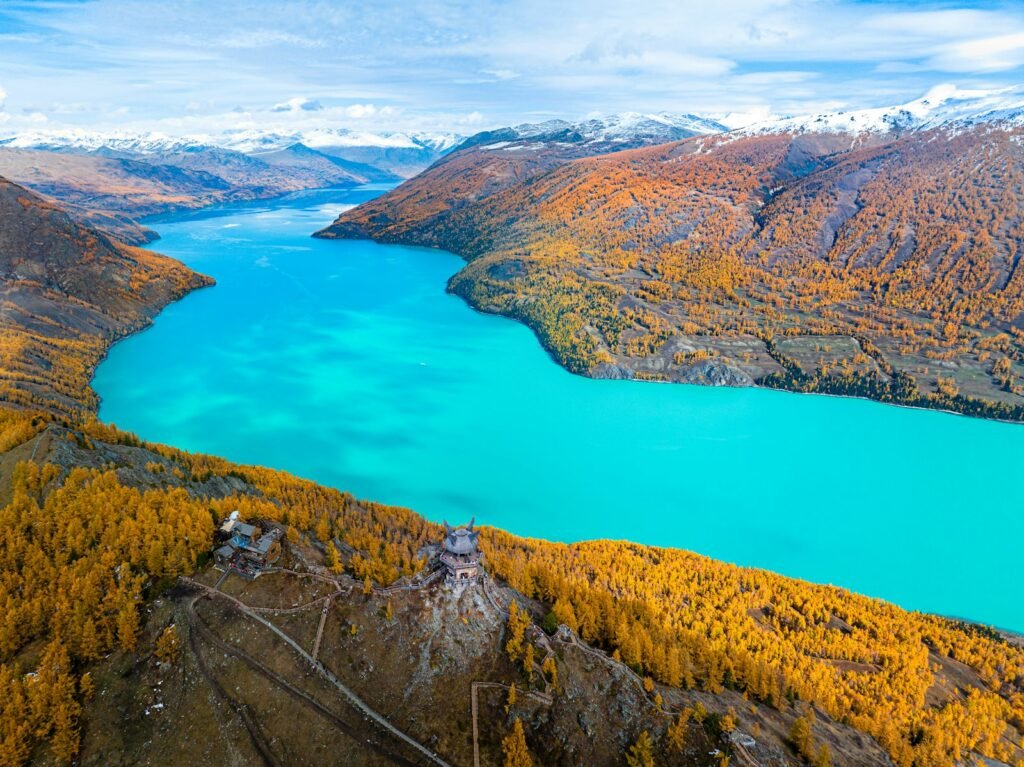
Most C-dramas on this site are built somewhere you can point at on a map and book a ticket to. My Altay was built nowhere: it was shot in the open country of northern Xinjiang, and then the county that hosted it built a village so that visitors would have somewhere to stand. The 2024 eight-part series — 我的阿勒泰, released internationally as To the Wonder, written and directed by Teng Congcong (滕丛丛) — turned a quiet corner of the Altay mountains into one of China’s most talked-about travel destinations in a single summer. Its My Altay filming locations are not a backlot. They are a lake, a birch forest, a border village, and a rebuilt hamlet called Caihong Bulake that did not exist on any map until the show made it famous.
The short answer: My Altay (我的阿勒泰 / To the Wonder) was filmed in Altay Prefecture, northern Xinjiang, mainly in Habahe County and Burqin County. The core filming area is Caihong Bulake (彩虹布拉克), now a rebuilt film-themed scenic area in Habahe’s Qibar Town — the place to see Zhang Fengxia’s shop and Batai’s tree. The wider locations are Baihaba and the Yegende grassland on the border, Kanas Lake, and the Tuva village of Hemu. Kanas, Hemu and Baihaba share one ticket system; Caihong Bulake is ticketed separately. One thing is not optional: Baihaba sits inside a border management area, so everyone — and foreign visitors especially — must sort out a pass before turning up.
The drama that put Altay on the map
My Altay is the opposite of a plot engine. Li Wenxiu (Zhou Yiran, 周依然) is a young Han woman who leaves Altay for the city to become a writer, fails, and comes home to her mother’s general store in a Kazakh herding village. Over eight short episodes she finds her footing again. That is close to the whole story. What made the series a phenomenon was not the plot but the place: the show is shot almost entirely outdoors, in real pasture, real forest and real light, and the landscape carries it.
The production facts are simple. It is an eight-episode mini-series made for CCTV and iQIYI, directed and co-written by Teng Congcong (滕丛丛), adapted from Li Juan‘s (李娟) essay collection of the same name, and it premiered on 7 May 2024 — in primetime on CCTV-1, alongside its streaming release. It starred Ma Yili (马伊琍) as the mother Zhang Fengxia, Zhou Yiran as Li Wenxiu, and Yu Shi (于适) as the young herder Batai. It finished the year as the highest-rated Chinese-language series on Douban, at 8.9.
The travel effect was immediate and unusually well documented. Within weeks of broadcast, Altay was the search term of the summer; the regional government and the national English press both reported the surge, and the Caihong Bulake location alone drew more than 200,000 visitors in the months after the show aired. Almost none of them came for a studio. They came for the grass.
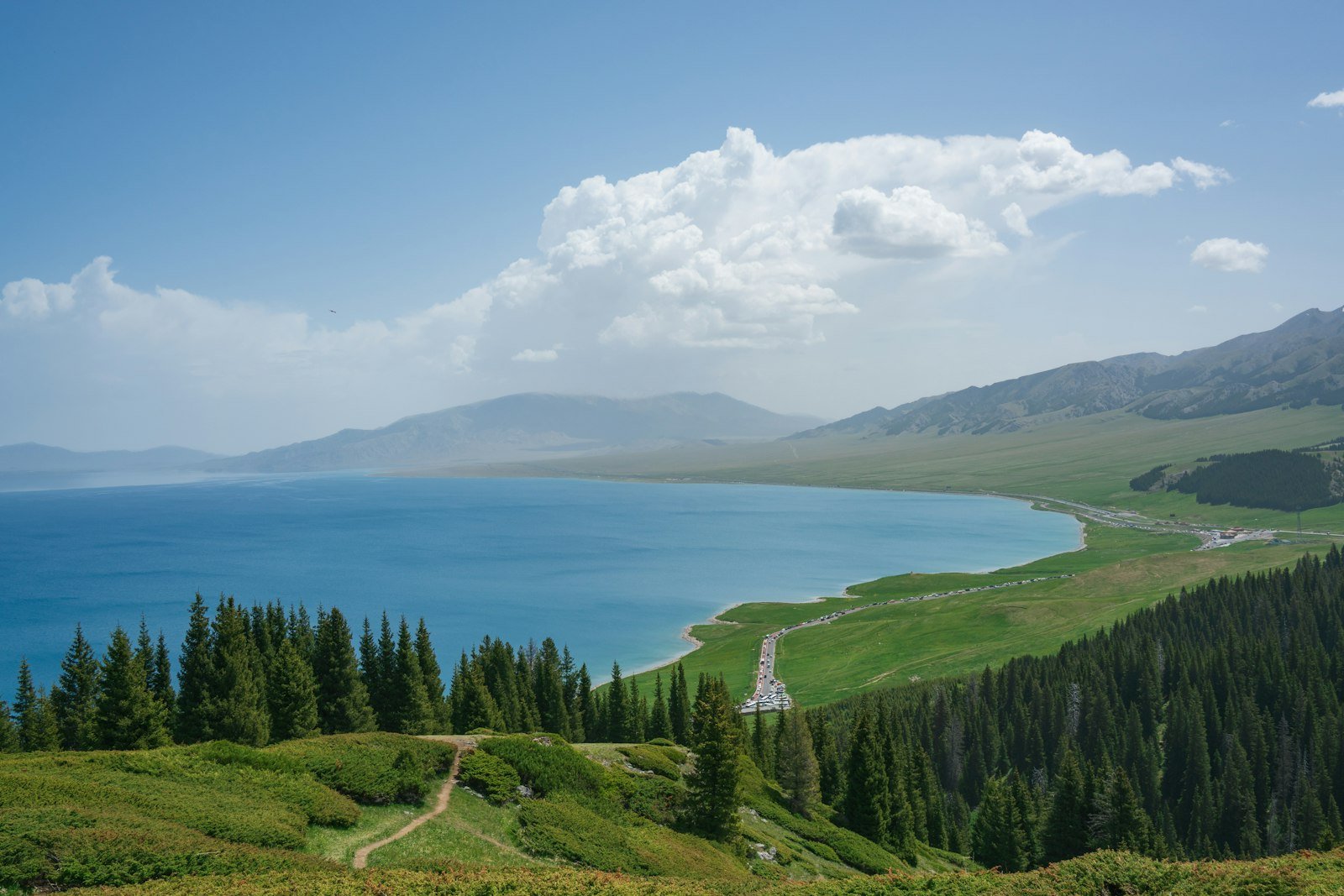
That is what makes this guide different from the studio trails elsewhere on the site. You are not walking a set dressed for cameras. You are standing in the country the camera was pointed at, and the reason to go is the same reason the show works: the land itself.
My Altay filming locations at a glance
| Location | Where | What it is in the show | Cost |
|---|---|---|---|
| Caihong Bulake (彩虹布拉克) | Habahe County, Qibar Town | The core set: Zhang Fengxia’s shop, Batai’s tree, the television frame | From ¥69 (OTA-listed; official price not published) |
| Baihaba (白哈巴) | Habahe County, on the Kazakh border | The border village and its wooden houses | ¥30 peak / ¥15 off, inside the Kanas ticket system; border pass required |
| Yegende grassland (也根得草原) | Habahe County, off the G219 near Baihaba | The summer pasture | Open country; the same border-area rules apply |
| Kanas Lake (喀纳斯) | Burqin County | The lake; the scene of the sisters washing clothes | ¥160 peak / ¥80 off, plus shuttle from ¥70 |
| Hemu (禾木) | Burqin County | The Tuva village among the birches | ¥50 peak / ¥25 off |
| Akeqi Wetland Park (阿克齐湿地) | Habahe County | River-valley and wetland shots | Reported; confirm locally before you go |
The first four sit within an hour or two of each other in the north-west of the prefecture, around Habahe and Burqin; Hemu is further east, deeper into the mountains. Everything here needs a car, a driver, or a tour — there is no metro, no train to the trailhead, and no walking between them.
Caihong Bulake: the village that stepped off the screen
Start with the one place built for the show. Caihong Bulake (彩虹布拉克) is a hamlet in Qibar Town, Habahe County, named after a song from the drama’s soundtrack. The production shot here, and after the series aired the county did something unusual: rather than let the location weather away, it rebuilt it as a proper scenic area, opened on 18 August 2025, built to 3A standards with roughly ¥100 million behind it — the first film-and-television themed scenic area in Altay Prefecture.
What you walk into is a careful reconstruction of the show’s world. Zhang Fengxia’s shop (张凤侠小卖部) stands with its blue signboard and its shelves of period props; Batai’s tree (巴太树) stands where the leads sat. Around them the site has rebuilt the television frame, the homecoming bus, the horse cart, and a nostalgia quarter with the publishing house, the doctor’s clinic and a cinema from the drama’s small-town scenes. Beyond the sets there is an intangible-heritage street of more than 15,000 square metres — Dombra-making, horn carving, felt-weaving — and a yurt-culture zone with century-old tents and Kazakh wedding rituals. It is, in other words, half film set and half county fair, and it is honest about being both.
Two practical warnings. First, the official ticket price has not been published: the operator sells through OTA platforms and on-site channels, and third-party listings quote an adult ticket from about ¥69, with an opening promotion that ran at half price into mid-September 2025. Treat that as a starting figure, not a guarantee, and confirm the current price and opening state through the official channel before you build a day around it. Second, the last stretch of road in is rough — the final few kilometres are gravel, and a high-clearance vehicle is the safer choice if you are self-driving. The county also runs a weekend shuttle from the Habahe county-town visitor centre for around ¥19.9, which is the easy way in if you are without a car.
Baihaba and the Yegende pasture: the border country
North-west of Habahe, pressed against the Kazakh border, is Baihaba (白哈巴) — a village of log houses that calls itself the “Northwest First Village”, and the most northerly settlement most travellers will ever reach in China. Its lanes and its wooden roofs supply the drama’s sense of a place at the edge of everything. Just outside it, along the G219, lies the Yegende grassland (也根得草原), the summer pasture the show uses for its high-country grazing scenes; the county has since developed a night-time “Phantom Light Forest” (幻光森林) attraction on the same pasture.
This is the part of the trip that needs planning rather than improvising, because Baihaba is inside a border management area. Everyone entering has to pass a police checkpoint with valid identification, and the rule that catches visitors out is that a normal ticket does not get you through. See the border-pass section below — it matters more than anything else on this page if you hold a non-Chinese passport.
Kanas: the lake in the show’s frame
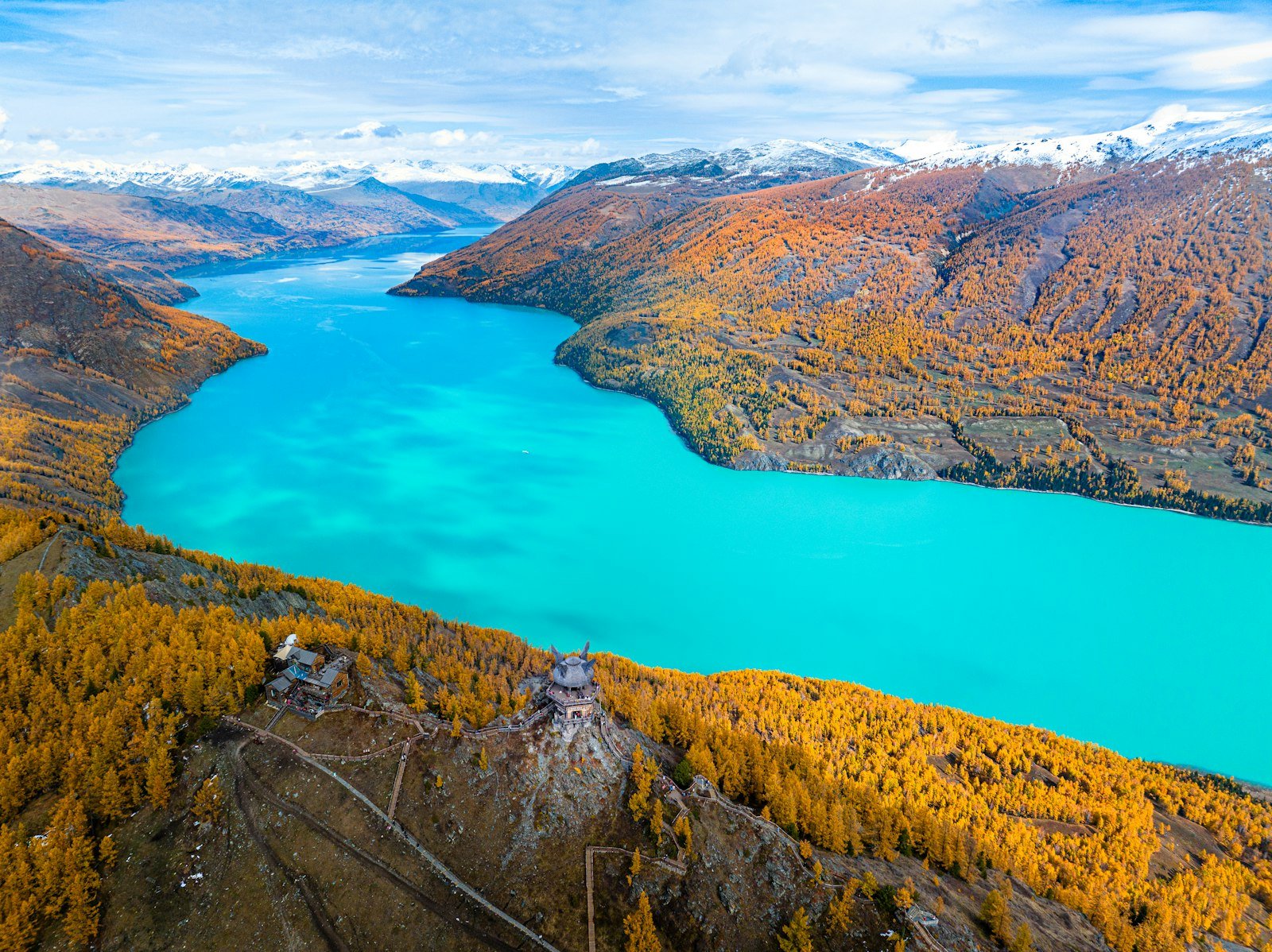
South-east of Habahe, in Burqin County, is the location most international visitors already know: Kanas (喀纳斯), the deep, colour-shifting lake the Chinese travel industry has long called “God’s back garden”. It is the show’s most photographed water, and the scene in which the three sisters wash clothes by the shore is the one fans come to stand in.
Kanas is also the most developed stop on the list, and the easiest to do without a car, because it runs on a proper ticket-and-shuttle system. You park or arrive at Jiadengyu (贾登峪), the gateway outside the reserve, and switch to the park shuttle; private vehicles do not drive the core. That structure is worth understanding before you buy anything, because the headline ticket and the shuttle are sold separately and the bundles differ. The details are in Tickets, hours and what is free.
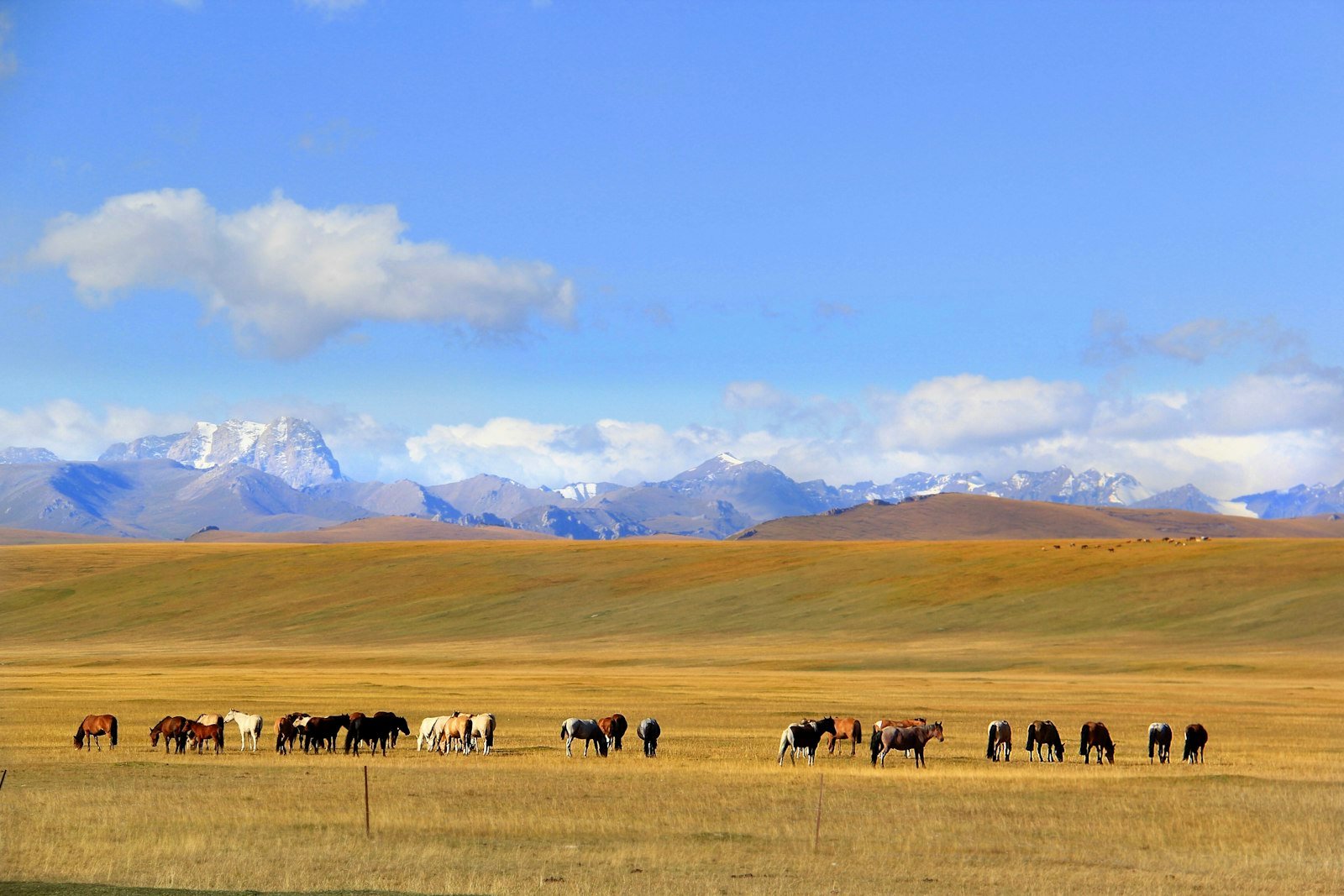
Hemu: the Tuva village in the birch forest
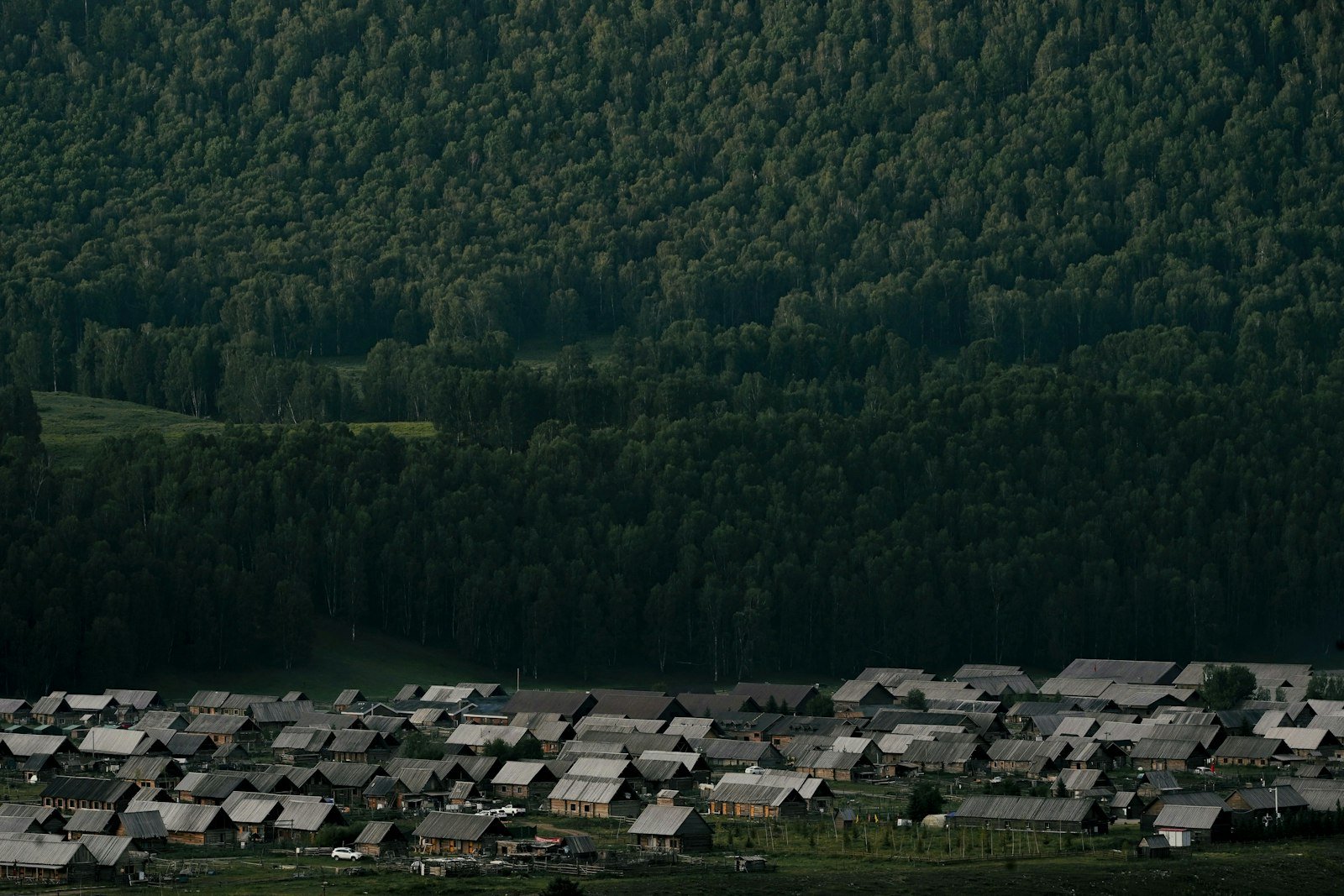
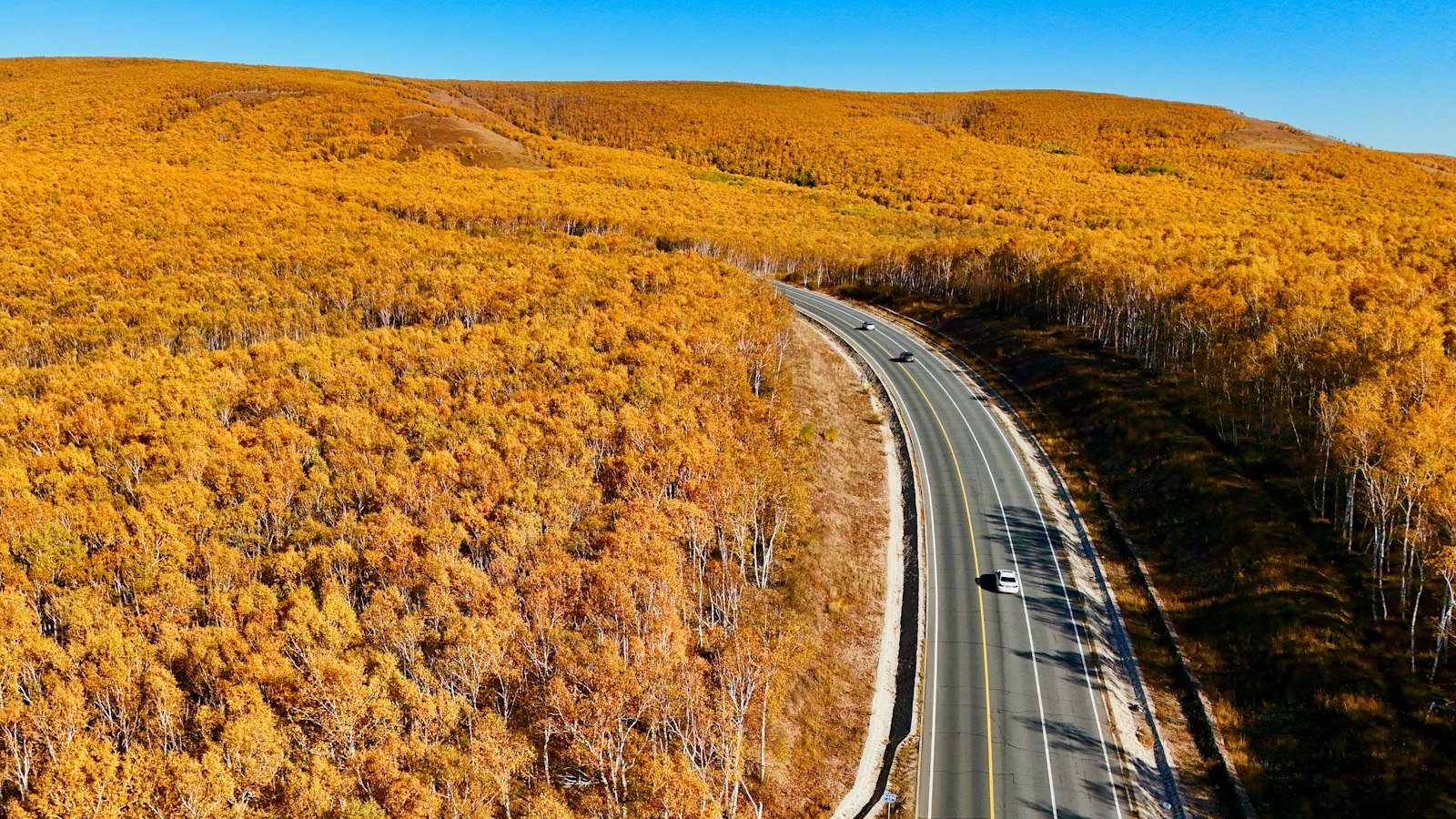
The fourth cluster is Hemu (禾木), further east in Burqin County and reached by its own road up the valley: a village of Tuva households whose log cabins and pointed roofs sit inside a birch forest that turns gold every autumn. It is the show’s other great set of textures — wood smoke, split timber, horses moving between houses — and in late September and early October it is also the busiest place in the region. Two things to know: Hemu is inside the same Kanas ticket system as the lake and Baihaba, and cars entering the village need a parking reservation booked in advance through the official mini-program, because the village simply cannot hold the traffic.
How we checked this list
This page leans harder on official sources than most, because the region’s government publishes a lot — and it is worth being precise about what that does and does not prove.
What we can stand behind: the Altay Prefecture government’s own website names Caihong Bulake as the drama’s core filming location, lists the reconstructed sets by name, and dates the scenic area’s opening to 18 August 2025; the Habahe County government confirms the location, the weekend shuttle and the reconstructed shop; and the Kanas Scenic Area management office publishes the ticket and shuttle prices we quote below. Those are first-party, and we took them from the government and operator pages rather than from copies of them.
What we cannot claim: an official, scene-by-scene attribution. No government or production statement says “this shot was filmed at this spot”. The wider location list — Baihaba, the Yegende pasture, Kanas, Hemu, Akeqi Wetland — is assembled from consistent Chinese coverage and government tourism writing published during and after broadcast, and we have marked the weakest item (Akeqi) as unconfirmed. Treat the scene-level matches as reported rather than officially confirmed, and judge each place on its own merits: every one of them is real, visitable country whether or not the camera was exactly there.
What we verified ourselves, against government and operator sources on 15 October 2026: the drama’s production facts and broadcast date; Caihong Bulake’s location, opening date and reconstructed sets; the Kanas, Hemu and Baihaba ticket tiers and the peak-season dates; the shuttle and bundle prices; the Hemu parking-reservation rule; the Altay border-management requirement; and the airport and rail access quoted below. Prices and rules in this region change with the season — check the operator’s page before you travel, and note the date above.
Seeing it in three days
The locations split into two clusters, and three days is a fair minimum. Everything below assumes a car or a driver; a tour is the simpler option if you would rather not arrange one.
Day one — Habahe and the set. Fly or drive in and base yourself in Habahe county town. Spend the afternoon at Caihong Bulake: the reconstructed village, the heritage street and the yurt zone are a half-day on their own, and the low evening light on the surrounding hills is the best of the day. If you are without a car, this is the day to use the weekend shuttle.
Day two — the border country. Head north-west to Baihaba, then out along the G219 to the Yegende pasture. This is the day the border pass matters, and the day to start early: the checkpoint and the drive both take time, and the pasture is at its best in the middle of the day. Return to Habahe or push on towards Burqin.
Day three — Kanas and Hemu. Enter the Kanas reserve through Jiadengyu, take the shuttle to the lake for the morning, then drive across to Hemu for the afternoon and, if you can, stay the night — the village is at its best once the day-trippers have gone and the light drops behind the birches. From here the loop closes back towards Altay city or the airport.
With a fourth day, slow down: add the Akeqi wetland near Habahe, or give Hemu a full day instead of an afternoon. This is not a region to rush, and the show it is famous for is a case for doing less.
Getting to Altay
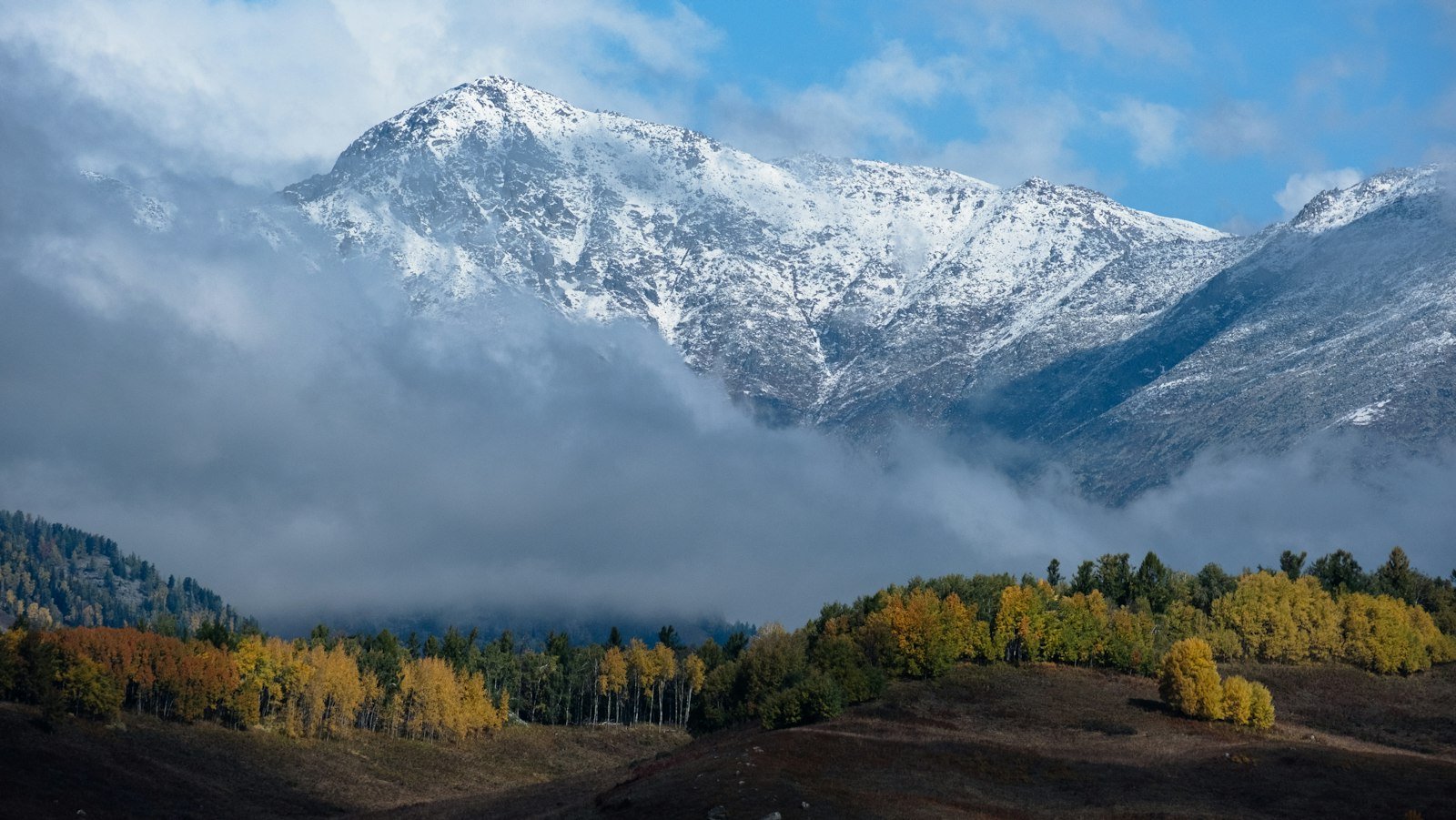
Altay Prefecture sits in the far north of Xinjiang. The gateway is Urumqi, and from there you fly or take the train; once you are in the prefecture, everything is by road.
- By air. Two airports serve the area. Burqin Kanas Airport (KJI) is the closer one, about an hour by road from Jiadengyu, the Kanas gateway. Altay Xuedu Airport (AAT), at Altay city, is about three and a half hours from the same point. Both take connections through Urumqi.
- By rail. Trains from Urumqi reach Altay and Beitun stations; from either you continue by car, taxi or a hired driver. Check the official 12306 app for your date rather than a printed timetable — bookings open only about two weeks ahead, and this is a long, popular line.
- By road. The regional network improved sharply on 30 June 2025, when four new highways opened at once, including the G681 link from Altay city towards Hemu and Kanas and the G217 from Altay to Burqin. Distances that once meant a long day are now shorter, but this is still big, empty country and you should plan fuel and daylight carefully.
If you are travelling from outside China: Altay is a long way from the main entry points, so most visitors route through Urumqi and fly the last leg. Two things matter more here than elsewhere on the site. First, Baihaba’s border-area rules — read the next section before you book anything. Second, the usual practical kit: a valid visa or visa-free entry, a payment app set up before you land, and train tickets booked against your passport. Our visa and entry guide, payment guide and train guide cover all three.
Tickets, hours and what is free
There are really only two ticket systems to understand: the Kanas reserve (which covers Kanas, Hemu and Baihaba together) and Caihong Bulake, which is separate. Prices below are the operator’s published figures, checked on 15 October 2026.
| What | Peak season (1 May – 15 Oct) | Off season (16 Oct – 30 Apr) |
|---|---|---|
| Kanas reserve — main ticket | ¥160 per person, valid 2 days | ¥80 |
| Hemu village | ¥50 | ¥25 |
| Baihaba village | ¥30 | ¥15 |
| Park shuttle — single entry | ¥70 | See winter notice |
| Park shuttle — two entries | ¥110 | See winter notice |
| Fish-Viewing Platform shuttle (观鱼台) | ¥20, separate | Seasonal |
| Bundle — single entry (ticket + shuttle) | ¥230 | — |
| Bundle — two entries | ¥270 | — |
| All-area ticket (Kanas + Hemu + Baihaba + all shuttles) | ¥375 | — |
| Winter all-area ticket | — | ¥100 per person, valid 3 days |
| Caihong Bulake | From ¥69 adult (OTA-listed); official price not published — confirm before travel | |
How to read this: if you are doing Kanas, Hemu and Baihaba on one trip, the all-area ticket at ¥375 is usually cheaper than buying the three separately and adding shuttles. If you are only visiting the lake and returning the same day, the single-entry bundle at ¥230 is the simple choice. Book through the reserve’s official channels — the Kanas Scenic Area and Yuanxingwang (原行网) WeChat accounts and mini-programs — and remember that Hemu requires a separate parking reservation for cars, booked the same way.
The border pass: what foreign visitors must arrange
This is the section to read twice. Baihaba is inside a border management area (边境管理区), the zone that runs along China’s land borders. Under the border-pass rules, anyone entering must hold valid identification and pass a police checkpoint — and a Kanas ticket, on its own, is not that document.
For Chinese residents the usual answer is the Border Management Area Pass (边境管理区通行证), applied for before travel. For foreign visitors, the same area is governed by stricter rules: you should expect to carry your passport and your accommodation registration (住宿登记表, the slip your hotel files for you), and to arrange the pass in advance rather than at the gate. In practice the reliable route is to make the arrangement through the local border authority or a licensed travel agency, and to do it days ahead rather than on the morning you intend to go. Do not assume you can turn up and pass through on a passport alone.
Bottom line: if Baihaba and the Yegende pasture are the reason for your trip — and for many fans they are — build the border pass into your planning from the start, not as an afterthought. If you would rather not deal with it at all, the rest of the list (Caihong Bulake, Kanas, Hemu) sits outside the border zone and needs nothing more than the ordinary tickets above. Requirements in border areas can change with the season; confirm the current procedure with your hotel, a licensed agency or the local border authority before you travel.
What a day actually costs
Altay is not a budget destination, but the costs are predictable. Accommodation is the big variable — a simple guesthouse room runs from a few hundred yuan a night, and the Caihong Bulake area’s own lodging has been reported in tiers from around ¥128 for a hostel bed to ¥588 for a room with a view of Batai’s tree, with a meal around ¥50. Transport is the other variable: without a car you are looking at a private driver or a tour, and that is the single largest line in most itineraries.
On the ground, a day that combines the Kanas reserve with a village stop comes to roughly ¥250–400 per person in tickets and shuttles alone in peak season — more if you add the all-area ticket and a night inside the reserve. A day at Caihong Bulake is far cheaper: one ticket, one meal, and no shuttle system to feed. Add food at ¥50–100 a day and you are looking at something like ¥400–700 per person per day once transport is shared, or roughly US$55–100 at a round ¥7 per US$1 (check the live rate). The landscape is the one thing that costs nothing at all.
Common questions
Where was My Altay filmed?
In Altay Prefecture, northern Xinjiang, mainly in Habahe County and Burqin County. The core filming area is Caihong Bulake in Habahe’s Qibar Town, now a rebuilt film-themed scenic area. The wider locations named in Chinese coverage are Baihaba and the Yegende grassland on the Kazakh border, Kanas Lake, and the Tuva village of Hemu, plus the Akeqi wetland. There is no studio to visit.
Is My Altay the same as To the Wonder?
Yes. 我的阿勒泰 is an eight-episode 2024 mini-series from CCTV and iQIYI, directed by Teng Congcong and adapted from Li Juan’s essay collection. It was released internationally as To the Wonder, while the book it is based on is often published in English as My Altay. Same show, two names.
Do I need a permit to visit Baihaba?
Yes. Baihaba is inside a border management area, so everyone entering passes a police checkpoint, and a normal attraction ticket is not enough. Chinese residents normally apply for a Border Management Area Pass; foreign visitors should carry their passport and accommodation registration and arrange the pass in advance through the local border authority or a licensed agency. Plan it days ahead, not on the day.
Is there a real Caihong Bulake, or is it just a set?
Both. The production filmed in the Habahe area, and the county then rebuilt the location as a proper scenic area, opened on 18 August 2025, with the show’s shop, tree and surrounding scenes reconstructed at 1:1. It is a real place you can visit, and it is honest about being a reconstruction of the drama’s world rather than the untouched original.
How much does Kanas cost?
The main Kanas ticket is ¥160 per person in peak season (1 May to 15 October), valid two days, and ¥80 off season. The park shuttle is separate: ¥70 for a single entry and ¥110 for two entries, making a single-entry bundle ¥230 and a two-entry bundle ¥270. If you are visiting Kanas, Hemu and Baihaba together, the all-area ticket at ¥375 usually works out cheaper. Buy through the reserve’s official WeChat channels.
Can I visit without a car?
Only with effort. There is no train or metro to any of these locations, and they are spread across a large, sparsely populated prefecture. The workable options are a licensed tour, a private driver, or — for Caihong Bulake specifically — the county’s weekend shuttle from Habahe county town. Everything else needs a vehicle and a driver.
When is the best time to go?
Late September to early October is the region’s signature season, when the birch and larch turn gold; it is also the busiest, so book early. Summer (June to August) is green, warm and the peak for the grassland. Winter brings snow, a much cheaper all-area ticket (¥100 for three days) and a ski season — but also closed passes and a much shorter list of open services. Check conditions before travelling outside the summer and autumn windows.
Is Altay worth it if I have not seen the show?
Yes, and it may be better that way. The drama is a good reason to go; the landscape is the reason to stay. Altay is one of the last genuinely wild corners of China — high pasture, deep forest, a lake that changes colour, and a border culture of Kazakh herders and Tuva villages — and the show simply pointed a camera at it. Three days covers the filmed locations; more days let you stop treating it as a checklist.
Your next move
Want another slow one?
If the pace of My Altay is what you liked, Dali — the setting of Meet Yourself — is the other show on the site that treats a place as the point.
Worried about the practical stuff?
Visas, payment, trains and the apps you will need before you land — the four things you cannot work out on the ground. Each guide is dated and sourced.
Ready to go?
My Altay was shot in open country, not on a set. See where Altay and the rest of the map sit.
Last verified
Sources: Altay Prefecture government (xjalt.gov.cn), 2026-10-08 — Caihong Bulake is the core filming location of My Altay; the reconstructed sets (Zhang Fengxia’s shop, Batai’s tree) · Altay Prefecture government, 2024-10-03 — National Day visitors at Caihong Bulake; the shop and Batai’s tree at Qibar Town, Jilin New Village, Habahe County · Altay Prefecture government, 2023-06-13 — getting to Kanas by rail, air and road; Jiadengyu gateway · Habahe County government (hbh.gov.cn), 2024-06-02 — weekend shuttle from Habahe county town to Caihong Bulake, ¥19.9 · Kanas Scenic Area management office (kns.gov.cn) — ticket tiers (Kanas ¥160 peak / ¥80 off; Hemu ¥50/¥25; Baihaba ¥30/¥15; peak 1 May–15 Oct) · Kanas Scenic Area management office — winter all-area ticket (¥100 / 3 days) and the Hemu parking-reservation rule · Kanas Scenic Area management office — border-area travel notice (valid ID and border pass at checkpoints) · Baidu Baike — My Altay (2024), 8 episodes, CCTV + iQIYI, dir. Teng Congcong, cast, premiere 7 May 2024 · Baidu Baike — Habahe County Caihong Bulake Scenic Area: Qibar Town, opened 18 Aug 2025, 3A standard, ¥100m investment · Douban 2024 year-end list and Altay regional news (altxw.com), 2024-12-31 — My Altay rated 8.9, highest-rated Chinese-language series of 2024 · Unsplash photo pages for the six photographs used, credited in the captions and the media library
Spotted something out of date? Email us — or read how corrections work. We check every report against the source and update the page.
Ready to plan it? Turn the dramas you have watched into a day-by-day route with the C-drama route planner.
Not sure where to start? Take the drama-city quiz — seven questions, one city, and a route waiting at the end.