
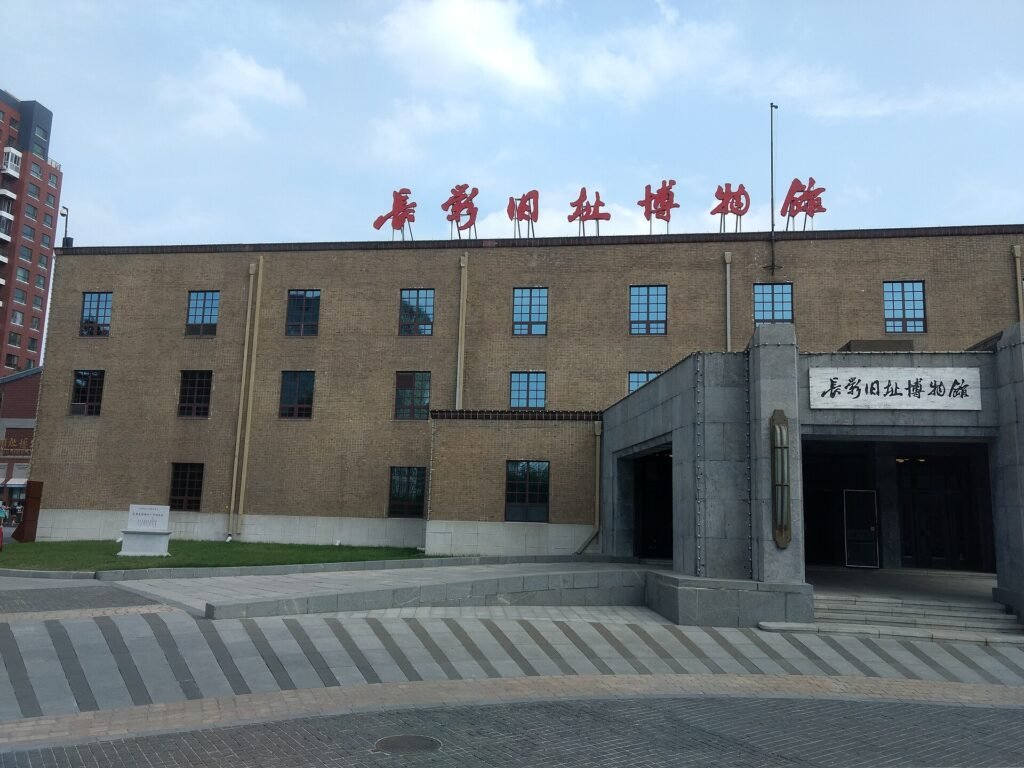
Every national cinema has an origin point, and for China it is a brick complex on Hongqi Street in Changchun, the capital of Jilin province in the north-east. Here, in 1945, the country’s first film studio was founded; here the first newsreel, the first cartoon and the first feature film of the People’s Republic were all made. The Changchun Film Studio is the cradle of Chinese cinema, and the city around it is now a film city you can walk — a studio museum, a 5A movie theme park, the locations of the hit drama A Lifelong Journey (人世间), and the palace where China’s last emperor lived as a puppet.
This is a different kind of filming-location guide. It is not one drama mapped onto one city; it is the city that built the industry. Changchun is where Chinese film began, and it still wears that history openly — in a preserved studio, in a film festival, in a public “film map” of sixty locations, and in streets that have stood in for half a century of television. If you have followed the other guides on this site from drama to city, this is the one that goes to the source.
The short answer: Changchun (长春) in Jilin is the home of Changchun Film Studio (长春电影制片厂), founded in 1945 as New China’s first film studio and known as “the cradle of Chinese cinema”. Visit the Former Site Museum of Changchun Film Studio (长影旧址博物馆, at 1118 Hongqi Street, around ¥90), the Changchun Movie Wonderland theme park (长影世纪城, a 5A park beside Jingyuetan), the Puppet Emperor’s Palace (伪满皇宫博物院, ¥70) and Jingyuetan (净月潭, ¥30). The 2022 CCTV drama A Lifelong Journey (人世间) was shot here. Changchun is about an hour from Harbin by high-speed rail and about four hours from Beijing.
The studio that started Chinese cinema
The story begins with a building that was never meant to be Chinese. On Hongqi Street stands a complex put up in 1937 as the headquarters of the Manchuria Motion Picture Corporation (株式会社满洲映画协会, known as Manying), the film arm of the Japanese puppet state of Manchukuo. Its studios were built in a German style, and for eight years they churned out propaganda. Then the war ended, and the same bricks were turned to a completely different purpose.
On 1 October 1945, the North-East Film Company (东北电影公司) was founded on the site — the first film studio under Communist leadership, with Yuan Muzhi (袁牧之) as its first director. The company was moved to Xingshan in Heilongjiang in 1946 and renamed the North-East Film Studio; it came back to Changchun, and on 28 February 1955 it took the name it is known by today: Changchun Film Studio (长春电影制片厂). In 1999 the studio was restructured into the Changying Group.
What makes the place matter is not the building but the output. Before the People’s Republic was even declared, the studio had already produced what film historians call its “seven firsts”: the first newsreel (Democratic North-East), the first puppet film, the first science film, the first animation, the first short feature, the first feature-length film (The Bridge) and the first dubbed foreign film. Later came the classics that most Chinese viewers grew up with — The White-Haired Girl (白毛女), Battle on Shangganling Mountain (上甘岭), Heroic Sons and Daughters (英雄儿女) and Five Golden Flowers (五朵金花). This is why Changchun is called, without exaggeration, “the cradle of Chinese cinema”.
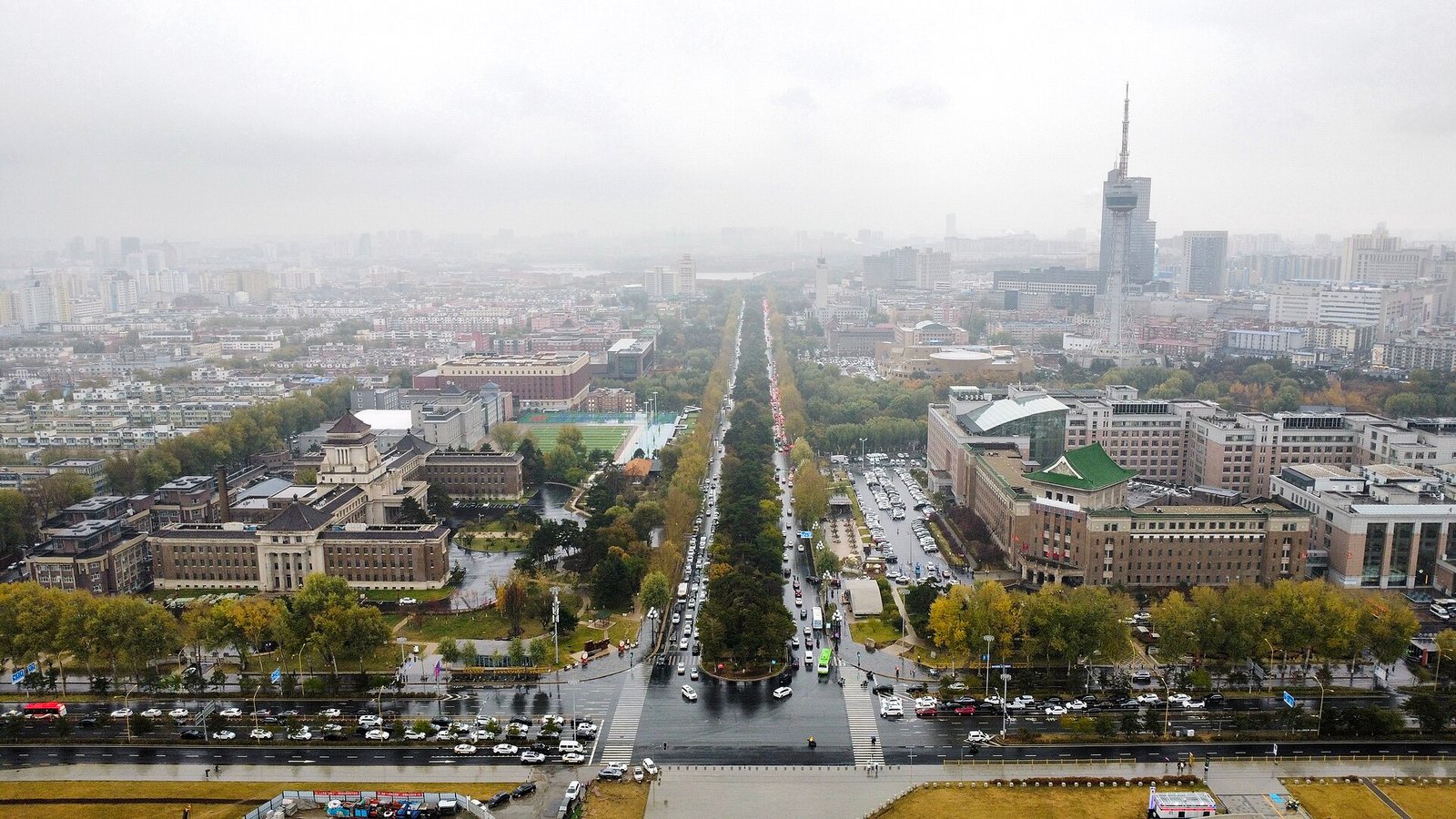
Changchun film locations at a glance
Changchun’s film sights fall into three groups: the studio and its theme park, the historical locations that dramas borrow, and the parks and streets that stand in for the city on screen. Here is the short list.
| Place | Where | Why it matters | Ticket |
|---|---|---|---|
| Former Site Museum of Changchun Film Studio (长影旧址博物馆) | 1118 Hongqi Street, Chaoyang | The studio where Chinese cinema began | ~¥90 |
| Changchun Movie Wonderland (长影世纪城) | Beside Jingyuetan, south-east | China’s first film theme park; national 5A | ¥240 / ¥198 |
| Puppet Emperor’s Palace (伪满皇宫博物院) | 5 Guangfu North Road, Kuancheng | Puyi’s court as puppet emperor of Manchukuo | ¥70 |
| Jingyuetan (净月潭) | South-east Changchun | Forest park; the dam in A Lifelong Journey | ¥30 |
| Nanhu Park & Culture Square (南湖公园 · 文化广场) | Central Changchun | Open city parks used again and again on screen | Free |
| FAW Museum (中国一汽博物馆) | Dongfeng Street, Qikai District | China’s first car plant; museum opened 2026 | Check locally |
Changchun Film Studio: the museum
The old studio is now the Former Site Museum of Changchun Film Studio (长影旧址博物馆), at 1118 Hongqi Street in the Chaoyang district, on the original 1937 site. It covers about 37,500 square metres, and what survives is remarkable: the sound stages, the film-printing workshop, the workshops and the props, kept much as they were, alongside exhibitions on the studio’s history and its stars. In 2022 the studio complex was listed as a Jilin provincial historic district.
This is the single best place in China to understand how the country’s film industry was built. You walk the same corridors where The White-Haired Girl and Heroic Sons and Daughters were made, past cameras, projectors and hand-painted posters, and through rooms set up as working sets. If you have ever wondered why Chinese cinema has its own visual language, this is where it formed.
Practical notes: admission is around ¥90 (students ¥45, and a reduced rate for visitors aged 60–64). Opening hours were extended on 19 October 2026 to 09:00 to 19:00, with last admission at 18:00 — announced by the city’s culture and tourism bureau on 17 October. Before that the museum closed at 17:00 in summer and 16:30 in winter, so older guides still carry those hours. It sits on the busy Hongqi Street commercial strip, so it is easy to combine with shopping and the 54 tram, a heritage tram line that runs through the district.
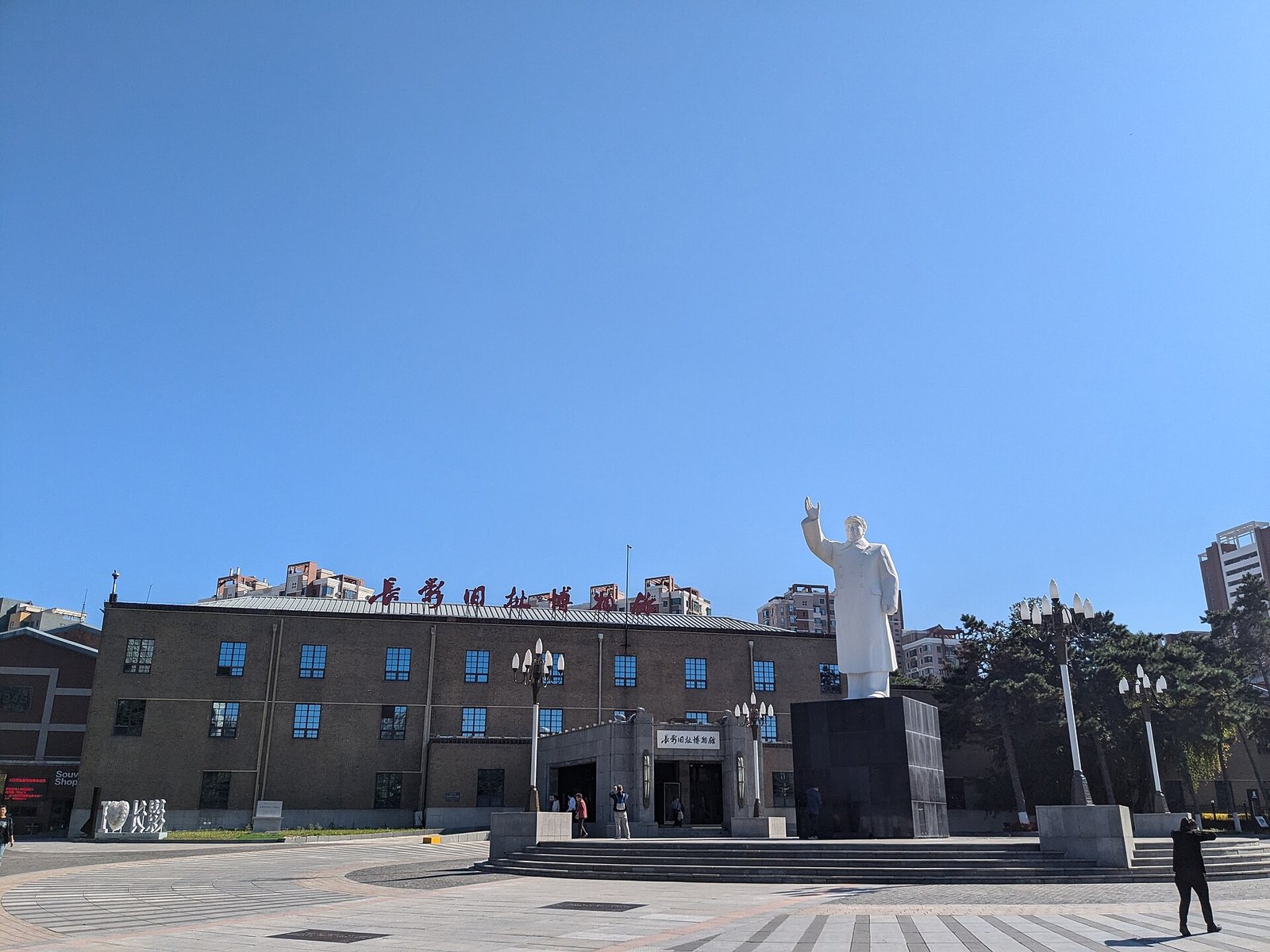
Changchun Movie Wonderland
Twenty minutes south-east of the studio, beside Jingyuetan, is Changchun Movie Wonderland (长影世纪城) — the studio’s second act. Opened as China’s first world-class film theme park and rated a national 5A scenic area, it is a full day out built around cinema: a flying dome cinema called Huaxia Soaring, a suspended roller coaster, a 3,000-square-metre props warehouse you can walk through, stunt and effects shows, and a large evening light-and-stage production that runs in the summer season.
It is not a working film set, and it does not pretend to be — it is a theme park with a film theme, aimed squarely at families and film fans. Tickets are ¥240 from 1 April to 31 October and ¥198 from 1 November to 31 March; there is a half-price window late in the day, and Tuesdays are half price except on public holidays. The park closes on Mondays for maintenance outside holiday periods, and some headline rides are ticketed separately. It is best paired with a Jingyuetan morning, since the two share the same corner of the city.
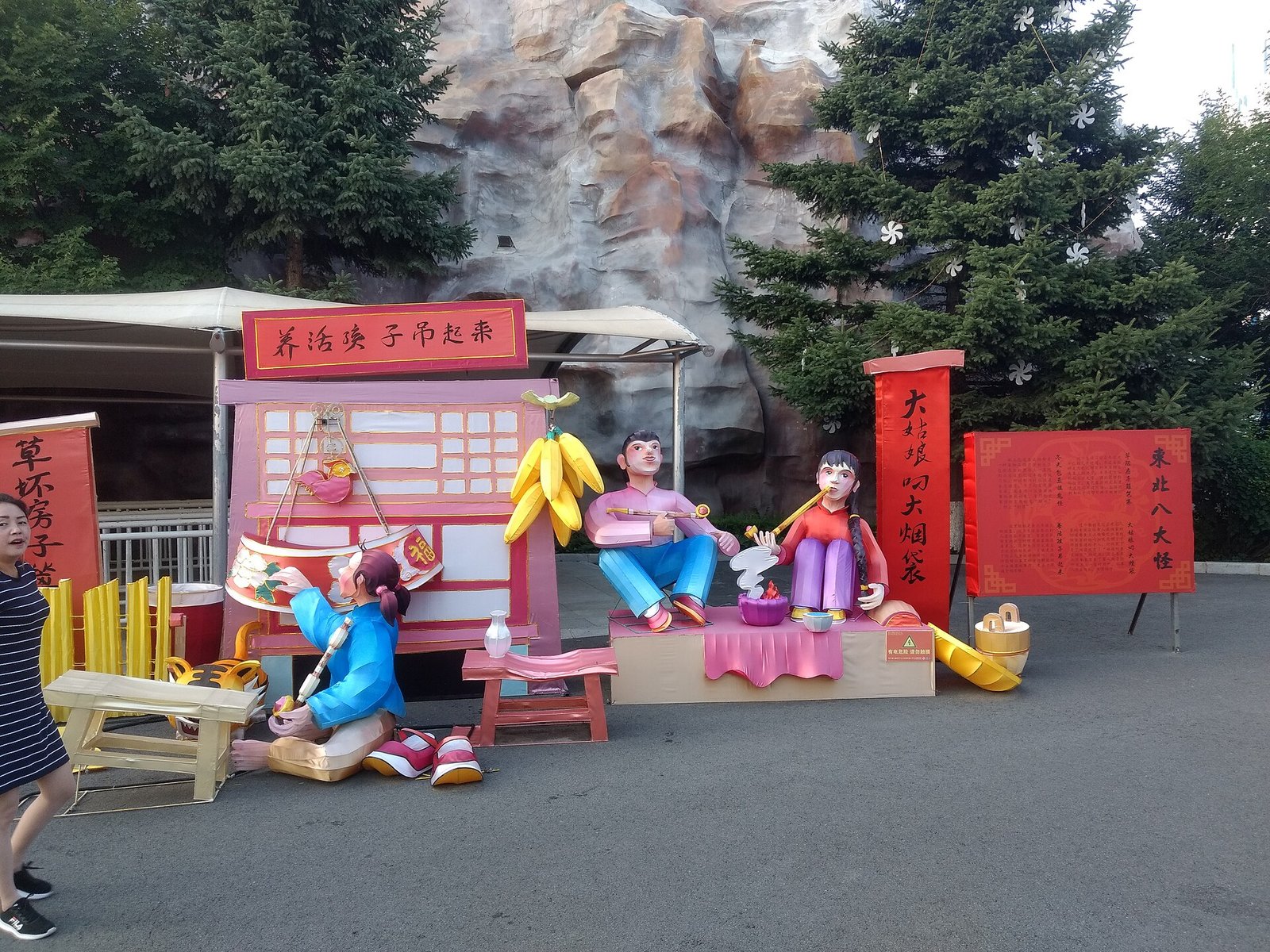
A Lifelong Journey: the drama’s locations
If the studio is Changchun’s past, A Lifelong Journey is its present on screen. The 2022 CCTV drama (人世间), adapted from Liang Xiaosheng’s Mao Dun Prize–winning novel, ran to 58 episodes and became one of the most-watched Chinese series of the decade. Directed by Li Lu and starring Lei Jiayin, Xin Baiqing, Song Jia and Yin Tao, it follows the Zhou family through fifty years of change, and it was filmed in Changchun in 2021.
The city’s culture and tourism bureau has published an official A Lifelong Journey route, which doubles as the best single itinerary for film fans: Jingyuetan → Changchun Water Culture Ecological Park → the Puppet Emperor’s Palace → Culture Square → Xinmin Street → Nanhu Park → the Former Site Museum of Changchun Film Studio, with a ride on the 54 tram in between. The most recognisable spot is the dam at Jingyuetan, the long empty road where Zhou Bingkun and Qu Xiuzhen talk on screen; in life it is a 555-metre dam, 19 metres high, across the reservoir. Nanhu Park, the city’s beloved backyard, appears too (and also in the animation Tea Ah Two).
One part of the drama is gone. The family’s neighbourhood, Guangzipian (光字片), was a built set erected inside hall 5 of the Changchun Agricultural Expo Garden — some 8,000 square metres of it, dressed with salvaged materials from demolished housing — and it was dismantled after filming. The exterior shots, however, were taken on real Changchun streets such as Tiebei First Road, and the red-brick blocks along Dongfeng Street that doubled for Zhou Rong’s flat are still standing. So you can walk the city that played the drama, even if you cannot walk the set.
It is far from the only production to use the city. The period drama The Young Marshal (少帅), about Zhang Xueliang, filmed at the Songyuan Hotel and around the old imperial quarter; the crime series Snow Labyrinth (雪迷宫) used the Russian consulate for its cold, watchful mood; and the animation Tea Ah Two (茶啊二中) set its world in Nanhu Park. This density is exactly why the city publishes a “Changchun Film Map” of around sixty locations, and why Changchun hosts a national film festival every August. If you are chasing a particular drama, check that map first — it is the closest thing China has to an official, city-wide answer to “where was this filmed?”.
The Puppet Emperor’s Palace
Changchun’s other great historical location is the Puppet Emperor’s Palace (伪满皇宫博物院) at 5 Guangfu North Road in Kuancheng, the compound where Puyi (溥仪), the last emperor of the Qing dynasty, was installed by the Japanese as the puppet emperor of Manchukuo and lived from 1932 to 1945. It has been a museum since 1962 and covers about 25 hectares, with the imperial living quarters, the audience halls and the underground air-raid shelter intact, plus exhibitions on the period.
It is a serious, sobering place rather than a pretty one, and it is the historical anchor of the city’s screen image — the period dramas set in the north-east all borrow its world. Admission is ¥70 (students ¥20). Opening hours run 08:30 to 17:20 from 16 April to 15 October and 08:30 to 16:50 in the winter season, with ticket sales stopping about an hour before closing. The simplest way to arrive is by metro: lines 3 and 4 to Weiman Huangong station (伪满皇宫站), then a five-minute walk.
One claim to treat carefully. Chinese travel writing sometimes says Bernardo Bertolucci’s Oscar-sweeping The Last Emperor (1987) was filmed at this palace. The film’s documented locations are the Forbidden City in Beijing — the first Western production ever allowed to shoot inside it — and the Cinecittà studios in Rome. Treat the Changchun claim as reported rather than confirmed, and come for the history, which needs no film to justify it.
Jingyuetan: the forest and the dam
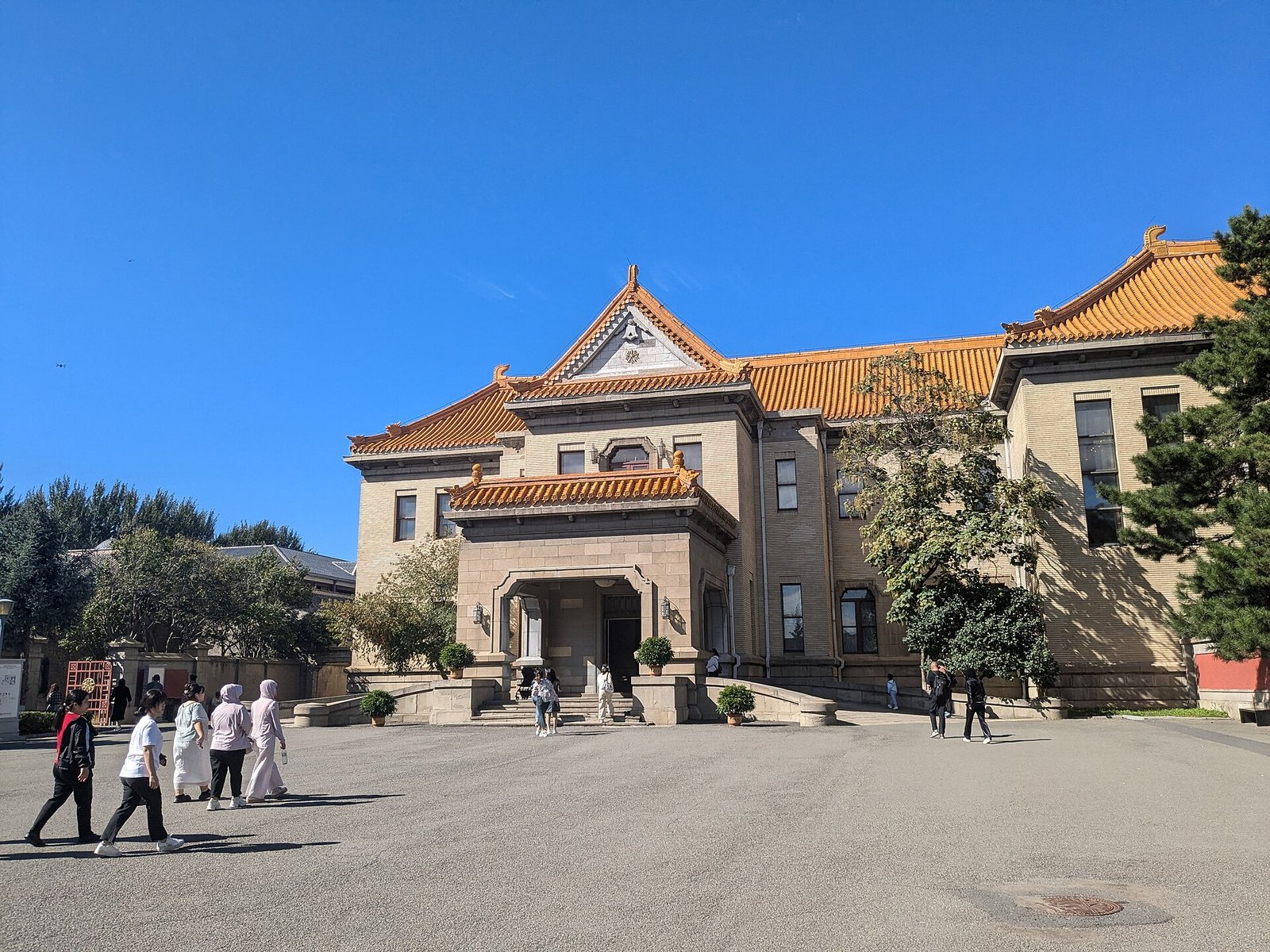
Jingyuetan (净月潭), the “Moon-in-the-Water Pool”, is Changchun’s green lung: a reservoir ringed by planted forest, about half an hour south-east of the centre and next door to both Movie Wonderland and the North-East Tiger Park. It is a national forest park, and it works in every season — walking and boating in summer, the famous autumn colour in late September and October, and a ski hill and snow sculptures in winter.
For film fans the draw is the dam, the 555-metre, 19-metre-high embankment that became one of A Lifelong Journey’s most quoted images, and the forest roads that stand in for the north-east in any number of productions. In winter the park hosts the Vasaloppet China cross-country ski festival, held here since 2003; the 24th edition, on 4 January 2026, drew more than 2,200 skiers from 33 countries. Admission is ¥30, with a sightseeing bus at ¥10 one way or ¥20 for a day pass and a cable car at the top end. It is a large park — give it half a day.
How we checked this guide
Four honest caveats, because they change how you should read everything above.
First, the famous set no longer exists. The A Lifelong Journey neighbourhood of Guangzipian was a temporary build inside an exhibition hall and was taken down after filming. If you come looking for it, you will not find it; what you can find are the real streets and buildings used for the exterior shots. We say so plainly rather than let a photo mislead you.
Second, the “cradle” is history, not a working backlot. Changchun Film Studio still exists as a company, but the old site is a museum and Movie Wonderland is a theme park. Do not expect to watch films being shot.
Third, scene-level attribution is reported, not official. The city publishes a “Changchun Film Map” of around sixty locations, and the tourism bureau lists an official A Lifelong Journey route, but no authority publishes a scene-by-scene list. Where we name a specific spot, we are following those published sources.
Fourth, prices and hours move. Everything quoted here is a published figure checked in October 2026 and should be reconfirmed before you travel, especially for the theme park, whose seasonal and promotional pricing varies widely.
Seeing Changchun in two or three days
Changchun is compact and its film sights cluster, so two days cover the essentials and three let you breathe.
Day one — the studio and the city centre. Start at the Former Site Museum of Changchun Film Studio on Hongqi Street (allow two to three hours), ride the 54 tram, then walk Nanhu Park and Culture Square, with its geology museum, and finish along Xinmin Street. This is the A Lifelong Journey core, all within a few metro stops.
Day two — history and industry. Morning at the Puppet Emperor’s Palace, then the Changchun Water Culture Ecological Park, and in the afternoon the new FAW Museum on Dongfeng Street, which tells the story of China’s first car plant and opened to the public in July 2026.
Day three — the parks. Give the day to Jingyuetan — the dam, the forest and, in winter, the ski hill — and add Changchun Movie Wonderland next door. In winter, this is the day to dress for; in late September and October, it is the day for colour.
Getting to Changchun
By air: Changchun Longjia International Airport (CGQ) is Jilin’s main gateway, about 30 km north-east of the city. It has its own rail station, Longjia, on the intercity line, with trains to central Changchun station in around fifteen minutes, plus buses and taxis.
By rail: Changchun sits on the Beijing–Harbin high-speed line. It is about one hour from Harbin West (second class roughly ¥119–132), around four hours from Beijing Chaoyang, and about an hour from Shenyang. The city’s high-speed station is Changchun West (长春西站), served by metro lines 2 and 6; Changchun station (长春站) is the older central station. There is also a fast intercity link to Jilin City in about 29 minutes.
Getting around: Changchun has a modern metro and light-rail network of eight lines, with more opening at the end of 2026. The studio, the palace, the parks and the main stations are all reachable by metro, and the heritage 54 tram is worth riding as an attraction in itself.
Tickets and opening hours
| Site | Ticket | Hours (check before travel) |
|---|---|---|
| Changchun Film Studio museum | ~¥90 (students ¥45) | 09:00–19:00, last entry 18:00 (from 19 Oct 2026) |
| Changchun Movie Wonderland | ¥240 (Apr–Oct) / ¥198 (Nov–Mar); Tuesdays half price | ~09:30–16:00/17:00; closed Mondays outside holidays |
| Puppet Emperor’s Palace | ¥70 (students ¥20) | 08:30–17:20 (peak) / 08:30–16:50 (winter) |
| Jingyuetan | ¥30 (+ bus ¥10/¥20; cable car extra) | Daily; seasonal hours, longer in summer |
| Nanhu Park / Culture Square | Free | Open all day |
Booking: two of these four need a reservation, and one of them is timed. The Puppet Emperor’s Palace (伪满皇宫博物院) sells timed, real-name slots through its own mini-program only — search “伪满皇宫博物院” in WeChat or Alipay, choose the area, the date and the time, enter every visitor’s document number, and pay on the day you go. Passport numbers are accepted alongside Chinese ID cards and Hong Kong/Macau/Taiwan permits, one document number holds one ticket per day, and slots open seven days ahead. You enter by scanning the QR code at the slot you booked; ticket sales stop at 16:40.
The Changchun Film Studio museum (长影旧址博物馆) has moved the same way: book through its official WeChat account or the “长影旧址博物馆售票” mini-program before you go — that is the channel the museum promotes, and the one that gives you a dated slot — with the ticket desk at the entrance as the fallback if the mini-program will not complete. Movie Wonderland and Jingyuetan are ordinary gate tickets — no booking, no time slot. The palace’s own rules are published at wmhg.com.cn.
What to know before you go
When to go. Changchun is a four-season city with sharp edges — our guide to the best time to visit China covers the national picture. Late September to October brings clear air and autumn colour; December to February is deep winter, with temperatures that can drop past −20 °C, and it is the season for the ski hill, the snow sculptures and the Vasaloppet festival. Summer is warm and green but busier at the parks.
Film festivals and maps. The Changchun Film Festival is held each August — the 21st edition ran from 23 to 28 August 2026, built around the theme “new era, new cradle, new strength” — and the city publishes a public Changchun Film Map of around sixty film locations, from the Puppet Emperor’s Palace to Nanhu Park. Changchun will also host the 33rd Winter World University Games in 2027, which is already reshaping the city’s winter infrastructure.
Language and logistics. English is limited outside hotels and the main sights; a translation app and screenshots of Chinese place names go a long way. Buy tickets through the official WeChat mini-programmes where you can (see our Alipay and WeChat Pay guide), and carry your passport — it is needed for museum entry and, for foreign visitors, for hotel registration.
Common questions
Where is Changchun Film Studio?
At 1118 Hongqi Street in the Chaoyang district of Changchun, Jilin province — the site of the original 1937 studio complex. It is now the Former Site Museum of Changchun Film Studio, and it is reachable by metro and by the 54 tram.
Can you visit Changchun Film Studio?
Yes. The old studio is open to the public as a museum, with the sound stages, printing workshop and props preserved. Admission is around ¥90, and hours are 09:00–19:00 with last admission at 18:00, extended from 19 October 2026. The working studio is not open to tourists, but the separate Changchun Movie Wonderland theme park is.
Where was A Lifelong Journey filmed?
The 2022 drama A Lifelong Journey (人世间) was filmed largely in Changchun, in Jilin province. The city’s official route takes in Jingyuetan, the Water Culture Ecological Park, the Puppet Emperor’s Palace, Culture Square, Xinmin Street, Nanhu Park and the Changchun Film Studio museum.
Can you visit the Guangzipian set from the drama?
No. The Guangzipian neighbourhood seen in A Lifelong Journey was a temporary set built inside a hall at the Changchun Agricultural Expo Garden, and it was dismantled after filming. The exterior scenes were shot on real streets, such as Tiebei First Road and the red-brick blocks on Dongfeng Street, which are still there.
Was The Last Emperor filmed in Changchun?
Not according to the film’s documented production. Bertolucci’s The Last Emperor (1987) was shot chiefly in the Forbidden City in Beijing and at Cinecittà in Rome. Chinese travel writing sometimes places it at the Puppet Emperor’s Palace in Changchun; treat that as reported rather than confirmed.
Is Changchun worth visiting for film fans?
Yes, and for a reason no other Chinese city can match: it is where the country’s film industry began. The studio museum, the theme park, the film festival, the city’s public film map and the locations of A Lifelong Journey make it the single best place to see how Chinese cinema was built — and it is an easy add-on to a Harbin or Beijing trip by high-speed rail.
How do you get to Changchun?
Fly into Changchun Longjia International Airport (CGQ), which has its own rail link to the city centre, or take the high-speed rail: about one hour from Harbin, one hour from Shenyang and four hours from Beijing, arriving at Changchun West or Changchun station.
What is the best time to visit Changchun?
Late September to October for autumn colour and clear skies, or December to February for the full winter experience — snow, the Jingyuetan ski hill and the Vasaloppet cross-country festival. August brings the Changchun Film Festival but also heat and crowds.
Your next move
Changchun is the origin story. Pair it with the two other north-east guides on the site — Harbin, the ice city that plays China’s coldest crime scenes, an hour away by rail, and the China ski resorts guide for the winter that follows. If you are building a trip, the high-speed rail planner shows how Changchun connects to Beijing, Shenyang and Harbin, and the drama index lists every series we have mapped to a city, with the region-by-region guide covering the rest of the country.
Last verified
Sources: Changchun Municipal Culture, Radio, Television and Tourism Bureau (wglj.changchun.gov.cn), 2026 — Changchun Film Studio as the cradle of New China’s cinema; the official A Lifelong Journey route (Jingyuetan → Water Culture Ecological Park → Puppet Emperor’s Palace → Culture Square → Xinmin Street → Nanhu Park → the studio museum); and Jingyuetan and Movie Wonderland opening information · Baidu Baike, "长春电影制片厂" (Changchun Film Studio) — founded on 1 October 1945 as the North-East Film Company with Yuan Muzhi as first director; moved to Xingshan in 1946; renamed Changchun Film Studio on 28 February 1955; the "seven firsts" of Chinese cinema · Baidu Baike, "长影旧址博物馆" (Former Site Museum of Changchun Film Studio) and Ctrip — address at 1118 Hongqi Street, Chaoyang; about 37,500 square metres on the 1937 site; admission around ¥90 (students ¥45); seasonal hours; listed as a Jilin provincial historic district in 2022 · Baidu Baike, "长春市长影世纪城" (Changchun Movie Wonderland) and the scenic-area guide — a national 5A area beside Jingyuetan; admission ¥240 from 1 April to 31 October and ¥198 from 1 November to 31 March; Tuesday half-price day; Monday closure for maintenance outside holidays · Baidu Baike, "人世间" (A Lifelong Journey) and Douban — the 2022 CCTV drama, 58 episodes, directed by Li Lu, starring Lei Jiayin, Xin Baiqing, Song Jia and Yin Tao, adapted from Liang Xiaosheng’s Mao Dun Prize novel and filmed in 2021 · Baidu Wenku and Baijiahao (2022) — the Guangzipian neighbourhood built as a set inside hall 5 of the Changchun Agricultural Expo Garden (about 8,000 square metres, using salvaged materials) and dismantled after filming; exterior scenes shot on real streets including Tiebei First Road and Dongfeng Street · Puppet Emperor’s Palace Museum (wmhg.com.cn) and the Changchun culture bureau — 5 Guangfu North Road, Kuancheng; a museum since 1962; about 25 hectares; admission ¥70 (students ¥20); peak-season hours 08:30–17:20 and winter 08:30–16:50; metro lines 3 and 4 · Baidu Baike, "瓦萨滑雪节" (Vasaloppet China) and the Changchun culture bureau — the cross-country ski festival held at Jingyuetan since 2003; the 24th edition on 4 January 2026 with more than 2,200 skiers from 33 countries; the Jingyuetan ski season · Changchun culture bureau and Baidu Baike, "第21届中国长春电影节" — the Changchun Film Festival held each August; the 21st edition from 23 to 28 August 2026, themed "new era, new cradle, new strength" · Baidu Baike, "长春电影地图" (Changchun Film Map) — a public map of around 60 Changchun film locations published with the film festival · 12306 and Ctrip — Changchun on the Beijing–Harbin high-speed line: about one hour from Harbin West (second class around ¥119–132) and about four hours from Beijing Chaoyang; the Longjia airport rail link · Baidu Baike, "长春轨道交通" and the Changchun culture bureau — eight metro and light-rail lines, with more opening at the end of 2026; lines 2 and 6 at Changchun West · National Immigration Administration (nia.gov.cn) — the 240-hour visa-free transit policy (57 nationalities, 24 provinces and 65 ports as of August 2026) and the advice to confirm current entry rules before travel · Baidu Baike, "中国一汽博物馆" (FAW Museum) and the Changchun culture bureau — opened to the public on 15 July 2026 on Dongfeng Street, in a 1953 tool workshop, with around 150 vehicles on display · Wikimedia Commons photo pages for the photographs used, credited in the captions and the media library
Spotted something out of date? Email us — or read how corrections work. We check every report against the source and update the page.
Ready to plan it? Turn the dramas you have watched into a day-by-day route with the C-drama route planner.
Not sure where to start? Take the drama-city quiz — seven questions, one city, and a route waiting at the end.