
China has skiing that almost no foreigner knows about: 800 metres of vertical in the northeast, and — in the far north-west — the largest lift-served drop in the country, on snow that squeaks. It took a television drama to make any of it visible, and the drama was shot almost entirely at one resort. Here is the short list of China ski resorts worth the trip.
The short answer: Ski into Love (嘘,国王在冬眠), China’s first ski-themed drama, was filmed in Jilin province and Xinjiang’s Altay prefecture — with every skiing scene shot at Beidahu near Jilin City. If you want to follow it, the anchor is Beidahu; the other end of the country holds Jikepulin, which has a 1,466-metre vertical drop, the greatest in China. Season runs roughly late November to late March in Jilin and to early April in Xinjiang. Avoid Chinese New Year week entirely.
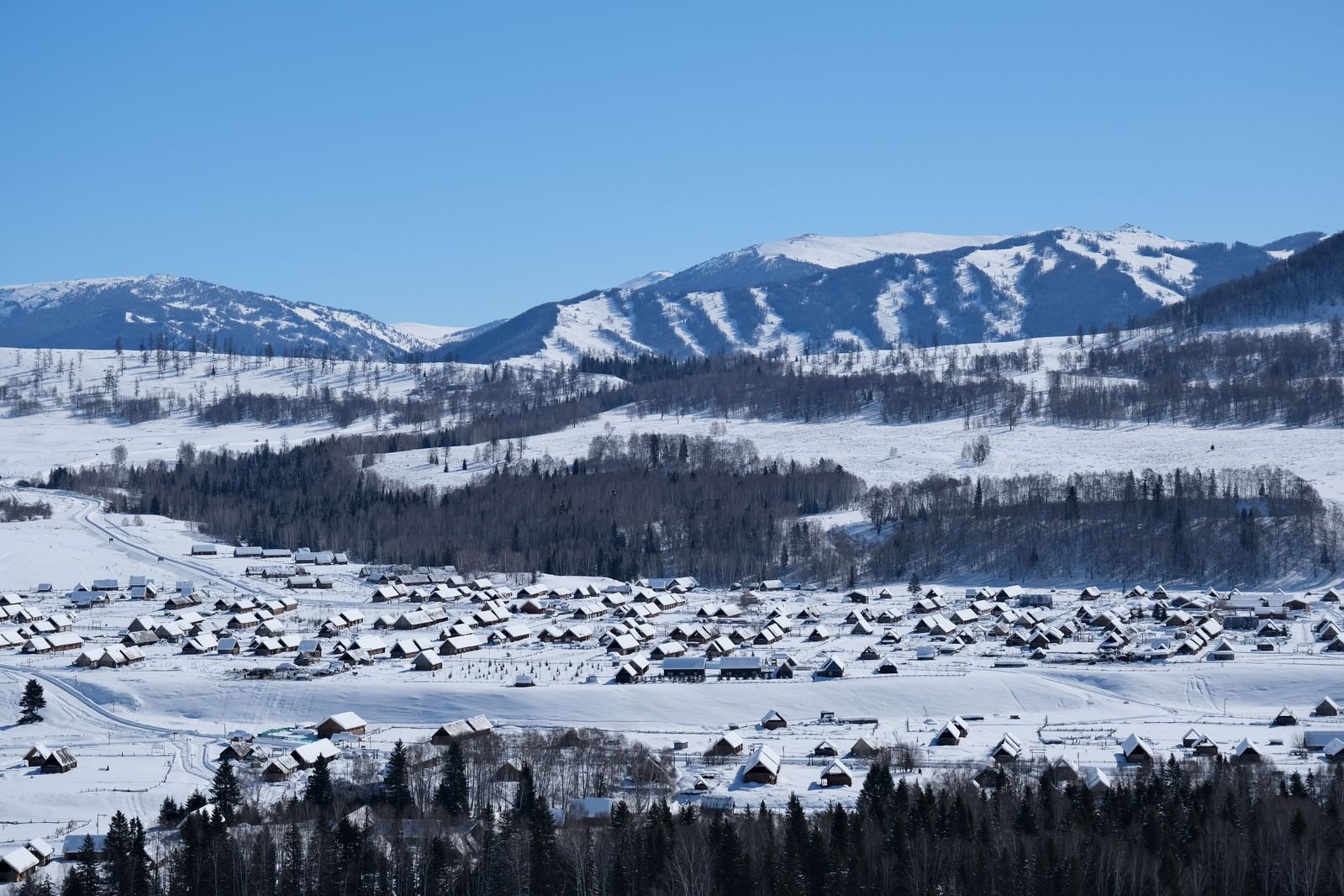
Photo: Leeinm / Wikimedia Commons, CC BY-SA 4.0
The drama that put Chinese skiing on screen
Ski into Love aired in March 2025 — a 23-episode romance starring Esther Yu Shuxin and Lin Yi, adapted from a web novel, about a cartoonist who loses her career and rebuilds it around snowboarding, and the former athlete who teaches her. It is a slight story told well, and it is worth knowing for one reason: it is the first Chinese television drama built around skiing, and the production said so itself.
What makes it useful for a traveller is that the makers were unusually specific about where they went. The show’s producer, Liu Ning, put it plainly: all of the skiing scenes were shot at Beidahu, with additional location work in Jilin City and the surrounding area. Filming began with an opening ceremony at the Beidahu ski area on 23 February 2024 and wrapped in June — a spring-to-summer shoot that caught the tail of the snow season and then the green mountain.
Four locations are credited across the run:
| Location | Chinese | Where | Role in the show |
|---|---|---|---|
| Beidahu | 北大湖滑雪度假区 | Jilin province, ~50 min from Jilin City | Every skiing scene. The main set |
| Lake Songhua | 松花湖滑雪度假区 | Jilin province, ~20 min from Jilin City | Second Jilin resort; the polished, resort-side scenes |
| Silk Road International | 丝绸之路国际滑雪场 | Urumqi, Xinjiang | The Xinjiang city resort |
| Jikepulin | 吉克普林国际滑雪场 | Burqin county, Altay, at Hemu | The big-mountain, deep-snow end of the trip |
There is one more piece of casting worth flagging: Wu Dajing, China’s Olympic short-track speed-skating champion, appears in the first six episodes. He is not a skier, and the show makes a joke of it — but for a Chinese audience it was the moment the drama announced that it was serious about winter sport.
Two Chinas, two kinds of snow at its ski resorts
Here is the thing that a drama filmed at one resort will not tell you: Chinese skiing is not one product. It is two, in two different parts of the country, and they are about as different as skiing gets.
Jilin, in the northeast, is the traditional heartland — the province shares the Dongbei cold pocket with Heilongjiang and produces the reliable, deeply cold, well-groomed skiing that Chinese skiers treat as the default. The snow is dry and preserved, natural snowfall is moderate (roughly one to two metres a season) and snowmaking fills the gaps, and the resorts are built around lifts, hotels and high-speed rail. This is where the drama was made, and it is the easier half of the country to visit.
Altay, in the far north-west of Xinjiang, is the other thing entirely. The storms that come off Siberia drop what riders call champagne powder — light, dry, and deep — on a range that sits on the same latitude band as Hokkaido with a fraction of the people. It is also, by archaeological consensus, the birthplace of skiing: petroglyphs found near Altay show humans on skis roughly ten thousand years ago. You are not skiing a resort carved out of a pasture last decade. You are skiing where the sport started.
If that sounds like a pitch, it is also the practical fork in the road. Jilin is where you go for a comfortable, well-run resort week with a rail connection. Altay is where you go for snow.
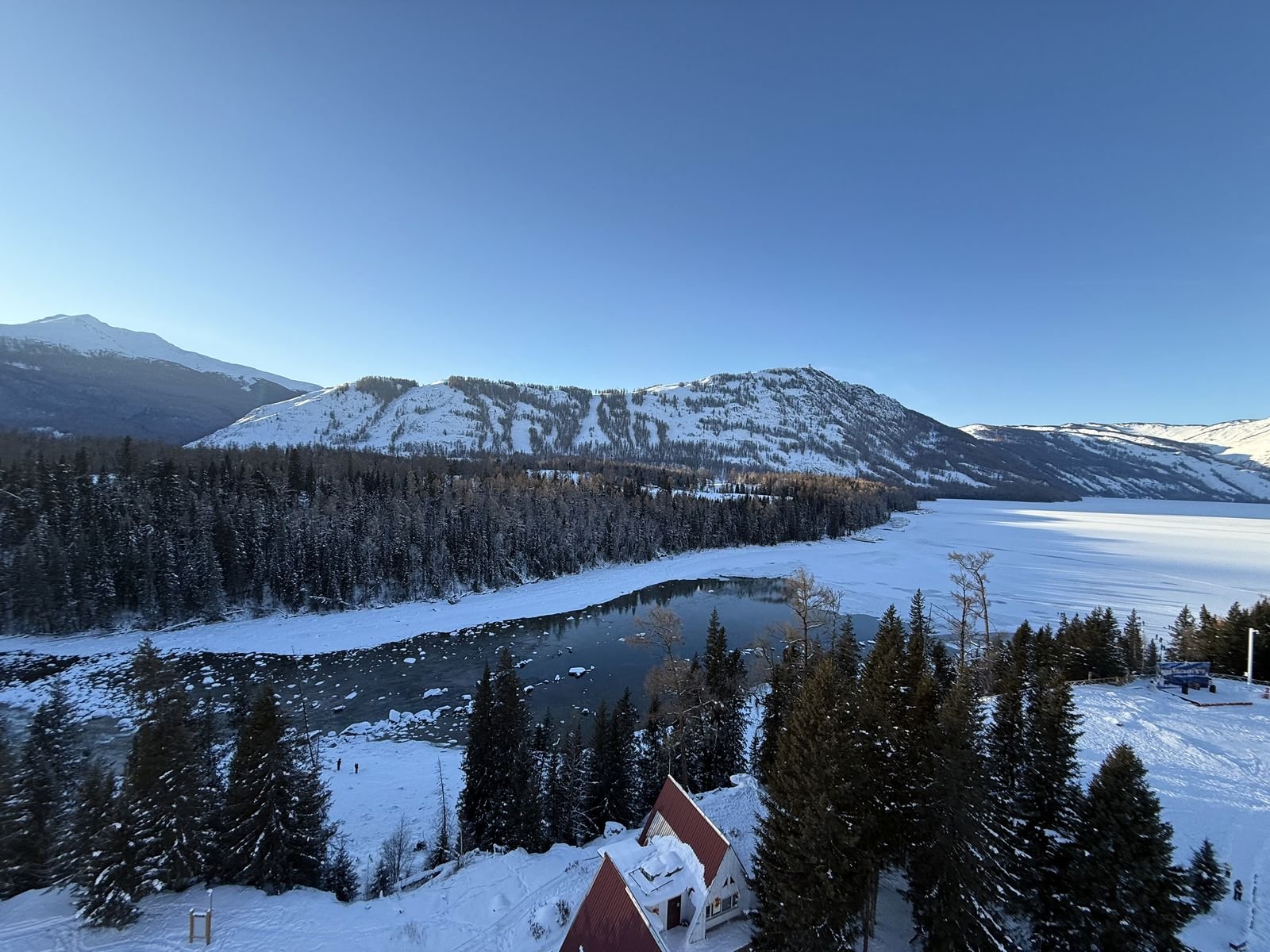
Photo: Pazakui / Wikimedia Commons, CC BY 4.0
The China ski resorts that matter
| Resort | Region | Vertical | Who it is for |
|---|---|---|---|
| Beidahu (北大湖) | Jilin, near Jilin City | ~800 m — the largest in eastern China | Strong intermediate and advanced skiers; the Ski into Love set |
| Lake Songhua (松花湖) | Jilin, near Jilin City | ~600 m | Families and mixed-ability groups; the easiest introduction |
| Changbaishan (长白山) | Jilin, on the North Korean border | Modest | Luxury hotels, hot springs and the volcano crater lake |
| Jikepulin (吉克普林) | Xinjiang, Burqin county, Altay | 1,466 m — the greatest in China | Powder hunters; the big-mountain end of the sport |
| Jiangjunshan (将军山) | Xinjiang, on the edge of Altay city | Moderate | Anyone based in Altay city; floodlit night skiing |
| Silk Road (丝绸之路) | Xinjiang, near Urumqi | Moderate | Short trips from Urumqi; the lowest-friction Xinjiang option |
Two numbers in that table deserve a moment.
The first is Beidahu’s roughly 800 metres of vertical, which is what the resort most often described as the best east of Urumqi is selling. It hosted the snow events of the 2007 Asian Winter Games and has grown its lift network substantially since, and the terrain includes genuine black pistes and gladed runs that hold snow for days. Its weaknesses are honest ones: the upper mountain catches wind, and English-language services are thin.
The second is Jikepulin’s 1,466 metres, which is not a marketing figure — it is the resort’s maximum drop, and it is the largest of any ski area in the country. Jikepulin sits inside the Kanas scenic area at Hemu, in Burqin county, with its high point at 2,848 metres and a master plan covering more than 5,000 hectares. It opened at the end of 2021 and was formally designated a national ski tourism resort by the Ministry of Culture and Tourism in February 2024. The combination — that much vertical, that much snow, inside a protected alpine valley — is why Altay has become the answer Chinese skiers give when you ask where the good snow is.
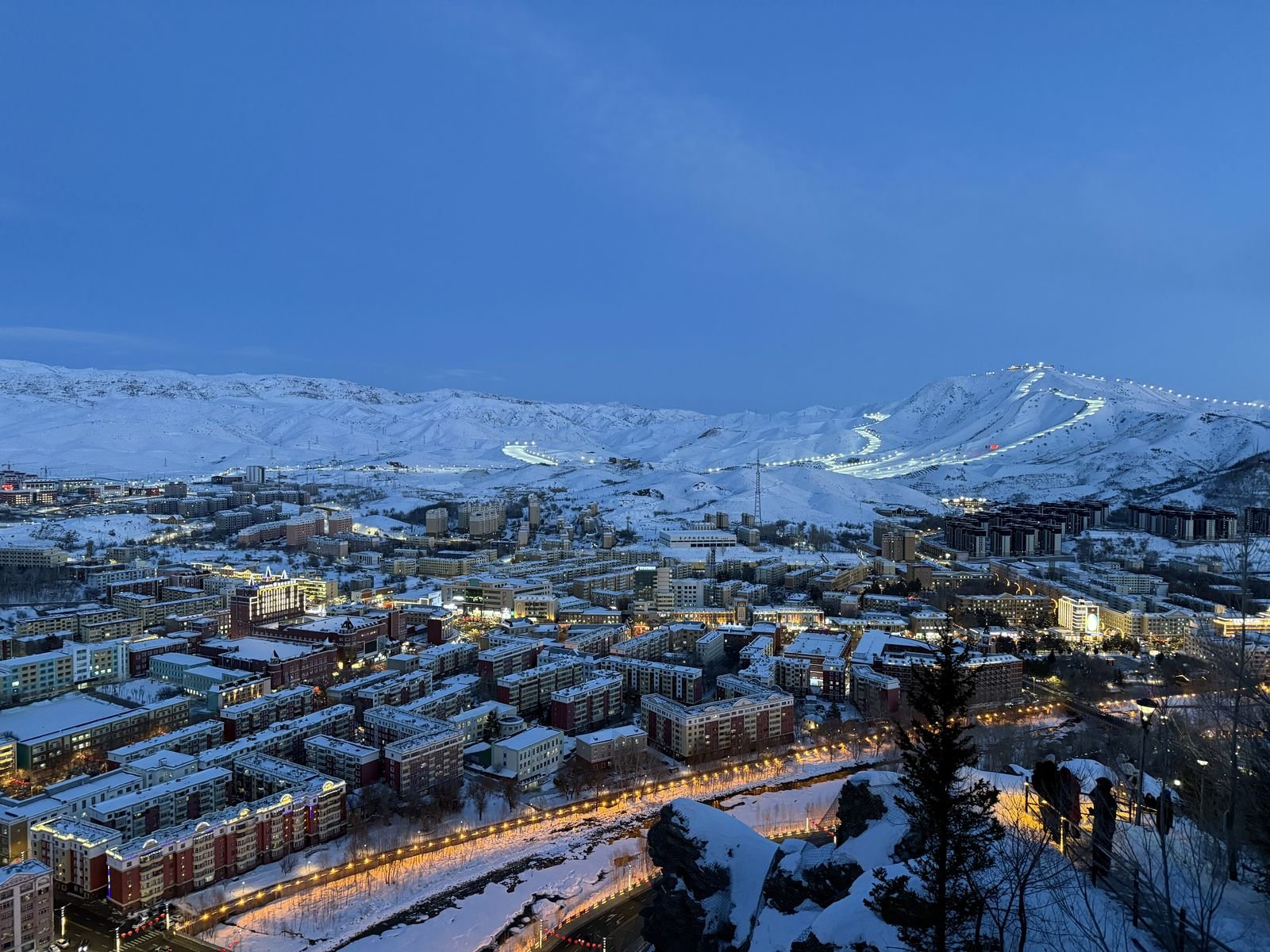
Photo: Pazakui / Wikimedia Commons, CC BY 4.0
Season and timing
The seasons do not match, which matters if you are trying to combine the two regions.
- Jilin: mid to late November through late March. Beidahu and Lake Songhua typically run lifts from around 09:00 to 16:30.
- Xinjiang: roughly late November to early April, with the reliable deep-snow window in January and February.
- The best weeks are mid-December to mid-January for full terrain and a festival atmosphere, or late February for a still-deep base with milder air.
- Do not come for Chinese New Year. It is the peak of domestic travel: prices roughly double, the lifts queue, and the resorts fill with people who ski once a year.
Be ready for the cold. January daytime highs in Jilin of minus 12 to minus 20°C are normal, and Xinjiang’s dry cold gets colder. This is interior-Canada weather, not alpine weather, and the payoff is that the snow stays fast and the corduroy stays edgeable all day.
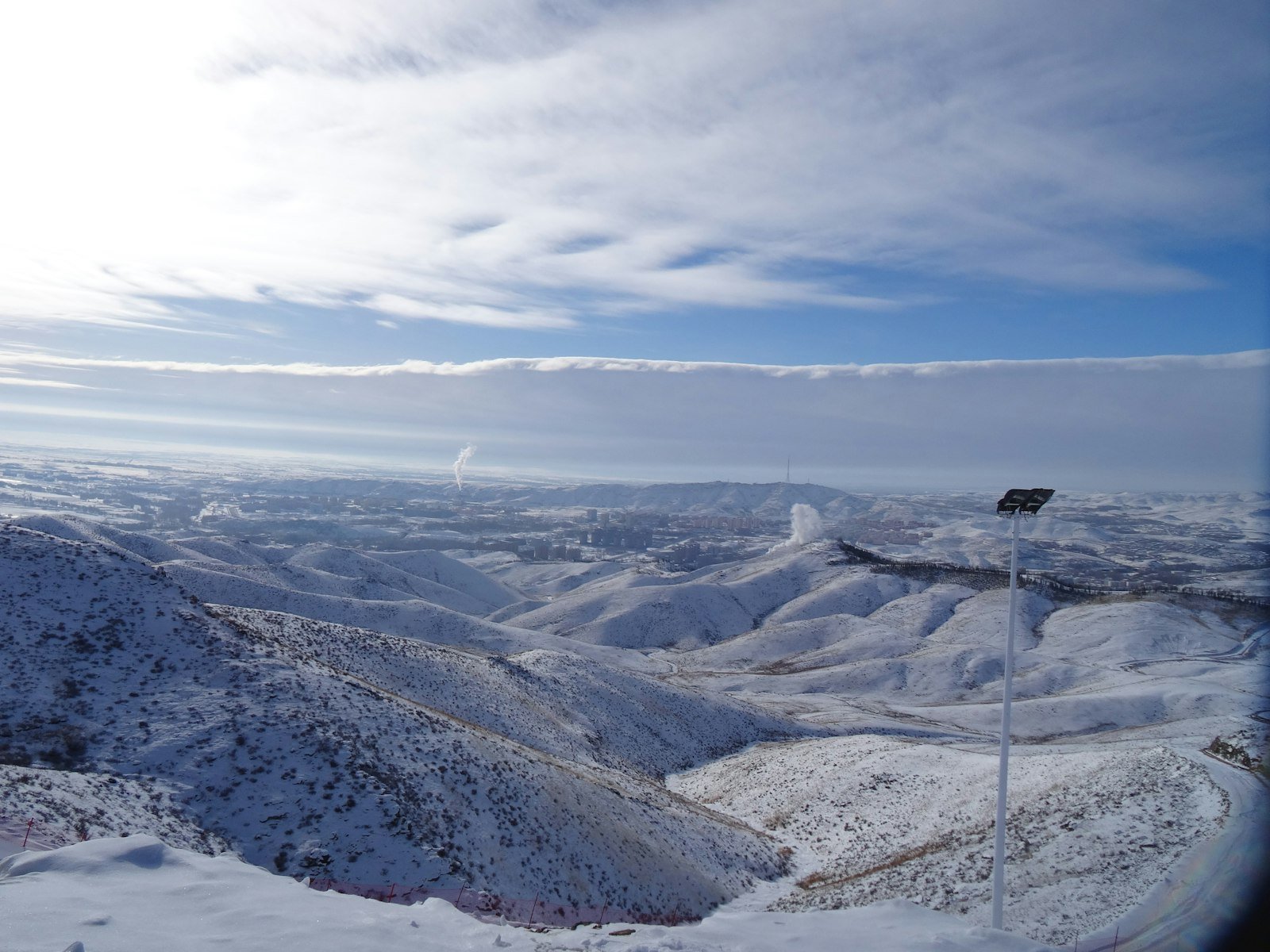
Photo: Mmoka / Unsplash
What it costs
Chinese resort skiing is cheap by international standards, and this is one of the few places in the sport where that is still true.
| Item | Typical cost | Notes |
|---|---|---|
| Lift ticket | ¥360–560 per day | Jilin resorts; multi-day passes reduce this |
| Lodging, slope-side mid-range | ¥350–700 per night | Club Med and the five-star Changbaishan properties start around ¥1,500 with meals |
| Equipment rental | ¥120–220 per day | Quality at the big northeast resorts is the best in the region |
| English ski lessons | Book ahead | Available at the larger resorts; instructors are limited |
Those figures are the range that a specialist China ski guide publishes for Jilin and should be read as indicative rather than official — resort pricing moves with the season, the package and the booking channel. Treat the operator’s own booking page as the authority, as always.
Getting there
The two regions are a flight apart, and neither is hard to reach.
- For Beidahu and Lake Songhua: fly to Changchun (CGQ), then 60 to 90 minutes by road, or take high-speed rail to Jilin City and continue from there. Changchun and Jilin City are both on the northeast high-speed network with direct trains to Harbin, Shenyang and Beijing.
- For Changbaishan: the volcano resorts have their own airport (NBS).
- For Urumqi and the Tianshan resorts: fly to Urumqi, which has the international airport and the widest choice of hotels. Silk Road and the other Tianshan resorts are within an hour or two of the city.
- For Altay: fly to Altay — the city has its own airport — or take the long overland route from Urumqi. Jiangjunshan is on the edge of Altay city; Jikepulin and Hemu are a further drive into the mountains.
See our high-speed rail guide for how booking works with a passport, and the apps guide for the maps and translation tools you will want off the coast.
Visiting as a foreign visitor
This is the section that matters most, because Chinese skiing is built for a domestic market and the friction is real.
- English is limited, and it is the single biggest difference between resorts. Lake Songhua is the exception: its Club Med village bundles English-speaking instructors, childcare, lift passes and meals into one price, which removes almost every obstacle at once. It is the easiest ski resort in the northeast for a first-time visitor to China. Beidahu, by contrast, has the better mountain and almost no English service.
- Your passport is your ID. Lift passes, hotels and any real-name booking key off an identity document. Carry the original — automated gates do not always open for a passport, and a photograph on a phone will not do.
- Set up Alipay or WeChat Pay before you fly. Resort payments, lift passes and rentals increasingly assume a phone. See the payment guide.
- Rent rather than fly with gear if you are unsure. Rental is inexpensive and the quality at the big resorts is good. If you are fussy about boots, bring your own.
- Some mountain areas near the border need an additional permit. If your itinerary goes beyond the resorts towards the frontier zones, check the current requirements before you book. See the visa and entry guide.
- Altitude is a real factor in Xinjiang. Jikepulin’s high point is 2,848 metres. If you are arriving from sea level, give yourself a day.
- Bring a spare camera battery and keep it warm. At minus 20°C, batteries die faster than you expect, and this is the one trip where the photographs are the point.
The honest summary: if you want a comfortable resort week with English service and a rail connection, book Lake Songhua and treat Beidahu as a day trip. If you want the snow the drama was pretending to show you, fly to Altay, accept that you will be pointing at things, and go.
How many days, and how to split it
Five to seven days lets you ski one region properly and keep a rest day. Three days is enough for a single resort if that is all the time you have.
- A Jilin week: three days at Beidahu for the vertical and the glades, two at Lake Songhua for easier groomers and resort comfort, and a rest day in Jilin City — which in deep winter is worth a morning of its own for the rime ice that coats the trees along the Songhua River.
- A Xinjiang week: arrive in Urumqi, ski the Tianshan resorts for two days, fly north to Altay, ski Jiangjunshan and Jikepulin, and finish with a soak in a hot spring. Local food — laghman noodles, big-plate chicken, fresh naan — is a large part of the trip.
- Both regions in one winter is the version serious skiers increasingly do, and the contrast between northeast corduroy and Altay powder is the fastest way to understand what Chinese skiing actually is.
Common questions
Where was Ski into Love filmed?
At Beidahu and Lake Songhua in Jilin province, plus Silk Road International in Urumqi and Jikepulin in Altay. The producer confirmed that all of the skiing scenes were shot at Beidahu.
Is China good for skiing?
For groomed resort skiing, yes — Jilin’s resorts are well built and remarkably good value. For powder, Altay is genuinely world class and almost empty by international standards. What China does not yet have is the English-language service and chalet culture of the Alps or Japan.
Which Chinese resort has the biggest vertical drop?
Jikepulin, in Altay, with 1,466 metres. Beidahu’s roughly 800 metres is the largest in eastern China.
Do I need a visa to ski in China?
Most foreign visitors to China now arrive visa-free. Some mountain areas near the border require an additional permit. Check the current rules before you book — see the visa guide.
Can I ski in China without speaking Mandarin?
At Lake Songhua’s Club Med, comfortably. Elsewhere, expect to manage with translation apps, saved Chinese place names and patience. Have your accommodation address and the resort names written in Chinese characters.
When is the best time to ski in China?
Mid-December to mid-January, or late February. Avoid Chinese New Year week.
Your next move
Worried about the practical stuff?
Visas, payment, trains and the apps you’ll need before you land — the four things you cannot work out on the ground. Each guide is dated and sourced.
Ready to go?
Ski resorts need a different length of trip. The planning guide sizes each option.
Last verified
Sources: Encyclopaedic reference for 吉克普林国际滑雪场 (Jikepulin International Ski Resort) — located in Hemu township, Burqin county, Altay prefecture, Xinjiang, inside the Kanas 5A scenic area; maximum elevation 2,848 m; maximum vertical drop 1,466 m, described as the greatest of any ski area in China — https://baike.baidu.com/item/吉克普林国际滑雪场/64002760 · Burqin County People's Government — Hemu (Jikepulin) International Ski Resort: master plan area of 5,129 hectares, near-term planning area 3,128 hectares, in Hemu township within the Kanas scenic area — https://brj.gov.cn/lybej/006006/20260415/9e62eb15-9824-455e-847a-ee128358e4a6.html · Reference record for 吉克普林滑雪旅游度假地 — formally designated a national ski tourism resort by the Ministry of Culture and Tourism on 8 February 2024 — https://baike.baidu.com/item/吉克普林滑雪旅游度假地/64057794 · Filming locations for 嘘,国王在冬眠 (Ski into Love) — the four credited locations are Jilin Beidahu Ski Resort, Jilin Lake Songhua Ski Resort, Urumqi Silk Road International Ski Resort, and Jikepulin International Ski Resort with the Hemu scenic area in Altay. Producer Liu Ning is quoted saying that all of the skiing scenes were shot at Beidahu. Filming began with an opening ceremony at Beidahu on 23 February 2024 and wrapped on 20 June 2024 — https://www.sohu.com/a/870083893_121386447 · Specialist English-language China ski guide, Jilin province — Beidahu vertical drop of around 800 m, described as the largest in eastern China; Beidahu hosted the snow events of the 2007 Asian Winter Games; Lake Songhua vertical of around 600 m with a Club Med village and English-speaking instructors; season mid/late November to late March; lift tickets ¥360–560 per day, slope-side lodging ¥350–700 per night, rentals ¥120–220 per day; January daytime highs of −12°C to −20°C; avoid Chinese New Year week. Used here as a range and labelled indicative rather than official — https://www.xinjiangski.com/china-ski-jilin-guide/ · Specialist English-language China ski guide, Xinjiang — the Altay powder belt, the Tianshan groomer resorts around Urumqi, Jiangjunshan on the edge of Altay city, the season running roughly late November to early April with January–February the reliable deep-snow window, and the roughly 10,000-year-old petroglyphs near Altay depicting humans on skis — https://www.xinjiangski.com/xinjiang-skiing-guide/
Spotted something out of date? Email us — or read how corrections work. We check every report against the source and update the page.
Ready to plan it? Turn the dramas you have watched into a day-by-day route with the C-drama route planner.
Not sure where to start? Take the drama-city quiz — seven questions, one city, and a route waiting at the end.