
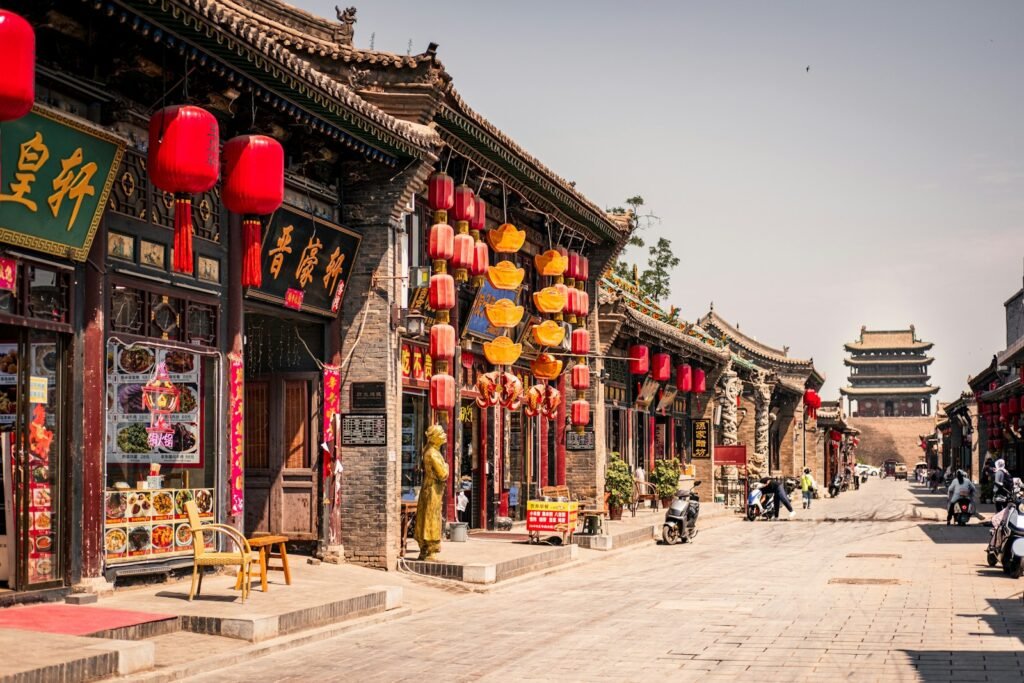
Most of the dramas on this site were shot in a place you can name and book a ticket to. The Knockout is the same, with one twist. Its story unfolds in Jinghai, a city that does not exist, and the show invented a name for the street at its centre: Old Factory Street. Both are fictional. The place underneath them is not. The 2023 crime drama — 狂飙, released internationally as The Knockout — was shot almost entirely in Jiangmen, a real city on the Pearl River Delta in Guangdong. Its The Knockout filming locations are not a backlot: they are a working old town where people still live, a 1931 courtyard village an hour to the south, and the watchtower country of Kaiping beyond it.
The short answer: The Knockout (狂飙) was filmed in Jiangmen, Guangdong — above all in the Changdi Historic District (长堤历史文化街区) in the city centre, whose Sanshisan Xu Street (三十三墟街) and Qiming Li (启明里) stand in for the show’s “Old Factory Street”. Scenes were also shot across Taishan (Mei Courtyard, Taicheng Artificial Lake, Beifeng Mountain, the coast at Haiyan) and in Kaiping, whose UNESCO diaolou watchtowers appear in the series. The old town is free and open; the Kaiping diaolou are ticketed. Jiangmen is 30–40 minutes by high-speed rail from Guangzhou, and since 11 October 2026 Taishan has had a direct train to Hong Kong West Kowloon.
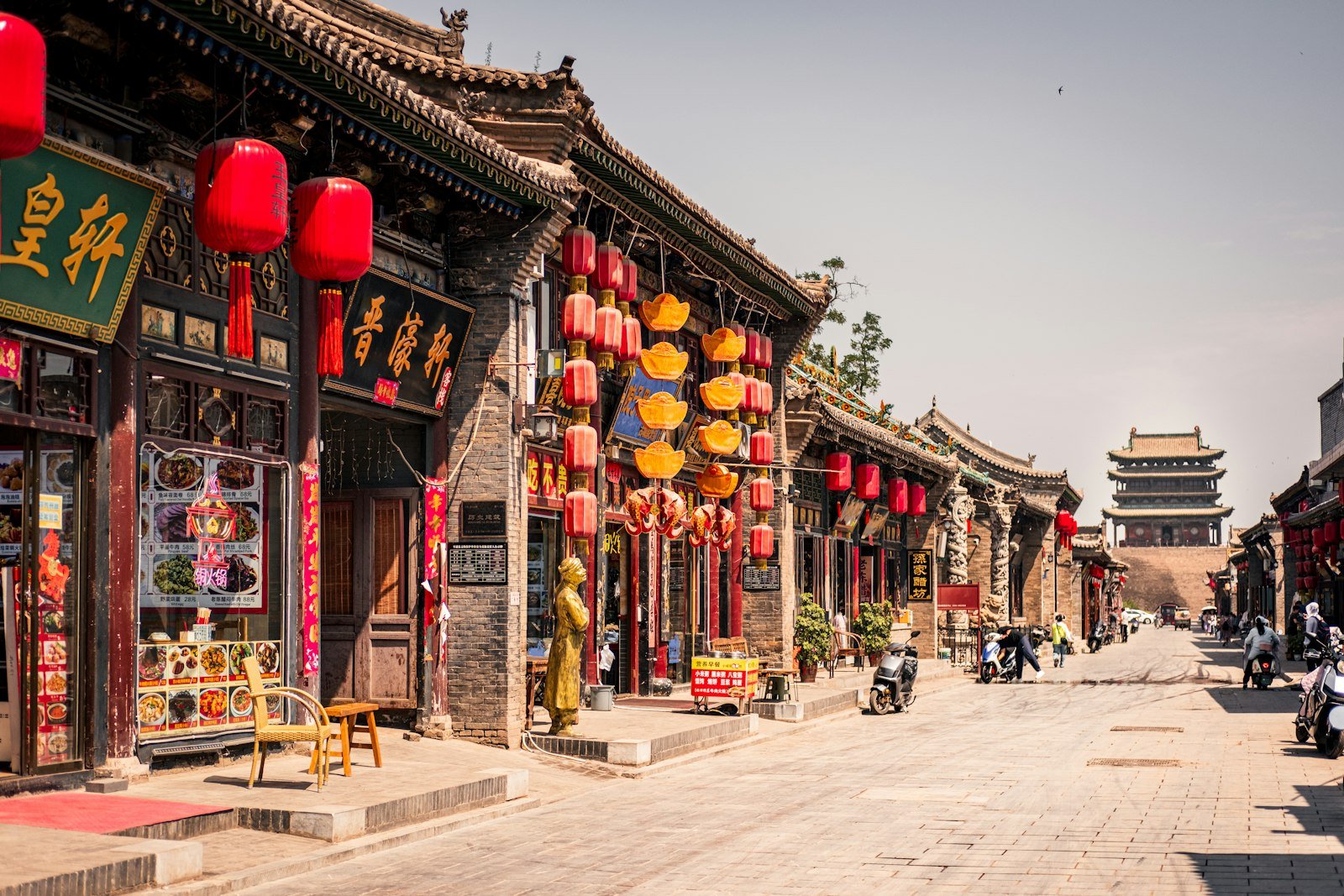
The drama that turned a quiet city into a film set
The Knockout is a thirty-nine-part crime drama that premiered on CCTV-8 and iQIYI on 14 January 2023, directed by Xu Jizhou (徐纪周) and starring Zhang Yi (张译) as the detective An Xin and Zhang Songwen (张颂文) as the gangster Gao Qiqiang. It follows the two men across twenty years, from a fishmonger’s stall to a criminal empire, and it became one of the most-watched Chinese series of the decade: a Douban score of 8.5 from more than 600,000 ratings, and a CCTV ratings peak above 3.
What matters for a traveller is where it was made. The production needed somewhere with the texture of twenty years of a southern Chinese city — old streets, colonial-era shophouses, a waterfront. It found all three in Jiangmen, a low-rise port city about an hour west of Guangzhou that had quietly been a filming destination for years. Between 2016 and 2020 alone, more than twenty films and TV dramas were shot there, drawn by the same thing the drama’s producers wanted: whole districts of arcaded buildings that were never torn down and rebuilt.
The effect was immediate. According to the travel platform Ctrip, searches for Jiangmen rose 163 per cent in the fortnight after the show began airing, and bookings for Jiangmen tours rose 121 per cent. Chinese media started calling it the “city of The Knockout”, and the city’s own tourism bureau folded the show into its campaigns — a push that was later recognised by Guangdong’s provincial culture-and-tourism department as one of its best cases of the year.
The Knockout filming locations at a glance
Every location below is in Jiangmen prefecture. The first three are in the city centre and can be walked in one morning; Taishan and Kaiping need a car, a driver or a train.
| Location | Where | What it stood for in the show | Cost |
|---|---|---|---|
| Changdi Historic District (长堤历史文化街区) | Pengjiang District, Jiangmen city centre | The show’s “Old Factory Street”; the arcaded streets and riverside quays | Free |
| Sanshisan Xu Street (三十三墟街) | Inside Changdi, Pengjiang | Gao Qiqiang’s pager shop and the pig-trotter noodle stall; the thirty-three stone steps | Free |
| Qiming Li (启明里) | East end of Changdi, 10 min on foot from Sanshisan Xu Street | Back-street and village exteriors | Free |
| Mei Courtyard (梅家大院) | Duanfen Town, Taishan | The rooftop fall scene between Li Xiang and Gao Qisheng | Free |
| Taicheng Artificial Lake (台城人工湖) | Taishan city | The pavilion where An Xin and Meng Yu break up | Free |
| Beifeng Mountain (北峰山) | Taishan, inland | Villa scenes | Park ticket |
| Qingshanju, Haiyan (海宴镇青山咀) | Taishan coast | The seaside secret meeting; the lighthouse behind it | Free |
| Kaiping diaolou (开平碉楼), e.g. Zili Village | Tangkou Town, Kaiping | Watchtower-village scenes | Ticketed |
Changdi: the real “Old Factory Street”
Start here, because this is the show’s centre of gravity. The Changdi Historic District is the old waterfront of Jiangmen, a band of arcaded streets running about 1.5 kilometres along the north bank of the Pengjiang River, from Pengjiang Bridge in the east to the Jiangmen Iron Bridge in the west. It is the city’s origin point: a market town from the Ming dynasty that was formally opened as a treaty port in the early 1900s, when hundreds of Chinese-and-Western qilou shophouses went up along the water. The district covers roughly 0.8 square kilometres and holds more than 5,400 buildings, of them 71 officially protected historic structures and more than 1,000 surviving arcades — a concentration that the provincial housing authority calls rare in southern China.
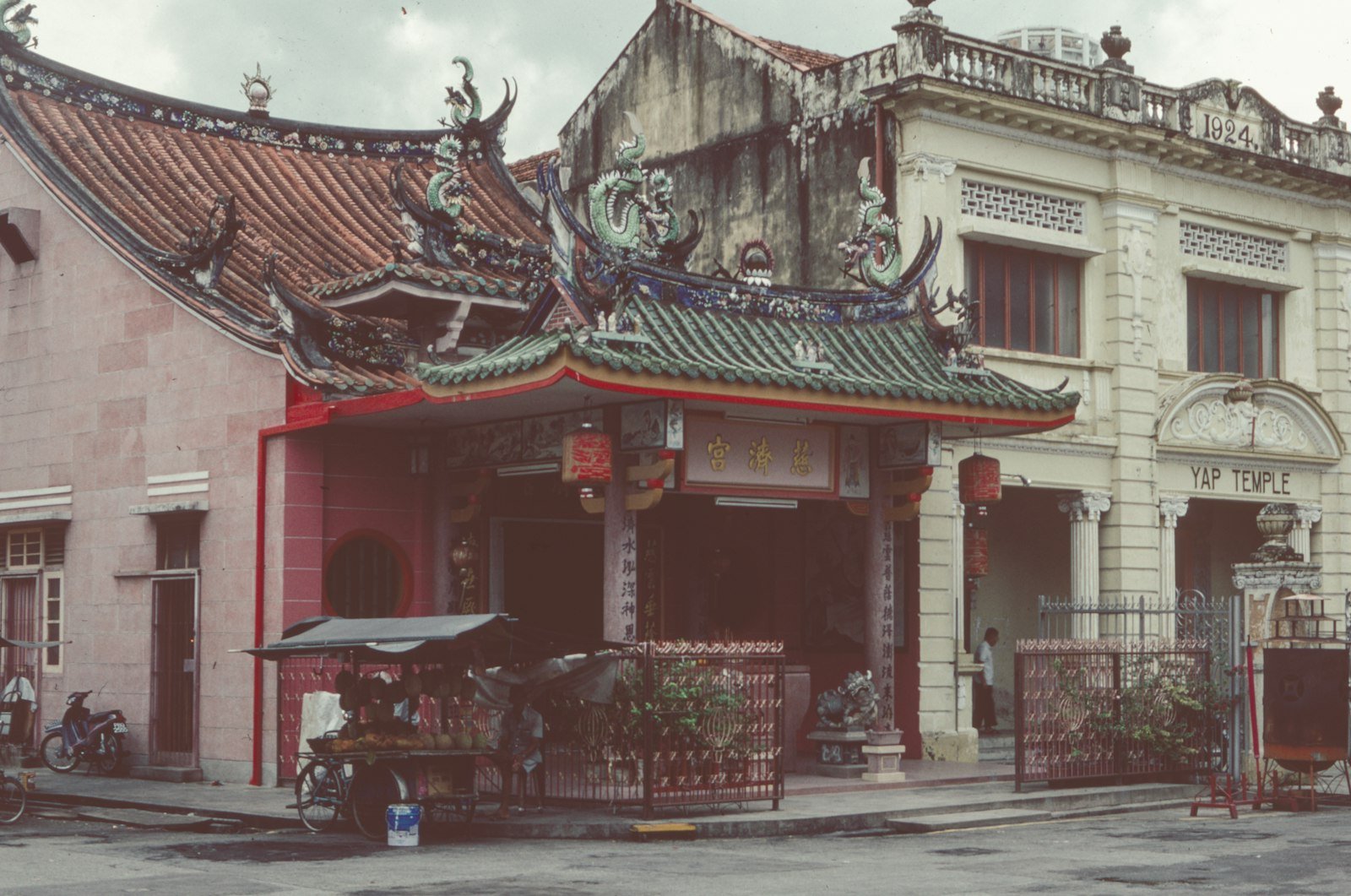
The name on the show is not the name on the ground. “Old Factory Street” was invented for the drama; the real prototype is Changdi, and in particular two linked quarters:
- Sanshisan Xu Street (三十三墟街), literally “Thirty-Three Market Street”, named for the thirty-three stone steps of the old river landing. This is the heart of it: the stepped lane, the shophouses, and the spot used for Gao Qiqiang’s pager shop, the “Qiangsheng Xiaolingtong” storefront that became the show’s most photographed prop. The pig-trotter noodles he eats in the series are sold all along the street.
- Qiming Li (启明里), a ten-minute walk east, is a century-old overseas-Chinese village folded into the city — brick lane-houses built from 1914 by emigrant families, now strung with lanterns and home to a small overseas-remittance museum (侨批馆) and craft shops.
The district was recognised in 2023 as a China Overseas Chinese International Cultural Exchange Base and a Guangdong Historic and Cultural District, and it now draws more than five million visitors a year. Qiming Li was named a national-level tourism and leisure district in 2025. That popularity has a cost: on national holidays the old town takes on the feel of a fairground, and the city’s own assessment is blunt that parking is its biggest problem. Come on an ordinary weekday morning if you want the streets to yourself.
Taishan: Mei Courtyard and the overseas-Chinese villages
An hour south of Jiangmen city, Taishan is one of China’s classic “hometowns of overseas Chinese” — a county from which generations emigrated to the Americas and Southeast Asia, and whose wealth came home as architecture. The drama used several of its landmarks.
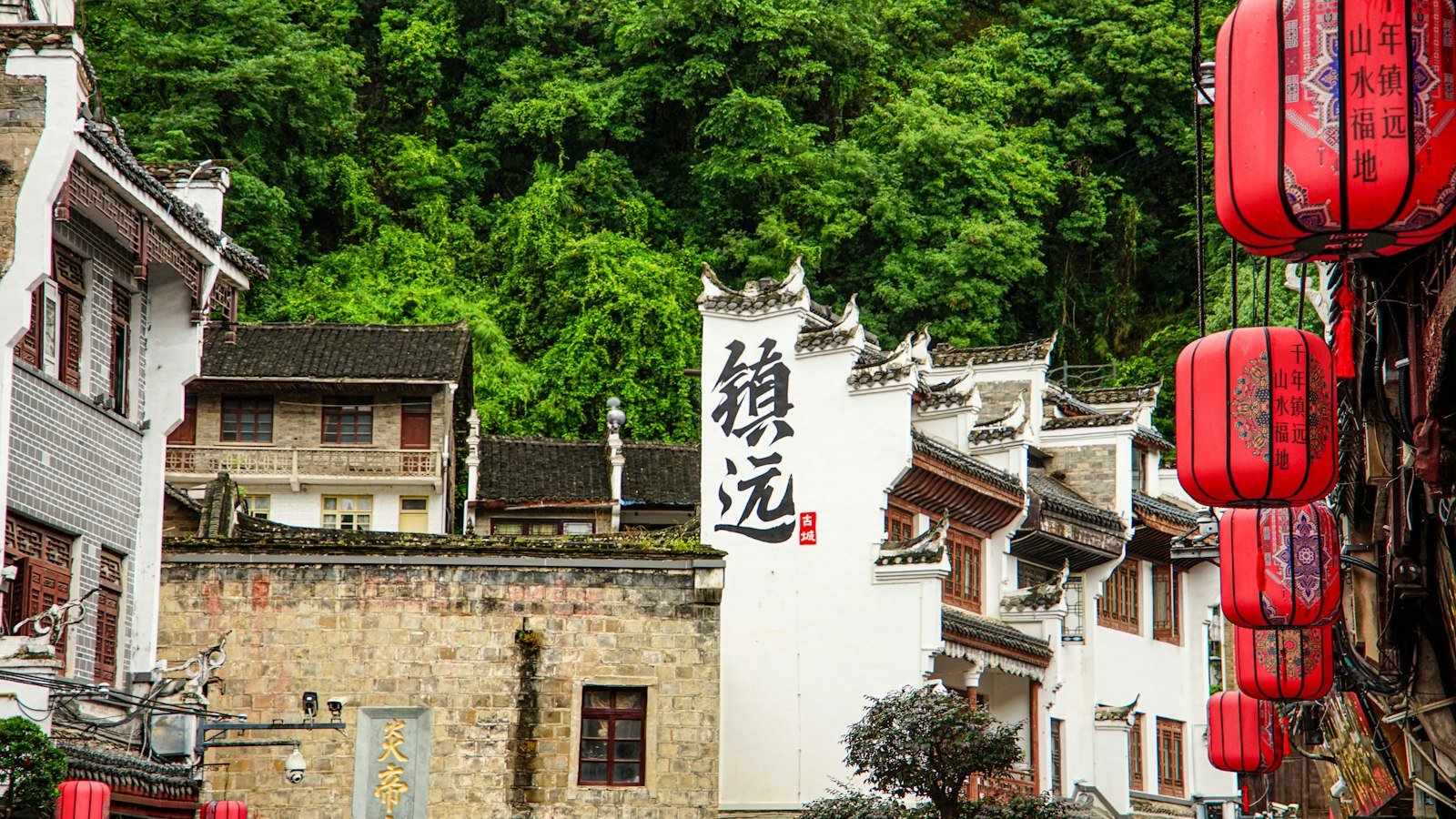
The best known is Mei Courtyard (梅家大院) in Duanfen Town, on the bank of the Datong River. It was built from 1931 by the Mei and other families, and it is not a single building but a small walled town: 108 two- and three-storey arcaded buildings arranged in a rectangle around a central market square, each one carrying a different blend of the owner’s adopted country and home tradition. It is a provincial-level protected site, and it has a long screen career of its own — Let the Bullets Fly (2010) was shot here before The Knockout used it for the scene in which Li Xiang and Gao Qisheng fall from a roof.
The other Taishan locations are spread out and need a car. Taicheng Artificial Lake, in the middle of the county town, is where An Xin and Meng Yu’s break-up pavilion stands. Beifeng Mountain National Forest Park supplied the villa scenes. And out on the coast at Haiyan, the embankment at Qingshanju — two cars, an empty road, the sea, and a lighthouse in the background — is the setting for one of the show’s key secret meetings. Taishan is also where the drama’s biggest logistical change has just landed: as of 11 October 2026 you can take a direct high-speed train from Hong Kong West Kowloon to Taishan in 2 hours 10 minutes.
Kaiping: the watchtowers in the frame
North-west of Taishan, still inside Jiangmen prefecture, is Kaiping, home to the diaolou — the fortified multi-storey towers that overseas-Chinese families built across the countryside in the 1920s and 1930s, part defence against bandits and floods, part display of wealth. Some 1,833 survive, and in 2007 “Kaiping Diaolou and Villages” became a UNESCO World Heritage Site — Guangdong’s first.
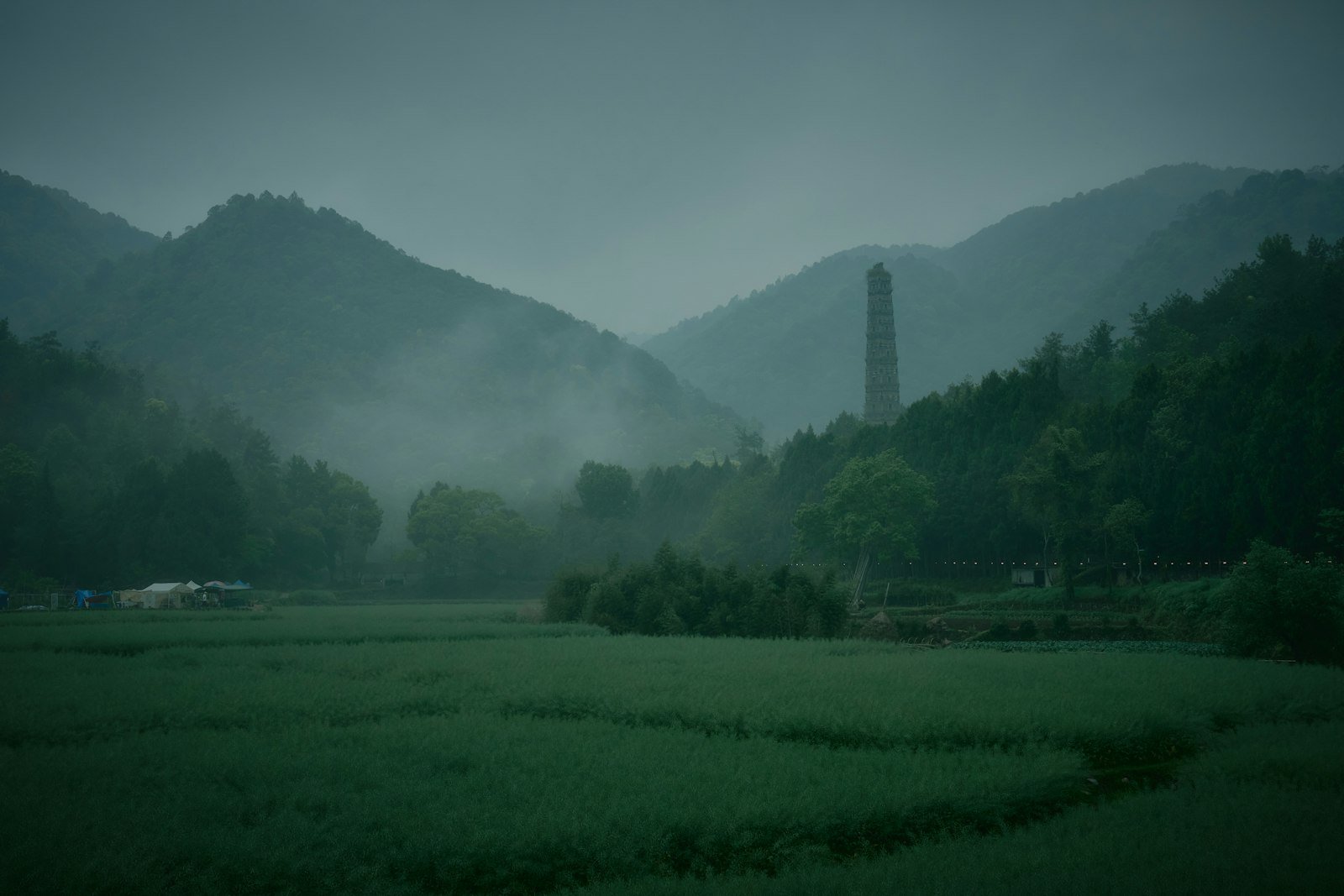
Scenes from The Knockout were shot in Kaiping, and the most visited spot is Zili Village (自力村) in Tangkou Town, where the towers and their Western-style villas rise straight out of the rice fields. It is the same landscape that made Let the Bullets Fly famous a decade earlier. Kaiping’s diaolou are the one part of this itinerary that is properly ticketed and worth half a day on its own.
How we checked this list
This is where we are honest about the limits. There is no official, scene-by-scene record of The Knockout‘s shoot. What exists is a clear official consensus on the headline facts — that Jiangmen was the main filming location, that the Changdi Historic District stands in for the show’s Old Factory Street, and that Mei Courtyard, Taishan and Kaiping all appear — set out by the Jiangmen, Taishan and Kaiping government portals and by Guangdong’s provincial housing authority. The finer attributions (which scene was shot at which building) are gathered from those official sources and from official media reports, and should be read as reported rather than officially confirmed shot by shot.
Where prices are concerned, we have written down only what is published, and dated it. The old-town district is free and open, and that is settled. The Kaiping diaolou prices below are the operator’s and ticketing platforms’ figures, and the two government pages we used for Mei Courtyard disagree on its exact size, so we have left that number out rather than pick one. Check official channels before you travel; opening hours and small fees in China change more often than the buildings do.
Seeing it in a day, or two
One day, city only. Give the morning to Changdi. Walk Sanshisan Xu Street from the top of the steps, loop down to the river quay, then follow the arcades east to Qiming Li — the whole circuit is flat, compact and takes about three hours at a wander. Eat pig-trotter noodles somewhere on the way. If you have a car and an afternoon, push on to Taishan for Mei Courtyard and Taicheng Artificial Lake.
Two days, properly. Day one as above, then stay overnight in Jiangmen or Taishan. Day two, drive the Taishan coast — Haiyan’s Qingshanju for the sea and the lighthouse — and finish at Kaiping’s Zili Village for the watchtowers at golden hour. If you are coming by rail rather than car, Taishan and Kaiping each have their own stations, so a car-free version is possible: train to Taishan for the courtyard, train to Kaiping South for the diaolou, and local taxis or buses for the last stretch.
Getting to Jiangmen and Taishan
By high-speed rail. This is the easy way. Guangzhou South to Jiangmen takes roughly 30 to 40 minutes; the same line continues to Taishan in about an hour and to Kaiping South in about an hour and ten. The big recent change is the Hong Kong link: since 11 October 2026, the trains between Hong Kong West Kowloon and Zhanjiang West (G6048/5 and G6046/7) stop at Taishan, making it a 2 hour 10 minute direct run — G6048/5 leaves West Kowloon at 10:18 and reaches Taishan at 12:28; G6046/7 leaves Taishan at 17:49 and arrives back in Hong Kong at 19:59. Jiangmen itself has had a direct West Kowloon service of about two hours since 2023, and after the October 2026 timetable change Jiangmen station runs 121 trains a day.
By air. There is no airport at Jiangmen. Fly into Guangzhou Baiyun (CAN), Shenzhen Bao’an (SZX), Hong Kong (HKG), Macao (MFM) or Zhuhai (ZUH), then take the train. From Guangzhou or Shenzhen the rail leg is short; from Hong Kong you can now ride straight through to Taishan.
On the ground. The old town is walkable and best done on foot — the lanes are too narrow to drive into, and parking is the city’s acknowledged weak point, with around 1,400 spaces spread across thirteen car parks that fill quickly at weekends and holidays. Buses 2, 53 and 43 run from the city-centre government stop to Wuyi Cheng in about twenty minutes for ¥2; a taxi from the centre is around ¥9 and six minutes.
Tickets, hours and what is free
The old town costs nothing. The diaolou are the only real ticket. Prices below are the published figures we could find, checked on 15 October 2026; confirm them on official channels before you go.
| What | Price | Notes |
|---|---|---|
| Changdi Historic District, Sanshisan Xu Street, Qiming Li | Free | Open, living neighbourhood — no gate, no ticket |
| Mei Courtyard, Taishan | Free | Reported as free and open daily; a few sources mention a small fee and advance booking — check locally |
| Taicheng Artificial Lake, Taishan | Free | Public park |
| Beifeng Mountain National Forest Park | Park ticket | Current price not confirmed |
| Kaiping diaolou — Zili Village | ¥78 | World Heritage core site |
| Kaiping diaolou — Li Garden (立园) | ¥100 | Built 1926; centenary in 2026 |
| Kaiping diaolou — Majianglong / Jinjiangli | ¥50–60 | Smaller clusters |
| Kaiping five-site combo ticket | ¥180 | Valid two days; covers Li Garden, Zili, Majianglong, Jinjiangli and Nanlou |
| Chuanshan islands (Shangchuan / Xiachuan) | Ferry + island fees | 4A-rated archipelago off Taishan; check sailings |
How to read this: if you are only doing the city, your bill is a bowl of noodles and a bus fare. If you are adding Kaiping, the ¥180 five-site combo is cheaper than buying Zili and Li Garden separately, and it is valid for two days — enough to see the towers without rushing. Everything on the Changdi side is free because it is not an attraction at all; it is a neighbourhood that happens to be photogenic.
What to know before you go
It is a living district, not a theme park. People live and work in Changdi. The most photogenic lanes are narrow, shared with scooters and deliveries, and busiest at weekends and public holidays — the city recorded an average of more than 100,000 visitors a day there over one recent National Day week. Go early, go on a weekday if you can, and treat the shopkeepers as residents rather than set dressing.
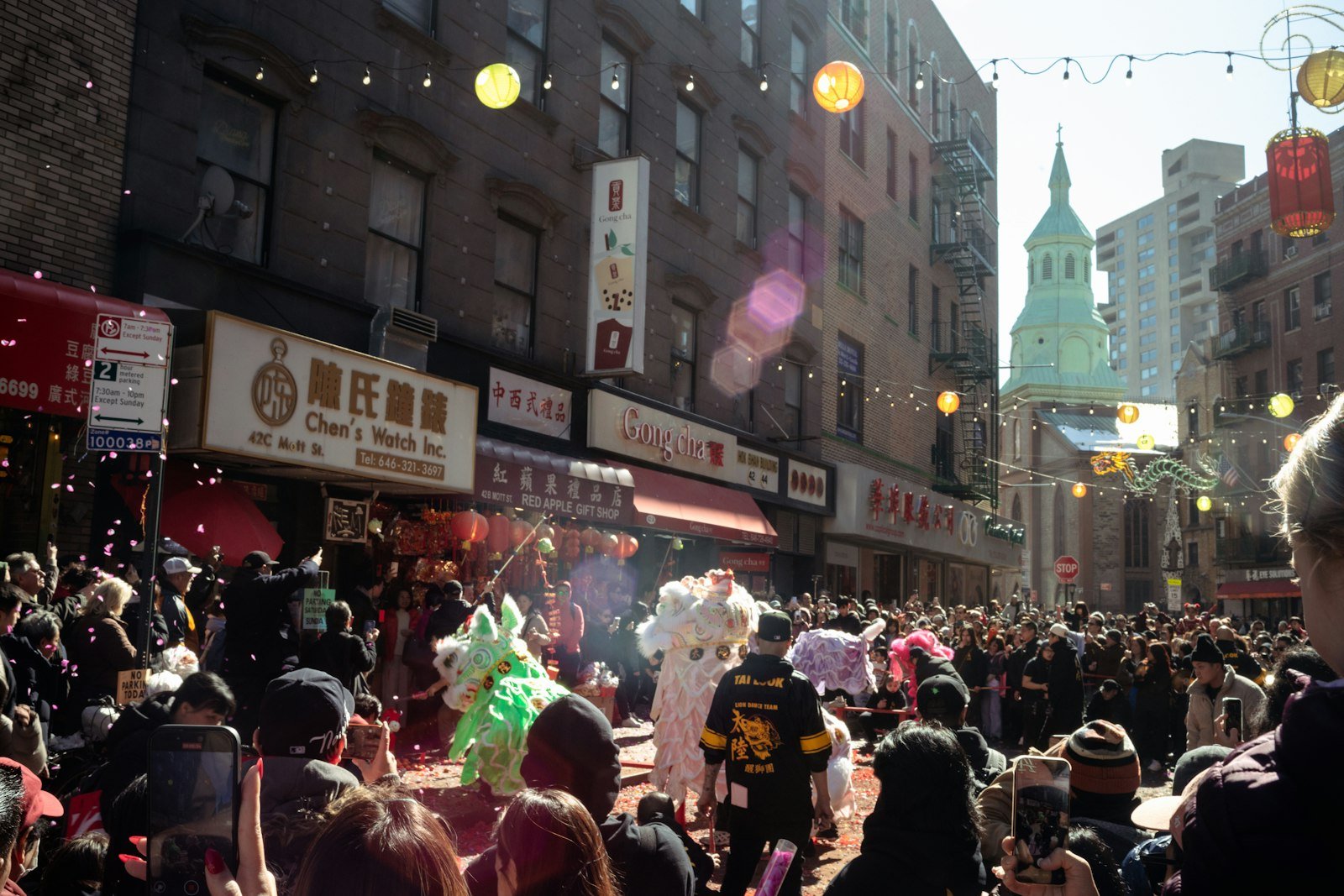
Eat while you are there. Jiangmen is in the Cantonese heartland. The dish the show made famous is pig-trotter noodles (猪脚面), sold in and around Sanshisan Xu Street; beyond that, look for Gujing roast goose (古井烧鹅), a Jiangmen speciality, and the wider Cantonese repertoire of rice-rolls, congee and dim sum.
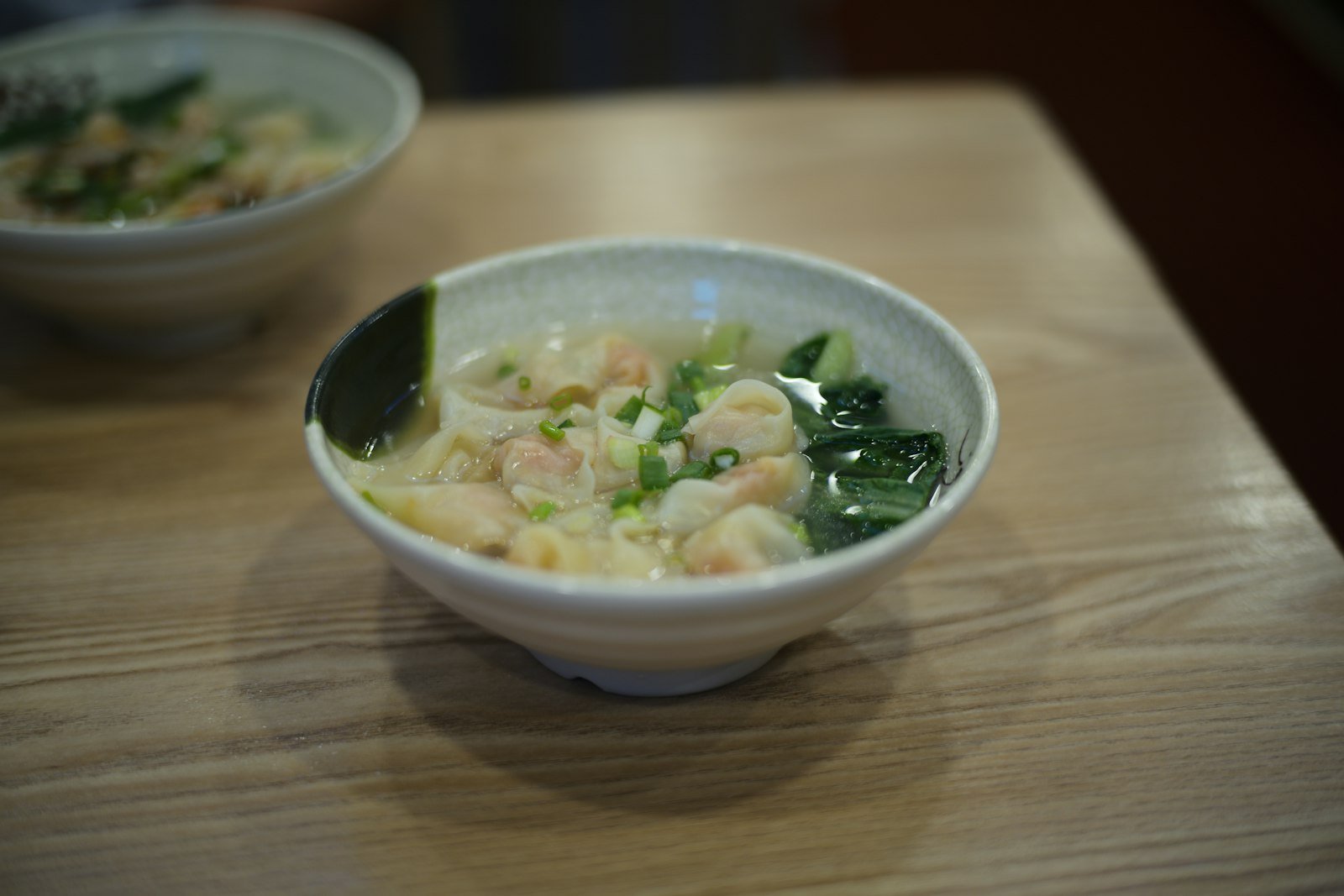
Practicalities. Guangdong is covered by China’s transit visa-free schemes, which allow many nationalities to enter without a visa under set conditions — the rules are detailed and change, so read our dedicated guide rather than rely on a summary. You will also want a payment app and a transport app sorted before you land. Jiangmen sits inside the Greater Bay Area, so it pairs naturally with Guangzhou, Shenzhen, Hong Kong and Macao.
Common questions
Where was The Knockout filmed?
Almost entirely in Jiangmen, Guangdong. The main location is the Changdi Historic District in the city centre, whose Sanshisan Xu Street and Qiming Li quarters stand in for the show’s “Old Factory Street”. Scenes were also shot in Taishan (Mei Courtyard, Taicheng Artificial Lake, Beifeng Mountain, the coast at Haiyan) and in Kaiping, home to the UNESCO diaolou watchtowers. There is no studio to visit.
Is “Old Factory Street” a real place?
No. Both the city (“Jinghai”) and the street (“Old Factory Street”) are fictional names invented for the drama. The real prototype for Old Factory Street is the Changdi Historic District in Jiangmen, and the most recognisable spot within it is Sanshisan Xu Street, where Gao Qiqiang’s pager shop was filmed.
Can I visit the filming locations without a car?
Yes for the city, with effort for the rest. The Changdi district is compact and walkable, and reachable by bus or taxi from Jiangmen’s stations. Taishan and Kaiping are spread out: each has its own high-speed rail station (Taishan, Kaiping South), so you can reach them by train, but you will want local taxis, buses or a driver for the last few kilometres, especially on the Taishan coast.
How do I get from Hong Kong to the filming locations?
By high-speed rail. Since 11 October 2026 there is a direct service from Hong Kong West Kowloon to Taishan taking 2 hours 10 minutes (G6048/5 leaves West Kowloon at 10:18). Jiangmen also has a direct West Kowloon service of about two hours. From either station, the old town and the Taishan locations are a short taxi or local train away.
Is there a fee to visit the old town?
No. The Changdi Historic District — including Sanshisan Xu Street and Qiming Li — is free and open; it is a working neighbourhood rather than a gated attraction. The paid part of this itinerary is the Kaiping diaolou, where Zili Village is around ¥78 and a five-site combo ticket about ¥180.
How much does the Kaiping diaolou cost?
Published prices are around ¥78 for Zili Village, ¥100 for Li Garden, ¥50–60 for the smaller clusters, and ¥180 for a five-site combo valid two days. These are operator and ticketing-platform figures — confirm them on official channels before you travel.
When is the best time to go?
Late autumn and winter (roughly October to December) are the most comfortable months in Guangdong — dry, mild and clear, and the busiest for the old town over national holidays. Spring is warm and wet; summer is hot, humid and prone to typhoons on the coast. If you want the streets to yourself, aim for a weekday outside the big holiday weeks.
Is Jiangmen worth visiting if I have not seen the show?
Yes. The drama is a good reason to go, but the architecture is the reason to stay: a whole district of early twentieth-century arcaded shophouses and overseas-Chinese villages, plus the UNESCO watchtower country an hour away. If you have seen the show, the streets will look familiar. If you have not, they will still be worth the trip.
Your next move
Another city on screen?
Jiangmen is one of a cluster of southern cities the dramas keep returning to. Shenzhen, the setting of The Love You Give Me, is the other Guangdong entry on the site.
Worried about the practical stuff?
Visas, payment, trains and the apps you will need before you land — the four things you cannot work out on the ground. Each guide is dated and sourced.
Ready to go?
The Knockout was shot in a living city, not a set. See where Jiangmen and the rest of the map sit.
Last verified
Sources: Jiangmen Municipal Government (jiangmen.gov.cn), 2023 — The Knockout (狂飙) filmed in Jiangmen; the Changdi Historic District and Sanshisan Xu Street; the Jiangmen Xu 2.0 old-town project; visitor figures · Jiangmen Municipal Government, 2024 — 2023 Jiangmen tourism review: visitor numbers, revenue and growth, and the drama’s impact on the old town · Jiangmen Municipal Government portal, 2026-10 — Taishan–Hong Kong West Kowloon direct high-speed rail (G6048/5, G6046/7) from 11 October 2026; journey times and timetable · Jiangmen Municipal Government — official attraction page for Mei Courtyard (梅家大院): Duanfen Town, Taishan; built from 1931; 108 arcaded buildings; provincial protected site; used by Let the Bullets Fly · Taishan Municipal Government (cnts.gov.cn) — Mei Courtyard heritage description · Guangdong Provincial Department of Housing and Urban-Rural Development (zfcxjst.gd.gov.cn), 2024 — Changdi Historic District designated a China Overseas Chinese International Cultural Exchange Base and a Guangdong Historic and Cultural District; scale (0.8 km², 5,400+ buildings, 1,000+ arcades); 5 million+ visitors a year · China Daily, 2023-02-18 — Jiangmen tourism surge after The Knockout; Ctrip search and booking growth; the city branded the “city of The Knockout” · The Paper (thepaper.cn), 2023 — The Knockout filming locations in Taishan and Jiangmen, named place by place · Kaiping diaolou — Zili Village, Li Garden and combo-ticket prices from the operator and ticketing platforms, checked 2026-10-15 (see Tickets); Kaiping Diaolou and Villages inscribed as a UNESCO World Heritage Site in 2007 · Douban and Baidu Baike — The Knockout (狂飙, 2023): 39 episodes, premiered on CCTV-8 and iQIYI on 14 January 2023, directed by Xu Jizhou, starring Zhang Yi and Zhang Songwen; Douban score 8.5 · Unsplash photo pages for the six photographs used, credited in the captions and the media library
Spotted something out of date? Email us — or read how corrections work. We check every report against the source and update the page.
Ready to plan it? Turn the dramas you have watched into a day-by-day route with the C-drama route planner.
Not sure where to start? Take the drama-city quiz — seven questions, one city, and a route waiting at the end.