
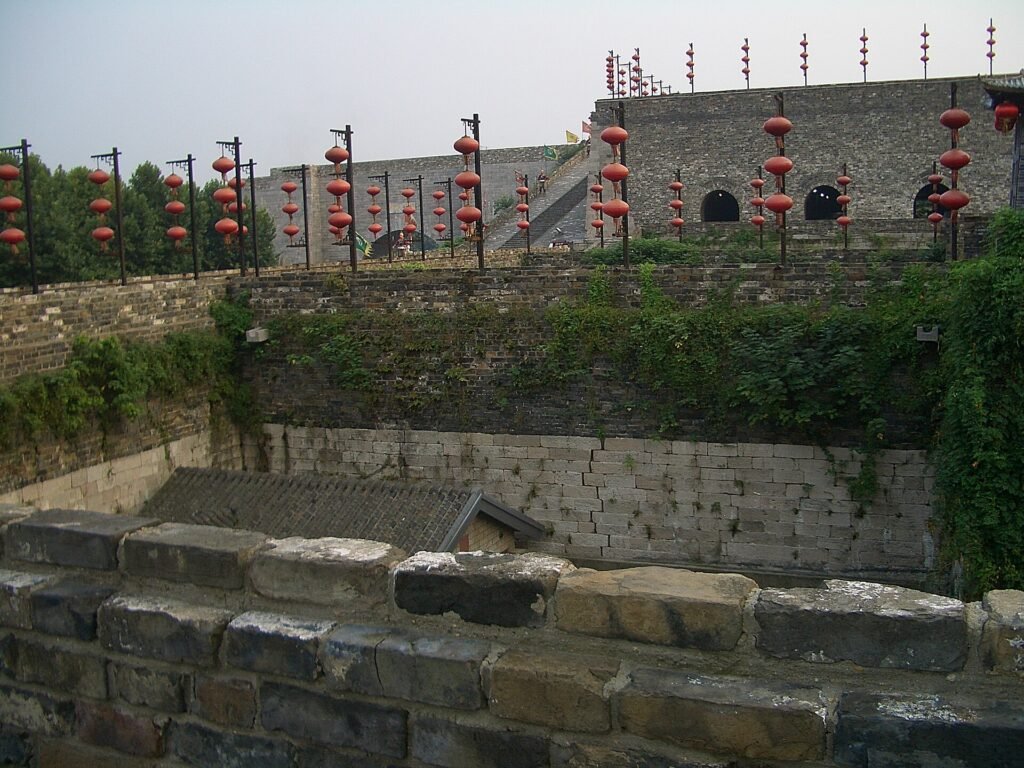
Most of the dramas on this site are filmed in a place you can point at on a map. The Bond (乔家的儿女) is filmed in one you can point at on a page of Chinese history: Nanjing, the old capital on the Yangtze. What makes its The Bond filming locations worth a trip is that almost none of them is a set. The siblings grow up on a real Ming-dynasty city wall, their father walks home past real 1930s houses, and the bridge in the background is the one the whole country knows. The show used the city as it stands, and the city is still standing.
The short answer: The Bond (乔家的儿女, 2021) was filmed in Nanjing, Jiangsu. The family’s childhood scenes are set on the Ming city wall — above all Zhonghua Gate (中华门) and the Taicheng stretch above Xuanwu Lake — and the lane the Qiao family lives in is based on Shaomao Lane (纱帽巷), north of Zhujiang Road. The father’s factory exteriors were shot at the 1865 Creative Park, the old Jinling Machinery Bureau. The father’s walk home passes the Yihe Road (颐和路) Republican-era villa quarter, and the show’s most recognisable backdrop is the Nanjing Yangtze River Bridge. Almost all of it is free; the wall and the bridgehead are the only small tickets.
The drama that made Nanjing a character
The Bond is a thirty-six-part family drama that premiered on Zhejiang TV and Jiangsu TV on 17 August 2021 and streamed on Tencent Video, running to its finale on 8 September. It was produced by Daylight Entertainment (正午阳光) — the studio behind several of the prestige Chinese dramas of the past decade — directed by Zhang Kaizhou (张开宙), and adapted by the novelist Wei Xi (未夕) from her own book. Bai Yu (白宇) plays Qiao Yicheng, the eldest son who raises his four siblings after their mother dies in childbirth; Liu Jun (刘钧) plays the feckless father Qiao Zuwang; Song Zuer (宋祖儿), Mao Xiaotong (毛晓彤) and Zhang Wanyi (张晚意) play the younger children. It opened on Douban at 8.7 and settled around 7.8, and it was nominated for Outstanding TV Drama at the 33rd Flying Apsaras Awards and for Best Chinese TV Series at the 28th Magnolia Awards.
The story runs from 1977 to the 2000s, so the show needed a city that could carry three decades without being rebuilt in a studio. Nanjing has the layers for it: Ming walls, Republican villas, 1950s work units, and a modern skyline, all inside one ring of metro line. It is also a city that has always been filmed — but rarely as itself. What is unusual about this guide is how little of it is a set. The wall the children play on is a UNESCO-scale survivor; the houses the father walks past are protected Republican-era villas; the bridge is a national monument. You are not visiting a backlot. You are visiting Nanjing.
The Bond filming locations at a glance
Every location below is in Nanjing. The wall, Yihe Road, the old city and the lake sit close together inside the old city and can be walked or met by metro; the Yangtze River Bridge is a short ride north-west.
| Location | Where | What it stood for in the show | Cost |
|---|---|---|---|
| Ming city wall (明城墙) | Zhonghua Gate (中华门) and the Taicheng stretch, Xuanwu District | Where the siblings play as children; where Yicheng races Ju’an as a student | Free–¥50 |
| Yihe Road quarter (颐和路公馆区) | Gulou District, north-west of the centre | The father’s drive home and Erqiang’s walk — the Republican city | Free |
| Nanjing Yangtze River Bridge (南京长江大桥) | Gulou / Pukou, north-west of the city | The show’s most recognisable backdrop | Free–¥15 |
| Shaomao Lane (纱帽巷) | Xuanwu District, north of Zhujiang Road | The model for the lane the Qiao family lives in | Free |
| 1865 Creative Park (1865园区) | Qinhuai District, on the old city’s south edge | The factory where the father works (exteriors) | Free |
| Xuanwu Lake (玄武湖) | Xuanwu District, below the north wall | Named in the show — the city’s own water | Free |
| Confucius Temple & Qinhuai (夫子庙·秦淮) | Qinhuai District, old city south | The old-city atmosphere around the family’s world | Free–ticketed |
| Sun Yat-sen Mausoleum (中山陵) | Purple Mountain, east of the city | The city’s monumental backdrop | Free (book ahead) |
The Ming city wall: where the siblings grew up
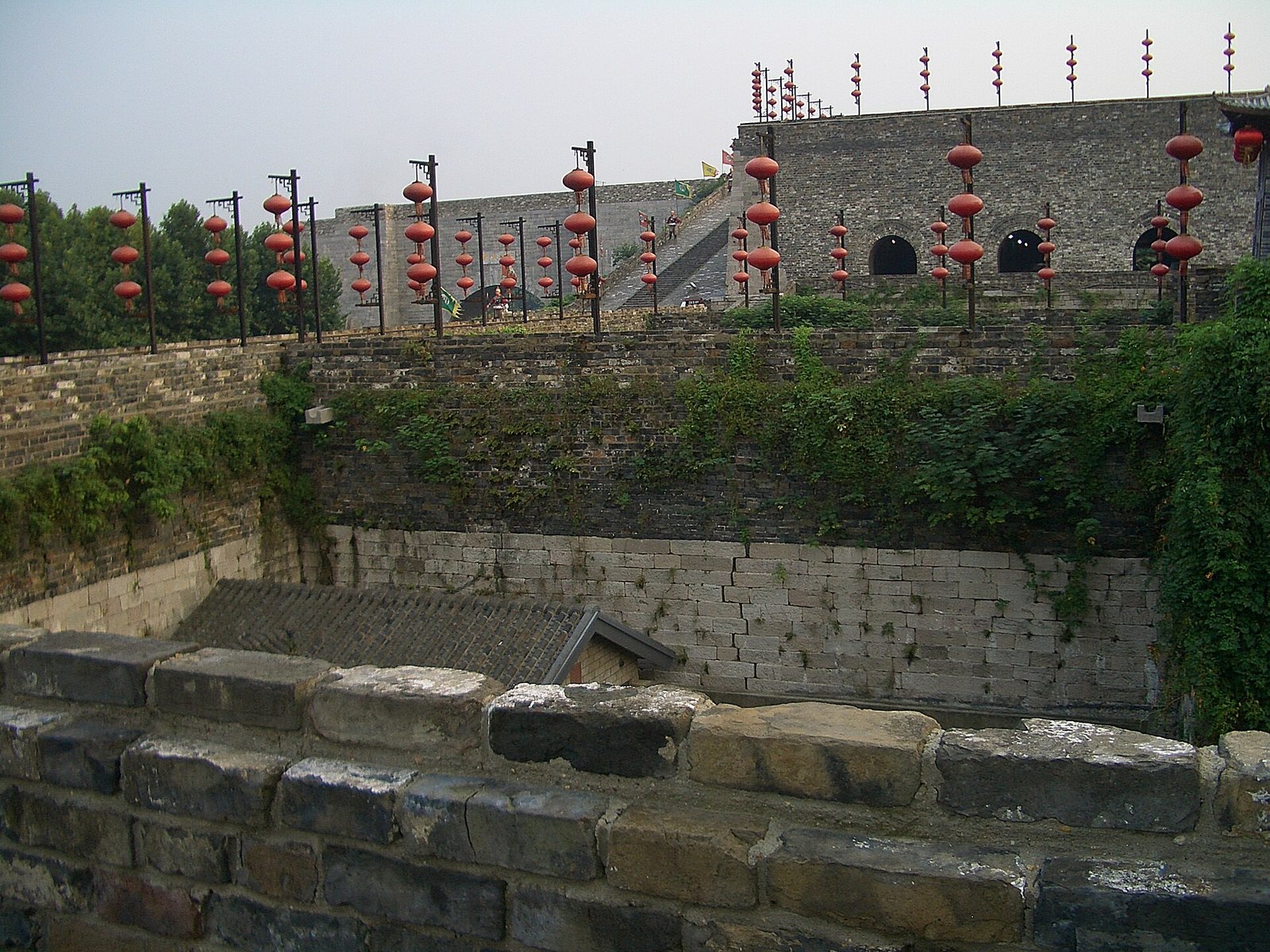
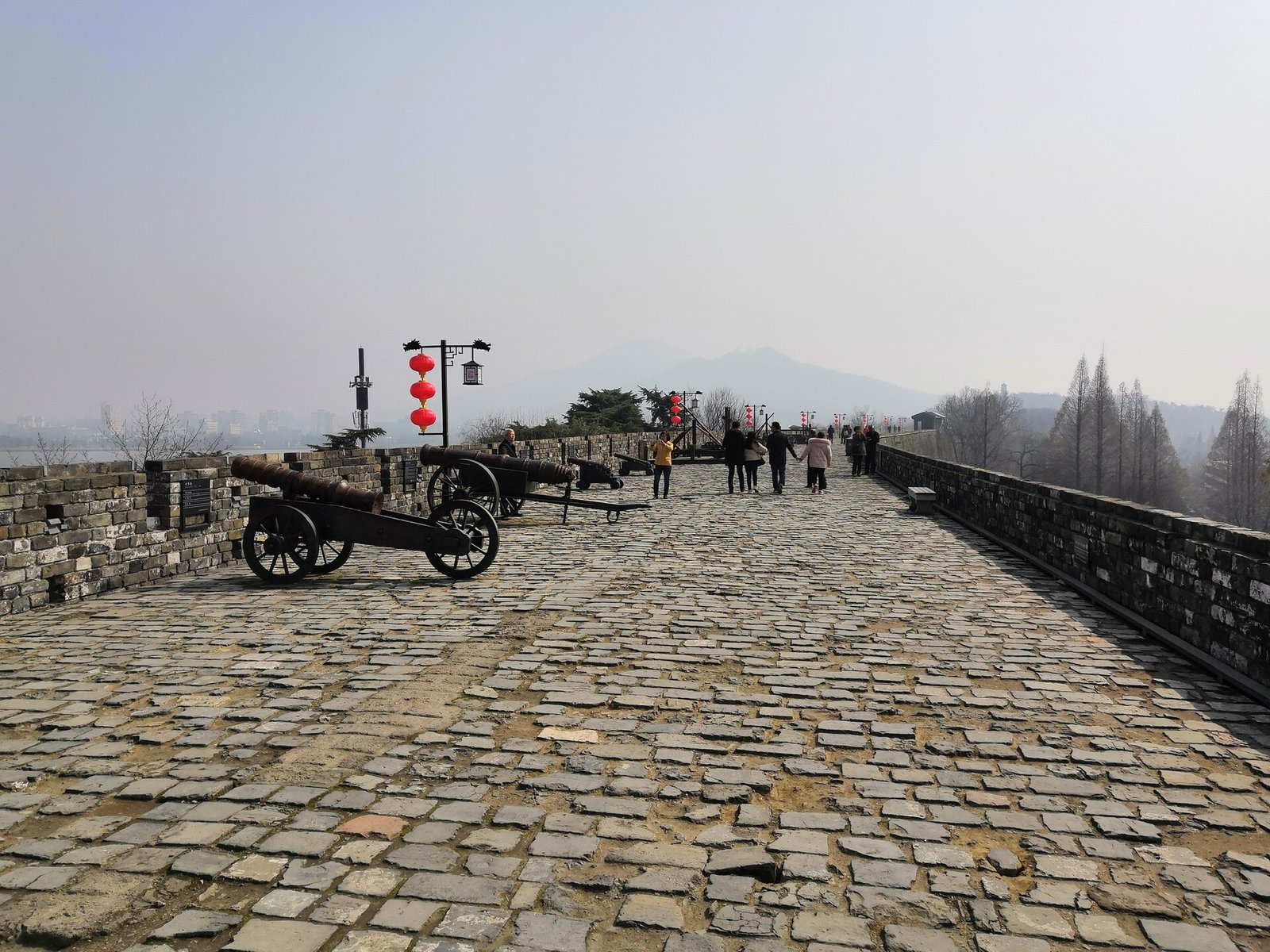
The single most-used location in The Bond is the wall. In the early episodes the Qiao children go up onto the Ming city wall to play and to escape; later, the eldest brother, Yicheng, runs along the parapet with a girl named Ju’an, and the wall becomes the place where the show says what it means. Nanjing’s wall is not a fragment. Built from 1366 under the first Ming emperor, it is one of the longest surviving city walls in the world, and large stretches of it are open to walk on.
The show returns again and again to Zhonghua Gate (中华门), the vast southern gate and the largest surviving city gate in China, with its nested barbicans and hidden troop chambers. It is also the stretch that carries the Taicheng section above Xuanwu Lake, and the Republican-era Yijiang Gate (挹江门) that appears in the show’s driving scenes. Walk any one of these and you are walking the show’s opening titles: grey brick, long ramparts, plane trees below, and a city laid out at your feet.
Not all of the wall is ticketed. Some sections are free to stroll; the main gate and the north line charge a small fee to climb. Zhonghua Gate is the one to book if you want the show’s most cinematic view, and the lantern festival lights the wall around the Lunar New Year.
Yihe Road: half of Republican history
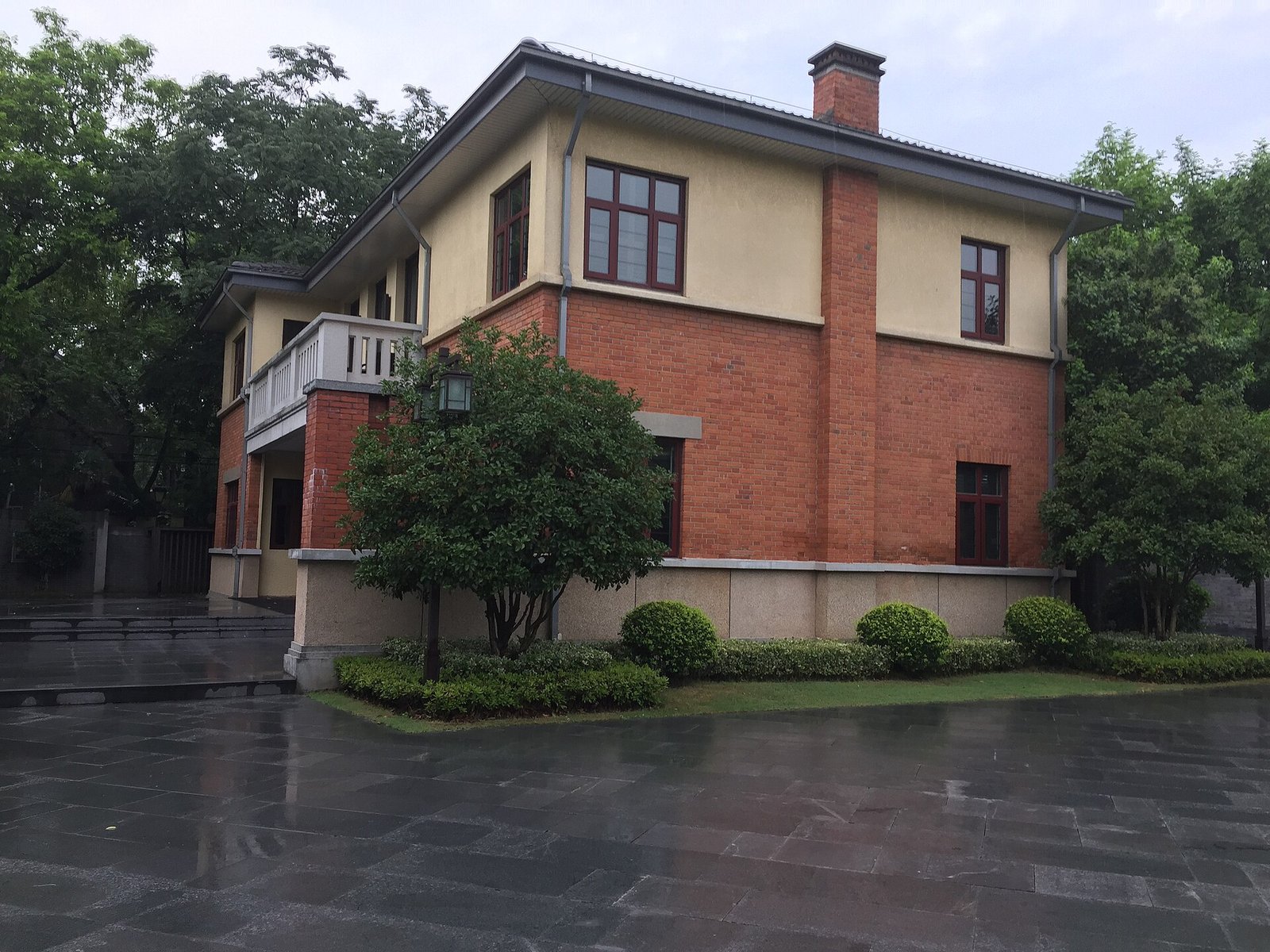
In one of the show’s recurring shots, the father, Qiao Zuwang, is driven home through a district of low garden houses and plane trees, and his second son, Erqiang, walks the same streets. That district is Yihe Road (颐和路), in Gulou, and it is the finest surviving Republican-era residential quarter in China. Laid out in the 1930s as housing for government officials, it holds hundreds of villas and courtyards behind high ochre walls, and locals describe it with a line worth remembering: “one Yihe Road, half of Republican history.”
The quarter is free and open, best walked slowly on foot. It is also one of the easiest filming locations in China to visit well, because it was never dressed for the cameras — the plane trees, the walls and the gardens are the originals, and the skyline of the modern city rises behind them in the same frame, exactly as the show frames it. Come in late afternoon, when the light comes low through the trees.
The Yangtze River Bridge
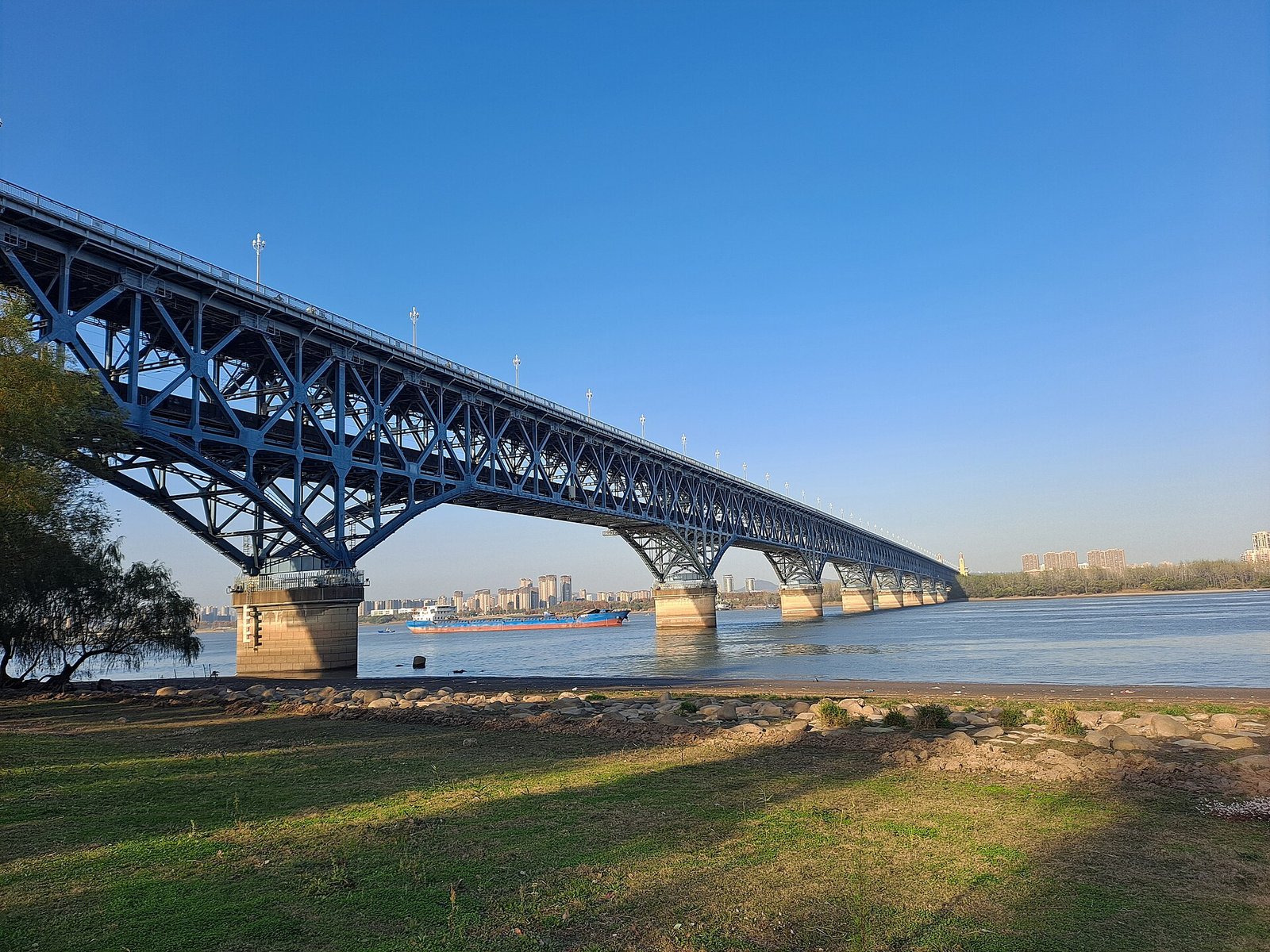
The most recognisable single image associated with The Bond is the Nanjing Yangtze River Bridge (南京长江大桥). Completed in 1968, it was the first double-deck road-and-rail bridge across the Yangtze designed and built by China without foreign help, and it is a national monument as much as a piece of infrastructure: the two 70-metre bridgeheads, the red flags on their towers, and the sculptural worker-peasant-soldier groups at their base. After a full restoration in 2018 the bridge is again a symbol of the city.
You cannot walk the road deck, but you can go up. The Bridge Park at the southern bridgehead runs a lift up to the observation platform, or you can climb the steps — the view runs the length of the bridge and back over the city. The park ticket also covers the small bridge museum, which explains why a bridge could mean so much. It is a short metro-and-bus ride north-west of the centre, and it pairs well with the old city on the same day.
Shaomao Lane and the old city
The Qiao family’s lane in the show is not invented. It is based on Shaomao Lane (纱帽巷), in Xuanwu District north of Zhujiang Road, a name that goes back to the Ming and Qing, when the lanes here were where officials’ black gauze caps were made. The buildings the show puts on screen are a recreation of an 1980s Nanjing lane, but the place — and the name — are real, and the lane has become a small landmark because of the series.
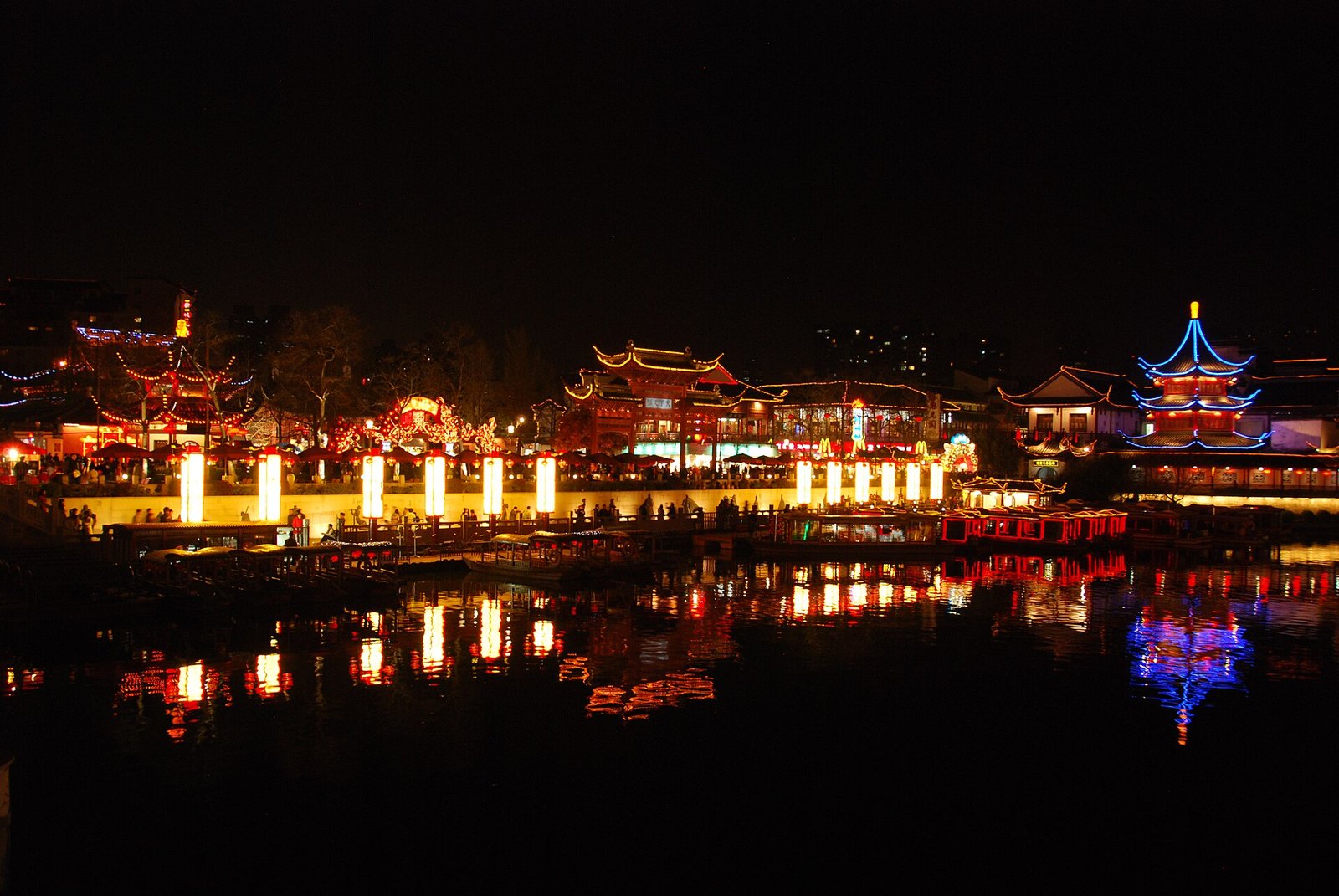
The father’s factory exteriors were shot at the 1865 Creative Park on the south edge of the old city, a former arsenal founded in 1865 as the Jinling Machinery Bureau during the Self-Strengthening Movement and later the Chenguang works; its plane-lined avenue, brick workshops and iron notice boards gave the show its working city. Around both, the old city of Nanjing does what it always did: the Confucius Temple and the Qinhuai riverfront, the gates, the markets and the food streets, all inside the wall.
Xuanwu Lake and the north wall
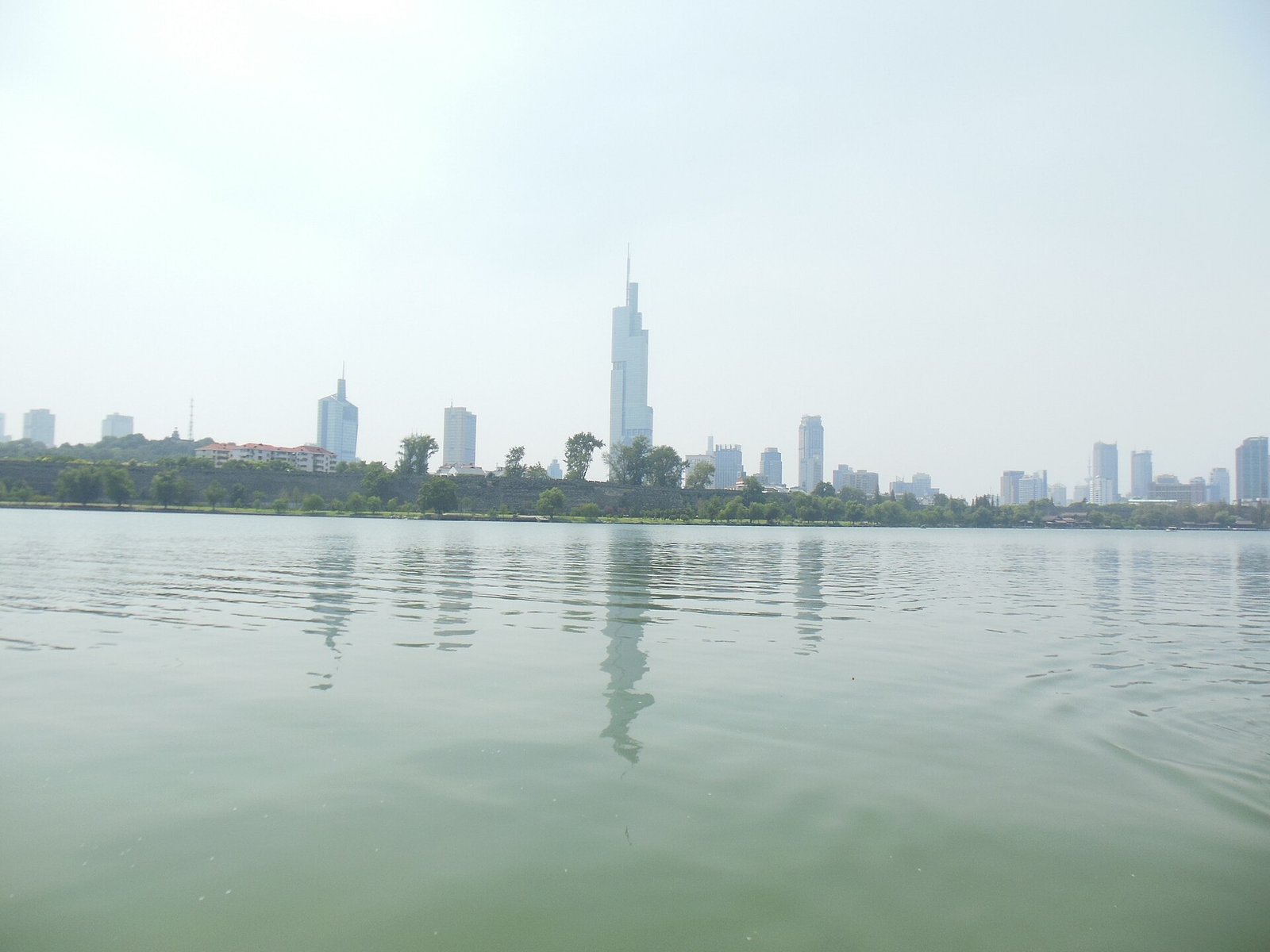
The show even names its water. When an aunt scolds the father, she tells him he threatens to throw himself into Xuanwu Lake several times a year — a joke that only lands if you know the lake. Xuanwu Lake sits directly below the northern stretch of the city wall, five islands linked by causeways, ringed by a free path that is open around the clock. It is one of the few places where you can see the wall, the water and the modern skyline in a single sweep, and it is the natural end to a day that began on the wall at Taicheng.
From the Jiefang Gate (解放门) on the lake’s south shore you can climb the wall and walk the 1.4 kilometres north to Xuanwu Gate, with the lake on one side and the city on the other. It is the single best hour in this itinerary, and it costs almost nothing.
How we checked this list
This is where we are honest about the limits. There is no official, scene-by-scene record of The Bond‘s shoot, and no single government document that lists the locations the way some cities publish theirs. What exists is a strong and consistent body of reporting: the district and neighbourhood authorities of Gulou and Xuanwu have written up the show’s landmarks in their own official channels, and the official media have catalogued the sites repeatedly. From those we can state the headline places with confidence — the wall, Yihe Road, Shaomao Lane, the 1865 park, the bridge, Xuanwu Lake. What we cannot claim is which exact scene was shot at which gate, and so we have written this as reported rather than officially confirmed shot by shot.
Where prices are concerned we have written down only what is published, and dated it. Most of Nanjing’s wall, Yihe Road, Xuanwu Lake and the Confucius Temple street are free and open; the wall, the bridgehead and the mausoleum are the exceptions. Treat every number below as a starting point and check official channels before you travel — opening hours and small fees in China change more often than the buildings do.
Seeing it in a day, or two
One day, the wall and the old city. Start at Zhonghua Gate when it opens and climb the wall. Walk the old city south to the Confucius Temple and the Qinhuai riverfront for lunch, then take the metro north to Taicheng and the Jiefang Gate, walk the wall above Xuanwu Lake, and finish the day on the lake shore. Everything here is inside the old city and the whole loop is a full but comfortable day.
Two days, properly. Day one as above. Day two, go north-west: Yihe Road in the late afternoon light, then out to the Yangtze River Bridge and its observation platform, and back for the 1865 park and Shaomao Lane if you want the show’s own streets. With a third day, add Sun Yat-sen Mausoleum and Purple Mountain, and one of the city’s museums.
Getting to Nanjing
By high-speed rail. Nanjing is one of the best-connected cities in China, and its main station, Nanjing South, is on the Beijing–Shanghai line. From Shanghai Hongqiao it is about 1 hour 30 minutes, with second-class tickets from around ¥117. From Beijing South it is roughly 3 to 4 hours. From Suzhou it is under two hours, which makes Nanjing a natural second stop on a Jiangsu trip.
By air. Nanjing Lukou International Airport (NKG) serves the city, with a metro link to the centre. If you are arriving from abroad, note that Nanjing’s airport has a dedicated desk for China’s transit visa-free scheme — see below.
On the ground. The old-city locations — the wall, the Confucius Temple, Xuanwu Lake and Shaomao Lane — are all inside the metro ring and reachable in a few stops. Use Metro Line 1 for Zhonghua Gate and Line 4 for Yihe Road. The Yangtze River Bridge is the one outlier, north-west of the centre, and is best reached by metro plus a short bus or taxi ride. A phone transit code is the easiest way to pay.
Tickets, hours and what is free
Most of this itinerary is free. The wall, the bridgehead and the mausoleum are the exceptions, and even those are inexpensive. Prices below are the published figures we could find, checked on 15 October 2026; confirm them on official channels before you go.
| What | Price | Notes |
|---|---|---|
| Yihe Road quarter, Shaomao Lane, 1865 park | Free | Living city streets — no gate, no ticket |
| Xuanwu Lake | Free | 4A-rated and free since 2010; lakeside path open 24 hours |
| Confucius Temple & Qinhuai area | Free street / ticketed halls | Walking street open all day; the paid halls run 09:00–22:00 |
| Ming city wall — Taicheng / north line | ¥30 full / ¥15 concession | 08:30–17:00, plus an evening session 17:00–22:00 |
| Ming city wall — Zhonghua Gate | ¥50 day / ¥90 night | 08:30–18:00; the night ticket includes a light show |
| Nanjing Yangtze River Bridge | Bridge free; Bridge Park ¥15 | Park ticket covers the bridgehead lift and the small museum |
| Sun Yat-sen Mausoleum | Free, book ahead | Upper terrace 08:30–17:00; closed Mondays. Other Purple Mountain sights are ticketed (Ming Xiaoling ¥70, Linggu ¥35, Music Stage ¥10, Meiling Palace ¥30; combo ¥100) |
How to read this: if you do only the show’s own streets — the wall, Yihe Road, Shaomao Lane, the lake — your bill is one wall ticket and a metro fare. The wall is the one thing worth paying for, and the north line above Xuanwu Lake is the best value of the lot. Buy wall and bridgehead tickets through the official channels or the park gate, not a reseller.
What to know before you go
It is a living city, not a set. Yihe Road and Shaomao Lane are ordinary streets full of people who live and work there. Shaomao Lane in particular is mostly a name now — the original buildings are gone and the show rebuilt its 1980s look — so visit it for the story and the street, not for a preserved film set. Walk quietly, and treat the doorways as homes.
Eat while you are there. Nanjing has one of the most distinctive kitchens in China, and it is built around duck: Nanjing salted duck (盐水鸭), duck-blood-and-vermicelli soup (鸭血粉丝汤), and the small soup dumplings the city does better than most. Look for the old food streets around the Confucius Temple and Laomendong, and finish with a bowl of the city’s own tangbao. If you are here in autumn, the city is at its best.
Practicalities. Jiangsu is covered by China’s transit visa-free schemes, and Nanjing Lukou Airport runs a dedicated desk for the 240-hour (10-day) transit visa-free policy, which now covers 55 nationalities and lets you cross provinces. The rules are detailed and change, so read our dedicated visa guide rather than rely on a summary. Sort a payment app and a transport app before you land; our train guide covers booking and stations if you are arriving by rail. Nanjing pairs naturally with Suzhou and Shanghai on the same high-speed line.
Common questions
Where was The Bond filmed?
In Nanjing, Jiangsu. The show’s childhood scenes are set on the Ming city wall — chiefly Zhonghua Gate and the Taicheng stretch above Xuanwu Lake — and the lane the Qiao family lives in is based on Shaomao Lane, north of Zhujiang Road. The father’s factory exteriors were shot at the 1865 Creative Park, the father’s drive home passes the Yihe Road villa quarter, and the show’s most recognisable backdrop is the Nanjing Yangtze River Bridge.
Is The Bond a Chinese drama, or the James Bond films?
It is a Chinese family drama. The Bond (乔家的儿女, 2021) is a 36-part series from the studio Daylight Entertainment, set in Nanjing between 1977 and the 2000s. The name is unrelated to the James Bond films; if you are searching for it, add chinese drama or the Chinese title 乔家的儿女.
Can I visit the filming locations without a car?
Yes. The wall, Yihe Road, Shaomao Lane, the Confucius Temple and Xuanwu Lake are all inside the old city and reachable by metro and on foot. The Yangtze River Bridge is the only one that needs a short trip out, by metro plus a bus or taxi.
Is the Qiao family’s lane a real place?
Partly. The lane in the show is based on Shaomao Lane (纱帽巷) in Xuanwu District, a name that dates to the Ming and Qing. The original buildings are gone — the show recreated an 1980s Nanjing lane for the camera — so the street today is the real place, not a preserved set.
How do I get to Nanjing from Shanghai or Beijing?
By high-speed rail. Shanghai Hongqiao to Nanjing South takes about 1 hour 30 minutes, with second-class tickets from around ¥117. From Beijing South it is roughly 3 to 4 hours. Nanjing South is on the main Beijing–Shanghai line, so services are frequent.
How much does the city wall cost?
The wall is not one ticket. Some stretches are free to walk; the north line (Taicheng) is ¥30 full / ¥15 concession, and Zhonghua Gate is ¥50 by day or ¥90 for the evening session, which includes a light show. Yihe Road, Xuanwu Lake and the Confucius Temple street are free.
What is the best time to visit Nanjing?
Autumn (October to November) is the classic month — clear, dry and golden on the plane trees — and spring (March to May) is nearly as good. Summer is hot and humid and winter is grey but quiet. Avoid the big national-holiday weeks if you want the wall and the lanes to yourself.
Is Nanjing worth visiting if I have not seen the show?
Yes. Nanjing is a major destination in its own right — the Ming wall, the Republican quarter, the Confucius Temple, the Yangtze River Bridge and the museums stand on their own. The show is simply a good route through them, and it explains the city’s layering of dynasties, republic and present better than most guidebooks.
Your next move
Another Jiangsu stop?
Nanjing is on the same high-speed line as Suzhou, where a 2019 family drama turned a 1930s lane and a canal teahouse into landmarks you can still walk.
Worried about the practical stuff?
Visas, payment, trains and the apps you will need before you land — the four things you cannot work out on the ground. Each guide is dated and sourced.
Ready to go?
Nanjing was shot as it is: a walled old capital with a Republican quarter and a river bridge at its edge. See where it sits on the map.
Last verified
Sources: Nanjing Municipal People’s Government (nanjing.gov.cn), 2024-12-31 — Nanjing Lukou Airport set up a dedicated 240-hour transit visa-free processing desk · Jiangsu Provincial People’s Government (jiangsu.gov.cn), 2026-01-14 — visa-free entries to Jiangsu exceeded 300,000 in 2025, the 240-hour window enabling multi-province travel · National Immigration Administration (nia.gov.cn) — the 240-hour transit visa-free policy and its expansion to 55 eligible countries from 12 June 2025 · Sun Yat-sen Mausoleum Administration, Nanjing (zschina.nanjing.gov.cn) — real-name reservation, opening hours and the Monday closure of the upper terrace · Nanjing Culture and Tourism Information Service Platform (njlyw.cn) — Zhongshan Scenic Area: Sun Yat-sen Mausoleum free, Ming Xiaoling ¥70, Linggu ¥35, Music Stage ¥10, Meiling Palace ¥30, combo ¥100 · Xuanwu Lake Scenic Area official site (xuanwuhu.net) — free since 2010; lakeside path open 24 hours, the five islands open 06:00–22:00 April–October · Nanjing Local Treasure (nj.bendibao.com) — Nanjing city wall: north line (Taicheng) ¥30 full / ¥15 concession, 08:30–17:00 with an evening session to 22:00; Zhonghua Gate ¥50 day / ¥90 night; Yangtze River Bridge Park ¥15 including the bridgehead and museum · Baidu Baike — Zhonghua Gate, Taicheng, Xiaoshamo Lane, Nanjing Bridge Park and The Bond (乔家的儿女): Zhonghua Gate as the largest surviving city gate; Taicheng as the wall stretch above Xuanwu Lake; Shaomao Lane as the model for the Qiao family lane · Douban (movie.douban.com/subject/34792295) — The Bond (乔家的儿女, 2021): 36 episodes, produced by Daylight Entertainment, directed by Zhang Kaizhou, starring Bai Yu, Song Zuer, Mao Xiaotong and Zhang Wanyi; premiered 17 August 2021 on Zhejiang TV and Jiangsu TV; Douban 8.7 opening settling to 7.8; nominated at the 33rd Flying Apsaras Awards and the 28th Magnolia Awards · Official media and district channels (Gulou and Xuanwu district / Xinjiekou neighbourhood official accounts; Baijiahao) — The Bond filming locations in Nanjing: the Ming city wall, Yihe Road villa quarter, the 1865 Creative Park, the Yangtze River Bridge, Xuanwu Lake, Shaomao Lane and the Confucius Temple area · Wikimedia Commons and Unsplash photo pages for the photographs used, credited in the captions and the media library
Spotted something out of date? Email us — or read how corrections work. We check every report against the source and update the page.
Ready to plan it? Turn the dramas you have watched into a day-by-day route with the C-drama route planner.
Not sure where to start? Take the drama-city quiz — seven questions, one city, and a route waiting at the end.