
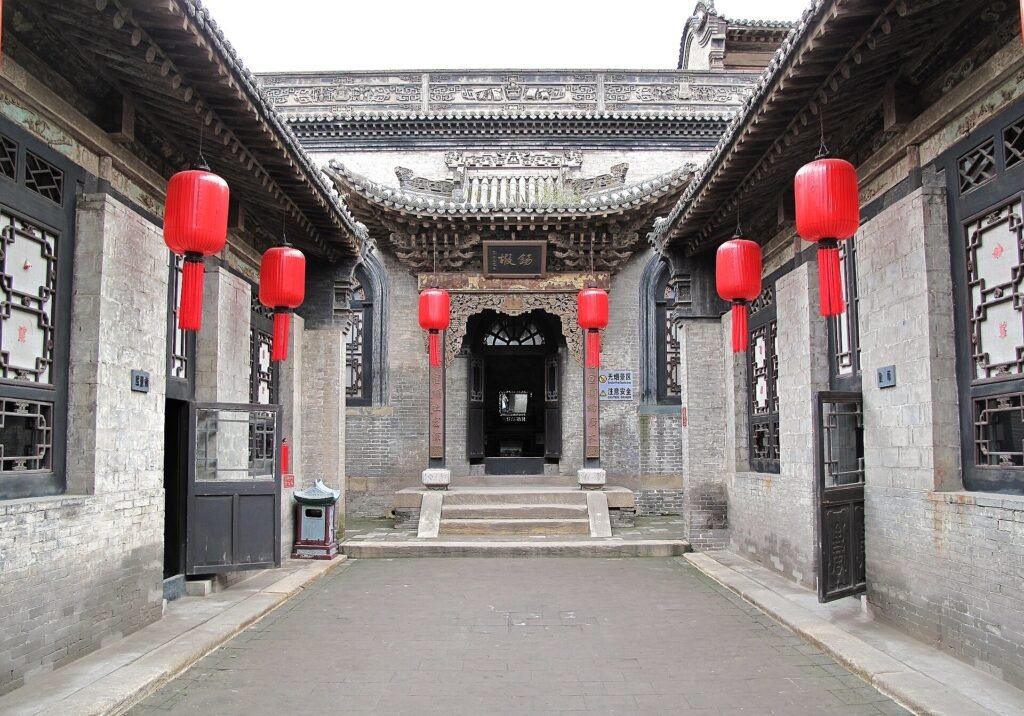
In 1991, Zhang Yimou took a novella by Su Tong about a concubine in a rich man’s house and turned it into the film that made his name abroad. Raise the Red Lantern (大红灯笼高高挂) is set in a fictional family compound, the house of the Chen clan — but the courtyards, the stone drums, the tiled roofs and the lantern-lit corridors you remember are entirely real. The film was shot at the Qiao Family Compound (乔家大院), a Qing-dynasty merchant’s mansion in Qi County, Shanxi, and it is the reason the Raise the Red Lantern filming locations are worth a trip: the greatest film of Zhang’s early career, made inside a house that still stands, forty minutes from the walled city of Pingyao.
This is one of the rare cases where the film and the place have grown into each other. Zhang shot in winter, in a compound built by a Shanxi banking family, and the film’s whole aesthetic — the grey brick, the symmetrical courtyards, the lanterns that hang and are lit like a ritual — comes straight out of the architecture. After the film won at Venice and broke box-office records in North America, the compound became famous far beyond Shanxi, and Pingyao, the intact Ming-and-Qing walled city next door, became one of China’s first UNESCO World Heritage sites. Today the Raise the Red Lantern filming locations are a two-stop trip through the heart of old Shanxi: the mansion, and the city that grew rich beside it.
The short answer: Raise the Red Lantern (大红灯笼高高挂, 1991), directed by Zhang Yimou and starring Gong Li, was filmed at the Qiao Family Compound (乔家大院) in Qi County (祁县), Jinzhong, Shanxi — a Qing-dynasty merchant’s mansion about 40 km from Pingyao. The film’s “Chen family” is fictional; the compound is not. Both the mansion and Pingyao’s ancient walled city (a UNESCO World Heritage site since 1997) are open to visitors, reachable by high-speed rail from Taiyuan, and are usually seen together in a day or two.
The film that made the compound famous
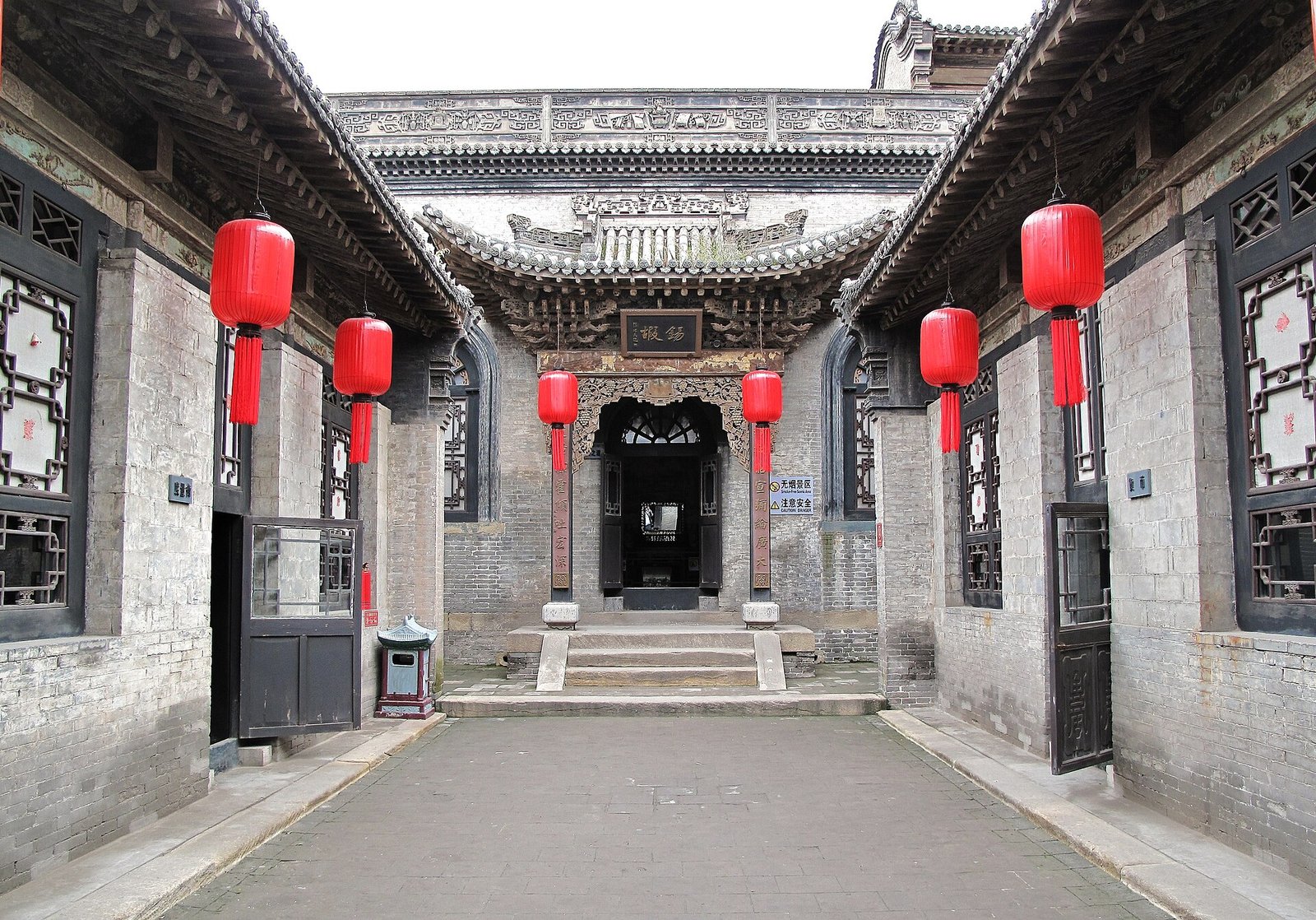
Raise the Red Lantern premiered in 1991 and became the film that carried Zhang Yimou — and his star, Gong Li — onto the international stage. It is adapted from Su Tong’s novella Wives and Concubines (妻妾成群), and it tells the story of a young woman, Songlian, who becomes the fourth wife of a wealthy patriarch and slowly learns the rules of a house in which the lighting of a red lantern decides who has power that night. It won the Silver Lion at the Venice Film Festival, and on its North American release in 1992 it set what was then a box-office record for a Chinese-language film. Its look — the grey courtyards, the red lanterns, the snow — is one of the most imitated images in Chinese cinema.
The house that supplied that look is the Qiao Family Compound. Zhang had originally gone looking at the even larger Wang Family Compound (王家大院) nearby, but the two sides could not agree on the location fee — the story goes that the Wangs wanted 300,000 yuan and Zhang walked away — so he moved on to the Qiao mansion at Qiaojiapu village in Qi County, about a hundred kilometres from the Wang compound, and shot there instead. The film calls the family the Chens; the house belongs to the Qiaos. That small substitution is the whole reason a merchant’s mansion in Shanxi became one of the most recognisable houses in world cinema.
What makes the Raise the Red Lantern filming locations unusual is that nothing was built for the film. Zhang used the compound as it was: its six large courtyards and twenty-odd smaller ones, its 300-plus rooms, its sightlines and its symmetry. When you walk it, you are walking the set — not a reconstruction, and not a theme park.
Raise the Red Lantern filming locations at a glance
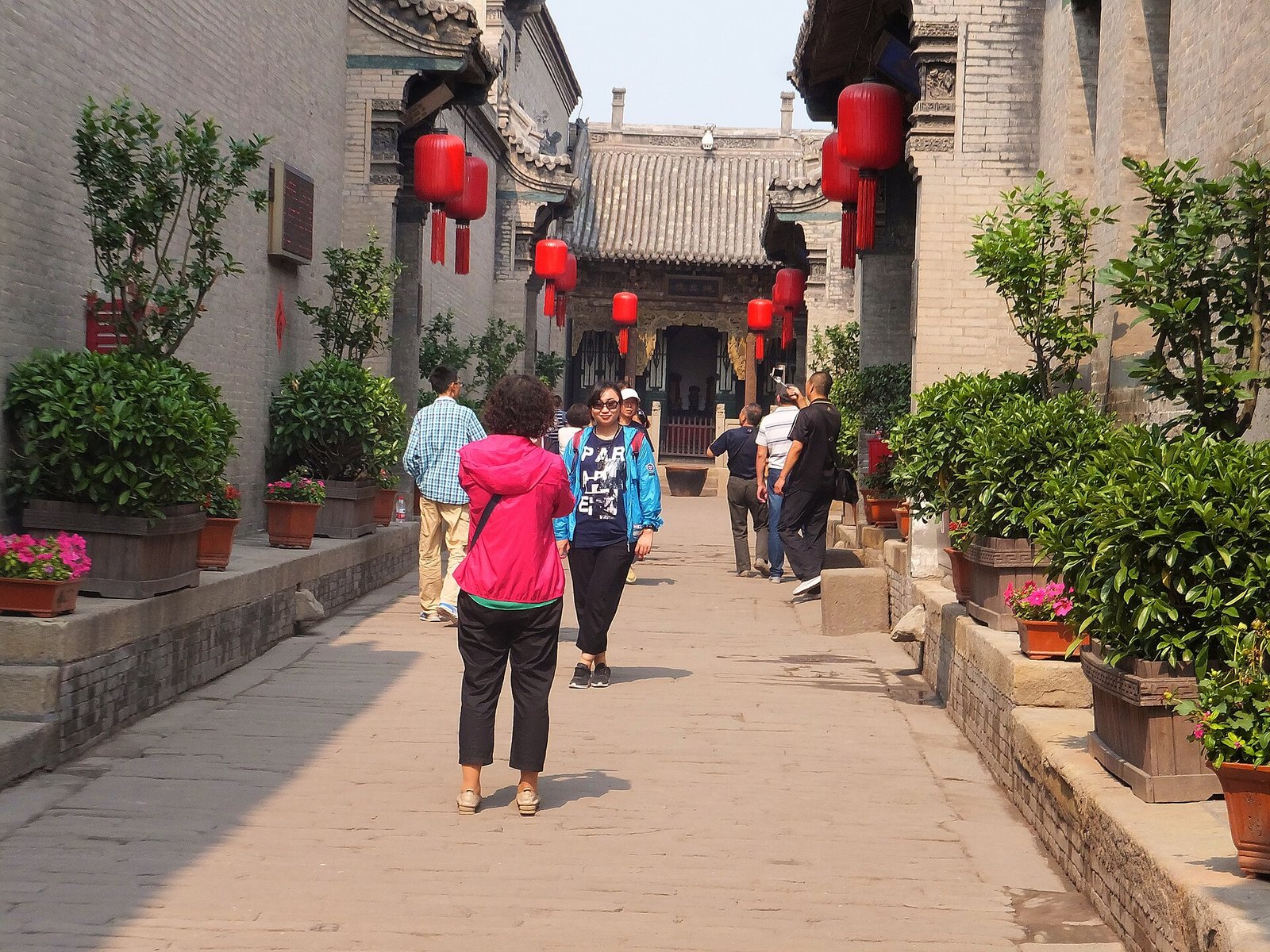
Here is the short list of Raise the Red Lantern filming locations and the places worth adding around them. The film itself was shot in one compound; the trip around it takes in the walled city and two temple complexes that together make up Shanxi’s UNESCO listing.
| Location | Where | Why it matters | Type |
|---|---|---|---|
| Qiao Family Compound (乔家大院) | Qiaojiapu, Qi County (祁县), Jinzhong | The actual filming location of Raise the Red Lantern | Ticketed (~¥115) |
| Pingyao ancient city (平遥古城) | Pingyao County, Jinzhong | The intact walled city beside the compound; UNESCO since 1997 | City free; pass ~¥125 |
| Pingyao city wall (平遥城墙) | Around the old city | The best surviving Ming-dynasty city wall in China | Needs the pass |
| Rishengchang (日昇昌票号) | Pingyao, West Street | China’s first draft bank — the origin of Shanxi’s banking fortune | On the pass |
| Shuanglin Temple (双林寺) | Qiaotou village, ~6 km from Pingyao | 2,000+ painted clay sculptures; UNESCO | Ticketed (~¥35) |
| Zhenguo Temple (镇国寺) | Haodong village, ~12 km from Pingyao | A Five Dynasties wooden hall, AD 963; UNESCO | Ticketed (~¥25) |
| Wang Family Compound (王家大院) | Jingsheng, Lingshi County | The even larger compound Zhang looked at first | Ticketed |
The Qiao Family Compound: what to see
The Qiao Family Compound (乔家大院) is the heart of the Raise the Red Lantern filming locations, and it is a serious piece of architecture in its own right. It was built over several generations in the Qing dynasty by the Qiao family, who were among the great merchant-banking clans of Shanxi — the province that effectively ran China’s finance in the eighteenth and nineteenth centuries. The compound is laid out with unusual precision: six large courtyards and twenty smaller ones, more than three hundred rooms in all, arranged on a grid so ordered that seen from above the whole complex is said to form the shape of a double happiness character (囍).
Its centrepiece is the Zai Zhong Tang (在中堂), the main residential courtyard built under the family’s most famous figure, Qiao Zhiyong, in the late Qing. It is a six-courtyard sequence of gates, screens, stone drums and covered walkways, and it is where the film’s most famous interiors were shot. The decorative detail is the reason to slow down: the wood carvings, the brick carvings, the stone lions, the calligraphy plaques and the lanterns that still hang in the courtyards. The compound has been a museum since the 1980s, and it is the busiest sight in the area after Pingyao itself.
Practical notes: the compound is at Qiaojiapu village in Qi County, on the road between Taiyuan and Pingyao. Admission is around ¥115 in the high season and it takes two to three hours to see properly. It is not on the Pingyao city pass — it is a separate ticket and a separate trip, about 40 km north-east of the walled city.
Pingyao: the walled city next door
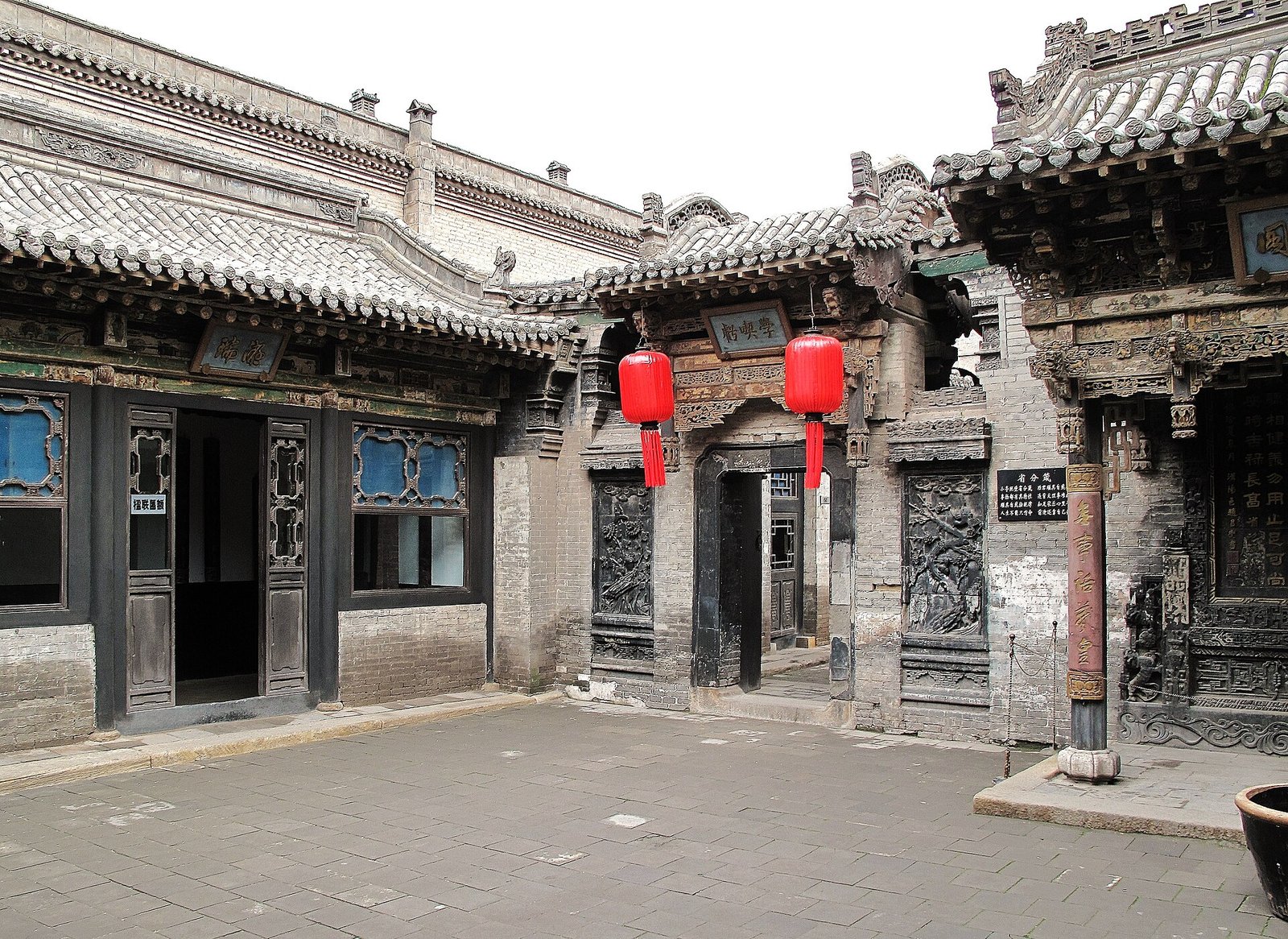
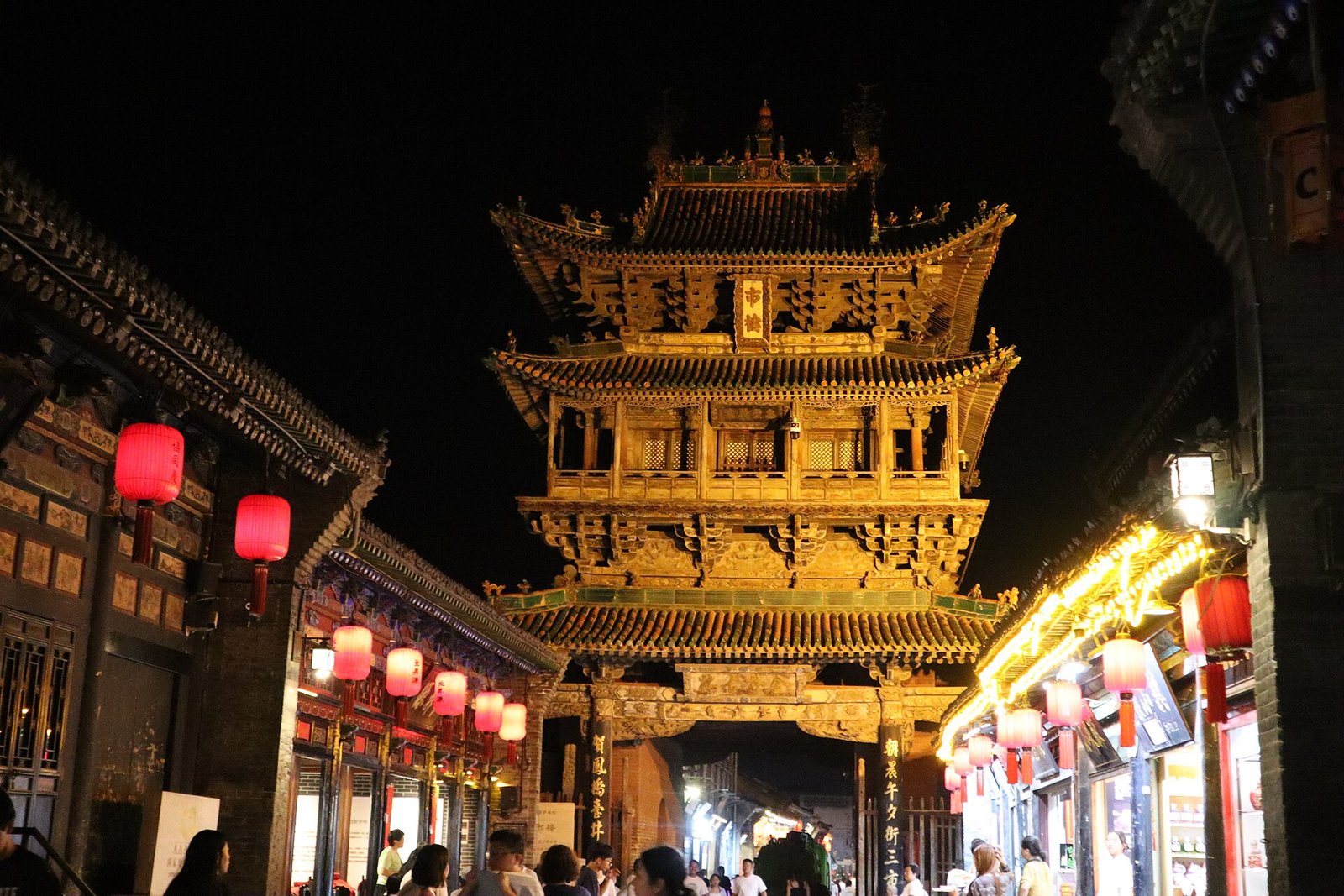
Forty kilometres south of the compound, Pingyao (平遥古城) is the other half of the trip, and for many visitors it is the main event. It is one of the best-preserved ancient cities in China: a complete Ming-and-Qing county town inside an unbroken 6-kilometre city wall, with its grid of streets, temples, courtyard houses and — crucially — tens of thousands of people still living and working inside it. In 1997 it was inscribed as a UNESCO World Heritage site, together with the two temples outside it, and it is the reason the region is on any serious China itinerary.
Pingyao was rich because it was China’s banking town. The Rishengchang (日昇昌票号) on West Street was the country’s first draft bank, founded in the 1820s, and it grew into a network that let merchants move money across the empire without moving silver. The old banks, the county government office (县衙), the Confucian temple, the City God Temple and the drum tower are all inside the walls and all covered by the city pass. The classic thing to do is simply to walk the main streets at dusk, when the lanterns come on and the grey brick turns the same colour it does in the film — and, if you have the legs for it, to walk a stretch of the city wall at sunset.
Pingyao is also the reason to think about timing. Every September the city hosts the Pingyao International Film Festival (平遥国际电影展), founded by the director Jia Zhangke, which fills the town with screenings, panels and visitors; the tenth edition ran from 24 to 30 September 2026. If you are a film traveller, that week is the one to aim for — though it is also the busiest. There is also a long-running immersive theatre piece, See Pingyao Again (又见平遥), performed nightly in a purpose-built space inside the city.
Shuanglin and Zhenguo: the two temples
Two of the Raise the Red Lantern filming locations‘ neighbourhood are not about the film at all, but they are part of the same UNESCO listing and are easy to add — and they have had an unexpected second life.
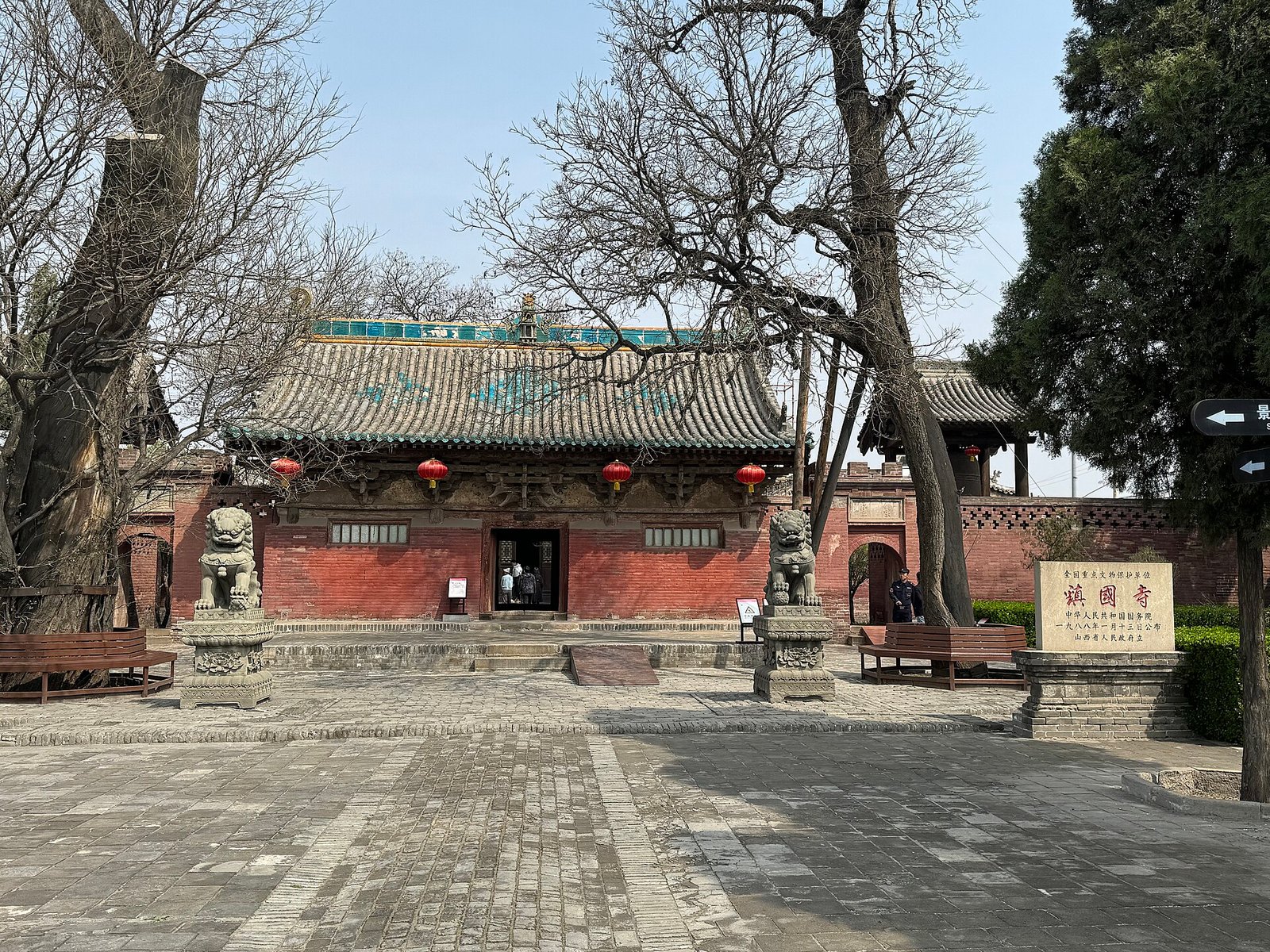
Shuanglin Temple (双林寺), about six kilometres from Pingyao, holds one of the great collections of painted clay sculpture in China: more than two thousand figures, many of them Song, Yuan and Ming, crowded into the halls in a way that is genuinely startling. Zhenguo Temple (镇国寺), a dozen kilometres the other way, is older still: its main hall, the Hall of Ten Thousand Buddhas, dates to AD 963, in the Five Dynasties period, and is one of the very few wooden buildings of that age to survive. Both are UNESCO sites, both charge a small separate ticket, and both are usually quiet — the old complaint in Pingyao was that visitors saw the city and skipped the temples.
That changed after 2024. The video game Black Myth: Wukong, which scanned dozens of real Chinese temples and grottoes as its settings, put Shuanglin and Zhenguo in front of a global audience, and visitor numbers to the two temples rose sharply. If you have played the game, you will recognise the sculpture halls immediately; if you have not, you will still be looking at some of the finest religious art in northern China.
How we checked this list
Four honest caveats, because they change how you should read everything above.
First, the family in the film is fictional and the house is real. Raise the Red Lantern is set in the household of the Chen family, which does not exist; the compound it was shot in belongs to the Qiao family. The film uses the real architecture as a stand-in for an invented one, so when you visit you are seeing the set rather than the story. That is the pleasure of it, but it is worth being clear: there is no “Chen family” to find.
Second, not every “Qiao family” reference is this one. Shanxi’s compounds share surnames and are easy to confuse — there is the Wang Family Compound, the Qiao Family Compound, and others, all within an hour or two of each other, and dramas occasionally use the same names for unrelated families. The compound in this guide is specifically the one at Qiaojiapu in Qi County, the location used for the 1991 film.
Third, there is no official scene-by-scene list. The attributions here come from Chinese media, film archives and the compound’s own material. We could not find a studio document confirming each shot, so treat the scene-level attributions as reported rather than officially confirmed, and treat all prices and hours as a snapshot. Everything here was checked on 16 October 2026.
Fourth, the film is dark, and the places are not. Raise the Red Lantern is a story about the oppression of women inside a feudal household — cold, claustrophobic and, by the end, brutal. The compound and Pingyao today are busy, warm and commercial, full of tour groups and snack stalls. Do not arrive expecting the film’s silence, and do not read the film’s politics as a description of the people who live there now.
Pingyao beyond the film
Pingyao is worth the trip whether or not you have seen the film, and for most visitors the city, not the mansion, is the reason to come. A short list, all of it checkable against official sources.
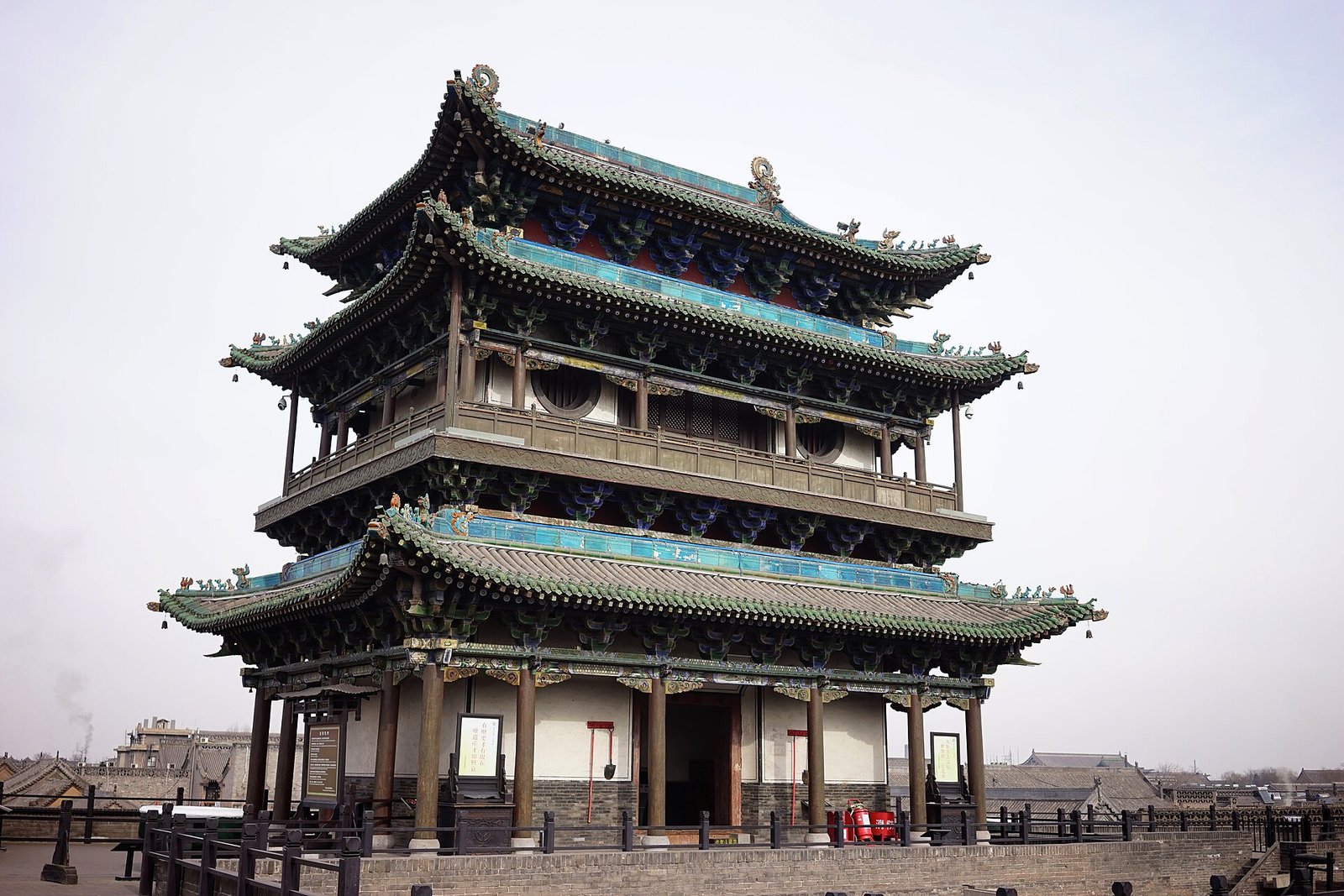
The wall comes first. Pingyao’s city wall is the best-preserved of its kind in China: about six kilometres around, with 72 watchtowers (said to represent Confucius’s 72 disciples) and more than 3,000 battlements. You cannot buy a separate wall ticket — climbing it requires the city pass — and the best stretch to walk is the southern section at sunset, looking over the grey roofs.
The streets and the food. Inside the walls, the main axes are South Street, West Street (the old banking street) and East Street. The food is northern Shanxi cooking: Pingyao beef (平遥牛肉), braised and served cold; kaolaolao (栲栳栳), steamed oat rolls eaten with a dipping sauce; wan tuo and bowls of hand-cut noodles. It is hearty, cheap and best eaten at the small places off the main drag.
The performances. See Pingyao Again (又见平遥) is a walk-through immersive show, staged in several linked spaces, that tells a Pingyao banking-family story; it runs most evenings (closed Mondays) and is worth booking a few days ahead. The city’s temples also keep a festival calendar around the Lunar New Year and the City God’s birthday.
The season. Pingyao has four proper seasons and the trip changes with them. Spring and autumn are the most comfortable. Summer is hot and crowded. Winter is cold and quiet, and it is the season that matches the film — grey skies, bare trees, and courtyards that look, on a good day, exactly like the shots in Raise the Red Lantern.
Seeing it in two or three days
The Raise the Red Lantern filming locations and Pingyao fit comfortably into two days, or three if you add the temples and the Wang compound. Build it around the two anchor sights, then let the rest fill in.
Day one — the compound. Go first to the Qiao Family Compound in Qi County, ideally arriving at opening to beat the coaches. Give it two to three hours, then travel on to Pingyao and check in inside the walls. Spend the late afternoon walking the old streets and the evening on South Street or West Street for dinner.
Day two — the walled city. Buy the Pingyao pass and work through the city: the city wall in the morning (before it gets hot or crowded), then Rishengchang, the county office, the Confucian temple and the City God Temple through the day. In the evening, either walk the wall again at sunset or see See Pingyao Again.
Day three — the temples. With a third day, take a car or a taxi out to Shuanglin Temple and Zhenguo Temple in the morning — they are in opposite directions, so plan the loop — and add the Wang Family Compound at Lingshi if you have the time and want to compare it with the Qiao mansion.
How to read this: the compound and the Pingyao pass are two separate tickets, and the temples are a third. Your costs are the two big admissions plus transport; the city streets themselves are free to walk at any hour. Group the compound and the city on consecutive days, and treat the temples as a half-day add-on.
Getting to Qiao’s and Pingyao
By rail — the good option. Pingyao is on the high-speed line south from Taiyuan, the provincial capital. The journey from Taiyuan South to Pingyao Gucheng station takes roughly 30 to 45 minutes, with second-class fares from about ¥29, and there are more than a dozen services a day. From the station it is a short ride to the old city: the 108 bus (about ¥2) runs to the north and west gates, or a taxi costs around ¥20. There is also an older Pingyao station for slower trains, a ten-minute walk from the west gate.
Getting to the Qiao Family Compound. The compound is not in Pingyao; it is in Qi County, on the Taiyuan side, roughly 40 km north-east of Pingyao and about an hour from Taiyuan. The usual approach is by road: many visitors stop at the compound on the drive between Taiyuan and Pingyao, or take a day tour from Taiyuan or Pingyao. If you are using public transport, the practical options are a tour, a hired car or a taxi — there is no dedicated high-speed stop at the compound itself.
By air. The nearest major airport is Taiyuan Wusu, with domestic flights from most Chinese cities and a growing number of international routes. From Taiyuan you take the high-speed train or a car south to Pingyao and Qi County. Pay for everything with Alipay or WeChat Pay.
Tickets, hours and what is free
| What | Price | Notes |
|---|---|---|
| Qiao Family Compound | ~¥115 | High season; ~¥100 in winter. Allow 2–3 hours |
| Pingyao ancient city streets | Free | The walled city itself has no admission charge |
| Pingyao city pass (通票) | ~¥125 | Covers the wall and 22 sights; valid 72 hours after first use |
| Pingyao city wall | Pass only | No separate ticket; you need the pass to climb it |
| Shuanglin Temple | ~¥35 | ~6 km from the city; not on the pass |
| Zhenguo Temple | ~¥25 | ~12 km from the city; not on the pass |
| See Pingyao Again (又见平遥) | ~¥238 up | Most evenings; closed Mondays; book ahead |
| Taiyuan South → Pingyao Gucheng (rail) | ~¥29–31 | About 30–45 minutes; frequent services |
| Pingyao Gucheng station → old city | ~¥2 bus / ~¥20 taxi | Bus 108 to the north and west gates |
What to know before you go
Visas. Shanxi is covered by China’s visa-free transit rules, with Taiyuan as the designated entry point, so eligible travellers on a confirmed onward ticket to a third country or region can transit without a full visa. Country lists and conditions change — check our visa guide and the official source before you book.
Weather. Shanxi has a continental climate with four real seasons. Spring and autumn are the most comfortable for walking; summer is hot and the main streets get crowded; winter is cold, dry and quiet — and, if you are chasing the film, the best season to see the courtyards as Zhang shot them. Bring layers and comfortable shoes, because both the compound and the walled city are seen on foot.
Paying and booking. Alipay and WeChat Pay work with foreign cards and are how you buy train tickets, admissions and meals. The Pingyao pass and the immersive show are best booked through the city’s official mini-programme or at the ticket offices inside the walls; the compound takes its own ticket. Carry your passport — it is the ID for rail travel and for the visa-free-transit paperwork.
Booking in the peak. Pingyao fills up around the Lunar New Year, the May and October holidays and, increasingly, the September film festival. Hotels inside the walls are the nicest way to stay and the first to sell out, so book early in those windows.
When to go. For comfort, aim for April–June or September–October. For the film’s atmosphere, come in winter. For the festival, come in late September — and book everything months ahead.
Common questions
Where was Raise the Red Lantern filmed?
At the Qiao Family Compound (乔家大院) in Qiaojiapu village, Qi County (祁县), in Jinzhong, Shanxi province, China. Zhang Yimou shot the 1991 film on location in this Qing-dynasty merchant’s mansion rather than on a set. The nearby walled city of Pingyao, about 40 km away, is the natural companion stop and is itself a UNESCO World Heritage site.
Is the Qiao Family Compound the “Chen family” house from the film?
No — the film’s Chen family is fictional. Raise the Red Lantern is adapted from Su Tong’s novella Wives and Concubines, and the household in the story is invented. The house you see on screen is the real Qiao mansion, used as a stand-in for the fictional one. So when you visit, you are walking the film’s set, not the home of its characters.
Can you visit the filming location?
Yes. The Qiao Family Compound has been a museum for decades and is open daily, with admission around ¥115 in the high season. It takes two to three hours to see, and it is about an hour from Taiyuan and 40 km from Pingyao. The courtyards, carvings and lanterns that appear in the film are all still there.
Why did Zhang Yimou shoot at Qiao’s and not Wang’s?
By most accounts it came down to money. Zhang first scouted the larger Wang Family Compound (王家大院) at Lingshi, but the two sides could not agree on a location fee — the story is that the Wangs asked for 300,000 yuan and the production walked away — so Zhang moved on to the Qiao mansion in Qi County and shot there instead. Both compounds are now open to visitors, so you can compare them yourself.
How do I get to the Qiao Family Compound and Pingyao?
Fly or train to Taiyuan, then take the high-speed rail south: Taiyuan South to Pingyao Gucheng takes about 30–45 minutes, with second-class fares from around ¥29. The compound is reached by road, usually as a stop on the drive between Taiyuan and Pingyao or on a day tour. From Pingyao Gucheng station, bus 108 or a short taxi ride takes you into the old city.
Is Pingyao worth visiting too?
Very much so. Pingyao is one of the best-preserved ancient cities in China — a complete Ming-and-Qing county town inside a six-kilometre wall, with its banks, temples and courtyard houses intact and still lived in. It has been a UNESCO World Heritage site since 1997. Most visitors see the compound and Pingyao together, and many find the city is the highlight.
What are the Shuanglin and Zhenguo temples?
Two temple complexes outside Pingyao that are part of the same UNESCO listing. Shuanglin Temple holds more than two thousand painted clay sculptures, many of them centuries old; Zhenguo Temple has a wooden main hall dating to AD 963. Both charge a small separate ticket and are usually quiet. They became much better known internationally after the 2024 video game Black Myth: Wukong scanned them as settings.
What is the best time to visit?
For comfortable walking, April–June or September–October. For the wintry courtyards that match the film, come in winter. If you want the Pingyao International Film Festival, aim for late September — the tenth edition ran 24–30 September 2026 — and book hotels well in advance.
Your next move
More real cities, more screens?
Shanxi is one of the real places we have mapped to the screen — from steel towns and water towns to the merchant mansion that played a feudal household in Zhang Yimou’s breakthrough film.
Worried about the practical stuff?
Visas, payment, trains and the apps you will need before you land — the four things you cannot work out on the ground. Each guide is dated and sourced.
Ready to go?
Old Shanxi is grey brick, red lanterns and a walled city that never came down. See where it sits on the map.
Last verified
Sources: Pingyao County People’s Government, Culture and Tourism Bureau (pingyao.gov.cn) — the official ticket prices for the Pingyao ancient city pass (¥125 full / ¥65 half) and for Shuanglin Temple (¥35 / ¥15) and Zhenguo Temple (¥25 / ¥10) · Pingyao County People’s Government news centre (pingyao.gov.cn), 2026-02-17 — the Pingyao city wall: a circumference of about 6.1 km, 72 watchtowers and 3,000 battlements, said to represent Confucius’s 72 disciples and 3,000 students · Pingyao Ancient City Scenic Area Management Co. (official notice), 2026-10-09 — winter operating hours from 9 October: all sights including Shuanglin and Zhenguo temples open 08:00–17:30, with the last ticket check 15 minutes before closing · Baidu Baike, "Qiao Family Compound" and "Qi County Qiao Family Compound Cultural Park", and a Baidu Wenku price summary (September 2026) — admission to the Qiao Family Compound at ¥115 full / ¥58 half, reduced from ¥138 during the 2019 clean-up of the site · Baidu Baike, "10th Pingyao International Film Festival"; the festival’s official site (pyiffestival.com); and Baijiahao (2026-04-23) — the tenth Pingyao International Film Festival held in the ancient city from 24 to 30 September 2026, founded by Jia Zhangke · Baidu Baike, "See Pingyao Again"; and a Baidu Wenku summary (2026-08-24) — the immersive walk-through show See Pingyao Again (又见平遥) at ¥238 per person, usually performed at 14:00 and 19:00 Tuesday to Sunday and closed on Mondays · China News Service (chinanews.com.cn), 2024-09-25 — the Black Myth: Wukong effect: visitor numbers at Pingyao’s Shuanglin Temple rose 500.52% year on year after the game used it and the Zhenguo Temple as settings · Gamersky (gamersky.com), 2026-08-17, and Baijiahao, 2024-09-01 — Shuanglin Temple’s more than 2,000 painted clay sculptures and Zhenguo Temple’s Hall of Ten Thousand Buddhas as one of the oldest surviving timber halls in China, dating to the Five Dynasties period · Baidu Baike, "Pingyao City Wall" and "Pingyao Ancient City" — the wall rebuilt in 1370 (Hongwu 3), about 12 m high with a circumference of more than 6,100 m; the ancient city inscribed by UNESCO as a World Heritage site in 1997 together with Shuanglin and Zhenguo temples · Baijiahao (2024-08-09 and 2025-07-15) — how Zhang Yimou came to shoot at Qiao’s: he first scouted the larger Wang Family Compound but the two sides could not agree a location fee (reported at 300,000 yuan), so he moved to the Qiao mansion in Qi County, about 100 km away · Ctrip and Baidu Wenku — Taiyuan South to Pingyao Gucheng high-speed rail at roughly 30–45 minutes with second-class fares from about ¥29, and bus 108 (about ¥2) or a taxi (about ¥20) from the station into the old city · IMDb (tt0101640) and TMDB — Raise the Red Lantern (1991): directed by Zhang Yimou, starring Gong Li, adapted from Su Tong’s novella Wives and Concubines, winner of the Silver Lion at the Venice Film Festival · Wikimedia Commons photo pages for the photographs used, credited in the captions and the media library
Spotted something out of date? Email us — or read how corrections work. We check every report against the source and update the page.
Ready to plan it? Turn the dramas you have watched into a day-by-day route with the C-drama route planner.
Not sure where to start? Take the drama-city quiz — seven questions, one city, and a route waiting at the end.