
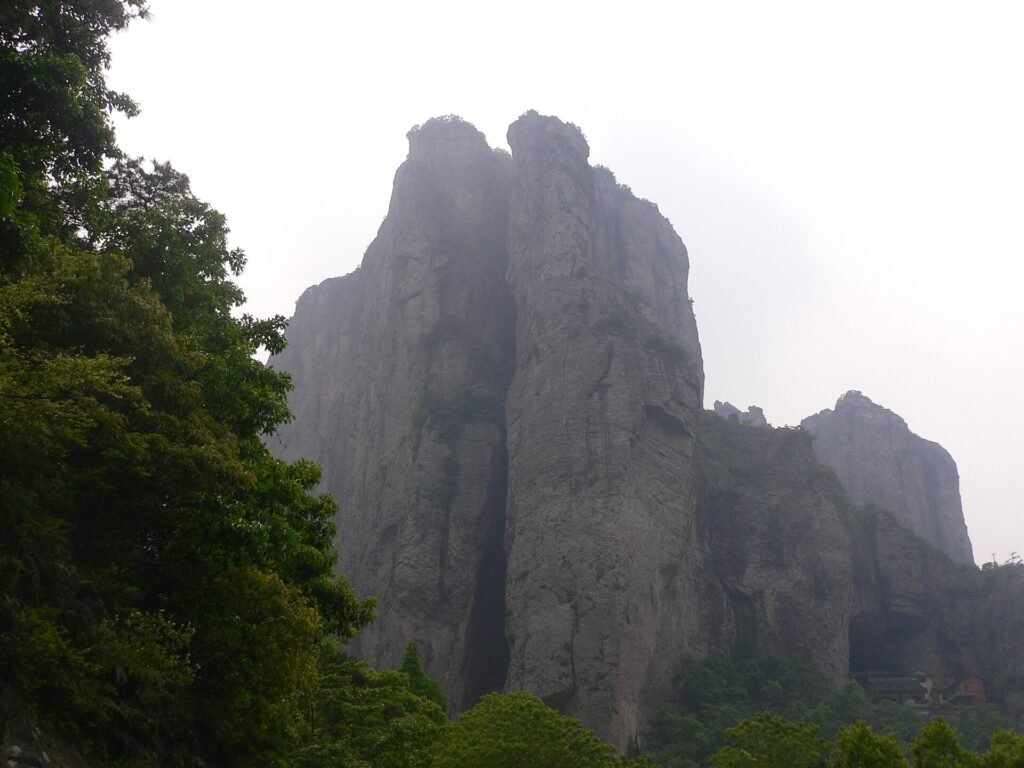
There is a real Langya Mountain in China. It is in Chuzhou, Anhui, it has a pavilion that Ouyang Xiu wrote a famous essay about in 1046, and it has nothing to do with Nirvana in Fire. The show’s Langya Mountain is a fiction — and the cliffs, mist and waterfalls that stood in for it are 600 km away, on the Zhejiang coast, in a geopark most Western fans have never heard of. These are the real Nirvana in Fire filming locations.
The short answer: Nirvana in Fire (琅琊榜) was not shot in one place. The mountain scenery that plays Langya Mountain is Yandang Shan (雁荡山) in Wenzhou, Zhejiang. The palace, city gate and mansion interiors are sets inside Xiangshan Film City (象山影视城) near Ningbo. A handful of scenes — the Qin Palace and the riverside pavilion ambush — were shot at Hengdian. The mountain is real and worth the trip on its own; the studios are film sets you pay to walk through. Allow three days, and read the ticket section before you buy anything.
The Langya Mountain problem behind these Nirvana in Fire filming locations
Search for “Langya Mountain” in English and you will be sent to Anhui. Search for it in Chinese and you will find the same thing: 琅琊山, the mountain in Chuzhou that Ouyang Xiu made famous with his Zuiweng Ting Ji, written in 1046, which every Chinese schoolchild can recite. It is a genuine beauty spot with a genuine history.
It is also a coincidence. Nirvana in Fire began life as an online novel by an author writing under the name Hai Yan, and the Langya Mountain in the book is invented — the same way Westeros is invented. When the 2015 television adaptation went looking for somewhere that looked like the seat of a mysterious intelligence network, it did not go to Anhui. It went to the coast of southern Zhejiang, to a mountain range made of volcanic rock, and pointed its cameras at the weather.
This is the single most useful thing to understand before you plan a trip, because it changes what you are booking. A Langya Mountain pilgrimage is not a studio tour and not a temple visit. It is a national geopark, and the show’s contribution was mostly to notice how the light fell on it.
The three real Nirvana in Fire filming locations
| Place | Where | What it is in the show | Type |
|---|---|---|---|
| Yandang Shan (雁荡山) | Wenzhou, Zhejiang | Langya Mountain — the cliffs, the mist, the mountain approach | Real landscape, 5A geopark |
| Xiangshan Film City (象山影视城) | Xiangshan, Ningbo, Zhejiang | The city gate, the palace halls, the mansion interiors, the market street | Working studio park |
| Hengdian World Studios (横店影视城) | Dongyang, Jinhua, Zhejiang | The Qin Palace (Yangju Hall, the prison exteriors) and the riverside pavilion ambush | Working studio park |
All three are in Zhejiang, which makes the trip sound easier than it is: the mountain is in the far south of the province and the studios are in the centre and east, roughly 300 km apart. You will not do all three in a day, and most people should not try.
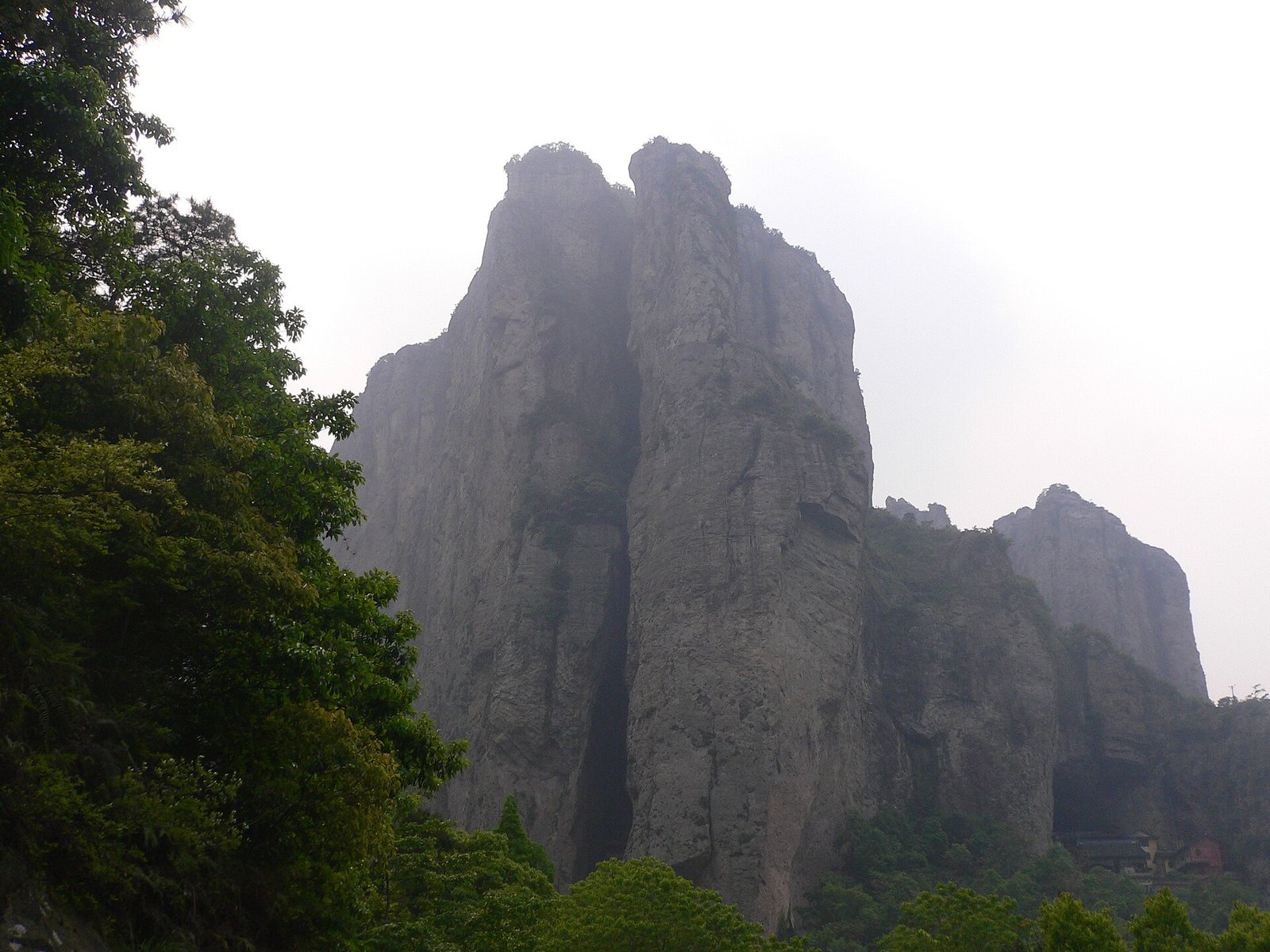
Photo: 江上清风1961 / Wikimedia Commons, CC BY 3.0
Yandang Mountain: the show’s mountain
Yandang Shan is not an obscure location. It is a UNESCO Global Geopark, a national 5A-rated scenic area, and one of the oldest tourist mountains in China — the poet Xie Lingyun climbed it in the 5th century, and it has been called “the first mountain under heaven” ever since. It is made of rhyolite and tuff, erupted and then cracked by faulting, which is why it looks the way it does: vertical cliffs, isolated pillars, and narrow gorges that open without warning.
What makes it work for Nirvana in Fire is that it is genuinely strange. The rock formations change shape as you walk past them — the Chinese phrase is 移步换形, “change form with each step” — and at night, lit only by moonlight, the same peaks read as entirely different silhouettes. The show’s mountain is supposed to feel like a place where information is traded and nobody is quite who they say they are. Yandang already felt like that.
Which of the eight areas matter
The scenic area is divided into eight ticketed zones: Lingfeng (灵峰), Lingyan (灵岩), Dalongqiu (大龙湫), Sanzhepu (三折瀑), Fangdong (方洞), Xianshengmen (显胜门), Yangjiaodong (羊角洞) and Yanhu (雁湖). A ninth, Xianqiao, is listed as undeveloped.
Three of them — Lingfeng, Lingyan and Dalongqiu — are known together as the 雁荡三绝, the “three wonders,” and they are what almost everyone comes for. For a Nirvana in Fire trip you can add one more: Xianshengmen, where two rock walls stand about 200 m high and only a few metres apart. It is the most cinematic formation on the mountain and it is also the least visited, because it sits in a separate valley to the north-west and takes a deliberate detour.
Lingfeng: day, night, and the crew’s passage
Lingfeng is the eastern gate of the mountain and the busiest area, for a good reason: it is the one place where the same walk is worth doing twice. The day ticket and the night ticket are sold separately, and the night walk is the whole point — the peaks that read as ordinary cliffs in daylight turn into animals and figures after dark, and there are licensed guides at the entrance whose entire job is to point at them and tell you what you are supposed to be seeing.
The area also holds one of the more specific pieces of Nirvana in Fire trivia on the mountain. The Lingfeng caves — a chain of connected grottoes formed along a fault line — were used during filming, and the crew’s internal passage through them was kept. It is the sort of thing that is easy to walk straight past, because nothing about it announces itself.
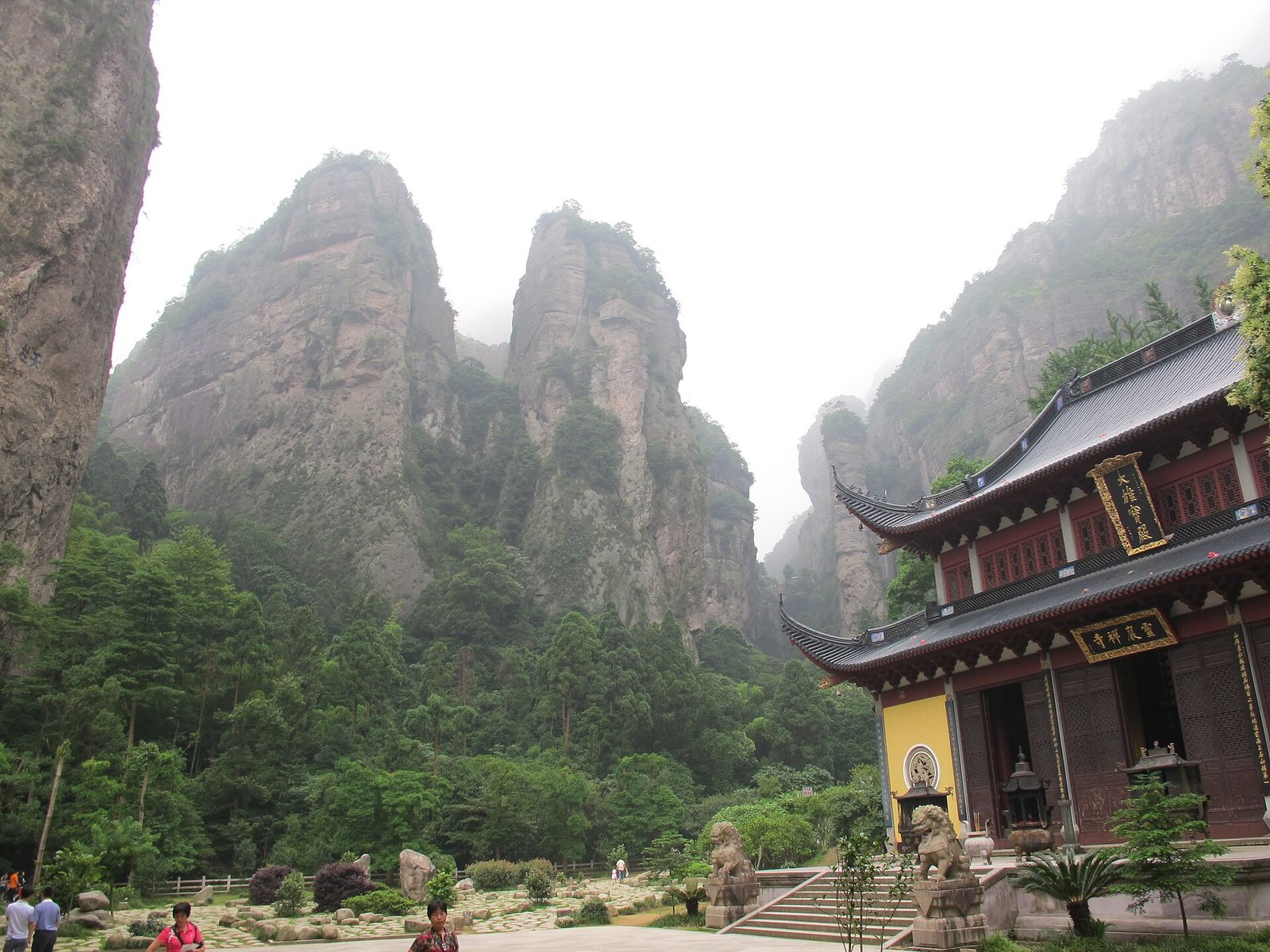
Photo: 江上清风1961 / Wikimedia Commons, CC BY 3.0
Getting to Yandang Mountain
This is easier than it used to be, and the details are the part that most English-language guides get wrong.
There is a dedicated station: Yandangshan Railway Station (雁荡山站), on the coastal high-speed line that runs between Ningbo and Wenzhou. It is about 2 km from the scenic area — close enough that some hotels will collect you, and close enough that the station is genuinely part of the visit rather than a transfer you endure.
The second thing, and the one worth knowing: the shuttle from the railway station to the visitor centre is free, and the internal tourist-bus network that links the scenic areas is currently free as well. The official transport page lists four dedicated lines — 游1, 游2, 游5 and a night service — running through the station, the visitor centre, Xianglingtou, and then Lingfeng, Sanzhepu, Fangdong, Lingyan and Dalongqiu in sequence. Buses leave when full or at intervals, and the last departures are adjusted to match the closing times of the areas, including the Lingfeng night session.
Two caveats, because this is China and nothing is permanent. The word the operator uses is 暂时 — “for the time being.” Free shuttles have a way of acquiring a fare. And the night line only matters if you are doing Lingfeng after dark, which you should.
By road, the G15 coastal expressway has a Yandang Shan exit; the official driving directions assume you are coming from Shanghai, Hangzhou, Ningbo or Fuzhou. From Shanghai the high-speed rail run to Yandangshan is the sane option, and there are direct services on the coastal line — check 12306 for the day you travel rather than trusting a timetable printed in a guidebook.
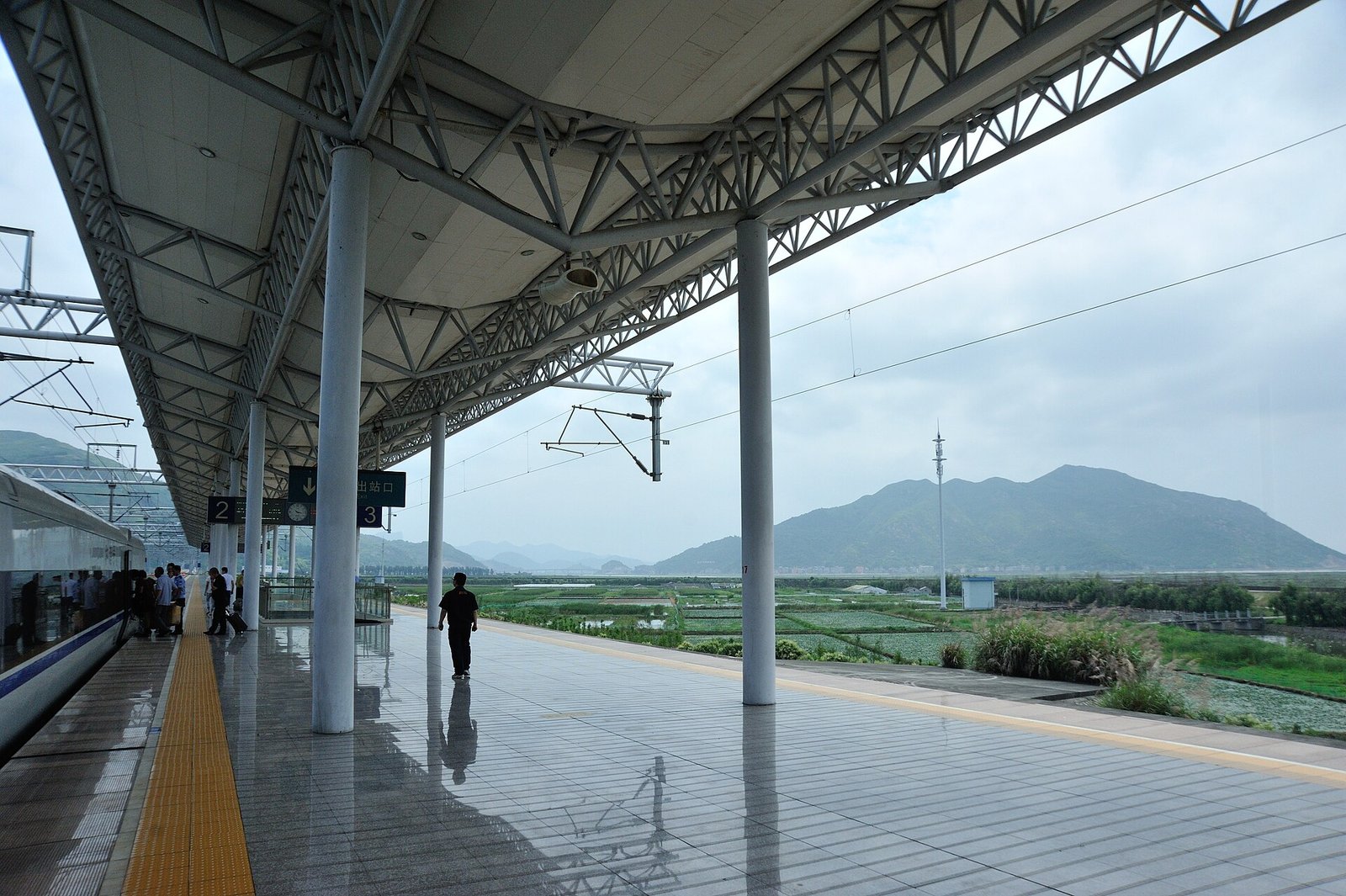
Photo: Siyuwj / Wikimedia Commons, CC BY-SA 3.0
Tickets, hours, and the merged-ticket trap
Yandang Shan has no single admission ticket. You buy each scenic area separately, or you buy a combination. That much is normal. What is not normal is what happened to two of the areas in September 2025.
Under a notice issued by the Yueqing municipal government (乐政发〔2025〕10号, effective 15 September 2025), the Lingyan and Fangdong areas were merged into a single “Lingyan–Fangdong Scenic Area” with a government-capped maximum price of ¥80 per person per visit. The cap is a ceiling, not a price — the operator is free to charge less.
Here is the part that catches people: the notice also kept the two areas on sale separately, at the prices set back in 2013 — ¥50 for Lingyan and ¥40 for Fangdong. Add those together and you get ¥90, which is more than the merged ticket can legally cost. Buying the two areas separately is now the more expensive way to see them. If a ticket window offers you a choice, the combined ticket is the one you want.
The other areas are priced individually and the mountain does not publish a single consolidated price list — the official site points you to its online ticketing channel instead. The figures most commonly quoted, and consistent across the operator’s sales channels, are Lingfeng ¥45 by day and ¥45 by night, with Dalongqiu around ¥50. Treat those as indicative and confirm at the window or on the official ticketing page, because the only price this mountain has published as a government-capped number is the ¥80 ceiling on Lingyan–Fangdong.
Two more things worth knowing before you pay:
- Students pay half. The official FAQ is explicit: full-time students in the national education system get 50% off on production of a student card, and that includes research students. A foreign student card is not mentioned, so bring your home institution’s card and be ready to explain it.
- The free-entry list is long. The管委会’s own regulations (温雁管〔2023〕23号) list nineteen categories, including anyone aged 70 or over, children under 6 or under 1.2 m, disabled visitors, serving and retired military personnel, and teachers who have taught for thirty years. Most of these require a Chinese-issued document, so foreign visitors should assume they will be paying.
Buying as a visitor from outside China: the official online ticketing channel is built for Chinese ID holders, so the reliable route is your passport at a staffed ticket window — at the visitor centre or at each area’s gate. Your passport stands in for a Chinese ID card, and you carry the same one on the day. The areas are ticketed separately, so buy each one as you reach it rather than trying to assemble everything online first.
When to go
The official FAQ puts the peak season at mid-March to mid-October, with the rest of the year as off-season — though it notes that winter tourism has been growing. It also warns, in unusually blunt language for an official site, that weekends are the worst: trains and buses sell out, Friday-to-Sunday hotel rooms fill up, and prices rise. If you have any flexibility, go on a weekday.
One seasonal quirk is worth diarising. Yandang hosts the Zhejiang landscape tourism festival in mid-October, and for the 2025 edition — the nineteenth — all eight state-run scenic areas waived admission for three days, 11 to 13 October. Whether the twentieth edition repeats the gesture is not something the operator has published at the time of writing, so check the official notice board in the first week of October before you book around it.
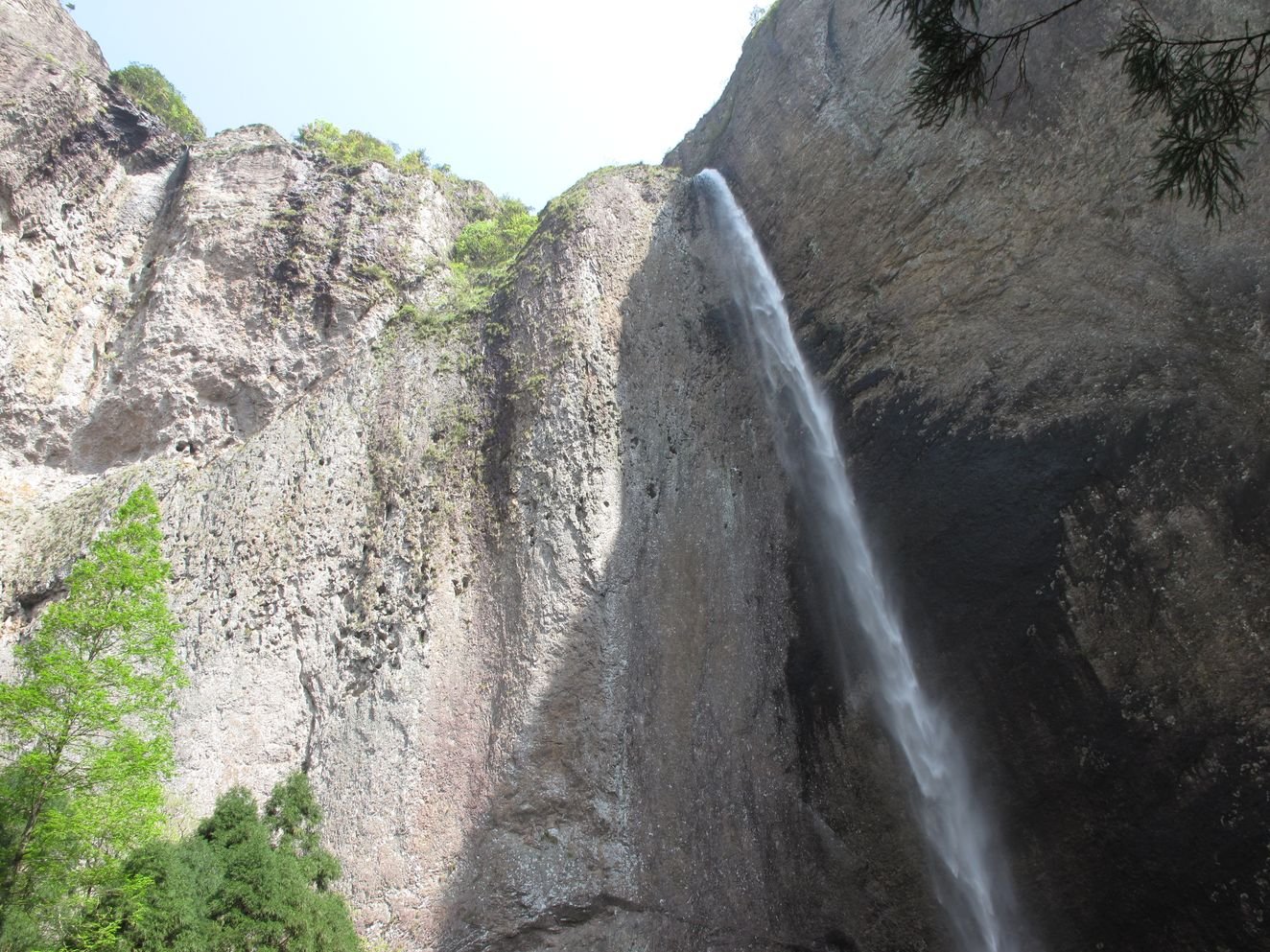
Photo: rheins / Wikimedia Commons, CC BY 3.0
Xiangshan Film City: the palace they built
The interiors are the other half of the show, and they are not on a mountain. They are inside a studio park on the coast east of Ningbo, and the honest way to describe a visit is this: you are walking through the backlot of a television drama, with the sets still standing and occasionally still in use.
Fan surveys of the park map the Nirvana in Fire locations as the city gate (which is the gate in the show, with the ancient battlefield laid out in front of it), the Jing Prince’s mansion, the palace hall in the Taoyuan temporary-palace set, the small tournament ground behind it where Princess Nihuang’s marriage contest is staged, a covered walkway used for the scene in which Mei Changsu and Commander Meng Zhi recognise each other, and the market street with the little archway where Mei Changsu and Prince Jing talk. Several of the mansion sets — Zhuangji, Zhaodun and Gongsun — were used for interiors.
The thing to plan around is that these are working sets. Productions still shoot here, and when they do, individual buildings close with no notice and no appeal. The park’s own advice is to accept it. If seeing a specific set matters more to you than seeing the park, that is a reason to travel in the off-season, not the peak.
For tickets, hours and how to get there — including the Metro Line 12 connection that changed in September 2026 — see our full Xiangshan Film City guide. The short version: adult admission is ¥150, winter hours run 08:30–16:00, and the park’s hotline is 400-711-3355.
Hengdian: the Qin Palace and the pavilion
Hengdian is the largest studio complex in the world and it appears in Nirvana in Fire in a handful of very specific places. Inside the Qin Palace (秦王宫) area, the show used the main hall as the exterior of Yangju Hall, the isolated buildings on the eastern and western flanks as the exterior of the Liang prison, and the junction between the main hall and the side halls for the scene in which Mei Changsu first runs into Tingsheng.
In the Along the River During the Qingming Festival (清明上河图) area, the riverside pavilion — the Huxin Ting, or “lake-heart pavilion” — is where the ambush at Jingrui’s birthday party was staged. Fans who have walked it note the same thing the director must have: the pavilion has no exit at the back. The characters really are trapped.
Hengdian is a full day on its own and is ticketed by area. Some ticket orders require a separate reservation, and overseas visitors have a specific official booking-to-passport process; see the current Hengdian guide rather than relying on old face-registration directions.
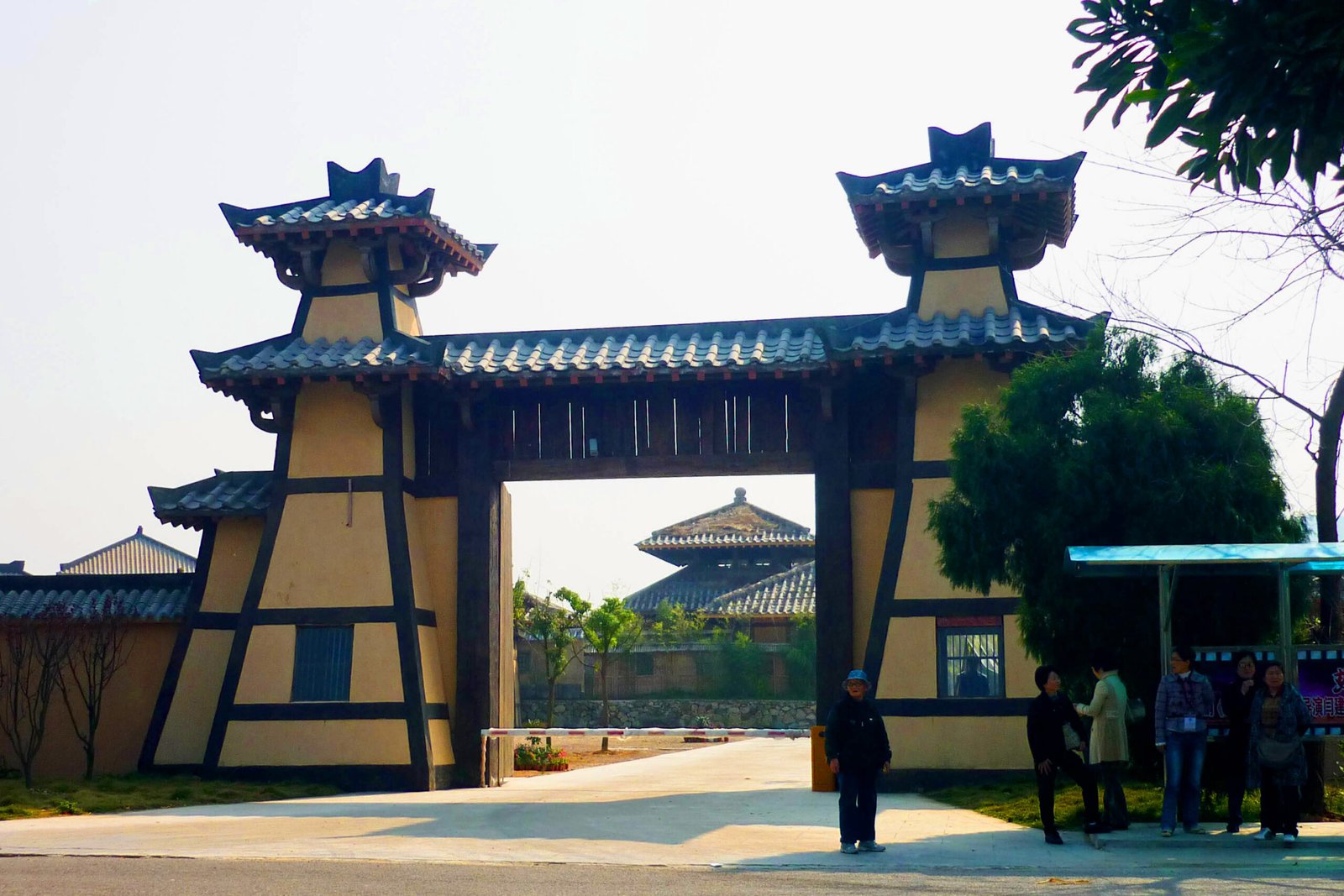
Photo: Wikimedia Commons, CC BY-SA 4.0
A realistic three-day route
Because the mountain and the studios are 300 km apart, the sensible plan is to give the mountain a day and a half and the studios the rest.
- Day 1 — Yandang, Lingfeng twice. Arrive at Yandangshan station, take the free shuttle to the visitor centre and on to Lingfeng. Walk the day circuit, eat in Xianglingtou, then go back in for the night session. This is the one day of the trip that cannot be compressed.
- Day 2 — Dalongqiu and Lingyan, then move. Morning at Dalongqiu (best after rain), then Lingyan and, if you have the legs, Fangdong on the combined ticket. Take an evening train north towards Ningbo and sleep in Xiangshan.
- Day 3 — Xiangshan Film City. A full day inside the park, working from the city gate inwards. If you want Hengdian as well, add a fourth day and route via Yiwu rather than trying to bolt it onto day three.
If you only have one day, choose the mountain. The studio park is a place where a television show was made; the mountain is the thing the show was trying to look like.
Common questions
Was Nirvana in Fire really filmed at Yandang Mountain?
The mountain scenery was. The palace interiors were not — they are sets at Xiangshan Film City and, for a few scenes, Hengdian. Yandang contributed the landscape: the cliffs, the mist, the gorges and the night silhouettes that the show uses to sell the idea of a hidden mountain stronghold.
Is Langya Mountain in Anhui the same place?
No. The Langya Mountain in Chuzhou, Anhui is real, famous, and unrelated. The name in the novel is invented; the scenery is Yandang’s. This is the single most common mix-up about the show, and it is why so many “Nirvana in Fire filming location” articles send people to the wrong province.
How many days do I need?
Two days for Yandang alone, if you want Lingfeng at night and the other areas by day. Three days if you add a studio park. Four if you want both Xiangshan and Hengdian.
Can I do this without speaking Mandarin?
Yandang is manageable. Signage is bilingual in the main areas, and shuttle routes are numbered. Xiangshan and Hengdian have different ticket and ID procedures; for Hengdian, follow the current passport booking and reservation steps. Carry a translation app and the Chinese names of the areas you want; our apps guide covers useful tools.
What should I combine it with?
Yandang pairs naturally with Wenzhou and the southern Zhejiang coast, and with Ningbo if you are heading to Xiangshan. If you are building a longer C-drama route, the studio parks cluster in central Zhejiang — see our Zhejiang film-studio route.
Your next move
Worried about the practical stuff?
Visas, payment, trains and the apps you’ll need before you land — the four things you cannot work out on the ground. Each guide is dated and sourced.
Ready to go?
The landscape scenes are Yandang’s. The guide covers the eight scenic areas, the shuttle and the merged ticket.
Last verified
Sources: Douban, first-hand visitor survey of Xiangshan and Hengdian film studios, 23 October 2017 — maps the Nirvana in Fire sets at Xiangshan (city gate, Jing Prince's mansion, palace hall, tournament ground, covered walkway, market-street archway) and at Hengdian (Qin Palace main hall, prison exteriors, the Huxin Ting pavilion) — https://movie.douban.com/review/8882224/ · Hengdian World Studios — English overseas booking and admission instructions · Hengdian World Studios — scenic-area reservation list, per-ID rule, and hotline · NetEase, 10 October 2025, relaying the operator's own '雁荡山发布' announcement — 19th Zhejiang landscape tourism festival at Yandang on 12 October 2025, with all eight state-run scenic areas waiving admission from 11 to 13 October 2025 — https://www.163.com/dy/article/KBHP5NAL0545AOQT.html · Wenzhou Yandang Mountain Scenic Area Management Committee (温州市雁荡山风景旅游管理委员会), ticket-concession regulations (温雁管〔2023〕23号), listing the nineteen categories entitled to free admission and defining the eight ticketed scenic areas — https://yds.wenzhou.gov.cn/art/2024/1/8/art_1229128374_2030285.html · Xiangshan Global Studios (象山影视城) official visitor notice — adult admission ¥150, winter opening hours 08:30–16:00, visitor hotline 400-711-3355 — https://www.xgslot.com/ · Yandang Mountain official tourism site — operator contact line 0577-6217-8888 and registered address in Yandang town, Yueqing — https://www.wzyds.com/ · Yandang Mountain official tourism site, FAQ — peak season mid-March to mid-October, weekends the busiest period, full-time students at 50% on production of a student card — https://www.wzyds.com/faq.aspx?t=37 · Yandang Mountain official tourism site, scenic-area descriptions — the eight areas, the 'three wonders', and Dalongqiu's single 197 m drop — https://www.wzyds.com/scenicSpot.aspx?t=17 · Yandang Mountain official tourism site, transport manual — Yandangshan railway station 2 km from the scenic area, free shuttle from the station to the visitor centre, and the four tourist-bus lines (游1/游2/游5/night) currently free of charge — https://www.wzyds.com/traffic.aspx?t=32 · Yueqing Municipal People's Government (乐清市人民政府), notice on the approved ticket price for the Lingyan–Fangdong Scenic Area (乐政发〔2025〕10号), effective 15 September 2025 — merges Lingyan and Fangdong under a government ceiling of ¥80 per person per visit, and retains separate single-area sale at ¥50 (Lingyan) and ¥40 (Fangdong) — https://yds.wenzhou.gov.cn/col/col1229128374/art/2025/art_73da53dad225428691b4a5a568322fd0.html
Spotted something out of date? Email us — or read how corrections work. We check every report against the source and update the page.
Ready to plan it? Turn the dramas you have watched into a day-by-day route with the C-drama route planner.
Not sure where to start? Take the drama-city quiz — seven questions, one city, and a route waiting at the end.