
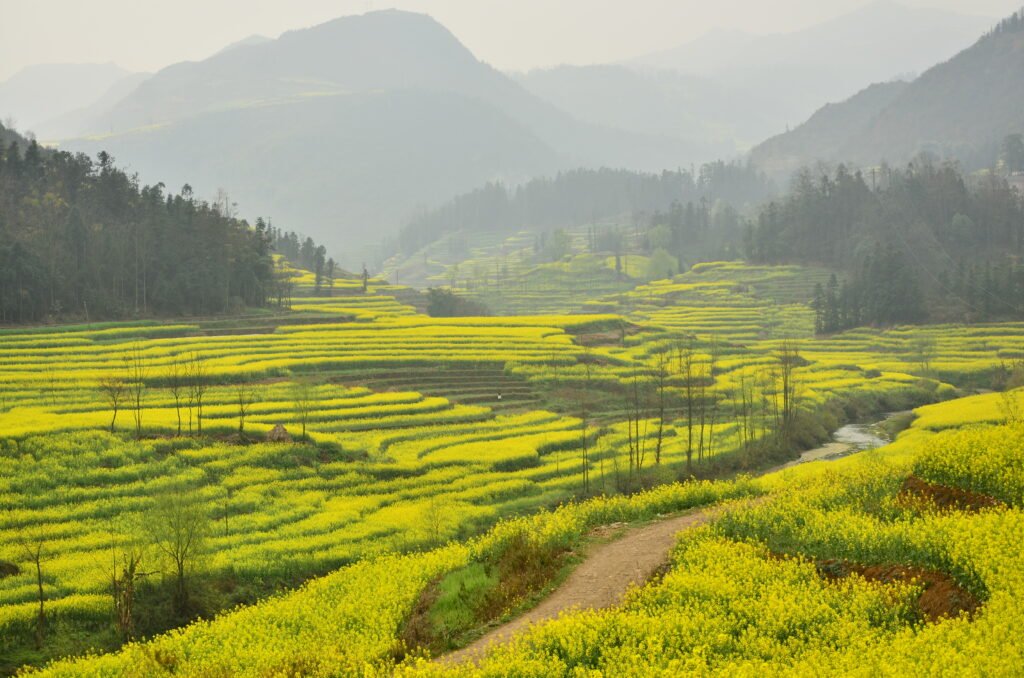
I still remember the exact moment I got hooked. It wasn’t the palace intrigue or the razor-sharp dialogue — it was a single shot of golden canola fields stretching to the horizon, two figures walking through them like they owned the world. I paused the episode, opened a map, and started planning. That’s how Joy of Life (庆余年) turned me into a location pilgrim. What follows is the Chasing Fan Xian route I ended up with — six stops across China, all reachable on public transport.
Across two seasons, the production team scattered their cameras from the futuristic libraries of Tianjin to the ancient city walls of Xiangyang, from the karst stone forests of Yunnan to the Tang Dynasty grandeur of Guizhou’s studio cities. This is the guide I wish I’d had before I went.
Chasing Fan Xian across China, at a glance
The locations span five provinces and two separate circuits. This is the whole map on one table — read it before you plan anything else.
| Location | Province | What was filmed | Circuit |
|---|---|---|---|
| Tianjin Binhai Library | Tianjin | The opening “future memory” sequence | 2 |
| Luoping canola fields | Yunnan | Fan Xian and Lin Wan’er’s first kiss | 1 |
| Jiulong Waterfalls | Yunnan | Outdoor chase and confrontation scenes | 1 |
| Shilin Stone Forest | Yunnan | The otherworldly exterior scenes | 1 |
| Duyun Qin-Han Studio City | Guizhou | The imperial capital Jingdou — palace and court scenes | 1 |
| Xiangshan Film City | Zhejiang | Season 1 capital street scenes: markets and teahouses | 2 |
| Xiangyang Tang City | Hubei | Season 2 palace and city sequences | 2 |
| Xiangyang ancient city walls | Hubei | Establishing shots of the city | 2 |
1. Tianjin Binhai Library — Where the Story Begins
The opening sequence of Joy of Life drops you inside a space that looks like it was designed by a civilization a thousand years ahead of ours. That’s not CGI. That’s the Tianjin Binhai New Area Cultural Center Library, designed by Dutch architecture firm MVRDV, and it is every bit as surreal in person as it is on screen.
Floor-to-ceiling cascading bookshelves wrap around a glowing spherical auditorium at the center. The effect is somewhere between a cathedral and a spaceship. When the drama used it as a framing device for Fan Xian’s “future memory,” the choice made perfect sense — nothing in China looks quite like this.
Practical tip: Entry is free, but you need to book in advance by scanning the QR code at the entrance. Weekday mornings are your best bet — by noon on weekends, the atrium fills up fast and the light gets harsh for photos. The library is in Binhai New Area, about 45 minutes from central Tianjin by metro (Line 9 to Tanggu, then a short taxi)


2. Luoping County, Yunnan — The Golden Fields and the Waterfalls
Two of the drama’s most visually arresting scenes were shot in Luoping County in Yunnan Province, and they couldn’t be more different in mood.
The Canola Fields
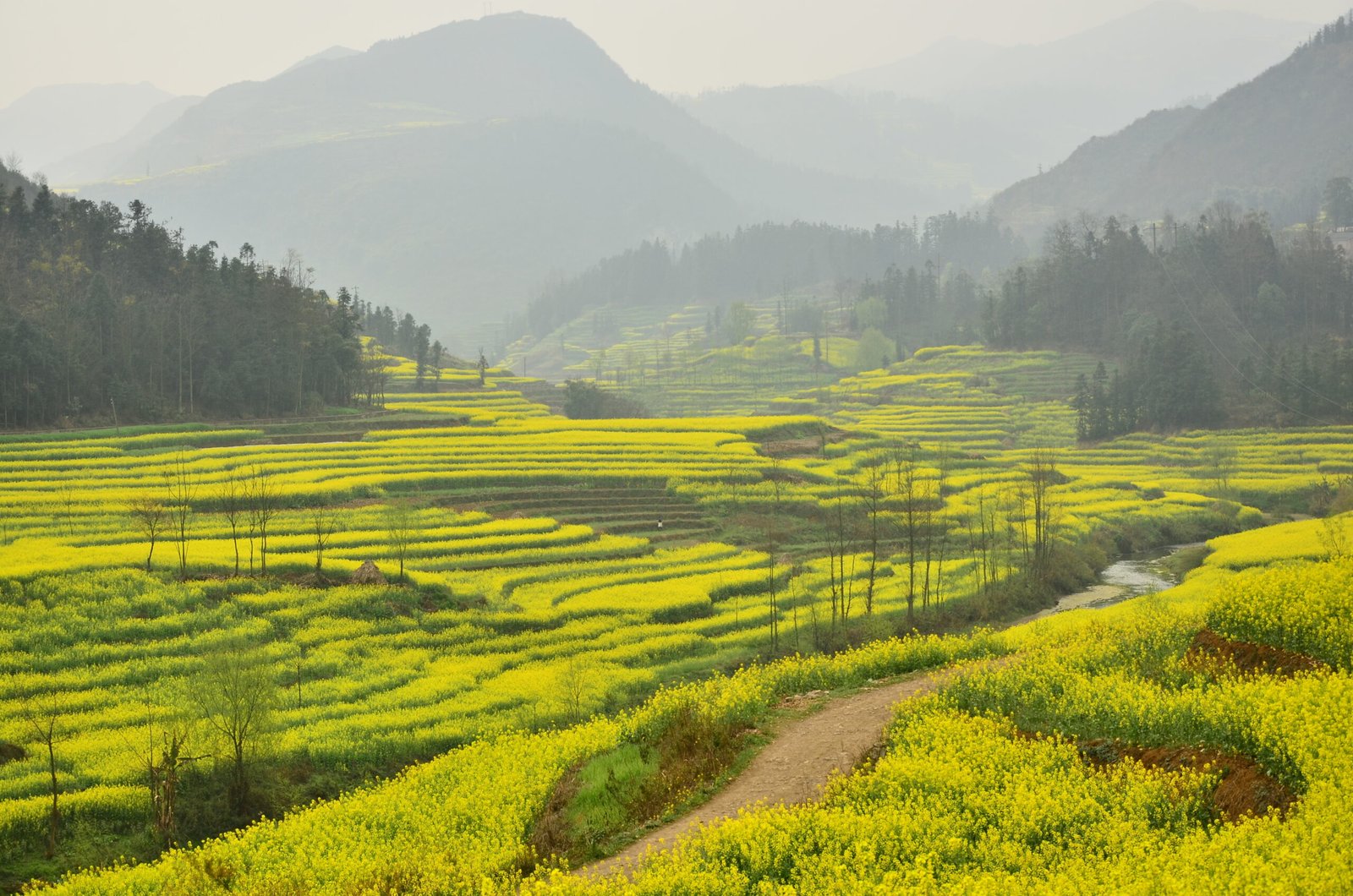
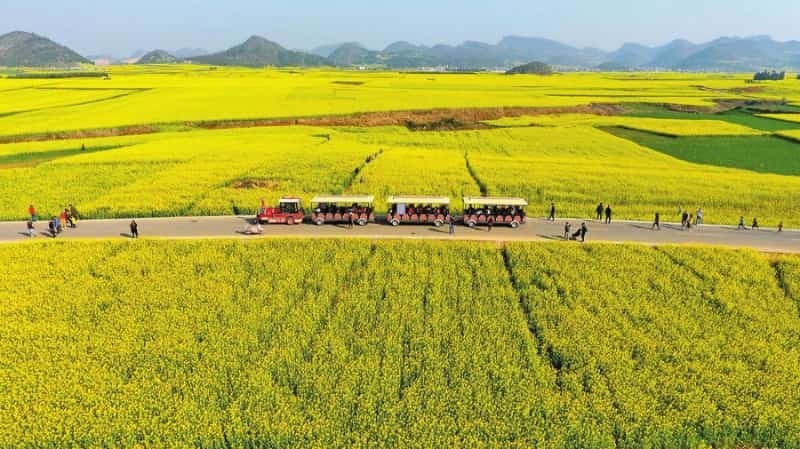
The scene where Fan Xian and Lin Wan’er share their first kiss was filmed in Luoping’s famous rapeseed flower fields — hundreds of acres of electric yellow that roll across the valley like a slow tide. In person, the scale is almost disorienting. You walk in and the world turns gold.
The fields bloom from February through April. If you’re planning a trip specifically for this, aim for mid-March when the color is at its peak. Early morning light is the move — the tour buses arrive around 9 AM and the paths get crowded quickly.
Jiulong Waterfalls
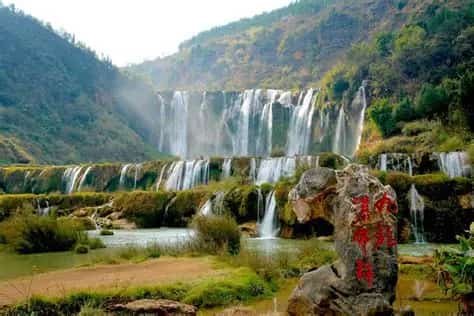
A short drive from the canola fields, the Jiulong (Nine Dragon) Waterfalls served as the dramatic backdrop for several outdoor chase and confrontation sequences. Ten cascades drop across a 4-kilometer stretch, with the largest falls plunging nearly 200 meters. In winter and spring, mist hangs in the gorge and, on clear days, you’ll catch rainbows rising off the spray.
Practical tip: Budget two full days in Luoping — one for the fields, one for the waterfalls. The county is accessible by high-speed rail from Kunming (about 1.5 hours). Accommodation options are limited, so book ahead during peak bloom season.
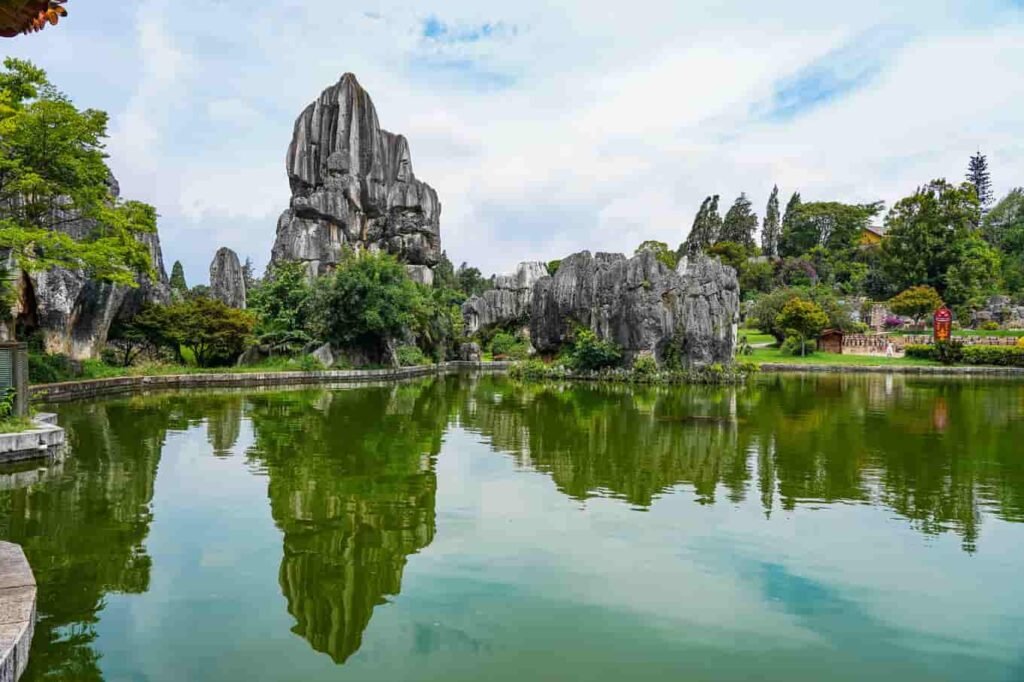
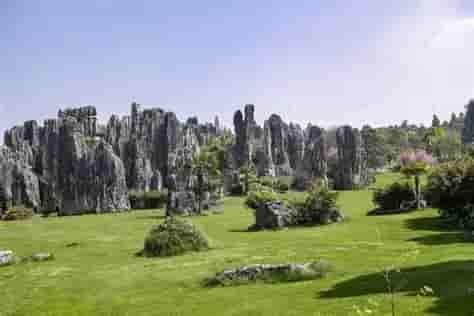
3. Shilin Geopark (Stone Forest), Yunnan — The Ancient Labyrinth
About 90 minutes by car from Kunming, the Shilin Yi Autonomous County Stone Forest is one of those places that makes you feel like you’ve walked into a different planet. Hundreds of towering limestone pillars — some reaching 30 meters — rise from the earth in formations that shift and change as you move through them. The production team used this landscape for several of the drama’s more otherworldly exterior scenes.
Shilin is a UNESCO World Heritage Site and one of China’s most visited natural attractions, which means crowds are a real consideration. The main scenic area gets packed by mid-morning. If you arrive at opening time (around 7:30 AM) and head straight to the inner forest sections, you’ll have the stone corridors largely to yourself for the first hour.
Practical tip: Combine Shilin with a Luoping trip — they’re both in eastern Yunnan and make a logical circuit. From Kunming, take the high-speed train to Luoping first, then loop back through Shilin before flying out.
4. Duyun Qin and Han Studio City, Guizhou — The Imperial Capital
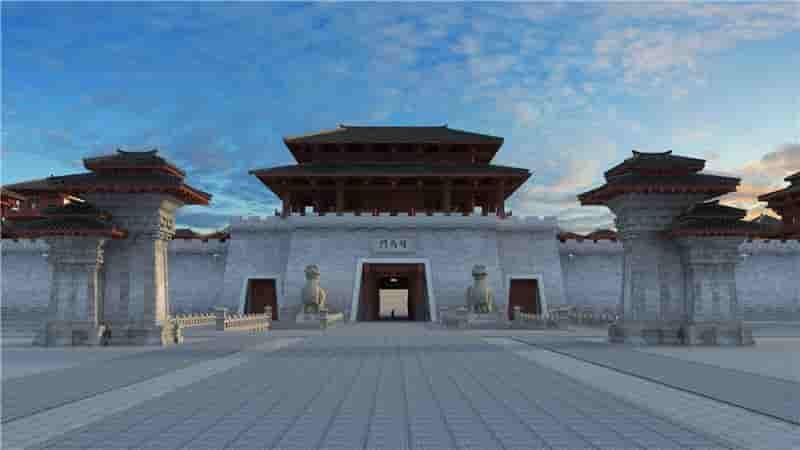
The sprawling palace sequences, the court intrigue, the narrow alleyways of the capital city Jingdou — much of this was built and filmed at Duyun Qin and Han Studio City in Guizhou Province. This is one of China’s three major film and television production bases, and it shares the honor of hosting both Joy of Life and The Untamed.
Unlike some studio cities that feel like theme parks, Duyun has a certain rawness to it — the sets are built for cameras, not tourists, which means the architecture feels genuinely cinematic rather than sanitized. Walking through the reconstructed Han Dynasty streets, you can almost hear the production crew calling action.
Practical tip: Duyun is in southwest Guizhou, accessible by high-speed rail from Guiyang (about 40 minutes). The studio city is in the Duyun Economic Development Zone — take a taxi from the station. Opening hours move with the season and the event calendar, so check them before you go — our Guizhou filming-locations guide carries the operator’s current hours, who gets in free, and how to add Luosike Mountain to the same trip.
5. Xiangshan Film and Television City, Ningbo, Zhejiang — Season 1 Street Scenes
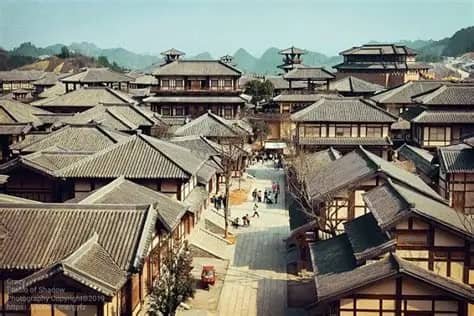
For the street-level scenes of the capital — the markets, the teahouses, the narrow lanes where Fan Xian navigates his way through the city’s underworld — the production used Ningbo Xiangshan Film and Television City in Zhejiang Province. This is one of China’s most active studio locations, having hosted dozens of major period dramas.
The sets here are more polished and tourist-friendly than Duyun, with regular visiting hours and guided tours. If you’re a serious drama location hunter, it’s worth a half-day stop on a broader Zhejiang itinerary that might also include Hangzhou or Ningbo’s old town.
6. Xiangyang, Hubei — Season 2’s Tang Dynasty Grandeur
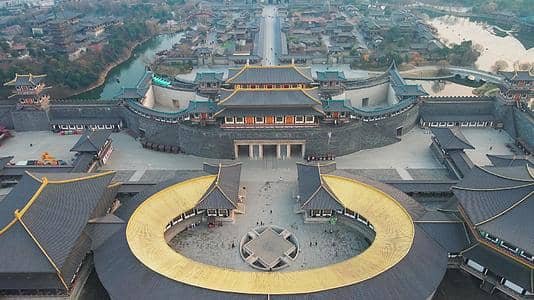
Season 2 of Joy of Life introduced a new visual register — grander, more imperial, more Tang Dynasty in its aesthetic. The production found its home in Xiangyang, Hubei Province, a city with over 2,800 years of history and one of China’s most impressive ancient city walls.
China Tang City (中国唐城)
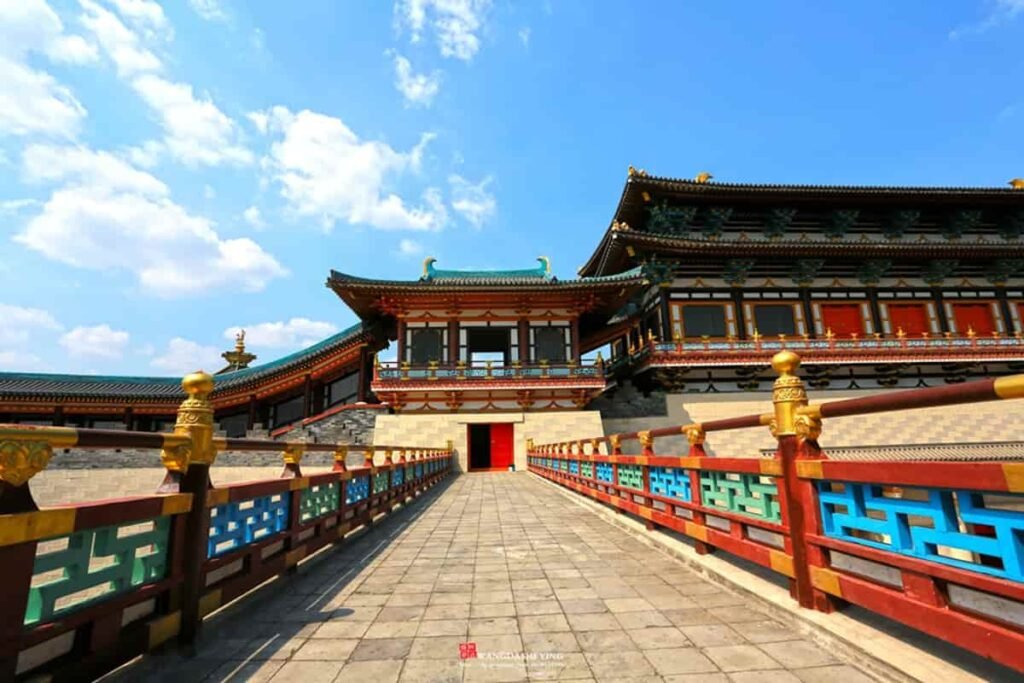
The largest imitation Tang Dynasty architectural complex in China, China Tang City served as the primary set for Season 2’s palace and city sequences. The complex integrates film production facilities with a tourism experience — you can rent Hanfu costumes (budget around 120–150 RMB for makeup and dress), walk the same streets Fan Xian walked, and catch live performances that run throughout the day and evening.
The recommended route through the complex: Mingde Gate → Zhuque Gate → Ximing Temple → West Market → East Market → Hongqiao → Hu Yulou → Jiannan Bieye. The night session (from 5 PM) is genuinely spectacular — the light shows and water performances transform the space entirely.
The walking route through Tang City
The suggested walking order through the complex — roughly half a day on foot. The night session, from 17:00, is the one most fans prefer.
Xiangyang Ancient City
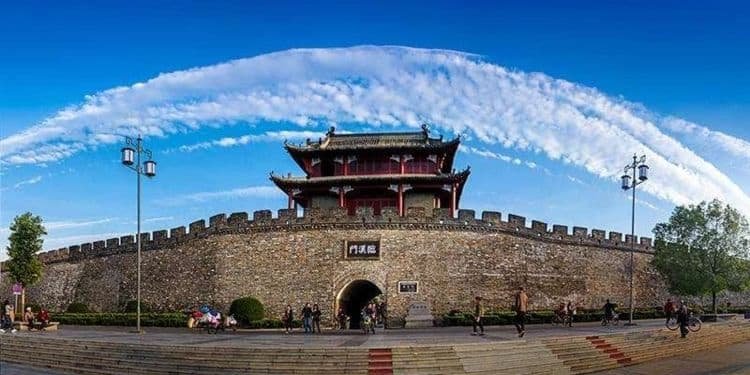
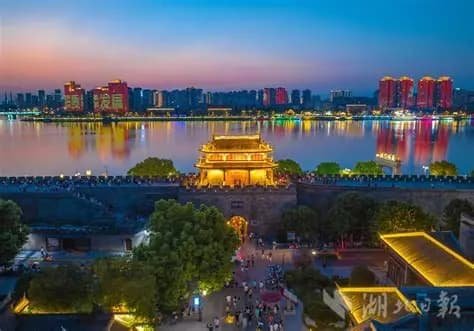
Beyond the studio complex, the Xiangyang Ancient City walls — largely intact from the Ming Dynasty — offer a more authentic historical experience. Walking the walls at dusk, with the Han River below and the old city spreading out around you, is one of those travel moments that doesn’t need a drama to justify it.
Practical tip: Xiangyang is well-connected by high-speed rail — about 2 hours from Wuhan, 3.5 hours from Beijing. In the city, buses No. 1 and No. 13 run directly to Tang City. For food, don’t leave without trying the local beef noodles and Nanzhang lard cake.
Planning Your Joy of Life Pilgrimage
The locations span five provinces — Tianjin, Yunnan, Guizhou, Zhejiang, and Hubei — so this isn’t a single-destination trip. The most logical approach is to build it around two separate circuits:
Circuit 1 — Yunnan + Guizhou: Fly into Kunming, spend two days in Luoping (canola fields + waterfalls), visit Shilin Stone Forest on the way back, then take the high-speed train to Guiyang and connect to Duyun. Allow 6–7 days total.
Circuit 1 — Yunnan + Guizhou
Allow 6–7 days. Best February–April, when the Luoping canola is in bloom.
Circuit 2 — Tianjin + Xiangyang + Ningbo: Start in Tianjin for the Binhai Library, then high-speed train south to Xiangyang for Tang City and the ancient walls, then east to Ningbo for Xiangshan Film City. Allow 5–6 days.
Circuit 2 — Tianjin + Hubei + Zhejiang
Allow 5–6 days. Works year-round; Xiangyang is loveliest in autumn.
The best time to do Circuit 1 is February through April, when the Luoping canola fields are in bloom. Circuit 2 works well year-round, though Xiangyang is particularly beautiful in autumn. Check the China travel calendar before you fix dates.
One last table before you go. For the full location-by-location breakdown — tickets, transport and where to base yourself — see our Joy of Life filming-locations guide.
| Before you go | Why it matters |
|---|---|
| Book the Tianjin library in advance | Entry is free but timed, and the reservation is real-name — reserve through the library’s own mini-program and bring your passport; if the system will not take a foreign document, the staffed desk will register you |
| Time Luoping for the bloom | The canola peaks February–April; mid-March is the sweet spot |
| Book Luoping accommodation early | Options are limited and fill fast during bloom season |
| Start Shilin at opening (about 07:30) | The stone corridors are yours for the first hour before the crowds arrive |
| Set up Alipay or WeChat Pay before you fly | Cash is rarely convenient — this is the one thing you cannot fix on the ground |
| Pack for five provinces, not one | Yunnan in bloom is warm by day and cold at night; Tianjin is a different climate entirely |
| Split the trip into two circuits | The locations span five provinces — one run means days lost to transit |
Fan Xian spent his whole life navigating a world that was trying to kill him, and he still found time to appreciate the view. The least we can do is follow his footsteps.
Official sources: Xiangshan Film City — the operator’s official visitor notice (ticket price and hours).
Your next move
Worried about the practical stuff?
Visas, payment, trains and the apps you’ll need before you land — the four things you cannot work out on the ground. Each guide is dated and sourced.
Ready to go?
Season 2’s Tang-dynasty grandeur was built in Xiangyang. The city guide covers Tang City and the rest.
Last verified
Sources: Hengdian World Studios - official visitor notice (tickets, hours, transport) · Xiangshan Film City - official visitor notice (tickets, hours) · Guizhou Provincial Government - Duyun Qin-Han Film City · China Railway 12306 - ticket pre-sale and refund rules
Spotted something out of date? Email us — or read how corrections work. We check every report against the source and update the page.
Ready to plan it? Turn the dramas you have watched into a day-by-day route with the C-drama route planner.
Not sure where to start? Take the drama-city quiz — seven questions, one city, and a route waiting at the end.