
Most set-jetting guides send you to a purpose-built film town. Beijing is different: it is the city that half of Chinese television is actually made in, and the places you recognise are real streets you can simply walk down. This is a guide to the Beijing filming locations you can actually reach on foot.
The short answer: Beijing is a two-layer destination. The first layer is the studio infrastructure — the China (Huairou) Film and Television Base in the north-east, and the film-capital district around it, much of which is free to visit. The second layer is the city itself, which stood in for both itself and everywhere else. A single drama, Rose Story, used 260 Beijing locations across six districts. Give the city at least two days and treat the studios as one of them.
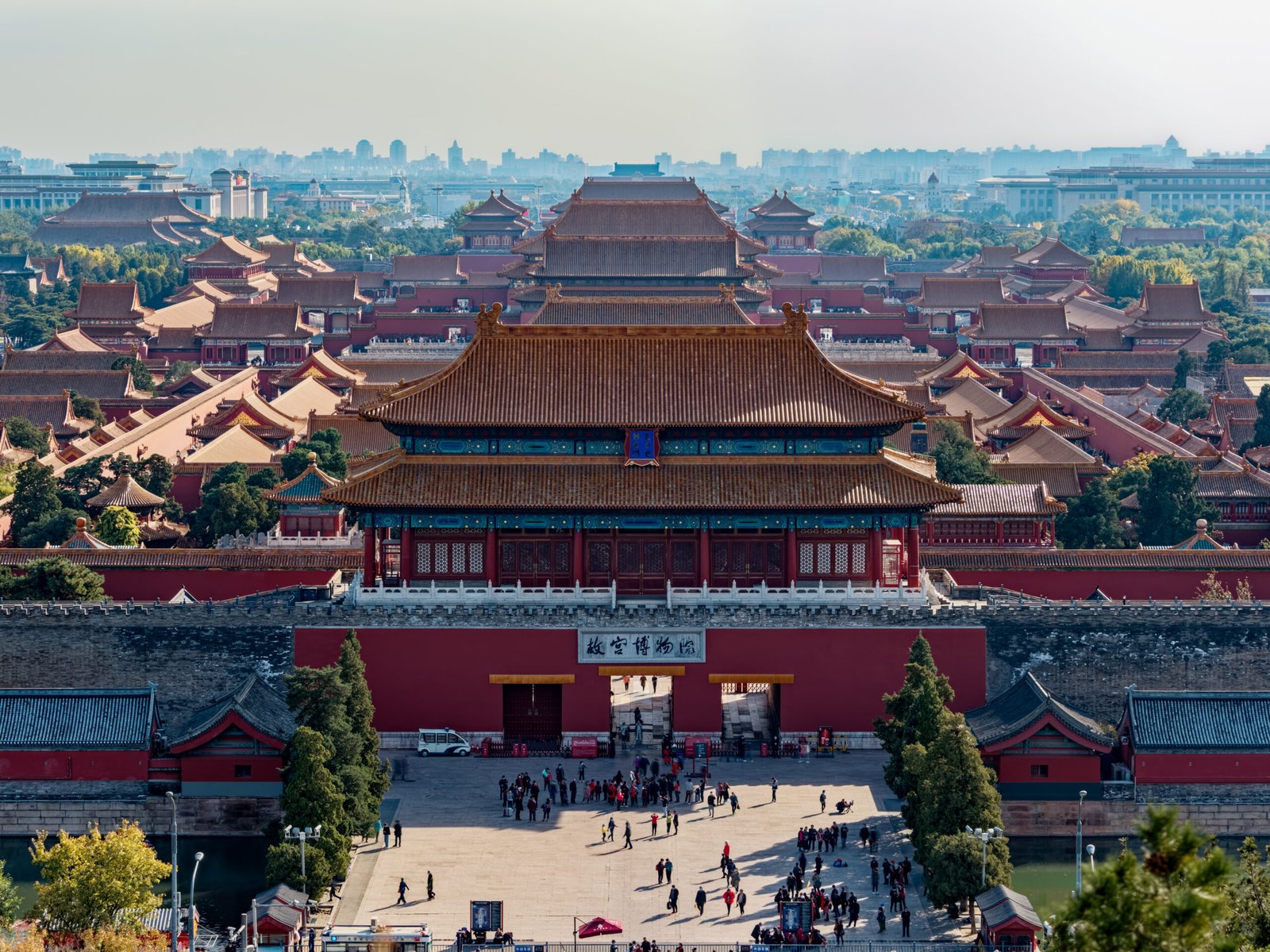
Why Beijing filming locations are different
Hengdian, Xiangshan and Xiangyang all exist to simulate places that are hard to film. Beijing does the opposite. It is the production capital of the country, so the city has been filmed so often that its streets, parks and riversides have a double life: you have seen them on screen without knowing it.
That makes Beijing the easiest set-jetting city in China for a foreign visitor. There is no gate, no ticket, and no studio minibus. You take the Metro to a normal public place and stand where the camera stood.
The Rose Story trail: Beijing filming locations
Rose Story (玫瑰的故事) is the clearest worked example, because the show leaned hard on real Beijing. Around 260 Beijing scenes were shot across Chaoyang, Xicheng, Dongcheng, Haidian, Changping and Shunyi. A few of them are worth building a day around.
| Location | District | What it is |
|---|---|---|
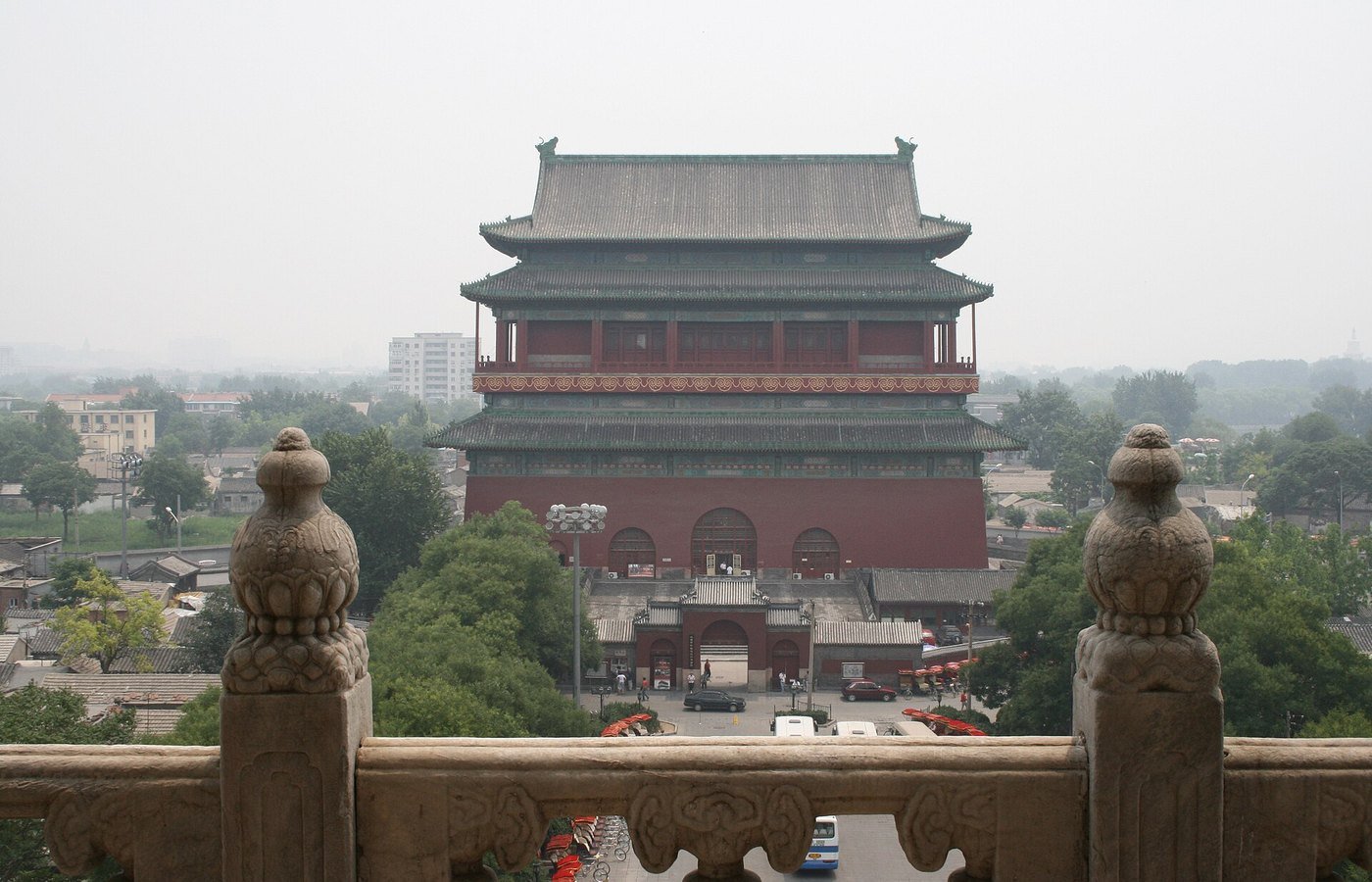
| Bell and Drum Towers | Dongcheng | Where the heroine skates — a genuine Yuan-dynasty timekeeping landmark on the Central Axis |
| Olympic Park | Chaoyang | The Bird’s Nest and Water Cube; the boardwalk scene was shot here |
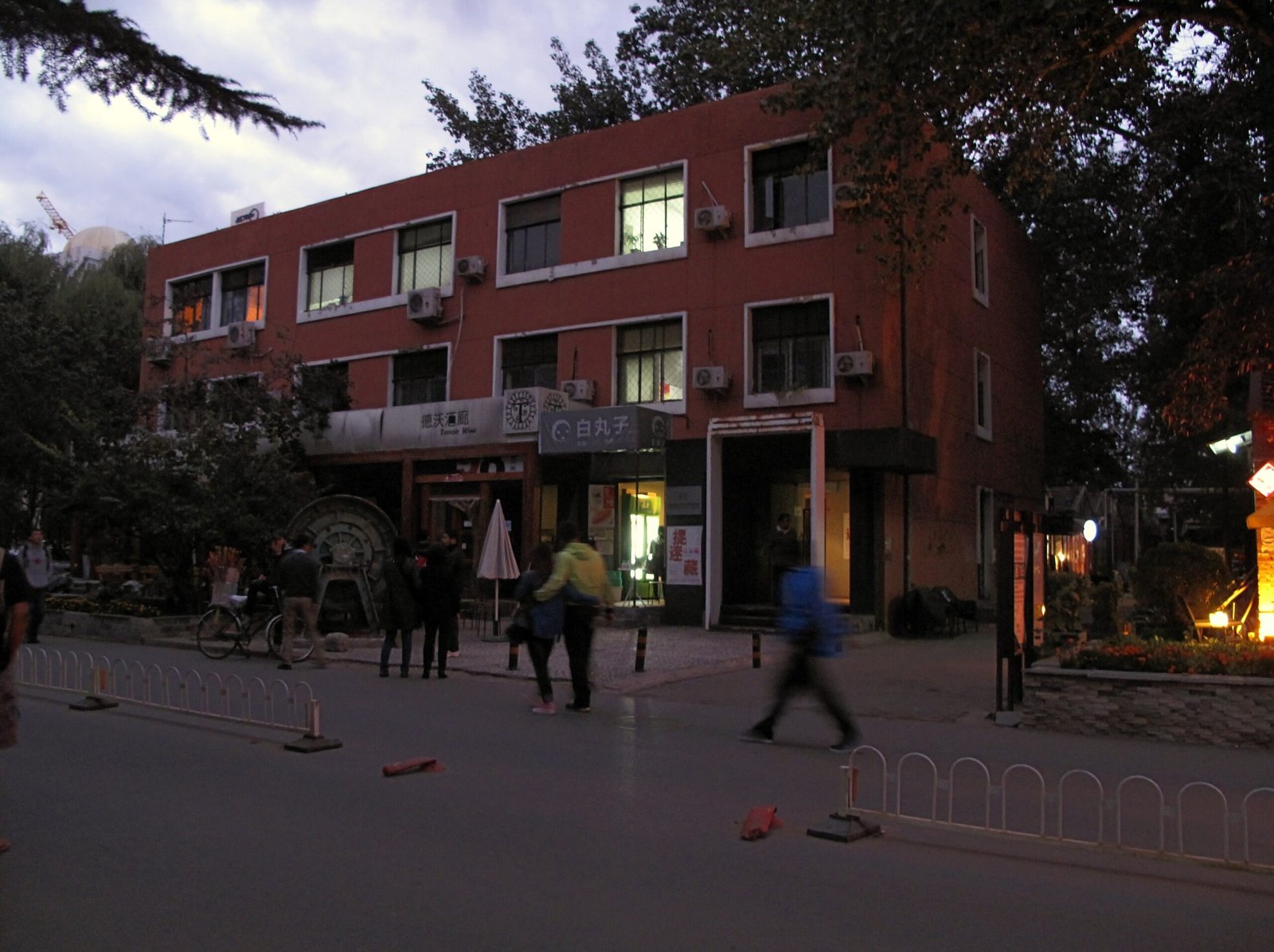
| 798 Art District | Chaoyang | The art-school world and several restaurant scenes; a real contemporary-art quarter |
| Changyu Afip Chateau | Miyun | A European-style winery used for an overseas scene |
| China World Hotel | Chaoyang | The opulent hotel interiors, on Jianguomenwai Dajie |
| Moon River leisure town | Tongzhou | Riverside hotel and town sequences, on the Grand Canal’s northern end |
Two of these deserve their own afternoon regardless of the show. The Bell and Drum Towers sit at the northern tip of Beijing’s Central Axis and are among the oldest surviving urban timekeeping structures in the country. And 798 is not a film set at all — it is one of the largest contemporary art districts in the world, converted from a Bauhaus-era electronics factory complex, which is exactly why it looks so cinematic.
The studio layer: Huairou
North-east of the city, in Yangsong Town, Huairou District, sits the China (Huairou) Film and Television Base — better known as the China Film Capital. This is the industrial side of Chinese screen production, and unusually, it is open to the public.
It has two very different halves.
- The China Film Digital Production Base on the east side is the technical heart: sound stages (sixteen of them, collectively over 40,000 square metres, with the largest at 5,000 square metres), digital post-production facilities, costume, prop and equipment warehouses. It was built to handle a serious annual output — on the order of eighty feature films and five hundred episodes of television a year.
- Xingmei Jinsheng Studio City on the west side is the backlot: around two hundred replica Ming and Qing buildings, including a Jiangnan water town, a northern town and a royal garden, all built in timber by traditional methods.
Practical details, and they are the good kind: entry is free, it is open daily from roughly 09:00 to 17:00, and you can reach it on bus 866 from Dongzhimen. Allow half a day to a full day. This is one of the very few places in the world where a visitor can walk a working film-industry cluster without paying for a tour.
Why this matters for your trip
If you are building an itinerary around Chinese drama, Beijing changes the shape of it. The studio towns — Hengdian, Xiangshan, Xiangyang — are all in the east and south, and they are all ticketed attractions with a single entrance and a set of zones. Beijing is the opposite: dispersed, public, and free. You can spend a morning in a real imperial-era landmark and an afternoon inside a working production base, and never once feel like you are on a themed tour.
Beijing is also the arrival point for most long-haul flights into China, which makes it the natural place to start. See the visa and entry guide before you book.
If you only have one day: the Central Axis
Beijing is the arrival point for most long-haul flights into China, which means for a lot of readers it is also the first 24 hours of the trip. That first day has a natural answer, and it is not a filming location: the Central Axis.
The axis is the 7.8-kilometre line running south to north through the old city, from the Yongding Gate up to the Drum and Bell Towers. It was inscribed as a UNESCO World Heritage Site in 2024, and it is the single most efficient way to see Beijing on foot — everything below sits on one straight line, and you walk it, not commute it.
| Stop | Why | Ticket (adult) |
|---|---|---|
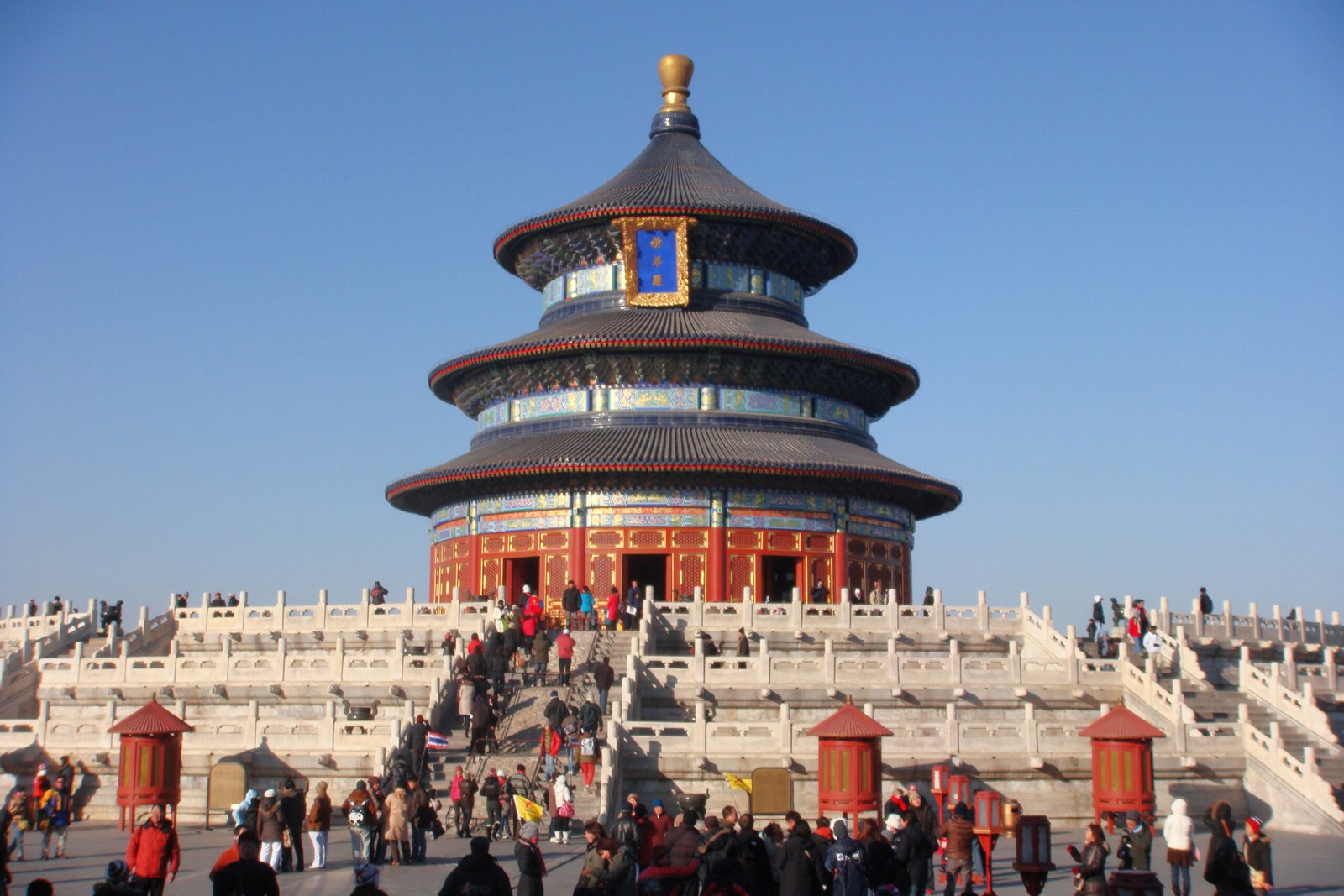
| Temple of Heaven (天坛) | Southern anchor. The triple-gabled hall you have seen a thousand times. | ~¥34 combo |
| Qianmen & Zhengyangmen (前门 / 正阳门) | The old commercial gate; start of the walkable stretch | Street level, free |
| Tiananmen Square (天安门广场) | The centre of the line. Advance reservation required — see below. | Free with booking |
| Forbidden City (故宫) | The axis at its densest. Allow three hours minimum. | ~¥60 high season |
| Jingshan Park (景山) | Climb it at the end. The view back down the entire axis is the payoff shot. | ~¥2 |
| Drum & Bell Towers (鼓楼 / 钟楼) | Northern anchor, in the hutong belt — which is also where the Rose Story trail begins. | ~¥20–30 each |
Total gate cost for the day comes to roughly ¥96–120 per adult depending on what you add. It is one of the cheapest full days of sightseeing in any world capital.
Two bookings you cannot skip. The Forbidden City closes on Mondays and requires a timed reservation made in advance through the official channel — it regularly sells out days ahead in peak season. Tiananmen Square also requires a separate advance reservation, including for foreign visitors. Do not turn up expecting to buy a ticket at the gate: you will not get in. Reserve both online before you fly.
Why this fits a C-drama trip. The axis is where the period dramas get their architecture — the Forbidden City is the source image behind every fake palace on every studio backlot you will visit later in the trip. Walking the real thing first turns the rest of the route into a comparison. And because the northern end is the hutong belt, you finish inside the neighbourhood where the Rose Story trail starts, which means day one flows straight into the filming-location day.
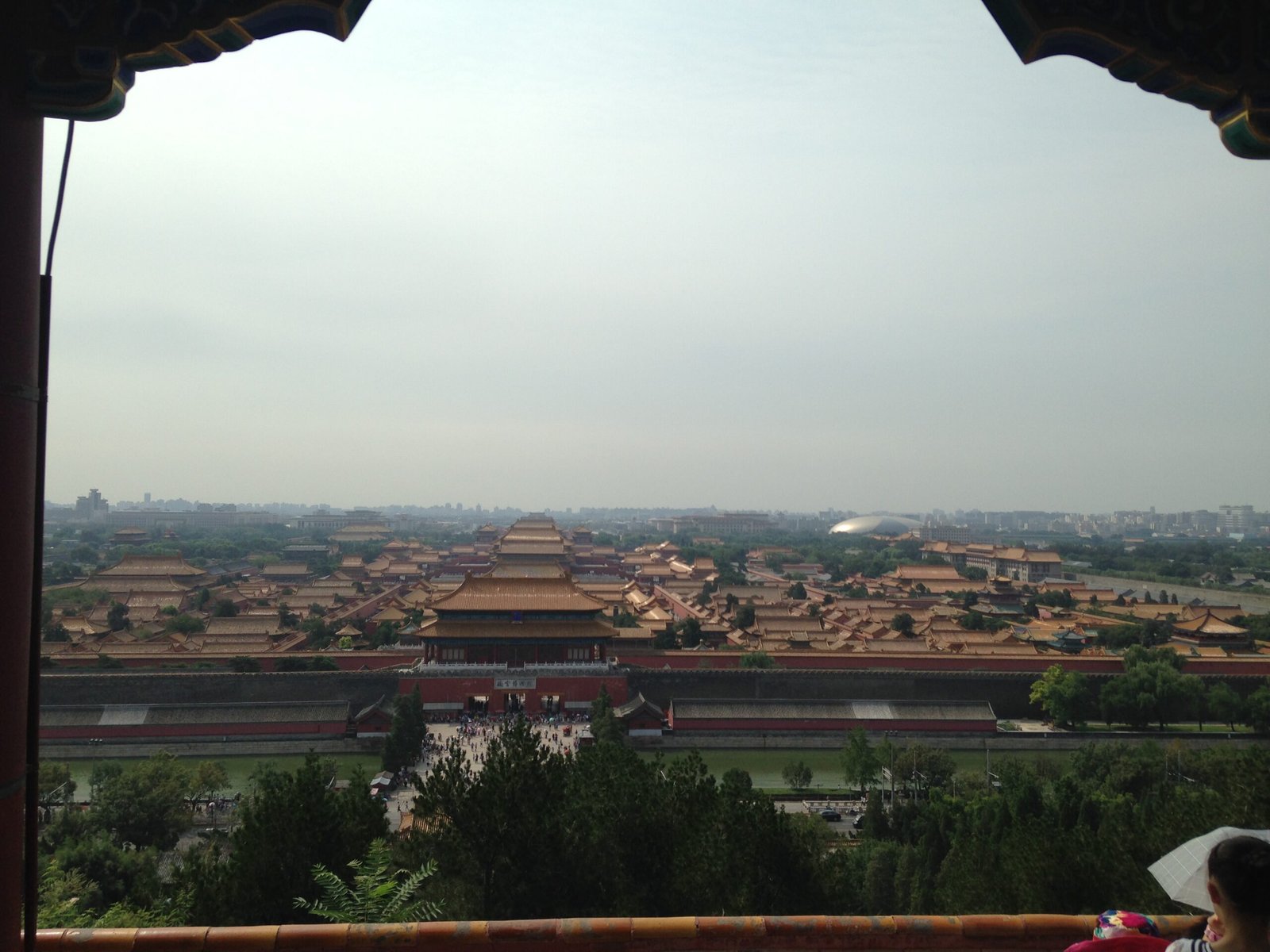
Getting around: All of it is on the metro, and the axis itself is walkable end to end if you are fit — roughly a full day at a relaxed pace. If you would rather not walk 7.8 km, hop the metro between the Temple of Heaven and Qianmen, then walk the middle stretch.
Practical notes
- Getting around: the Metro reaches every location on the Rose Story list. Distances in Beijing are large — budget travel time generously and avoid the peak-hour crush.
- Payment: set up Alipay or WeChat Pay before arrival. Metro gates take a phone pass or a ticket machine that accepts cash.
- Timing: spring (April–May) and autumn (September–October) are the good windows. Summer is hot and crowded; winter is cold, dry and clears the crowds.
- Avoid: the National Day week and Chinese New Year, when the headline sights become unmanageable.
- Language: far more English is available in Beijing than in the studio towns, but the studio base itself is not signposted for foreign visitors — have the Chinese name ready.
Visiting as a foreign visitor
Beijing is the easiest set-jetting city in China for a foreign visitor — English signage, an English-friendly metro, and a booking system that accepts a passport. The one place it is strict is the two sights that require advance reservation.
- Reserve with your passport, and do it before you fly. The Forbidden City and Tiananmen Square both require advance booking and both accept a passport number. Foreign visitors are not exempt, and neither site sells same-day tickets at the gate. Book through the official channel, not a reseller.
- Carry the original passport, not a photocopy. The reservation is checked against the document you booked with. A photo on your phone will not get you through the gate.
- Most of the trail needs nothing at all. The Rose Story locations — the Bell and Drum Towers, 798, Olympic Park, the hutong belt — are ordinary public places: no ticket, no reservation, no ID on the public streets. The Huairou studio base is free to enter; only a visit to a specific facility needs arranging in advance.
- Metro and payment. The metro is the fastest way between the spread-out locations, and a phone pass inside Alipay or WeChat Pay is smoother than a paper ticket. Set up mobile payment before arrival — the ticket machines take cash, but almost everything else is faster on a phone.
Before you go: the visa and entry guide, the payment guide, the apps guide and the high-speed rail guide cover the parts that are the same everywhere in China. This section covers only what is different here.
Common questions
Are there any ancient film cities in Beijing?
Yes — Xingmei Jinsheng Studio City in Huairou has around two hundred replica Ming and Qing buildings. It is part of the same complex as the digital production base and is free to enter.
Can I visit a working studio in Beijing?
The Huairou base is open and free, but it is an industry site first. Specific stages may be closed for shoots. You are visiting a working facility, not an attraction with opening hours built around visitors.
Is Beijing worth it if I already visited Hengdian?
Yes, and for the opposite reason. Hengdian is a self-contained film town you tour. Beijing is a real capital whose real places were used as sets. They do not overlap.
How long do I need?
Two days minimum: one for the public-location trail in the city, one for Huairou. Three lets you slow down and add the Central Axis properly.
Do I need to book anything in advance?
Not for the city locations — they are ordinary public places. The Huairou base does not require booking for general entry, but confirm current arrangements if you want to see a specific facility.
Your next move
Worried about the practical stuff?
Visas, payment, trains and the apps you’ll need before you land — the four things you cannot work out on the ground. Each guide is dated and sourced.
Ready to go?
Beijing needs at least three days. The planning guide sizes it.
Last verified
Sources: The Palace Museum (Forbidden City) — official ticket prices, opening hours and Monday closure · The Palace Museum — official online timed-ticket booking
Spotted something out of date? Email us — or read how corrections work. We check every report against the source and update the page.
Ready to plan it? Turn the dramas you have watched into a day-by-day route with the C-drama route planner.
Not sure where to start? Take the drama-city quiz — seven questions, one city, and a route waiting at the end.