
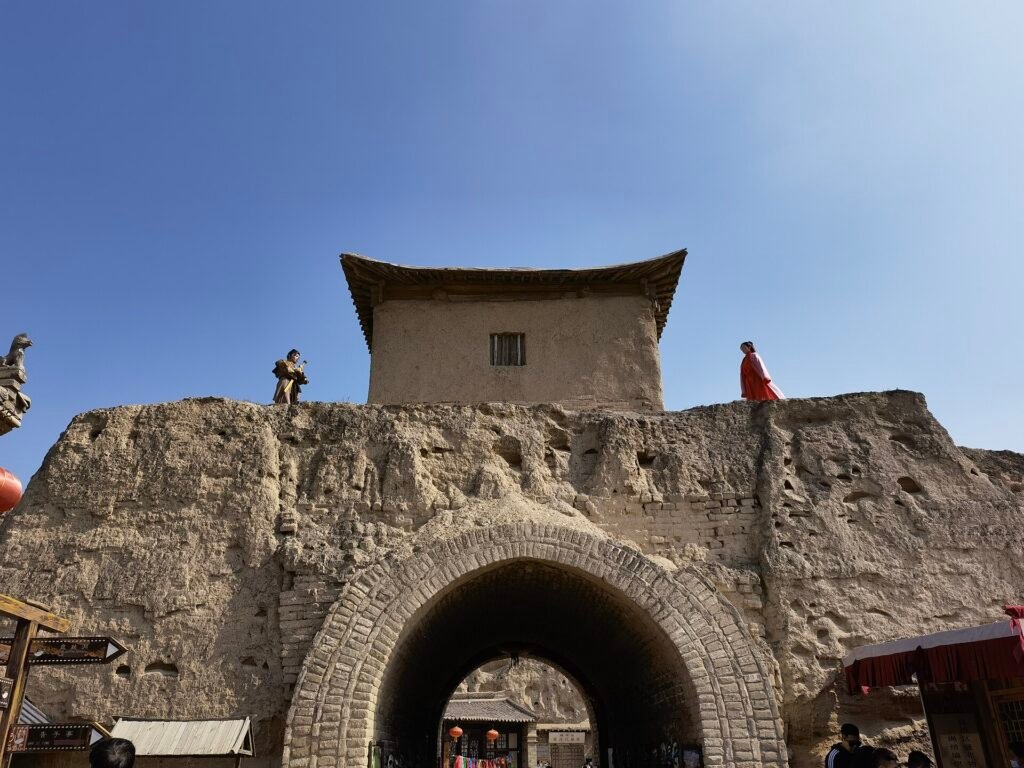
Almost every famous Chinese film you can quote was shot in the same dusty corner of the north-west. Red Sorghum, A Chinese Odyssey, Ashes of Time — all of them were filmed at Zhenbeibao, a studio built inside two ruined Ming frontier forts on the edge of the Gobi, 35 km from Yinchuan. This is a guide to Yinchuan filming locations: the film city where Zhang Yimou and Wong Kar-wai actually worked, the desert and reed-marsh that doubled for a mythic China, and the Xixia Imperial Tombs, which became China’s newest UNESCO World Heritage Site in 2025. If you came asking where was A Chinese Odyssey filmed, the answer starts here — and it is not where most people think.
Yinchuan is the capital of Ningxia, a small autonomous region squeezed between the Yellow River and the Helan Mountains, on the western edge of the Gobi. For two centuries it was the seat of the Western Xia, a Tangut empire that vanished so completely that its script had to be re-deciphered in the twentieth century. Its royal tombs still stand on the gravel plain below the mountains — the “pyramids of the east” — and the same plain, with its mud-walled forts and empty horizons, is why filmmakers kept coming back. Those two things — a film city and a vanished empire — are what make the Yinchuan filming locations worth a trip of their own.
The short answer: Yinchuan (银川) is the capital of Ningxia in north-west China, at the foot of the Helan Mountains. The Zhenbeibao West Film Studio 35 km from the city is where Red Sorghum (1987), Ashes of Time (1994) and A Chinese Odyssey (1995) were shot, among more than a hundred films. A Chinese Odyssey was filmed across three places — Zhenbeibao for its main scenes, Shahu for the reed-marsh, and Dunhuang for the desert. The Xixia Imperial Tombs, west of the city, joined the UNESCO World Heritage List in July 2025. Zhenbeibao costs ¥80 and opens 8:00–18:00 in summer.
Why Yinchuan became China’s film city
Yinchuan has something that almost no other Chinese city can offer a film crew: a frontier that still looks like a frontier. The Helan Mountains rise straight out of a gravel plain, the Great Wall runs along their feet in eroded ribbons, and the old forts and watchtowers are made of rammed earth the colour of dust. Point a camera at almost anything here and you have the China of the imagination — the bandit country, the desert road, the wall at the edge of the world. That is why the Yinchuan filming locations cluster so tightly: the landscape does most of the work.
The second reason is a single man. In the 1980s, the writer Zhang Xianliang, who had been exiled to a farm near Zhenbeibao, saw the two abandoned Ming forts on the plain and understood what they were worth. When The Herdsman, the 1982 film adapted from his own novel, was shot there, the ruins became famous. In 1993 Zhang Xianliang founded the Zhenbeibao West Film Studio on the site — and made a rule that still stands: the studio charges film crews no location fee. Productions came, and kept coming. More than a hundred films later, the site markets itself with a single line: “Chinese cinema went out into the world from here.”
The result is a city whose screen history runs in two directions at once. One is the mythic frontier of the studio’s desert epics; the other is the real history of the Western Xia, whose tombs are the region’s other great draw. Few places let you spend the morning inside a film set and the afternoon inside a UNESCO World Heritage Site, and that pairing is exactly why Yinchuan belongs on our map of C-drama filming locations, alongside the other desert cities of the north-west.
Yinchuan filming locations at a glance
| What | Where | Why it matters |
|---|---|---|
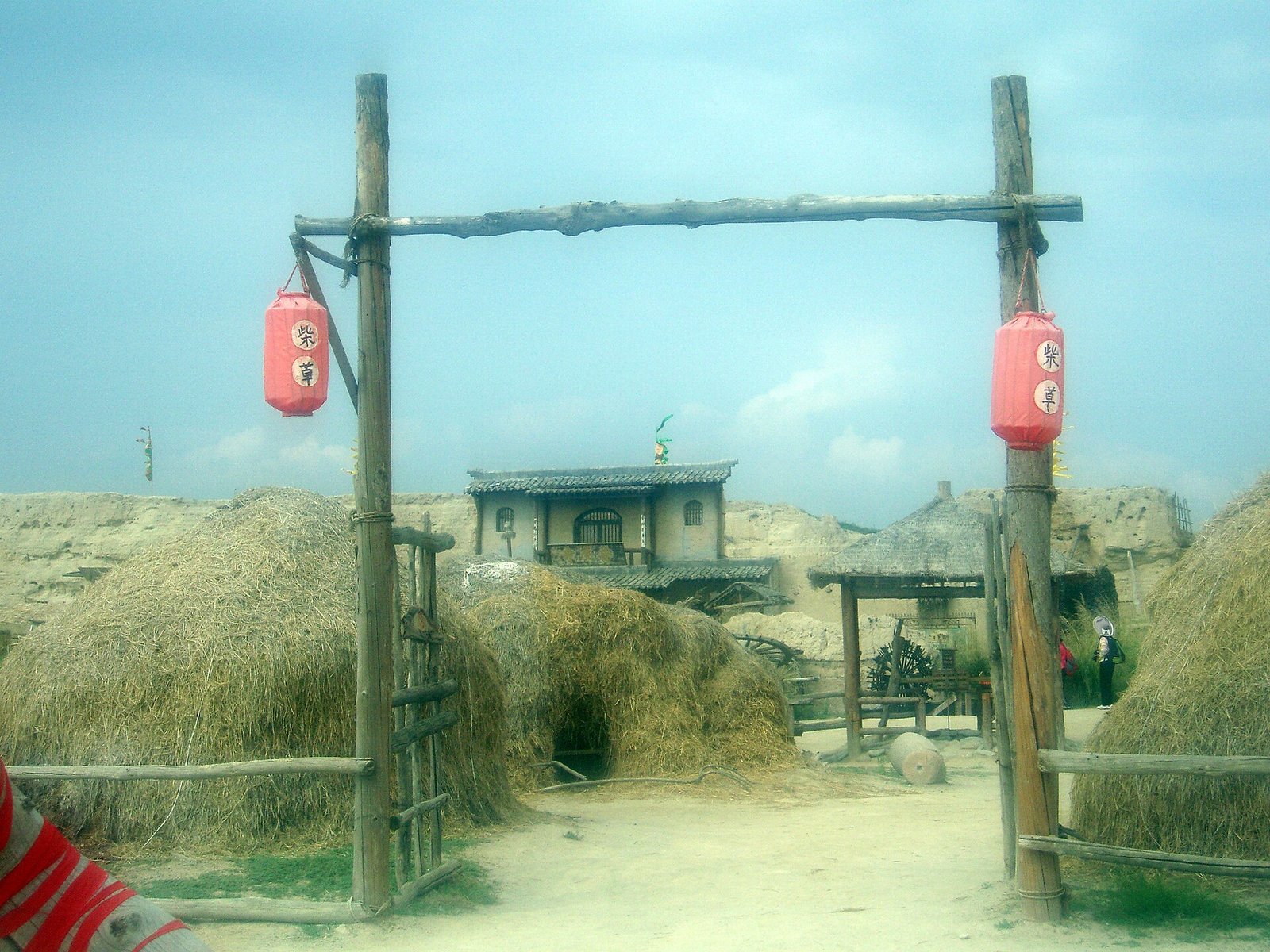
| Zhenbeibao West Film Studio (镇北堡西部影城) | 35 km north-west of the city | AAAAA studio in two Ming forts; Red Sorghum, Ashes of Time, A Chinese Odyssey |
| Xixia Imperial Tombs (西夏陵) | About 35 km west, below the Helan Mountains | UNESCO World Heritage Site (2025); the “pyramids of the east” |
| Shahu (沙湖) | About 42 km north, in Pingluo | Desert and lake in one; the reed-marsh of A Chinese Odyssey |
| Helan Mountains rock art (贺兰山岩画) | About 50 km north-west | Thousands of prehistoric carvings on the mountain’s flanks |
| Ningxia Museum (宁夏博物馆) | City centre | The best single introduction to Western Xia history |
| Lanshan Park (览山公园) | City centre, by the lake | A free sunset viewpoint over the Helan range |
Those six places are the Yinchuan filming locations that matter, and they divide into two stories: the film city at Zhenbeibao, where the desert epics were made, and the Western Xia world of the tombs and the museum, which gives the region its depth. Knowing which is which is the point of this guide.
The films that were really shot here
Unlike most places we write about, Yinchuan does not need a section on what was not filmed here — the studio’s record is real. But it does need one on what was filmed where, because the most famous production of all, A Chinese Odyssey, was made across three provinces, and only one of them is this one.
Red Sorghum (红高粱, 1987)
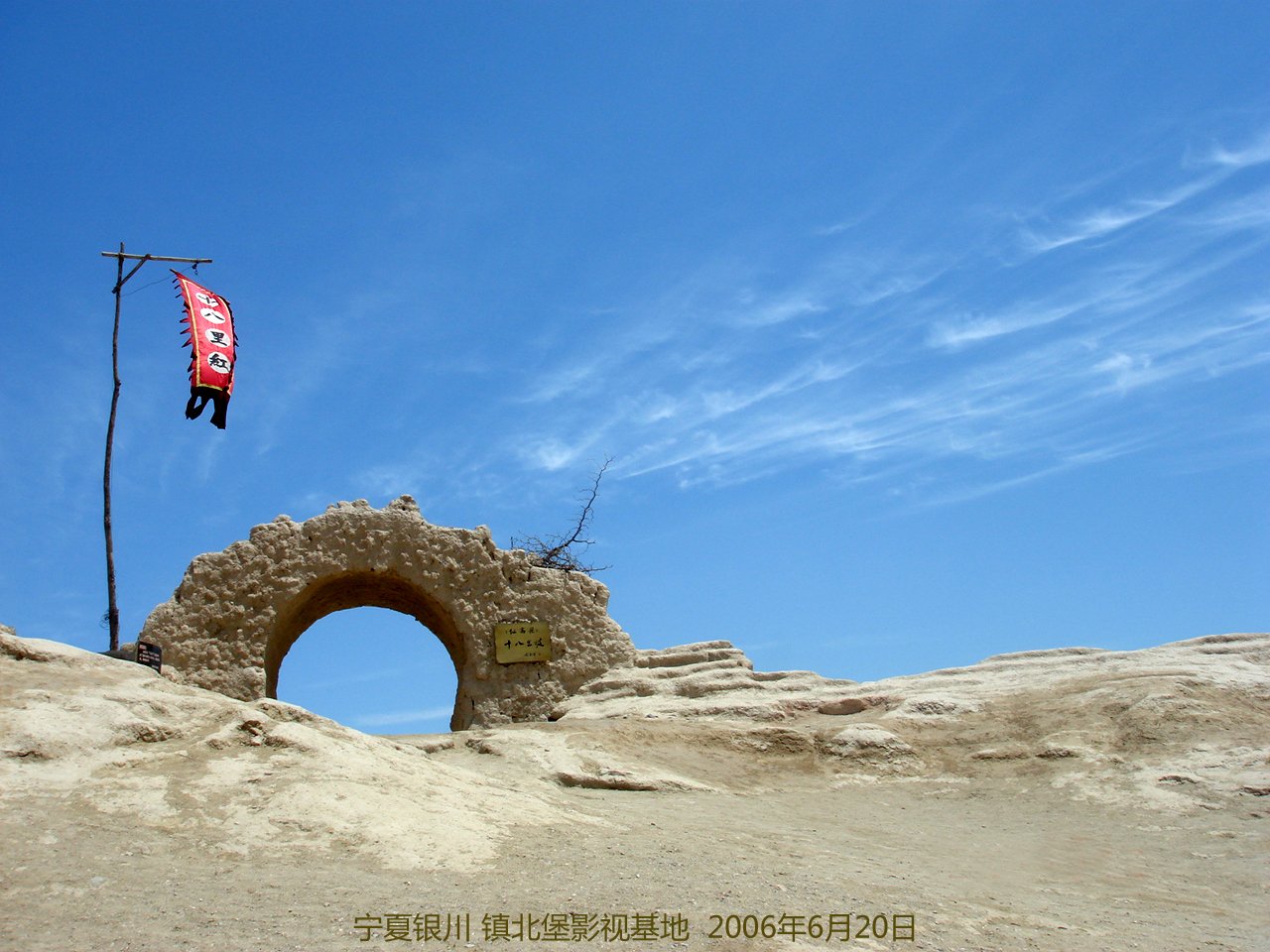
Zhang Yimou’s first film, and the one that took Chinese cinema to Berlin, was shot at Zhenbeibao in 1986 and released the following year. Its story of a sorghum-wine distillery in bandit country turned the studio’s rammed-earth walls into the definitive image of the Chinese frontier, and two of its sets survive on site today: the Moon Gate (月亮门), which the studio calls “the most beautiful shot in the film”, and the wine workshop, where you can still hear the drinking song from the movie. If you know one frame of Red Sorghum, it was made here.
A Chinese Odyssey (大话西游, 1995)
The most-quoted film in modern Chinese cinema — and the reason most younger visitors come — was shot by Jeffrey Lau at Zhenbeibao, and the studio keeps its most famous scene intact. The Bull Demon King’s Palace (牛魔王宫) is where the bandit chief Joker and the fairy Zixia have the exchange that gave China its shorthand for love at first sight, “a hundred years, ten thousand years”, and pilgrims queue to stand where they stood. But the film is a three-location story, and this is where the honest answer matters:
- Zhenbeibao — the main scenes: the city gate, the wall-top confrontation and the Bull Demon King’s stronghold.
- Shahu, the lake-and-desert reserve north of Yinchuan — the reed-marsh where Zixia drifts in a boat.
- Dunhuang, in Gansu — the sand dunes of the desert sequences, which we cover in our Dunhuang guide.
So the short answer to “where was A Chinese Odyssey filmed” is: mostly here, partly at Shahu, and partly at Dunhuang. If you want to walk the film, you need all three — but Zhenbeibao is where its heart is.
The set that looks like the film: New Dragon Gate Inn
One location needs a warning. New Dragon Gate Inn (新龙门客栈, 1992), the Tsui Hark-produced wuxia that made the desert inn a Chinese archetype, has a rebuilt inn standing inside the Zhenbeibao studio — a low, windowless building designed to look secretive and treacherous, and a favourite photo stop. But the 1992 film’s main exteriors were shot in Gansu, at the Dunhuang film city and the Jiayuguan fort, not here. The inn at Zhenbeibao is a reconstruction, faithful to the film rather than part of it. Enjoy it for what it is; just do not tell yourself you are standing in the movie.
The same discipline applies to the whole studio, and it is the one thing to hold on to as you walk around: what you see at Zhenbeibao is, for the most part, sets — streets, inns and city gates built for the cameras and left standing. The forts they sit inside are genuine Ming ruins, but the towns are not. That is not a flaw. A film studio is the one place where the set is the destination.
Zhenbeibao: the film city itself
The Zhenbeibao West Film Studio (镇北堡西部影城) is a AAAAA-rated attraction and a national heritage site, set in two Ming-dynasty garrison forts — the Ming Fort and the Qing Fort — that stand a few hundred metres apart on the plain. Zhang Xianliang’s studio filled them with more than a hundred standing sets: an old-Yinchuan street, a Cultural-Revolution courtyard, a Han-dynasty village, a temple theatre, shops and inns. The pitch is that you walk through the China of a dozen films at once, and the studio leans into it — you can rent costumes and be photographed as a character, “a tourist when you arrive, a star when you leave”.
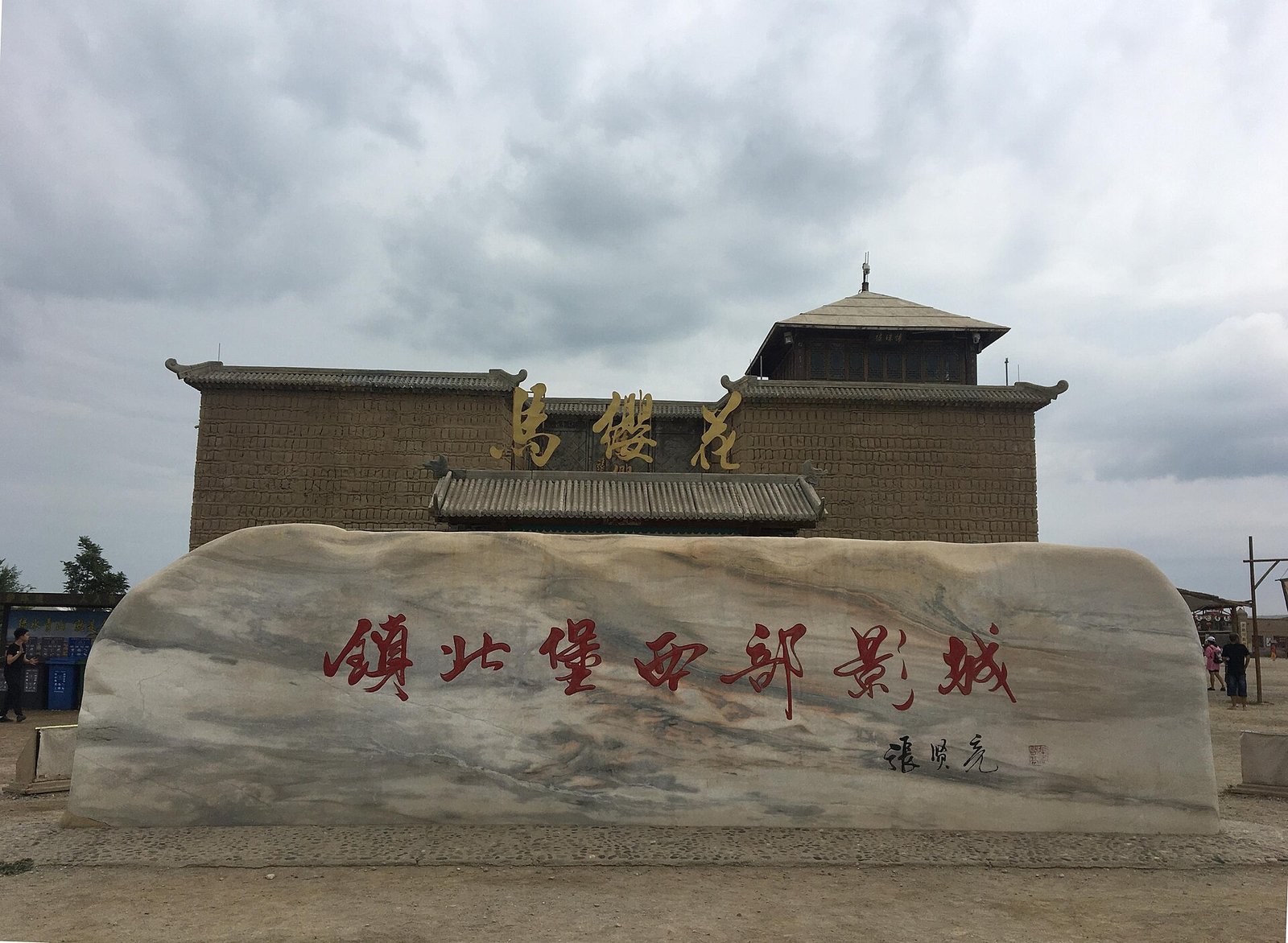
Give it half a day. The highlights are the film sets named for the movies that used them — the Moon Gate and the wine workshop from Red Sorghum, the Bull Demon King’s Palace from A Chinese Odyssey, the Dragon Gate Inn reconstruction — plus the Wengcheng, the barbican where the 1984 film One and Eight was shot and where the studio’s whole story began. It is 35 km north-west of Yinchuan, out past the edge of the city, and the drive itself shows you the landscape the films were reaching for.
The Xixia Imperial Tombs
The other half of the Yinchuan filming locations story is not a film set at all but a real one. The Xixia Imperial Tombs (西夏陵) lie about 35 km west of the city, spread across the gravel apron below the Helan Mountains: nine royal mausoleums and more than two hundred lesser tombs, their rammed-earth towers eroded into shapes that look less like buildings than like pyramids left out in the rain. It is the largest and best-preserved surviving trace of the Western Xia empire, and on 11 July 2025 it was inscribed on the UNESCO World Heritage List — China’s sixtieth World Heritage Site.
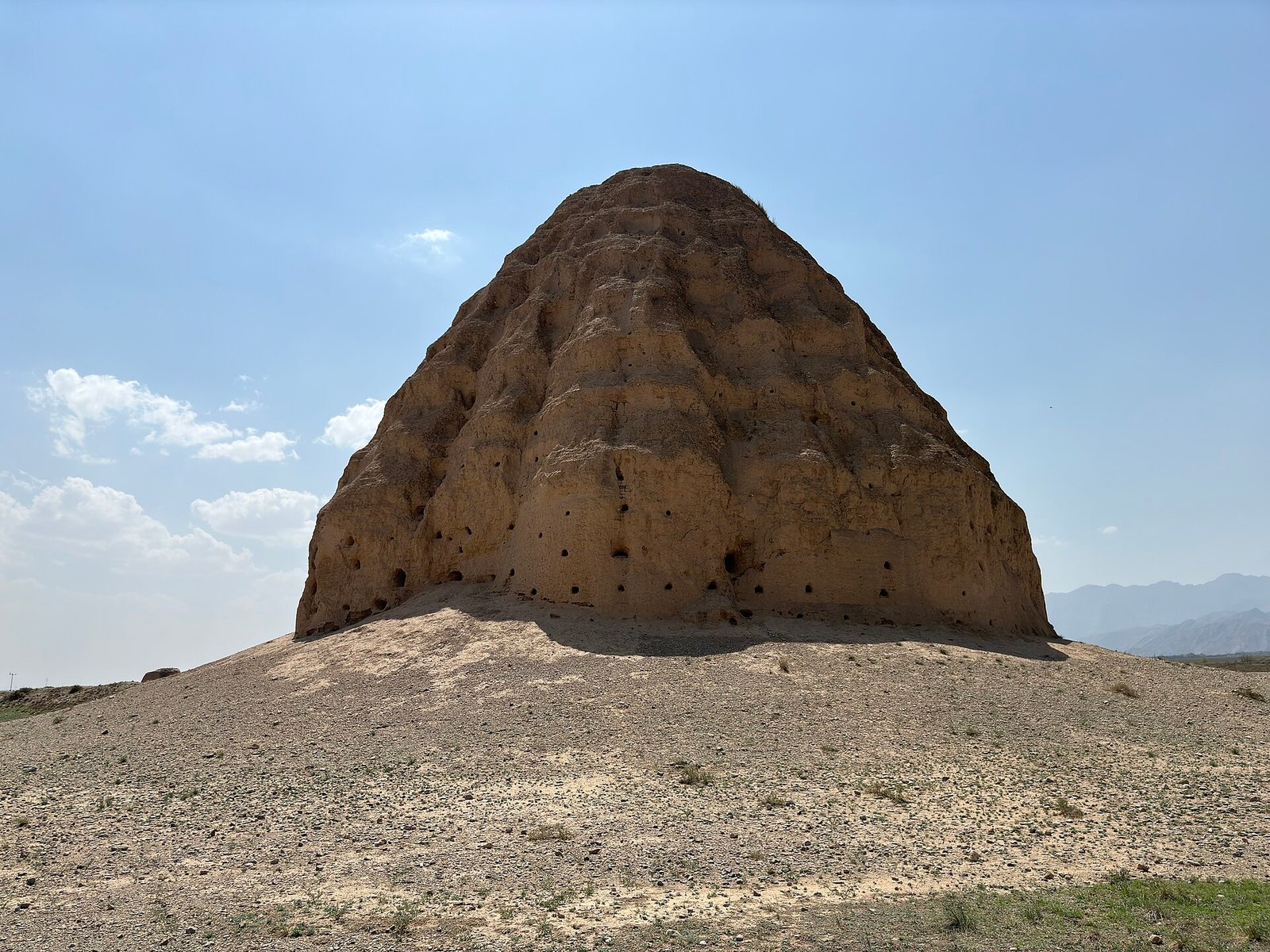
Start at the Xixia Museum, which holds more than two thousand objects and is the only place that makes sense of what you are about to see; the empire left almost no continuous written record, and its Tangut script was only deciphered in the last century. Then take the shuttle into the site itself, where the tombs stand in open, wind-scoured country with the mountains behind them. Come late in the day if you can — the light on the earth towers is the whole point, and the site is quiet enough to feel like the end of the world. Note the free-entry policy: on Mondays and Wednesdays the first ticket is waived for all visitors, which is worth planning around.
Around Yinchuan: Shahu, the rock art and the museum
If you have a second day beyond the studio and the tombs, three more places round out the region. Shahu (沙湖), a AAAAA reserve about 42 km north of the city, is the strangest of them: eighty square kilometres in which a desert and a lake sit side by side, reeds and dunes within sight of each other. It is the reed-marsh of A Chinese Odyssey, and the boat through the reeds is the reason to go. Further north-west, the Helan Mountains rock art preserves thousands of prehistoric carvings pecked into the mountain’s dark flanks, some of them thousands of years old. And in the city itself, the Ningxia Museum is the best single primer on the Western Xia, while Lanshan Park gives you a free sunset over the Helan range at the end of the day.

Two of these are worth planning around rather than fitting in. The Ningxia Museum in the city is free and small enough to see in a morning, and it is the one place that turns the tombs from a field of earth mounds into a story — the Tangut script on its stelae and seals is the empire’s own voice, recovered only in the twentieth century. And the Helan Mountains rock art is a different kind of ancient altogether: thousands of carvings pecked into the mountain’s dark flanks over millennia, best seen early before the heat and the tour buses arrive. Together with the tombs, they give the region a depth that a film city alone could not.
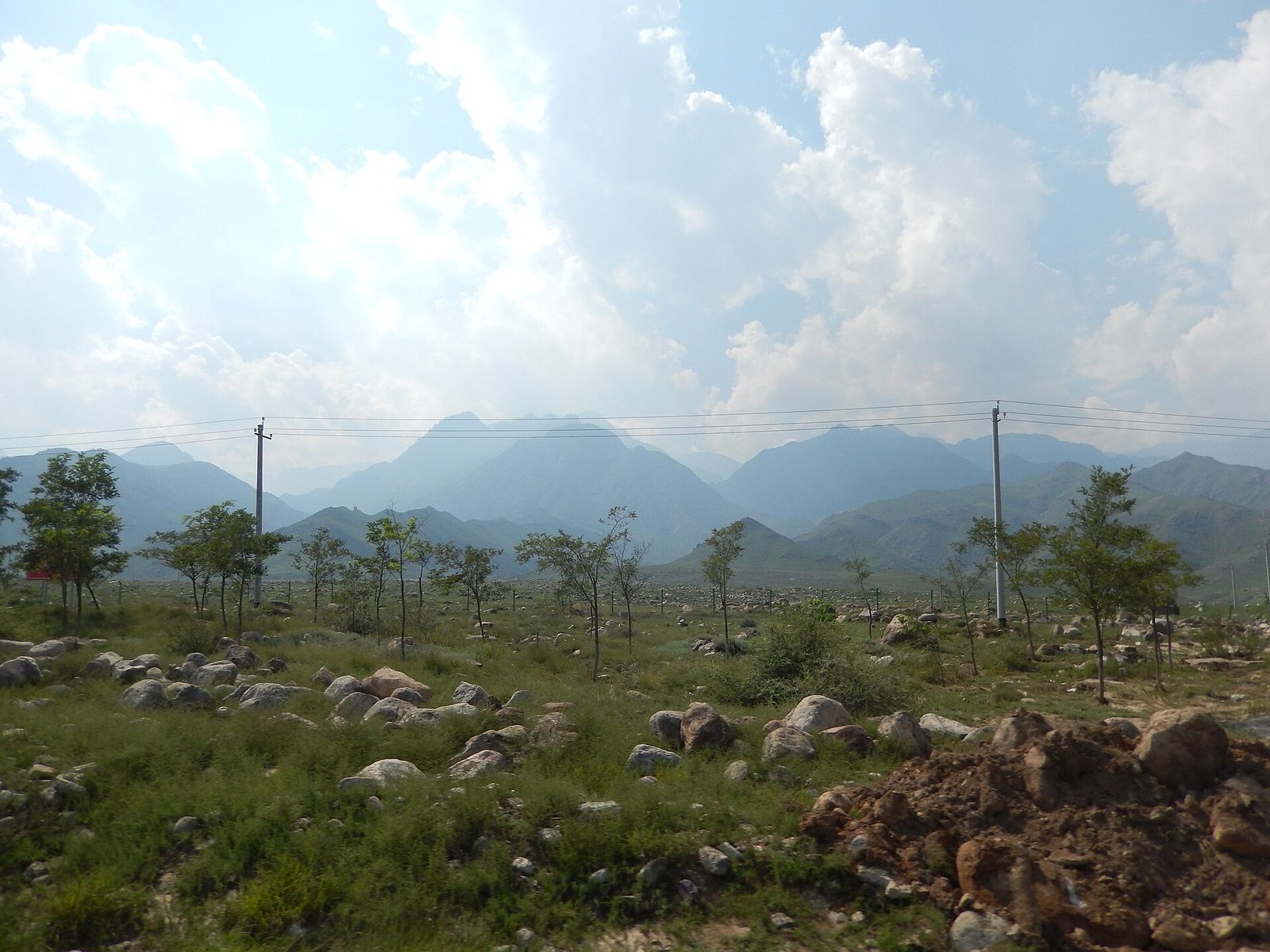
Taken together, these give the Yinchuan filming locations their second dimension: not just where films were made, but the real landscape — desert, lake, mountain and vanished empire — that made the films possible in the first place. If you are following the frontier on screen rather than on the map, the same desert-and-fort scenery recurs in our Dunhuang guide and along the Great Wall towns we cover in the filming-locations map.
When to go
Yinchuan sits at about 1,100 m on the north-west frontier, which means a dry, continental climate: hot, bright summers and cold, clear winters, with a sharp spring wind that can carry dust off the Gobi. The most comfortable months are May to June and September to October, when the days are warm and the light is clean — and autumn, in particular, is when the desert and the tomb plain look their best. Avoid late spring sandstorms if you can, and be ready for a big day-to-night temperature swing whatever the season: the same sun that bakes the studio at noon leaves the tomb plain cold after dark.
Winter is underrated. From November the crowds thin out, the light turns long and low, and the studio’s dust-coloured sets look most like the films they were built for — though you will want serious layers for the wind. Summer is hot but workable if you start early and take the studio in the morning and the museum at midday. Whichever season you choose, the two headline Yinchuan filming locations — the studio and the tombs — are open year-round and never need booking.
How we checked this guide
Every price, time and historical figure here was checked against a primary or official source on 16 October 2026. For the sights and the film history we used the Ningxia culture and tourism department, which lists the studio’s AAAAA rating, its hundred-plus films and its named sets, together with the studio’s own founding story and the 1993 no-location-fee rule. For the tombs we used the Ningxia culture and tourism department and the Yinchuan Xixia district government for hours and the free-entry policy, and the National Cultural Heritage Administration, the State Council and UNESCO for the July 2025 World Heritage inscription. For transport we used the national rail operator and Xinhua on the opening of the Baotou–Yinchuan high-speed line in December 2025. Prices and hours in China change with the season, so reconfirm before you travel — and if you find something out of date, our corrections page tells you how to flag it.
One, two or three days
| Time | Plan | Notes |
|---|---|---|
| One day | Zhenbeibao in the morning, the Xixia Imperial Tombs in the late afternoon | The minimum. The studio needs 3–4 hours; the tombs 2–3, best in the low sun. |
| Two days | Day 1 the studio and the city; Day 2 the tombs, the rock art and Shahu | The standard trip. Shahu and the rock art are in opposite directions, so pick one. |
| Three days | Add Shahu and the Helan rock art both, plus the Ningxia Museum, or continue to Zhongwei | For the unhurried. Zhongwei’s Shapotou dunes are a further 2 hours by rail. |
Two days is the right answer for most visitors, and it maps onto the Yinchuan filming locations almost exactly: the film city on one day, the Western Xia world on the other. If you are building a longer north-west trip, our route planner can string Yinchuan together with Dunhuang and the Silk Road cities.
Getting to Yinchuan
Yinchuan is easier to reach than its remoteness suggests. Yinchuan Hedong International Airport (INC) handles domestic and some international flights, with a high-speed rail link to the city. By rail, the Yinchuan–Xi’an high-speed line runs the 600-odd kilometres to Xi’an in a little over three hours, and the Baotou–Yinchuan high-speed line, which opened on 23 December 2025, completed the Beijing–Lanzhou corridor and gave the city a direct high-speed link to Beijing for the first time. The station you want is Yinchuan (银川站).
| From | To Yinchuan by rail | Notes |
|---|---|---|
| Beijing | About 6½ hours | Direct since the Baotou–Yinchuan line opened in December 2025 |
| Xi’an | About 3 hours | The Yinchuan–Xi’an line; the easiest approach from central China |
| Lanzhou | About 3 hours | Connects to the wider north-west network |
| Zhongwei | About 2 hours | For the Shapotou dunes, on the way south |
Once in the city, the Zhenbeibao studio is 35 km north-west and reachable by the tourist bus lines 17 and You-3 from the railway station and Nanmen, though departures are infrequent, so an early start or a taxi is safer. The Xixia Imperial Tombs are about 35 km west and are best done by car or a half-day tour; Shahu and the Helan rock art are further out and effectively need a vehicle. Because the Yinchuan filming locations are spread across the plain, a car for a day is the single most useful thing you can arrange. For rail bookings and how to use the system as a foreign visitor, see our trains guide.
Tickets and opening hours
| Sight | Ticket | Hours |
|---|---|---|
| Zhenbeibao West Film Studio | ¥80 adult / ¥40 student | 08:00–18:00 summer; 09:00–17:00 winter |
| Xixia Imperial Tombs | Paid entry; free first ticket on Mondays and Wednesdays | 08:00–17:00 (site later in peak season) |
| Shahu | Paid entry (boat included in some tickets) | 08:00–17:00 |
| Helan Mountains rock art | About ¥60–70 including shuttle | 08:00–18:00 summer; to 17:30 winter |
| Ningxia Museum | Free (ID or passport required) | Closed Mondays |
| Lanshan Park | Free | All day |
Tickets at the studio and the tombs are straightforward and rarely sell out, so unlike some Chinese sights you do not usually need to book ahead — the exception is peak holidays, when the studio can be busy. The free-entry days at the Xixia tombs (Mondays and Wednesdays) are the best-value window in the region, and pairing a free tomb visit with the museum makes a cheap, full day. The Yinchuan filming locations are unusually affordable by Chinese standards, with no timed-entry systems to plan around.
What to know before you go
A few practical points will make the Yinchuan filming locations and the two headline sights much easier to manage.
- Distances are real. Everything here is tens of kilometres apart and public transport is thin. Budget for taxis or a car, and group the studio with the city and the tombs with the mountain side.
- Sun and dust. The plain is bright, exposed and windy. Bring water, a hat, sunglasses and something for the dust, especially at the tombs and the rock art.
- Temperature swings. Days can be hot and nights cold in the same week. Layers work better than one heavy coat.
- Costumes at the studio. Renting a period costume and posing in the sets is half the fun and half the point. Set aside an hour for it.
- Cash and apps. Mobile payment is standard; foreign cards work at major sites but not everywhere. Our planning hub covers payments, visas and apps.
- Pair it with Dunhuang. A Chinese Odyssey runs from Zhenbeibao to Dunhuang, and the two make a natural Silk Road double bill.
Common questions
Was anything really filmed in Yinchuan?
Yes — far more than most Chinese cities, and the record is genuine. The Zhenbeibao West Film Studio, 35 km from the city, is where Red Sorghum (1987), Ashes of Time (1994) and A Chinese Odyssey (1995) were shot, among more than a hundred films, and several of the sets still stand. The studio was founded in 1993 by the writer Zhang Xianliang on the site of two Ming forts, and it famously charges film crews no location fee. This is one of the rare places where the answer to “where are the filming locations” is simply: here.
Where was A Chinese Odyssey filmed?
Across three places. The main scenes — the city gate, the wall-top confrontation and the Bull Demon King’s stronghold — were shot at Zhenbeibao near Yinchuan, and the Bull Demon King’s Palace set is still there. The reed-marsh where Zixia drifts in a boat was filmed at Shahu, north of the city. The desert dunes were filmed at Dunhuang in Gansu. So the film belongs to Yinchuan, but not to Yinchuan alone.
Was New Dragon Gate Inn filmed at Zhenbeibao?
Not the film itself. The 1992 New Dragon Gate Inn shot its main exteriors in Gansu, at the Dunhuang film city and the Jiayuguan fort. Zhenbeibao has a rebuilt Dragon Gate Inn standing inside the studio, faithful to the film and a popular photo stop, but it is a reconstruction rather than a shooting location. Visit it as a set, not as a scene.
How do I get to Zhenbeibao from Yinchuan?
The studio is 35 km north-west of the city. Tourist bus lines 17 and You-3 run from the railway station and Nanmen, but departures are infrequent, so an early start or a taxi is more reliable. By car, take Beijing Road west, turn north at Xixia Square and continue about 18 km. Allow a half-day on site.
Are the Xixia Imperial Tombs worth visiting?
Yes, and they are the reason to give Yinchuan more than one day. The tombs are the largest surviving trace of the Western Xia empire and joined the UNESCO World Heritage List in July 2025. Start at the Xixia Museum to make sense of them, then take the shuttle into the site, ideally in the late afternoon light. Entry’s first ticket is free on Mondays and Wednesdays.
When is the best time to visit Yinchuan?
May to June and September to October are the most comfortable, with warm days and clean light, and autumn is when the desert and the tomb plain look their best. Winter is quiet and atmospheric but cold and windy; summer is hot, so start early. Whatever the season, expect a big temperature swing between day and night.
Your next move
Yinchuan rewards the traveller who takes the films at their word. Go to Zhenbeibao for the sets that made the frontier a genre, to the Xixia Imperial Tombs for the empire that the films’ landscapes were borrowed from, and to Shahu if you want to see the reed-marsh where A Chinese Odyssey actually drifted. Then follow the desert west, to Dunhuang, where the same film’s dunes and the Mogao caves sit in the sand — or head south to Luoyang for the other end of China’s imperial story. For the full picture of where Chinese drama is really made, start from our drama hub and the filming-locations map.
Last verified
Sources: Ningxia Hui Autonomous Region Department of Culture and Tourism (whhlyt.nx.gov.cn) — the Zhenbeibao West Film Studio: AAAAA rating, the films shot there (Red Sorghum, Ashes of Time, A Chinese Odyssey and more than a hundred others), the named sets (the Moon Gate, the wine workshop, the Bull Demon King’s Palace, the Dragon Gate Inn, the Wengcheng barbican), the distances from Yinchuan and the opening hours · Ningxia Hui Autonomous Region Department of Culture and Tourism (whhlyt.nx.gov.cn) — the Xixia Imperial Tombs: AAAA rating, location on the eastern slope of the Helan Mountains, the largest and best-preserved surviving trace of the Western Xia, the 1988 national heritage designation, the 2012 World Heritage tentative list and the 2017 national archaeological park status · Ningxia Hui Autonomous Region Department of Culture and Tourism (whhlyt.nx.gov.cn) — Shahu: AAAAA rating, 80.10 square kilometres with more than 20 square kilometres of desert beside more than 40 square kilometres of water, 42 km from Yinchuan in Pingluo county, opening hours · National Cultural Heritage Administration (ncha.gov.cn), the State Council (gov.cn) and UNESCO, 11 July 2025 — the inscription of the Xixia Imperial Tombs on the UNESCO World Heritage List at the 47th session in Paris, China’s sixtieth World Heritage Site · Yinchuan Xixia District People’s Government (ycxixia.gov.cn), 14 July 2025 — the Xixia Imperial Tombs ticket office, museum and site opening hours and the airport-to-site route; and 8 July 2025 — the free first-ticket policy on Mondays and Wednesdays from 1 March to 30 November 2025 · China Railway (china-railway.com.cn, 8 January 2026) and SASAC (sasac.gov.cn, 26 December 2025) — the Baotou–Yinchuan high-speed line, opened on 23 December 2025, completing the Beijing–Lanzhou corridor and giving Yinchuan a direct high-speed link to Beijing · Xinhua, Ningxia channel (nx.xinhuanet.com), 1 October 2026 — “following the films around Ningxia”, the Zhenbeibao studio’s film-culture identity and the Ming Fort and Qing Fort lanes · Yinchuan Bendibao (yc.bendibao.com) — Zhenbeibao tickets (adult ¥80, student ¥40, the summer evening extension), the tourist bus lines 17 and You-3, and the self-drive route via Beijing Road and Xixia Square · Baidu Baike, “Zhenbeibao West Film Studio”, and China News Service / Beijing Youth Daily (13 December 2020) — the writer Zhang Xianliang founding the studio in 1993 on the site of two Ming and Qing frontier forts, the Ming Fort and Qing Fort, and the rule that film crews pay no location fee · Baidu Baike and Baidu Wenku entries on New Dragon Gate Inn (1992) — the film’s main exteriors shot in Gansu at the Dunhuang film city and the Jiayuguan fort, with a rebuilt Dragon Gate Inn standing inside the Zhenbeibao studio · Wikimedia Commons photo pages for the photographs used, credited in the captions and the media library
Spotted something out of date? Email us — or read how corrections work. We check every report against the source and update the page.
Ready to plan it? Turn the dramas you have watched into a day-by-day route with the C-drama route planner.
Not sure where to start? Take the drama-city quiz — seven questions, one city, and a route waiting at the end.