
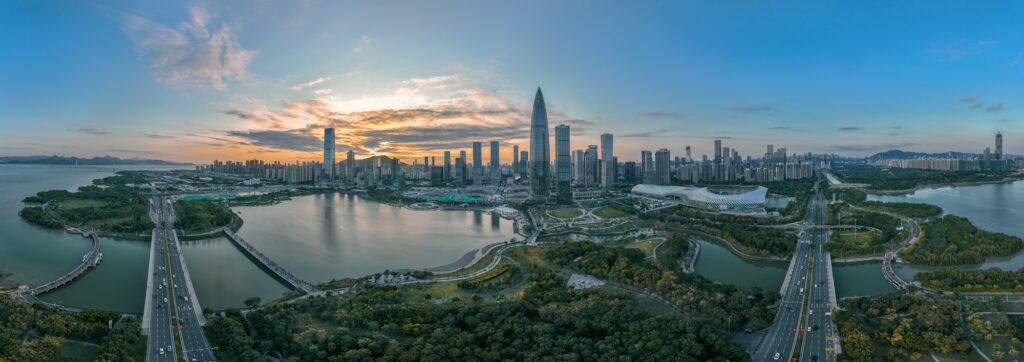
Most C-dramas on this site end at a studio gate. The Love You Give Me does not. The 2023 Tencent romance — 你给我的喜欢, directed by Ding Yingzhou, starring Wang Yuwen and Wang Ziqi — was shot on location across Shenzhen: a 128-metre ferris wheel on the Bao’an waterfront, a free public reservoir boardwalk in Yantian, a Ming-dynasty walled town out in Dapeng, and the beaches of the Dapeng peninsula. Its The Love You Give Me filming locations are not a backlot you can tour in an afternoon. They are a working city, and one of its coastlines, and you can do both in two days.
The short answer: The Love You Give Me (你给我的喜欢) was filmed in Shenzhen, Guangdong, and the recognisable places are OH Bay and its Bay Area Light ferris wheel in Bao’an, Enshang Reservoir in Yantian, Dapeng Ancient City, Rose Coast and the Langqi Zhanyun beach in the Dapeng New District, Yunli Dream Park in Longgang, and a Shekou city walk in Nanshan. A handful of beach exteriors were shot just over the border in Huizhou. Most of it is free to walk into, and only the ferris wheel and one beach really need a ticket.
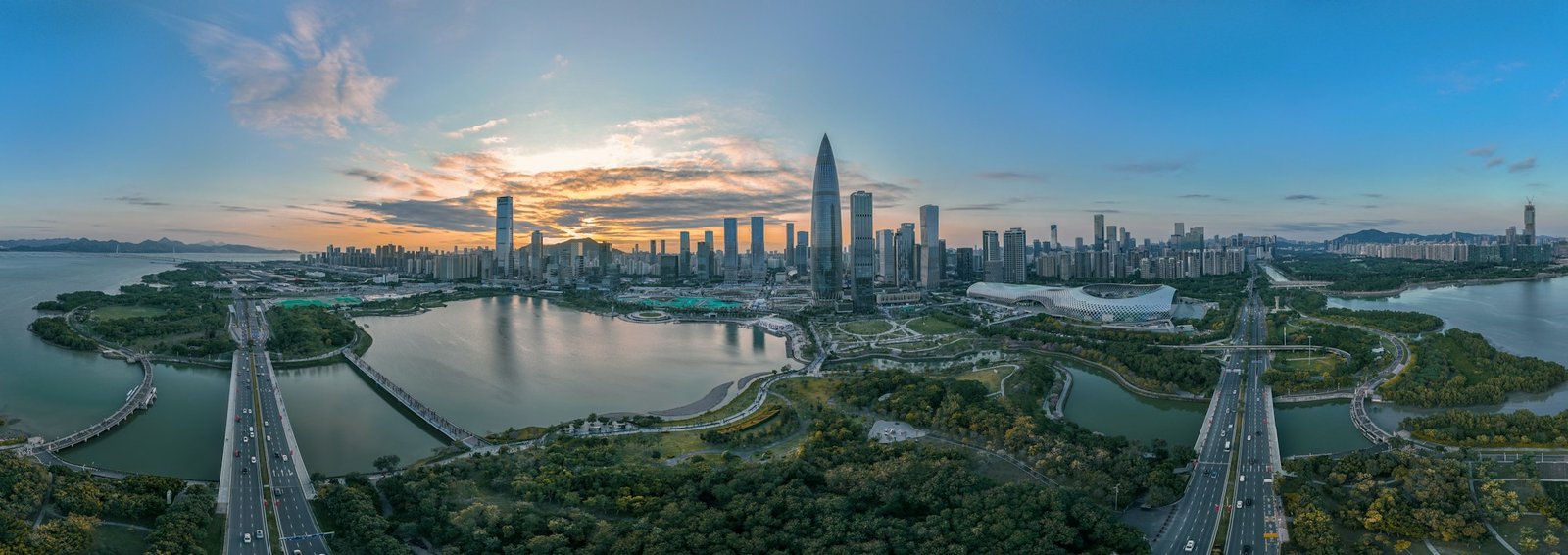
A romance that used a real city
Almost everything else in the period-drama half of this site is a studio story. The Love You Give Me is the other kind of Chinese drama, and the easier one to travel for. It is a contemporary romance: Min Hui (Wang Yuwen, 王玉雯) is a project manager raising her young son on her own, and Xin Qi (Wang Ziqi, 王子奇) is the former boyfriend who left for abroad years ago and has now come back. The two circle each other across twenty-eight episodes, with a five-year-old in the middle of the frame, and the city keeps getting in the shot whether the script asks for it or not.
The production facts are simple. The series was made for Tencent Video, directed by Ding Yingzhou (丁英洲), adapted from the novel of the same name by Shi Dingrou (施定柔), and released in 2023. What matters for a traveller is that it is a Shenzhen drama rather than a “southern city” drama assembled from backlots. The ferris wheel on the Qianhai-Bao’an waterfront, the walled town on the Dapeng peninsula and the reservoir loop in the eastern hills are all real, all visitable, and mostly free.
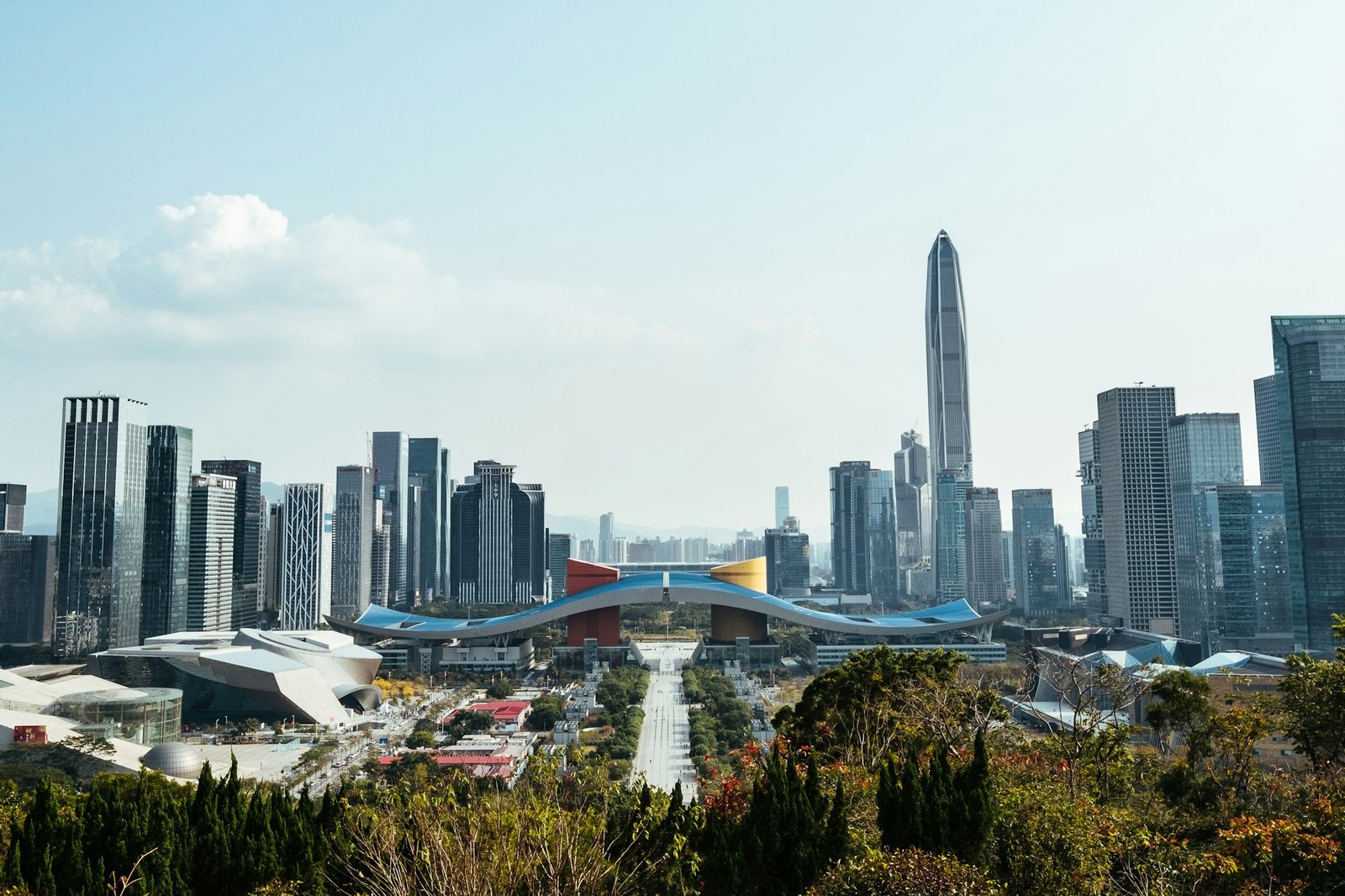
That is why the locations below are worth the trip. You are not touring a set. You are standing where the camera stood, and the view is the one in the frame.
The Love You Give Me filming locations at a glance
| Location | Where | What it is in the show | Cost |
|---|---|---|---|
| OH Bay (欢乐港湾) | Bao’an, west Shenzhen | The ferris-wheel confession on the waterfront | District free; wheel ¥150, ¥180 on public holidays |
| Enshang Reservoir (恩上水库) | Yantian, east | The reservoir boardwalk and the tree the leads keep returning to | Free, no booking |
| Dapeng Ancient City (大鹏所城) | Dapeng New District, far east | The old town that stands in for the couple’s early days | Free entry; some exhibition halls ¥10–30 |
| Langqi Zhanyun beach (浪骑瞻云) | Nan’ao, Dapeng | The camping beach by the resort | Resort beach — access is for hotel guests, not day trippers |
| Rose Coast (玫瑰海岸) | Xichong, Dapeng | Beach scenes | ¥40–50, at the gate |
| Yunli Dream Park (云里梦想乐园) | Bantian, Longgang | The family day at the amusement park | From ¥45 per project |
| Shekou (蛇口) | Nanshan, south-west | The city backdrop to the apartment scenes | Free — a city walk |
| Tenli Silver Beach (惠州十里银滩) | Huizhou, outside Shenzhen | A few beach exteriors | Free to walk; rides charged |
Two of these are city day-trips that the metro can reach; the Dapeng cluster needs a full day and a bus; Enshang Reservoir is a half-day out from the metro. Nothing on the list needs a tour guide.
OH Bay: the confession on the wheel
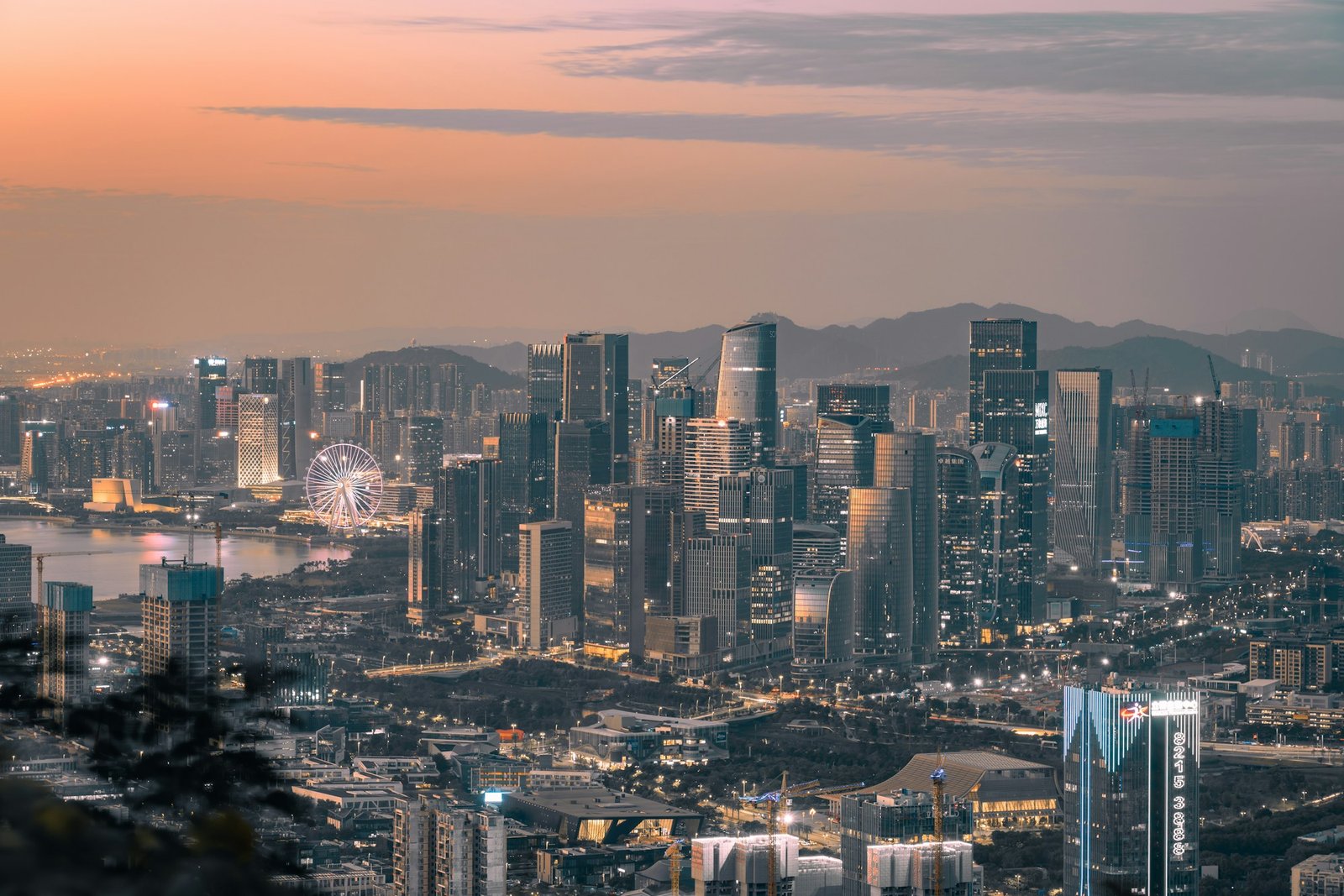
The single most recognisable location in the drama is a piece of machinery. OH Bay (欢乐港湾) is the waterfront district on the south side of Bao’an’s central area, and its landmark is the Bay Area Light (湾区之光) ferris wheel — 128 metres tall, 28 cabins, one full revolution every 28 minutes, opened in April 2021. In the drama this is where the confession lands; in real life it is simply the best viewpoints on this stretch of coast, sitting directly opposite the towers of Nanshan and Qianhai.
The district itself is a free, open commercial area — plaza, waterfront boardwalk, shops, cafés, cycling and the little tourist train that loops the site. Only the wheel is ticketed. An adult ride is ¥150 on ordinary days and weekends and ¥180 on statutory public holidays; children and seniors pay ¥80, students ¥110, and Hong Kong and Macau residents ¥120. Tickets are sold through the operator’s official online channels — the WeChat mini-program — and on non-holiday days it is worth booking a day or two ahead for a sunset slot.
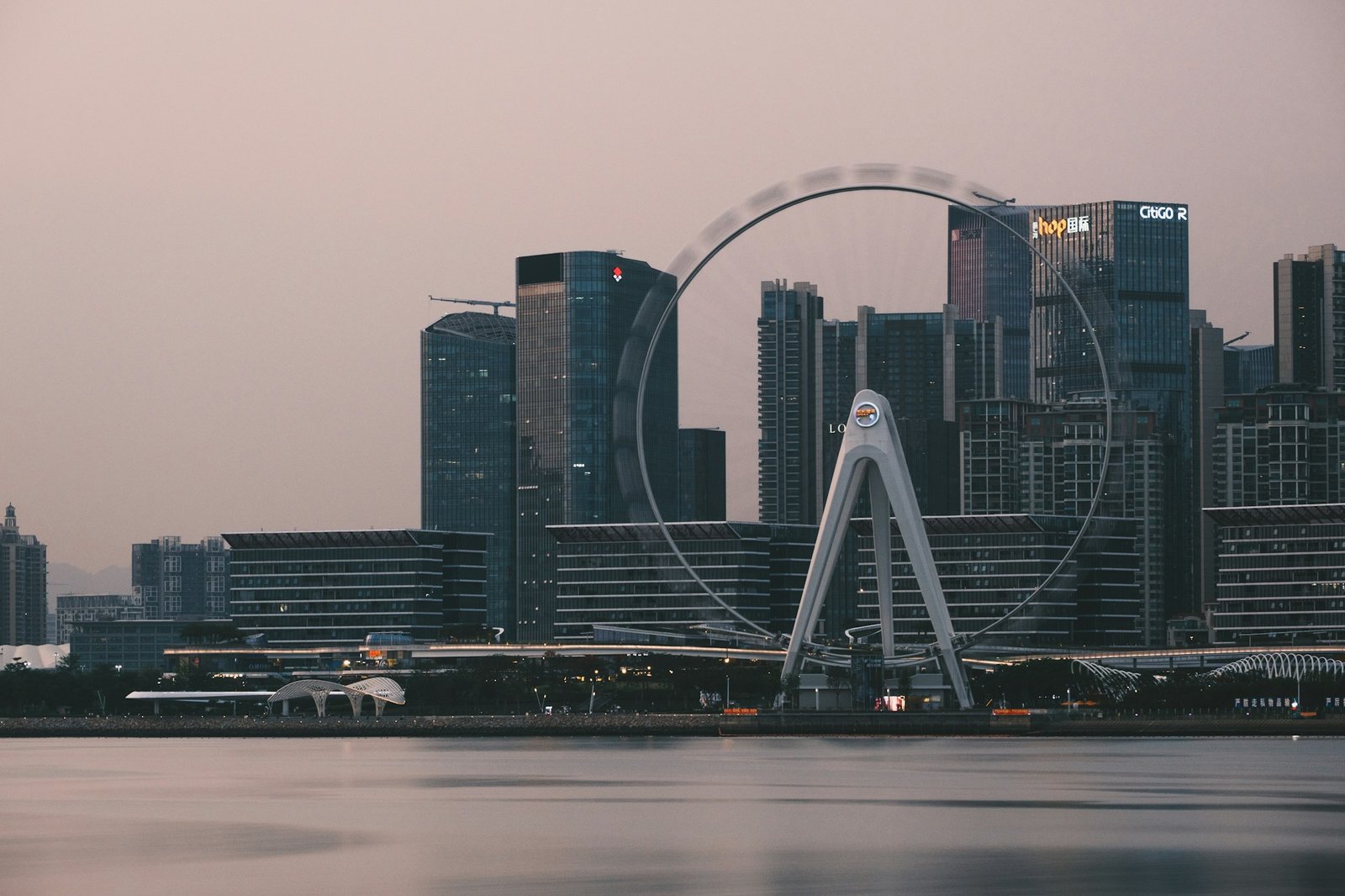
How to see it: budget two hours, and time it for the hour before sunset when the wheel lights up and the towers across the water do too. The boardwalk, the shopping and the train are all free, so this is an easy stop even if you are not riding.
Enshang Reservoir: the tree, and the winter colours
On the other side of the city, in the hills above Yantian, sits Enshang Reservoir (恩上水库) — a small reservoir reached along Enshang Road, with a public greenway loop of just over a kilometre and views back down towards the sea. This is the location Chinese coverage of the drama names most often: the lakeside walk, the forest boardwalk, and the big old tree that fans of the show seek out as the spot where the leads’ story turns. We will be straight with you about that tree — see How we checked this list below — but the walk is worth doing whether the tree checks out or not.
Access is easy. Metro Line 8 to Shenwai High School station (深外高中站), exit B, gets you to the foot of the hill in minutes; the viewing-platform shortcut (盐高观景台) takes about twenty minutes on foot, or you can take Line 8 to Haishan station (海山站) and walk the two kilometres along the greenway from the city side. The district’s own published hiking line runs about ten kilometres and three to four hours: the Shatoujiao seaside boardwalk, the Yantian government plaza, the Wutong Mountain mandarin-duck valley, Enshang Road, Enshang Wetland, and finally the reservoir — a genuinely good half-day that needs no ticket and no booking.
Come in winter if you can. The plantation of Taxodium (metasequoia, 落羽杉) along the water turns a deep red from roughly December into January, and local reporting has covered the colour every year since 2024 — it is the one season when this quiet corner of Shenzhen is genuinely busy.
Dapeng Ancient City: the town where it starts
Out on the Dapeng peninsula, about an hour and a half east of the city centre, is the drama’s most substantial location. Dapeng Ancient City (大鹏所城) is a Ming-dynasty fortified town — formally the Dapeng Garrison of a Thousand Households, founded in 1394 — and one of the better-preserved coastal-defence castles in China. It has been on the national list of key cultural relics under state protection since 2001, and its lanes, gate towers, temples and the old generals’ residences of the Lai family, who produced five generals in three generations, are the texture the drama borrows for its backstory.
For a visitor the practical facts are unusually generous. Entry to the town is free — you walk in through the gates off Pengcheng village (鹏城社区) — and it is open year-round with no reservation required. A small number of exhibition halls inside charge on the spot, ¥10 to ¥30 each, posted at their doors; you can ignore them and simply walk the lanes. The town has been the subject of a steady stream of Chinese coverage as a day trip, and it is the reason dapeng ancient city shenzhen itself turns up as a search in its own right.
There is one restriction that catches drivers out, and it applies to everyone on the road, visitors included. Every year from 1 May to 8 October, on all weekends and public holidays, private cars must hold a vehicle reservation to enter the southern half of the Dapeng peninsula — the zone south of the Diefu Mountain tunnel, which includes Dapeng Ancient City. The rule comes from the city government, aimed at the summer crush on the peninsula’s single coastal road. If you are driving, book a slot through the official channels before the weekend; if you are on a bus, the reservation does not apply to you.
The Dapeng coast: Rose Coast and the resort beach
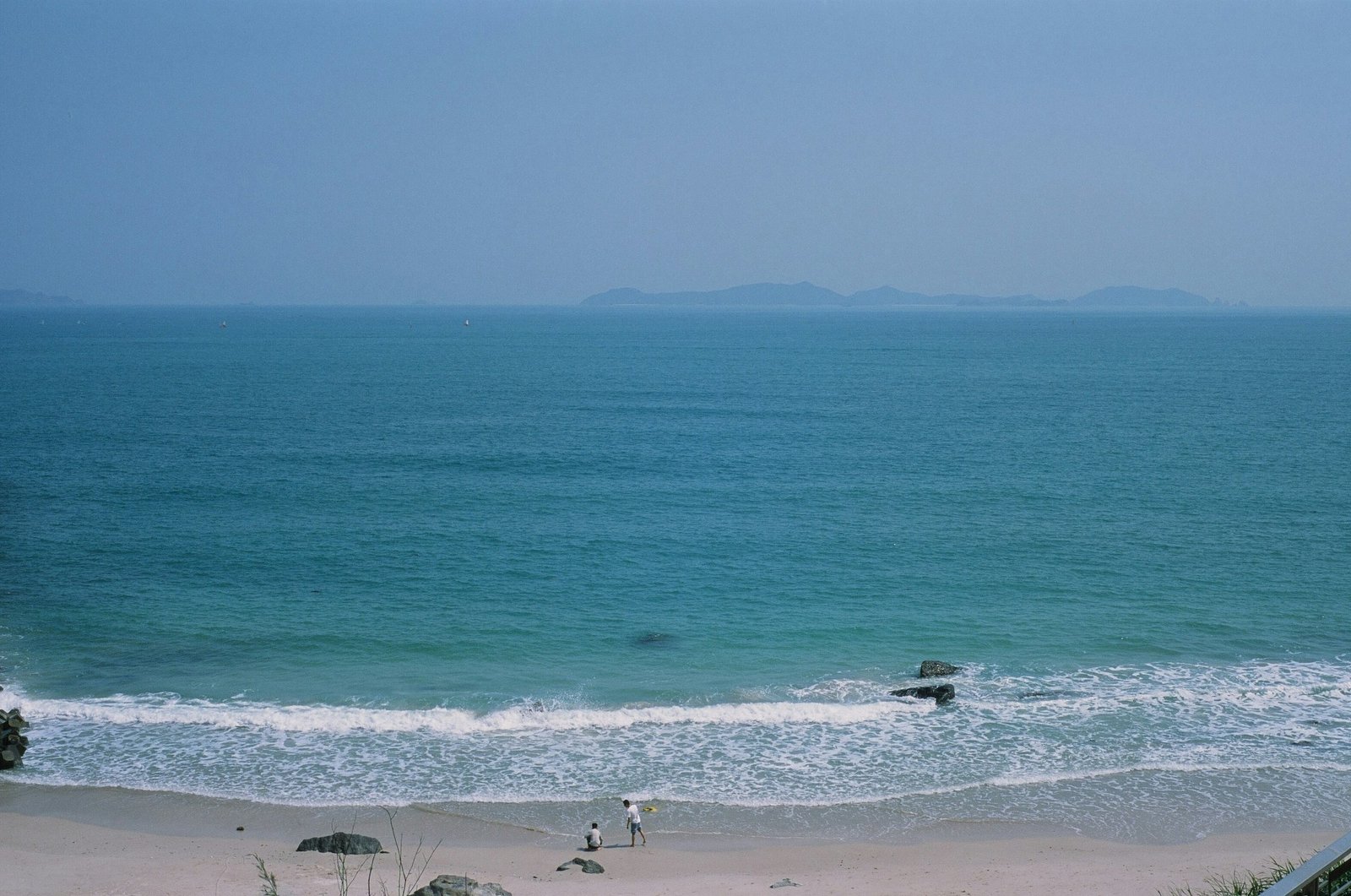
The peninsula’s beaches carry the show’s seaside material, and the two named in Chinese coverage are very different visits.
Rose Coast (玫瑰海岸), in the Xichong area of Kuichong subdistrict (葵涌街道溪涌), is a commercial wedding-photo beach: paid entry, a long curve of sand, and the usual paid extras. Ticket pricing is the one place our sources disagree, which is why we write it as a range: ¥40–50 for an adult, with a ¥25 concession for children and seniors, no reservation needed — buy at the gate or through the official sales channel. Hours are 8:00–19:00 on weekdays (closing at 21:00) and 8:00–20:00 on weekends and public holidays (closing at 22:00). If the self-service kiosk will not take a foreign document, the staffed window by the gate will.
Langqi Zhanyun (浪骑瞻云) is a different proposition, and worth explaining plainly. The beach at 88 Xindong Road in Nan’ao belongs to a Vanke resort hotel, not to the public: the drama’s camping scenes play out on a hotel beach, and as a day visitor you should treat it as scenery rather than a stop — it is open to resort guests, and its neighbours Yangmeikeng and Jidiaosha, both walkable along the same shore, are the beaches to plan around. One naming trap: some map apps still file this address under Longgang district. That is the old administrative map — since 2011 the whole peninsula sits in the Dapeng New District.
And one honest footnote, because several guides quietly blur it: a few of the drama’s beach exteriors were shot over the border in Huizhou, at Tenli Silver Beach (十里银滩) on the coast of Huidong county, next to the better-known Xunliao Bay — the same shore another well-known romance used before this one. If you are strictly checking off the show’s beaches, the Dapeng pair above are the Shenzhen ones; the Huizhou beach is an optional detour across the provincial line, not part of a Shenzhen day.
Yunli Dream Park: the family day out
The gentlest location on the list is also the one travelling parents ask about. Yunli Dream Park (云里梦想乐园) sits in the north plaza of Yunli Smart Park at 6 Fada Road in Bantian, Longgang — a mid-way stop between the city centre and the eastern hills. It is an open-air amusement park of about 15,000 square metres with more than twenty rides: a mini roller coaster, a ferris wheel, a carousel, the ring-run cars and the usual gentle roundabouts for smaller children. In the drama this is where the family’s day out plays, and it is a fair image of the place: an ordinary neighbourhood park that happens to have rides, not a theme-park complex.
Pricing is by ride or by bundled pass, from about ¥45, and several third-party ticket channels quote the same starting figure — the reliable way to read it is “from ¥45” rather than a fixed price, because the total depends on the combination you pick. There is no reservation requirement; buy on the spot or through the park’s channels. If your trip runs through Longgang anyway — the city’s manufacturing belt between the centre and Dongguan — it is an easy two hours to fold into a day.
Shekou: the city walk that replaces the apartment
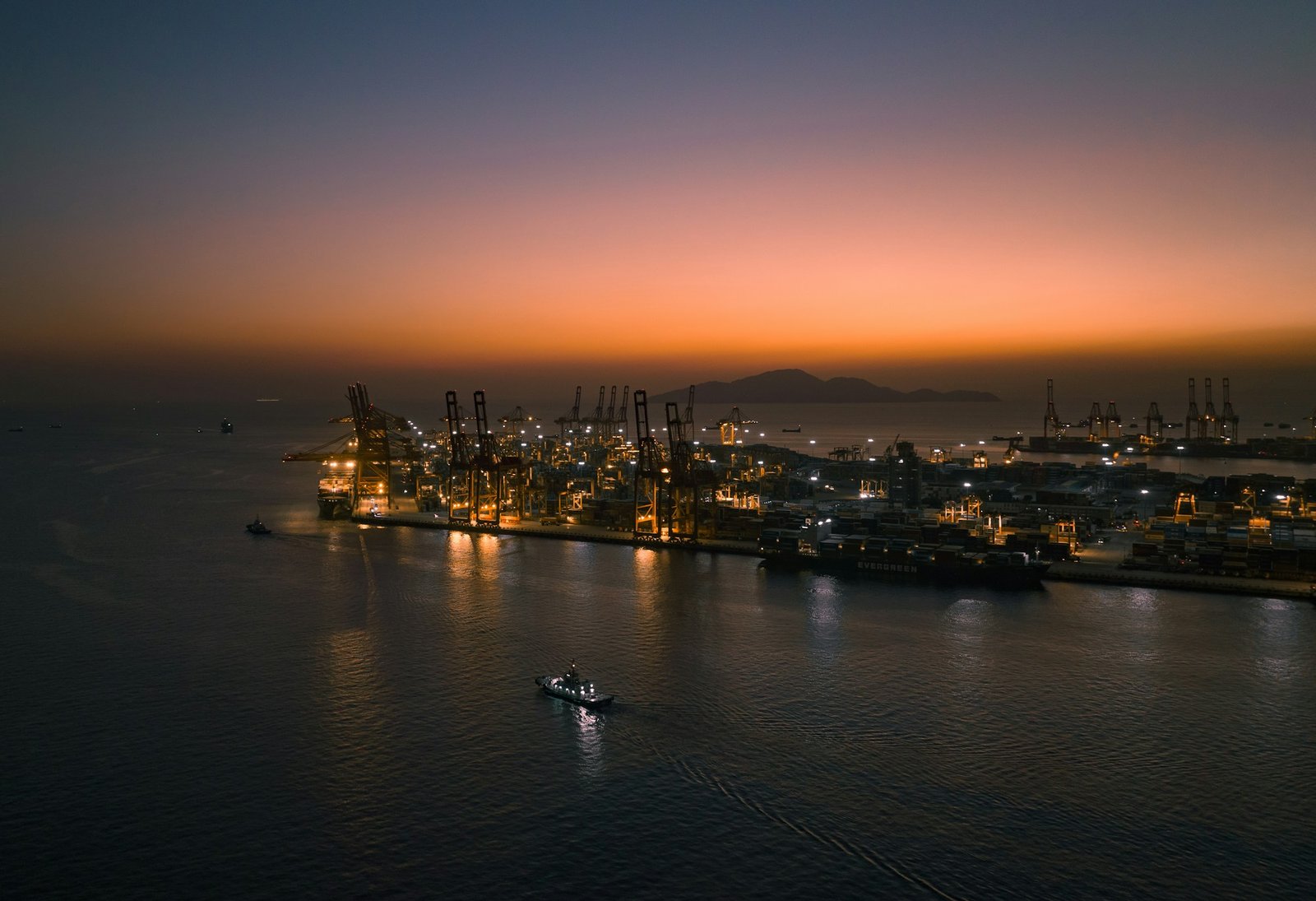
Chinese coverage of the drama also points at a specific address in Shekou (蛇口), in Nanshan: a serviced-apartment building used for the leads’ urban scenes. We should save you the trip — it is a residential building, not a visitor site, and there is nothing to see from the street.
What works instead is the older Shekou walk that the address sits in, twenty minutes on the metro from the city centre. Sea World (海上世界) holds the Minghua, the retired cruise ship turned into a plaza and bar strip; Value Factory (价值工厂), the old Float Glass works, keeps its industrial sheds and is now exhibition and studio space; and the fishing harbour still runs, with the morning catch and the seafood places that come with it. This is the Shenzhen that existed before the towers — the district that gave the city its first port, its first foreign-invested factories and, in a sense, its name as the place where China’s reforms were piloted. It is also where the drama’s city mood actually lives.
How we checked this list
This page is the one place on the site where the honesty section matters most, so here it is plainly.
The drama was not given the lavish press tour that bigger costume dramas get, and its production company has not published an official list of locations. Every English listicle of The Love You Give Me locations traces back to the same handful of Chinese write-ups, and we went back to those sources ourselves rather than to the copies. The core set — Enshang Reservoir, OH Bay’s ferris wheel, Dapeng Ancient City, Rose Coast, the Langqi Zhanyun beach, Yunli Dream Park, the Shekou apartment, and the Huizhou beach detour — is consistent across several independent Chinese round-ups published during and after broadcast, including two separate location write-ups in 2023 and 2024 and the summary answers that circulate on Baidu Zhidao. That is why we are willing to write the list at all.
What we could not do is get an official, on-the-record confirmation for each individual spot. No government or media statement says “this scene was filmed here”, and the specific claims — which tree is the tree, which lane is the lane — come from fan-level sources that have hardened into fact by repetition. Treat the scene-by-scene attributions as reported rather than confirmed, and judge the walk on its own merits; every place on the list is a real, visitable, mostly free location whether the camera was there or not.
What we did verify ourselves, against government and city sources on 13 October 2026: Dapeng Ancient City’s free entry, opening hours and vehicle-reservation rule (Shenzhen government’s own answer and the Dapeng New District site); the Bay Area Light wheel’s dimensions, ride time and fares (the operator’s ticketing channels as reported by local city guides); Rose Coast’s fare range and hours; Enshang Reservoir’s free greenway, metro access and the district’s published hiking line; Yunli Dream Park’s area, ride count and starting price; and the Shenzhen Metro fare structure quoted in the cost section below. Fares and rules change — check the operator’s page before you travel, and note the verification date.
Seeing it in two days
Unlike a studio-park pilgrimage, there is no single route here: the locations form three natural clusters, and two days covers them without a car.
Day one — the city, west to south. Start at OH Bay in late afternoon: free waterfront, the wheel turning across the bay, sunset from the boardwalk, dinner in the district. Then the metro south into Shekou for the Minghua, Value Factory and the harbour at last light. Both stops sit on Line 5 and Line 2 respectively, and neither needs a ticket beyond the wheel itself.
Day two — the peninsula, all day. Take the early bus out to Dapeng Ancient City: the E11 express to Dapeng Central, then the M471 local to the ancient town’s stop. Walk the lanes, then continue towards the coast for Rose Coast in the afternoon. This is a full-day outing — roughly ninety minutes each way — and in the May-to-October window check the weekend vehicle-reservation rule even if you are only on a bus, because the same crush slows the roads.
With a third day, or a free morning, slot in Enshang Reservoir on Metro Line 8 (a half-day, free, and at its red-metasequoia best in winter), or Yunli Dream Park if you are travelling with a child. Huizhou’s Tenli Silver Beach is a separate expedition — a car and a border crossing — and not worth it unless the show has you under its spell.
Getting to Shenzhen
Shenzhen is one of the easiest cities in China to reach, which is part of why it makes a good long weekend even without the drama.
- By high-speed rail. Shenzhen North and Futian stations sit on the Beijing–Guangzhou–Shenzhen–Hong Kong line. Guangzhou is about half an hour away, and Hong Kong’s West Kowloon station a short ride in the other direction, with frequent departures. Check 12306 for your date rather than a printed timetable — tickets go on sale only about two weeks ahead.
- By air. Shenzhen Bao’an International Airport (SZX) is a major international hub with connections across Asia and beyond, and it is on the metro (Line 11) as well as by airport bus.
- In the city. The metro reaches most of this guide: Line 5 for the OH Bay waterfront, Line 2 for Shekou, Line 8 for Enshang Reservoir. The Dapeng peninsula is bus country — there is no metro across the hills.
If you are travelling from outside China: Shenzhen is one of the country’s main ports of entry, and its airport and crossings are designated ports for the 240-hour transit visa-free scheme — whether it applies to you depends on your passport and your onward ticket, so read our visa and entry guide and check the current rules before you book. For the rail leg in, book on the official 12306 app with your passport number entered exactly as printed, and carry that same passport to the station: on a passport booking, the passport is your ticket at the gate, and if the automatic gate will not read it, the staffed lane will. In the city itself, load the transit code inside Alipay or WeChat rather than the ordinary payment code — the metro gates will not read the latter, and there is no cash option.
Tickets, hours and what is free
Most of this trail is free ground. The short ticket list is below, checked against operator and city sources on 13 October 2026.
| What | Cost | Booking |
|---|---|---|
| OH Bay waterfront district (plaza, boardwalk, train) | Free | None |
| Bay Area Light ferris wheel | ¥150; ¥180 on public holidays (children/seniors ¥80, students ¥110, HK/Macau residents ¥120) | Official online channel (WeChat mini-program); book ahead on non-holidays |
| Dapeng Ancient City (the town itself) | Free | None — no reservation; individual exhibition halls ¥10–30 on the spot |
| Rose Coast | ¥40–50 adult; ¥25 children/seniors | None — buy at the gate or the official channel |
| Yunli Dream Park | From ¥45 per project or bundled pass | None — buy on the spot |
| Langqi Zhanyun beach | Resort beach — hotel guests, not a day-visit ticket | n/a |
| Enshang Reservoir, Shekou walk, city parks | Free | None |
| Metro | ¥2 for the first 4 km, distance-priced to a ¥15 maximum | Transit code in Alipay or WeChat |
Buying as a visitor from outside China: the attractions here rarely involve identity checks — the town, the reservoir and the city walk are free public space. Three places matter: the rail journey in, where tickets are issued against your passport; the ferris wheel, whose online booking runs on a Chinese app or mini-program, so keep the staffed ticket office as a fallback; and the Dapeng vehicle reservation, which for anyone driving (including a rental car) needs the car’s plate booked through the official channels for the 1 May – 8 October weekend and holiday window. If a self-service machine will not read a foreign document, the staffed window will.
What a day actually costs
The trail itself is close to free: the reservoir, the walled town, the Shekou walk and the OH Bay waterfront cost nothing and need no booking. The two ticketed stops are the ferris wheel at ¥150 (¥180 on public holidays) and Rose Coast at ¥40–50. The metro runs ¥2 for the first 4 km and tops out at ¥15, and buses out to Dapeng are a few yuan each way. With lunch at ¥30–60 and dinner at ¥50–120, a city day without the wheel comes to ¥100–260 per person and a day with the wheel to ¥260–450; a peninsula day — buses, one beach and simple food — lands around ¥150–300 per person, all roughly US$15–65 at a round ¥7 per US$1 (check the live rate).
Common questions
Where was The Love You Give Me filmed?
In Shenzhen, Guangdong. The locations named in Chinese coverage are OH Bay and its Bay Area Light ferris wheel in Bao’an, Enshang Reservoir in Yantian, Dapeng Ancient City, Rose Coast and the Langqi Zhanyun beach out on the Dapeng peninsula, Yunli Dream Park in Longgang, and the Shekou district in Nanshan. A few beach exteriors were shot just over the border in Huizhou. There is no studio park to visit.
Was The Love You Give Me filmed in Shenzhen?
Yes — with the honesty caveat our checking section sets out. Several independent Chinese write-ups published during and after the drama’s 2023 broadcast name the same Shenzhen locations, and we verified the places themselves, their tickets and their hours against government and city sources. No official statement from the production confirms each spot scene by scene, so treat the specific attributions as well-reported rather than official.
Is Dapeng Ancient City the town in The Love You Give Me?
It is the strongest match on the list. Chinese round-ups of the drama consistently place the old-town scenes at Dapeng Ancient City, the Ming-dynasty garrison town in the Dapeng New District, and the match makes sense — it is the most film-ready old town within the city’s borders. Entry is free, the town is open year-round with no reservation, and from 1 May to 8 October private cars need a weekend-and-holiday reservation to enter the peninsula.
How much is the OH Bay ferris wheel?
An adult ride on the Bay Area Light wheel is ¥150 on ordinary days and weekends and ¥180 on statutory public holidays. Children and seniors pay ¥80, students ¥110, and Hong Kong and Macao residents ¥120. The waterfront district around it is free. Book through the operator’s official online channel; on non-holidays a sunset slot a day or two ahead is a good idea.
Do I need to book anywhere in Dapeng?
Not for the town itself — Dapeng Ancient City is free, needs no reservation, and the exhibition halls inside are paid on the spot if you want them. The one booking that matters is for drivers: from 1 May to 8 October, on weekends and public holidays, cars must hold a reservation to enter the southern half of the Dapeng peninsula, which includes the ancient town. Bus passengers are unaffected.
How do I get to Dapeng Ancient City without a car?
Take the E11 express bus to Dapeng Central, then change to the M471 local bus to the Dapeng Ancient City stop. Budget roughly ninety minutes each way from the city centre, start early, and treat the peninsula as a full-day outing. Rose Coast is a short onward hop from the town.
Can I visit the apartment in Shekou?
No. The serviced-apartment building named in Chinese write-ups is a residential address, not an attraction, and there is nothing to see from outside. The better use of the stop is the Shekou walk: Sea World and its retired cruise ship, the Value Factory sheds, and the fishing harbour.
Is Shenzhen worth a trip if I have not seen the show?
Yes. The drama is a good excuse; the city is the reason to stay. Shenzhen gives you a genuine coastline — the Dapeng peninsula’s beaches and the old garrison town — one of China’s most interesting urban success stories, the Shekou district where the reforms began, and hill walks with sea views. Two days covers the show’s locations comfortably; a third day is for the coast.
Your next move
Still exploring?
The other real-city romances on the site — Quanzhou, Ningbo, Hangzhou — are one tap away.
Worried about the practical stuff?
Visas, payment, trains and the apps you’ll need before you land — the four things you cannot work out on the ground. Each guide is dated and sourced.
Ready to go?
Shenzhen was the whole shoot: no studio, no set. See where it sits on the map.
Last verified
Sources: Baidu Baike, drama entry for 《你给我的喜欢》 (cast, crew, 28 episodes) · Baidu Baijiahao, 2023-08-12 location round-up for the drama · Baidu Baijiahao, 2024-01-18 location write-up · Baidu Zhidao, combined answer on the drama’s filming locations · Shenzhen News, 2024-01-15, the red metasequoia at Enshang Reservoir · Shenzhen Government Online, 2025-07-03, answer on the Dapeng peninsula weekend/holiday vehicle reservation (1 May – 8 October) · Dapeng New District site, introduction to Dapeng Ancient City (free entry, Lai family generals) · Guangdong Provincial Local Chronicles, Dapeng Ancient City listed in the fifth batch of national key cultural relics (2001) · Guangdong Literature and History, Dapeng Garrison of a Thousand Households founded 1394 · Shenzhen Bendibao, 2026-04-29, Dapeng Ancient City visitor guide · Shenzhen Bendibao, Rose Coast tickets and hours · Dahepiao, 2025-06-19, Bay Area Light ferris wheel fares · Langqi Zhanyun resort official site (Vanke Zhanyun brand beach hotel) · Shenzhen Government Online, Shenzhen Metro distance-based fare structure (¥2 first 4 km) · Unsplash photo pages: Weichao Deng (juniperphoton) — aerial skyline and Shekou harbour; Robert Bye — civic-centre skyline; Bobbi Wu — OH Bay ferris wheel; Muki Pan — coast; ダモ リ (darmau) — Qianhai at dusk
Spotted something out of date? Email us — or read how corrections work. We check every report against the source and update the page.
Ready to plan it? Turn the dramas you have watched into a day-by-day route with the C-drama route planner.
Not sure where to start? Take the drama-city quiz — seven questions, one city, and a route waiting at the end.