
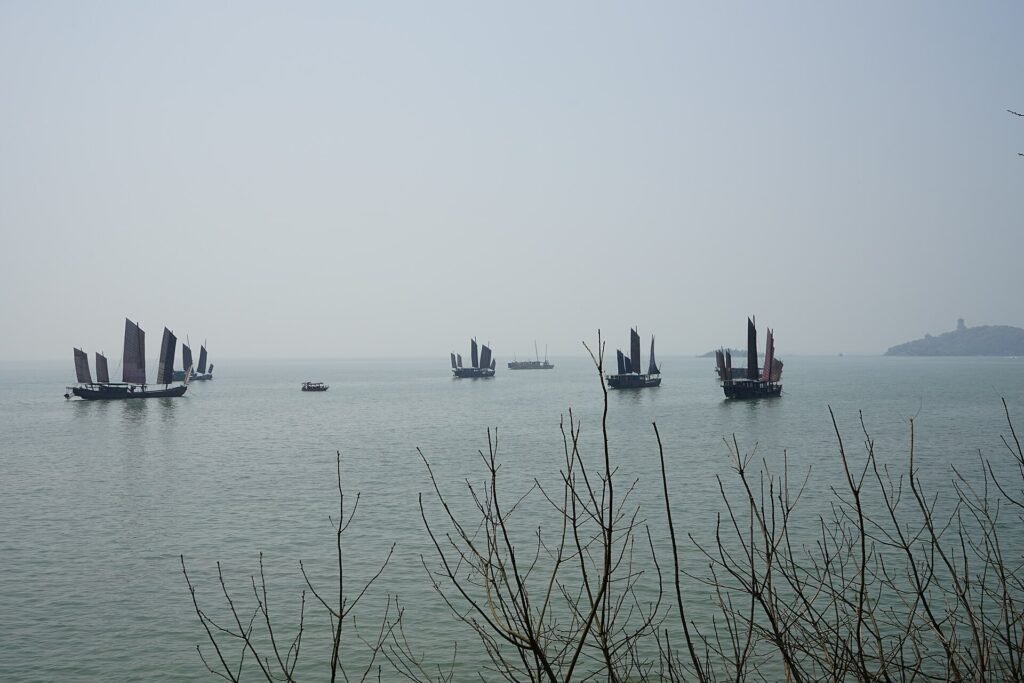
There is a line early in A Dream of Splendor about throwing money into West Lake. The lake the camera is actually looking at is 200 km away, in Wuxi, and it is called Taihu. That single substitution tells you almost everything about how this show was made — and it is the reason the A Dream of Splendor filming locations are easier to plan than most C-drama pilgrimages.
The short answer: A Dream of Splendor (梦华录) was shot across Zhejiang and Jiangsu. The Qiantang opening — the tea house, the water mill, the fishing village — is at Water Margin City in Wuxi, on Lake Tai, plus Yuantouzhu on the same lake. The Eastern Capital scenes are at Hengdian, in the Along the River During the Qingming Festival area. Xiangyang’s Tang City and Xiangshan Film City supplied the rest. Wuxi and Hengdian are the two that matter, and they are three hours apart by rail.
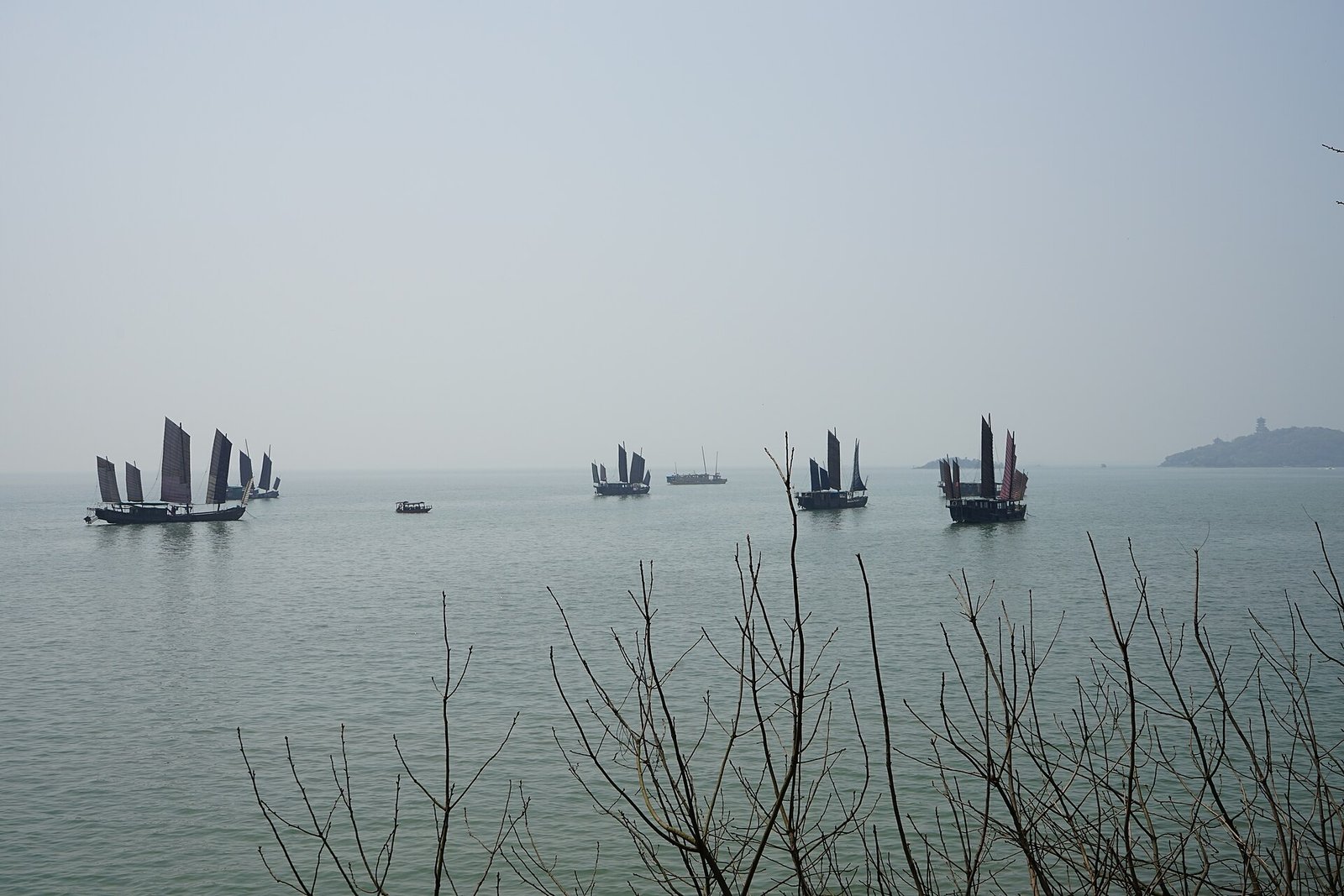
Photo: Huanokinhejo / Wikimedia Commons, CC BY-SA 4.0
What the show is, in one paragraph
A Dream of Splendor aired on Tencent Video in June 2022, directed by Yang Yang and starring Liu Yifei as Zhao Pan’er. It adapts a Yuan-dynasty zaju play by Guan Hanqing — Zhao Pan’er Saves a Courtesan — and turns it into the story of three women who leave the south, arrive in the Song capital, and build a tea house into the city’s biggest restaurant. It is, unusually for a period drama, a story about work: brewing, accounting, negotiating, hiring. The scenery follows the plot, which means the locations split cleanly into a southern half and a capital half.
Production ran from 16 February to 5 July 2021 — more than four and a half months — and opened at Hengdian. The director has said the team scouted old towns in Kaifeng and Xiangyang alongside the Jiangnan studio towns of Wuxi, Hengdian and Xiangshan before shooting, aiming for the flat, pale palette of a Song painting rather than the saturated look of a typical palace drama. That scouting is why the same show can put a working water mill on Lake Tai and a city gate in a studio car park.
The A Dream of Splendor filming locations at a glance
| Place | Where | What it plays | Access |
|---|---|---|---|
| Water Margin City (水浒城) | Wuxi, Jiangsu | Zhao Pan’er’s tea house, the fishing village, the city gate | Bus 82 from Wuxi station |
| Yuantouzhu (鼋头渚) | Wuxi, Jiangsu | The lakeside walk — Pan’er and Sanniang talking by the water | Separate scenic area, own ticket |
| Hengdian, Qingming set | Dongyang, Zhejiang | The Eastern Capital: Fan Lou, the small imperial street, the Kaifeng office | High-speed rail to Yiwu, then road |
| Xiangyang Tang City (襄阳唐城) | Xiangyang, Hubei | The courtesan house and Ouyang Xu’s doorway | Separate trip, central Hubei |
| Xiangshan Film City (象山影视城) | Ningbo, Zhejiang | Supporting period sets | Metro Line 12 from Ningbo |
Wuxi: the water that is not West Lake, and the main A Dream of Splendor filming location
The opening episodes are the part of the show people remember, and they were shot in Wuxi in May 2021. The base’s own description of its lakefront is unusually blunt about why it works: Water Margin City was built on the shore of Lake Tai, not near it, and the willows run right down to the water. When the script called for a tea house in the Jiangnan countryside with mist on the water behind it, the production did not have to build anything.
Songji Water Mill — Zhao Pan’er’s tea house
The tea house is Songji Shuimofang (宋记水磨坊), a working water mill standing on the lake edge inside Water Margin City. It is the single most photographed Dream of Splendor location in China and the reason a lot of people make the trip at all. It is also, at heart, a mill: the wheel, the water channel and the wooden structure are the real thing, and the show simply dressed the interior as a tea shop.
Because it is on the water and inside a studio park, timing matters more than at a normal sight. Go early — the park opens around 08:00 — and go on a weekday. The tea house sits on the far side of the park from the main gate, so get the day’s map at the entrance rather than following the crowd.
Shijie Village and the city gate
Shijie Village (石碣村) is the fishing settlement where the three women begin, and it is where the show’s river scenes were shot — Pan’er poling a boat, Sanniang washing clothes, the dice game. The Eastern Capital city gate (东京城门楼) also appears in the show, and it is the same crenellated wall you walk through to enter the park.
One caution that applies to the whole park: these are working sets, and buildings close when a production is shooting. The base has crews resident most of the year. The lakefront and the village are outdoors and rarely affected; interiors are not guaranteed.
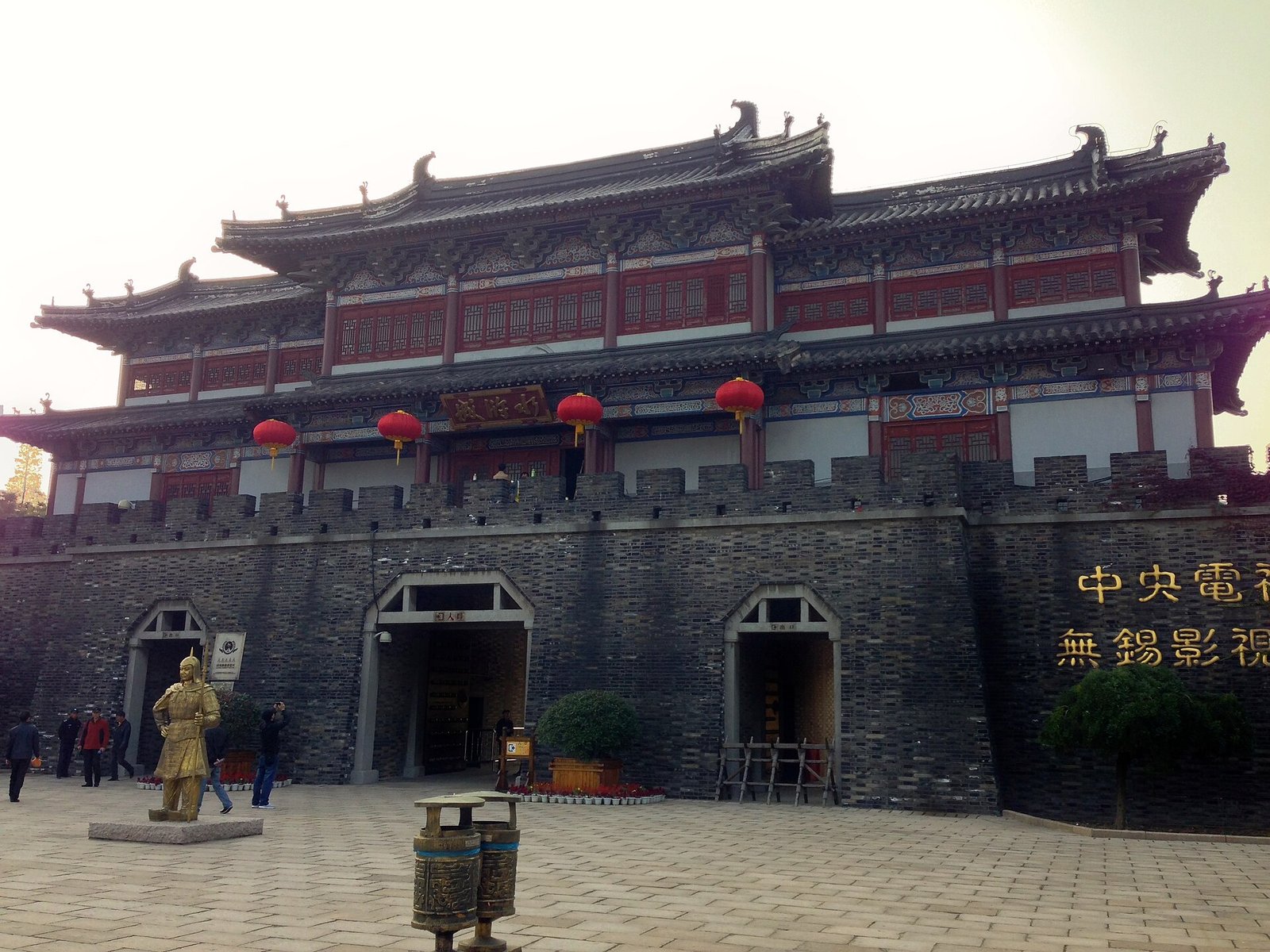
Photo: ping lin / Wikimedia Commons, CC BY-SA 3.0
Yuantouzhu: the bridge in the lake scene
The lakeside conversation between Pan’er and Sanniang was shot at Wanlang Bridge (万浪桥) in Yuantouzhu (鼋头渚), the peninsula on the north shore of Lake Tai, on the other side of Wuxi from the studio base. Yuantouzhu is a major scenic area in its own right and has nothing to do with film — it is famous for its spring cherry blossom — and it is ticketed separately from the studio base. Do not assume one ticket covers both; they are different operators in different parts of the city.
This is also the answer to a question the show invites. The drama’s south is a literary south — the Jiangnan of poetry, not a survey of Hangzhou. Wuxi’s stretch of Lake Tai is bigger, emptier and, on a misty morning, closer to what the script describes than the built-up shore of West Lake would have been.
Hengdian: the Qingming scroll set
The capital half of the show was shot at Hengdian, inside the Along the River During the Qingming Festival (清明上河图) area — the park modelled on the Song painting of Kaifeng’s commercial street. This is where the show stops being pastoral and starts being urban, and the mapping is specific enough to walk:
- Fan Lou (樊楼) — the Eastern Capital’s great pleasure-house tower, and the show’s most recognisable building. The same tower appears in the Wuxi Water Margin City set, which is a nice illustration of how Chinese period dramas recycle architecture: the same imaginary building exists in more than one park.
- The small imperial street (小御街) — where the courtesan Zhang Haohao parades through the city.
- The Kaifeng office (开封府) — used as the headquarters of the Imperial City Division where Gu Qianfan works.
- The bridge beside the land-and-water stage (水陆戏台) — where Pan’er plays cuju.
Hengdian is a full day and it is ticketed per area, not as one park. The Qingming area is on the operator’s reservation list when included in a ticket order; overseas visitors also have a specific passport-update process. Follow the current Hengdian guide for the official steps and portal.
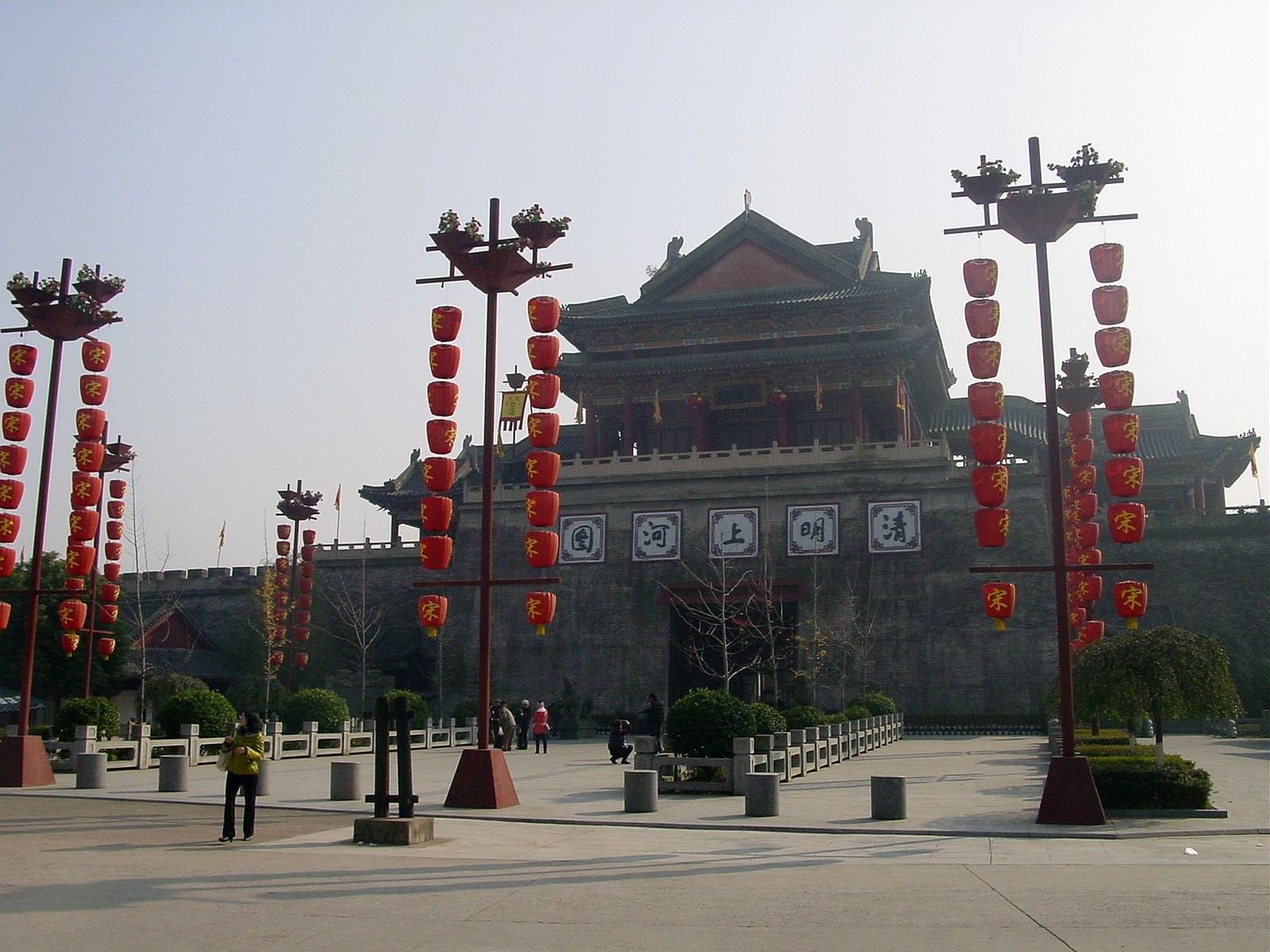
Photo: zhiyin586 / Wikimedia Commons, CC BY 3.0
Xiangyang and Xiangshan
Two more places appear in the show and are worth knowing about even if you do not go. Xiangyang’s Tang City supplied the courtesan house and the street outside Ouyang Xu’s home — it is the same park that stands in for the Tang capital in Joy of Life and half a dozen other dramas, and it has its own guide here. Xiangshan Film City, near Ningbo, supplied supporting period sets; it is the park covered in our Xiangshan guide.
Neither is worth a dedicated trip for Dream of Splendor alone. Both are worth folding into a longer studio itinerary.
Tickets and how to combine them
Three separate operators are involved, which is the main planning headache.
- Wuxi Water Margin City is part of the CCTV Wuxi Film Studios base. The operator does not publish a price list on its website — it sells through its official WeChat account and Meituan. Full details, including bus 82 and the free luggage storage, are in the Wuxi film studios guide.
- Yuantouzhu is a separate scenic area with its own ticket, sold separately. You cannot buy a combined studio-plus-peninsula ticket.
- Hengdian is ticketed per area. The Qingming set is one of several; the combined passes are worth it only if you are doing more than one area in a day.
Buying as a visitor from outside China: booking and entry rules differ by operator. For Hengdian, use the official WeChat booking flow, have online customer service replace the mainland-ID order details with your passport, and make the separate reservation if your chosen Hengdian areas require it. Wuxi and Yuantouzhu have separate channels; do not assume Hengdian’s process applies to them. Hengdian steps and official links.
Budget two days if you are doing Wuxi and Hengdian properly, and treat the rail leg between them as part of the day rather than dead time — see taking the train in China for how booking works.
A realistic two-day route
- Day 1 — Wuxi. Bus 82 from Wuxi railway station to Water Margin City. Work the lakefront first: Songji water mill, then Shijie Village, then the city gate. If you have a second day in Wuxi, add Yuantouzhu for Wanlang Bridge.
- Day 2 — Hengdian. Rail to Yiwu, then onward to Hengdian. Before visiting the Qingming area, check whether your ticket order requires a separate reservation; see the current Hengdian guide for the official portal and passport workflow. Then spend the day in the Qingming area working from Fan Lou outwards.
If you only have one day, do Wuxi. The opening episodes are the part of the show that made people want to go, and they are also the part that is genuinely outdoors rather than a set.
Common questions
Was A Dream of Splendor filmed in Hangzhou?
No. The show is set partly in the south and has a line about West Lake, but the water scenes were shot on Lake Tai in Wuxi. Hangzhou’s West Lake does not appear.
Can I see the tea house without entering the studio park?
No. Songji water mill is inside Water Margin City, which is a ticketed park with a gate and opening hours. It is not visible from public land.
Is the Fan Lou at Hengdian the same as the one in Wuxi?
They are two separate buildings with the same name, both inside studio parks — one in Hengdian’s Qingming area, one in Wuxi’s Water Margin City. Period dramas reuse the same architectural references, so the same fictional building exists in more than one park.
How many days do I need?
Two, if you want both halves. One, if you only want the lake and the tea house.
Can I combine this with other C-drama locations?
Yes, and it is one of the better shows to combine. Wuxi sits on the Shanghai–Nanjing corridor and Hengdian sits next to Yiwu, so a Wuxi–Hengdian–Xiangshan loop is a realistic week. See the Zhejiang film-studio route.
Your next move
Worried about the practical stuff?
Visas, payment, trains and the apps you’ll need before you land — the four things you cannot work out on the ground. Each guide is dated and sourced.
Ready to go?
Most of the drama was shot at the Wuxi studio base. The guide covers how to reach it and what is inside.
Last verified
Sources: China.com Entertainment (中华网娱乐), 10 June 2022 — location summary covering the Wuxi Water Margin City shoot (Songji water mill, Shijie Village), Yuantouzhu and Xiangyang Tang City — https://ent.china.com/tv/news/11042503/20220610/42523720.html · Haixia Net (海峡网), 9 June 2022 — quotes director Yang Yang on the location scouting for the series (old towns in Kaifeng and Xiangyang alongside the Jiangnan studio towns of Wuxi, Hengdian and Xiangshan) and lists the Hengdian Qingming-area mapping — https://m.hxnews.com/news/yl/kdsj/202206/09/2071153.shtml · Hengdian World Studios — English overseas booking and admission instructions · Hengdian World Studios — scenic-area reservation list, per-ID rule, and hotline · Wuxi Binhu District People's Government (无锡市滨湖区人民政府) — official description of the CCTV Wuxi Film Studio base, confirming Water Margin City's principal sights including Fan Lou, Qingming Riverside Street and Zishi Street — https://www.wxbh.gov.cn/doc/2024/03/06/4187721.shtml · Wuxi Film Studio base official website, visitor services and FAQ — bus 82 from Wuxi railway station East Square (¥2, 06:15–18:30, every 10–15 minutes), free luggage storage, and opening guidance — https://www.ctvwx.com/page12 · Xinmin Evening News (新民晚报), 18 June 2022 — location report on A Dream of Splendor: the Zhao tea house is the Songji water mill inside Water Margin City, Wuxi, shot in May 2021; Shijie Village and the Eastern Capital city gate also appear; the lakeside walk between Zhao Pan'er and Sun Sanniang was shot at Wanlang Bridge, Yuantouzhu; the Hengdian scenes map to Fan Lou, the small imperial street, the Kaifeng office and the bridge beside the land-and-water stage in the Along the River During the Qingming Festival area — https://www.163.com/dy/article/HA55CSAG0512DU6N.html
Spotted something out of date? Email us — or read how corrections work. We check every report against the source and update the page.
Ready to plan it? Turn the dramas you have watched into a day-by-day route with the C-drama route planner.
Not sure where to start? Take the drama-city quiz — seven questions, one city, and a route waiting at the end.