
Most set-jetting trips run one way: you fall for a show, then go looking for the place. Chongqing ran the experiment backwards. The city became famous on its own — as the vertical, neon-lit, “8D” metropolis that short video could not stop filming — and only then did a drama come along and use it, undisguised, as itself. You can arrive for the show and stay for the city, or the other way round. Either way you end up on the same staircases. This is a guide to the Chongqing filming locations you can actually reach on foot.
The short answer: Chongqing (重庆) is a municipality of about 32 million in southwest China, built where the Jialing River meets the Yangtze. *The First Frost* (难哄) — Netflix’s most-watched Chinese-language drama of 2025 — was shot here, and its fictional “Nanwu” is this city wearing another name. Allow two full days for the city, plus one more if you want Wulong. Most of what you came for is free and the paid stops are cheap. The one thing to plan around is not a ticket: it is a residential block that never asked to become famous.
Why Chongqing filming locations are worth the trip
Two things happened to Chongqing at almost the same time, and they are not the same thing.
The first is the drama. The First Frost, adapted from Zhu Yi’s novel and starring Bai Jingting and Zhang Ruonan, topped Netflix’s 2025 ranking of Chinese-language series with around 6.1 million views — ahead of every costume epic on the platform. It is a quiet, rain-soaked romance, and it is unusually honest about where it was made: the show does not invent a city, it films the real one. The riverside parks, the steep lanes and the neon are all Chongqing.
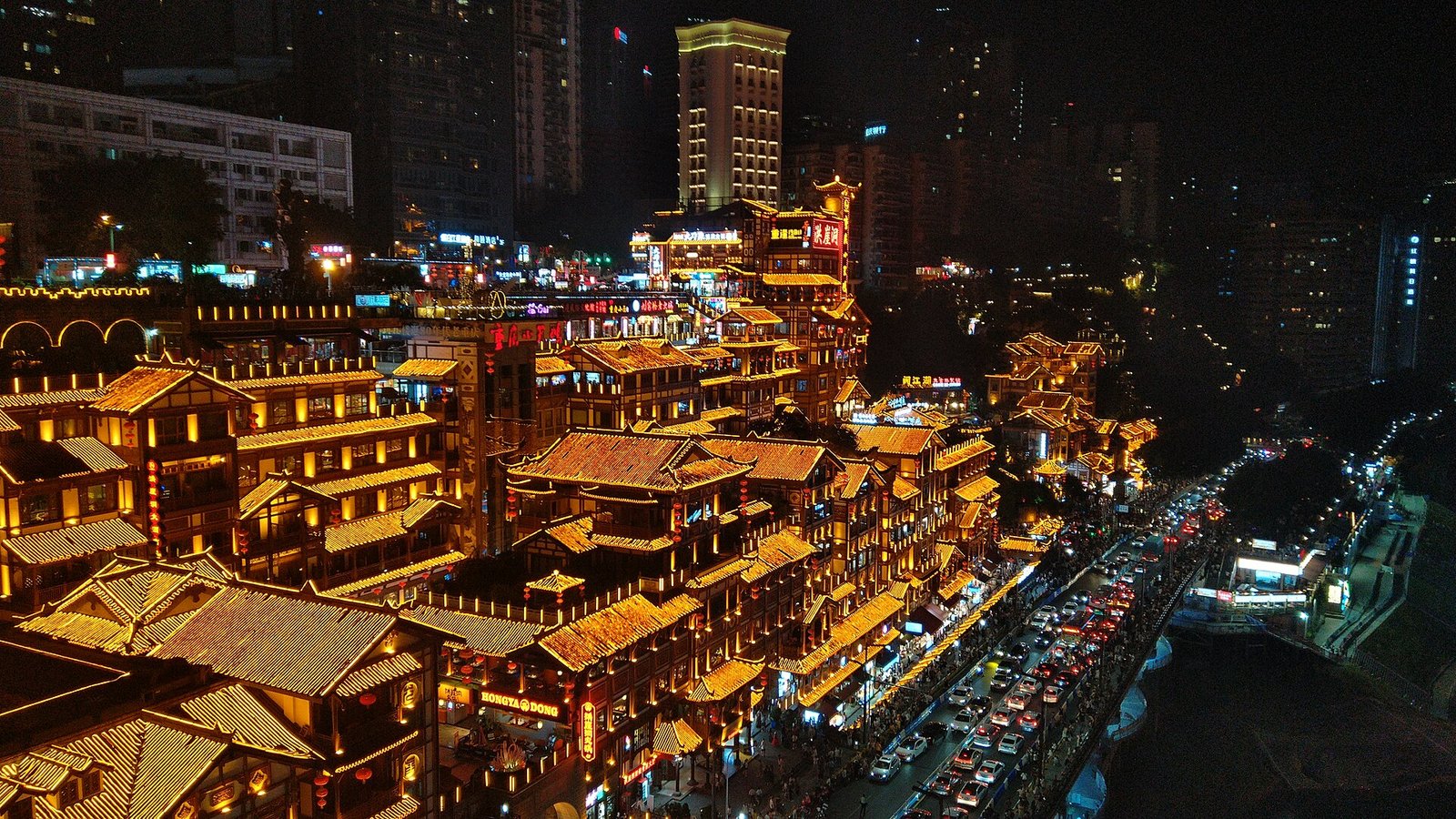
The second is the city’s own rise. Chongqing has spent the last few years becoming the West’s mental image of “cyberpunk China” — a place where a monorail runs through a tower, where a bridge deck sits sixty metres above a street, and where you can walk into a building on the 22nd floor straight off the road. CNN ran a feature in August 2025 calling it exactly that, and short-video platforms did the rest.
The numbers followed. In the first half of 2026, Chongqing’s airport port handled 1.48 million cross-border passenger trips, up 39.5% year on year, and foreign passenger movements rose 86%. Visa-free entries grew 83.6%. Across China, 77.7% of foreign arrivals now come in without a visa. In Chongqing, departure tax-refund transactions multiplied by 21.5.
The practical consequence is simple, and it is the thing no guide says plainly: you are not early. Chongqing is crowded with exactly the kind of traveller who reads the same articles you do. Go on a weekday, avoid National Day week and Chinese New Year, and book accommodation two to three weeks out.
The First Frost trail: the Chongqing filming locations you actually see
Here is the honest version. Chongqing is not a backlot; nothing was built for the show. What you visit are real places that happened to be in frame — which means the “trail” is really a list of good reasons to walk the city.
| Stop | What it is | The catch |
|---|---|---|
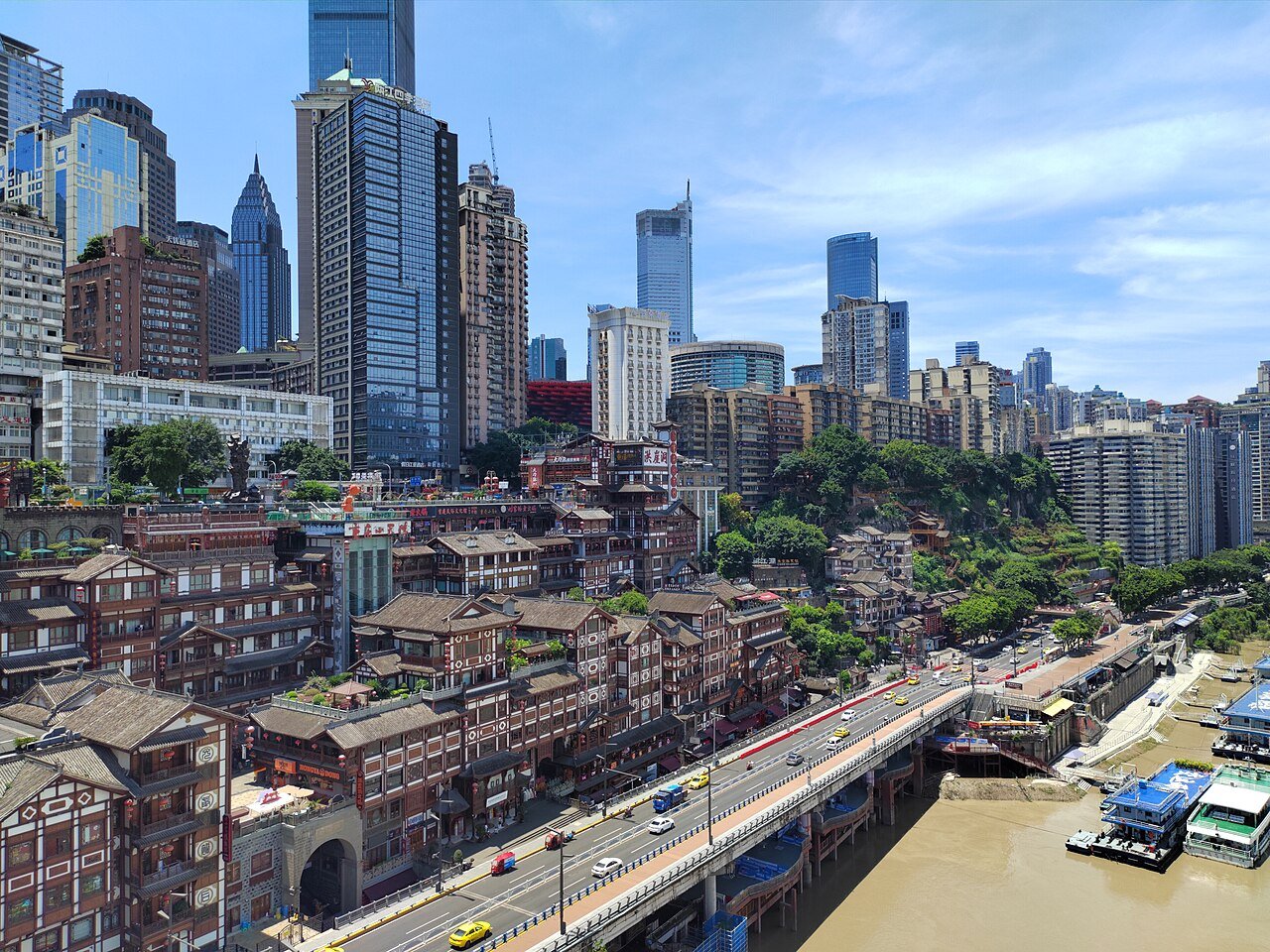
| Hongya Cave 洪崖洞 | Eleven storeys of stilted houses stacked up the Jialing bank | Free and always open; the lights are the whole point |
| Baixiangju 白象居 | A 24-storey residential block with no lifts and several “ground floors” | People live here — read the next section before you go |
| Huguang Guild Hall 湖广会馆 | A Qing merchants’ complex of three guild halls | ¥32, and you must reserve a day ahead |
| Yangtze River Cableway 长江索道 | A 1987 cable car across the Yangtze | ¥30 one way; the queue is part of the experience |
| Qiansimen Bridge 千厮门大桥 | The road bridge over the Jialing | Not a stop in itself — it is the viewpoint for Hongya Cave |
| Eling No.2 Factory 鹅岭二厂 | A 1930s printing works turned creative quarter | Free; the hill views are the reason |
| Liziba 李子坝 | A monorail station built into a tower block | Free viewing platform; thirty seconds of train |
| Zhongshan 4th Road 中山四路 | A plane-tree avenue of Republican-era buildings | The quiet, non-neon Chongqing |
| Raffles City 朝天门来福士 | The sail-shaped towers at the river confluence | Paid observation deck, about 250 m up |
Two of these deserve their own paragraphs.
Baixiangju: the stop that is not a photo op
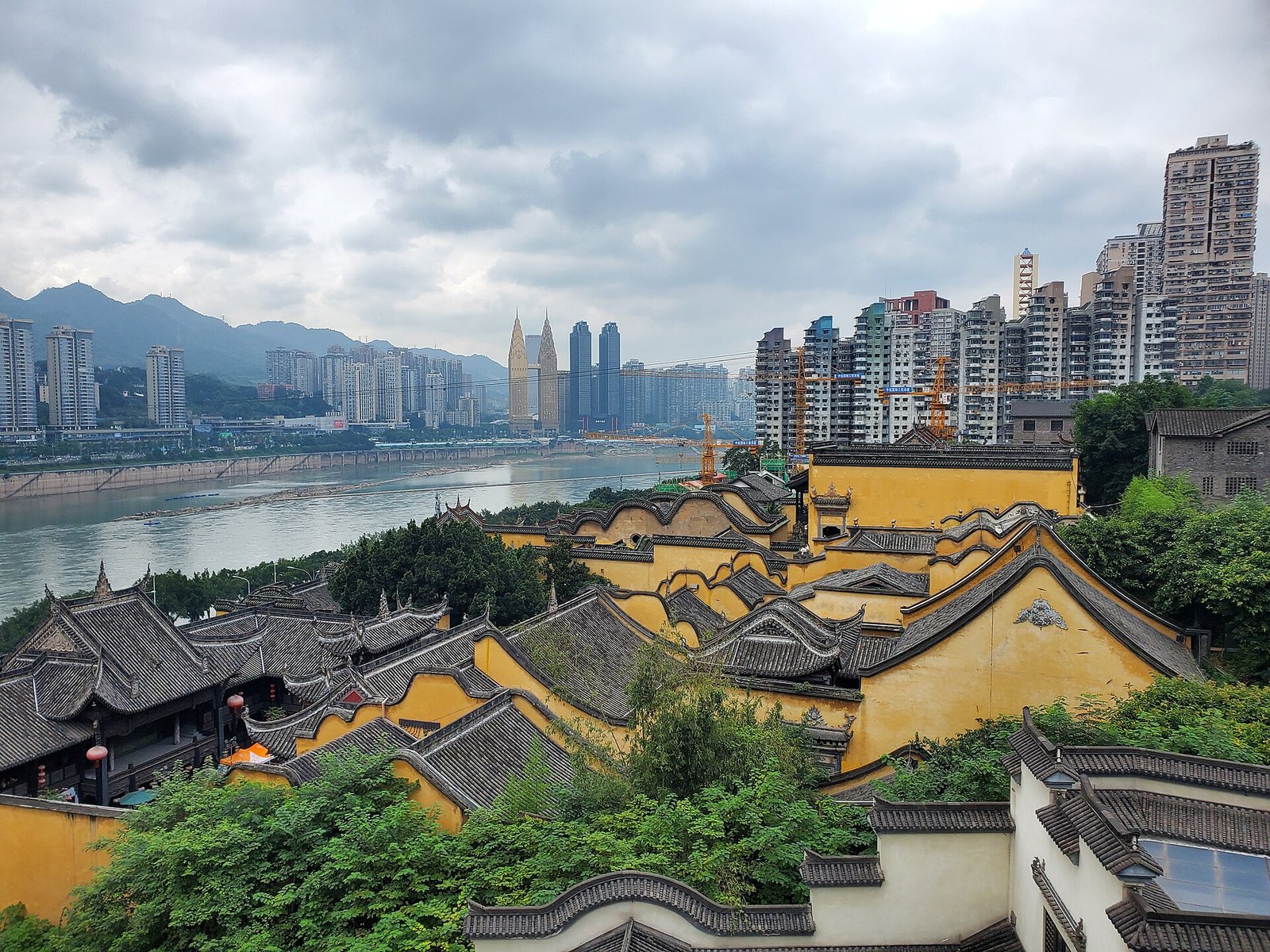
Baixiangju (白象居) is the most cinematic ordinary building in China. It was designed into a hillside in the early 1990s, so it has no lifts: instead, three separate entrances open onto three different streets at three different heights. From one door you are on the ground; from another you are on the fifteenth floor. The walkways between its two towers frame the Yangtze, and the light in the stairwells does the rest.
It went viral, and the residents paid for it. By 2023 the crowds were large enough that the building put up a “谢绝参观” — no visitors — sign, and residents were photographed barring doorways. CCTV covered it. The arrangement since has been a compromise: you can often enter, sometimes after registering, but the building’s patience is not infinite.
So treat it as what it is — someone’s home with a view. Go quietly and in small numbers, do not block stairwells or doorways, do not fly a drone, do not photograph through windows, and if the sign is up, take no for an answer. If you are not willing to do that, skip it. It is one building, and the city has plenty of views that nobody has to live inside.
Liziba: the train that goes through the building
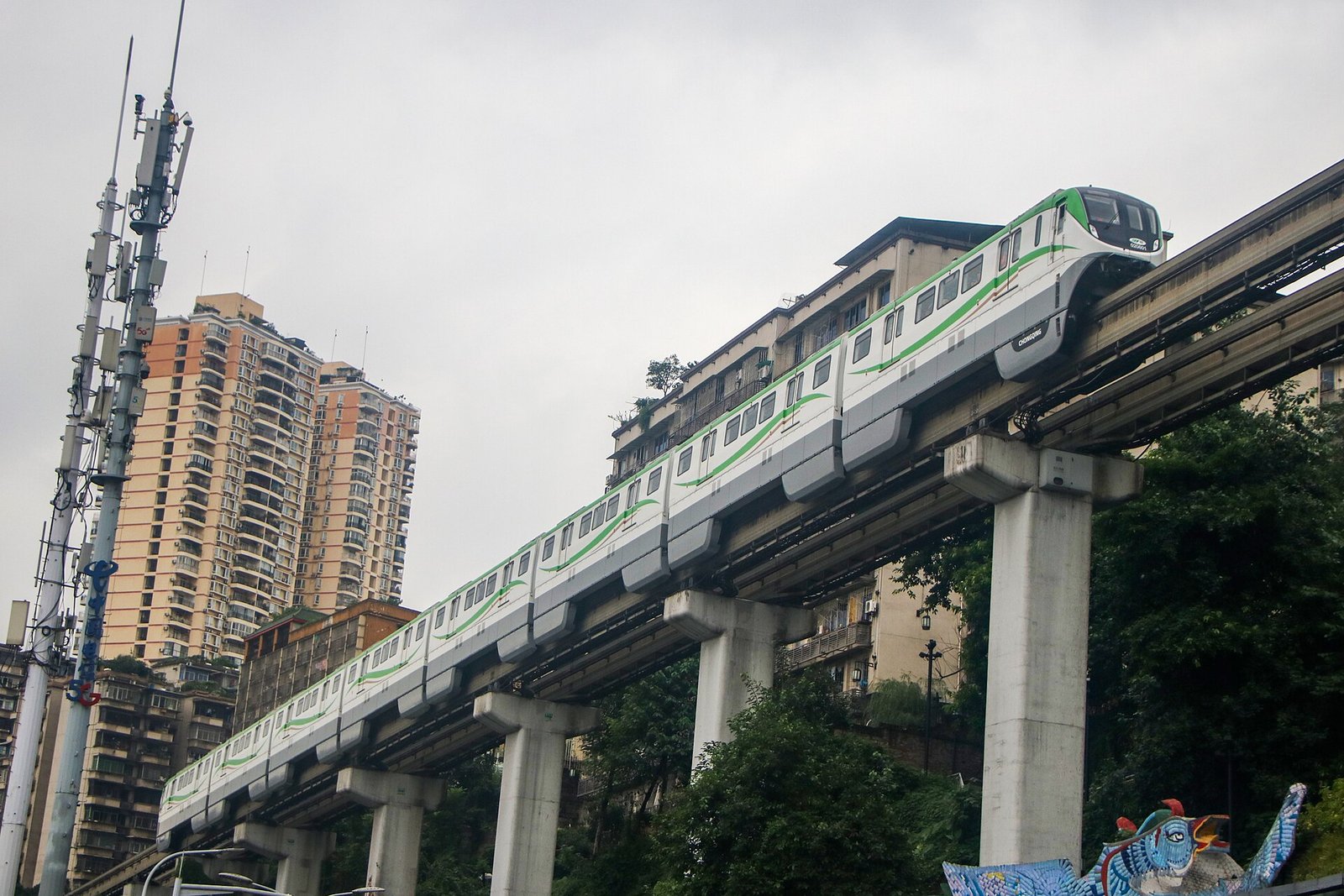
Liziba (李子坝) on Metro Line 2 is the image everyone arrives with: a monorail sliding into the middle of a nineteen-storey block. The reason is not showmanship. When Line 2 was built, the route and the building could not both be moved, so the station and the tower were designed as a single structure, with the track floor isolated from the flats above and below. The train has run through the building ever since, and the people who live there mostly ignore it.
There is a free viewing platform opposite, and it is exactly as advertised — but it is a thirty-second experience, not a morning. Come at rush hour if you want more trains, and stand below the track rather than level with it for the angle that actually looks like the photographs.
The rest of the city, with no drama attached
Even if you have never watched a C-drama, Chongqing earns three days on its own.
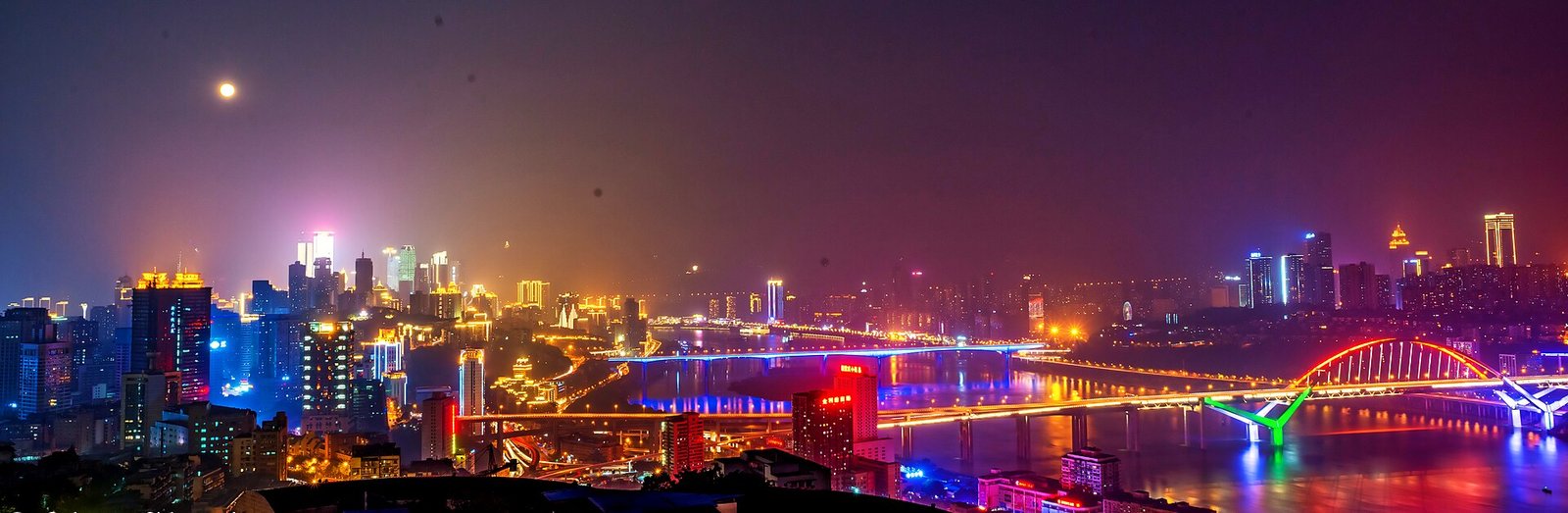
Hongya Cave is the headline. It is free, it is open all day, and it is worth almost nothing in daylight — the point is the lighting, which runs from about 19:00 to 23:00, with the best window around 20:00 to 22:00 once the sky is dark but still blue. And the photograph everyone wants is not taken from inside Hongya Cave. It is taken from the Qiansimen Bridge, a few minutes’ walk away, looking back. Go up onto the bridge, not down to the entrance.
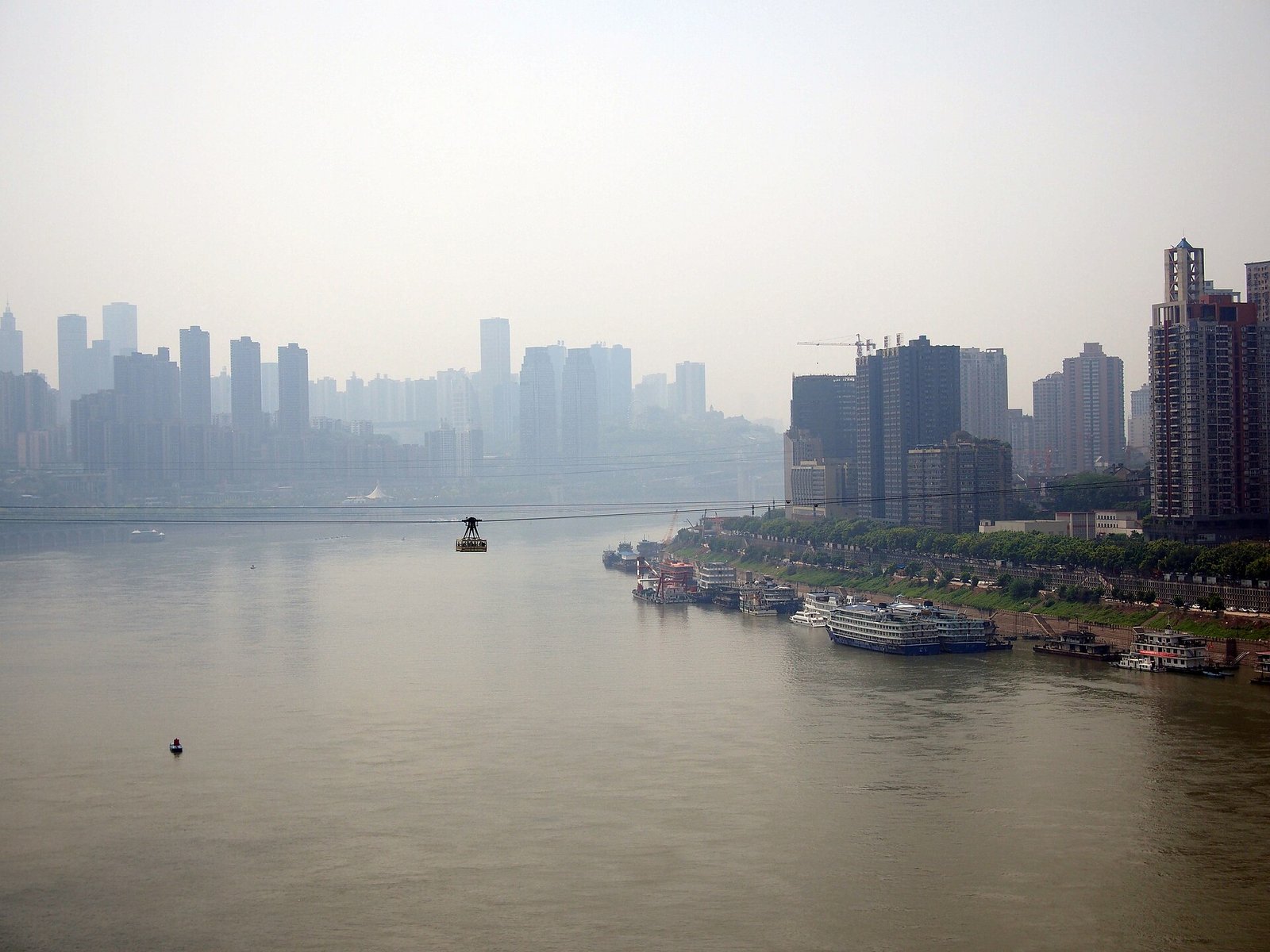
The Yangtze River Cableway was built in 1987 as a commuter crossing and is now a ride in its own right. It runs 1,166 metres from Xinhua Road in Yuzhong to Shangxinjie in Nan’an, and it is the only river crossing that gives you the whole skyline at once. Tickets are sold through the operator’s own WeChat account, same-day only, from 07:45 — and the two stations are not equally busy, so check both before you commit.
Ciqikou Old Town is the touristy one: a Ming and Qing river port of stone lanes, teahouses and snacks. It is free and genuinely pretty, but it is also the most crowded place on this list, and the commercial core is now mostly shops. Go early, or go for the side lanes uphill.
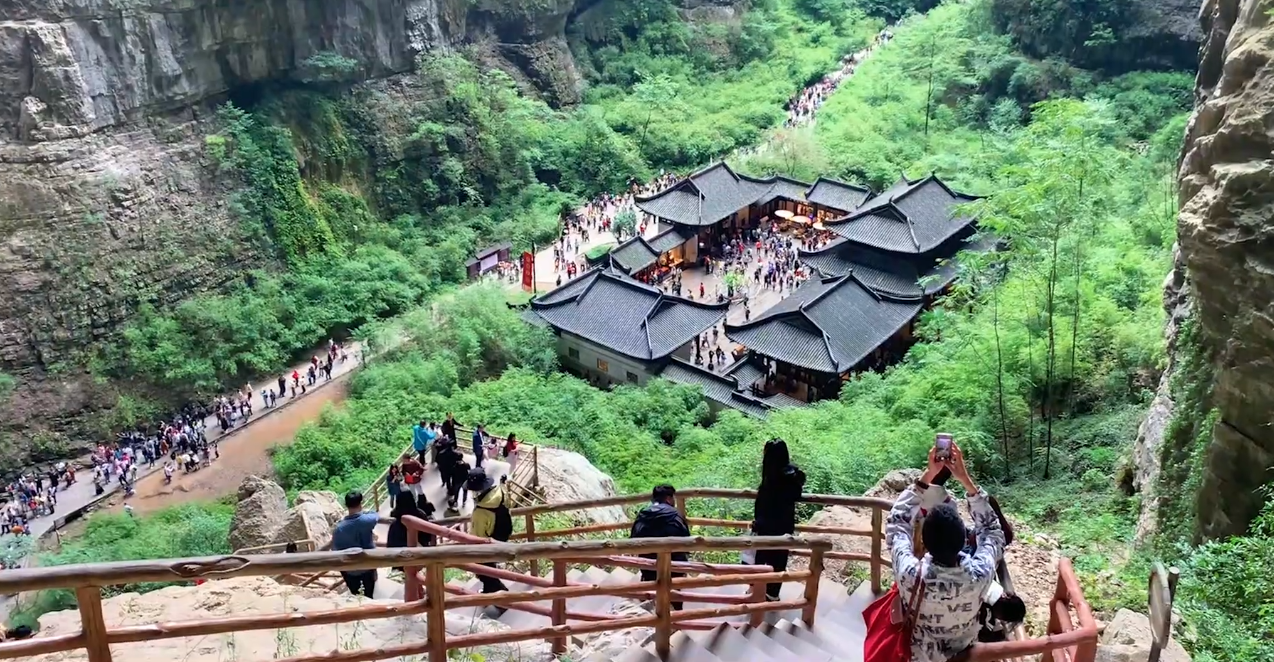
Wulong is the day trip that justifies a third day. The Three Natural Bridges are a UNESCO World Heritage karst landscape — three natural stone arches spanning two collapsed caves — and they are where Curse of the Golden Flower and Transformers: Age of Extinction were shot. The reconstructed Tang post station at the bottom of the gorge is a film set that turned into a real destination. It is about two and a half hours from the city by road or rail, and it wants a full day.
Tickets, hours and what is free
Prices below are the operators’ own published rates as of 11 October 2026. Chinese attractions move their hours with the season and their prices with the holiday calendar, so check the day before you go.
| Place | Price | Hours and notes |
|---|---|---|
| Hongya Cave 洪崖洞 | Free | Open all day; lights on roughly 19:00–23:00 |
| Liziba viewing platform 李子坝 | Free | No ticket, no booking |
| Ciqikou Old Town 磁器口 | Free | Shops from mid-morning; busiest after 10:00 |
| Eling No.2 Factory 鹅岭二厂 | Free | Open-air site; individual venues keep their own hours |
| Eling plank walkway 鹅岭栈桥 | Free, booking required | Tue–Sun 09:00–18:00, last entry 17:40; closed Mondays except public holidays |
| Huguang Guild Hall 湖广会馆 | ¥32 adult; ¥16 student, child or senior 60–64; free over 65 | 09:00–18:00, last entry 17:00; reserve via the WeChat account a day ahead |
| Yangtze River Cableway 长江索道 | ¥30 one way, ¥50 return | 08:00–22:00, and 07:30–23:00 on public holidays; same-day tickets from the WeChat account, on sale from 07:45 |
| Raffles City observation deck 来福士 | Paid, priced by deck | Book on the day; the 250 m glass deck is the one people mean |
| Three Natural Bridges 天生三桥 | ¥125 low season (Nov–Feb), ¥155 high season | Includes the ¥40 transfer bus and the ¥45 Tianlong spiral stair; about 2.5 hours from the city |
Buying as a visitor from outside China: the booking channels above are Chinese apps — the Huguang Guild Hall and the cableway both sell through official WeChat accounts — and they accept a passport in place of a Chinese ID card. Enter your passport number exactly as printed and carry the same passport on the day, because the ticket is checked against it. If an app or a self-service machine will not take a foreign document, the staffed window will.
One live change worth knowing: from 9 October 2026 the exit shuttle at the Three Natural Bridges is suspended while its road is rebuilt. You now walk the last 800 metres out along the footpath to the transfer point. The operator says normal service resumes when the road reopens, with no date set. Wulong enquiries: 400-023-5666; Three Natural Bridges: 023-77710118.
Getting around: the city with no ground floor
Chongqing’s transport is the attraction. The metro is fast, cheap and mostly elevated, and Line 2 in particular is a sightseeing ride that happens to be public transport.
- Pay with your phone. Chongqing accepts the national transit QR codes through Alipay, as well as its own app, 渝畅行. The single most common mistake foreigners make is trying to scan the ordinary Alipay payment code at the gate. It will not work. You need the transit code, and it must be the same code in and out.
- Line 2 is the scenic one. It runs along the Jialing and past Liziba. Sit on the river side.
- Never trust “floor 1”. Because the city is built on ridges, one building can have several street-level entrances. When you leave a metro station, read the exit letter, not the floor number. This is why locals give directions in exits and bridges rather than in addresses.
- Taxis and DiDi. DiDi runs inside Alipay and is easier than explaining an address in Chinese. Cross-river trips are cheap by Western standards but can take a long time at peak.
- Walking is the point, and it is vertical. Budget for stairs. The escalator at Lianglukou and the public lift on Kaixuan Road exist because the gradient is genuinely extreme.
Visiting as a foreign visitor
Chongqing is far more foreigner-ready than it was five years ago, but it is still a domestic destination first. The mechanics are the same as anywhere in China; the friction is local.
- Your passport is your ID everywhere. Attractions, hotels and rail all key off an identity document, and yours is the passport. Carry the original. Hotel check-in for foreign guests is a registration procedure rather than a formality, and a handful of small guesthouses still do not hold the licence for it — if you book somewhere boutique, confirm in advance that they accept foreign passports.
- Expect ID and face-scan gates. Automated gates across China are built around the Chinese ID card, and a passport does not always open the lane. Look for the staffed lane and hand over the document. At Hongya Cave and on the metro this is routine; at smaller ticketed sites it is worth having the word 护照 ready.
- Free does not always mean unreserved. Hongya Cave normally needs no booking, but the operator has used free timed reservations at peak. The Eling plank walkway is free and requires a booking, and it closes on Mondays. Assume nothing.
- Mobile payment first, cash second. Set up Alipay or WeChat Pay with an overseas card before you fly. Cash is accepted but slows everything down, and small vendors may not have change for a ¥100 note.
- English is thin, and the place names are the real problem. Save the characters you will actually need — 洪崖洞, 李子坝, 长江索道, 湖广会馆, 解放碑 — and keep an offline translation app. Amap is a better map here than anything Western, and it has an English mode.
- Visa. If you are transiting, Chongqing Jiangbei International Airport is one of the ports covered by China’s 240-hour visa-free transit, which gives eligible nationalities ten days without a visa when flying on to a third country. If you are not transiting, check the current visa-free list first — most foreign visitors to China now arrive without a visa at all.
Before you go: the visa and entry guide, the payment guide, the apps guide and the high-speed rail guide cover the parts that are the same everywhere in China. This section covers only what is different in Chongqing.
How many days, and where to sleep
Two days is the honest minimum for the city, and it splits cleanly: one day for the river, one day for the hills.
- Day one — the peninsula. Jiefangbei in the morning, then Huguang Guild Hall and the old city wall before lunch, the cableway across in the afternoon, and Hongya Cave plus the Qiansimen Bridge after dark.
- Day two — the hills. Liziba on Line 2, then Eling Park and the Eling No.2 Factory, then Ciqikou on the way back. This is the day you will walk the most.
- Day three — Wulong, if you have it. Leave early; it is a full day out and back.
Base yourself in Yuzhong district, around Jiefangbei or Xiaoshizi, if this is your first visit: it puts the cableway, Hongya Cave and two metro lines within walking distance. City hotel rates are low by international standards, and the expensive river-view rooms are rarely worth it — you will be out at night anyway.
What a day actually costs
This is the honest mid-range version: one person, one full sightseeing day on the peninsula or the hills, eating well without trying to impress anyone. Ticket and transit figures are the operators’ own published rates — the same ones listed above, checked 11 October 2026 — while food is a realistic mid-range estimate, not a published price. Your own day will land somewhere inside these numbers.
| Item | Per person | Notes |
|---|---|---|
| Metro, across a full day of rides | ¥8–16 | From ¥2 for the first 4 km (¥3–5 covers most cross-city trips; the network maximum is ¥10 a ride). Pay with the transit code inside Alipay or 渝畅行 — not the ordinary payment code |
| Yangtze River Cableway, one way | ¥30 (¥50 return) | Same-day tickets from the WeChat account, on sale from 07:45; the crossing takes minutes, the queue can take an hour |
| Huguang Guild Hall | ¥32 adult (¥16 student, child or senior 60–64; free over 65) | Reserve through the WeChat account a day ahead |
| Hongya Cave, Liziba, Ciqikou, Eling No.2 Factory | Free | No tickets, no booking. The Eling plank walkway is free too but needs a booking (Tue–Sun 09:00–18:00; closed Mondays except public holidays) |
| Raffles City observation deck | Priced by deck | Book on the day; the 250 m glass deck is the one people mean |
| Wulong: Three Natural Bridges (optional day trip) | ¥125 low season / ¥155 high | Includes the transfer bus and the Tianlong spiral stair; about 2.5 hours out and back, so a full day |
| Lunch | ¥10–25 | A bowl of xiaomian, the local noodle breakfast-lunch; the hotpot places open for lunch too |
| Coffee and a snack | ¥15–40 | Ciqikou and the factory district |
| Hotpot dinner | ¥60–120 | The city’s signature meal; the old-town places are cheaper than the river-view ones |
A realistic sightseeing day comes to roughly ¥120–250 per person — about US$17–36 at a round ¥7 per US$1 (check the live rate). Add ¥125–155 if you take the Wulong day trip. If the cableway queue is against you, crossing the river by metro costs a few yuan and takes about the same time as waiting.
Who this trip suits — and who should skip it
Not every itinerary is for every traveller. This is the honest version of who the peninsula-and-hills day actually works for.
- First-time visitors who loved The First Frost. Day one on this page follows the show’s Chongqing, and none of it needs a car, a Mandarin phone call or a tour group.
- Photographers. Nowhere else stacks a river, ridges and an eight-storey escalator into one metro ride; the lights at Hongya Cave after dark are the reason to stay up.
- Couples. The cableway across the Yangtze at dusk and the walk over Qiansimen Bridge afterwards are the city’s best two hours.
- Families with children. Line 2 is effectively a sightseeing ride at a metro fare, and the hills day is a staircase adventure.
- Solo travellers. Hotpot for one is normal here (what locals call a small pot), and everything in the table above is bookable on a phone.
Skip it if stairs and gradients are a problem for you — this is a vertical city and day two is the walkingest day of the two; if you dislike crowds, the cableway queue and the Hongya Cave crowds after 19:00 are the two pinch points; or if you have one day only, because two is the honest minimum.
Common questions
Was The First Frost really filmed in Chongqing?
Yes. The series used the real city rather than a studio backlot, which is why the locations are ordinary streets, parks and stairwells rather than sets. The fictional city in the show, “Nanwu”, is Chongqing under another name.
Can I visit Baixiangju?
Sometimes, and only on the residents’ terms. It is a private residence that became a viral location; it has put up a no-visitors sign in the past, and residents have objected to the crowds. Enter quietly if you are allowed to, and leave if you are asked to.
Is Hongya Cave really free?
Yes — there is no admission charge and normally no booking. The lighting, roughly 19:00 to 23:00, is the whole reason to go, and the best photograph is taken from the Qiansimen Bridge, not from the building.
Do I need to speak Mandarin?
No, but the names matter. Save the Chinese characters for the places you want, and use a translation app with offline Chinese. Metro signage is bilingual; street signage is not.
Is Chongqing worth visiting if I have not seen the drama?
Yes — arguably more so. The city was a destination before it was a filming location, and most of what makes it remarkable has nothing to do with any show.
Is it walkable?
It is walkable in the way a mountain is. Distances are short and gradients are brutal. Plan on the metro for the long hops and stairs for everything else.
Your next move
Still exploring?
Chongqing is one of the big-city entries. See the rest of the filming map.
Worried about the practical stuff?
Visas, payment, trains and the apps you’ll need before you land — the four things you cannot work out on the ground. Each guide is dated and sourced.
Ready to go?
Chongqing needs three days minimum. The planning guide sizes it.
Last verified
Sources: Yangtze River Cableway operator (重庆公共交通运营有限公司索道分公司), official site — operating hours 08:00-22:00 (07:30-23:00 on public holidays), opened 24 Oct 1987, 1,166 m, hotline 023-68816888 — https://www.cqsuodao.com/ · Wulong Tourism (重庆武隆旅游产业(集团)有限公司), official ticket table — Three Natural Bridges ¥125 low season / ¥155 high season, including ¥40 transfer bus and ¥45 Tianlong spiral stair — https://www.wlkst.com/pjdq.jhtml · Wulong Tourism official notice, 8 Oct 2026 — Three Natural Bridges exit shuttle suspended from 9 Oct 2026; 800 m walk-out via the footpath — https://www.wlkst.com/wlxw/20261008/27995.html · Chongqing Municipal People's Government, 14 Aug 2026 — inbound tourism and departure tax-refund figures (refund transactions up 21.5x) — https://www.cq.gov.cn/zwgk/zfxxgkml/zdlyxxgk/ggwh/ly/zxdt/202608/t20260814_15934268.html · China News Service, 2 Jul 2026 — Chongqing airport port cross-border passenger trips up 39.5%, foreign movements up 86%, visa-free entries up 83.6% in H1 2026 — https://www.chinanews.com.cn/sh/2026/07-02/10651751.shtml · CCTV News, 26 May 2023 — Baixiangju residents and the "谢绝参观" (no visitors) sign — https://news.cctv.com/2023/05/26/ARTIWwP25fQ1QdFcXTYyMihW230526.shtml · Chongqing Bendibao — Huguang Guild Hall ¥32 adult / ¥16 concession, 09:00-18:00 (last entry 17:00), advance booking via the official WeChat account — https://cq.bendibao.com/tour/jingdianbangdan/ · Chongqing Bendibao — Eling plank walkway (鹅岭栈桥) free but booked, Tue-Sun 09:00-18:00, closed Mondays — https://cq.bendibao.com/xiuxian/2026429/163659.shtm · CNN feature, Aug 2025 (as republished) — Chongqing as the "cyberpunk city" drawing global visitors — https://www.sohu.com/a/923677754_122414789 · Chongqing government portal — 240-hour visa-free transit and Chongqing Jiangbei port — https://pacq.gov.cn/archives/195327.html
Spotted something out of date? Email us — or read how corrections work. We check every report against the source and update the page.
Ready to plan it? Turn the dramas you have watched into a day-by-day route with the C-drama route planner.
Not sure where to start? Take the drama-city quiz — seven questions, one city, and a route waiting at the end.