
Most people visit one filming location and stop. But Zhejiang happens to hold three of the best in China, and a high-speed rail line now threads through all of them. This is the route that connects them — the Zhejiang film route, five days by rail from Hangzhou to Jinyun Xiandu.
The short answer: Five days, three stops, one province. Start at Hengdian (the largest studio complex in the world), move east to Xiangshan Film City on the coast, then south to the real landscape at Jinyun Xiandu. Every leg is by high-speed rail; no car required. Fly into Hangzhou or Ningbo, fly out of Wenzhou.
Why this route, and who it is for
If you have come to China specifically to stand inside the dramas, the single biggest inefficiency in your trip is treating each location as its own separate journey. These three sit in one province, within a few hours of each other, and they are deliberately different from one another — which is exactly why they work as a sequence.
The logic is a progression:
- Hengdian is the industrial heart — 30-plus standing sets, the place where the sets are literal and enormous.
- Xiangshan is the coastal counterpart — a working studio that built the cities that Joy of Life and The Rise of Phoenixes needed.
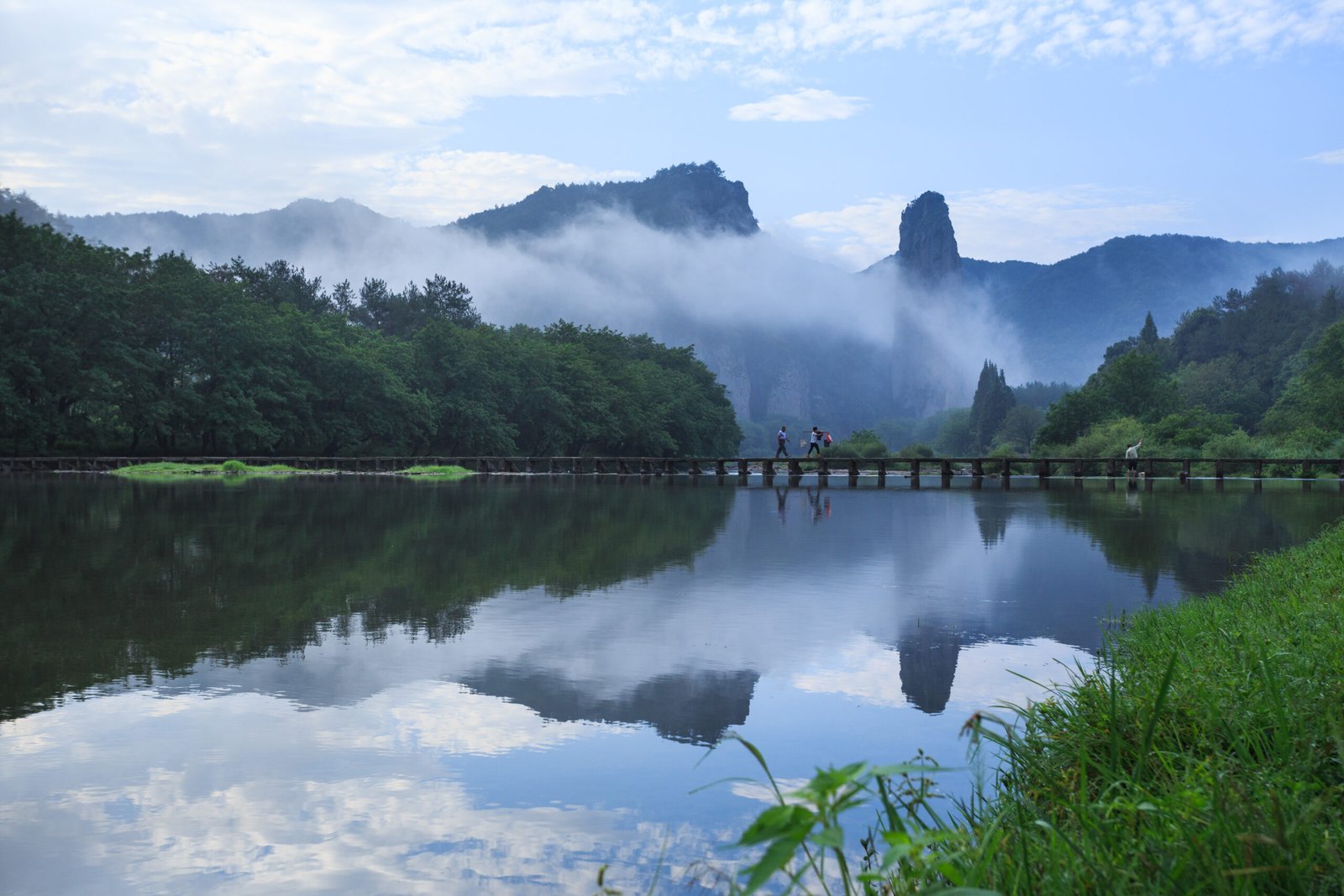
- Jinyun Xiandu is the opposite of both: not built at all, but the real cliffs and valleys that period dramas borrow when they want “ancient China” without a set.
Ending on the real landscape rather than another backlot is deliberate. After four days of constructed worlds, standing on an actual 170-metre rock spire is the payoff.
The Zhejiang film route at a glance
The Zhejiang film route, in order
Every leg is high-speed rail or public transport — no car needed. Book each rail leg the day it opens.
| Day | Base | What you do | Rail leg |
|---|---|---|---|
| 1 | Hengdian | Arrive, first zones (Qin King Palace, Riverside Scene) | Hangzhou → Hengdian Station |
| 2 | Hengdian | Ming Qing Palace, Guangzhou–Hong Kong Street, evening shows | — |
| 3 | Xiangshan | Transfer, then Xiangshan Film City | Hengdian → Ningbo → Xiangshan |
| 4 | Ningbo → Jinyun | Optional Ningbo morning, then rail south | Ningbo → Jinyun West |
| 5 | Jinyun Xiandu | Full day in the scenic area; fly out of Wenzhou or rail onward | — |
Five days is the minimum that does this without sprinting. Add a day at each end if you want to shoot properly, or if you plan to detour into a city.
Days 1–2: Hengdian
Fly into Hangzhou and take the high-speed rail to Hengdian Station — the park’s own station, opened September 2024 on the Hangzhou–Wenzhou line. From the station, a light-rail line on the Jinyi-Dongyang system runs to a stop at the gate of the Ming Qing Palace zone, so you can arrive at a gate rather than a car park.
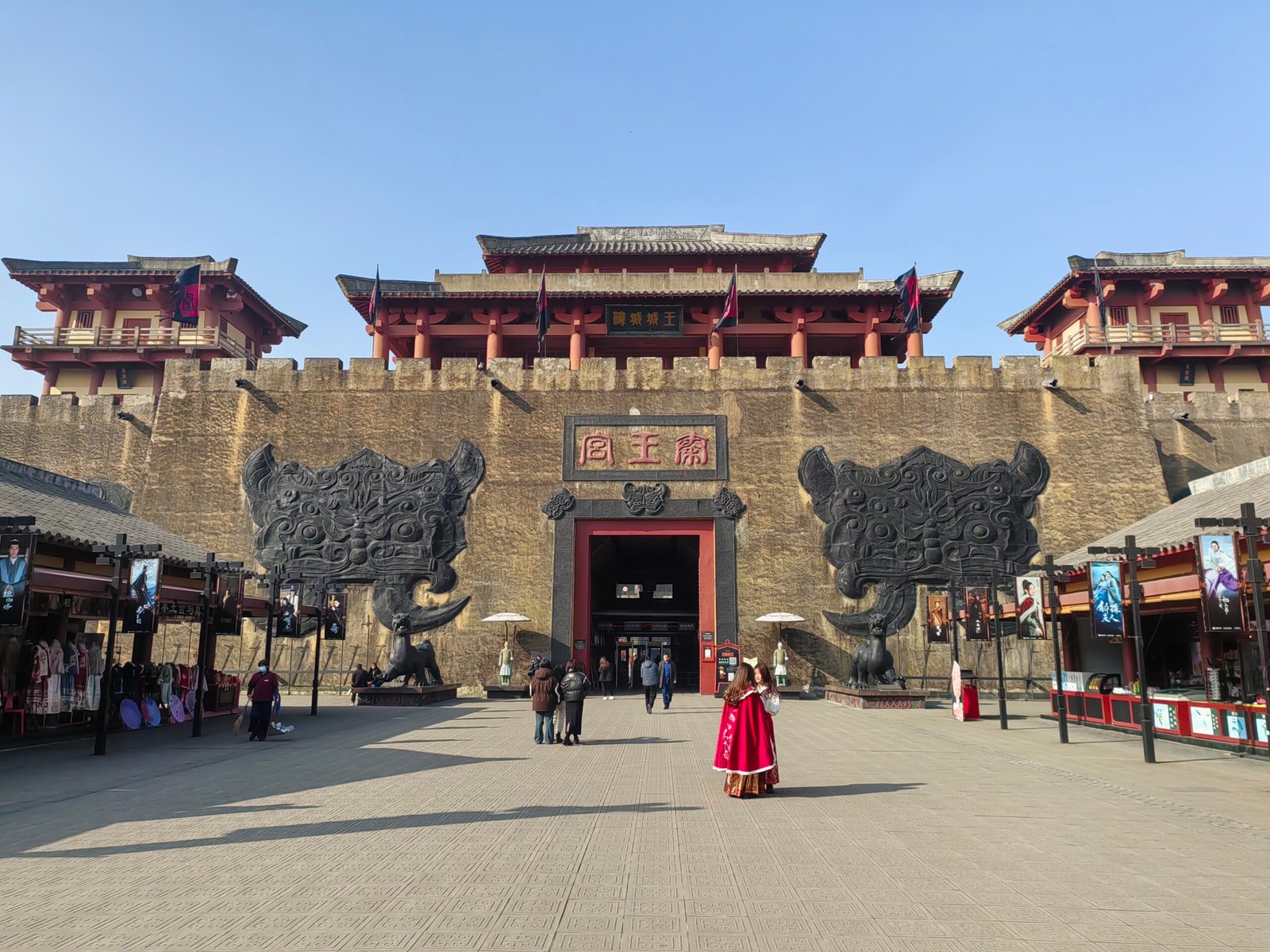
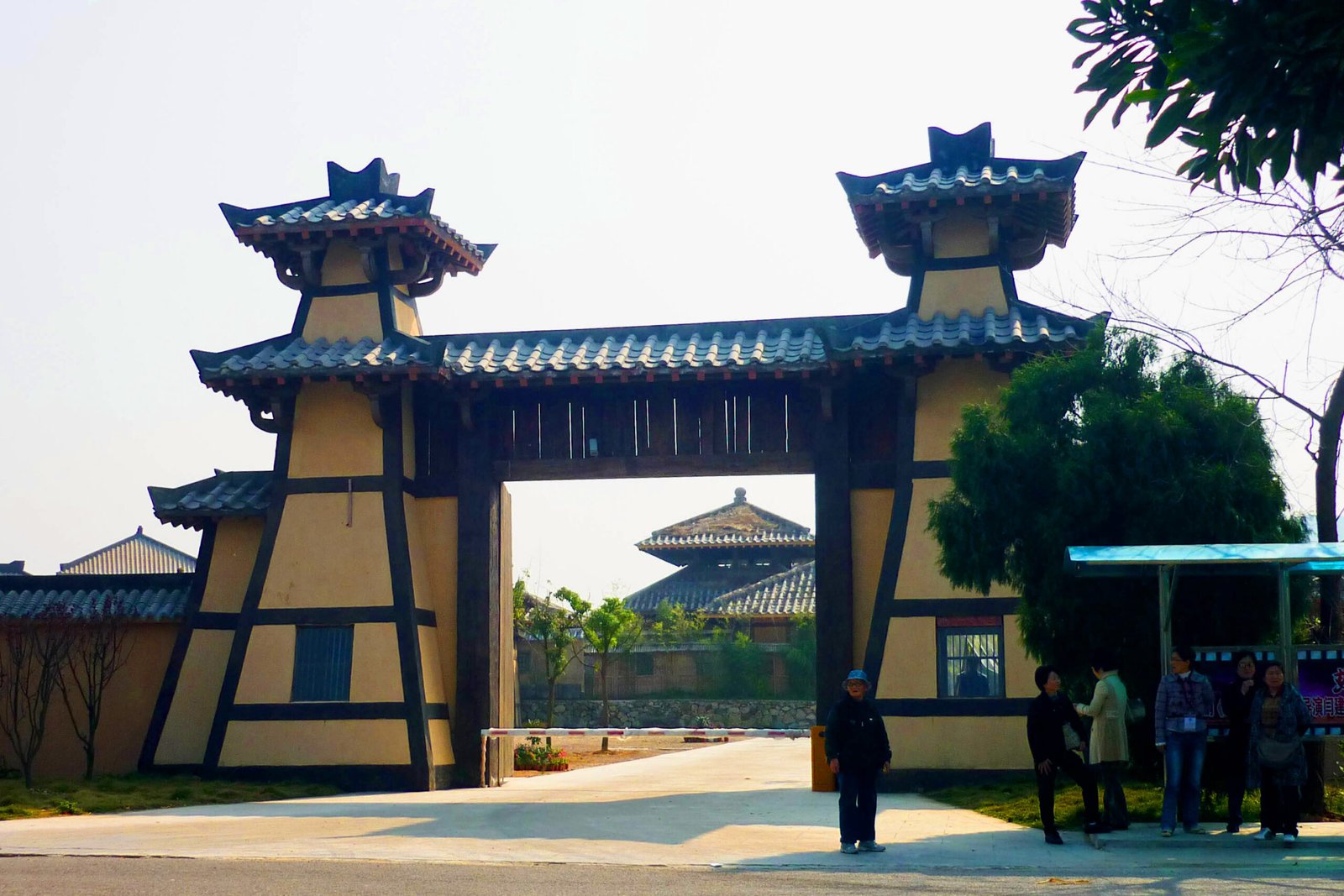
Two days is the right minimum here because Hengdian is not one attraction — it is a cluster of separately ticketed zones. Trying to do it in a single day means picking two and racing. See our full Hengdian guide for which zones justify their ticket. The short version: Qin King Palace and Ming Qing Palace are the two that photograph like the dramas; Guangzhou–Hong Kong Street is the one people are surprised by.
Stay inside the complex if you can. The evening shows and the early-morning light on the sets are the reason to be there, and being on site saves two commutes a day.
Day 3: Hengdian → Xiangshan
This is the day with the most transit, so start early. There is no direct rail link between the two studios; you go via Ningbo. Take the light rail back to Hengdian Station, rail to Ningbo, then a bus or the 惠民直通车 (huimin direct coach) onward to Xiangshan Film City.
On the Xiangshan leg: Ningbo’s public transport group runs subsidised direct coaches to Xiangshan Film City. In July 2025 a round-trip coach seat was advertised from ¥49.9 — transport only, not including the entrance ticket, leaving from Ningbo South Coach Station. It ran as a seasonal service tied to a specific summer event, so do not assume it is running on your dates: confirm the current timetable, departure point and whether a ticket-inclusive bundle exists before you rely on it.
Alternatively, rail to Ningbo then the metro to Damuwan, where the new Line 12 (opened September 2026, China’s first cross-sea urban rail line) puts you within reach of the scenic-area shuttle. See the Xiangshan guide for the full breakdown of both options.
Xiangshan itself rewards half a day to a full day. It is a working studio — parts may close without notice if something is filming — and it holds the sets behind Joy of Life‘s capital city and a long list of other period dramas.
Day 4: Ningbo → Jinyun
Ningbo is worth a morning before you leave. It is a real city with a genuine old quarter, and it breaks up what would otherwise be a pure transit day. If you would rather push straight through, this leg can be done in one go.
From Ningbo, rail south to Jinyun West (缙云西站) on the Jinhua–Wenzhou (金温) line. Note the station name carefully: Jinyun West, not Jinyun, and not Lishui. Older guides tell you to go to Lishui and take a 40-minute taxi; the newer Jinyun West station puts you 15–25 minutes from the scenic-area gate, which is why most people now skip Lishui entirely.
Day 5: Jinyun Xiandu
Xiandu is a national 5A scenic area of 166 square kilometres, and it is the only stop on this route that is not a set. The signature is Dinghu Peak (鼎湖峰), a 170.8-metre volcanic rock spire rising straight out of the valley — used in Chinese Paladin‘s sword-flying sequences and, more recently, the cliff scenes of Joy of Life 2.
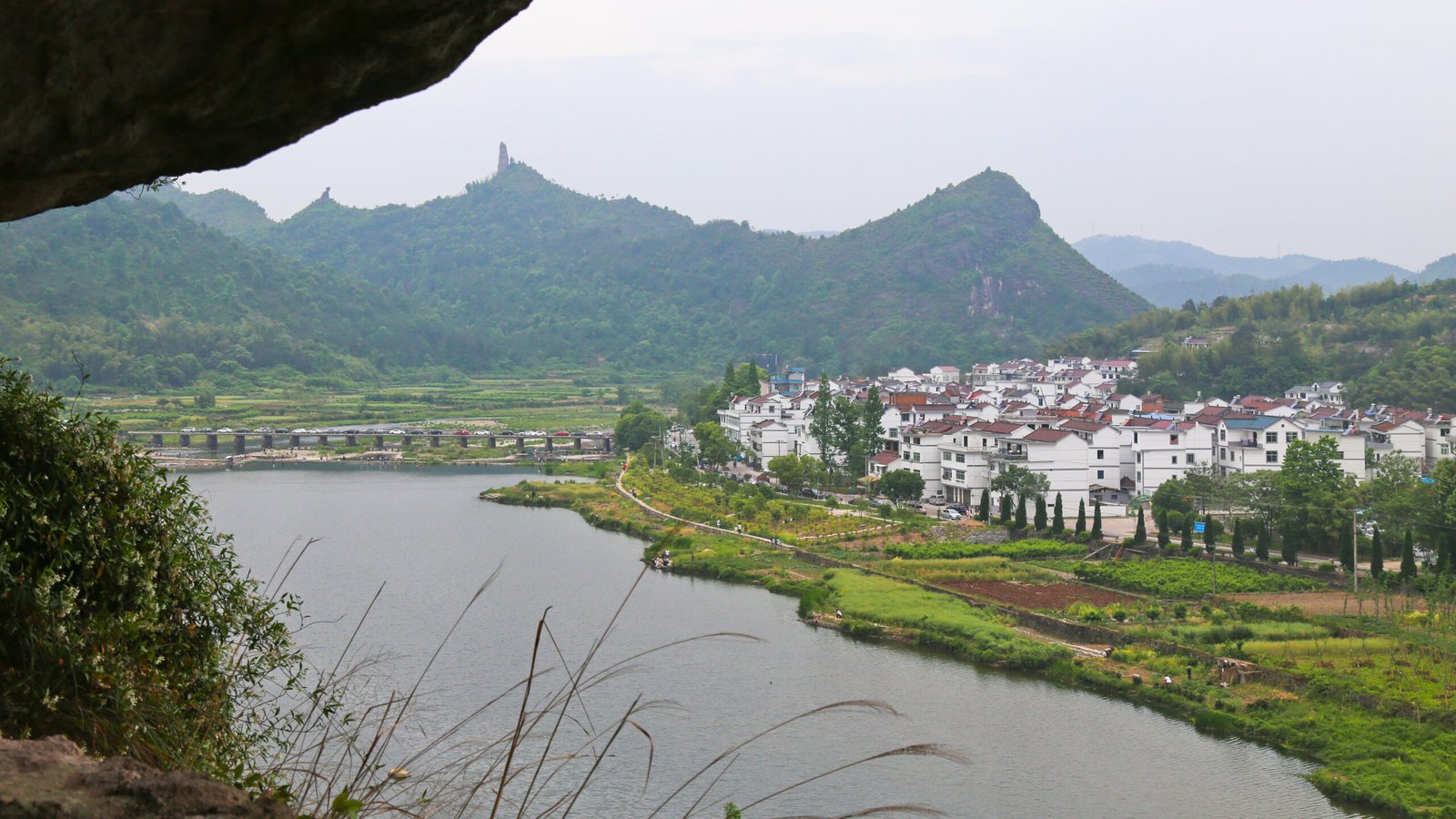
Different spots within the valley map to different dramas, which is the detail most English guides miss. The Jinyun Xiandu guide has the full spot-by-spot mapping. Give it a full day — the named spots are spread out and the internal shuttle takes real time.
From Jinyun, rail onward in any direction, or continue south to Wenzhou to fly out. Wenzhou is the southern terminus of the same Jinhua–Wenzhou line, so the return journey is straightforward.
Practical notes for the whole route
- Rail booking: Book with your passport. Chinese high-speed tickets release on a rolling window and selling out on weekend legs is normal — book each leg as soon as it opens. See our high-speed rail guide.
- Tickets, reservations and ID: the three operators do not share one process. At Hengdian, use the official WeChat booking route, have customer service update the order to the visitor’s passport, and separately reserve eligible area orders per visitor ID. Follow the current Hengdian guide; for Xiangshan and Xiandu, use their respective operator instructions.
- Payment: Set up Alipay or WeChat Pay before you land. Small vendors, shuttles and ticket machines here favour phone payment, and foreign cards are hit-or-miss.
- Apps: A translation app with offline Chinese is essential once you leave the studios — Xiangshan and Jinyun are domestic destinations with limited English. See the essential apps guide.
- Timing: Aim for March–May or September–November. Avoid the first week of May and the first week of October entirely — every stop on this route is a domestic destination too, and holiday crowds are severe. See the best time to visit.
- Pace: This is a working itinerary, not a holiday. If you have ten days rather than five, the right move is to add days to Hengdian and Jinyun rather than add new cities.
Common questions
Do I need a car for this route?
No. Every leg is rail or public transport. A car helps inside Jinyun once you are there, but the shuttle covers the main spots, and a taxi for the day is cheap if you want flexibility.
Can I do this in reverse?
Yes, and it works better if you are flying into Wenzhou or coming up from Fujian. The sequence reads the same either way — the point is to end on the real landscape, so whichever city you finish in, visit the studios first.
Which single stop is the most impressive?
Hengdian, for scale. But the one people remember is Jinyun Xiandu, because it is the only one that was not built for the camera.
Is five days enough?
Enough to see all three properly. Not enough to linger. If drama locations are the whole point of your trip, ten days across these three is a better trip than five days across six cities.
Your next move
Still exploring?
The route covers the same Zhejiang stops as the show.
Worried about the practical stuff?
Visas, payment, trains and the apps you’ll need before you land — the four things you cannot work out on the ground. Each guide is dated and sourced.
Ready to go?
The full route runs five days. The planning guide sizes it.
Last verified
Sources: Hengdian World Studios — English overseas booking and admission instructions · Hengdian World Studios — scenic-area reservation list, per-ID rule, and hotline · Jinhua Rail Transit — Ming Qing Palace station, Hengdian light rail (opened 2023) · Jinyun Xiandu official site — national 5A area, 166.2 km² · Lishui Municipal Government — Jinyun Xiandu scenic area · Zhejiang Provincial Dept. of Transport — Ningbo→Xiangshan subsidised coach service (8 Jul 2025)
Spotted something out of date? Email us — or read how corrections work. We check every report against the source and update the page.
Ready to plan it? Turn the dramas you have watched into a day-by-day route with the C-drama route planner.
Not sure where to start? Take the drama-city quiz — seven questions, one city, and a route waiting at the end.