
Some filming locations are built. This one was already there — a 170-metre stone pillar of ancient volcanic rock rising straight out of a river valley, which Chinese production designers have been borrowing for two decades. This is Jinyun Xiandu: what was filmed here, what it costs, and how to reach it.
The short answer: Xiandu Scenic Area (仙都景区) is in Jinyun County, Lishui, Zhejiang — a national 5A site about 20 minutes by road from Jinyun West high-speed rail station. It is a landscape rather than a film set: several separate spots spread across a valley, connected by a shuttle bus. It has appeared in Joy of Life 2, Lost You Forever, The Legend of Shen Li, Chinese Paladin and more. Allow a full day.
Why Jinyun Xiandu matters
Most of the places on this site are studios. Xiandu is the opposite: it is a real landscape — a national scenic area of 166 square kilometres — that happens to look like the fantasy China that period dramas keep reaching for.
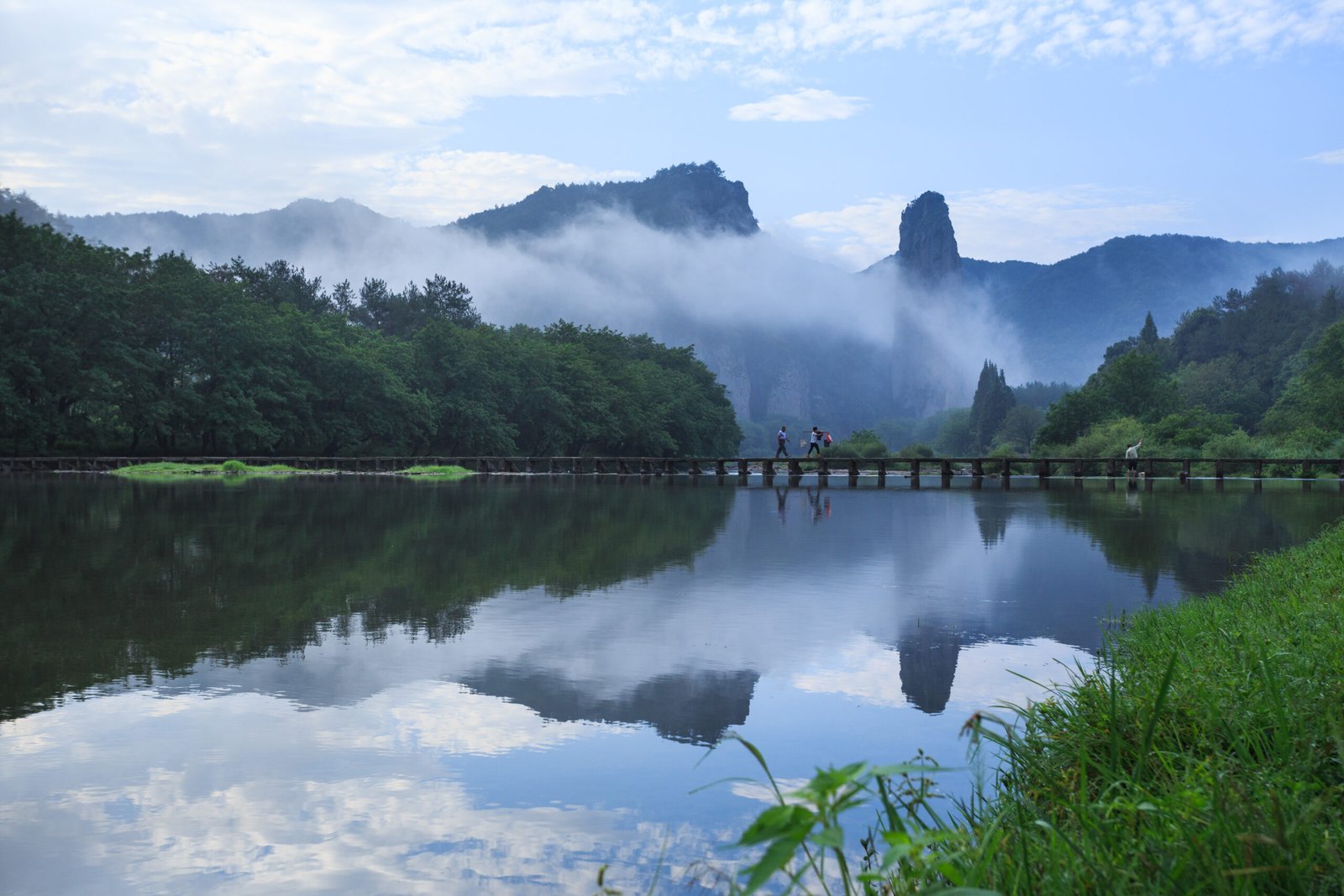
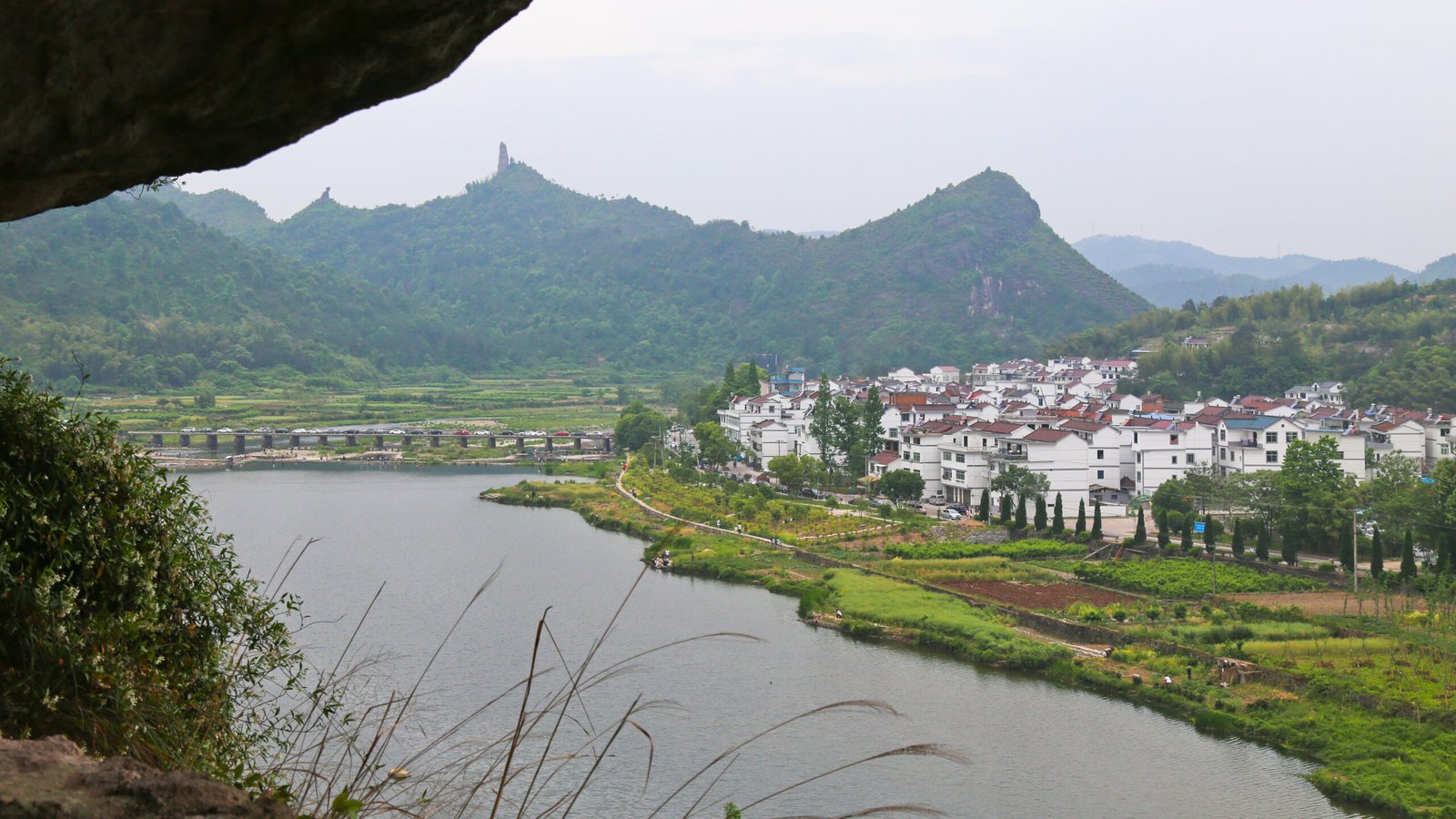
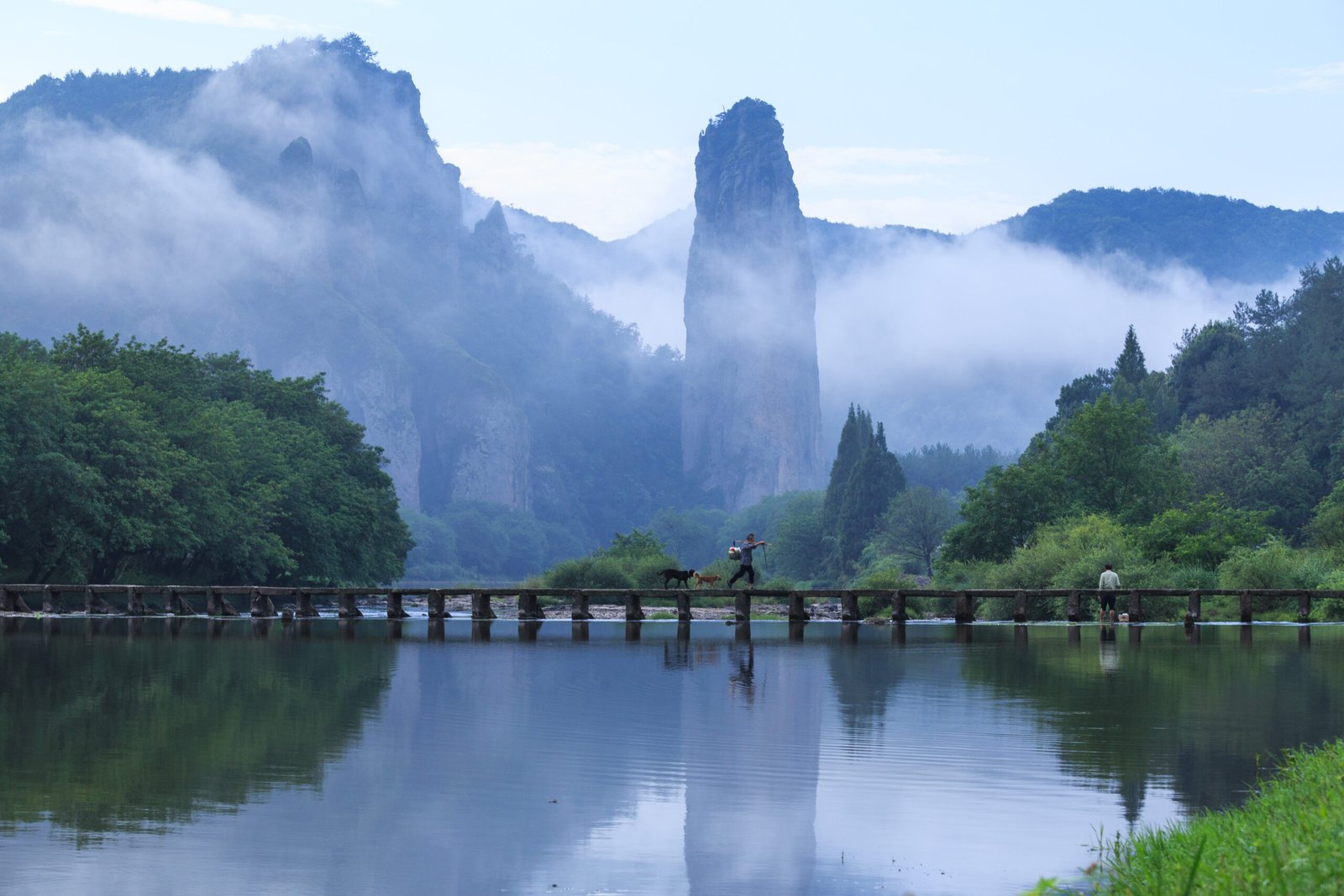
The signature feature is Dinghu Peak (鼎湖峰), a 170.8-metre stone spire that photographs like something drawn rather than formed. Around it sits a valley of red-cliff gorges, bamboo, an old stone bridge, and a riverside village — which is why so many productions have used it, and why it reads as the same “China” across all of them.
For our purposes, two dramas matter most: Joy of Life and Lost You Forever. Both are already covered on this site as drama guides — this page is the place you go to actually stand in them.
What was filmed where
This is the part Chinese-only guides get right and English ones rarely do: the different spots on site correspond to different dramas. Knowing which is which lets you plan a route with a purpose.
| Spot | Filmed for | What you are looking at |
|---|---|---|
| Xiaochibi (小赤壁) — Dragon-Furrow Path | Joy of Life 2, The Double | A cliff walkway cut into a red sandstone face — the location used for the drama’s cliff-set scenes |
| Dinghu Peak (鼎湖峰) | Chinese Paladin | The 170.8 m spire; the aerial-sword-flying sequences were filmed against it |
| Zhutan Hill (朱潭山) | The Legend of Shen Li | The stone slab bridge with the peak reflected in the river — best in mist |
| Xiandu Taoist Temple (仙都观) | Buddhist Boot Camp, Strange Tales of Tang Dynasty | A temple complex whose stone passageway reads as “one door, two worlds” |
Getting there
How to reach Jinyun Xiandu
Jinyun West — not Jinyun, and not Lishui. The newer station puts you 15–25 minutes from the gate.
Xiandu is unusually easy for a landscape location, because it sits close to a high-speed rail line.
- Take high-speed rail to Jinyun West (缙云西站). Jinyun is on the Nanjing–Wenzhou line, with direct services from Shanghai, Hangzhou and other eastern cities.
- From the station to the scenic area visitor centre is about 15–25 minutes by road. Shuttle and local bus options connect the station to the entrance; a taxi or DiDi is the simplest option if you have luggage, typically in the ¥30–60 range depending on the route and time of day.
- Inside the scenic area, an internal shuttle bus (景交车) links the separate spots. It is not free — buy the ticket at the visitor centre. Walking between all of them is not realistic in one day.
- There is also a cable car up Dinghu Peak for those who want the high view without the climb, ticketed separately.
See the high-speed rail guide for booking the Zhejiang leg with a passport.
Tickets — read this part carefully
One ticket covers the whole valley, and the reference adult price is ¥90. The shuttle bus inside the scenic area is a separate ¥20, so the figure most visitors actually pay is about ¥110; buying online in advance is usually a little cheaper, and the ticket is valid for two days with re-entry. Temporary discounts do happen — a reduced ¥70 rate applied while the Huangdi Ancestral Hall was under construction — so treat ¥90 as the reference figure rather than a guarantee.
- What is reliable: the single gate ticket includes the core spots (Dinghu Peak, Zhutan Hill, Xiaochibi and the rest), it stays valid for two days, and the published adult rate is ¥90 with the shuttle at ¥20. Buy with your passport — the gate ticket is real-name, and the passport you buy with is the one you show at the gate.
- What is not included: the internal shuttle bus and the cable car are separate. Budget for both if you want to cover the valley comfortably.
- Regional schemes exist — Lishui and neighbouring cities periodically run reciprocal free-entry or ticket-swap promotions. These are time-limited and residency-restricted, so they are worth checking only if you are travelling during the window and are eligible.
- Hours are seasonal, and the summer day is long: 7:30–17:30 from 29 April to 31 October, and 08:00–17:00 from 1 November to 28 April. The area can also close at short notice for events or maintenance, so check the official site in the week you travel.
- Best seasons: March–May and September–November. Spring brings the mist that makes the peak photographs work; autumn has clearer light.
Practical rule, same as everywhere on this site: check the current price and hours the week before you travel. Chinese scenic-area pricing changes without much warning, and no third-party page — ours included — keeps up perfectly.
Practical notes
- Language: a domestic-tourism site with limited English. A translation app with offline Chinese matters here.
- Payment: set up Alipay or WeChat Pay beforehand — shuttle, cable car and small vendors all favour phone payment.
- Timing: arrive early. Morning mist is both the reason to come and gone by mid-morning.
- Avoid: the National Day week and Chinese New Year, when this becomes a very busy domestic destination.
- Duration: one full day with the shuttle. Add a second day only if you want to shoot seriously.
Visiting as a foreign visitor
Xiandu is a 5A national scenic area, which in practice means two things: the ticket system assumes a Chinese ID card, and the site is run for domestic tour groups. Neither is a barrier, but both change how you buy and how you enter.
- Book by real name, and expect the passport to be the odd one out. Scenic-area tickets are issued against an identity document; for you that is the passport. The official channel and the staffed window both handle it. If a booking page rejects a passport number, do not fight it — buy at the visitor centre on arrival, which is where you collect the shuttle ticket anyway.
- The ticket is not the whole cost. The internal shuttle that links the separate spots is a separate ¥20, and the cable car up Dinghu Peak is ticketed separately again. Buy both at the visitor centre rather than at each stop, and do not plan to walk the whole valley in one day.
- Ignore the “free entry” promotions unless you hold a Chinese ID. The reciprocal free-entry schemes between Lishui and neighbouring cities are residency-restricted and time-limited — they are for Chinese residents, not for a foreign passport holder. Assume you pay the standard adult rate and treat any discount as a bonus.
- Payment and language. The shuttle, the cable car and the small vendors all favour phone payment; set up Alipay or WeChat Pay beforehand and carry a little cash as backup. English is limited — have 仙都 (the scenic area), 鼎湖峰 (the peak) and 景交车 (the shuttle) saved in Chinese.
Before you go: the visa and entry guide, the payment guide, the apps guide and the high-speed rail guide cover the parts that are the same everywhere in China. This section covers only what is different here.
Common questions
Is Xiandu a film set or a real place?
A real place. It is a national scenic area that existed long before any production arrived. That is what makes it different from Hengdian or Xiangshan — you are visiting a landscape, not a backlot.
Which drama should I care about here?
If you are following this site, Joy of Life 2 (the cliff scenes at Xiaochibi) and Lost You Forever (the peak-and-valley landscapes) are the two most relevant. Both are already covered in their drama guides.
Can I visit on the way between other locations?
It fits well between Hangzhou and Wenzhou, since Jinyun West is on the same line. It also pairs naturally with a broader Zhejiang route if you are already doing Hengdian.
Do I need a whole day?
Yes, realistically. The named spots are spread out and the shuttle takes time. Half a day means choosing two spots and skipping the rest.
Is it worth it if I’ve already seen the big studios?
Especially then. Xiandu gives you something the studios cannot: the actual mountains the dramas were trying to evoke.
Your next move
Still exploring?
Xiandu is one of the three Lost You Forever legs.
Worried about the practical stuff?
Visas, payment, trains and the apps you’ll need before you land — the four things you cannot work out on the ground. Each guide is dated and sourced.
Ready to go?
Xiandu is a half- to full-day stop. The planning guide sizes it.
Last verified
Spotted something out of date? Email us — or read how corrections work. We check every report against the source and update the page.
Ready to plan it? Turn the dramas you have watched into a day-by-day route with the C-drama route planner.
Not sure where to start? Take the drama-city quiz — seven questions, one city, and a route waiting at the end.