
This is the leg that separates a casual visit from a real pilgrimage. The mist, the bamboo, the impossible vertical ridges — that is Guizhou, and it is the part of The Untamed that looks most like the show. These are the Duyun Guizhou filming locations worth building a trip around.
The short answer: Duyun (都匀) is a small highland city in southern Guizhou. Fly to Guiyang, then take high-speed rail south to Duyun East — around 40 minutes, and there is a station inside the airport terminal itself. The purpose-built set where most of The Untamed was filmed, Duyun Qin-Han Film City, is a short drive from the centre. The mountain exteriors are the other way and need a car. Allow 2–3 days on the ground.
Why the Duyun Guizhou filming locations matter
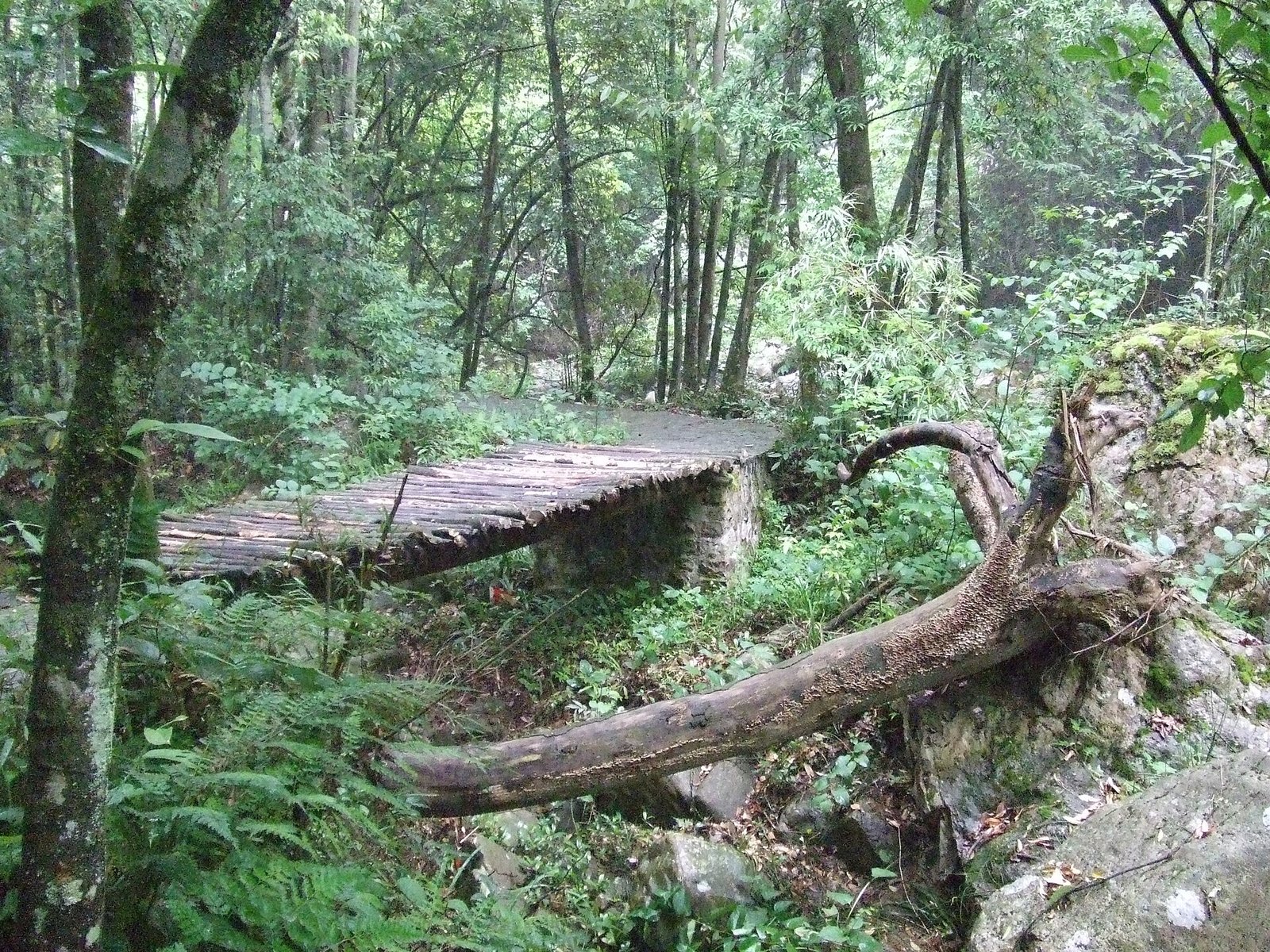
Hengdian gave The Untamed its halls and its architecture. Guizhou gave it the feeling — the mountain exteriors, the low mist over bamboo ridges, the sense of a landscape that is genuinely old and genuinely indifferent.
Guizhou is one of China’s poorest and most mountainous provinces, which is exactly why it still looks like that. It has been far less developed for tourism than Zhejiang or Yunnan, and the landscape has not been tidied for visitors. Duyun itself sits at around 800 metres and has a reputation among Chinese travellers as a summer escape — a 25°C city in July, when most of the country is unbearable.
What is actually at the Duyun Guizhou filming locations
One correction worth making before you plan anything, because it will confuse your searches otherwise. The set is not called the “Qiannan filming base”. Its name is 都匀秦汉影视城 — Duyun Qin-Han Film City — and it is a serious, permanent facility rather than a leftover backlot.
| Site | What it is | Effort |
|---|---|---|
| Duyun Qin-Han Film City (秦汉影视城) | The purpose-built palace complex where the show’s interiors and city sets were shot | Ticketed, half a day |
| Luosike (螺丝壳) | The plateau and waterfall used for Cloud Recesses’ back mountain | Needs a car and driver |
| Doupeng Mountain (斗篷山) | National forest park — hiking, waterfalls, old-growth forest | Day trip by road |
| Shiban Alley (石板街) | Historic stone-paved street in the old town | Free, walkable |
| Xishan Bridge (西山大桥) | The bridge made famous by the film A Cool Fish | Free, walkable |
Some of what you saw on screen was shot at informal locations rather than attractions. This is why Guizhou cannot be done as a ticketed tour in the way Hengdian can — you are travelling to a place, not through a gate.
The film city, and what you are actually visiting
Duyun Qin-Han Film City covers about 695 mu — roughly 46 hectares — with 230 reconstructed buildings and around 160,000 square metres of floor area. It opened in December 2017 and holds national 4A scenic-area status. Its operator was designated a national cultural-industry demonstration base in 2024.
The layout is a Qin-Han imperial capital, not a theme park: an outer city of three zones and three broad streets, wrapped around an inner city built as the Weiyang Palace complex. The centrepiece is Xuanzhi Hall (宣室殿), described as the largest single Han-style reconstructed building in China, alongside the Chengming Hall, an altar, the Jasper Pool, the Jiaofang Hall and Changle Palace. A 280-metre Chang’an Street reproduces a Qin-Han market frontage.
It is not a preserved set you walk through with a headset. It is a working studio that also sells tickets, which means two things: some halls are closed when a crew is in, and you may genuinely walk past a production. Both are part of the appeal.
What The Untamed shot here
The Untamed filmed at Duyun in 2018, and it is still the city’s defining association — the local government refers to it as the city’s “core IP”. The built sets you will recognise include:
- Buyetian City (不夜天城) — the show’s most-visited set
- Cloud Recesses (云深不知处) — the interiors and courtyards
- Liyang City (栎阳城)
- Qishan Jiaohuasi (岐山教化司)
The film city has since added a small cluster of permanent exhibition halls tied to individual dramas — including ones for The Untamed, Joy of Life and Xun Qin Ji — which is a nicer way of saying it has leaned, hard, into fan tourism. Around five to six thousand fans make the trip to Duyun specifically for The Untamed each year. According to the city’s own figures, the hotel room two of the leads stayed in is booked out from May onwards and never goes empty in summer.
The list of productions is long and not only period drama: Joy of Life, A Cool Fish, The Qin Empire, Ever Night, Love Like the Galaxy, Serenade of Peaceful Joy and well over 300 others have used the site. If you came for one show in particular, check the current filming schedule before you book — but do not expect to be told what is shooting.
The mountains: Luosike and Doupeng
Here is the part most English-language guides miss. Cloud Recesses’ back mountain — and its signature waterfall — were not shot at the film city. They were shot on Luosike (螺丝壳), the high plateau south of Duyun.
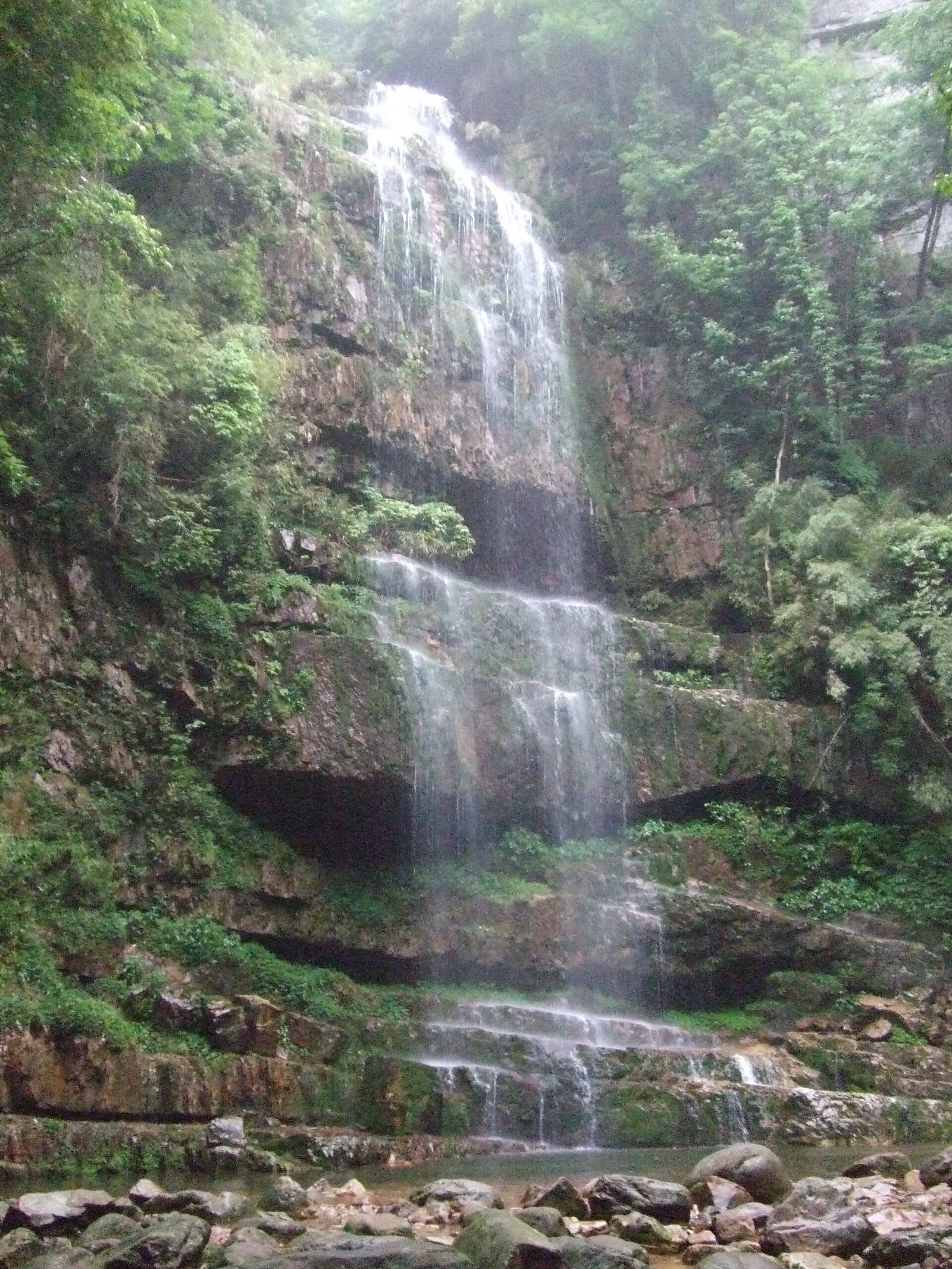
Luosike is now a hiking destination in its own right — an 18-kilometre loop over high grassland and wind farm access roads, and the location of the show’s closing scenes. It is genuinely spectacular and genuinely remote. There is no bus. You drive, you park near the wind farm, and you walk.
Doupeng Mountain (斗篷山) is the more accessible of the two — a national forest park with marked trails, waterfalls and the kind of damp, overgrown, ancient-looking forest that makes the province’s scenery read as fantasy on screen. Both are real wilderness. Go with a local driver who knows the roads, start early, and do not treat either as a photo stop you can slot between two other things.
The city layer
Duyun itself is more interesting than its size suggests. The Sword River (剑江) runs through the centre and the city has built a long riverside walk along it, which is where locals actually spend their evenings.
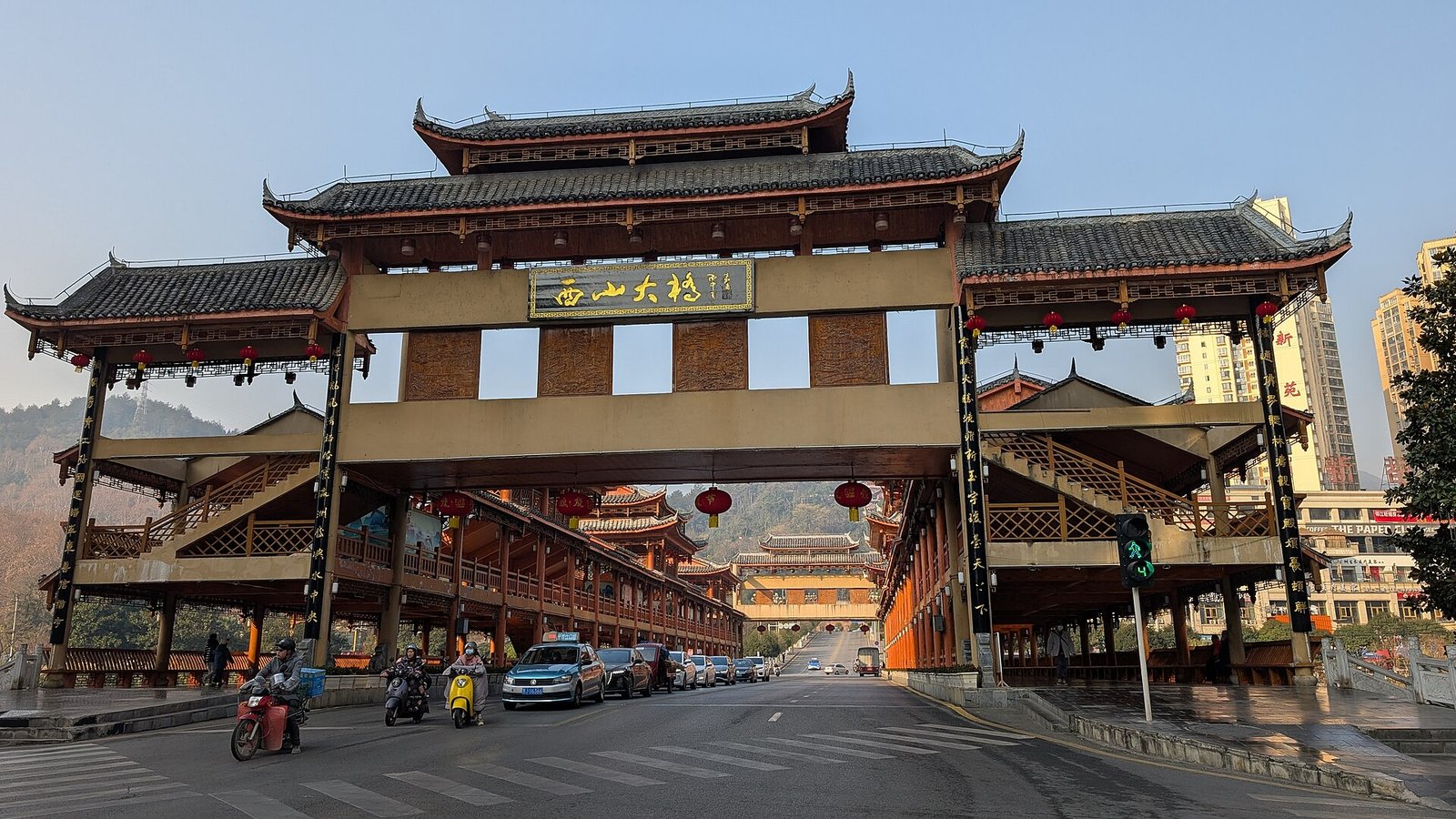
Xishan Bridge (西山大桥) is the one to see at dusk — a covered bridge with a tiered timber gate, red lanterns and the plaque across the top. It is free, it is in the middle of town, and it is the reason a lot of Chinese visitors know Duyun at all.
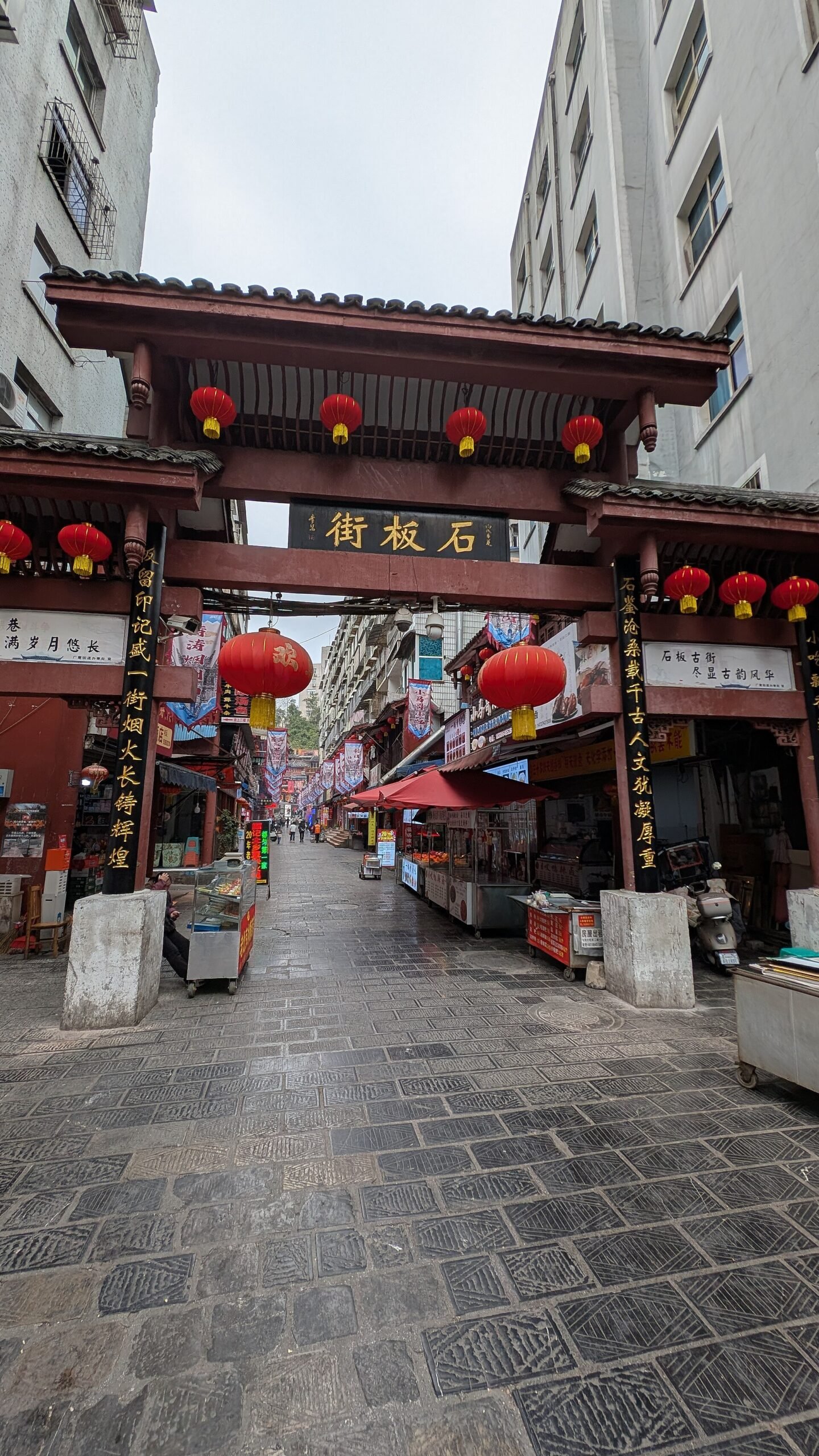
Shiban Alley (石板街) is the historic shopping street — genuinely old paving, rebuilt shopfronts, red lanterns, and street food in the evenings. It is one of 66 sites the city lists as part of its “3+N” filming matrix, alongside the film city and two smaller studio towns. In practice it is a pleasant hour, not a pilgrimage site, but it is where you will eat.
Tickets, hours and what it costs
The film city’s gate price is ¥120, but the discounted adult rate has sat at ¥63 for several years and that is what almost everyone actually pays. Book online and you scan your passport or ID at the gate.
The free-entry list is unusually generous, and it is the single best-value detail on this page. Entry is free for:
- Students — primary, secondary and university, including from Hong Kong, Macao and Taiwan, on production of a valid student ID
- Visitors aged 65 and over
- Children aged 6 and under
- Military personnel (serving and retired), police, firefighters, medical workers, teachers and disabled visitors, on production of ID
- First-time visitors from Taiwan
Hours move with the season and with the festival calendar — the site runs night sessions during major holidays, sometimes until 22:00, and closes earlier in the winter months. Suggested visit time is three to five hours. Because the schedule changes, check before you travel rather than trusting any list, including this one. The official enquiry line is 0854-8810313. Foreign visitors buy with a passport — the concessions above are all document-based, and your passport is the document — and the staffed window is the fallback if a machine will not take it.
Getting there
How to reach Duyun — the trick most guides miss
Already in Guiyang? Guiyang North works just as well — 40–60 min to Duyun East, ¥46–78.
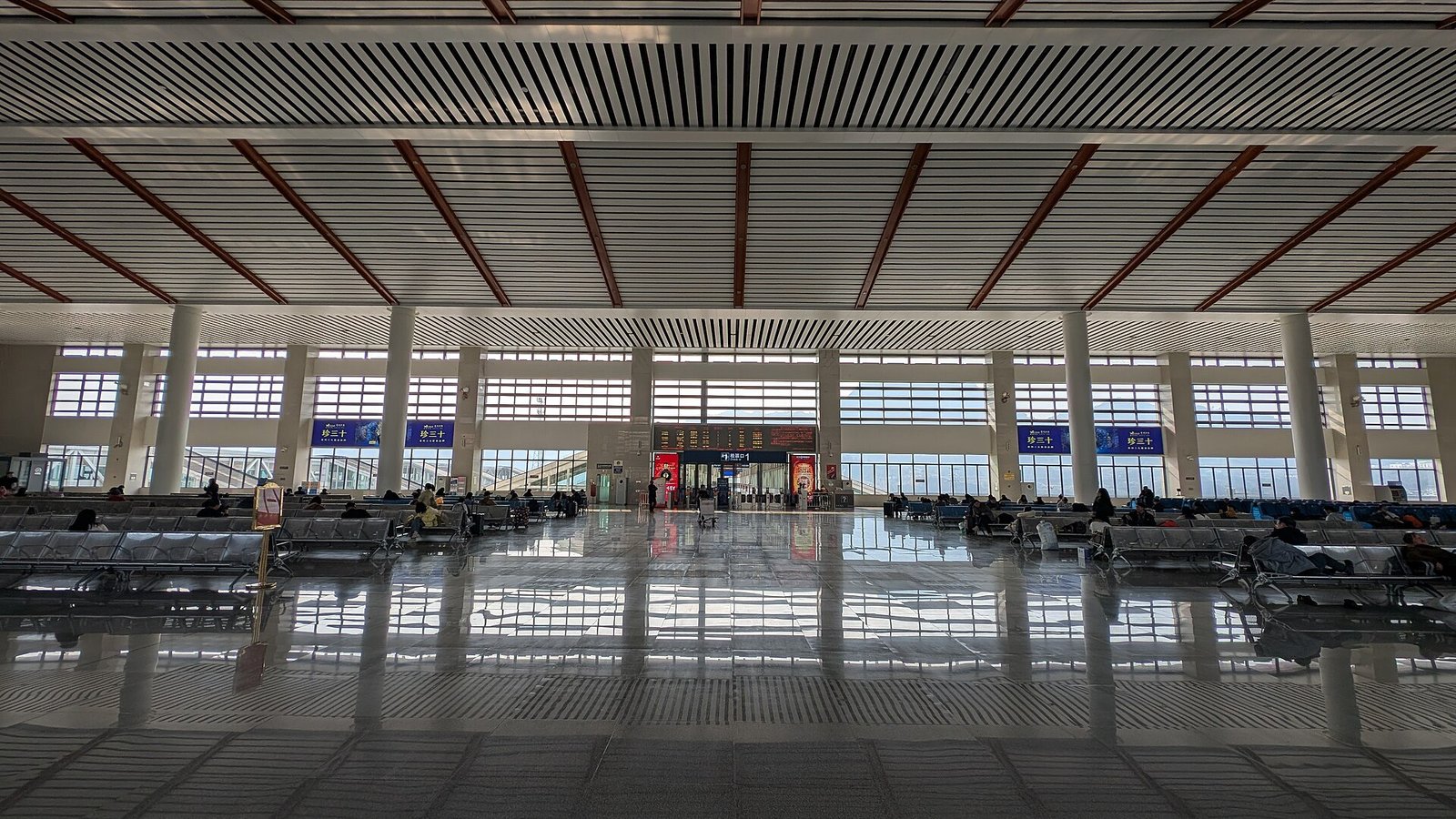
There is one genuinely useful thing to know about arriving here, and it is not in most guides.
- Fly to Guiyang Longdongbao International Airport (KWE) from Shanghai, Beijing, Guangzhou or Chengdu.
- Do not go into Guiyang city. Longdongbao railway station is in the basement of Terminal 2 — you take a lift down and you are on the Guiyang–Guangzhou high-speed line. Trains from there reach Duyun East in around 32 minutes for roughly ¥50.
- If you are already in Guiyang, Guiyang North works just as well: 40 to 60 minutes to Duyun East, ¥46 to ¥78 depending on the service.
- From Duyun East station, the film city is a short taxi ride away. The budget option is city bus 22 from Dazhizi (大十字) in the centre, which runs to the film city gate for around ¥3.
Note the two-station trap that catches people on this route: Duyun uses Duyun East, Hengdian uses Yiwu or Hengdian station. They are in different provinces. See the high-speed rail guide for how to book both legs with a passport.
Where to stay
Stay in central Duyun, within walking distance of the Sword River and Shiban Alley — not out by the film city. There is almost nothing around the studio after the gates close, whereas the centre gives you the riverside, the food street and Xishan Bridge lit up at night, all on foot.
Duyun is not an expensive city and it is not a major tourist destination, so mid-range rooms are cheap by Chinese big-city standards — budget roughly ¥150 to ¥350 a night for something clean and central. The exception is high summer, when the city fills up with domestic visitors escaping the heat. Book ahead for July and August, and for any national holiday.
If you are heading out to Luosike or Doupeng Mountain, arrange the car and driver through your hotel the evening before. It is the single most useful thing your accommodation can do for you here.
Base yourself in the city centre rather than beside the film city — the studio has no evening, and the centre is where you eat. Type 都匀 (Duyun) into the box to see what is actually available.
Booking through this widget earns us a small commission at no extra cost to you. It never changes what we recommend — see our affiliate disclosure.
The mist is the point, and it is a gamble
Guizhou is wet. Rain falls in most months and low cloud is common, which is what produces the look. It also means some days will be washed out entirely and the mountains will simply not be there.
Build in a buffer day. If you are travelling this far for a specific shot, do not fly out the morning after your only attempt. Spring and autumn give the best balance of green, visibility and manageable rain; summer is wettest and the mountains are busiest with domestic tourists; winter is mistiest and coldest, and the landscape has its own appeal.
Practical warnings, honestly
- Less English than anywhere else on this route. Guizhou has far fewer foreign visitors than Zhejiang. Download offline translation and maps, and have every place name you need written in Chinese characters before you leave the hotel.
- Cash matters more here. Alipay works in the city, but small towns and roadside stops may not take it. See the payment guide.
- Do not plan a tight schedule. Road travel is slow, weather is unpredictable, and the sites are not clustered.
- Hiring a car and driver is normal, not extravagant. It is the practical way to reach Luosike and Doupeng Mountain. Arrange it through your hotel.
- The film city is a working studio. Some buildings can be closed for filming at short notice. That is the deal, not a complaint to be made at the gate.
- Respect the communities. Some of these are working villages and working streets, not attractions.
A two-day plan
Day one. Arrive Duyun East by mid-morning and drop your bags. Spend the afternoon at the film city — three to five hours is right, and going in the afternoon means you finish in the good light. Eat on Shiban Alley in the evening, then walk the riverside to Xishan Bridge after dark.
Day two. Take a car and driver out early, either to Luosike for the plateau and the Cloud Recesses waterfall, or to Doupeng Mountain if you want trails rather than grassland. Both are full days once you account for the drive. If you have a third day, do the one you skipped, and treat the middle of the day as a write-off.
Visiting as a foreign visitor
Guizhou is the least foreign-visitor-ready stop on this route, and Duyun is no exception. Nothing is closed to you — it is simply the place where preparation matters most, and where the difference between a smooth day and a hard one is almost entirely in what you sorted before you arrived.
- Buy the film-city ticket by passport, and carry the original. Entry is against an identity document, and a scanned copy on your phone is not accepted at the gate. If the online channel will not take a passport number, buy at the window — the discount has held for years, so you are not losing much by doing it on arrival.
- Assume less English than anywhere else on the trip. The film city, the streets and the mountain sites are run for domestic visitors. Download offline translation and maps, and have every place name you need — 都匀, 秦汉影视城, 螺丝壳, 斗篷山 — written in Chinese before you leave the hotel.
- Cash matters more here. Alipay works in the city, but small towns and roadside stops may not take it, and personal payment codes can reject a foreign card. Carry a few hundred yuan in small notes. See the payment guide.
- Getting to Luosike and Doupeng Mountain means a car and driver. There is no practical public-transport route. Arrange it through your hotel the day before — this is the normal way to do it, not an extravagance.
Before you go: the visa and entry guide, the payment guide, the apps guide and the high-speed rail guide cover the parts that are the same everywhere in China. This section covers only what is different here.
Common questions
Is Guizhou worth it if I only have one trip?
Do Hengdian first. Guizhou is the better-looking half but the harder half, and it works best as a second journey once you are comfortable travelling in China.
How many days do I need?
Two days on the ground minimum — one for the film city, one for the mountains. Three if you want both mountain areas or if the weather turns against you.
Can I do it as a day trip from Guiyang?
Not really. The rail leg is short but the sites are spread out and the best light is early. Stay in Duyun.
Is the film city worth the ticket if I have not seen The Untamed?
Only if you like Qin-Han architecture. With the show in your head it is a genuinely good half-day; without it, it is a large set of reconstructed palaces and you will be done in ninety minutes.
Do I need a permit?
No special permit for foreign visitors to this area. Standard entry rules apply — check the visa and entry guide, and note that some attractions ask to see your passport rather than accept a photocopy.
When should I come?
Spring and autumn. Check the best-time guide first — Guizhou’s wet season and China’s holiday calendar both land squarely on this trip, and a national holiday will change what the film city feels like.
Your next move
Still exploring?
Duyun’s Qin & Han Studio City is the Guizhou leg of The Untamed.
Worried about the practical stuff?
Visas, payment, trains and the apps you’ll need before you land — the four things you cannot work out on the ground. Each guide is dated and sourced.
Ready to go?
Duyun is a one- to two-day stop. The planning guide sizes it.
Last verified
Sources: Duyun Municipal Government — official notice setting the Qin-Han Film City ticket at ¥63 against a published ¥120 · China Railway 12306 — official source for train times and fares
Spotted something out of date? Email us — or read how corrections work. We check every report against the source and update the page.
Ready to plan it? Turn the dramas you have watched into a day-by-day route with the C-drama route planner.
Not sure where to start? Take the drama-city quiz — seven questions, one city, and a route waiting at the end.