
Xiangyang is the least obvious stop on the C-drama map and, for many fans, the most rewarding. It is a real city in Hubei with a genuine history — and beside it sits Xiangyang Tang City, a purpose-built set that gave several of the biggest Chinese period productions their world.
The short answer: Tang City (唐城) is in Xiangyang, Hubei province, reachable by high-speed rail from Wuhan in about an hour and a half, or from Shanghai in four to five hours. It is a large Tang-dynasty-themed film set open to visitors, and it is one of the main locations for Joy of Life. Allow one full day for the set and half a day for the city.
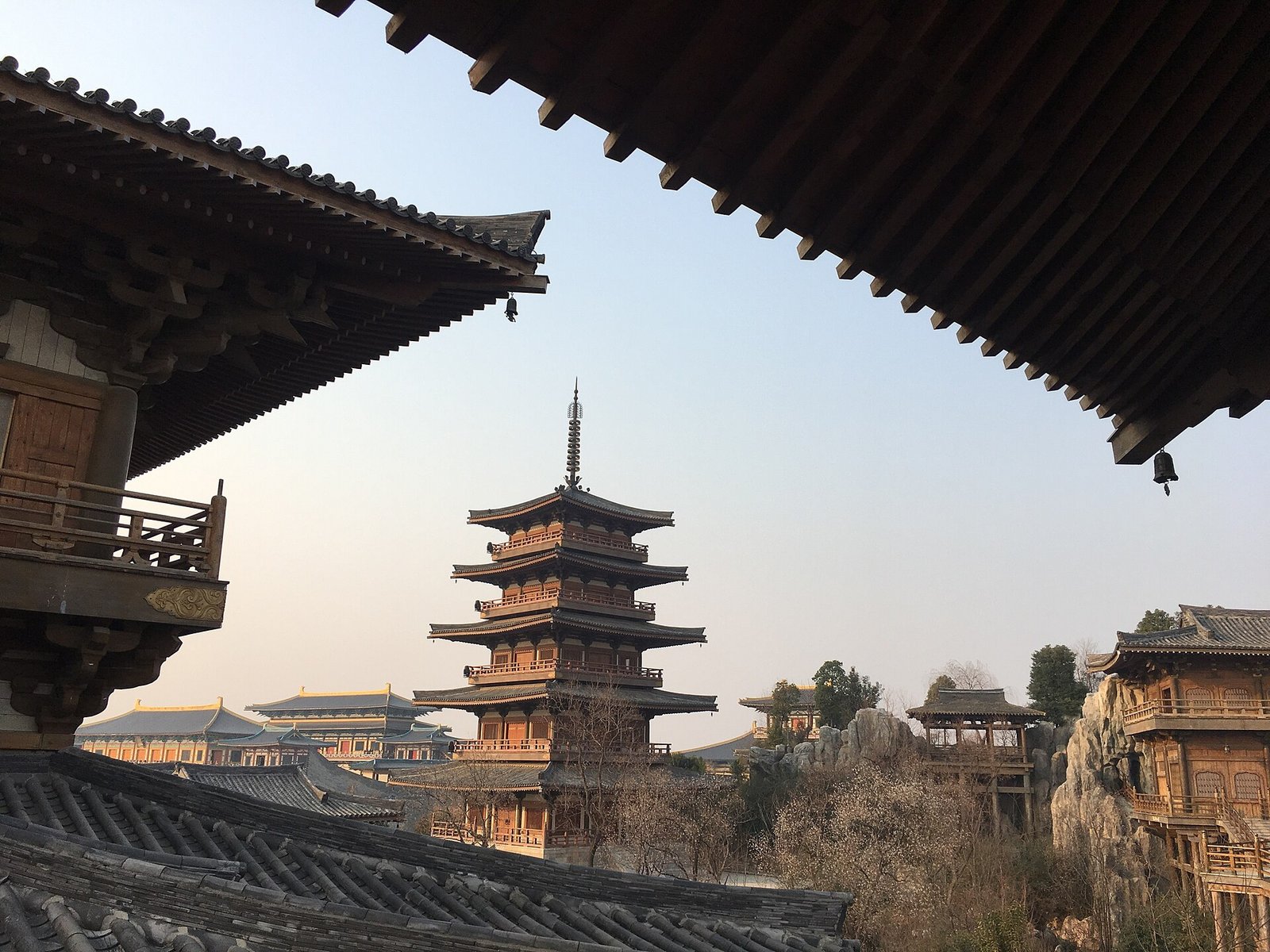
What Xiangyang Tang City actually is
One correction before you plan, because it changes what you are looking at. Tang City was not built for Joy of Life, and it is not primarily a Joy of Life attraction. It was built for Chen Kaige’s film Legend of the Demon Cat (妖猫传, 2017) — roughly 90% of that film was shot here — and it opened as a visitor attraction on the back of it.
Construction began in 2012. The whole scenic area covers about 3.7 square kilometres, laid out to the plan of Tang-dynasty Chang’an rather than as a replica of one specific monument. It holds national 4A status and sits in Xiangcheng district, directly across the road from Xijiachi (习家池), one of China’s oldest surviving private gardens.
That origin story matters when you walk in. This is a working studio that sells tickets, not a theme park: the architecture is built to be photographed from specific angles, and the proportions are more theatrical than archaeological.
Xiangyang Tang City (唐城): the set itself
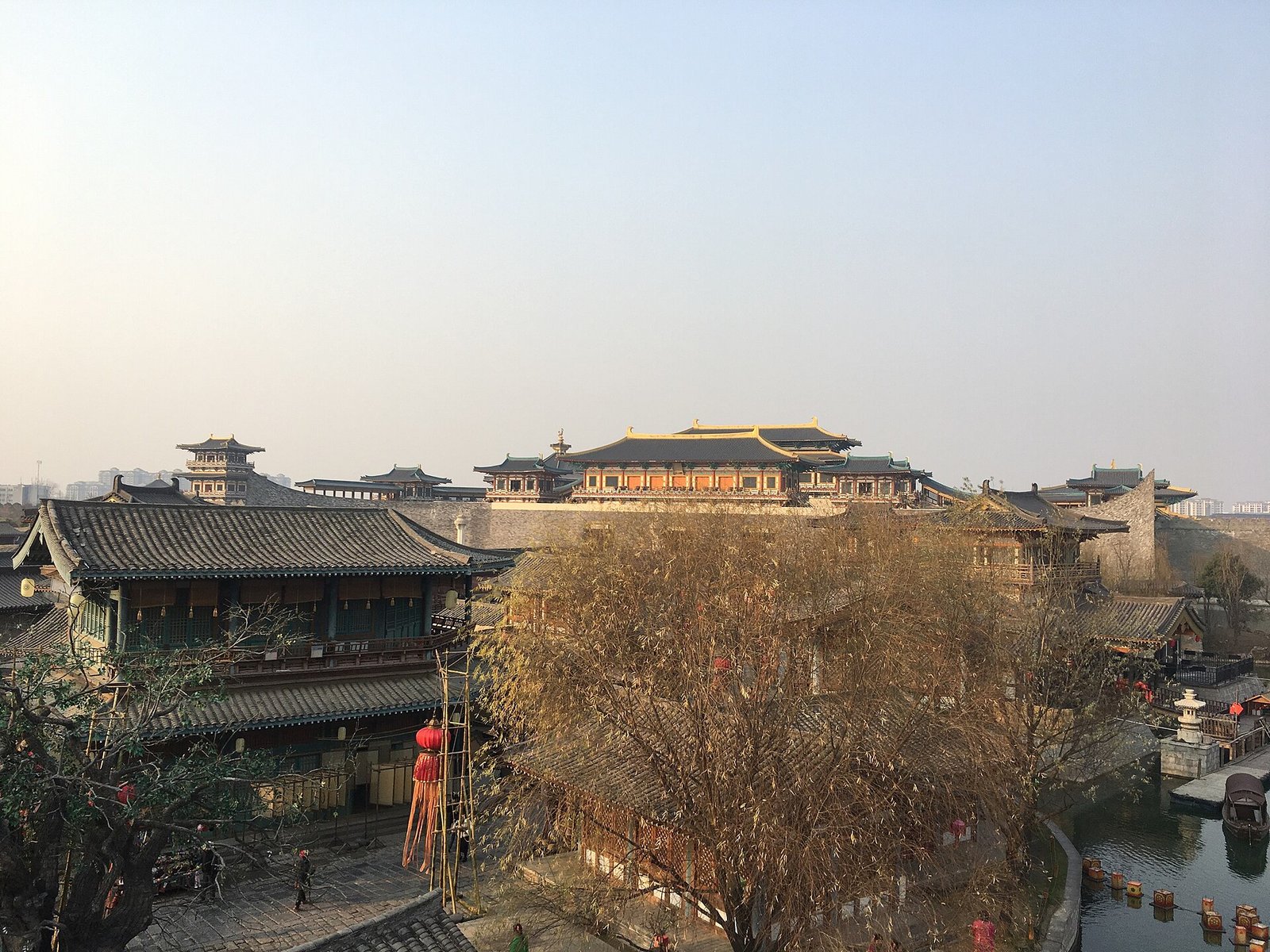
It is large — you will walk several kilometres — and it was designed with filming in mind, which means the sightlines and proportions are unusually deliberate. For Joy of Life, this is where much of the capital’s world was built: the palace halls, the market streets, the courtyards where Fan Xian moves between factions.
| What to see | Why |
|---|---|
| The main palace complex | The grandest architecture and the establishing-shot material |
| Market streets | The most walkable and most photographed area |
| The city walls | Best at golden hour, looking back over the whole set |
| Waterfront areas | Evening lights and reflections |
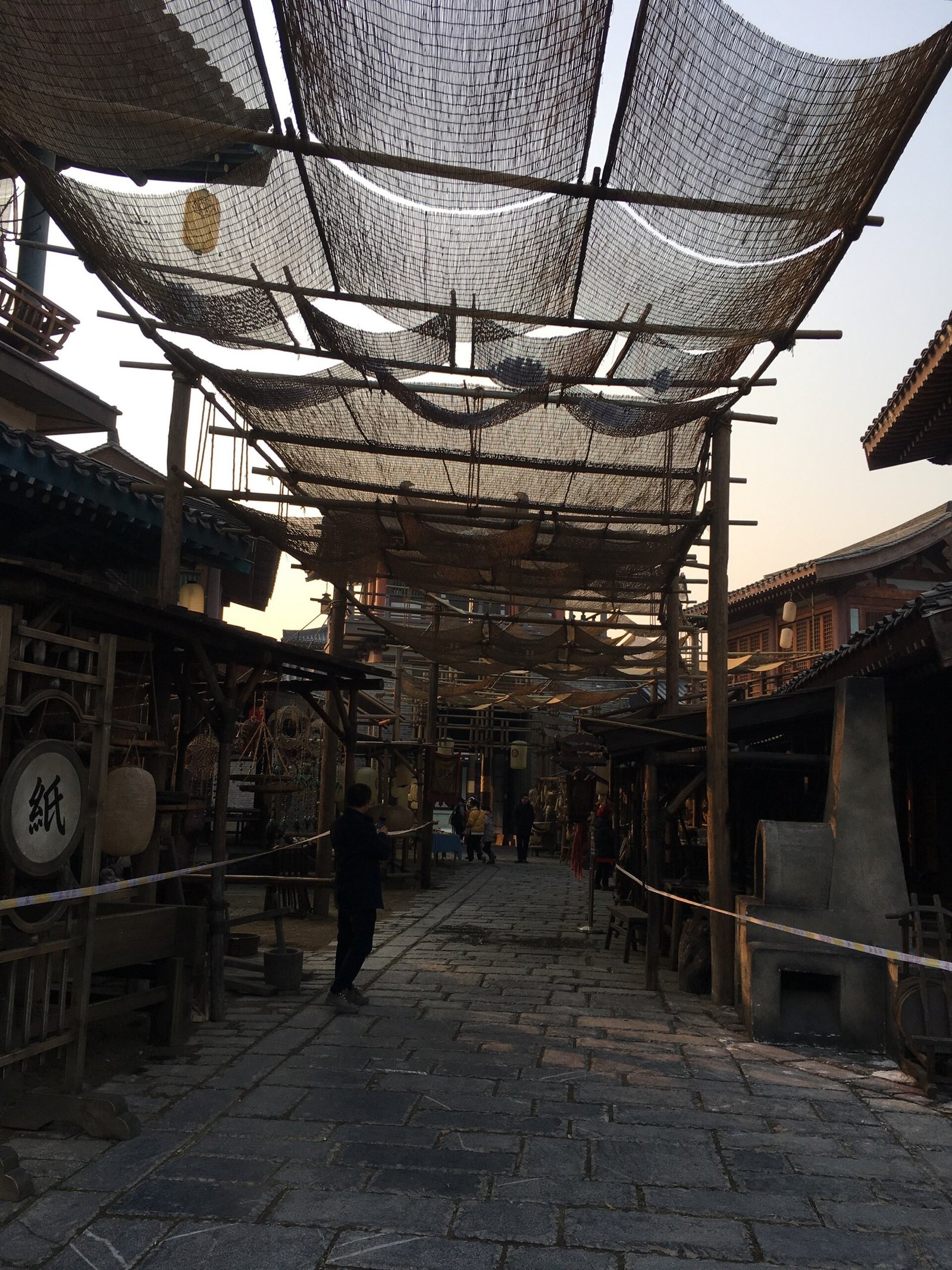
Tang City runs evening programmes in peak season. If the lights are on, stay — the set is genuinely more atmospheric after dark, and the water reflections are the reason people pay for the night ticket rather than the day one.
What was actually filmed here
This is where most English-language coverage gets it wrong, so it is worth being precise. Joy of Life did not shoot its capital in one place. The palace and city scenes for the capital of Qing were split between Tang City here in Xiangyang and Xiangshan Film City in Zhejiang. The town of Danzhou, where the story opens, was shot at the Duyun Qin-Han Film City in Guizhou. If you came to China for one drama, you are looking at a three-province itinerary, not a single set.
The production list at Tang City is long, and it is a better guide to what you will recognise than any single show:
- Legend of the Demon Cat (妖猫传) — the film the set was built for
- Joy of Life (庆余年) — capital scenes, both seasons
- Serenade of Peaceful Joy (天盛长歌)
- The Rebel Princess (上阳赋)
- A Dream of Splendor (梦华录)
- Novoland: Eagle Flag (九州缥缈录)
It has hosted a great many more Tang-set productions, and the local tourism authority actively promotes it on that basis — including, at times, mapping out the exact camera positions used in specific scenes. If a show you love was filmed here, the set itself is not the hard part; finding the precise frame is.
Xiangyang city itself
Do not treat Xiangyang as merely the town next to the set. It is one of the oldest continuously fortified cities in China — the Chinese nickname for it is Huaxia di yi chengchi, “China’s first city of walls” — and it has a well-preserved ancient city wall along the Han River, a genuine historic core, and far fewer foreign visitors than the coastal cities. Prices are lower and the pace is slower.
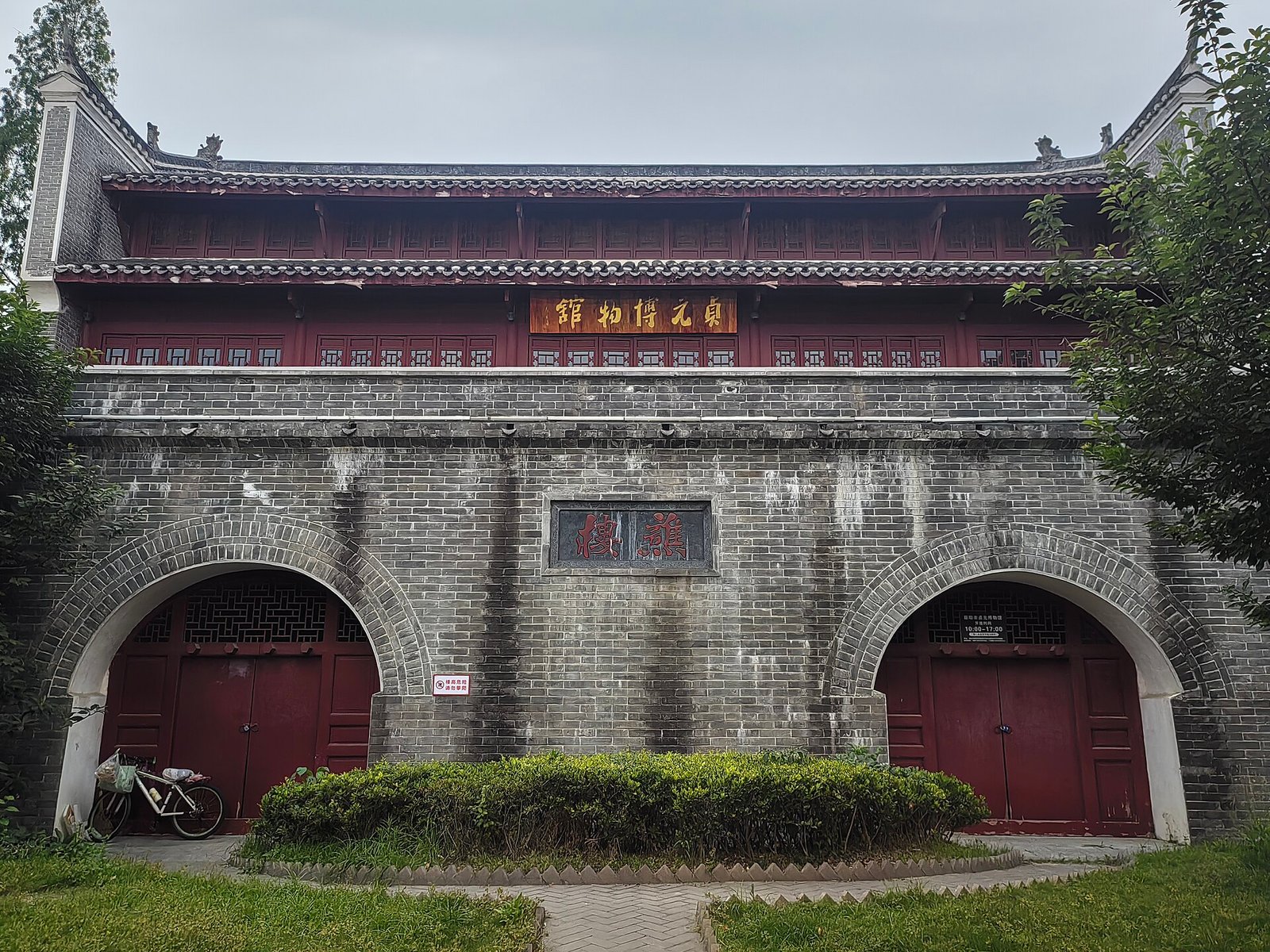
The old city wall and the riverside are worth an afternoon, particularly at sunset. Beyond that, three things justify the extra day:
- Gulongzhong (古隆中) — a national 5A site and the thatched cottage where Zhuge Liang lived before the Three Kingdoms period. This is where the Three Visits to the Thatched Cottage story is set, and for anyone who grew up on Three Kingdoms drama it is a genuine pilgrimage. Full-price tickets run around ¥87. See the Gulongzhong section below for how to get there.
- Xijiachi (习家池) — directly across the road from Tang City, and one of the oldest surviving private gardens in China, dating to the Han dynasty. It is easy to add to a Tang City day because it is right there.
- Han River evening cruise (汉江夜游) — the river is why the city exists, and seeing the wall from the water at night is the best single view in Xiangyang.
It is also a useful reminder that Chinese historical dramas are drawing on places that actually exist.
Gulongzhong: the Three Kingdoms pilgrimage
If you watch Chinese historical drama at all, you already know this place even if you have never heard the name. Gulongzhong (古隆中) is the valley where Zhuge Liang — the strategist at the centre of virtually every Three Kingdoms production ever made — lived as a young farmer before he was persuaded to enter politics. It sits about 20 kilometres west of central Xiangyang, and it is a national 5A scenic area.
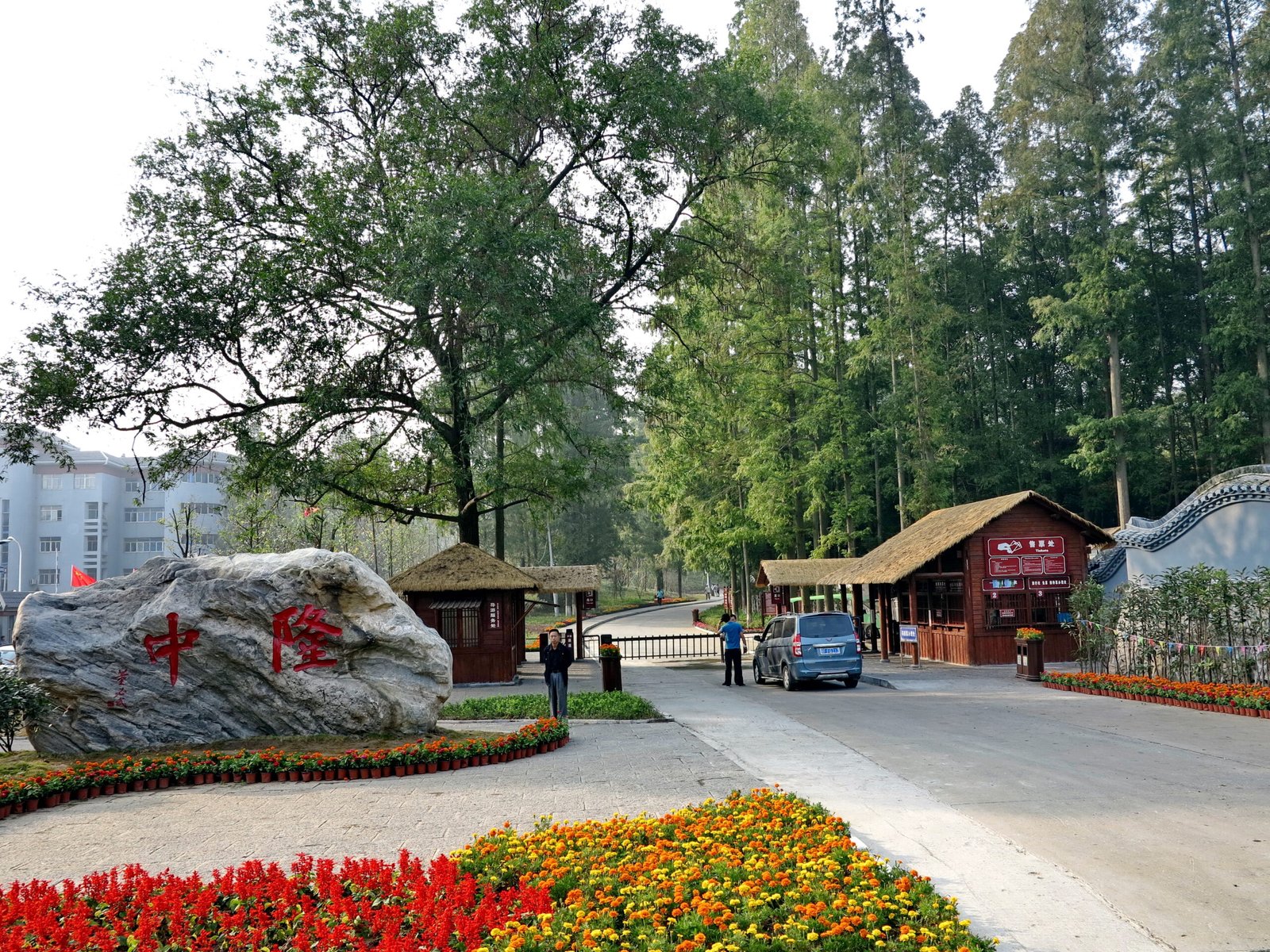
The story it is built around is the Three Visits to the Thatched Cottage (三顾茅庐): the warlord Liu Bei travelled to this valley three times before Zhuge Liang agreed to serve him. The conversation that followed — the “Longzhong Plan” (隆中对), in which Zhuge Liang laid out the strategy for dividing the empire in three — is one of the most quoted passages in Chinese history. The set-piece site here is Sangu Tang (三顾堂), the “Hall of the Three Visits”, built on the spot the story is set in.
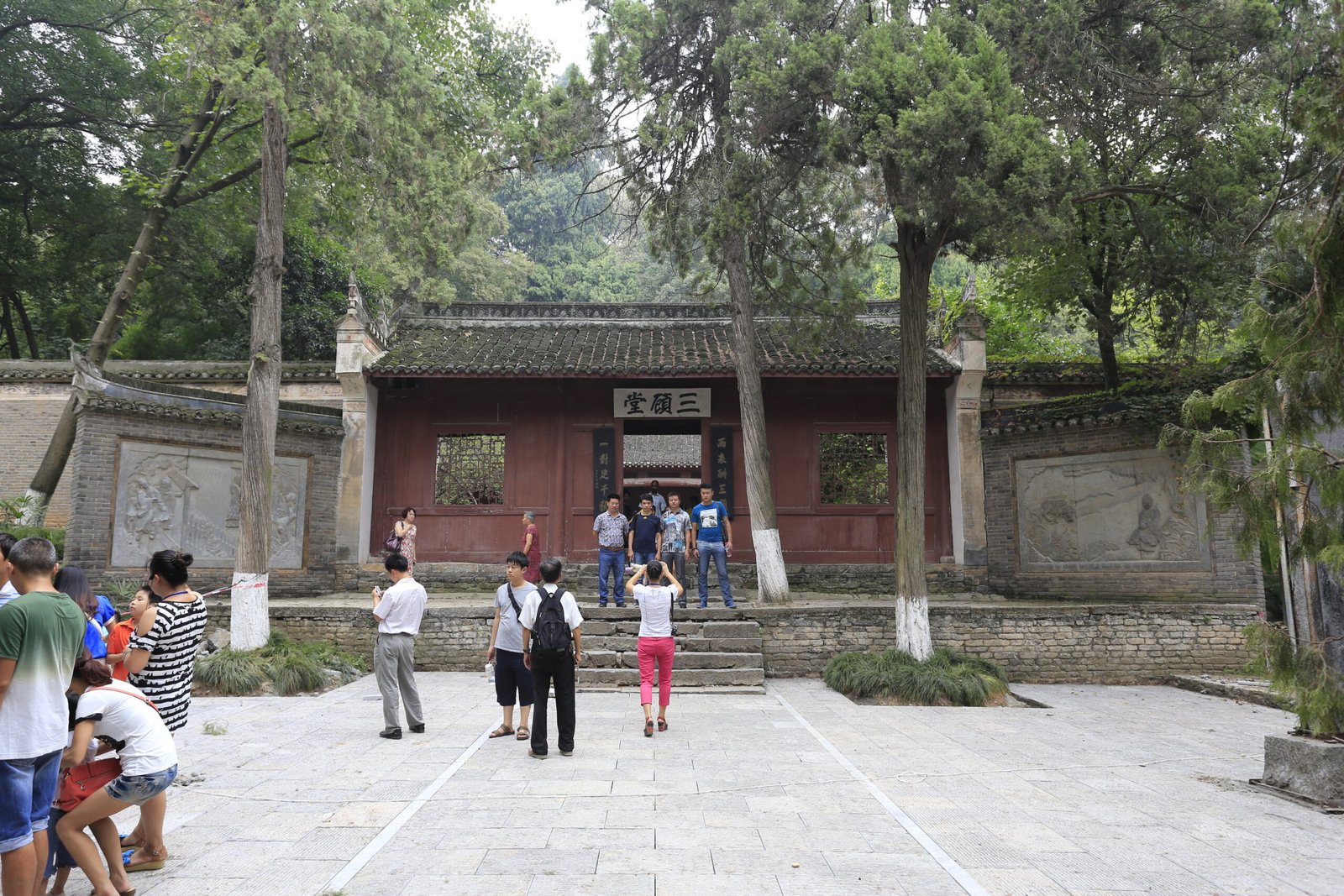
This is not a film set. It is the genuine historical site, and that is exactly why it earns its place on a set-jetting itinerary: it is where the drama you have watched on screen is drawn from, rather than where it was filmed.
| What to see | Why it matters |
|---|---|
| The stone archway (石牌坊) | The entrance marker and the classic photo — the whole visit starts here |
| Wuhou Shrine (武侯祠) | The memorial hall to Zhuge Liang, rebuilt and added to across dynasties |
| Sangu Tang (三顾堂) | The Hall of the Three Visits — the site the central story is set in |
| The thatched cottage (草庐) | The reconstruction of where Zhuge Liang actually lived and farmed |
| Gonggeng Tian (躬耕田) | The fields he worked; the “he was a real farmer” detail the shows skip |
| Baizhang Waterfall area | The landscape half of the site, and the reason to allow half a day |
The other thing worth knowing is that it has been rebuilt as a modern attraction, not a ruin. Since 2025 the whole area has been re-worked around immersive theatre: a live action role-play trail, Into Gulongzhong (入戏古隆中), spreads 38 staged scenes and more than 50 costumed interactor points through the valley, turning episodes such as the three visits and the Longzhong debate into something you can walk into and push forward. A separate indoor show, Meeting Zhuge Liang (遇见诸葛亮), runs in the Kongming Qin Hall — a roughly 45-minute digital production about the young Zhuge Liang before he became the legend. If you are coming for the history, the theatre is a bonus; if you are coming with children, it is the reason they will remember it.
Practical shape of a visit: allow three to four hours for the core site on foot, more if you take in the performance.
Xiangyang as a Three Kingdoms base — and how to get to Gulongzhong
Gulongzhong is not just a single attraction; it is the anchor of a genuine Three Kingdoms circuit, and Xiangyang is the natural base for it. If you have more than two days here, this is how the day-trips stack up — all reachable from Xiangyang city without a car.
| Site | What it is | Getting there |
|---|---|---|
| Gulongzhong (古隆中) | Zhuge Liang’s home; the 三顾茅庐 site | Bus 6 (now the Gulongzhong tourist line) from People’s Square / old-city cross street; or the Xiangyang East station tourist shuttle |
| Tang City (唐城) | The Legend of the Demon Cat / Joy of Life set | Bus 1 or 13 (now the Tang City tourist lines); or the East station shuttle |
| The old city wall | The genuinely ancient fortification along the Han River | City centre; walkable from most hotels |
| Zhong Xuan Lou (仲宣楼) | One of the four great ancient towers of China, on the city wall | City centre |
| Mixanggong / Lumen Mountain | Further Three Kingdoms-era points in the wider Xiangyang area | Day trip from the city; ask at your hotel |
The single most useful transport fact is new. From September 2025, Xiangyang upgraded several city bus routes into dedicated tourist lines and opened two brand-new express shuttles straight from the transport hubs to the sights:
- Bus 6 is now badged the Gulongzhong tourist line (古隆中旅游专线), running through People’s Square, the old-city cross street and on to the scenic area.
- Buses 1 and 13 are now the Tang City tourist lines (唐城旅游专线), linking Xiangyang Railway Station, the city centre and Tang City.
- Two new hub shuttles run from Xiangyang East high-speed station and from Xiangyang airport direct to the cluster of sights — Fantawild, Tang City, the city museum, the old city and Gulongzhong — on one route.
How to book the new shuttles: they are reservation-only. Book one day ahead in the Xiangyang Travel (襄阳出行) app, under “public transport services” → “tourist lines” (文旅专线). A departure is confirmed once five people have reserved, so book early on quiet days and have a bus fallback ready.
There is one more piece of good news that makes a no-car trip to Xiangyang genuinely easy: the city runs its station buses to the high-speed timetable, not a fixed last-bus clock — the K1 express between Xiangyang East and the city has been known to run past 3 a.m. to meet late trains. You do not need to plan around a last-bus deadline here.
If you go independently, keep the Chinese name 古隆中 saved on your phone, and note that the standard ticket is around ¥87, of which roughly ¥20 is the internal shuttle within the scenic area — the site is large and the shuttle is worth taking. The discounted ticket is around ¥53, also including the shuttle, and children under 1.2 metres go free. One recent change is worth knowing: since 1 May 2026 Hubei province has given free first-gate admission to visitors aged 60 and over at state-run A-level scenic areas, and Gulongzhong is one of them. The rule is written around the Chinese ID card, though, so if you are travelling on a foreign passport, ask at the gate rather than assume. Prices and promotions change with the season, and Xiangyang regularly runs discount campaigns, so check before you buy. See the rail guide for booking the train in, and the Hengdian guide if you are combining this with the studio half of your trip.
Tickets and timing
Tang City sells day tickets and night tickets, and they are not the same experience. Day admission is around ¥90; the night session, booked a day ahead online, has been advertised at under ¥100. Students and visitors aged 60 to 69 pay half price on production of ID — for foreign visitors that means your passport — and children under 1.2 metres go free. The province-wide over-60s concession is tied to state-run scenic areas, so confirm whether it applies here before you rely on it. Combination tickets bundling the day session, a hanfu rental or a Gulongzhong entry are also sold, and are usually the better value if you want both.
Two timing notes that matter. First, last entry is around 21:30, and the night programme is the reason to come late — aim to enter after about 17:00. Second, some night performances are suspended on Mondays outside public holidays. If the evening show is your reason for going, do not make it a Monday.
Prices and show schedules change with the season. Treat the figures above as a guide and check before you buy. Tickets are bought at the gate or through the operator’s official channels; a passport stands in for a Chinese ID card, and the staffed window is the fallback if a machine will not read it.
Getting there
How to reach Xiangyang and Tang City
Xiangyang East is a genuinely useful interchange if you are stringing several cities together.
From Wuhan: high-speed rail to Xiangyang East, about 1 hour 30 minutes. Wuhan is a major hub, so this is the natural routing from most of eastern China.
From Shanghai: direct high-speed rail to Xiangyang East, roughly 4 to 5 hours. Long, but a single comfortable journey.
From Xi’an: the Wuhan–Xi’an high-speed line now runs through Xiangyang, which makes the city a five-direction rail hub — east to Wuhan, west to Xi’an, north into the Central Plains, south toward Hunan and Guangdong. Xiangyang East is where the lines converge, and it is a genuinely useful interchange for a multi-city trip.
From Xiangyang East station to Tang City, take a taxi or DiDi — around 30 to 40 minutes. Have the Chinese name 唐城 saved on your phone to show the driver. See the high-speed rail guide for booking.
Where to stay
Stay in Xiangyang city, not next to Tang City. The set has no evening outside its own programme, and the city gives you the wall, the riverside and the food. The area around the old city and the Han River is the convenient base; anything on a metro or bus line into the centre works.
Xiangyang is inexpensive by Chinese big-city standards, and unlike Hengdian it does not fill up around a single attraction, so you can usually book late.
Base yourself in the city centre near the old wall and the Han River — the set is a 30-minute drive out and has nothing around it. Type 襄阳 (Xiangyang) into the box.
Booking through this widget earns us a small commission at no extra cost to you. It never changes what we recommend — see our affiliate disclosure.
A two-day plan
Day one — the city. Walk the old city wall in the morning, see the Qiaolou and the museum, then take the riverside in the late afternoon. Eat Xiangyang beef noodles, which are the local dish and genuinely worth seeking out. Evening: Han River cruise if it is running.
Day two — Tang City. Go in late morning, work through the palace complex and the market streets in daylight, then stay for the night programme. This is the one place on the trip where entering early and leaving late is the right call. If you have a third day, add Gulongzhong — the Three Kingdoms site out west — and note that Xijiachi is across the road from Tang City, so it slots into day two rather than day three.
Day three (optional) — Gulongzhong. A half to full day out west. Bus 6 from the old city, or the East station shuttle if you are arriving that day. Do it as its own day rather than bolting it onto Tang City, which is on the opposite side of the city.
Practical notes
- Language: less English than Shanghai or Hengdian. A translation app with offline Chinese is essential.
- Payment: Alipay works, but carry cash for small vendors. See the payment guide.
- Timing: spring and autumn. Hubei summers are hot and humid, and the set has very little shade.
- Duration: one full day at Tang City, half a day for the city. Two days is a comfortable visit.
- Monday nights: some evening performances do not run. Check before you commit to a night ticket.
- Combine it with the other Joy of Life locations. The capital was shot here and at Xiangshan in Zhejiang; the opening town was shot in Duyun. Doing all three is a real trip, not a day out.
- Three Kingdoms day: if the strategist, not the set, is why you came, budget a separate day for Gulongzhong — it is 20 km west and deserves more than an afternoon tacked onto Tang City.
Visiting as a foreign visitor
Xiangyang gets few foreign visitors, and it shows: less English than the coastal cities, and a ticketing system built for domestic travellers. The visit is entirely doable — the pieces are just less signposted, so it pays to arrive knowing the pattern.
- Buy the Tang City ticket by passport. Entry is against an identity document, and the concession categories are defined in Chinese terms. A passport holder pays the standard adult rate unless a staffed window says otherwise — if you think you qualify for a senior or student concession, ask at the window with your document rather than assuming an online price applies.
- Face-scan and ID gates. Tang City admits visitors through automated gates that assume the Chinese ID card, so a passport usually needs the staffed lane. Have the original document out, not a photo of it.
- Night tickets and Mondays. The night session is why many people come, and some evening performances do not run on Mondays. Confirm at the gate before you buy a night ticket, and note that last entry falls well before closing time.
- Payment and language. Alipay works in the city, but small vendors may not take it — carry cash. English is limited; save 唐城 (Tang City), 古隆中 (Gulongzhong) and 襄阳 (Xiangyang) in Chinese. See the payment guide.
Before you go: the visa and entry guide, the payment guide, the apps guide and the high-speed rail guide cover the parts that are the same everywhere in China. This section covers only what is different here.
Common questions
Is Tang City only about Joy of Life?
No — and it is worth knowing that Joy of Life is not even why it exists. It was built for the film Legend of the Demon Cat, and it has hosted a long list of Tang-set productions since. Joy of Life is simply the most internationally known of them, and it is a genuine reason to go.
Can I visit without speaking Mandarin?
You can, but it is harder than Hengdian. Expect less signage in English and fewer staff who speak it. Prepare your phone thoroughly and have key names in Chinese characters.
Is it worth combining with Hengdian?
Yes if you have ten days or more, and the rail connection makes it feasible. Xiangyang is a genuine second stop rather than a day trip.
When is the best time?
April to May and September to October. Avoid the first week of May and the first week of October, when domestic tourism peaks — and if you are chasing the evening show, avoid Monday.
Is Gulongzhong worth it if I am not into Three Kingdoms?
Probably not as a standalone trip, but it is worth it as context. Even if you have never watched a Three Kingdoms drama, the valley is genuine history and it explains a whole genre of Chinese drama in a way a studio set cannot — the studio shows you how the story was filmed, Gulongzhong shows you where it came from. If you have already given over a day and a half to Xiangyang, half a day here closes the loop.
Can I do Gulongzhong and Tang City in one day?
Physically yes, and the new hub shuttle links both, but it is a rushed day and you will short-change both. They sit on opposite sides of the city — Tang City east, Gulongzhong west. Give each its own day if you can, and use the shuttle for whichever one you are doing independently.
Do I need a permit?
No special permit for this area. Standard entry rules apply — check the visa and entry guide.
Your next move
Worried about the practical stuff?
Visas, payment, trains and the apps you’ll need before you land — the four things you cannot work out on the ground. Each guide is dated and sourced.
Ready to go?
Xiangyang is a one- to two-day stop. The planning guide sizes it.
Last verified
Sources: Xiangyang Ancient City / Longzhong Scenic Area Management Committee — official site · China Railway 12306 — official source for train times and fares
Spotted something out of date? Email us — or read how corrections work. We check every report against the source and update the page.
Ready to plan it? Turn the dramas you have watched into a day-by-day route with the C-drama route planner.
Not sure where to start? Take the drama-city quiz — seven questions, one city, and a route waiting at the end.