
This is the one thing you cannot fix on the ground. Get your entry status wrong and the whole pilgrimage ends at the check-in desk. Here is what actually applies to foreign fans visiting China to walk C-drama filming locations — including the part most travel blogs get wrong. This is a plain-language guide to the China visa for foreigners rules, written for C-drama travellers rather than business visitors.
The short answer: There are four doors into China for a China visa for foreigners, and which one is yours depends entirely on your passport. If your nationality is on the 50-country visa-free list, you walk in for 30 days with no paperwork. If it is not — and that includes the United States — your realistic option is the 240-hour (10-day) transit visa-free rule, which requires a confirmed ticket onward to a third country. If neither applies, you need a standard L tourist visa, applied for three to four weeks ahead.
Checked against official sources, September 2026. Everything on this page is drawn from the National Immigration Administration (国家移民管理局, nia.gov.cn), the Chinese visa application service centres, and Chinese embassy announcements. Entry policy changes often — sometimes with only weeks of notice — so confirm your own nationality against the latest announcement before you book.

First: the four China visa for foreigners routes
People lose days to this because they read one article about “China is visa-free now” and assume it applies to them. It usually does not, or it applies in a form that has conditions attached. Work down this list in order.
| Door | Who it is for | Stay | Conditions |
|---|---|---|---|
| 1. Visa-free entry | 50 nationalities | 30 days | None. No onward ticket, no port restriction, travel anywhere in China. |
| 2. 240-hour transit | 57 nationalities | 10 days | Confirmed onward ticket to a third country. Must enter via one of 65 designated ports. Limited to 24 provinces. |
| 3. Hainan island | 61 nationalities | 30 days | Must fly direct to Sanya or Haikou. You cannot leave Hainan. |
| 4. L tourist visa | Everyone else | Per visa | Apply at a Chinese Visa Application Service Centre, 3–4 weeks ahead. |
If you hold a US passport — the most common case for readers of this site — door 1 is closed to you. The United States is not on the visa-free list. Your choice is door 2, door 3, or door 4. In practice, almost every American C-drama trip is built on the 240-hour transit rule, and the rest of this page is mostly about how to use it correctly.
Door 1: the 30-day visa-free list
China grants unilateral visa-free entry for up to 30 days to ordinary passport holders from 50 countries. It is genuinely unconditional: no onward ticket, no designated port, no geographic limit. You arrive, you are stamped in, you have a month.
The list breaks down as 35 European countries, 7 in Asia (Japan, South Korea, Brunei and the Gulf states of Bahrain, Kuwait, Oman and Saudi Arabia), 6 in the Americas (Argentina, Brazil, Canada, Chile, Peru and Uruguay) and 2 in Oceania (Australia and New Zealand). The UK and Canada were the most recent additions, on 17 February 2026. Forty-eight of the fifty are currently set to run until 31 December 2026; Russia is extended separately to 31 December 2027, and Brunei has no expiry date at all.
Two things to note. First, visa-free is not the same as visa-exempt by treaty — China also has full mutual agreements with countries including Singapore, Thailand, Malaysia, Kazakhstan, the UAE, Qatar and Serbia, and those work differently. Second, the list is unilateral and temporary. China has extended it repeatedly, but each extension is announced separately, which is why every guide you read will be slightly out of date.
Entry is permitted for tourism, business, family visits, exchange visits and transit. It does not cover work, degree study or news reporting — those need their own visas.
Door 2: the 240-hour transit rule, properly explained
This is the rule that makes a C-drama pilgrimage possible for American, Mexican, Vietnamese and Indonesian passport holders. It is also the rule most often misunderstood, usually at the departure airport, by an airline check-in agent who has never seen it before.
The three conditions
- You hold an ordinary passport from one of 57 countries — valid for at least three months. Travel documents and emergency passports do not qualify.
- You have a confirmed ticket, booked before you arrive, onward to a third country or region — with a date and an assigned seat.
- You enter through one of the 65 designated ports in 24 provinces, and stay within the permitted area for no more than 240 hours.
You do not apply in advance. You are processed at the border, free of charge, and the permit is stamped or annotated into your passport on arrival.
One thing worth knowing before you plan around it: the 240-hour transit rule is a standing policy, not a year-end promotion. Unlike the 30-day visa-free list — which is renewed in batches and currently runs to 31 December 2026 — the transit rule has no announced expiry date, and it has only ever been widened (more countries, more ports, longer stays). If your itinerary depends on it, you are not racing a deadline.
The “third country” trap — read this twice
Chinese transit rules look only at the last flight into China and the last flight out. Your route must be Country A → China → Country B, where A and B are different countries or regions. Nothing before A or after B matters.
This is more generous than people expect: you can fly from the United States direct to Shanghai and then onward to Hong Kong, China; Macao, China; or Taiwan, China, and it qualifies — the three are treated as separate regions for immigration purposes under this rule.
It is also where people fail. The classic mistake is booking US → Japan → China → Japan → US. That looks like a loop through a third country, but the last flight into China departs Japan and the last flight out of China arrives in Japan. Same country. It does not qualify, and you will be turned away at check-in.
Where you can go: 24 provinces, 65 ports
You can enter at any of the 65 designated ports across 24 provinces, and you do not have to leave from the same one you entered. Once inside, you may travel between provinces within the permitted area — this is the single biggest improvement over the old 72- and 144-hour rules. Landing in Shanghai, spending five days there, taking the train to Beijing for another five and flying out is a fully compliant itinerary.
Seven provinces are excluded entirely. Inner Mongolia, Jilin, Tibet, Gansu, Qinghai, Ningxia and Xinjiang are not covered by the transit policy. You cannot use the 240-hour rule to visit them, or even to stop over — a connection through Urumqi does not give you the right to leave the airport. If Dunhuang or Tibet is on your list, you need a full visa.
Six more provinces are only partly covered, which matters more than it sounds:
| Province | Permitted area |
|---|---|
| Shanxi | Taiyuan and Datong only |
| Heilongjiang | Harbin only |
| Jiangxi | Nanchang and Jingdezhen only |
| Guangxi | Nanning, Guilin, Beihai and nine more cities |
| Sichuan | Chengdu, Leshan and nine more cities |
| Yunnan | Kunming, Lijiang, Dali, Xishuangbanna and five more prefectures |
That last row is the one to remember if you are chasing Meet Yourself. Yunnan is not fully open, but Dali is explicitly inside the permitted area, which means the drama’s main locations are reachable on a transit entry.
How the 240 hours are counted
Not from the moment you land. The clock starts at 00:00 on the day after your arrival. Land at 3pm on 1 October and your ten days run to 23:59 on 11 October — you effectively get the rest of your arrival day for free. It cuts the other way if you land at 23:50, which is worth knowing when you are choosing flights.
Leaving
Your exit port does not have to match your entry port. Guangdong is especially flexible: all 36 of the province’s open ports can be used to exit, including the land crossings to Hong Kong, China and Macao, China, so you can enter at Shanghai and walk out over the Luohu bridge into Hong Kong, China if that suits your route.
What this means for the locations on this site
This is the question you actually came here with, so here is the direct answer.
| Region on this site | Covered by 240-hour transit? | Notes |
|---|---|---|
| Shanghai | Yes | Fully covered. The most common entry point. |
| Zhejiang (Hengdian) | Yes | Fully covered. |
| Guizhou (Duyun) | Yes | Fully covered. |
| Hubei (Xiangyang) | Yes | Fully covered. |
| Yunnan (Dali & Shaxi) | Yes, partly | Yunnan is a partial province, but Dali is inside the permitted area. |
Every region we cover is reachable on a 240-hour transit entry. The practical constraint is not geography but time: ten days is enough for Hengdian plus one other region, and not enough for Hengdian and Guizhou and Yunnan. Plan for two trips, or accept that you are choosing.
Door 3: the Hainan option
Useful for filming locations, and worth knowing. 61 nationalities can enter Hainan visa-free for 30 days. The list is the 59 countries that were on it before August 2026, plus Kyrgyzstan and Vietnam, which were added on 20 August 2026. Note the arithmetic: 61 is not the 57 transit countries plus four. The two schemes are separate policies and their country lists overlap without one deriving from the other, so the number has to be checked against the immigration announcement rather than rebuilt from the transit list.
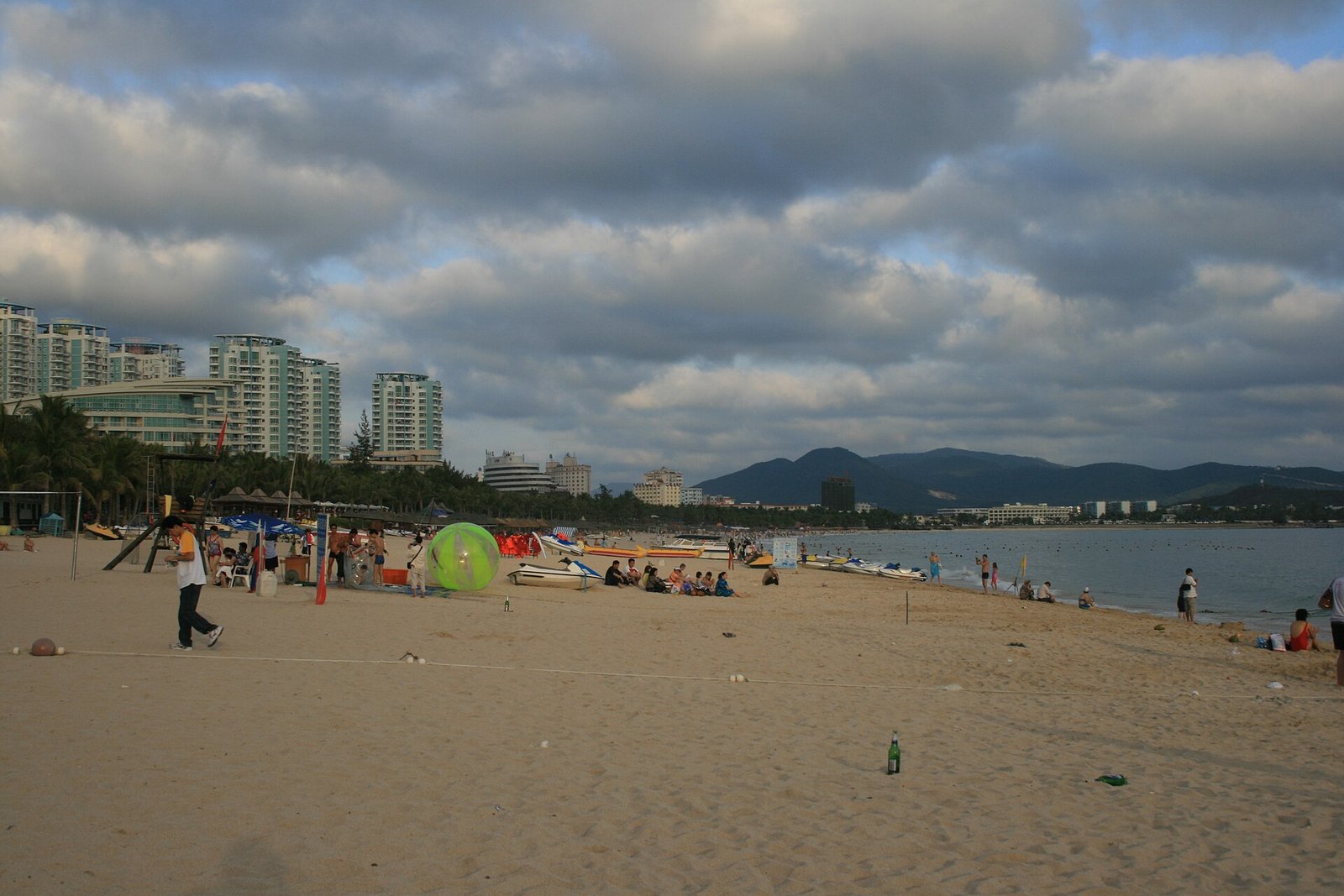
The catch is that you must fly direct to Sanya or Haikou, and you may not leave the island. Transiting through mainland China to get there does not work. But Hainan is no longer a blank on this site: the island has seven documented film locations of its own, including the whole of Lost in the Stars (2023), which was shot there while pretending to be Southeast Asia. See Hainan filming locations. An earlier version of this page said there was no C-drama filming location on Hainan. That was wrong, and it is corrected here rather than quietly deleted.
Gary Todd / Wikimedia Commons, CC0
Door 4: if you need a tourist visa
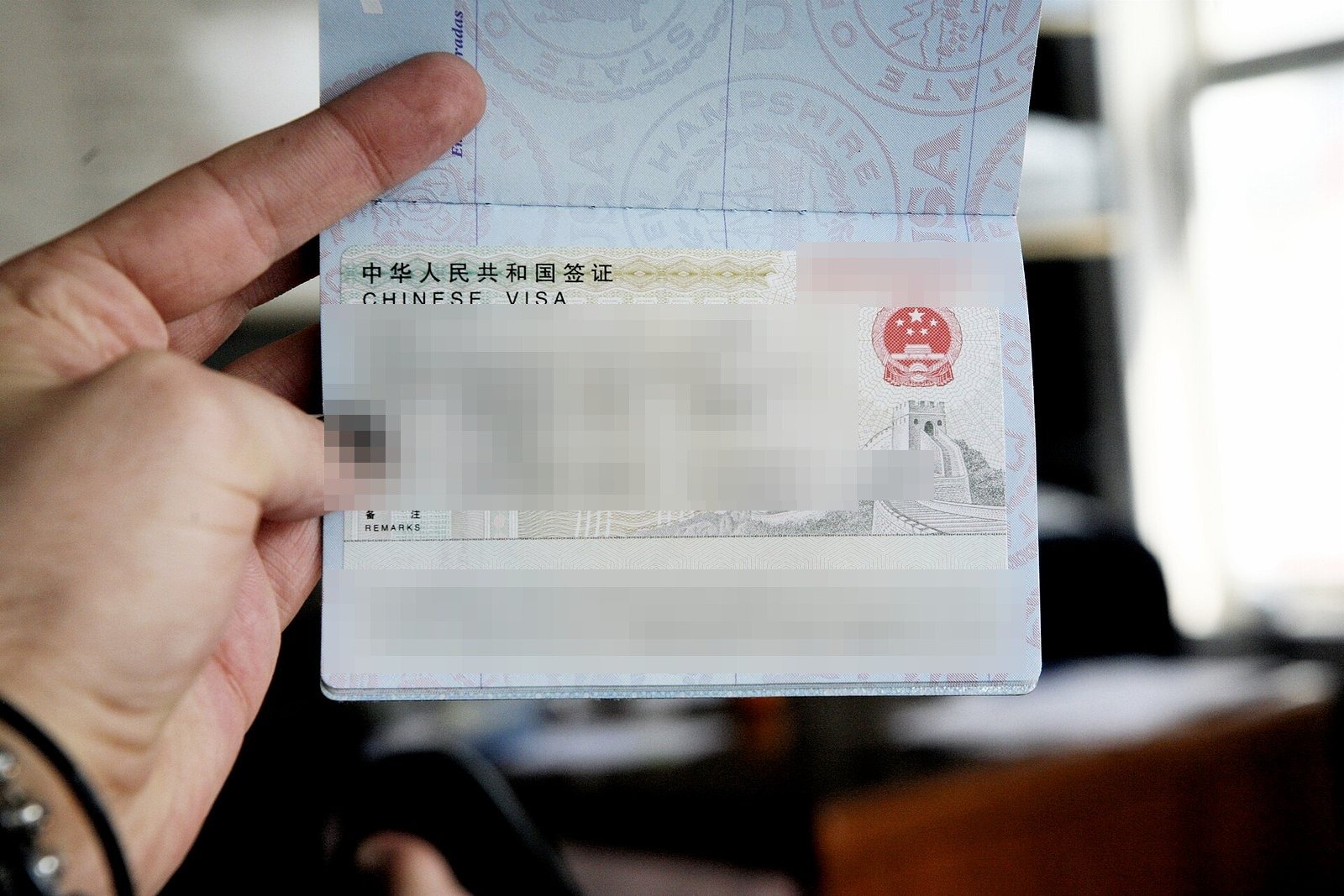
Apply through the Chinese Visa Application Service Centre for your region, not the embassy directly. Budget three to four weeks, longer in peak season.
kris krüg / Wikimedia Commons, CC BY-SA 2.0 · personal details blurred
| Item | What you need |
|---|---|
| Application form | Completed online, printed and signed |
| Passport | At least 6 months validity, 2 blank pages |
| Photo | Recent, white background, specific dimensions — follow the current spec exactly |
| Itinerary | Flight and hotel bookings for the whole stay |
| Proof of funds | Bank statements, sometimes requested |
| Fee | Varies by nationality and number of entries |
Do not fabricate bookings. Visa officers cross-check, and a refused application is far more expensive than a refundable hotel reservation. A refusal stamp also disqualifies you from the 240-hour transit rule, which turns a small problem into a large one.
At the border: what actually happens
You fill in an arrival card and go through fingerprint collection at a self-service kiosk before the immigration desk. If you are entering on the transit rule, follow the signs for the temporary entry permit rather than joining the general visa queue, and be ready to show your onward ticket. Officers may ask for your hotel address — have the Chinese name and address saved offline, in Chinese characters.
Four things will get a transit entry refused at the desk:
- A passport with less than three months’ validity
- A previous Chinese visa refusal stamped in your passport
- A record of illegal entry, overstay or unauthorised work in China within the past five years
- Any other ground on which Chinese law bars entry
And one obligation that people forget: if you are not staying in a hotel or a licensed guesthouse, you must register your accommodation at the local police station within 24 hours of arrival. Hotels do this for you automatically. Staying with a friend, or in a short-let apartment booked through an app, does not. This is the single most common administrative slip foreign visitors make, and it is also the easiest to fix — take your passport and your host, and it takes a few minutes.
Common questions
Can I work or study on a visa-free entry?
No. Tourism, business meetings, family visits and transit only. Filming a paid commercial production requires a separate work permit. News reporting needs accreditation arranged in advance.
What if I want to visit Hengdian and Guizhou on the same trip?
Both are fully covered by the transit rule, so the constraint is time, not geography. Ten days total is the practical limit for a transit entry — most fans split this into two trips, or pick one region and do it properly.
Do I need a visa for Hong Kong, China or Macao, China?
They operate separate immigration systems with their own rules. A mainland visa does not automatically grant entry there, and time spent there does not count against your mainland stay. For the transit rule, however, Hong Kong, China; Macao, China; and Taiwan, China do count as a valid third region — which makes them useful for building a compliant route.
Is the visa-free policy likely to change?
It has changed several times in recent years, and it has only ever moved in one direction — more countries, longer stays, more ports. So the direction of travel is not in doubt; what you cannot rely on is the detail staying put.
What is already locked in, as of September 2026:
- The 30-day unilateral list (50 countries) is confirmed through 31 December 2026 — with Russia extended separately to 31 December 2027 and Brunei with no expiry at all. Any trip you are planning now falls inside that window.
- The 240-hour transit rule (57 countries) is a standing policy with no announced end date — it is not tied to the year-end deadline that applies to the 30-day list.
- The Hainan 30-day scheme (61 countries) is likewise in force with no expiry announced.
So the realistic risk is not that the policy lapses before your trip. It is that a specific detail moves — a country added or removed, a port closed, a fee introduced. That is why the numbers on this page carry a date, and why you should re-check within a month of travel. Treat the 12367 immigration hotline, which operates in multiple languages, as the final word.
What is the single most common mistake?
Booking a route that returns through the same country you arrived from. If your last flight into China and your last flight out both touch Japan, you do not qualify for transit entry — even if the trip looks like a loop through a third country on paper. Check the two segments, not the whole itinerary.
Live fares come straight from Trip.com. Booking through this box earns us a small commission at no extra cost to you — see our affiliate disclosure.
Your next move
Still exploring?
The visa is step one; the map is step two. Browse the regions.
Worried about the practical stuff?
The apps are the next thing to sort after entry.
Ready to go?
Visas are one door. The planning hub covers the rest of the pre-departure list.
Last verified
Sources: National Immigration Administration — 240-hour transit visa-free policy (57 countries, 65 ports) · National Immigration Administration — regional visa-free entry, incl. Hainan 30 days (61 nationalities) · Chinese embassy — FAQ on the 30-day unilateral visa-free policy (50 countries, validity dates)
Spotted something out of date? Email us — or read how corrections work. We check every report against the source and update the page.
Ready to plan it? Turn the dramas you have watched into a day-by-day route with the C-drama route planner.
Not sure where to start? Take the drama-city quiz — seven questions, one city, and a route waiting at the end.