
Most dramas build a world and then hide where they built it. The Best Thing (爱你) did the opposite. The Best Thing filming locations are almost all real Hangzhou places, shot openly, with the city doing the work of the set — which is why a 2025 romance about a Chinese-medicine doctor and a hotel manager has turned into a walking guide to the whole of Zhejiang’s capital.
The short answer: The Best Thing filming locations are entirely in Hangzhou. There is no studio layer and no invented city: the heroine’s home is beside Wuliu Lane (五柳巷), her coffee shop is in Xiaohe Zhijie (小河直街), the cycling accident is on Yang Gong Causeway (杨公堤) at West Lake, the hospital is a real hospital in Lin’an and Shangcheng, and the grandfather’s house is in Tangqi Ancient Town (塘栖古镇). The show is a Hangzhou travelogue with a plot attached — which is exactly why the trail is worth walking.
| Place | Where | What it is in the show | Status |
|---|---|---|---|
| Wuliu Lane (五柳巷) | Shangcheng, Hangzhou | The heroine’s home street | Confirmed |
| Xiaohe Zhijie (小河直街) | Gongshu, Hangzhou | The coffee shop where she works | Confirmed |
| Yang Gong Causeway (杨公堤) | West Lake, Hangzhou | Where she falls off her bike | Confirmed |
| Tangqi Ancient Town (塘栖古镇) | Linping, Hangzhou | The grandfather’s house | Confirmed |
| Baochu Pagoda & Broken Bridge | West Lake, Hangzhou | The opening West Lake shots | Confirmed |
| Baima Apartments (白马公寓) | Gongshu, Hangzhou | The heroine’s home exterior | Confirmed |
| Xianghu Xiaoyao Manor (湘湖逍遥庄园) | Xiaoshan, Hangzhou | The hotel where she works | Confirmed |
| Mengxiyuan (中国院子·梦溪苑) | Yuhang, Hangzhou | A date spot; the real cherry blossoms | Confirmed |
Everything on that list is a place you can stand in. Nothing was built for the show. That is unusual enough to be the whole story.
The Best Thing filming locations: why one city does all the work
Start with what the show is. The Best Thing is a 2025 iQIYI romance directed by Che Liangyi, starring Zhang Linghe (张凌赫) as He Suye, a Chinese-medicine doctor, and Xu Ruohan (徐若晗) as Shen Xifan, a workaholic hotel manager. It streams internationally as The Best Thing, and it found an audience well beyond China — enough that the English-language questions about it are less “what happens” and more “where is that street.”
The answer is Hangzhou, and the reason it works is structural. A costume drama has to invent its world, so its locations are backlots. A modern drama set in a real city can simply use the city — and Hangzhou gave this production something rare: a dense, walkable, photogenic core with water running through all of it. West Lake on one side, the Grand Canal on the other, and old lanes in between.
The local press noticed immediately. When the show aired in February 2025, Zhejiang’s own Tide News (潮新闻) ran a piece cataloguing the locations, and the phrase viewers kept using was that the drama had “an extremely high Hangzhou content” — 含杭量超高. One comment quoted in that coverage is the most useful review the city ever got: “I started watching for the idol, and got ambushed by Hangzhou’s spring.”
That is the pitch. You are not visiting a set. You are visiting a city that was cast as itself and did not have to act.
West Lake: the pagoda, the bridge and the causeway
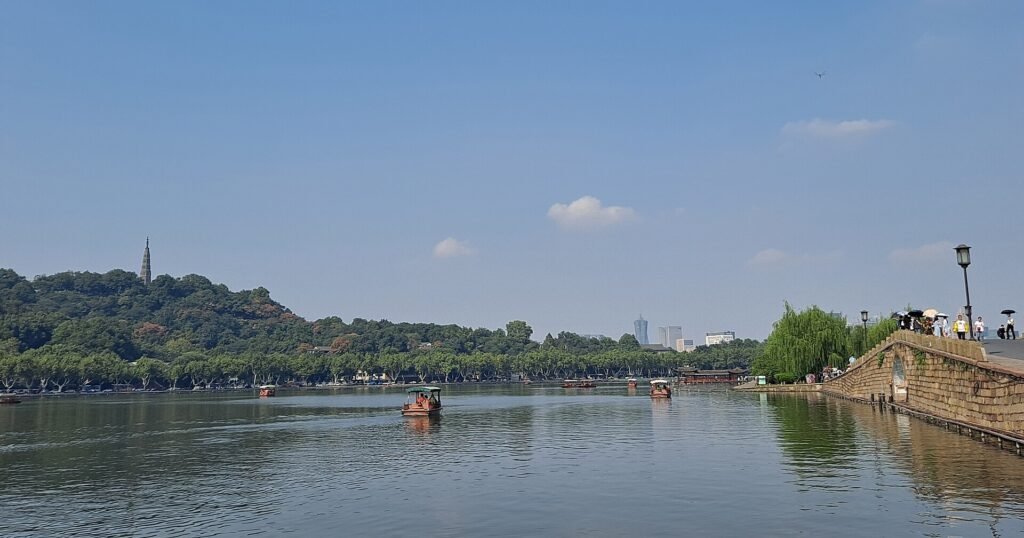
The show opens on West Lake, and it opens with the two most recognisable silhouettes in Hangzhou: Baochu Pagoda (保俶塔), the slender brick pagoda on Gem Hill above the north shore, and Broken Bridge (断桥), the low arch at the eastern end of the Bai Causeway where every Hangzhou love story is contractually obliged to begin.
Neither is a difficult stop. Both are free, both are on the lake’s northern rim, and both are best at the hour when everyone else is at dinner. Baochu Pagoda is a fifteen-minute uphill walk from the lake path; the reward is the view back down over the whole north shore.
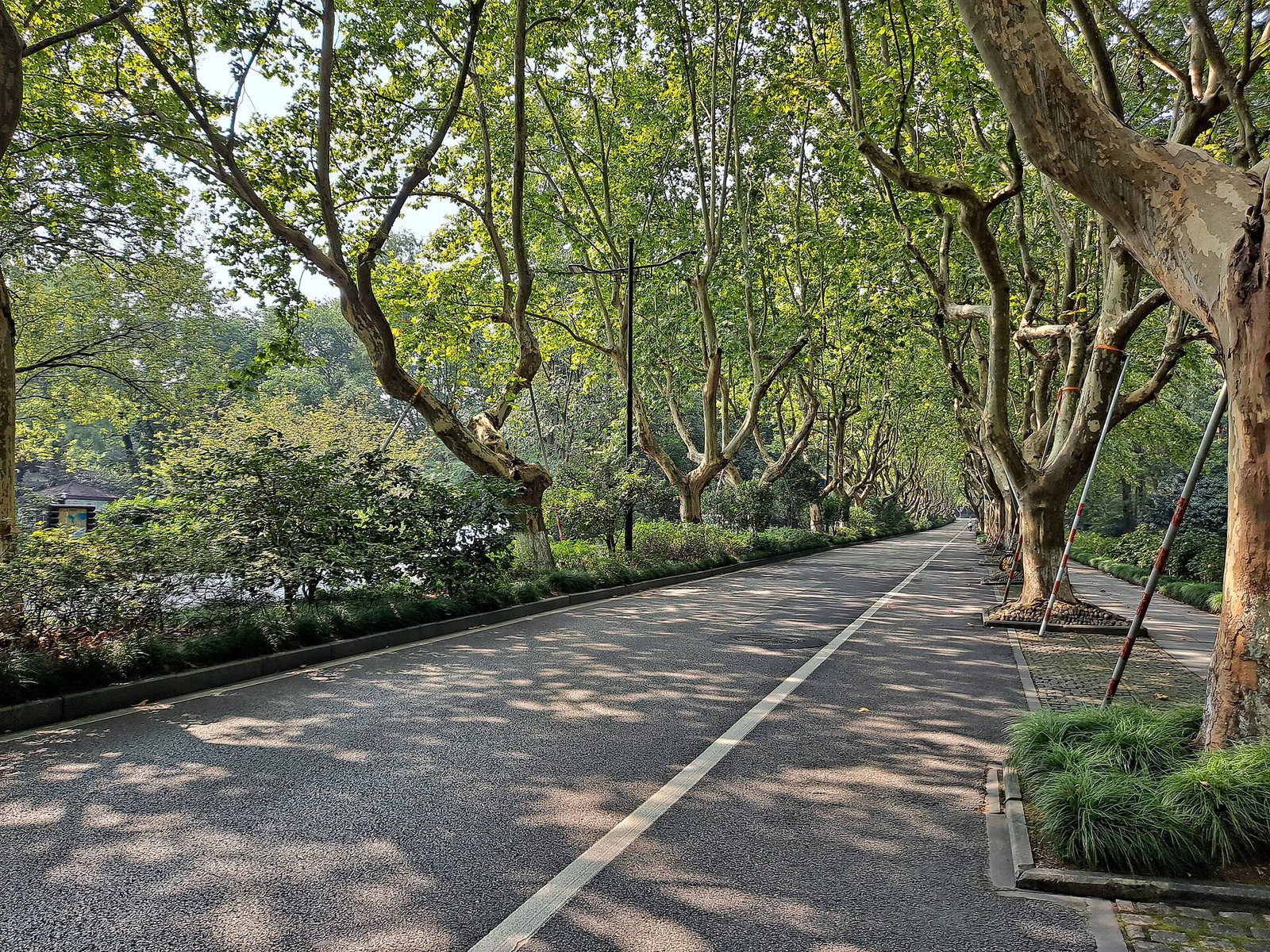
The location that actually matters to the plot, though, is further west. Yang Gong Causeway (杨公堤) is the third of the lake’s three causeways — the one the tour boats mostly ignore — and it is where Shen Xifan comes off her bicycle in the show’s early episodes. It is also the causeway with the most trees and the least crowd, which is presumably why the production chose it. If you only do one West Lake stop for this drama, do this one.
钉钉 / Wikimedia Commons, CC BY-SA 4.0
Wuliu Lane: the heroine’s street
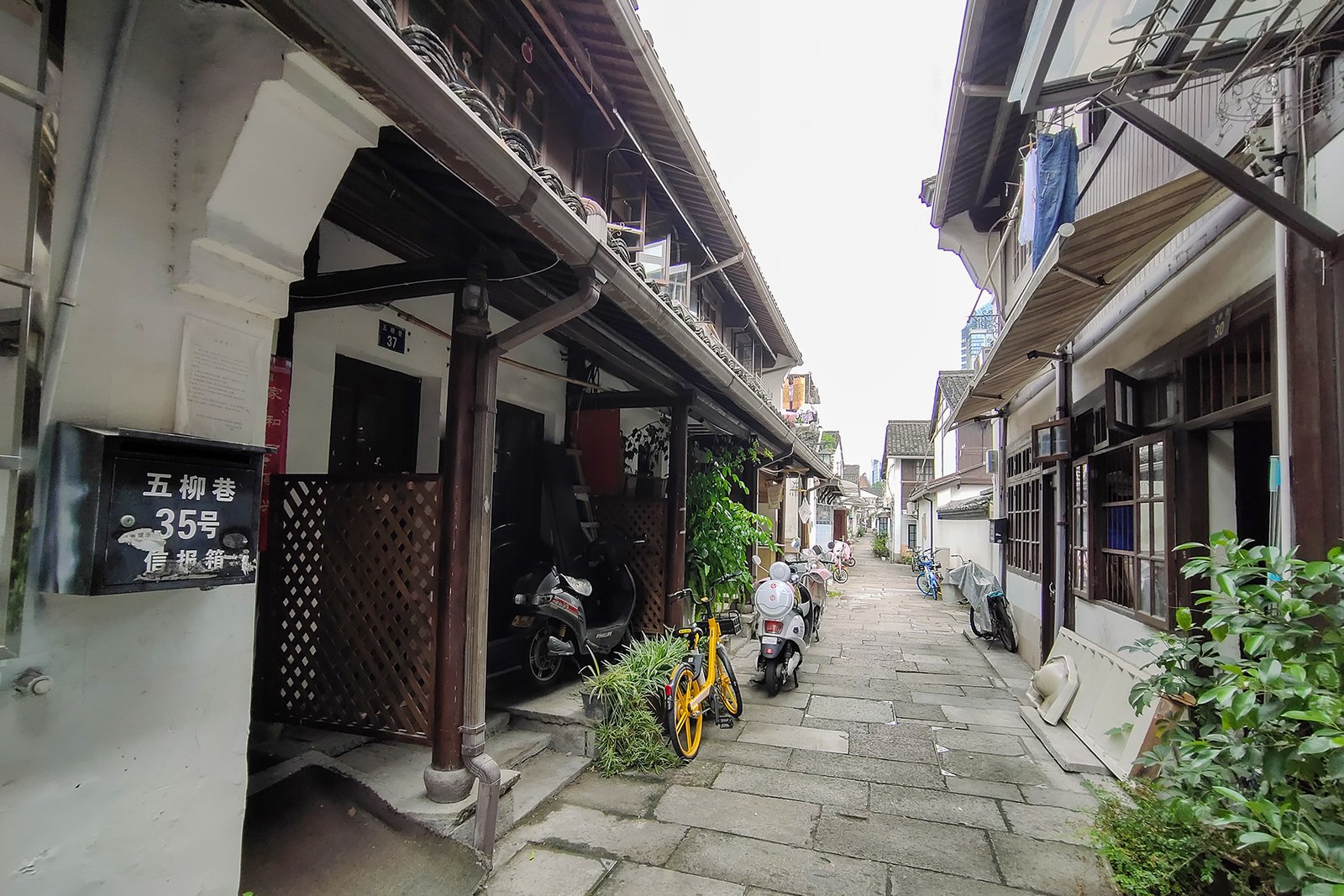
If you want one address from this show, it is Wuliu Lane (五柳巷), in Shangcheng district, a few minutes’ walk south of the old Hefang Street quarter. This is where Shen Xifan lives, and the production did not have to dress it: Wuliu Lane is a genuine historic conservation block, a knot of lanes and canal-side houses where late-Qing and Republican-era alley housing sits next to 1970s and 1980s blocks, with small bridges over water that has been there for centuries.
Windmemories / Wikimedia Commons, CC BY-SA 4.0
It is also, in the show’s best trick, the most ordinary place on the list. There is no gate, no ticket, no queue — it is a lane that people live on, named for a Southern Song garden and still holding Republican-era lane houses beside the East River. What there is: small independent shops that have moved quietly into the old courtyard buildings. The Chinese coverage of the show lists cafés, a bookshop and flower shops among them, which is a fair summary of what Wuliu Lane is now.
One practical note that matters more than it sounds: Wuliu Lane sits right beside the city’s water-bus network, which we will get to in a moment. That is not a coincidence you should ignore when planning a route.
Xiaohe Zhijie: the coffee-shop lane
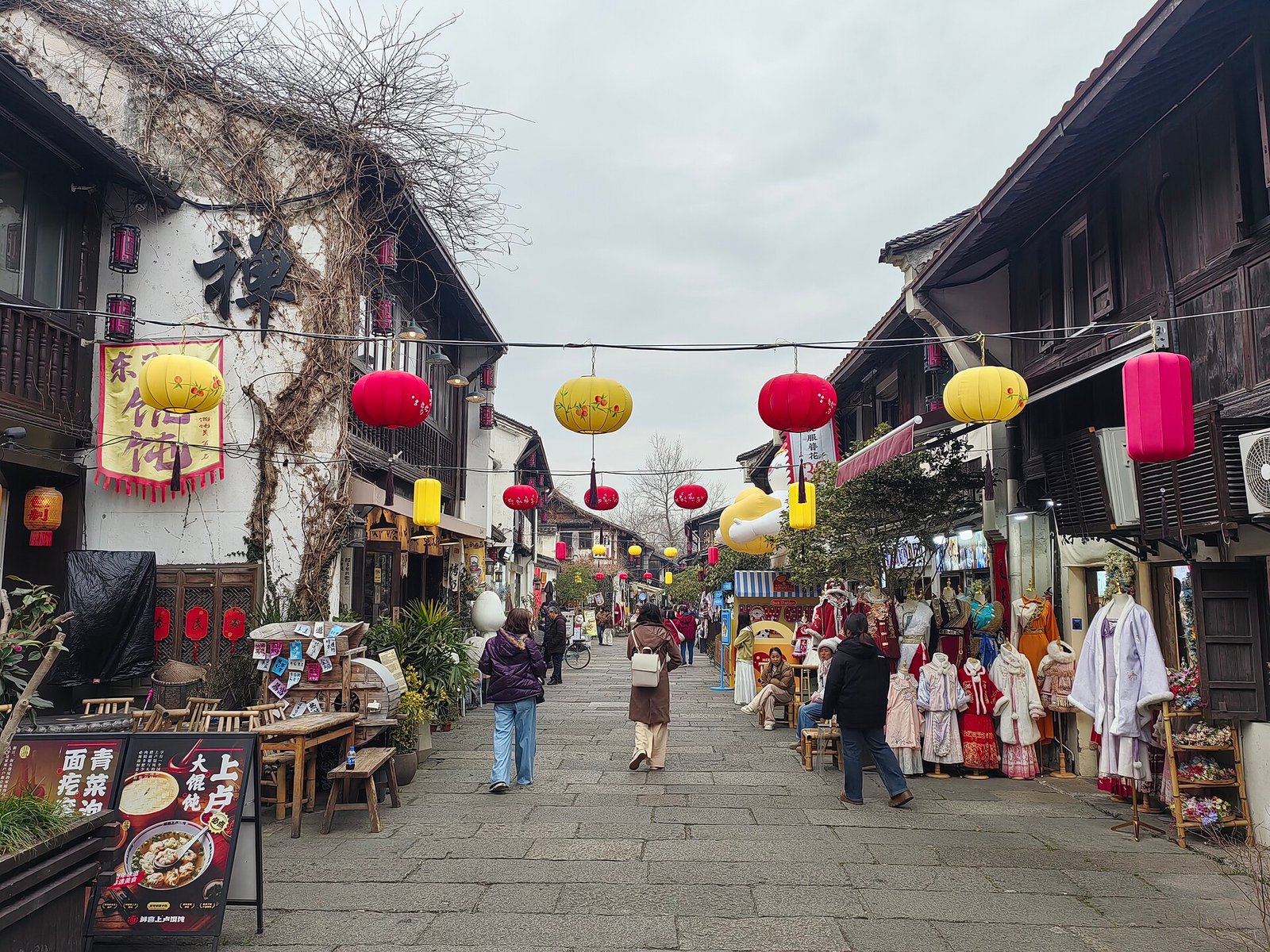
Shen Xifan works in a coffee shop in Xiaohe Zhijie (小河直街), and this is the stop that has done the most for the show’s reputation online. Xiaohe Zhijie is a historic lane on the Grand Canal in Gongshu district, at the point where the canal meets the Xiaohe and the Yuhang Tang rivers — a water junction, which is why it grew shops in the first place.
What it looks like now is late-Qing and Republican lane housing, low and whitewashed, strung along the water, and a lane that has become famous for one thing in particular: zanhua (簪花), the floral headdresses that travelled from Quanzhou in Fujian and turned a lane barely a kilometre long into a row of more than thirty studios where you can be dressed and photographed in them. Hangzhou’s own city media have written about the phenomenon, which tells you how much of the lane’s identity it now is.
For a Best Thing trip this is the most efficient single stop in Hangzhou: you get the show’s coffee shop, a canal-side historic lane, and the city’s current most-photographed activity, all inside ten minutes on foot. It is free and open all day.
Yumeto / Wikimedia Commons, CC BY-SA 4.0
The ¥3 water bus, the best stop on the whole trail
Here is the single best-value thing in this article. Hangzhou runs a public water-bus network on its canals, and Line 7 is the one that threads through the old city — past the stone bridges of the Wuliu Lane stretch and along the canal. It is a commuter service, not a sightseeing boat, which is exactly why it costs ¥3 for a single ride, flat, and has never been raised.
Thirty-odd minutes on a wooden-topped canal boat, through the middle of a historic city, for the price of a bottle of water. Locals call it the most beautiful water bus in China; the passengers are mostly people going about their day. The stop you want is at Wuliu Lane, which puts the heroine’s street and the boat ride in the same ten minutes.
Two practical points. Seats are limited and the boats are small, so turn up early rather than at the last minute. And you pay on board with the Alipay or WeChat transit code — the same one you activate for the metro, which is a separate setting from the ordinary payment code. The boat takes no cash, so set that up before you land. There is no need to book ahead.
Tangqi Ancient Town: the grandfather’s house
The show’s most out-of-the-way stop is also the one that feels most like a different century. Tangqi Ancient Town (塘栖古镇) is in Linping district, on the Grand Canal at the northern edge of greater Hangzhou, and it is where the grandfather’s scenes were shot.
Tangqi was, in the Ming and Qing, one of the leading canal towns of the Jiangnan region — a grain and fruit port whose wealth is still visible in the covered arcades along the water. The town’s centrepiece is Guangji Bridge (广济桥), a seven-arch stone bridge over the Grand Canal, and the Shuibei Street (水北街) that runs off it. It is a working old town rather than a rebuilt one, and it is unusually easy on the wallet: the core streets, the bridge and the riverside are free and open around the clock.
It is also the stop that makes the “the cast were in a long-distance relationship” joke land — Tangqi is about an hour from West Lake, on the far side of the city from the Lin’an hospital. Hangzhou is bigger than the show makes it look, and a route that ignores that will spend its day in traffic.
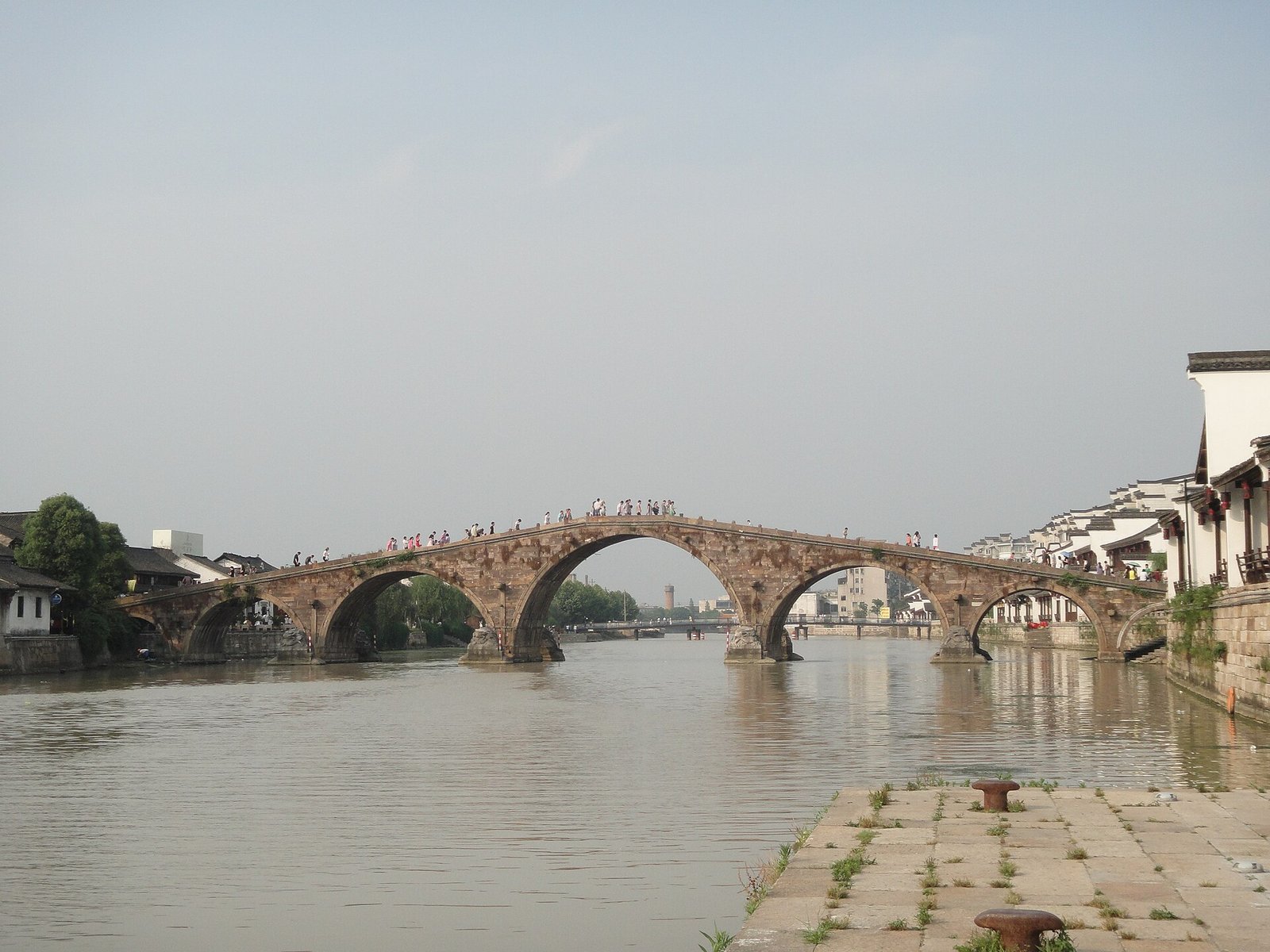
SamKe / Wikimedia Commons, CC BY-SA 3.0
The rest of the sprawl: Xianghu, Mengxiyuan, and the golden ball
Hangzhou’s locations are spread across the whole municipality, and a few of the remaining ones are worth planning around rather than stumbling into.
- Xianghu Xiaoyao Manor (湘湖逍遥庄园), in Xiaoshan, is the hotel where Shen Xifan works, and it is the most photographed interior of the show — its courtyards and lake-facing gardens carry a lot of screen time, and the cherry blossoms the show’s fans kept pointing at are here, on the shore of Xianghu, West Lake’s quieter “sister lake”. It is a working hotel, so you visit as a guest or a diner, not as a tourist.
- Mengxiyuan (中国院子·梦溪苑) in Yuhang is the date spot, and the reason it looks the way it does is that the production did not fake the cherry blossoms — the real ones were shot here. It is a classical Jiangnan garden built around a central lake, in Liangzhu on the northern edge of the city, beside the archaeological site. It is the one paid stop on this list, at ¥80, and it is at its best for the two weeks the cherries are out.
- Baima Apartments (白马公寓) near Wulin Square is the heroine’s home exterior, an early “luxury” tower of central Hangzhou. Note that the cherry tree visible in the show was a prop, not a tree — the real blossom shots are Mengxiyuan’s.
- The Hangzhou International Conference Centre — the gold sphere on the Qiantang riverside, known locally as the “big golden ball” — is a skyline shot rather than a scene, and the Aoti Impression City mall in Xiaoshan is where the heroine talks with her best friend. Both are real, neither is a pilgrimage.
One honest note on the two medical locations. The hospital where He Suye works is filmed at a real hospital in Lin’an district and a real traditional-medicine clinic in Shangcheng. They are working medical facilities. Do not treat them as attractions.
The Best Thing filming locations English guides get wrong
The English-language coverage of this show’s locations is thin, and most of what exists repeats one word: Hangzhou. That is correct and almost useless — Hangzhou is a city of twelve million people and a municipal area the size of a small country.
What we could and could not pin down:
- “It was filmed in Hangzhou” — true, and confirmed by local reporting at the time of broadcast. But the useful version is the district-level list above; “Hangzhou” alone will send you to the wrong side of the city.
- The breakfast shop where the two leads meet. It was a real noodle shop on Hushu South Road. It has since moved, so the “same booth” photo is no longer available. Do not plan a morning around it.
- Cherry-blossom locations. Several lists point at a central Hangzhou park and a particular tree. That tree was built for the production; the actual blossom footage was shot at Mengxiyuan. If you go looking for the tree in the park, you will find a park.
- Anything placing the show at a studio. There is no studio layer in this production worth visiting. Any guide that sends you to a backlot for this drama has confused it with a costume show.
Our rule is the same as everywhere on this site: if the Chinese record does not support it, we do not send you there — and we would rather tell you a stop is a prop than let you spend a morning looking for it.
A two-day route that actually works
The locations are spread north, south, east and west, and the single biggest mistake is trying to do them in the order the show does. That is the one thing to understand about The Best Thing filming locations: they cluster by district, not by episode. Group them the way the city is actually built, not the way the plot unfolds.
- Day 1 morning — West Lake. Start at Broken Bridge, walk the north shore to Baochu Pagoda, then work west to Yang Gong Causeway. All free, all walkable, and the light is best before the crowds arrive.
- Day 1 afternoon — the two lanes. Wuliu Lane first, then the Line 7 water bus (¥3) north along the canal to Xiaohe Zhijie for the coffee-shop lane and the floral headdresses. This is the densest, cheapest and most rewarding half-day on the list.
- Day 2 morning — Tangqi. Out to the canal town on the northern edge of the city for the grandfather’s house and Guangji Bridge, then lunch on the arcaded street. Free, and a genuine change of scale from the lake.
- Day 2 afternoon — pick one. Mengxiyuan (¥80, Yuhang) if the cherries are out or you want the garden; Xianghu (Xiaoshan) if you would rather see the hotel and the lake it sits on. They are on opposite sides of the city. Do not attempt both.
If you only have one day, do Day 1. The lake and the two lanes are the show, and they are also the best day out in Hangzhou regardless of why you came.
For the rest of the city — Lingyin Temple, the Longjing tea hills, Leifeng Pagoda and the Grand Canal, none of which the show needed — see the full Hangzhou filming locations guide.
Tickets, hours and what is free
Prices move, and this page is not a booking engine. What follows is what the sites and the city’s own transport operator were quoting when we last checked; confirm before you travel.
- Free, and permanently so — West Lake and its causeways, including Yang Gong Causeway; Broken Bridge and the Baochu Pagoda path; Wuliu Lane; Xiaohe Zhijie; Tangqi Ancient Town’s core streets, Guangji Bridge and Shuibei Street.
- Water bus, Line 7 — ¥3 flat, single fare, paid on board with the Alipay or WeChat transit code rather than cash; children under 1.3 m ride free. Boats are small, so arrive early in the day.
- Mengxiyuan — ¥80 for adults, free for children. Seasonal, and it is a garden, so the cherries are the point.
- Xianghu Xiaoyao Manor — a hotel. There is no ticket; you visit by staying, eating or booking a spa appointment.
- West Lake in spring — this one catches people out. From March to May, on weekends and public holidays, the West Lake scenic area runs traffic controls: alternating even-and-odd plate access across the area, and limited-access management around Lingyin and the southern route. Public transport and taxis are the sane choice in peak season, and the water bus is a genuinely pleasant way around the edge of it.
- If you are visiting from outside China — nothing on this list needs pre-booking, which is the good news. The catch is that both the water bus and the metro take the Alipay or WeChat transit code rather than cash or a bank card, and that code is a separate setting from the ordinary payment code, so activate it before you fly. There is no English booking site for any of it; the whole trail is paid on the spot.
What a day actually costs. The trail itself is cheap: metro from ¥2 for the first 4 km with a ¥12 network maximum, the Line 7 water bus at ¥3, public bikes at ¥1.5–3 a ride, and lunch and dinner at ¥25–60 and ¥50–120 respectively. A realistic trail day lands at ¥105–235 per person — the full stop-by-stop breakdown, including the Lingyin reservation rule, is in the cost table on the Hangzhou guide.
Common questions
Where was The Best Thing filmed?
Entirely in Hangzhou, Zhejiang — and unlike most dramas, in real places rather than on a set. The heroine’s home is beside Wuliu Lane, her coffee shop is on Xiaohe Zhijie, the accident is on Yang Gong Causeway at West Lake, and the grandfather’s house is in Tangqi Ancient Town.
Was The Best Thing filmed in a studio?
Effectively no. This is a modern drama shot on location in a working city. There is no backlot to visit, and any guide that sends you to one for this show is confusing it with a costume drama.
Can I visit the coffee shop and the home from the show?
Yes — the lanes themselves are public and free, and Xiaohe Zhijie is the easiest of the show’s locations to reach. What you cannot visit are two specific interiors: the breakfast shop where the leads meet has moved, and the hospital where He Suye works is a working medical facility, not an attraction.
Is the cherry blossom in the show real?
Partly. The cherry tree in one of the city parks was built for the production, but the actual blossom footage was shot at Mengxiyuan (中国院子·梦溪苑) in Yuhang, which is a real garden and the one paid stop on this list, at ¥80.
What is the cheapest way to see the locations?
Almost all of them are free, and the transport is the attraction: the Line 7 water bus costs ¥3 and runs through the historic centre. A full day on West Lake, both lanes and the boat is possible for under ¥50 in total.
How many days do I need?
Two days covers it comfortably if you group the stops by district. One day gets you the lake and the two lanes, which is the show’s heart; the canal town and the gardens are the second day.
Your next move
Still exploring?
The other modern dramas shot in real cities — Dali, Shanghai, Ningbo and more.
Worried about the practical stuff?
Visas, payment, trains and the apps you’ll need before you land — the four things you cannot work out on the ground. Each guide is dated and sourced.
Ready to go?
Hangzhou plays itself here, from Xiaohe Zhijie to the canal. The city guide has tickets, hours and a day-by-day cost.
Last verified
Sources: Tide News (潮新闻, Zhejiang Daily Press Group), "《爱你》播出,取景地杭州多个打卡点被圈出", by 滕一韬, 2025-02-27 — the full location list: Baochu Pagoda and Broken Bridge, Baima Apartments, Wuliu Lane, the “three chopsticks” breakfast shop on Hushu South Road, Aoti Impression City, Yang Gong Causeway, Xiaohe Zhijie, the Hangzhou International Conference Centre, Xianghu Xiaoyao Manor, Mengxiyuan, Lin’an First People’s Hospital and Shangcheng Tairen TCM clinic, and Tangqi Ancient Town; also the ¥3 / 30-minute water bus beside Wuliu Lane · Hangzhou city media (杭州网 / hznews.hangzhou.com.cn), "小河直街‘簪花如云’", 2024-05-14 — Xiaohe Zhijie’s zanhua trade, the lane’s late-Qing and Republican housing, and its canal-side setting · Hangzhou city media (杭州网), "Xiaohe Zhijie in the National Day holiday", 2024-10-03 — the lane is over 1,000 m long with 30-plus zanhua studios · Mengxiyuan (中国院子·梦溪苑) ticket announcement, 2023-03-28 — ¥80 adult, children free; Yuhang district, Liangzhu, 良安路 118号 · Xianghu Xiaoyao Manor official site — lakeside resort hotel on Xianghu, Xiaoshan · Prime Video — The Best Thing (爱你), 2025 iQIYI production, international streaming
Spotted something out of date? Email us — or read how corrections work. We check every report against the source and update the page.
Ready to plan it? Turn the dramas you have watched into a day-by-day route with the C-drama route planner.
Not sure where to start? Take the drama-city quiz — seven questions, one city, and a route waiting at the end.