
Pursuit of Jade (逐玉) looks expensive without trying to, and the reason is geographic. It is a 2026 costume drama that swapped green screen for a real Chinese county most foreign fans cannot place on a map — which is why the Pursuit of Jade filming locations are worth a trip, and also why so many English guides get them wrong. The lists you will find elsewhere name eight places. The provincial culture bureau names two.
The short answer: The Pursuit of Jade filming locations come down to two counties in Zhejiang. The province’s own culture and tourism authority names them as the production’s core locations. Xianju (仙居) in Taizhou supplied the scenery — the riverside scene where Fan Changyu and Xie Zheng first meet was filmed on the Yong’an Creek (永安溪), and the mountain that gives the show its “immortal” look is Shenxianju (神仙居). Xinchang (新昌) in Shaoxing supplied the old architecture that carries the power-struggle scenes. The palace and courtyard interiors came from a studio, and the one Chinese coverage consistently names is Hengdian. The eight-location lists in English add Xiangshan, Yunnan, Sichuan, Hangzhou and Dongyang; we could not confirm any of those, and there is a section below explaining why.
The two counties behind the Pursuit of Jade filming locations
Start with what is on the record. In March 2026, as the show was peaking, Zhejiang’s provincial culture and tourism department published a piece titled 《逐玉》热播背后浙江影视与文旅的融合之路 — “the road behind Pursuit of Jade’s success, and Zhejiang’s film-and-tourism integration.” It is not a fan post. It is the province explaining, to its own industry, what the drama did for it.
Its opening paragraph is the single most useful sentence available about this show’s geography: 《逐玉》以台州仙居、绍兴新昌等地为核心取景地 — “Pursuit of Jade used Taizhou’s Xianju and Shaoxing’s Xinchang, among others, as its core filming locations.”
That is a two-county answer, and it explains everything that looks odd about the show. Xianju is in the mountains of southern Zhejiang, in Taizhou prefecture; Xinchang is 150 km north-east of it, in Shaoxing. Both are old, both are full of water, and neither is a studio. That is the whole trick.
| Place | Where | What it is in the show | Status |
|---|---|---|---|
| Yong’an Creek (永安溪) | Xianju, Taizhou, Zhejiang | The riverside scene where Fan Changyu and Xie Zheng meet | Confirmed — provincial tourism authority |
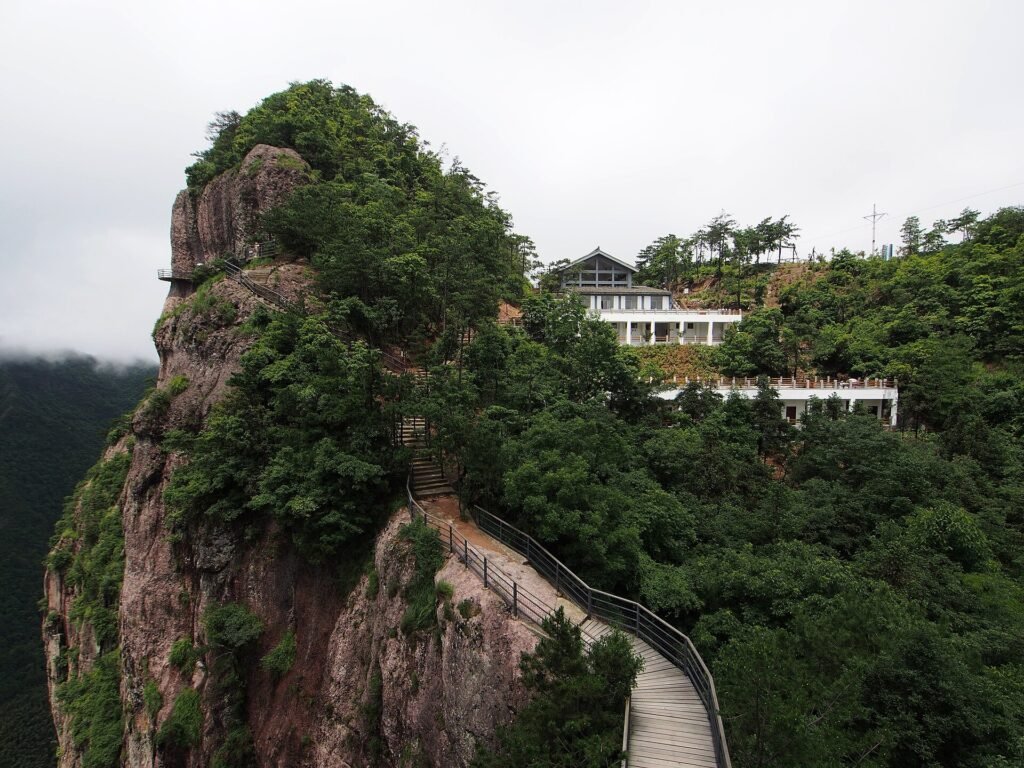
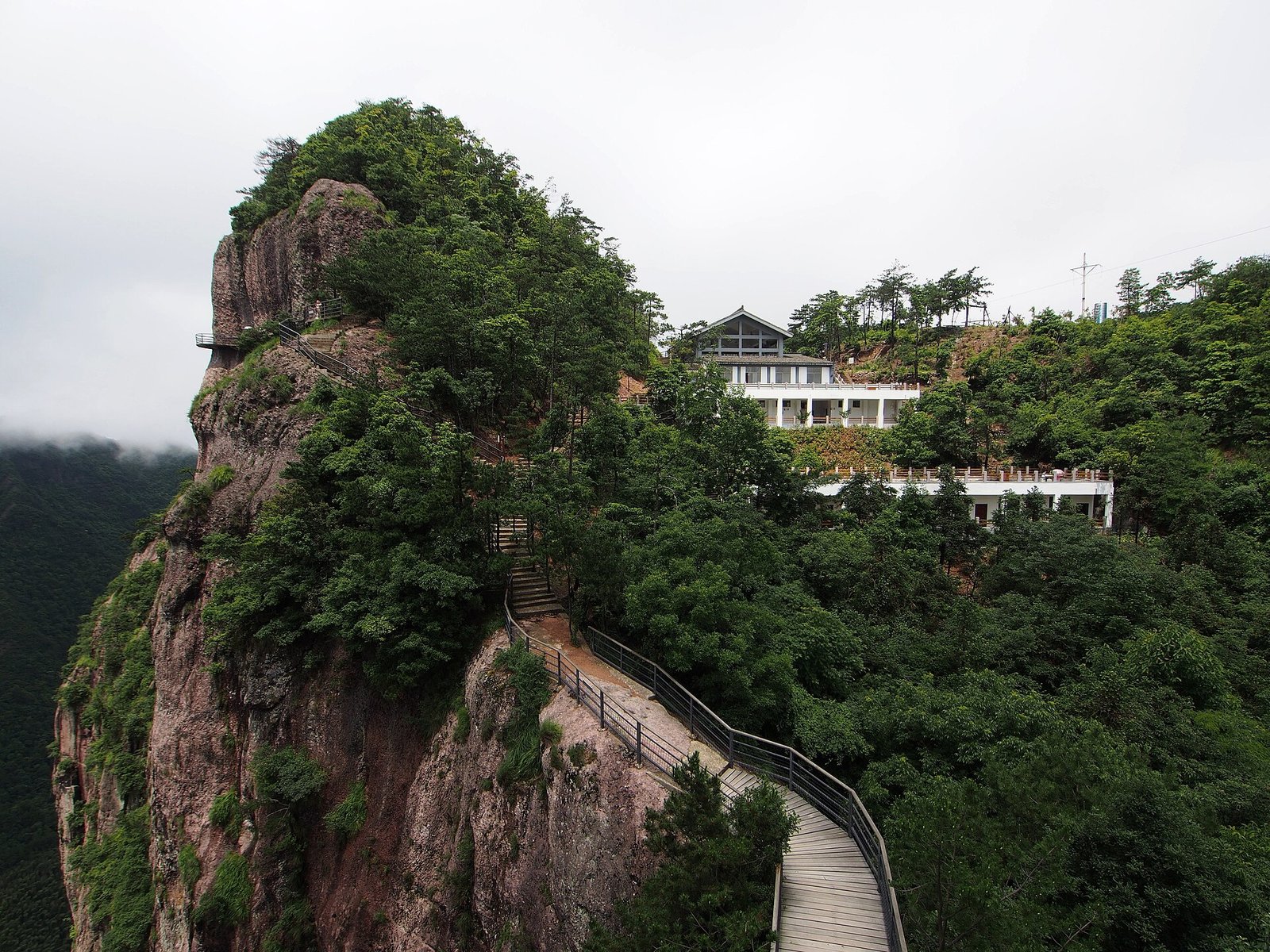
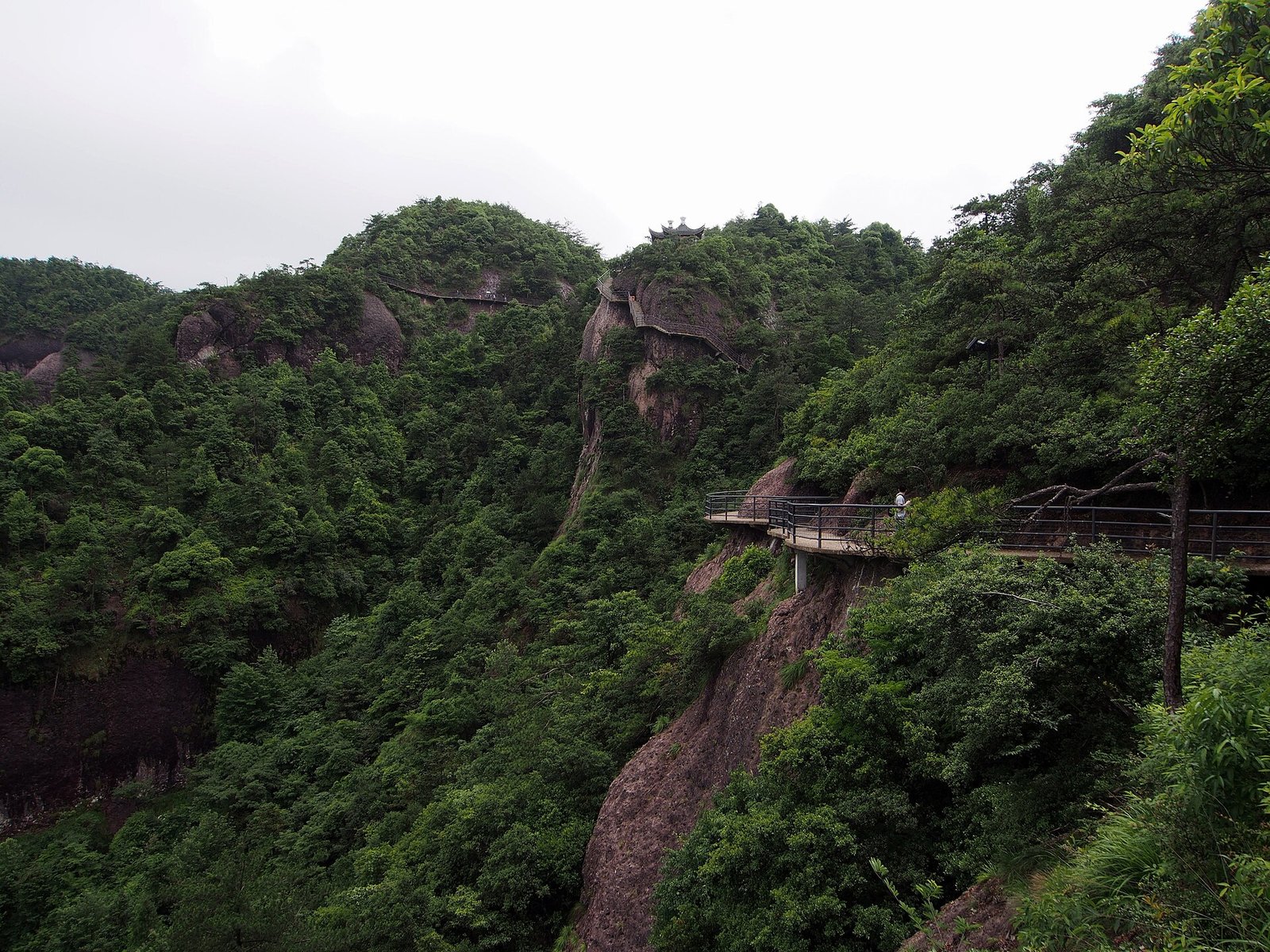
| Shenxianju (神仙居) | Xianju, Taizhou, Zhejiang | The “immortal” peaks and cloud scenery | Confirmed — provincial tourism authority |
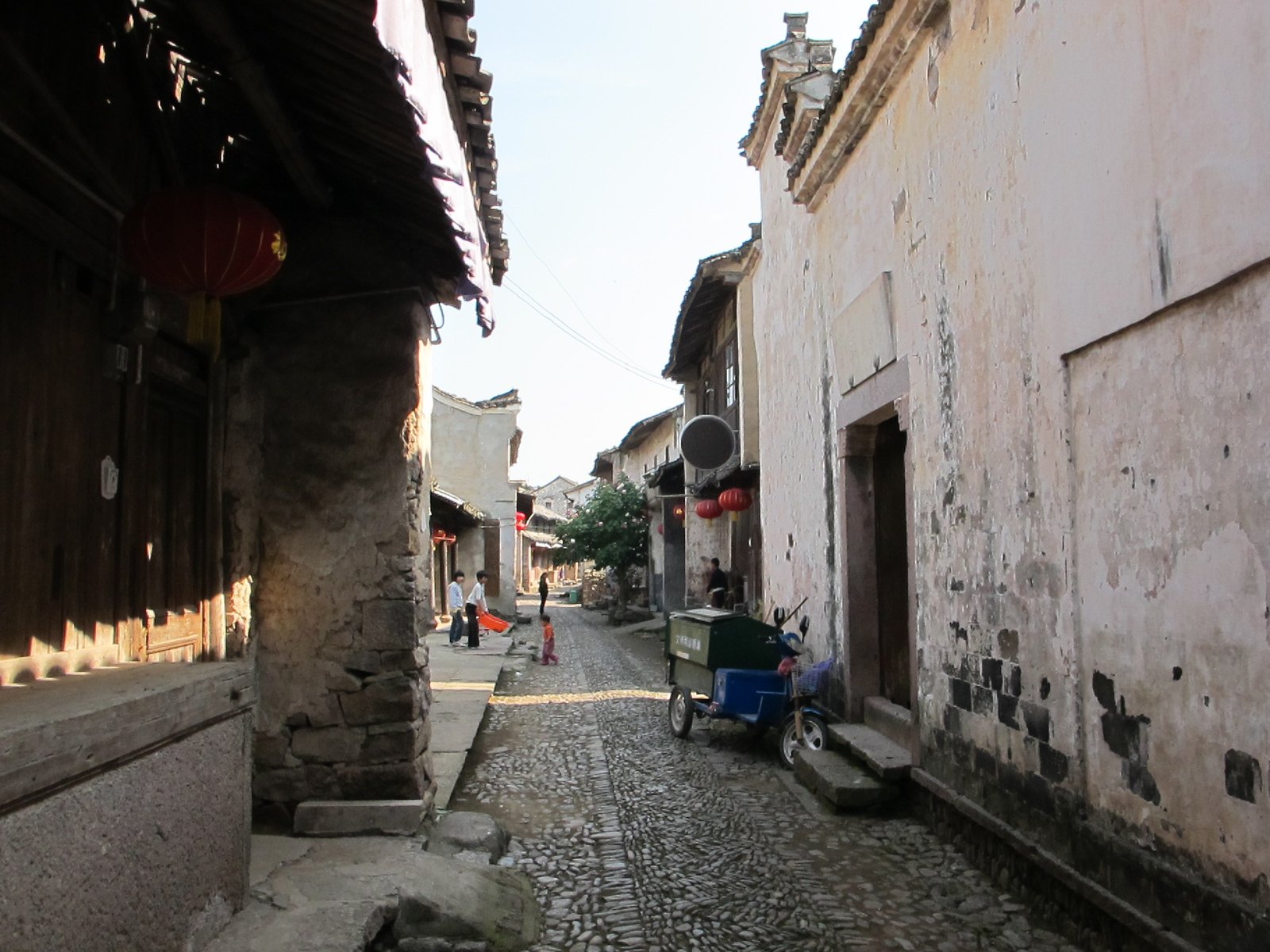
| Potan Ancient Town (皤滩古镇) | Xianju, Taizhou, Zhejiang | Waterfront town streets; a long-standing costume-drama location | Confirmed as a location used by the production |
| Jingxing Rock (景星岩) | Xianju, Taizhou, Zhejiang | Cliff and sea-of-cloud scenery | Confirmed as a location used by the production |
| Xinchang (新昌) | Shaoxing, Zhejiang | The old architecture behind the power-struggle scenes | Confirmed — provincial tourism authority |
| Hengdian World Studios (横店影视城) | Dongyang, Jinhua, Zhejiang | Palace, courtyard and interior sets | Widely reported; not named in the provincial statement |
rheins / Wikimedia Commons, CC BY 3.0
Everything else you will read about this show — and there is a lot of it — is either an inference from the screen or a straight copy of somebody else’s inference.
Yong’an Creek: the scene everyone is looking for
The reason people search for this show’s locations at all is one sequence. Fan Changyu, the butcher’s daughter, and Xie Zheng, the fallen marquis hiding his identity, meet on a riverbank — clear water, bamboo on both banks, mist sitting low on the hills behind. It is the shot the whole romance hangs off, and it is the one location the Chinese coverage is unambiguous about.
It was filmed on the Yong’an Creek (永安溪), the river that runs through Xianju county and gives the whole valley its shape. The creek is not a scenic-area set piece with a ticket gate. It is a working river — the towns along it grew up as river ports, and the old wharf at Potan still stands — which is exactly why the scene reads as lived-in rather than staged.
Practically, this is the hardest part of the trip to pin down. The creek runs for tens of kilometres through the county, and the production did not publish a stake in the ground. What the local tourism authority did publish, in the same period, is a two-day, one-night itinerary built around the show — 跟着《逐玉》游仙居, “follow Pursuit of Jade around Xianju” — which strings together Shenxianju, Tangkantou village, Xiya village and Tongjiang Academy. If you want a route rather than a guess, that is the one to take.
江上清风1961 / Wikimedia Commons, CC BY 3.0
Shenxianju: the mountain that does the heavy lifting
If the creek is the romance, Shenxianju is the genre. The name means “the abode of the immortals,” and for once the marketing is accurate: the scenic area is a knot of rhyolite pillars, cliff walls and gorges that look like they were designed by a production designer, and were in fact designed by volcanic eruptions and then carved by water.
It is a national 5A-rated scenic area — the top tier in China’s rating system — which matters for a practical reason: 5A status means real infrastructure. There is a cable car on both the north and south sides, a network of cliff walkways bolted to the rock, and a glass viewing platform on the Nantianding summit. The local joke, repeated by state media, is that Shenxianju offers “weightless climbing” — 无重爬山 — because the cable car and the outdoor escalators do most of the ascent for you.
For a Pursuit of Jade trip, that is good news. The scenery the show uses is the scenery you can reach without a hike. Take the cable car up, walk the cliff path, and you are standing in the exact register of image the drama is built from.
rheins / Wikimedia Commons, CC BY 3.0
There is one more thing worth knowing. Shenxianju is a film location before it was a Pursuit of Jade location. The provincial write-up notes that the peaks, the old town and the cliffs around Xianju had already appeared in dozens of Chinese productions — including The Forbidden Kingdom, The Journey of Flower and Nirvana in Fire. If the scenery feels familiar before you have watched a minute of Pursuit of Jade, that is why.
Jingxing Rock, and the rest of Xianju
Xianju’s other confirmed contribution is Jingxing Rock (景星岩), a sheer cliff massif west of the county town that is famous locally for one thing: the sea of cloud that forms below it on the right mornings. It is the kind of location a production uses for two shots and a title card, and it is the kind of location a traveller either gets completely or not at all — on a clear day it is a rock; on a cloudy one it is the reason the show is called a fantasy.
The rest of the county is worth a day of its own. Potan Ancient Town (皤滩古镇) is the old river port, a 2 km flagstone street with the shopfronts still standing and a wharf at the bottom of it — the most directly relevant non-mountain stop on the trip. Tongjiang Academy (桐江书院), Tangkantou and Xiya are the villages the local tourism authority built its official itinerary around. None of them is a theme park. All of them are the reason the show does not look like one.
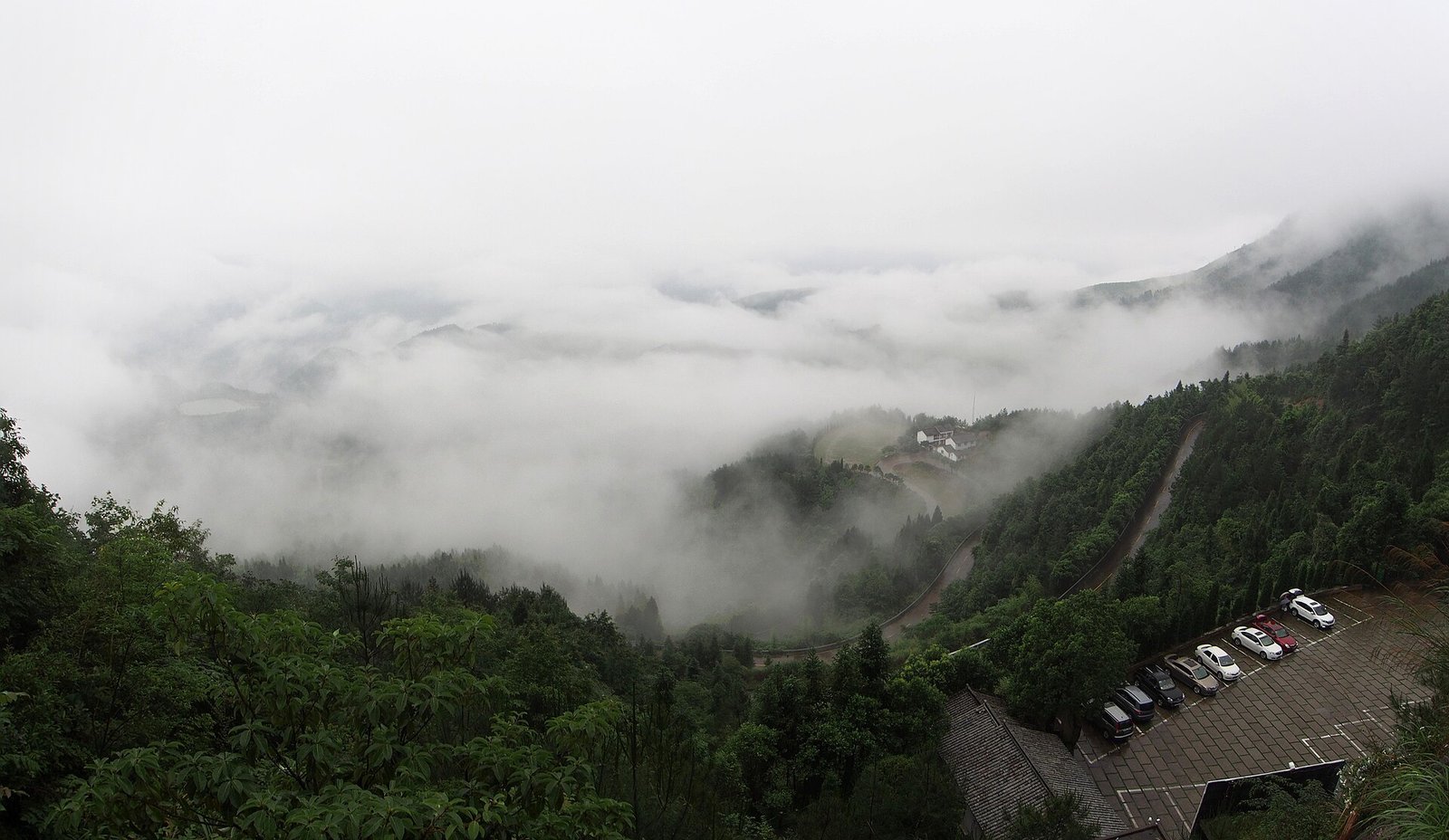
rheins / Wikimedia Commons, CC BY 3.0
Xinchang: the other half of the drama
Xianju is the show’s romance. Xinchang is its politics. The provincial write-up is specific about the division of labour: Xinchang’s old buildings, “with their plain and solemn bearing and their deep, distant Chan atmosphere,” supplied the weight behind the power-struggle scenes.
Xinchang is a county of Shaoxing, an hour or so from Hangzhou, and it is one of the most heavily filmed small towns in Zhejiang. Before Pursuit of Jade it hosted One and Only and Mysterious Lotus Casebook; the local government has leaned into it, putting up production stills as wayfinding signs and publishing a guide to the exact camera positions. Its best-known site is Dafo Temple (大佛寺), a 4A-rated temple built into a gorge with a giant Maitreya carved out of the rock face — started in the Eastern Jin and finished centuries later.
For a set-jetter the appeal here is different from Xianju. Xianju gives you landscape. Xinchang gives you the interior of the show’s world: courtyards, stone steps, temple halls, the architecture the plotting happens inside.
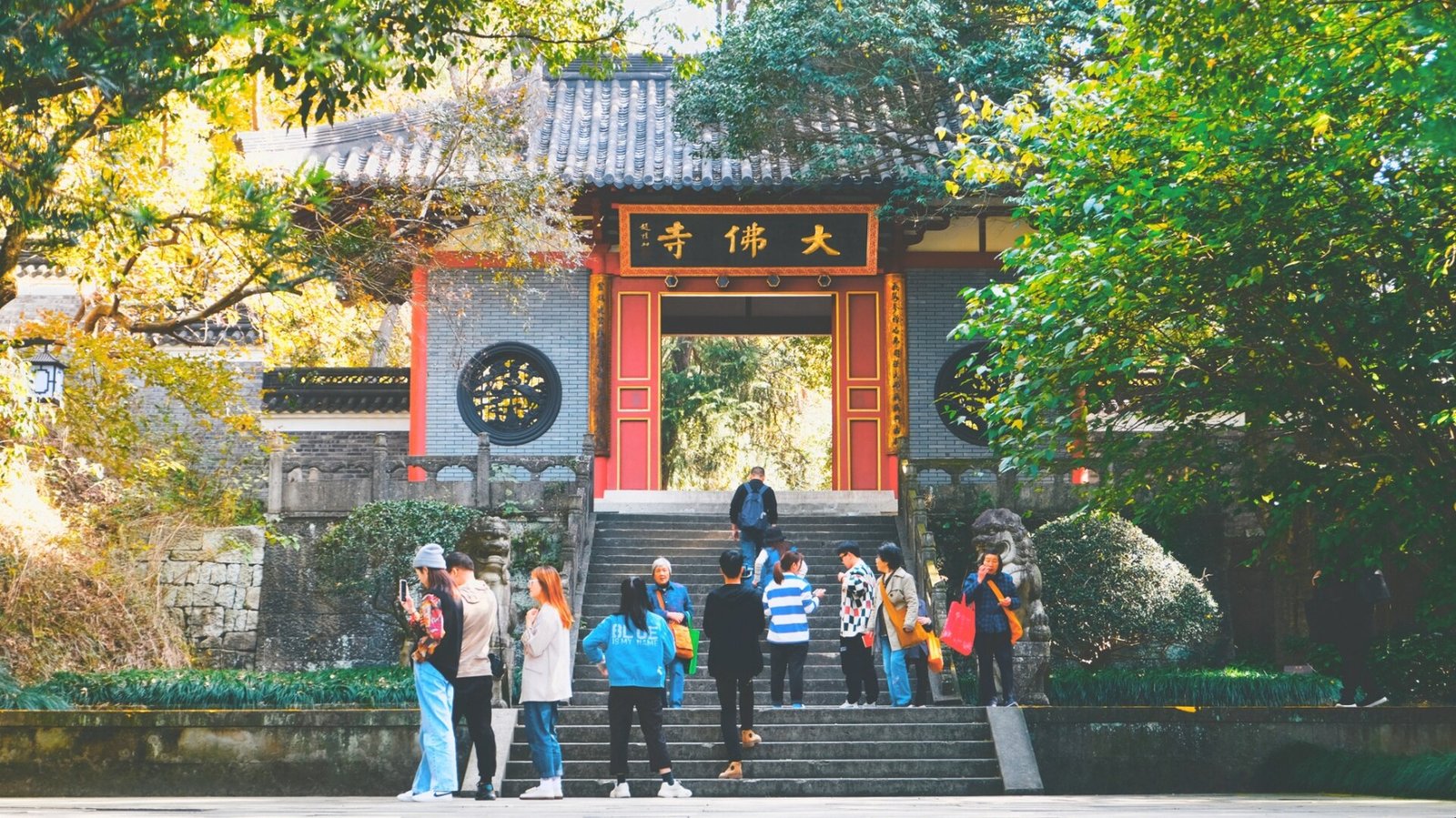
黑揍红 / Wikimedia Commons, CC BY 2.5
Hengdian: where the interiors came from
No Zhejiang costume drama escapes Hengdian, and this one does not either. The world’s largest studio complex, in Dongyang, is where the palace halls, noble mansions, market streets and ceremonial courtyards were shot — the parts of the show that are built rather than found. The Tang and Song Palatial District inside the complex is the area most often cited by fans who have walked it, and it is the area to head for if you are going specifically for this drama.
One honesty note: the provincial culture and tourism write-up names Xianju and Xinchang, not Hengdian. Hengdian is the studio layer that every production in the province uses, and the Chinese coverage of the show names it too — but if you want to be strict, the studio is the least-documented part of the answer. It is also the easiest to visit, so this is not much of a problem.
Hengdian is ticketed by area. The operator requires a separate reservation for orders that include six named areas, and publishes a multi-step passport booking route for overseas visitors. See the current Hengdian guide for the exact area list, official reservation portal, passport steps and hotline.
The Pursuit of Jade filming locations English guides list that we could not confirm
This is the part that matters, because it is where almost every English article on this show goes wrong.
Search for Pursuit of Jade locations in English and you will find the same eight names recycled across lifestyle magazines and fan blogs: Hengdian, Xiangshan Film and Television Town, the Tang and Song district, a “Lengquan Scenic Area,” Hangzhou, Dongyang Ancient Town, Yunnan and Sichuan. Some of those are hedged in the original text with the word “reportedly.” By the time they are copied, the hedge is gone.
We went looking for Chinese-language confirmation of each. Here is what we found:
- Xiangshan Film and Television Town (象山影视城) — plausible, since it is the standard Zhejiang studio for siege and battle sequences, and it is a genuinely good visit. But no Chinese source we could find links it to this production. Treat it as unconfirmed.
- Yunnan — the English articles place the exile arc at Dali’s Erhai lake and the Jade Dragon Snow Mountain near Lijiang. Both are real, both are spectacular, and neither appears in any Chinese account of where this show was shot. Unconfirmed, and we would not plan a 2,000 km detour on it.
- Sichuan — cited for the “Battlefield of the North” sequences. Same problem: no Chinese confirmation, and Sichuan’s misty mountains are a generic answer that fits half the war dramas ever made.
- Hangzhou — possible but unspecified; the English text says “lakeside scenes” without naming a district. Hangzhou is a plausible day trip from Xinchang, which is presumably where the guess comes from.
- Dongyang Ancient Town — the English sources themselves admit this one is not officially confirmed. It sits next to Hengdian, which is why it keeps getting suggested.
- “Lengquan Scenic Area” — this one is worth flagging specifically, because it is the most likely to send you somewhere that does not exist. The English text describes a scenic area in Taizhou known for a frozen waterfall in episode 14. Taizhou is the right prefecture — it is Xianju’s prefecture — but we could not identify any scenic area by that name in it. We suspect a garbled transliteration of a Xianju site. Do not book around it.
None of this is a reason to distrust the show. It is a reason to distrust the list. The Chinese production was deliberately quiet about some locations during shooting — the coverage says as much — and the vacuum got filled with inference. Our rule is simple: if we cannot find it in Chinese, we do not send you there.
A realistic four-day route
The Pursuit of Jade filming locations split across two counties about 150 km apart, with Hengdian sitting between them to the north-west. That makes a clean loop if you start from Hangzhou or Shanghai.
- Day 1 — Xianju, the creek and the old town. Arrive at Xianju station, drop bags, and spend the afternoon on the Yong’an Creek and at Potan Ancient Town. This is the low-effort day: the wharf, the flagstone street, the river. Eat in the county town.
- Day 2 — Shenxianju. A full day. Cable car up, cliff path across, glass platform if you want it. Allow three to four hours inside the scenic area and give the rest of the day to Jingxing Rock if the cloud is right.
- Day 3 — north to Hengdian. Train or car to Dongyang, and a full day inside Hengdian World Studios, working from the Tang and Song Palatial District outwards. This is the day you are walking through sets rather than scenery.
- Day 4 — Xinchang. On to Shaoxing for Dafo Temple and the old town, then back to Hangzhou. Xinchang is the quietest of the four days and, for a lot of fans, the one that lands hardest, because it is the show’s interior world standing still.
If you only have two days, do Xianju. The creek and the mountain are the show; the studios are where the show was assembled.
Tickets, hours, and the hanfu trick
Prices in China move, and this page is not a booking engine. What follows is what the scenic areas and the local ticketing channels were quoting when we last checked, and you should confirm on the official channel before you travel.
- Shenxianju — adult admission is ¥110, with an online advance price around ¥99. The cable car is separate: roughly ¥65 up and ¥55 down. The official booking channel is the scenic area’s own platform, and the enquiry line is 0576-87038686.
- Opening hours — Shenxianju sells tickets from 07:00 to 15:30 in summer and 07:30 to 15:00 in winter. A full cable-car circuit takes about three to four hours. Arrive early; the mountain closes on its own schedule, not yours.
- Potan Ancient Town — around ¥35, open roughly 08:00–16:10.
- Yong’an Creek rafting — the creek has a rafting operation that runs in the warm months, typically quoted somewhere in the ¥40–80 range depending on channel and season.
Buying as a visitor from outside China: use your passport as your identity document, not a Chinese ID number. Shenxianju sells through its official ticketing platform; Potan Ancient Town and Yong’an Creek rafting have separate local operators, so confirm each current channel before paying. If a Chinese-language form or self-service machine will not accept your passport, ask at the staffed ticket counter or visitor centre; where the fallback is unclear, call Shenxianju on 0576-87038686 before travelling. Carry the same original passport you used to book, and do not assume one operator’s ticket covers another site.
One genuinely useful quirk: Chinese scenic areas run seasonal promotions, and Xianju’s are unusually generous. Shenxianju has run a free-admission offer for visitors wearing hanfu — traditional dress — announced in late March 2026, and it has also run free-entry windows for teachers and students in the summer. Neither is a permanent policy. Both are worth checking the official WeChat account for before you book, because if one is running, it pays for your ticket several times over.
Common questions
Where was Pursuit of Jade filmed?
Mainly in Zhejiang province, in two counties: Xianju, in Taizhou prefecture, and Xinchang, in Shaoxing prefecture. Xianju supplied the riverside and mountain scenery — the Yong’an Creek and Shenxianju — and Xinchang supplied the old architecture. Interiors came from a studio, most likely Hengdian.
Was Pursuit of Jade filmed in China?
Entirely. There is no overseas location work in this production. Every confirmed location is in Zhejiang, and the studio work is in Zhejiang too.
Where exactly is the river scene filmed?
On the Yong’an Creek (永安溪) in Xianju county. The creek runs a long way through the county and the production did not publish an exact spot, so the practical approach is to follow the local tourism authority’s official Pursuit of Jade itinerary, which covers the creek towns along with Shenxianju and three villages.
Is Pursuit of Jade filmed in Hengdian?
The interior and palace work is widely reported to be, and Hengdian is the studio every Zhejiang costume drama uses. It is not named in the provincial culture and tourism department’s write-up, which is why we list it as reported rather than confirmed. If you are going to one studio for this show, make it Hengdian, and head for the Tang and Song Palatial District.
Was Pursuit of Jade filmed in winter?
Parts of it were, and the snow is real rather than digital — which is part of why the show looks the way it does. Xianju and Xinchang both get cold enough for it, though snow in the Zhejiang hills is not guaranteed in any given winter. If snow scenery is the thing you are chasing, aim for January and February and accept the risk.
Should I visit Shenxianju if I have not watched the show?
Yes. It is a 5A scenic area with a cable car, a cliff walkway and a glass platform, and it had a film career long before this drama. The show is the excuse, not the reason.
How many days do I need?
Two days for Xianju alone. Four to add Hengdian and Xinchang. Anything less and you are on a coach tour.
Your next move
Worried about the practical stuff?
Visas, payment, trains and the apps you’ll need before you land — the four things you cannot work out on the ground. Each guide is dated and sourced.
Ready to go?
The shoot is spread across Xianju, Xinchang and more. The studio route ties them into one itinerary.
Last verified
Sources: Hengdian World Studios — English overseas booking and admission instructions · Hengdian World Studios — scenic-area reservation list, per-ID rule, and hotline · Lifestyle Asia HK, "In-real-life filming locations of Pursuit of Jade", 2026-05-08 · Shenxianju Scenic Area official site (Zhejiang Shenxianju Tourism Group) · Shenxianju official ticket channel · Taizhou Bendibao, "2026 Shenxianju online booking and notices", 2026-09-18, sourced from the scenic area (opening hours, cable-car duration, enquiry line) · Tatler Asia, "8 Pursuit of Jade locations you can visit", 2026-04-17 — the eight-location list this article checks line by line · Zhejiang Provincial Dept. of Culture, Radio, TV and Tourism (浙江文化发布) — "逐玉热播背后浙江影视与文旅的融合之路", 2026-03-28, naming Xianju and Xinchang as core filming locations
Spotted something out of date? Email us — or read how corrections work. We check every report against the source and update the page.
Ready to plan it? Turn the dramas you have watched into a day-by-day route with the C-drama route planner.
Not sure where to start? Take the drama-city quiz — seven questions, one city, and a route waiting at the end.