
Walking the Wuyue Kingdom: A Travel Guide to the Real Filming Locations of Swords Into Plowshares (太平年)
I came to Swords Into Plowshares (太平年) expecting a palace drama. What I got was something rarer — a historical epic that made me want to book a flight to Hangzhou before the final credits rolled. The story of Qian Hongchu, the last king of the Wuyue Kingdom, and his fateful decision to surrender his territory peacefully to the Song Dynasty is one of Chinese history’s most quietly remarkable chapters. And the production team filmed it in the places where that history actually happened.
Premiering on January 23, 2026 across CCTV, iQiyi, Tencent, and Mango TV — and released simultaneously in 15 languages across 100+ platforms worldwide — Swords Into Plowshares is the first major drama to center the Wuyue Kingdom. Starring Bai Yu as Qian Hongchu, Zhu Yawen as Zhao Kuangyin, and Zhou Yutong as Sun Taizhen, it was filmed in 8K ultra-high definition across six cities in Zhejiang Province, with a 60,000-square-meter purpose-built set at Hengdian World Studios as its production base.
This is where the drama lives. Here’s how to find it.
The Historical Stage: Understanding Wuyue Before You Go
Most Western visitors to Zhejiang know Hangzhou as the city of West Lake and silk. Fewer know that for over 70 years — from 907 to 978 AD — Hangzhou was the capital of the Wuyue Kingdom, a small but culturally sophisticated state that managed to survive the chaos of the Five Dynasties and Ten Kingdoms period through a combination of shrewd diplomacy and genuine good governance.
The Wuyue kings built sea walls to protect coastal farmland, dredged the Grand Canal, and patronized Buddhist art on a scale that still shapes the landscape of Zhejiang today. When Qian Hongchu finally surrendered the kingdom to the Song Dynasty in 978 AD, he did so without a battle — sparing his people the devastation that had consumed the rest of China for decades. The drama’s title, 太平年 (literally “years of peace”), is both a description and a prayer.
Traveling through Zhejiang with this history in mind transforms the experience entirely. The pagodas, the temples, the old city districts — they’re not just scenic. They’re the physical legacy of the Wuyue kings.
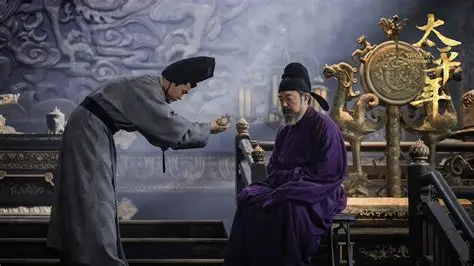
1. Hengdian World Studios, Dongyang — The Production Heart
The drama’s primary production base is Hengdian World Studios in Dongyang, Jinhua — China’s largest film and television production complex and the location where the production team constructed a dedicated 60,000-square-meter set for the series. Over 8,000 custom costumes were made here, from soldiers’ armor to court robes, each manufactured to a precision tolerance of 0.1 millimeter.
Hengdian is a functioning studio city that also operates as a tourist destination. Visitors can walk through sets from dozens of major Chinese historical dramas, watch live action sequences being filmed, and rent period costumes for photos. The scale of the place is genuinely staggering — it’s less a studio lot and more a small city built entirely from reconstructed Chinese history.
Practical tip: Hengdian is in Dongyang, Jinhua, about 2.5 hours by high-speed rail from Shanghai or 1.5 hours from Hangzhou. The studio complex is large enough to require a full day. Buy tickets in advance online — peak season (summer and national holidays) sees significant crowds. The best time to visit is weekday mornings in spring or autumn.
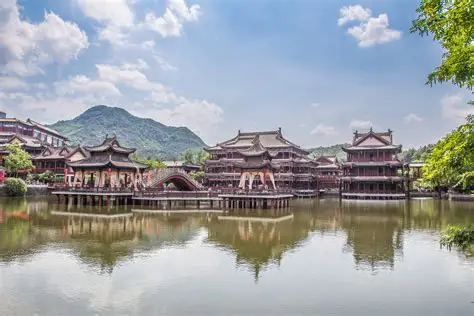
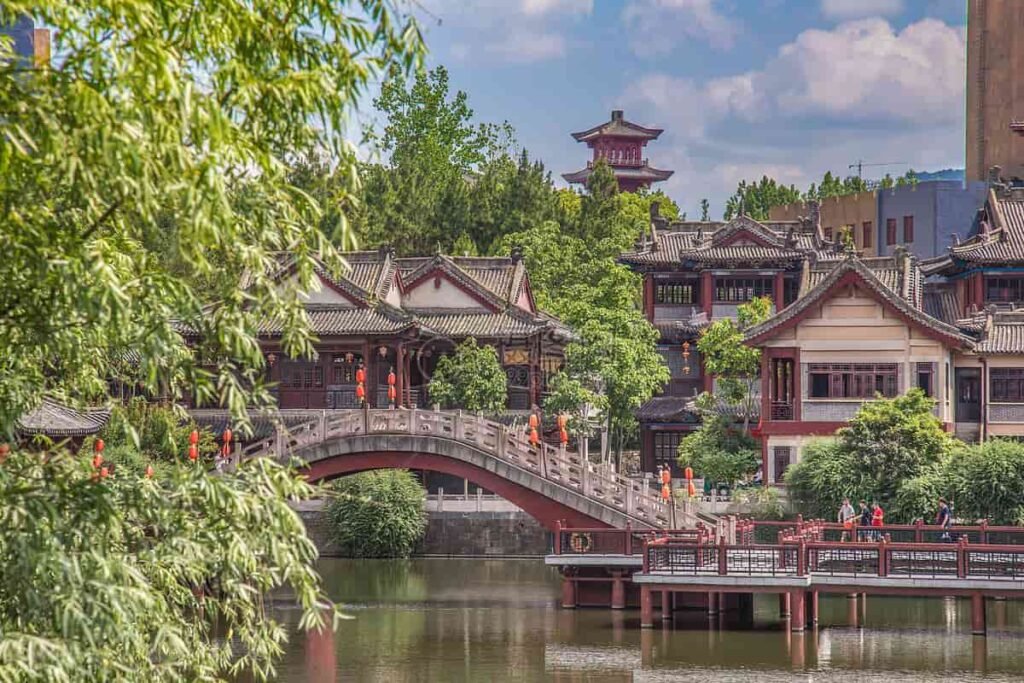
2. Hangzhou — Capital of the Wuyue Kingdom
Hangzhou is the emotional and historical center of Swords Into Plowshares. Founded in 907 with Hangzhou as its capital, the Wuyue Kingdom at its height covered present-day Zhejiang, Shanghai, and parts of southern Jiangsu and northern Fujian. The city’s identity is inseparable from the Wuyue legacy.
Lin’an District — Birthplace of the Wuyue Founders
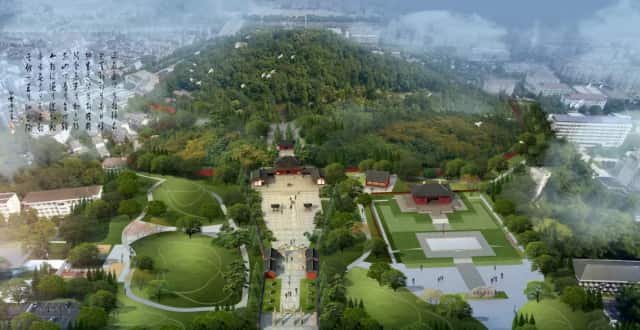
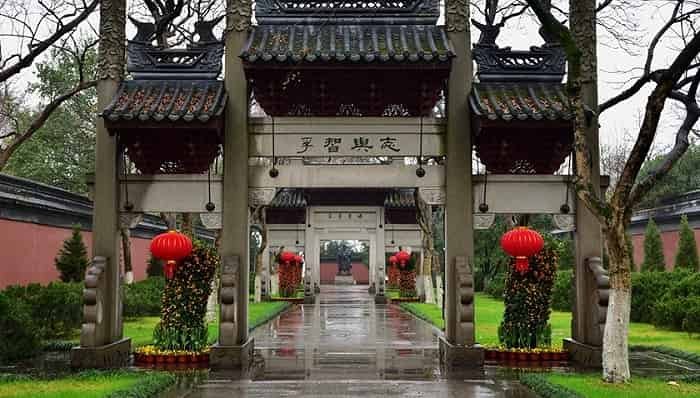
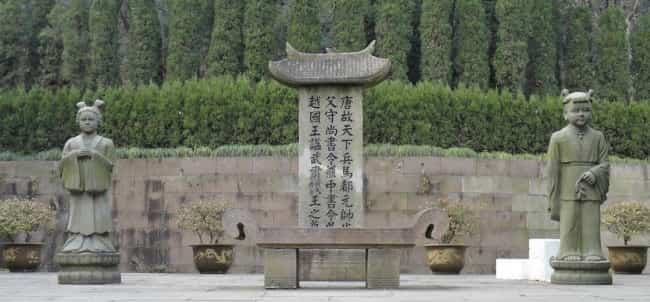
Lin’an district, in western Hangzhou, is the birthplace and final resting place of Qian Liu (852–932), the founder of the Wuyue Kingdom and grandfather of the drama’s protagonist Qian Hongchu. Actor Bai Yu visited Lin’an’s historical sites extensively to prepare for his role — walking the same ground his character’s ancestors walked.
The Qian Liu Mausoleum complex in Lin’an is the most significant Wuyue heritage site in China. The tomb and surrounding park preserve the memory of the kingdom’s founding generation, and the scale of the site gives you a visceral sense of the dynasty’s ambition and reach. It’s quiet, unhurried, and genuinely moving — the kind of place that makes the drama’s final act feel personal.
West Lake and the Leifeng Pagoda
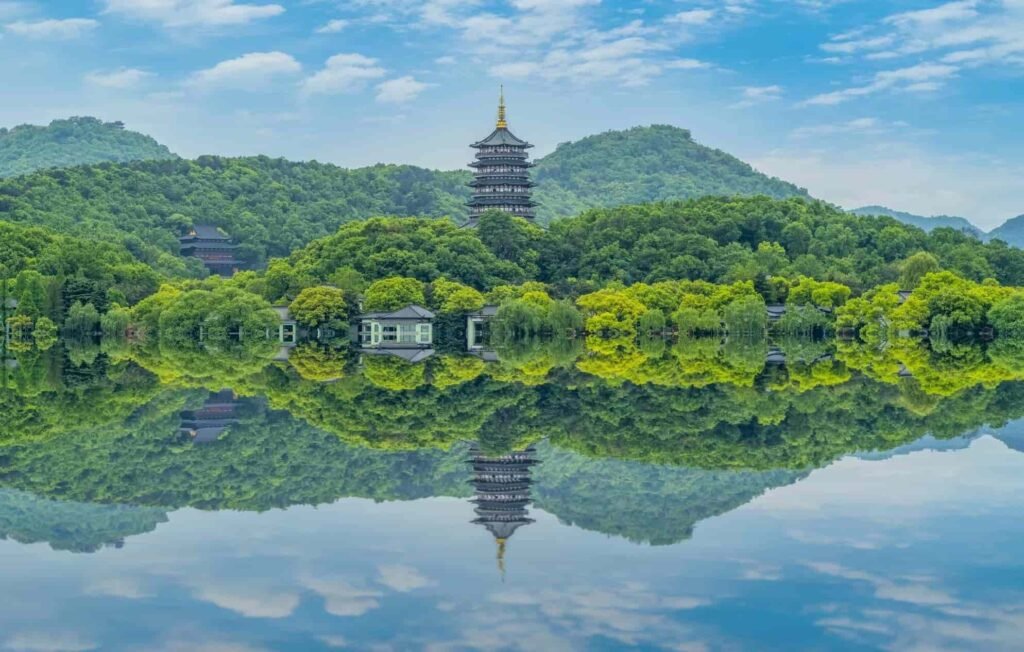
The Leifeng Pagoda on the southern shore of West Lake was originally built in 977 AD by Qian Hongchu himself — just one year before he surrendered the kingdom to Song. He built it to honor his consort Sun Taizhen (Zhou Yutong’s character in the drama) and to enshrine a relic of the Buddha. The current structure is a reconstruction, but it stands on the original Wuyue-era foundations, and the view across West Lake from its upper floors is one of Hangzhou’s finest.
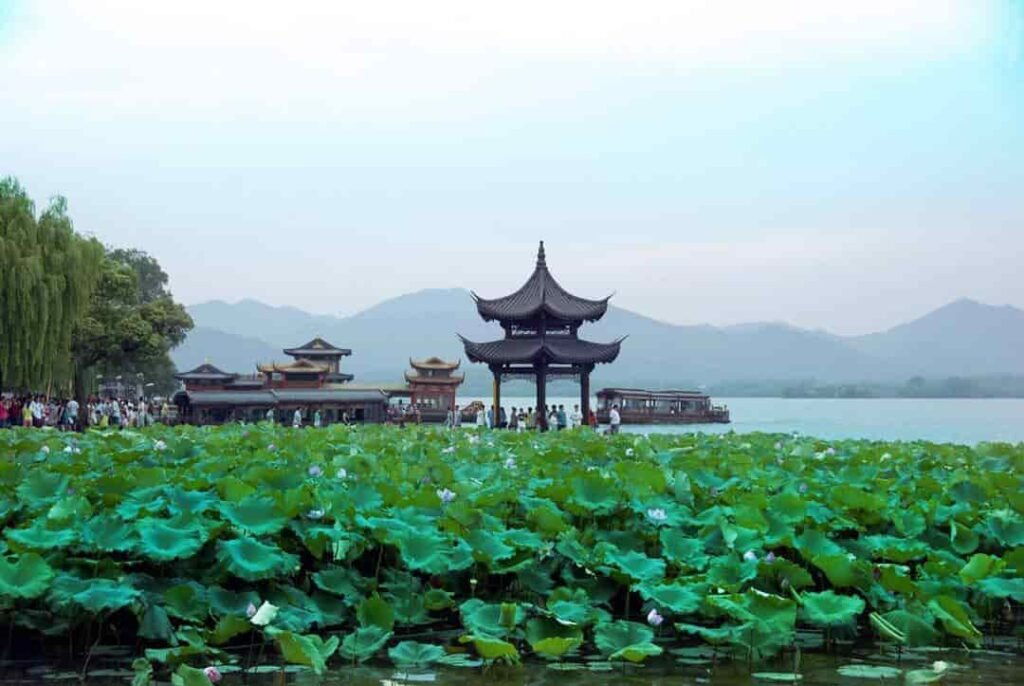
Walking the West Lake circuit with the drama in mind reframes the entire landscape. The causeways, the pagodas, the temple complexes on the surrounding hills — much of this was shaped by Wuyue patronage. You’re not just sightseeing. You’re reading the physical record of a kingdom.
Practical tip: Hangzhou is 1 hour from Shanghai by high-speed rail. West Lake is free to enter and best experienced early morning or at dusk. The Leifeng Pagoda charges a small entrance fee. Lin’an is about 1 hour from central Hangzhou by metro and bus — worth a dedicated half-day.
3. Shaoxing — Ancient Water Town of the Wuyue Era
One of the confirmed filming locations for Swords Into Plowshares, Shaoxing is one of China’s oldest cities and one of its most atmospheric. The canal network that runs through the old town dates back centuries, and the black-awning boats that still ferry visitors through the waterways give the city a texture that no studio set can fully replicate.
The production used Shaoxing’s preserved historical districts for street-level scenes — the markets, the canal-side residences, the narrow lanes that would have characterized a prosperous Wuyue-era town. Walking through the Cangqiao Historical District or along the old canal near Shen Garden, you can feel exactly why the location scouts chose it.
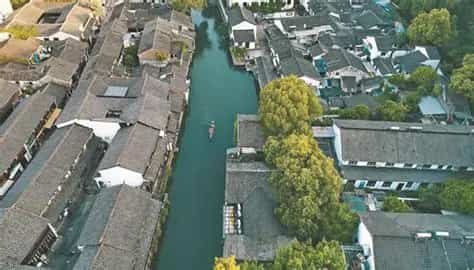
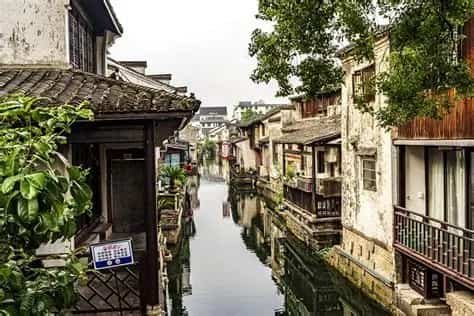
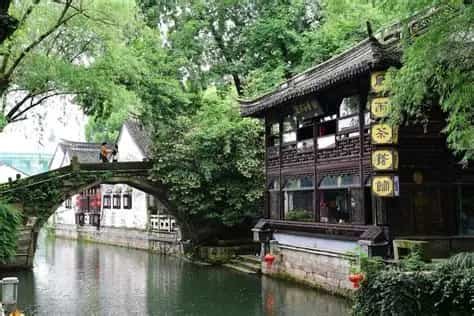
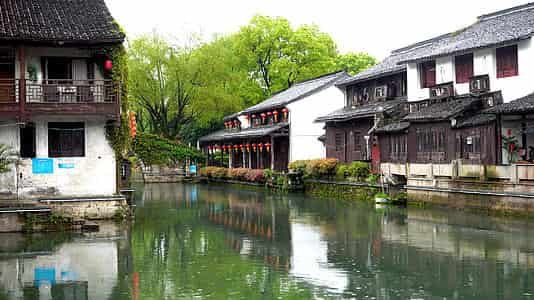
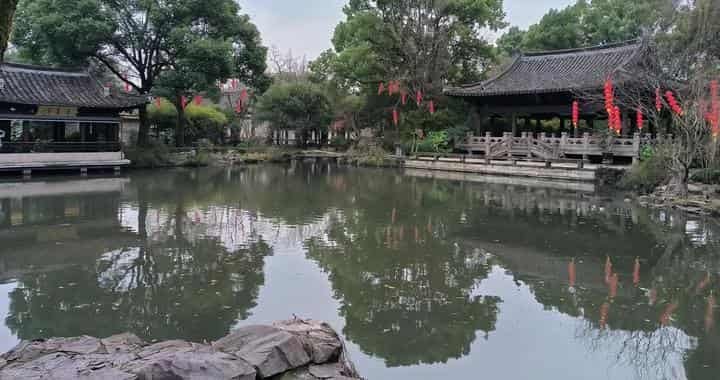
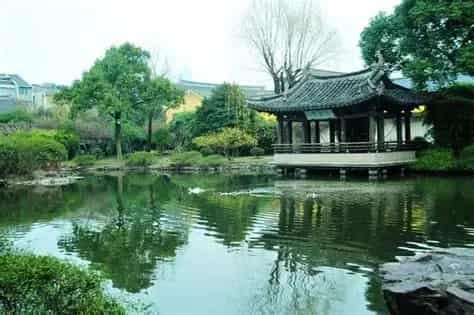
Practical tip: Shaoxing is 40 minutes from Hangzhou by high-speed rail. The old town is compact and walkable. Rent a boat for a canal tour — it’s the best way to see the city as it would have appeared in the drama. The local Shaoxing rice wine (绍兴黄酒) is worth trying at a canal-side restaurant.
4. Jinhua — Where the Sets Were Built
Beyond Hengdian, the broader Jinhua region in central Zhejiang provided additional location shooting for the series. Jinhua’s landscape — rolling hills, ancient villages, and well-preserved Ming and Song-era architecture — offered the production team authentic backdrops that complemented the studio work.
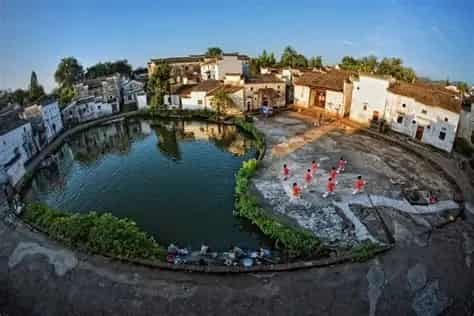
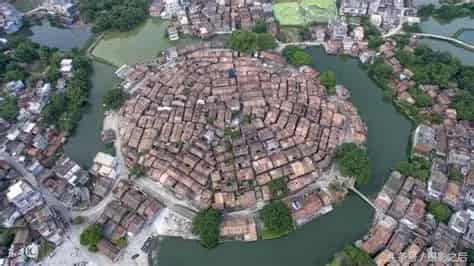
The Zhuge Bagua Village in Lanxi (part of Jinhua) is one of the best-preserved ancient villages in China, laid out according to the Eight Trigrams formation attributed to Zhuge Liang. While not a direct filming location for the drama, it represents the kind of living historical architecture that defines the Zhejiang landscape the production drew from.
5. Taizhou and Wenzhou — The Southern Wuyue Coast
The drama’s production also extended to Taizhou and Wenzhou on Zhejiang’s southern coast — both cities that fell within the historical boundaries of the Wuyue Kingdom. These locations provided coastal and maritime scenes, reflecting the Wuyue kings’ sophisticated management of the sea walls and waterways that protected their territory.
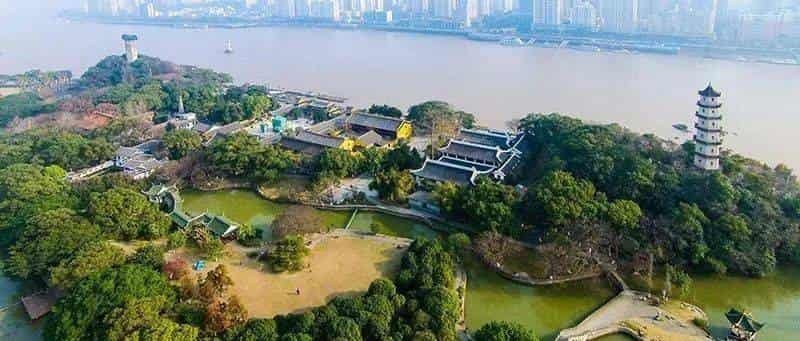
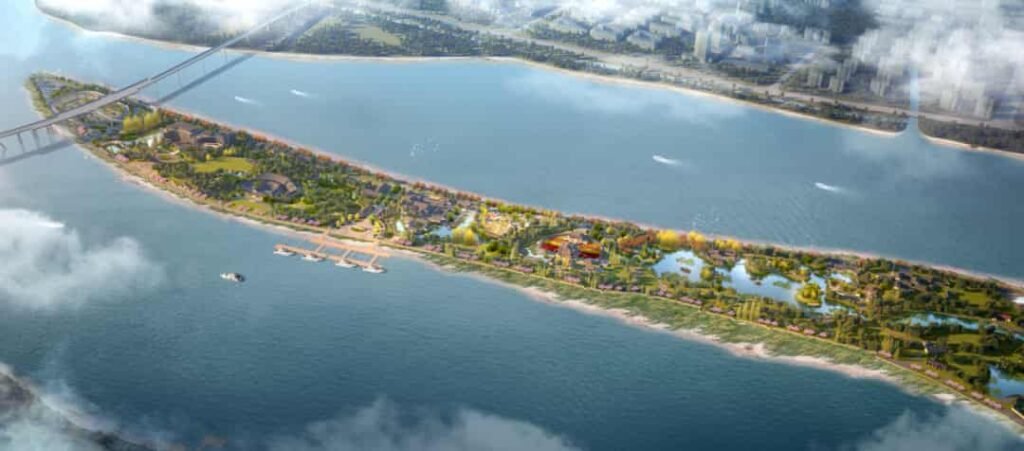
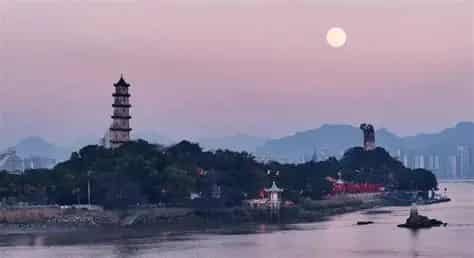
Wenzhou’s Jiangxin Island, sitting in the middle of the Oujiang River, has a history stretching back to the Eastern Jin Dynasty and contains pagodas and temples that predate the Wuyue period. The island’s layered history — visible in its architecture — makes it one of the most evocative historical sites in southern Zhejiang.
Practical tip: Both Taizhou and Wenzhou are accessible by high-speed rail from Hangzhou (1.5–2 hours). They work well as extensions of a broader Zhejiang circuit, particularly if you’re combining the drama locations with coastal scenery.
6. Quzhou — The Western Frontier
The westernmost of the confirmed filming locations, Quzhou sits at the edge of Zhejiang where the province meets Jiangxi and Fujian. Its position on the historical frontier of the Wuyue Kingdom made it a natural choice for scenes depicting the kingdom’s borders and the military tensions of the Five Dynasties period.
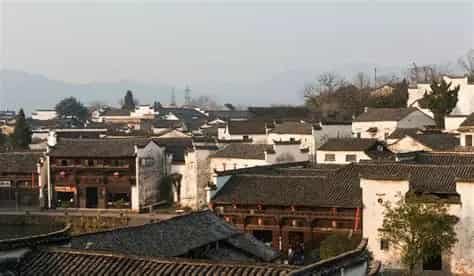
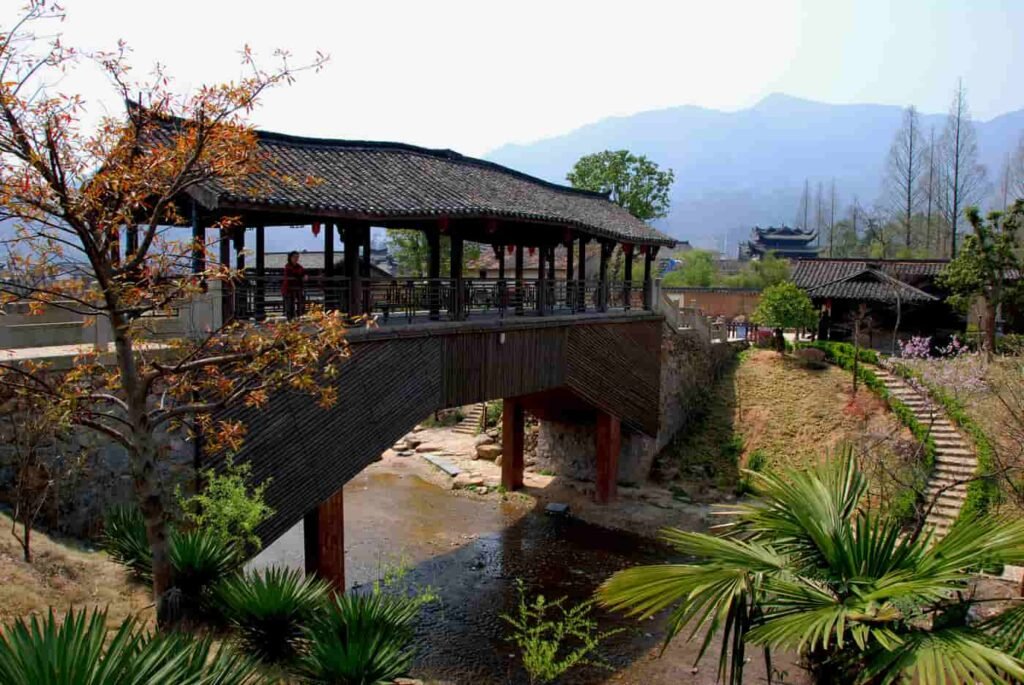
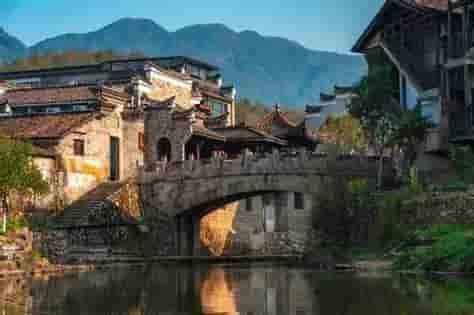
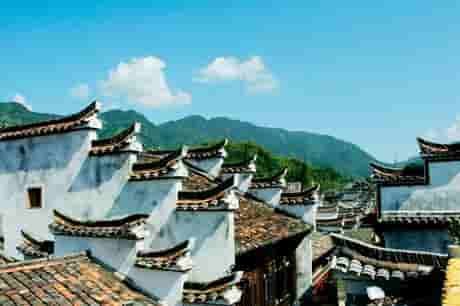
Quzhou’s Nianbadou Ancient Town is one of Zhejiang’s hidden gems — a remarkably intact Ming-era settlement that sees far fewer tourists than the more famous ancient towns of Anhui or Jiangsu. The stone-paved streets and whitewashed walls have a quiet authenticity that rewards slow exploration.
Planning Your Wuyue Kingdom Circuit
All six filming locations — Hangzhou, Jinhua (Hengdian), Shaoxing, Taizhou, Wenzhou, and Quzhou — are within Zhejiang Province, making this one of the most logistically straightforward drama location pilgrimages in China. High-speed rail connects all of them, and Hangzhou serves as a natural hub.
Suggested 7-day circuit:
Days 1–2 in Hangzhou: West Lake, Leifeng Pagoda, Lin’an district (Qian Liu Mausoleum). Days 3 in Shaoxing: canal district, Shen Garden, local wine tasting. Day 4 in Jinhua/Hengdian: full day at the studio complex. Day 5 in Quzhou: Kucheng Ancient Town. Days 6–7 split between Taizhou and Wenzhou for coastal scenery and Jiangxin Island.
The best time to visit is March through May (spring) or September through November (autumn). Summer is hot and humid across Zhejiang, and the major sites get crowded during national holidays.
Qian Hongchu chose peace over pride, and in doing so preserved a civilization. The least dramatic thing about Swords Into Plowshares is also its most powerful: the idea that the most courageous act a ruler can perform is to put down his sword. Zhejiang is where that story happened. Go see it.